• KGS/USD = 0.01144 0%
  • KZT/USD = 0.00210 0%
  • TJS/USD = 0.10454 -0.1%
  • UZS/USD = 0.00008 0%
  • TMT/USD = 0.28571 0.28%
  • KGS/USD = 0.01144 0%
  • KZT/USD = 0.00210 0%
  • TJS/USD = 0.10454 -0.1%
  • UZS/USD = 0.00008 0%
  • TMT/USD = 0.28571 0.28%
  • KGS/USD = 0.01144 0%
  • KZT/USD = 0.00210 0%
  • TJS/USD = 0.10454 -0.1%
  • UZS/USD = 0.00008 0%
  • TMT/USD = 0.28571 0.28%
  • KGS/USD = 0.01144 0%
  • KZT/USD = 0.00210 0%
  • TJS/USD = 0.10454 -0.1%
  • UZS/USD = 0.00008 0%
  • TMT/USD = 0.28571 0.28%
  • KGS/USD = 0.01144 0%
  • KZT/USD = 0.00210 0%
  • TJS/USD = 0.10454 -0.1%
  • UZS/USD = 0.00008 0%
  • TMT/USD = 0.28571 0.28%
  • KGS/USD = 0.01144 0%
  • KZT/USD = 0.00210 0%
  • TJS/USD = 0.10454 -0.1%
  • UZS/USD = 0.00008 0%
  • TMT/USD = 0.28571 0.28%
  • KGS/USD = 0.01144 0%
  • KZT/USD = 0.00210 0%
  • TJS/USD = 0.10454 -0.1%
  • UZS/USD = 0.00008 0%
  • TMT/USD = 0.28571 0.28%
  • KGS/USD = 0.01144 0%
  • KZT/USD = 0.00210 0%
  • TJS/USD = 0.10454 -0.1%
  • UZS/USD = 0.00008 0%
  • TMT/USD = 0.28571 0.28%

Viewing results 331 - 336 of 611

Kazakh Government Is Trying (Again) To Introduce An Unpopular Betting Law

A newly resurrected Law on Gambling Business is set to come into force in Kazakhstan. The law will see the introduction of a new private betting regulator that will be granted extensive government powers, and pocket 1.5% of all betting transactions. Its return bodes yet another bout of strategic networks in the Kazakh government, where powerful lobbying forces from private companies are increasingly finding a presence in the corridors of power. The fast track of this new regulator is unusual. Despite protests from the betting industry, the bill passed the second reading. The regulator, formerly known as the Betting Accounting Centre (BAC) and now renamed the Unified Accounting System (UAS), passed the first reading in Parliament on June 3, and the second reading on June 5. Later on 28 June, the Senate approved the bill and it is now waiting to be signed into law. Several consequences could follow once this new regulator is enforced. They include the new body performing as a gambling referee, and therefore possessing privileges in terms of resource allocation, production, and sales. At the same time, the regulator will determine market competition and pocket 1.5% of all profits. With such sweeping powers, there is no mention as to how the regulator will be monitored and controlled to ensure it acts transparently. In January this year, the Kazakh parliament announced that it intended to reintroduce the new betting law in parliament, two years after a scandal involving a deputy minister accepting bribes from pro-regulator lobbyists forced the government to abandon its first attempt to pass the law. This year’s bill would be identical to the previous one, except for two changes: the term “Betting Account Centre” will be replaced by the more circumlocutious “Unified Accounting System”; and the regulator will perform the role of a fintech company controlling all financial transactions of the betting sector. The introduction of the bill just over two years ago shocked the Kazakh betting industry. The introduction of a third-party regulator with government powers that could control and determine market players and obtain 1.5% of profits drew immediate comparisons to old Kazakhstan, a troubled history which president Tokayev insists the country is moving away from. After speaking up against the regulator in 2019, particularly on its powers to obtain shady profits and capacity for abuse, the owners of independent bookmaking company Olimp were arrested by the government as members of ‘organised crime syndicates.’ The conventional wisdom was that the parliament had learned from the debacle and would now be pursuing more subtle means of silencing the opposition to this bill. So, besides the polishing up of the regulator label, what has changed? And why might the Kazakh parliament think things will turn out differently for them this year? For one, the Kazakh parliament has labelled this new law under the guise of a public health concern and to help the younger generation combat the rising problem of gambling addiction in Kazakhstan. This includes increasing the age of betting to 21 and...

Mixed Results for Kazakhstan in Media Freedom Rankings

Analysts at Ranking.kz have provided an overview of press freedom in Kazakhstan and alleged violations against journalists. According to the International Foundation for the Protection of Freedom of Expression, Әdil sөz, there was a 20.1% decrease in incidents of violations against correspondents last year, with 434 incidents in 2023 and 141 from January to May this year. Additionally, reports of pre-trial claims or lawsuits against individual journalists or editorial offices declined by 5% in 2023. Despite this, seven court decisions led to various sentences for journalists at the end of 2023. The most common violation was obstruction of legitimate professional activities, with 51 cases, including six violent ones, primarily involving police and state employees. Threats to journalists and editorial offices were also significant, with 44 incidents reported. Nonviolent attempts to coerce journalists were noted to have decreased slightly. However, despite fewer reported violations, according to Reporters Without Borders, censorship issues have worsened. Kazakhstan's press freedom ranking fell from 134th to 142nd in 2024, with a score of 41.11 out of 100. In contrast, Kyrgyzstan ranks highest in Central Asia at 120th, while Turkmenistan remains one of the worst globally in 175th place.

Universities of Kazakhstan and China to Cooperate on Microsatellite Launch

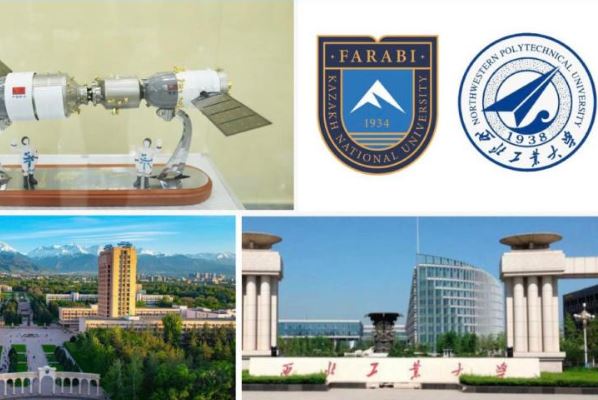
Al-Farabi Kazakh National University and the Northwest Polytechnic University of China have agreed to conduct joint scientific research using microsatellites. According to the press service of the Ministry of Science and Higher Education of the Republic of Kazakhstan, the agreement was reached during  talks between the President of the Republic of Kazakhstan, Kassym-Jomart Tokayev, and Xi Jinping, during the latter's official visit to Kazakhstan. The initiative, the first of its kind to be implemented by Kazakh universities,  opens up new opportunities for space research, training qualified specialists, and developing joint satellites, as well as enabling remote sensing studies of the Earth via a microsatellite. Integral to the project, is an aim to develop equipment for gravimetric measurements, including a specialized ground station and a transmitter on the satellite, designed to detect density inhomogeneities in the Earth's crust and mantle. The employment of such, will help solve fundamental problems in the study of geodynamic processes at great depths. The North-West Polytechnic University of China is a leader in launching objects into space whilst Al-Farabi Kazakh National University, the only Kazakh university with experience in launching nanosatellites into orbit , has already launched its own Al-Farabi-1 and Al-Farabi-2 nanosatellites.

Taking the Necessary Steps to Curb Child Abuse in Kazakhstan

In Almaty, a young woman threw herself off a Ferris wheel, falling to her death. Before committing suicide, she had strangled her five-year-old daughter. The number of children in Kazakhstan has soared over the past decade, but so have the number of crimes committed against minors. When Mom and Dad are the murderers In 2023, twenty-five children were murdered in Kazakhstan, seven of them by their relatives according to the country’s children's ombudsman, Dinara Zakiyeva. This year, Kazakhstanis were shocked by numerous horrifying cases of child abuse. According to relatives and neighbors, the family of the woman who strangled her daughter lived in the Ile District of Almaty Region and were financially secure and successful. The regional commissioner for children's rights, Aigul Yesimbekova, explained that the woman had confesses her crime to her sister before committing suicide. “The child had Down's syndrome. The mother was most likely in an internal crisis and despair when she decided to do this,"Yesimbekova explained. "She went to her sister and told her that she was going to kill herself. When her sister tried to calm her down, she went to the park (the Central Park of Culture and Leisure in Almaty). Her husband is an IT specialist, and the financial component [of her life] was fine. She was not registered with psychiatrists, her husband makes money, and everything seemed fine, but the child was sick. Probably, her soul was in such a state of crisis; it is hard when a child is sick. Maybe she murdered the child in a rush of emotion, and then, unable to cope with the guilt, she took the step she did.” According to Zakiyeva, such families are in critical need of psychological support, and child protective services should supervise them. However, the situation with psychologists and child social workers in Kazakhstan is poor. At the end of June, a court in the Turkestan Region convicted a mother of killing her two children. Their bodies were found in a rented apartment in February 2024 in the city of Turkistan. The mother was sentenced to 15 years in prison. After killing her children, the woman called her friend and told her what she'd done. Even against the backdrop of Kazakhstan’s high birth rates, the Turkestan Region - as is the entire south of the country - is an outlier. The percentage of people under the age of 18 in Kazakhstan stands at 34.1%, whereas in the Turkestan Region, this figure is 43.3%, followed by the Mangystau Region at 41.9%, and the federal city of Shymkent at 40.6%. Experts say that it is in the regions with the highest birth rates that the highest rates of violence against children are recorded. In September of last year, a pedophile raped and brutally murdered a five-year-old girl who lived next to him in the village of Zhibek Zholy in the Turkestan Region. He was sentenced to life imprisonment and chemical castration. News of the murder almost sparked a riot and deadly reprisals against the rapist;...

A Greater Role for Kazakhstan’s Media

On June 27, in the lead-up to Mass Media Workers' Day, Kazakhstan’s President Kassym-Jomart Tokayev took to the stage to address a gathering of journalists and media professionals. His engagement underscored the government’s response to the public’s increasing attention to a more liberalized media landscape. Western observers, having taken a renewed interest in former Soviet states amidst Russia’s invasion of Ukraine, are pushing these countries for progress, particularly on press freedoms. The European Center for Press Freedoms criticized the passage of Georgia’s foreign agent law that drove of tens of thousands of citizens to protest in the streets. Amnesty International condemned raids of journalists’ offices and homes in Kyrgyzstan. Reporters Without Borders downgraded Uzbekistan’s position in its State of Press Freedom Index to “very serious”. Kazakhstan has also received its fair share of Western criticism about freedom of the country’s media. Human Rights Watch reports that “although Kazakhstan’s new mass media law has some amendments that should improve the status quo, its ambiguity and the restrictive nature of other provisions threaten to create obstacles to the work of local and foreign journalists”. Government attitudes towards the media vary widely along the periphery of Russia and the former Soviet Union. In Kazakhstan, despite ongoing challenges and shortcomings, it is increasingly seen as the fourth estate, providing citizens with the information they need to check the government’s power. Increasing media influence on society and elected officials Indeed, Tokayev referred to the media as the “fourth estate” in his address, expanding on its growing roles and responsibilities in building “a just and fair Kazakhstan”. He acknowledged the media provides a “pluralism of opinion (which) is exactly what we strived for from the beginning, (and) is our fundamental achievement,” noting that it can “criticize the activities of the authorities”. He called it the “voice of the people, the messenger of the nation, and the spiritual support of society,” adding that it can “shape the legal culture”. A recent example of the media’s influence in the legal realm in Kazakhstan can be seen in the aftermath of Saltanat Nukenova’s murder by her husband, who is a former Minister of the Economy. This tragic story garnered an enormous reaction in Kazakhstani media and resulted in calls for legislation to protect women against domestic violence. Consequently, in April 2024, the President signed what became known as “Saltanat’s Law”, and the former minister was sentenced to 24 years in prison. A burgeoning media space, but some challenges remain According to the TCA’s count, over a hundred independent media outlets operate in Kazakhstan through sites and social media channels. They express a wide range of opinions, including criticizing government activities. On the other hand, the government maintains the right to revoke their license to operate inside Kazakhstan. In the last year, for instance, the Ministry of Culture and Information has blocked digital currency platform, Coinbase.com, as well as an LGBTQ+ site for children called Selftanu.kz, and the Russian news portal Sputnik24. In this environment, the June 27 ceremony did...

Kazakhstan’s Attempts to Address Disinformation and Media Freedom

On June 19, President Tokayev signed amendments to the law governing Kazakhstan's mass media. Meanwhile, public debate on foreign and domestic media that allegedly receive financing from abroad continues. While human rights activists focus on the principle of freedom of speech, political analysts are concerned about a string of disinformation campaigns attempting to destabilizing the country. The respective changes to legislative acts affect a wide range of issues. In particular, a new and broader concept of mass media has been introduced which includes internet resources. It is envisaged that a Unified Media Platform will be created to implement the state’s information policy, including grants for non-state media and accreditation of journalists to state bodies and organizations through a simplified accreditation procedure. In addition, the statute of limitations for claims brought against the media to refute information that does not correspond to facts and defames honor, dignity, and business reputation has been reduced to one year. Under the new law, Kazakhstan's Ministry of Foreign Affairs has the right to deny accreditation to foreign journalists "in case of a threat to the national security of the Republic of Kazakhstan." A few months ago, the Ministry did not issue accreditation to 36 correspondents from Azattyk. The publication subsequently filed a lawsuit, and in April, the media outlet and the Ministry reached a mediation agreement. While the new law focuses mainly on foreign funded domestic media, experts cite recent examples of pressures on Kazakhstan’s society and authorities through disinformation campaigns that mostly originated from abroad. For instance, a week ago in Kyiv, Ukrainian authorities claimed an assassination attempt was made on Kazakhstani national Aidos Sadykov, the creator of a YouTube channel called Bәse. Sadykov and his wife Natalya were placed on the wanted list in Kazakhstan in October 2023 for “inciting social, national, clan, racial, class, or religious discord.” Their inclusion on the list is linked to the January 2022 coup attempt and riots, as well as their ties to controversial fugitive billionaire Mukhtar Ablyazov, who currently has judgements against him in U.S. and UK courts exceeding $5 billion. Ablyazov faced murder charges in Kazakhstan following the death of the CEO of a local bank that he later took over and reportedly defrauded. According to government authorities, Sadykov repeated Ablyazov's calls for violence surrounding the January 2022 coup attempt as well as the Mazhilis elections in March 2023, where the channel openly called for organizing riots. Furthermore, on the one-year anniversary of the January 2022 events, his Bәse channel gave instructions to overthrow the government in Kazakhstan, following the example of events in Ukraine. The four-minute video includes information on how to create coordination committees for regime change. Natalya Sadykova has also worked for the Respublika newspaper, allegedly funded by Ablyazov. Aidos Sadykov had previously served two years in Kazakhstan for hooliganism and fled to Kyiv in 2014. The alleged perpetrators of the attack on Sadykov, Meiram Karataev and Altai Zhakanbaev, are Kazakhstani citizens. Shortly after the purported assassination attempt, Natalya Sadykova accused Kazakhstan’s...