• KGS/USD = 0.01144 0%
  • KZT/USD = 0.00211 0%
  • TJS/USD = 0.10460 0%
  • UZS/USD = 0.00008 0%
  • TMT/USD = 0.28571 0.28%
  • KGS/USD = 0.01144 0%
  • KZT/USD = 0.00211 0%
  • TJS/USD = 0.10460 0%
  • UZS/USD = 0.00008 0%
  • TMT/USD = 0.28571 0.28%
  • KGS/USD = 0.01144 0%
  • KZT/USD = 0.00211 0%
  • TJS/USD = 0.10460 0%
  • UZS/USD = 0.00008 0%
  • TMT/USD = 0.28571 0.28%
  • KGS/USD = 0.01144 0%
  • KZT/USD = 0.00211 0%
  • TJS/USD = 0.10460 0%
  • UZS/USD = 0.00008 0%
  • TMT/USD = 0.28571 0.28%
  • KGS/USD = 0.01144 0%
  • KZT/USD = 0.00211 0%
  • TJS/USD = 0.10460 0%
  • UZS/USD = 0.00008 0%
  • TMT/USD = 0.28571 0.28%
  • KGS/USD = 0.01144 0%
  • KZT/USD = 0.00211 0%
  • TJS/USD = 0.10460 0%
  • UZS/USD = 0.00008 0%
  • TMT/USD = 0.28571 0.28%
  • KGS/USD = 0.01144 0%
  • KZT/USD = 0.00211 0%
  • TJS/USD = 0.10460 0%
  • UZS/USD = 0.00008 0%
  • TMT/USD = 0.28571 0.28%
  • KGS/USD = 0.01144 0%
  • KZT/USD = 0.00211 0%
  • TJS/USD = 0.10460 0%
  • UZS/USD = 0.00008 0%
  • TMT/USD = 0.28571 0.28%

Viewing results 109 - 114 of 183

Liberalizing Kazakhstan’s Economy Must Not Become Uncontrolled Privatization, Expert Warns

Last week, President Kassym-Jomart Tokayev signed a decree on reducing the state’s participation in the economy, aiming to help develop competition and private business. This could be a significant boost to the economy, financial analyst Rassul Rysmambetov, an Almaty-based expert in distressed assets and Director of the Financial Freedom Public Foundation, told The Times of Central Asia, though everything will depend on how the decree is implemented. Firstly, the decree envisages creating a National Office for Privatization under the Agency for the Protection and Promotion of Competition. This office is to develop criteria for state assets subject to privatization and create a list of them. In addition, measures are provided to increase the autonomy, quality, and independence of corporate governance at Samruk-Kazyna, the National Welfare Fund, and its subsidiaries. “The government must establish a specific list of large entities that will offer major stakes in the next two years in IPOs,” President Tokayev explained. According to Tokayev, the quasi-public sector – bloated and often ridden with debt – needs serious reform. “We need to put an end to the question of where state participation should continue and where competition can be developed. The largest share of the state in the economy is represented by the group of companies held by the Samruk-Kazyna fund, so that is where this work must start. New, systemic measures are required to fundamentally rehabilitate the fund,” the president stated. A separate section of the decree presents measures aimed at protecting the rights and legitimate interests of business, including decriminalizing offenses related to economic activity and coordinating with prosecutors on prohibitive and restrictive measures initiated by government agencies. This is not the first time Kazakhstan has tried to liberalize its economy – it has even privatized social institutions, such as hospitals, schools, and creative centers for children before – but previous attempts yielded no tangible successes. “We need to continue to work to improve the quality of services, consistently reduce state participation and eliminate excessive regulation and restrictions. This applies to all sectors of the economy,” Tokayev stressed. “Uncontrolled monopolies, unequal access to resources and unfair trade practices must be eliminated at the root. A pillar of economic liberalization will be effective privatization. There have been so many privatization plans, but every time we make the same mistakes.” Rysmambetov believes that professionals should take the lead. “Liberalizing the economy is a process. By no means can it be limited to a single decree – it is a strategic course. I see here dozens, if not hundreds of by-laws, industry reference documents and possibly new laws and codes. I'm afraid that parliament will prove unable to keep up with the pace at which these reforms should be carried out,” he stated. According to Rysmambetov, Samruk-Kazyna could be dissolved tomorrow, but the holding has taken on a lot of debt for its subsidiaries, meaning that in the near term its assets can only be partially privatized. In general, each Samruk-Kazyna company has a related supervising ministry, so, to...
Why Kazakhstan’s Deepening Ties With Afghanistan Are Significant

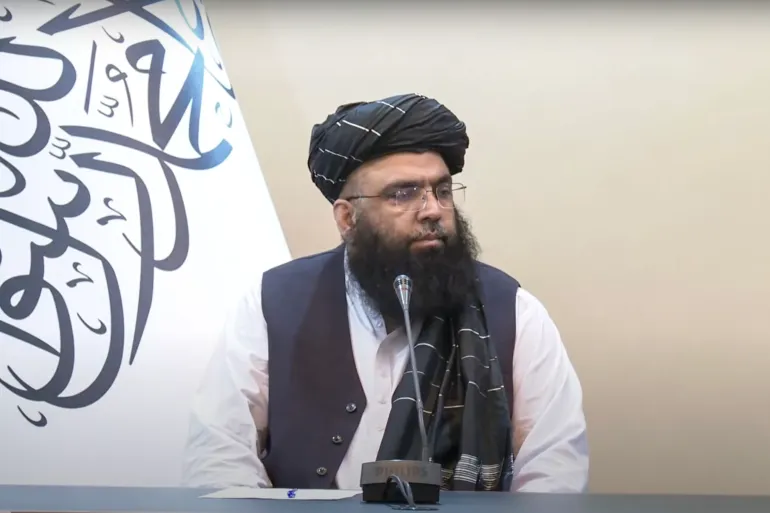
At the end of April a Kazakh delegation made an official visit to Kabul, where a meeting of the Kazakh-Afghan Business Forum and an exhibition of Kazakh products were held. This was the third bilateral event aimed at expanding trade and economic ties between Kazakhstan and Afghanistan. The visit to Kabul indicates Astana’s intention to enhance Kazakhstan’s relations with the new Afghan authorities, and not only through trade. This is evidenced by a number of details that differed from previous official contact. First, an unannounced trilateral government meeting took place between Afghanistan, Kazakhstan and Turkmenistan in Kabul. The result was the announcement that a new logistics route to Afghanistan through Turkmenistan and Kazakhstan would be developed. There is nothing earthshaking about this – Turkmenistan is set to become a transportation hub for international corridors passing through Kazakhstan, primarily the North-South and the Middle corridors, as well as the Lapis Lazuli Corridor (Turkey-Azerbaijan-Turkmenistan-Afghanistan). What is significant is that the sides are striving to create favorable conditions for logistics, especially more competitive transport tariffs so trains can pass through faster. This is particularly important given congestion in Uzbekistan, where bottlenecks occur. The announcement in Kabul also means a direct route to economically attractive western Afghanistan and further south. What else made the Kabul visit notable was the meeting between Kazakh deputy prime minister Serik Zhumangarin, who oversees trade, and Abdul Kabir, the Taliban’s deputy prime minister for political affairs. Given the reputation of the Taliban, it is not in the interests of Astana to simply stage a conversation for the cameras. Unfortunately, details about the Zhumangarin-Kabir meeting are few. According to the available information, the deputy prime ministers discussed security issues in Afghanistan, apparently in the context of how to grow the Afghan economy. Following the meeting, Kabir stated that Afghanistan does not want to be a threat to the region, and intends to improve relations with its neighbors through the progressive development of trade and economic relations. The Zhumangarin-Kabir meeting is said to have taken place on the initiative of the Afghan side. Considering Kabir’s closeness to the emir of the Taliban, it is likely that the initiative came from him. Other notable outcomes of the visit of the Kazakh delegation to Kabul included: discussion of joint projects for geological exploration, mining and processing of solid minerals in Afghanistan, as well as in the IT sector; discussion of the possibilities for supplying Kazakh-made cars and subsequent localization of service centers in Afghanistan; a rise in the quota for Afghan students at Kazakh universities from 30 to 60, as well as a 10-day trip to children’s camps in Kazakhstan for 30 Afghan children in the summer of 2024; and discussion of the possibility of establishing direct flights between the two countries. Aidar Borangaziev is a Kazakhstani diplomat. He has worked in the diplomatic service in Iran and Afghanistan. He is a founder of the Open World Center for Analysis and Forecasting Foundation (Astana). He is an expert in regional security.    

Kazakh News Publisher Says New Media Law Does Little for National Press

Kazakhstan's new law "On Mass Media," recently passed by its lower house of parliament (the Mazhilis), has agitated the country's reporters. In an interview with The Times of Central Asia, Dzhanibek Suleyev, the publisher of several news sites, remonstrates that the law should have been more supportive of the national press. An aspect of the law that has caused heated discussions is the Ministry of Foreign Affairs' new right to deny accreditation to foreign journalists "in case of a threat to the national security of the Republic of Kazakhstan." A few months ago the Ministry of Foreign Affairs didn't renew or refused to issue accreditation to 36 correspondents of the news website Azattyq, the Kazakh affiliate of the U.S. Government's Radio Free Europe/Radio Liberty (RFE/RL). No explanation was given for this rejection, and Azattyq has filed a lawsuit in court. Suleyev explained: "It is clear that the state wants to protect itself and society as much as possible from extremist publications and the spread of deviant morality, but what is proposed for those who simply do their work honestly, every day? We like to impose restrictions, but what about support? I think that if the state were to expand the field of cooperation, the press would be less critical." "Apparently, the state authorities have such an ambiguous opinion of Azattyq. In addition, the lack of accreditation clearly does not prevent 'going on the air,' the audience has access to the materials. I do not think that denial of accreditation to foreign media will become a mass phenomenon. The New York Times or leading sports publications and channels will hardly be denied accreditation. You have to understand that from the point of view of the state, there are ordinary media, and there are structures engaged in propaganda and counter-propaganda, and this should be taken into account," Suleyev explained. Suleyev said that the establishment of a one-year statute of limitations for media materials is a positive development, as it protects journalists' rights. It was initially proposed to set the term at three years from the date of publication. "It is good that it was reduced to a year, three years of limitation is the death of the publication. Of course, I would have liked to reduce the statute of limitations even further, but thanks for that. If journalists are always afraid of the court, how can they work? Because of the long statute of limitations, editorial offices need to keep archives, video, audio and documents, not everyone can do this. Besides, with a long statute of limitations, it is easier to settle scores with the press, to get unwanted people closed down," he said. Suleyev was happy to see more television programs in Kazakh. The new law aims to increase the amount of Kazakh-language and domestic content on television and radio. From 2025 at least 55% of TV and radio programs should be broadcast in Kazakh, rising to 60% from 2027. Retransmission of foreign TV and radio channels will be reduced to 10%...

No Lessons Being Learned From Kazakh Floods, Says Political Analyst

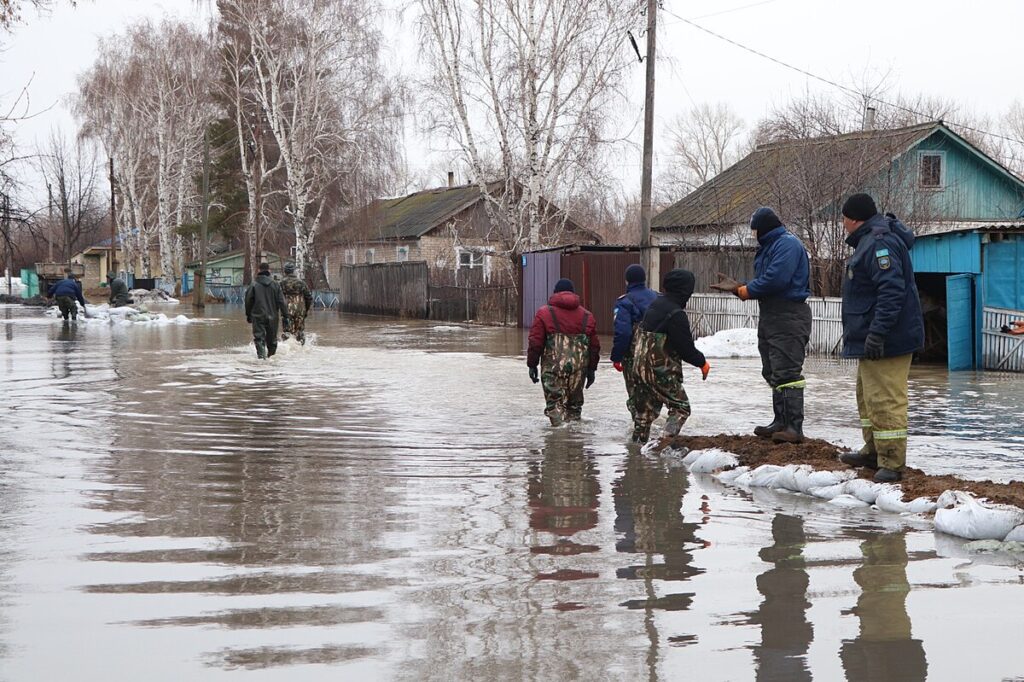
Kazakhstan has been prone to flooding before, but the 2024 Kazakh floods have added a catastrophic page to the chronicles. Political analyst Marat Shibutov tells The Times of Central Asia that only extremely tough measures can motivate ministers and akims (local government executive) to actually work on flood prevention.   The Floods Have Not Yet Peaked Areas and homes in many regions of Kazakhstan -- Atyrau, West Kazakhstan, Aktobe, Akmola, Kostanay, East Kazakhstan, North Kazakhstan and Pavlodar -- remain flooded. According to the Ministry of Emergency Situations, more than 113,000 people have been evacuated from the various disaster zones. The threat of another destructive wave of surface water still remains for major cities, even high-rise buildings are battling high in water in Atyrau, Petropavlovsk and Kostanay. Kazakh president Kassym-Jomart Tokayev has already visited the affected regions several times. According to local reports, people are now concerned not with punishing those responsible, but with paying fair compensation for lost housing, farms and livestock, and, most importantly, with creating an effective flood control system. In particular, residents of dacha (detached suburban) houses in Uralsk blocked the highway, demanding that the akim of the city include them in the list of those to be paid. If more floods occur it will be impossible to live in flood-prone areas. The only alternative is a radical revision of the requirements for residential zoning protective measures. Tokayev spoke about the responsibility for breached and unfinished dams and dikes, as well as the overlooked forecasts made by meteorologists about increased snowmelt and the threat of flooding not only from rivers, but also from the steppes in late March. For the lack of timely flood control measures, he announced a harsh reprimand to First Deputy Prime Minister Roman Sklyar and Minister of Water Resources and Irrigation Nurzhan Nurzhigitov. Local administrators weren't spared either, with harsh reprimands and warnings for incomplete official compliance to the akims of Aktobe, Kostanay and West Kazakhstan regions -- and a harsh reprimand to the akims of Atyrau, Akmola, Almaty, Pavlodar and Abay regions. According to official data from the Ministry of Emergency Situations, in 2024 to date seven billion tenge ($15.5 million) have been allocated just to local executive bodies for flood mitigation activities. In March 2024, 66 billion tenge ($147 million) was allocated to carry out work relating to combating emergency situations. From 2019 to 2023, the Emergency Situations Ministry's expenditures increased almost fourfold, to 264 billion tenge ($588 million). Over the past five years, over 762 billion tenge ($1.7 billion) has been allocated from the national budget. What exactly those funds were towards remains an open question -- possibly as part of ongoing criminal cases.   Disasters of the Past It's not the first time that high water has caused irreparable damage in Kazakhstan. In Uralsk they still talk about a serious flood in 1942. In early May, the water level in the Urals reached 943 centimeters, and a 9-point storm raged on the river. Over 500 families were evacuated from...

How India is Becoming a Robust Soft Power in Central Asia

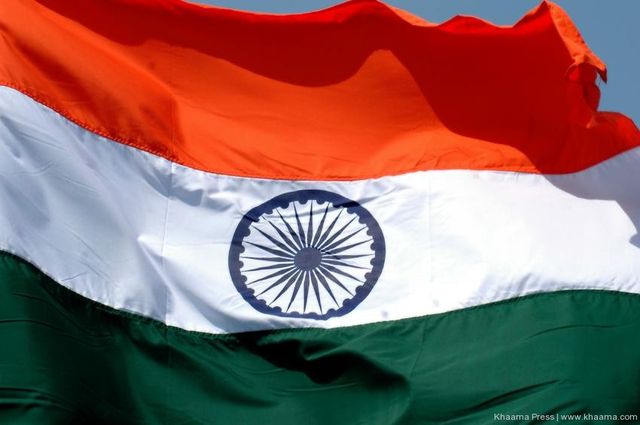
The middle-income trap, a pressing issue that has led to the stagnation of many successful developing economies, demands immediate attention. This trap, which occurs when a middle-income country can no longer compete internationally in standardized, labor-intensive goods due to relatively high wages, is a result of various factors, including countries most successful demographic characteristics. For instance, access to education has reduced birth rates due to an almost 100% literacy rate defined by 12 years of education. In the process, importing cheap manufacturing products has made local products uncompetitive. In such a situation, the country should have planned to upgrade current skill-based education to high-tech skills such as ICT, pharmaceuticals, etc. This shift to high-tech education holds immense potential for developing countries, offering a pathway out of the middle-income trap. Unfortunately, poor investment in developing high-tech education has led to an inadequate supply of a high-skilled workforce. Developed economies, such as the U.S. and a few European countries, are in an advantageous position to overcome such a trap due to their highly effective immigration policy. Developing countries, such as Brazil, Mexico, Argentina, the Philippines, and almost all Central Asian Republics, meanwhile, suffer. This will be further aggravated if the issue is not addressed urgently. Due to its geographic location and natural resource endowments, Central Asia, a diverse region with a mix of upper-middle and low-income countries, holds significant importance in the global economic landscape. Let's look at a specific case, such as Uzbekistan, a country whose population is growing at 1.3% per annum. Regarding age structure, the 0-14 age group makes up 30.1% of the population, the 15-64 age group 64.6%, and the 65-plus group constitutes just 5.3%. The country has achieved a high literacy rate, with 100% of the population completing 12 years of primary and higher secondary education. However, the country’s GDP per capita is relatively low, at US$ 3,209 (nominal term) and US$ 11,316 (PPP). The country's economy is dominated by the services sector, which contributes 48.4% to the GDP, followed by industry at 33.7%, and agriculture at 17.9%. The poverty line is set at less than US$ 3.2 per day, affecting 10% of the population. The country's labor force is distributed across sectors, with 25.9% in agriculture, 13.2% in industry, and 60.9% in services. The unemployment rate is 5.3%, and underemployment is a significant issue, affecting 20% of the population. The low supply of highly skilled workers challenges further increasing per capita income. The country will likely fall into this middle-income trap because it reaches a certain average income and cannot progress beyond that level. It seems helpful to mention some insights from this perspective. During Soviet times, the growth model of states was determined by their available resources, and Central Asia is rich in abundant resources. However, in most cases, primary resources were taken to other non-resource wealthy states for further value addition. So, the workforce was created in the respective states based on the concerned state's requirements. Workforce migration from one state to another was...

Will Europe Learn Lessons From Central Asian Gas Failures to Secure Oil Imports Bypassing Russia?

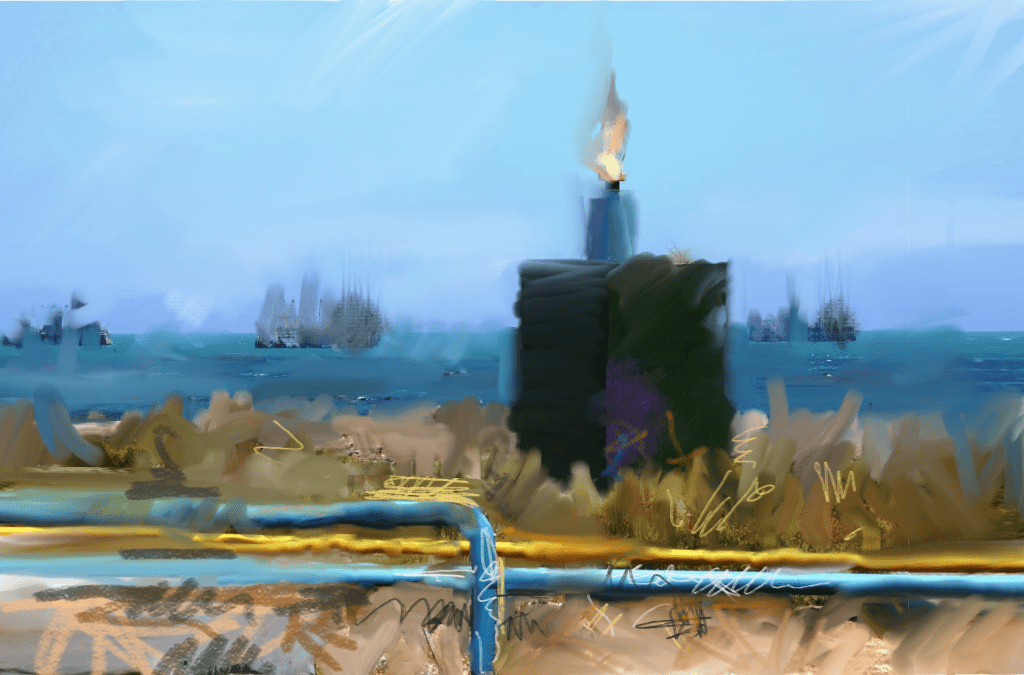
Despite loud statements and reports, alternative routes for transporting oil from Kazakhstan and Central Asia to Europe remain only intentions. The desire of the EU to diversify its hydrocarbon suppliers is running into internal bureaucracy and a lack of understanding of how things work in Central Asia, which is in fact seeking to ship its energy in different directions.   Lost gas To start, it is worth recalling the Turkmenistan-Russia gas dispute of 2009. Before that, Gazprom bought gas from Central Asian countries at the border, swapping some volumes of domestic supplies with Kazakhstan, Turkmenistan and Uzbekistan, and buying gas at prices lower than EU export rates. Gazprom explained this practice rather simply: there is no economic sense in transporting the gas through Russian territory, so at the border the price cannot be European (minus transportation) – this gas was consumed in Russia or supplied at preferential prices to Ukraine, while Russian gas was sent to Europe. In 2008, Turkmenistan produced 70.5 billion cubic meters (bcm) of gas, exporting 47 bcm, with an increase in production and exports planned for 2009. According to the Energy Institute, gas consumption by European countries in 2022 amounted to 498.8 bcm, meaning Turkmenistan alone, assuming export volumes stabilized at 50 bcm per year, could cover 10% of Europe’s needs. That amount, 50 bcm of gas, is the annual consumption of Switzerland, Sweden, the Czech Republic, Greece, Portugal, Slovakia, Slovenia, Bulgaria, Croatia, Denmark, Estonia, Finland, Ireland, Latvia, Lithuania, Luxembourg, Norway and North Macedonia combined. However, Turkmen gas would never reach Europe. When an agreement on the volumes and prices of gas purchases by Gazprom failed to be reached, 15 years ago, on April 9, 2009, there was an explosion and fire on the eastern branch of the Central Asia-Center (CAC) gas pipeline, at CAC-4. Subsequent negotiations to resume the transport of Turkmen gas between Russian President Dmitri Medvedev and Turkmen leader Gurbanguly Berdimuhamedov, which took place in September 2009 in Moscow, could not resolve the dispute. All these years, the media and European leaders have been talking about building the so-called Nabucco gas pipeline, which was to go from Central Asia, along the bottom of the Caspian Sea, through Azerbaijan and on to Germany and Austria. Its design began back in 2002. Note that by 2009, had the project been energetically implemented, Nabucco could have been built and the first deliveries would have begun. In 2022, gas consumption in Germany and Austria amounted to 77.3 bcm and 7.9 bcm, respectively, meaning supplies from Central Asia could cover at least half of their needs. This seemed like the perfect opportunity for a large-scale gas pipeline. The Central Asian countries wanted to supply gas to Europe via alternative routes, receiving European prices for their commodities, and Europe could have significantly diversified its gas imports. Another player, however, was closely watching Europe’s red tape and indecision – China.   Hidden dragon China understands how to work with Central Asia, and in 2007 construction of the first line of...