• KGS/USD = 0.01143 -0%
  • KZT/USD = 0.00193 -0%
  • TJS/USD = 0.10881 0%
  • UZS/USD = 0.00008 0%
  • TMT/USD = 0.28575 0%
  • KGS/USD = 0.01143 -0%
  • KZT/USD = 0.00193 -0%
  • TJS/USD = 0.10881 0%
  • UZS/USD = 0.00008 0%
  • TMT/USD = 0.28575 0%
  • KGS/USD = 0.01143 -0%
  • KZT/USD = 0.00193 -0%
  • TJS/USD = 0.10881 0%
  • UZS/USD = 0.00008 0%
  • TMT/USD = 0.28575 0%
  • KGS/USD = 0.01143 -0%
  • KZT/USD = 0.00193 -0%
  • TJS/USD = 0.10881 0%
  • UZS/USD = 0.00008 0%
  • TMT/USD = 0.28575 0%
  • KGS/USD = 0.01143 -0%
  • KZT/USD = 0.00193 -0%
  • TJS/USD = 0.10881 0%
  • UZS/USD = 0.00008 0%
  • TMT/USD = 0.28575 0%
  • KGS/USD = 0.01143 -0%
  • KZT/USD = 0.00193 -0%
  • TJS/USD = 0.10881 0%
  • UZS/USD = 0.00008 0%
  • TMT/USD = 0.28575 0%
  • KGS/USD = 0.01143 -0%
  • KZT/USD = 0.00193 -0%
  • TJS/USD = 0.10881 0%
  • UZS/USD = 0.00008 0%
  • TMT/USD = 0.28575 0%
  • KGS/USD = 0.01143 -0%
  • KZT/USD = 0.00193 -0%
  • TJS/USD = 0.10881 0%
  • UZS/USD = 0.00008 0%
  • TMT/USD = 0.28575 0%
21 December 2025

Viewing results 1015 - 1020 of 3375

Dr. Atakan Varol: Kazakhstan Should Play an Active Role in Shaping the Future of AI

The Times of Central Asia spoke with Dr. Hussein Atakan Varol, a professor of robotics and PhD in electrical engineering, who serves as General Director of the Institute of Smart Systems and Artificial Intelligence (ISSAI) at Nazarbayev University (NU). Dr. Varol discusses ISSAI’s research initiatives, the role of artificial intelligence (AI) in Kazakhstan, and the country's potential to lead in AI innovation. ISSAI’s Mission and Collaborations TCA: What is the mission of ISSAI, and what are its key focus areas? Varol: At ISSAI, our mission is to conduct cutting-edge AI research and develop practical, impactful solutions that benefit Kazakhstan and the broader global community. We specialize in large-scale generative AI models, speech recognition, computer vision, and AI infrastructure. Our goal is to establish sovereign AI capabilities in Kazakhstan, minimizing dependence on external technologies while maintaining a strong ethical foundation. All our research adheres to principles of "AI for Good" and "AI for Kazakhstan," ensuring that developments remain responsible and socially beneficial. TCA: How does ISSAI collaborate with the public sector, private companies, and international organizations? Varol: We actively engage with government agencies, local businesses, and global AI research institutions. Our partnerships focus on AI model development, data collection, and deploying AI-driven solutions. Access to computational resources remains a key challenge, and we collaborate strategically to secure the infrastructure needed to scale AI projects in Kazakhstan. Notable Projects and Local Impact TCA: What are some of ISSAI’s most promising current developments? Varol: A highlight is SoyleApp, which provides real-time speech recognition, text-to-speech, and multilingual translation. It has vast potential in education, public services, and cross-language communication. We’ve also developed the Mangitas 01 Inference Server, a vital step for Kazakhstan’s AI ecosystem. In the absence of AI supercomputers, we built Mangitas 01 using commercial off-the-shelf components, allowing local deployment of AI models with enhanced data security. We’re now working on expanding this line to support our Oylan language-vision model, paving the way for more advanced multimodal AI applications. TCA: Have ISSAI’s solutions been successfully implemented in Kazakhstan? Varol: Yes. SoyleApp is being integrated into governmental and enterprise systems to improve accessibility for Kazakh-speaking users. Mangitas 01 serves as a prototype for local AI infrastructure, enabling organizations to operate AI systems within Kazakhstan, enhancing both data protection and performance. TCA: How does the local context influence your AI development? Varol: Kazakhstan’s linguistic and cultural diversity demands AI systems capable of understanding and producing content in Kazakh, Russian, and other regional languages. We've created tailored datasets and models to meet these needs. Moreover, the country's limited AI infrastructure has led us to focus on efficient and scalable solutions like Mangitas 01. [caption id="attachment_31080" align="aligncenter" width="1600"] Dr. Atakan Varol; image: NU.edu[/caption] The Future of AI and Kazakhstan’s Role TCA: How do you see AI evolving over the next 5-10 years? Varol: The next leap is toward multimodal and sparse generative models that handle text, images, and audio simultaneously. With proper investment, Kazakhstan can contribute meaningfully to this frontier. We’re also exploring edge AI, which enables...
Pope Francis Championed Central Asia’s Role in Promoting Peace in a Multicultural Region

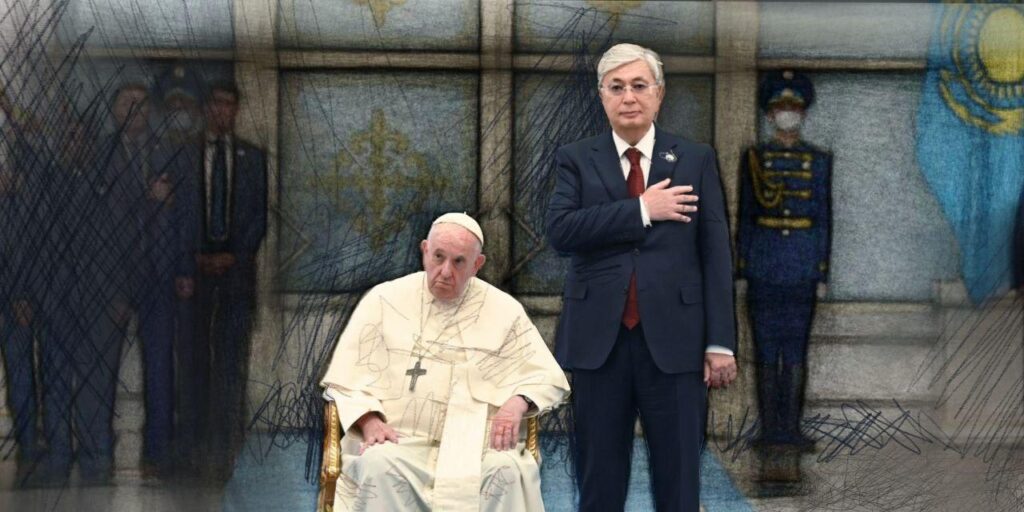
Pope Francis was a tireless advocate for peace and dialogue on the global stage, spotlighting Central Asia not as a zone of conflict but as a unique crossroads of cultures, religions, and geopolitical influence—an embodiment of tolerance and coexistence. In 2022, amidst the escalating Russia-Ukraine war and rising geopolitical tensions, Pope Francis made a historic pastoral visit to Kazakhstan to attend the Congress of Leaders of World and Traditional Religions. Kazakhstan, a predominantly Muslim nation, has a Christian minority comprising 17.2% of the population, primarily Russian Orthodox, alongside Catholics and Protestants. President Kassym-Jomart Tokayev, the event’s host, reaffirmed his country’s dedication to religious tolerance, presenting Kazakhstan as a model of “interfaith dialogue in creating a more peaceful and harmonious global society.” Notably, religiously motivated violence against minorities is virtually unheard of in Kazakhstan. Tokayev later visited the Holy See to continue discussions with Pope Francis, focusing on strengthening collaboration for global peace and interfaith understanding. Tributes and Reflections on His Legacy Central Asian leaders are expressing their condolences following the death of Pope Francis at age 88. “The deceased, with his extensive activity as a great Pontiff, made a significant contribution to world affairs and gained fame throughout the world with his creative initiatives and actions,” President Emomali Rahmon of Tajikistan said in a message to Cardinal Giovanni Battista, dean of the College of Cardinals.  Rahmon, who met Francis last year at the Vatican, said the pontiff had promoted dialogue, peace and stability. Tajikistan’s leader said he recalled the pope's “continuous efforts to strengthen and expand the good relations between Tajikistan and the Holy See.” President Shavkat Mirziyoyev of Uzbekistan said Francis had made “a worthy contribution to the development of relations between Uzbekistan and the Vatican, strengthening interfaith and interfaith friendship, supporting people in need around the world, and widely promoting noble ideas.” Mirziyoyev’s message was posted on Telegram by Sherzod Asadov, Uzbekistan’s presidential press secretary. President Sadyr Japarov of Kyrgyzstan, who met the pope in the Vatican last year, has also expressed condolences.  Tokayev offered his condolences through his X account (formerly Twitter): “I express my deepest condolences on the passing of His Holiness Pope Francis. [The Pontiff] was an extraordinary spiritual leader who spared no effort to promoting the noble ideals of humanism, justice and compassion.” Kazakhstan will hold a nationwide prayer on Tuesday, according to the state-run Kazinform News Agency. It said the prayer will be broadcast live from the Our Mother of Perpetual Help Cathedral in Astana. A Legacy of Peace and Dialogue Pope Francis’ engagement with Central Asia highlighted the region’s growing geopolitical significance in a rapidly changing global order. His efforts emphasized shared responsibilities in building a more peaceful and equitable world—a mission he championed throughout his papacy. These interactions serve as a powerful reminder that even in today’s fragmented global landscape, communities can transcend divisions to forge partnerships rooted in shared human dignity. Through his outreach, Pope Francis strengthened Central Asia’s connection to the Vatican, showcasing the potential of faith-driven diplomacy in...

Kazakhstan’s Institute of Nuclear Physics Launches Advances in Nuclear Science and Applications Journal

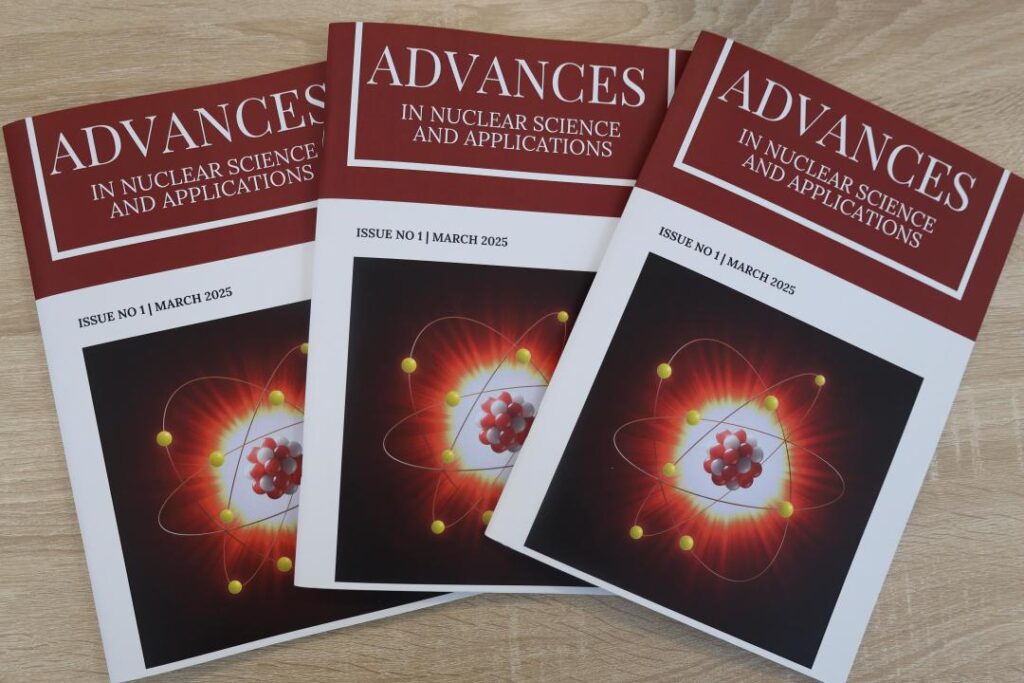
Kazakhstan’s Institute of Nuclear Physics has officially launched a new international scientific journal, Advances in Nuclear Science and Applications. The presentation of the first issue took place at the Institute’s headquarters and marks a significant step in the country's efforts to promote nuclear research and academic exchange on a global scale. According to the Ministry of Science and Higher Education, the journal is designed as a high-level international platform that integrates both fundamental and applied research in nuclear science and technology. It aims to foster open knowledge exchange and collaboration across borders. The inaugural issue, published in March 2025, features six peer-reviewed articles covering current topics in nuclear science. The journal will be published quarterly in English, in March, June, September, and December, and will follow international academic publishing standards. All submitted articles undergo a rigorous double-blind peer review process, and the journal is fully open access via its official website. The publication is also seeking inclusion in major global scientific databases such as Scopus and Web of Science. The editorial board consists of more than ten recognized experts from eight countries: Russia, Italy, Japan, the United States, Turkey, Poland, Romania, and Kazakhstan, reflecting the journal’s international scope and ambitions. Sayabek Sakhiev, Director General of the Institute of Nuclear Physics, emphasized the significance of the launch: “We have been working towards creating the journal for more than a year. This is the result of serious and purposeful work. Today we have big plans and high expectations. We strictly follow international standards and are confident that Advances in Nuclear Science and Applications will take its rightful place in world science.” The journal’s Editor-in-Chief, Prof. Mikhail Itkis, has also extended an invitation to early-career scientists, encouraging young researchers to submit their work for publication in upcoming issues.

Half of Marriages in Kazakhstan End in Divorce; Deputies Propose State Alimony Fund

Nearly half of all marriages in Kazakhstan ended in divorce by the close of 2024, prompting renewed calls for the establishment of a state-backed alimony fund. Justice Minister Yerlan Sarsembayev addressed the issue during a recent speech to members of Parliament, citing the breakdown of family values and widespread failure to support children as key social concerns. “Unwillingness to support their children and evasion from paying alimony are consequences of the crisis in family and marital relations,” Sarsembayev said. “The values that were once inherent to our people are being lost, unfortunately. As a result, families suffer and, above all, the children.” As of early 2024, Kazakhstan recorded over 283,000 enforcement orders related to child support payments, with around 12,000 cases, roughly 4%, categorized as problematic. The main obstacles to enforcement, according to Sarsembayev, include lack of stable income, absence of property, and in some cases, the deliberate concealment of earnings by one parent. To address the issue, the state has attempted to find employment for debtors without permanent income. However, more severe measures have also been implemented: in 2024, 4,642 individuals were held administratively liable, while 461 cases were brought to court under Article 139 of the Criminal Code of the Republic of Kazakhstan. Of these, 391 resulted in convictions. “Nevertheless, we believe that these punitive measures alone cannot fully resolve the issue of non-payment,” Sarsembayev added. “If a person does not understand the value of family and responsibility toward their children, no punishment will help.” Proposal for a State Alimony Fund During the same government session, Mazhilis deputy Magerram Magerramov once again proposed the creation of a state alimony fund to address chronic payment failures. The country’s total child support arrears now exceed 16 billion tenge (approximately $30.5 million), and the amount continues to grow. Magerramov’s proposal has been floated before but failed to gain traction. The Ministry of Justice previously objected to the idea, citing concerns about the financial burden on the state and the risk of encouraging dependency. “This idea has not been supported in the past because it would place a strain on the national budget,” Sarsembayev explained. “Moreover, establishing such a fund could promote a sense of dependency among those obliged to pay alimony, who might assume the state will cover their obligations.” As The Times of Central Asia previously reported, a survey conducted last year revealed that 78% of young Kazakhs believe in the importance of officially registering a marriage, a statistic that reflects a continuing societal emphasis on formal family structures despite rising divorce rates.

Kazakhstan Aims to Double Oil Refining Capacity by 2040

Kazakhstan plans to double its oil refining capacity to 38 million tons by 2040, according to the country’s Minister of Energy, Yerlan Akkenzhenov. The announcement came during a recent meeting with executives from the national oil company KazMunayGas and representatives from the country’s four main refineries: Atyrau, Pavlodar, Shymkent, and the Aktau-based Caspi Bitum plant. Akkenzhenov said the goal is enshrined in Kazakhstan’s new Oil Refining Industry Development Concept for 2025-2040, which aims to significantly boost the share of refined oil, improve resource efficiency, and increase the production of value-added petroleum products. Key objectives of the strategy include: Increasing the depth of refining to 94%, aligning with global best practices; A full transition to high environmental standard fuels, such as K5 gasoline and Jet A-1 jet fuel; Expanding the production of petrochemical products for both domestic and international markets; Enhancing the technological sophistication and operational efficiency of Kazakhstan’s refineries. “We must not just supply the domestic market with fuel today but lay the foundation for technological sovereignty and sustainable development for decades to come,” Akkenzhenov said. “The successful realization of this concept depends on our ability to work efficiently, make bold decisions, and take responsibility for them. There is no time for hesitation, the country expects concrete results: modern plants, quality products, and reliable power supply.” As part of the initiative, the minister urged the accelerated development of a feasibility study to double the capacity of the Shymkent refinery and called for swift agreement signings with potential partners. He also stressed the need for the Pavlodar petrochemical plant to begin work on its next expansion phase. Meanwhile, the Atyrau refinery is to focus on implementing approved projects while preparing for further capacity growth. The Caspi Bitum plant has been tasked with completing post-modernization commissioning and ensuring stable operations. Kazakhstan’s three major oil refineries are located in: Pavlodar (northeast); Atyrau (west); Shymkent (south). As previously reported by The Times of Central Asia, the national antimonopoly agency proposed in March to privatize state stakes in the Pavlodar and Atyrau refineries, a move that could reshape the sector’s ownership landscape.

Central Asian Leaders To Join Putin at Moscow’s WWII Parade

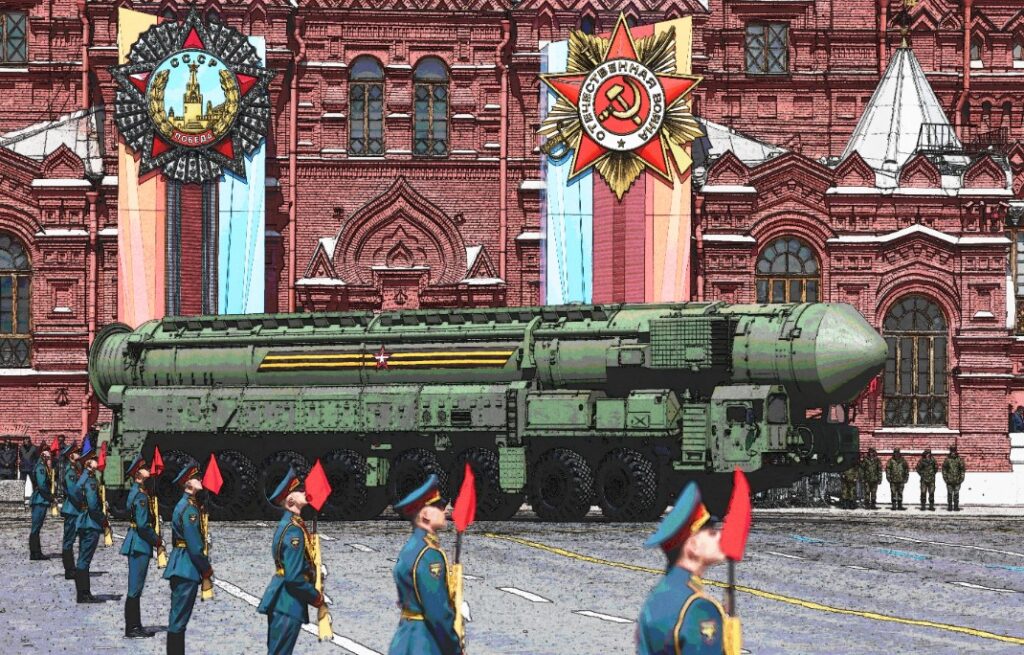
Leaders of the Commonwealth of Independent States, or CIS, will attend the 80th anniversary of the victory over Nazi Germany in Moscow on May 9, Russian state media have reported. The CIS, a regional group that was set up as the Soviet Union collapsed in 1991, includes the Central Asian countries that were Soviet republics: Kazakhstan, Kyrgyzstan, Tajikistan, Turkmenistan and Uzbekistan. Those leaders have traditionally attended the Moscow parade. But the event drew more international scrutiny in the last few years as Russian President Vladimir Putin tried to showcase diplomatic contacts in the face of Western efforts to isolate him, and display Russian military might as the war in Ukraine dragged on. "I am happy and pleased, just like you, to announce that all heads of state of the CIS will be at the celebrations in Moscow on May 9," CIS Secretary General Sergey Lebedev told the council of the group’s inter-parliamentary assembly. He was quoted by Russia’s RIA Novosti news agency. The Russian news outlet TASS issued a similar report. Kremlin spokesman Dmitry Peskov has said more than 20 heads of state and government are expected to join Putin at the victory parade in Moscow. Some Central Asian countries, whose ancestors fought for the Soviet Union against Germany in WWII, hold their own events around the anniversary of the end of the war against the Nazis. Kyrgyzstan, for example, plans a parade on May 8 in the capital of Bishkek, allowing President Sadyr Japarov to catch the Moscow parade on the next day. Similarly, the Kazakh capital of Astana will host a military parade on May 7 after canceling several previous commemorations.