• KGS/USD = 0.01144 0%
  • KZT/USD = 0.00194 0%
  • TJS/USD = 0.10879 -0.18%
  • UZS/USD = 0.00008 0%
  • TMT/USD = 0.28490 0%
  • KGS/USD = 0.01144 0%
  • KZT/USD = 0.00194 0%
  • TJS/USD = 0.10879 -0.18%
  • UZS/USD = 0.00008 0%
  • TMT/USD = 0.28490 0%
  • KGS/USD = 0.01144 0%
  • KZT/USD = 0.00194 0%
  • TJS/USD = 0.10879 -0.18%
  • UZS/USD = 0.00008 0%
  • TMT/USD = 0.28490 0%
  • KGS/USD = 0.01144 0%
  • KZT/USD = 0.00194 0%
  • TJS/USD = 0.10879 -0.18%
  • UZS/USD = 0.00008 0%
  • TMT/USD = 0.28490 0%
  • KGS/USD = 0.01144 0%
  • KZT/USD = 0.00194 0%
  • TJS/USD = 0.10879 -0.18%
  • UZS/USD = 0.00008 0%
  • TMT/USD = 0.28490 0%
  • KGS/USD = 0.01144 0%
  • KZT/USD = 0.00194 0%
  • TJS/USD = 0.10879 -0.18%
  • UZS/USD = 0.00008 0%
  • TMT/USD = 0.28490 0%
  • KGS/USD = 0.01144 0%
  • KZT/USD = 0.00194 0%
  • TJS/USD = 0.10879 -0.18%
  • UZS/USD = 0.00008 0%
  • TMT/USD = 0.28490 0%
  • KGS/USD = 0.01144 0%
  • KZT/USD = 0.00194 0%
  • TJS/USD = 0.10879 -0.18%
  • UZS/USD = 0.00008 0%
  • TMT/USD = 0.28490 0%
15 December 2025

Viewing results 1297 - 1302 of 3290

Kazakhstan Ships First Batch of Kashagan Oil to Baku

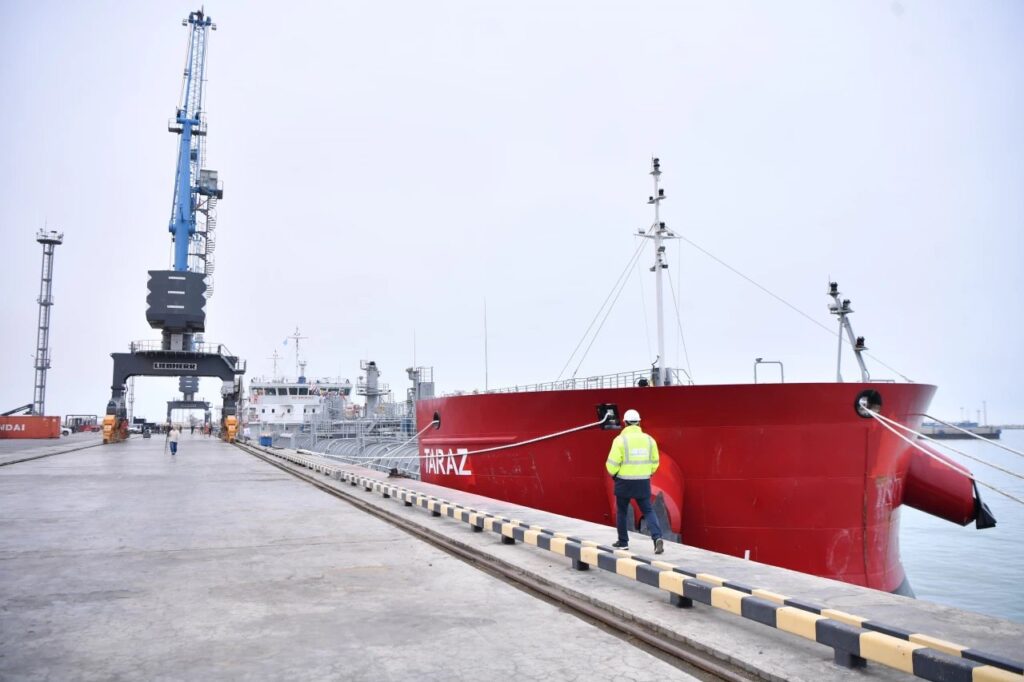
Kazakhstan has shipped its first batch of oil from the Kashagan field to the Azerbaijani port of Baku, marking a significant step in the country’s efforts to diversify its export routes. The shipment was confirmed by the national oil company KazMunayGas (KMG). The tanker Taraz, carrying Kashagan oil, departed from the port of Aktau and is en route to Azerbaijan. Upon arrival in Baku, the oil will be transported via the Baku-Tbilisi-Ceyhan (BTC) pipeline system to the Mediterranean Sea. The export operation is being carried out by KMG Kashagan B.V., a subsidiary of JSC NC KazMunayGas, which manages Kazakhstan’s share in the North Caspian Production Sharing Agreement (PSA). This initiative aligns with Kazakh President Kassym-Jomart Tokayev’s directive for KazMunayGas to develop alternative hydrocarbon export routes. The shipment also advances the development of the Trans-Caspian International Transportation Route, a vital corridor for Kazakhstan’s oil exports. In 2022, KazMunayGas and Azerbaijan’s state oil company SOCAR signed a general agreement to enable the transit of Kazakh oil. In March 2024, the two parties finalized plans for a phased increase in deliveries through Azerbaijan. Under the agreement, annual transit volumes are expected to reach 2.2 million tons. KMG Kashagan B.V., which holds a 16.88% stake in the North Caspian PSA, represents Kazakhstan’s interests in the North Caspian Project (NCP). The company is responsible for the exploration and production of hydrocarbons in the Caspian Sea, as well as the independent transportation and sale of its production share under the PSA’s terms. Energy analysts highlight that diversifying export routes will help Kazakhstan reduce its reliance on traditional oil supply corridors, thereby increasing flexibility and resilience in the face of global market volatility.


Nazarbayev Agrees to Meet Belarusian President Lukashenko

Former Kazakh President Nursultan Nazarbayev has agreed to meet with Belarusian President Alexander Lukashenko, according to a statement released by the Belarusian leader’s press service. “Today, there was a very warm, friendly conversation between the President of Belarus and the First President of Kazakhstan. Nursultan Nazarbayev cordially congratulated Alexander Lukashenko on his election victory and conveyed his sincere congratulations and greetings to the Belarusian people. Alexander Lukashenko also warmly thanked Nursultan Nazarbayev for his kind words and wishes. The Belarusian leader and the First President of Kazakhstan agreed to find an opportunity to meet and talk in the near future,” the statement read. The meeting is part of a series of diplomatic engagements Nazarbayev has undertaken recently. In December 2024, he held a high-profile meeting with Russian President Vladimir Putin at the Novo-Ogaryovo residence. That visit sparked considerable public attention in Kazakhstan, with some parliamentarians expressing concern. Mazhilis Deputy Samat Nurtaza stated that such meetings cause him “internal anxiety.” Meanwhile, Deputy Yermurat Bapi suggested that Nazarbayev’s visit to Russia might be linked to the “Kazakhgate-2” case currently under review in the United States. Lukashenko, who has ruled Belarus since 1994, has faced significant international criticism following his re-election on January 26, a process widely dismissed in the West as neither free nor fair. While the Belarusian Central Election Commission reported that Lukashenko secured 87.6% of the vote, the European Union and other international organizations denounced the results as “fictitious” and criticized the election for failing to meet democratic standards. Despite the controversy, Lukashenko has received congratulations from various world leaders, including Kazakh President Kassym-Jomart Tokayev, who reportedly congratulated Lukashenko during a phone call. According to the state-run BelTA news agency, the election was monitored by 486 international observers from 52 countries, as well as over 44,000 national representatives. However, independent observers and western governments have cast doubt on the credibility of these reports. The forthcoming Nazarbayev-Lukashenko meeting is expected to further discussions on regional and bilateral issues, though no specific details have been released.

Criticism of Kazakhstan’s Health Insurance System Reaches Parliament

Members of Kazakhstan's Mazhilis (lower house of parliament) have voiced strong criticism of the country’s healthcare system, particularly the Social Health Insurance Fund, which they argue has lost public trust. Many citizens reportedly view the quality of medical services as unsatisfactory. Kazakhstan operates a system of compulsory social medical insurance, wherein doctors' services are funded through a combination of contributions from working citizens, their employers, and the state budget. These financial contributions are collected by the Social Health Insurance Fund, which then allocates the funds to medical institutions based on the volume of services provided to the population. Speaking in Parliament, Health Minister Akmaral Alnazarova defended the system, claiming that it has led to improvements in key health and demographic indicators since its introduction. “Today, 83% of Kazakhstanis are connected to the compulsory social health insurance system, 72% of whom are from vulnerable segments of the population. This demonstrates the availability of medical care in the country,” Alnazarova stated. However, Mazhilis Deputy Chairman Dania Yespayeva pointed out that despite increasing healthcare budgets, public satisfaction with medical services continues to decline. According to surveys, up to 47% of Kazakhstanis consider the quality of domestic healthcare to be poor. Deputy Askhat Aimagambetov echoed these concerns, accusing medical institutions of manipulating service statistics to secure additional funding from the Social Health Insurance Fund. He cited a case where a five-month-old child, who had not yet developed teeth, was recorded as having received dental services. Aimagambetov also claimed that hospitals sometimes charge the insurance fund for dozens of services provided to the same patient in a single day - an impossibility. “The financing system encourages such behavior because payments are based on the quantity of services rendered, not on the effectiveness of treatment. As a result, the [Social Health Insurance Fund] has become a de facto bank for the Ministry of Health. Citizens and doctors alike have become hostages of inconsistent and poorly planned reforms, while the availability and quality of care have deteriorated. The system remains underfunded, and the resources it does have are spent inefficiently,” Aimagambetov stated. He emphasized the need for stricter oversight of the reports submitted by medical institutions to the insurance fund for reimbursement. Currently, inspections cover only about 1% of these reports, a figure Aimagambetov described as insufficient. Public dissatisfaction with health care is also reflected in broader trends. As previously reported by The Times of Central Asia, approximately 5% of Kazakhstanis considering emigration cite access to better medical services abroad as a primary reason.

Satellite Internet Now Available on Astana-Almaty Train in Kazakhstan

Kazakhstan Temir Zholy (KTZ), the national railway company, has launched a pilot project to provide satellite Internet access on its trains. The new service debuted on January 25 aboard the train connecting the capital, Astana, with the country's largest city, Almaty. Covering a 17-hour journey, the Astana-Almaty train route is one of the most popular in Kazakhstan. Using satellite technology, passengers can now access apps such as WhatsApp, YouTube, and other video-hosting platforms throughout their trip. However, access to torrent sites and platforms enabling streaming downloads will be restricted. The initiative is a collaboration between the Ministry of Digital Development, Innovation and Aerospace Industry, the Ministry of Transport, and Jusan Mobile, the official distributor of Eutelsat-OneWeb in Kazakhstan. Zhaslan Madiyev, Minister of Digital Development, Innovation and Aerospace Industry, described the project as a milestone for digitalizing the country's transportation network. “The launch of this pilot project on the KTZ train using the low-orbit satellite constellation Eutelsat-OneWeb is an important event in the digitalization of transport,” Madiyev stated. “Thanks to cooperation with partners, we have demonstrated that even in challenging conditions, it is possible to provide passengers with high-speed (50-100 Mbps) and stable internet. This achievement paves the way for further digital transformation in Kazakhstan and enhances travel comfort for our citizens.” The pilot project also includes the introduction of several technological upgrades to improve the passenger experience. Mobile terminals for conductors have been deployed to facilitate quick ticket verification, while POS terminals allow for cashless payments in the dining car. Additionally, video surveillance systems have been installed to enhance security in railcars. According to Anuar Akhmetzhanov, Chairman of the Board of JSC Passenger Transportation, the introduction of satellite internet is a key step in modernizing passenger services. He added that in the future, satellite internet access will be expanded to trains operating on other major routes. Currently, internet access on Kazakh trains is available only when trains travel near cities and villages with cellular network coverage. For the vast stretches of railway running across Kazakhstan’s expansive steppes - often far from human habitation - connectivity has traditionally been unavailable. The adoption of satellite internet technology addresses this gap and ensures seamless connectivity even in remote areas. For a country as large as Kazakhstan - it is the ninth largest in the world - railways remain a vital mode of transportation. In 2024, KTZ transported 13.6 million passengers, with the Astana-Almaty, Astana-Shymkent, Almaty-Shymkent, Astana-Semey, and Almaty-Semey routes being the most popular.

Amre Kashaubaev and the Mystery of an Old Photograph

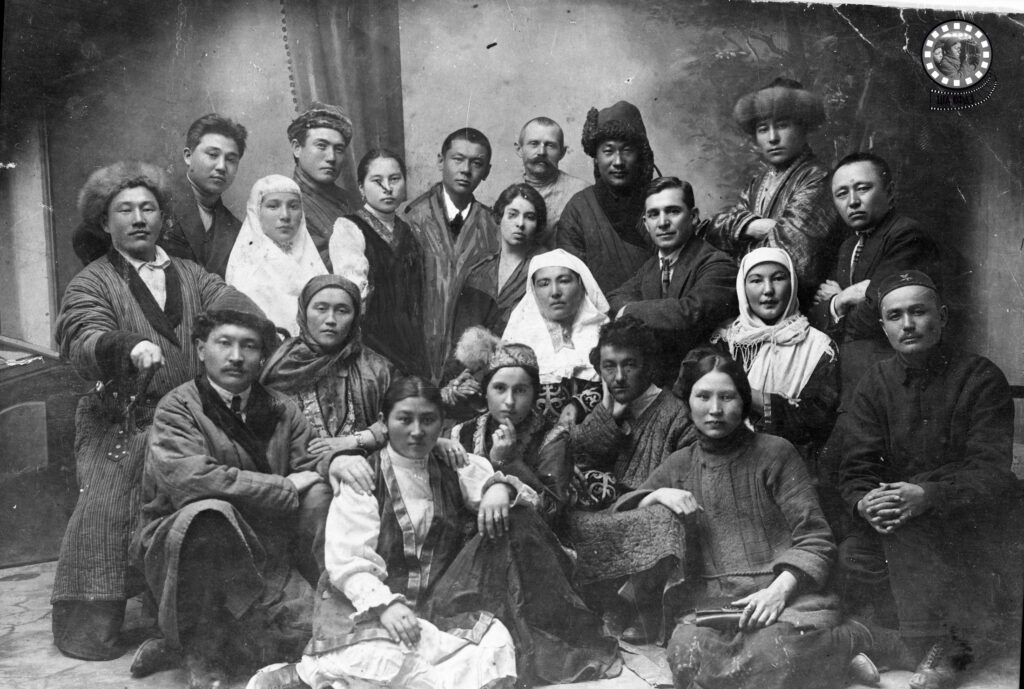
In Kazakhstan, the musical talent of Amre Kashaubaev is well known. Thanks to him, European audiences were introduced to the live melodies of Kazakh music when Kashaubaev performed Kazakh songs at the International Exhibition of Modern Decorative and Industrial Arts of 1925 in Paris. As previously reported by The Times of Central Asia, the first recordings of Kazakh music were made between 1903 and 1909 during the travels of the German explorer Richard Karutz in Turkestan. His book, Among the Kirghiz and Turkmens in Mangyshlak, published in 1911 in Russia, was edited by Vasily Radlov, a renowned ethnographer, archaeologist, and educator of German origin, who was also a pioneer in Turkology. However, it was only in 1925, thanks to Kashaubaev’s talent, that Europeans could hear Kazakh folk songs performed live. The fate of this man is very similar to the destinies of thousands of talented individuals in the early years of the Soviet Union, whose creative works could not fit into the "Procrustean bed" of communist ideology. [caption id="attachment_27972" align="aligncenter" width="1279"] Amre Kashaubaev and his wife Orazke, Kzyl-Orda, 1926.[/caption] Amre Kashaubaev was born in 1888 in the Abraly district of the Semipalatinsk region. His first professional attempt to become a singer was a public performance at a fair near the village of Koyandy, not far from the modern city of Petropavlovsk, at a festival of Kazakh oral art. Through his songs, Kashaubaev’s art became famous throughout Kazakhstan. Anatoly Lunacharsky, then the People’s Commissar for Education, personally invited him to participate in concerts at the International Exhibition in Paris. Kashaubaev also actively participated in the creation of the first Kazakh professional theater. In April 1927, he gave a concert in Moscow, followed by a performance in Frankfurt. He frequently performed on the radio, singing Kazakh folk songs and enchanting listeners with the beauty and depth of his voice. His theatrical performances also garnered great interest. Today, archival institutions and museums in Kazakhstan hold only a few photographs and documents depicting Kashaubaev. This is because many documents were destroyed by his colleagues and relatives due to his political persecution by the Bolsheviks. His trip to Paris proved to be fatal for the singer since it drew the attention of the Soviet state security agencies. During the Paris exhibition, the talented singer met Kazakh political dissident Mustafa Shokay, who in 1917 had been the Chairman of the Kokand Autonomy — a state entity that lasted for six months in the Turkestan region of the Russian Empire. Moreover, Shokay was an active member of the Alash Party, which the Soviets deemed bourgeois and whose members were subjected to repression. Although Kashaubaev was not imprisoned for his ties with political opponents of the Bolsheviks, he faced significant pressure from the authorities. On December 6, 1934, he was found dead on the streets of Alma-Ata. The cause of his death remains unknown. Within the archival fonds of The Central State Archive of Film, Photo Documents, and Sound Recordings of the Republic of Kazakhstan, we believe there...

Kazakhstan Sumo Wrestler Takes Third Place at Japan’s Emperor’s Cup

According to the Japanese publication Tachiai, Kazakhstan’s Yersin Baltagul, known in Japan as Kimbodzan Haruki, has achieved a historic milestone at the Emperor's Cup, one of the most prestigious tournaments in the sumo world. Baltagul entered the tournament's final round with an impressive record of 12 wins and 3 losses. However, in the decisive matches, he was bested by Japan’s Ojo Konosuke and Mongolia’s Sugarragchaagiin Byambasuren, known by his ring name Hoshoryu Tomokatsu. This secured Baltagul a commendable third-place finish. While Hoshoryu Tomokatsu ultimately claimed the championship title, Baltagul did not leave the tournament empty-handed. He was awarded the “Fighting Spirit” prize, a special recognition for his skill, determination, and resilience in the ring. This accolade cements Baltagul’s place as the first Kazakhstani athlete to reach such heights in the professional world of Japanese sumo. Baltagul, 27, began his wrestling journey in his childhood, training in traditional kazaksha kures (national wrestling) and judo. Aged 18, he moved to Japan to pursue a career in sumo, and in 2019, he claimed the title of Japan's youth sumo champion, marking an important early milestone. Since then, he has steadily risen through the ranks to become one of the strongest competitors in a sport deeply rooted in Japanese culture and tradition. Baltagul's 12th victory during the Emperor's Cup has spotlighted his elite level of training and competitiveness, ranking him among the sport's top athletes. His success demonstrates the growing prominence of Kazakhstan's athletes on the international stage and paves the way for the development of sumo in Kazakhstan. Baltagul’s story is one of perseverance and excellence, marking a proud moment for Kazakhstan in the global sports arena.