• KGS/USD = 0.01144 0%
  • KZT/USD = 0.00216 0%
  • TJS/USD = 0.10456 0%
  • UZS/USD = 0.00008 0%
  • TMT/USD = 0.28571 0.28%
  • KGS/USD = 0.01144 0%
  • KZT/USD = 0.00216 0%
  • TJS/USD = 0.10456 0%
  • UZS/USD = 0.00008 0%
  • TMT/USD = 0.28571 0.28%
  • KGS/USD = 0.01144 0%
  • KZT/USD = 0.00216 0%
  • TJS/USD = 0.10456 0%
  • UZS/USD = 0.00008 0%
  • TMT/USD = 0.28571 0.28%
  • KGS/USD = 0.01144 0%
  • KZT/USD = 0.00216 0%
  • TJS/USD = 0.10456 0%
  • UZS/USD = 0.00008 0%
  • TMT/USD = 0.28571 0.28%
  • KGS/USD = 0.01144 0%
  • KZT/USD = 0.00216 0%
  • TJS/USD = 0.10456 0%
  • UZS/USD = 0.00008 0%
  • TMT/USD = 0.28571 0.28%
  • KGS/USD = 0.01144 0%
  • KZT/USD = 0.00216 0%
  • TJS/USD = 0.10456 0%
  • UZS/USD = 0.00008 0%
  • TMT/USD = 0.28571 0.28%
  • KGS/USD = 0.01144 0%
  • KZT/USD = 0.00216 0%
  • TJS/USD = 0.10456 0%
  • UZS/USD = 0.00008 0%
  • TMT/USD = 0.28571 0.28%
  • KGS/USD = 0.01144 0%
  • KZT/USD = 0.00216 0%
  • TJS/USD = 0.10456 0%
  • UZS/USD = 0.00008 0%
  • TMT/USD = 0.28571 0.28%

Viewing results 1561 - 1566 of 4669

Kazakhstan to Ban Chicken Egg Imports from April

Kazakhstan’s Ministry of Agriculture has drafted an order to ban the import of fresh chicken eggs for six months, beginning in April. The proposal, backed by the government’s interdepartmental commission, is expected to remain in effect through the end of September. The ban will apply to all imports of fresh eggs, regardless of transport mode, from both countries outside of and member states of the Eurasian Economic Union (EAEU). However, it will not affect the transit of eggs through Kazakhstan, including shipments moving from one EAEU country to another, such as from Russia to Kyrgyzstan. The initiative was not proposed by the authorities but by the Association of Egg Producers. “The Association appealed to the Ministry of Trade and the Ministry of Agriculture to consider a ban on egg imports from April to September,” said Kairat Maishev, head of the association. “A similar restriction was in place in 2024, from May to October. The goal is to curb illegal imports, prevent the entry of low-quality eggs, and support the development of the domestic industry.” Maishev stressed that the ban does not target legitimate importers but aims to ensure that imported eggs are properly documented and taxed. He also noted concerns about substandard products entering the market during the summer months. “In summer, the market often receives imports that do not meet shelf life and quality standards,” he stated. “It’s also difficult for authorities to regulate pricing for these products.” Kazakhstan currently has 34 poultry farms producing approximately five billion eggs annually, enough to meet domestic demand, according to the association. “We are confident that local producers can fully supply the population with quality products,” Maishev added. Official data shows that in 2024, Kazakhstan imported 87.4 million eggs and exported 43.2 million. Domestic production covered 99% of the national demand, with most imports originating from other EAEU countries. Government officials argue that the temporary ban will help strengthen the domestic egg industry and promote transparent pricing in the local market. In a related development, Kazakhstan suspended poultry imports in January from the U.S. states of Delaware and South Carolina, as well as Germany’s Baden-Württemberg region, due to outbreaks of avian influenza. 
Celebrating Nauryz: A Timeless Tradition of Unity, Renewal, and Heritage in Central Asia

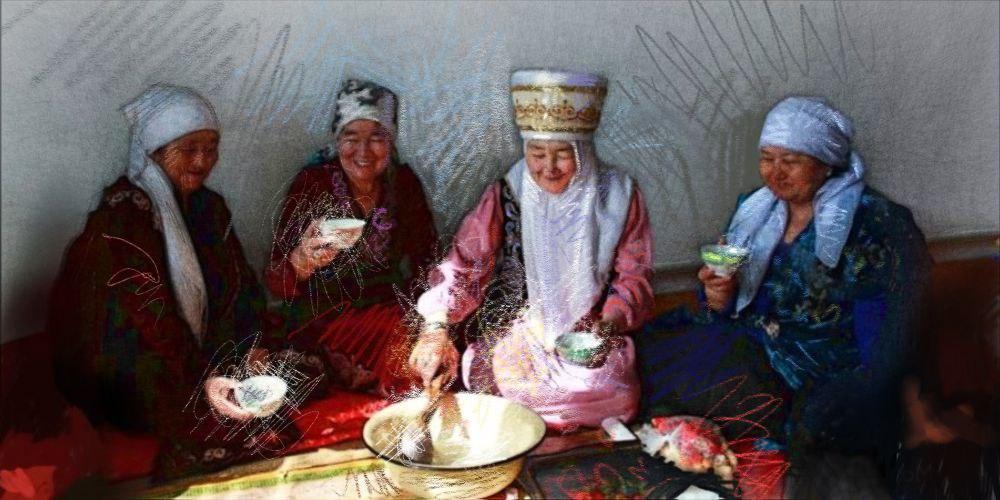
Nauryz is more than just a holiday - it is a symbol of spring renewal, harmony, and unity that has been celebrated by the peoples of Central Asia for centuries. Marking the arrival of the spring equinox, Turkic communities welcome the New Year with purification rituals, festive gatherings, and traditional games. While the holiday shares common roots across the region, each country celebrates it uniquely, reflecting its distinct cultural heritage. Nauryz has survived through the centuries, and despite the evolution of the celebration in the modern era, it continues to unite people through traditions. Kazakhstan In Kazakhstan, Nauryz is celebrated on a large scale, transforming cities and villages into festival grounds filled with folk rituals, sporting events, and cultural performances. The holiday begins with blessings from elders and family visits. At the heart of the festive table is Nauryz-kozhe, a traditional soup made from seven ingredients, each symbolizing key values in life. “Nauryz without Nauryz-kozhe is not Nauryz," Daniyar, 29, from Almaty, told The Times of Central Asia. "When I was a child, my grandmother told me that eating it would bring luck for the year. That’s why the whole family gathers around the table.” Beyond feasting, Nauryz is a time for competitions. Among the most popular are kokpar, an equestrian contest where riders traditionally competed for a goat carcass - now often replaced with a dummy version (serke), asyk atu, a traditional game of precision using sheep bones, and kazaksha kures, a national wrestling competition. “As a child, I always looked forward to this day because it was when I could see adults displaying strength and skill," Sanzhar, 25, from Taraz, told TCA. "These traditions are passed down through generations and strengthen our culture.” Ancient customs also come to life during the festival. People wear traditional Kazakh attire, exchange gifts, and partake in purification rituals. “When I put on a [traditional] Kazakh costume, I feel a deep connection with my ancestors. There’s something magical about this holiday - the aroma of freshly cooked kozhe, the sound of the dombra, the folk dances, and the spirit of unity. It’s a day to remember who we are and take pride in our culture,” said Aizhan, 40, from Astana. [caption id="attachment_29953" align="aligncenter" width="1200"] Nauryz celebration in Almaty; image: TCA[/caption] Kyrgyzstan In Kyrgyzstan, Nauryz represents renewal and rebirth. The celebrations begin with a cleansing ritual, where people clean their homes, courtyards, and even their minds, symbolizing a fresh start. Hospitality plays a central role, as it is customary to host and visit seven guests, symbolizing openness and strong social bonds. Like in Kazakhstan, Nauryz-kozhe is a staple of the festive table. However, Kyrgyz cuisine also features kuurdak, fried meat with potatoes and onions, and osh - also known as plov or palov - emphasizing the tradition of generous feasting. The holiday is further enriched by national sporting competitions, including horse races, wrestling (kuresh), ordo, a traditional strategy game, and arkan tartysh, a tug-of-war contest. “For us, Nauryz is more than just a holiday....

Kazakhstan’s Film Industry Surges: Domestic Productions Outperform Foreign Blockbusters at the Box Office

Kazakhstan's domestic film industry is experiencing a renaissance, successfully competing with and even surpassing foreign productions in box office revenue, an outcome that was unthinkable just a decade ago. Ten years ago, Kazakhstani films and television were seldom watched. Western and Russian blockbusters dominated cinemas, leaving little room for domestic content. Filmmakers lamented that their work attracted only a niche audience of aesthetes and patriots. Today, however, Kazakh productions are filling theaters and attracting millions of online views. “In 2024, the output of Kazakhstani films increased by 58%. Among the top 10 highest-grossing films, every second one was a domestic production. Revenue from foreign and domestic films was nearly equal. This demonstrates the growing interest of audiences in national content,” Kazakhstan’s Prime Minister, Olzhas Bektenov, said on March 18. By the end of 2024, Kazakhstani films had grossed more than 22 billion tenge, a 30% increase compared to 2023, according to Alexander Aksyutits, general director of the Top Pro Cinema production center. The number of films released during the year surged from 65 to 107. “What’s even more important is that Kazakhstanis’ attention to national cinema continues to grow. Looking at the top 20 highest-grossing films of last year, 70% were locally produced. Just a few years ago, foreign films dominated the market. As a result, our film industry is attracting increasing interest from private investors. Equally significant are the positive changes in the state financing system for film production,” Aksyutits said. [caption id="attachment_29923" align="aligncenter" width="1280"] YouTube/frame from the series "5:32"[/caption] Streaming Demand and Cultural Shift Aksyutits also noted a surge in Kazakhstan's TV series production, largely due to the rising popularity of streaming platforms. However, demand for local content currently outstrips the country’s production capacity, primarily due to a shortage of skilled professionals. Some experts believe this shift in audience preferences is linked to a growing cultural divide between Kazakhstan and the Western and Russian film industries. As narratives diverge, local audiences increasingly seek stories that reflect their own experiences and values. “In recent years, I’ve started watching Kazakhstani TV much more often. Before, I had little interest in them and barely knew they existed. Now, I remember titles like Meow, 5:32, Patrol, and Sake. These are mostly crime dramas or comedies. What draws me in are the relatable characters, people you might see in your own neighborhood. The familiar settings, humor, and natural dialogue make the stories feel real,” said Alexander, a resident of Almaty. The TV series Meow follows drug couriers and the battle against them, while 5:32 delves into the world of serial killers. Sake and Patrol take a comedic approach, with the former portraying a charmingly corrupt mid-level official and the latter focusing on the daily lives of police officers. According to critics, this new wave of TV content, which is currently achieving high ratings on television and accumulating millions of online views, successfully blends serious themes with strong performances and humor. Countries including Russia, Kyrgyzstan, Ireland, Germany, Azerbaijan, Turkey, India, South Korea, the UK,...

Kazakhstan Restores Populations of Przewalski’s Horse, Turanian Tiger, and Snow Leopard

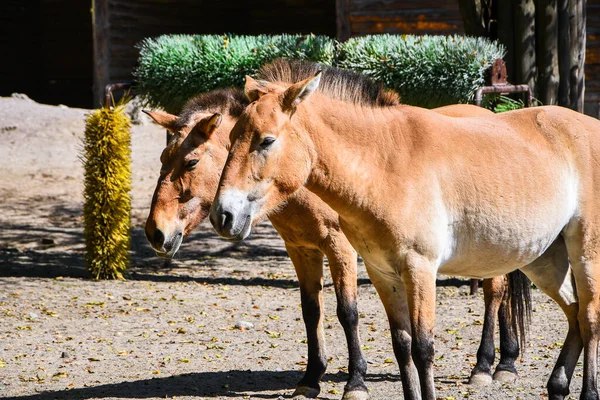
Kazakhstan is making significant strides in wildlife conservation, actively restoring populations of Przewalski’s horse, the Turanian tiger, and the snow leopard. These efforts mark a major step toward reintroducing species that were once native to the region but had either disappeared or faced severe population declines. Hungary Supports Reintroduction of Przewalski’s Horse Kazakhstan is continuing its ambitious program to restore endangered species, including Przewalski’s horse, a once-dominant species of the Kazakh steppes that vanished from the wild in the 1960s. Thanks to international conservation programs, their numbers have been preserved in captivity, and now efforts are underway to return them to their natural habitat. As part of this initiative, Hungary will provide 150 Przewalski’s horses, which will be released into Kazakhstani nature reserves, Hungarian Minister of Agriculture István Nagy announced. “This step will increase safety for this horse species in case of disease outbreaks,” Nagy stated. The first seven horses have already been brought from the Prague Zoo to the Altyn Dala Reserve in Kazakhstan’s Kostanay region. Reintroducing the Turanian Tiger In parallel, Kazakhstan continues its efforts to bring back the Turanian tiger, a subspecies that disappeared from the region 70 years ago. To support this initiative, the government has established the Ile-Balkhash Nature Reserve, which now serves as a habitat for key prey species. To date, the reserve has received 205 riparian deer and more than 100 kulans. Authorities have also increased the populations of roe deer and wild boars, ensuring an adequate food supply for the tigers. In fall 2023, two tigers from the Netherlands arrived at the reserve, and another three to four animals from Russia are expected to be introduced soon. Snow Leopard Population Doubles Kazakhstan has also made remarkable progress in snow leopard conservation. According to Daniyar Turgambayev, chairman of the Forestry and Wildlife Committee of the Ministry of Ecology and Natural Resources, the number of snow leopards in the country has now reached 180 individuals, double the population recorded in the 1990s. “Specially protected natural areas covering 3.6 million hectares have been established in key snow leopard habitats. Currently, about 70% of their range is under official protection,” Turgambayev stated. The government has deployed photo traps and satellite telemetry to monitor the snow leopard population. Eleven leopards have been fitted with satellite collars, allowing researchers to track their movements and adaptation to the wild. Expanding Protected Areas Since gaining independence, Kazakhstan has dramatically expanded its protected natural areas, from 869,000 hectares to 30.9 million hectares. This expansion has not only helped revive endangered species but also significantly strengthened overall biodiversity protection. With an integrated approach to conservation, Kazakhstan has positioned itself as a leader in Central Asia in the reintroduction of endangered species and the preservation of natural ecosystems.

Another Drone Crashes in West Kazakhstan

Another drone has crashed in Kazakhstan’s West Kazakhstan region. Local residents discovered the object near the village of Atameken, approximately 60 km north of the district center of Taskala.  On March 18, the police department in Taskala District received a report about an unidentified object, believed to be a drone, found in a remote area. The device measured approximately three meters in length. Police officers, representatives of the district akimat (council), and emergency services were dispatched to the scene. The West Kazakhstan Region Police Department confirmed the discovery of an object resembling an unmanned aerial vehicle (UAV).  “The object fell in a remote area, away from populated settlements, and was found intact, with no visible damage. All circumstances surrounding the incident are being investigated,” the agency stated. This marks the second case of a drone crash in the region within a month. On February 18, a similar object, measuring 120 cm in length, was discovered in the village of Uyaly in Bokeyorda District. At that time, police and emergency responders also arrived at the scene to investigate. According to analysts, the drone that crashed on February 18 bears similarities to the Crecerelle, a reconnaissance UAV developed by the French defense company Sagem. However, authorities have not yet confirmed this information. The incidents have raised concerns due to the region’s proximity to the Kapustin Yar military training ground, which is leased by the Russian Ministry of Defense. Located in Bokeyorda District, the facility occupies nearly half of the district’s territory. Meanwhile, in neighboring Russia’s Saratov region, Ukrainian drones have repeatedly targeted military facilities, including airfields and fuel storage sites. On February 17, seven drones carrying explosives and metal shrapnel attacked the Kropotkinskaya oil pumping station, a facility operated by the Caspian Pipeline Consortium (CPC).  The recent drone crashes in West Kazakhstan region have heightened security concerns among residents and the authorities. Investigations are ongoing to determine the origin of the drones and any potential links to military activity in the region. [caption id="attachment_29909" align="aligncenter" width="1280"] Image: Colonel GSh Telegram channel[/caption] Posting images of its tail number, the has reported that the drone was a  Russian Geran-2 (Shahed-136) kamikaze drone. > > This story has been updated to reflect breaking developments.

Former Energy Minister to Lead Kazakhstan’s New Nuclear Energy Agency

Kazakh President Kassym-Jomart Tokayev has signed a decree establishing the Atomic Energy Agency, a new government body that will report directly to the head of state. The decision, announced on March 18, is part of broader efforts to improve the country’s public administration system. The new agency will oversee uranium mining, the use of atomic energy, radiation safety, and the management of the Semipalatinsk nuclear safety zone. Previously, these responsibilities fell under the Ministry of Energy. Along with its functions, the agency will also inherit its first leader from the ministry: Almasadam Satkaliyev, who has been appointed as its head after being relieved of his role as energy minister. Satkaliyev has held key positions in Kazakhstan’s energy sector, including serving as vice president for economics at KazTransOil, head of the Kazakhstan Electricity Grid Management Company (KEGOC), and chairman of Samruk-Energo. Since 2023, he has led the Ministry of Energy, where he played a central role in preparing for a national referendum on nuclear power plant construction and negotiating with potential suppliers from Russia, China, South Korea, and France. As head of the new agency, Satkaliyev is expected to work closely with the presidential administration on drafting regulations and structuring the agency’s operations. His successor at the Ministry of Energy is Yerlan Akkenzhenov, who previously served as deputy energy minister and has experience within the national oil company KazMunayGas. Tokayev first announced plans to establish the Atomic Energy Agency just days ago during a meeting of the National Kurultai (Assembly), as reported previously by The Times of Central Asia.