• KGS/USD = 0.01144 0%
  • KZT/USD = 0.00215 0%
  • TJS/USD = 0.10680 0.19%
  • UZS/USD = 0.00008 0%
  • TMT/USD = 0.28530 0%
  • KGS/USD = 0.01144 0%
  • KZT/USD = 0.00215 0%
  • TJS/USD = 0.10680 0.19%
  • UZS/USD = 0.00008 0%
  • TMT/USD = 0.28530 0%
  • KGS/USD = 0.01144 0%
  • KZT/USD = 0.00215 0%
  • TJS/USD = 0.10680 0.19%
  • UZS/USD = 0.00008 0%
  • TMT/USD = 0.28530 0%
  • KGS/USD = 0.01144 0%
  • KZT/USD = 0.00215 0%
  • TJS/USD = 0.10680 0.19%
  • UZS/USD = 0.00008 0%
  • TMT/USD = 0.28530 0%
  • KGS/USD = 0.01144 0%
  • KZT/USD = 0.00215 0%
  • TJS/USD = 0.10680 0.19%
  • UZS/USD = 0.00008 0%
  • TMT/USD = 0.28530 0%
  • KGS/USD = 0.01144 0%
  • KZT/USD = 0.00215 0%
  • TJS/USD = 0.10680 0.19%
  • UZS/USD = 0.00008 0%
  • TMT/USD = 0.28530 0%
  • KGS/USD = 0.01144 0%
  • KZT/USD = 0.00215 0%
  • TJS/USD = 0.10680 0.19%
  • UZS/USD = 0.00008 0%
  • TMT/USD = 0.28530 0%
  • KGS/USD = 0.01144 0%
  • KZT/USD = 0.00215 0%
  • TJS/USD = 0.10680 0.19%
  • UZS/USD = 0.00008 0%
  • TMT/USD = 0.28530 0%

Viewing results 2377 - 2382 of 5066

Kazakhstan to Hold Nuclear Plant Referendum on October 6

A popular vote on the need to build a nuclear power plant in Kazakhstan will be held on October 6. President Kassym-Jomart Tokayev announced this during his annual address to the nation. “Given the growing global energy deficit, we need reliable and environmentally friendly energy sources. Therefore, I believe it is necessary to pay close attention to the development of nuclear energy. This type of generation can largely meet the rapidly growing needs of our economy. About 200 nuclear power plants are operating in 30 developed and developing countries,” the head of state said. Discussions on constructing a nuclear power plant in Kazakhstan have been ongoing for many years. The idea of the need for a nuclear power plant first appeared after the closure of the Soviet reactor in Aktau in 1999. Since then, the country has repeatedly raised questions about the development of nuclear power, especially in the context of improving energy security and climate change resilience. However, public opinion is divided: many people in the country remember the consequences of nuclear tests at the Semipalatinsk test site and fear environmental risks. In 2021, discussions about constructing a nuclear power plant intensified when a possible site for Kazakhstan's first atomic power plant began to be considered in Almaty region, near the village of Ulken. These plans sparked lively public debate and protests among residents and environmentalists. According to Tokayev, Kazakhstan should consider the future, taking into account long-term national interests and the country's specifics. “Every step important for the country's life should be made with the support of the people. So, it should be done by referendum on the nuclear power plant; this topic has been on the public agenda for a year. I believe this is the time for citizens to make an informed decision. The upcoming referendum will be another manifestation of a broad national dialog and a vivid example of realizing the concept of a 'listening state.' In fact, with such steps, we form a new socio-political culture and lay new standards for making key state decisions,” he said.
Uzbekistan Leads the Field in Central Asia’s Medals at the Paris 2024 Paralympics

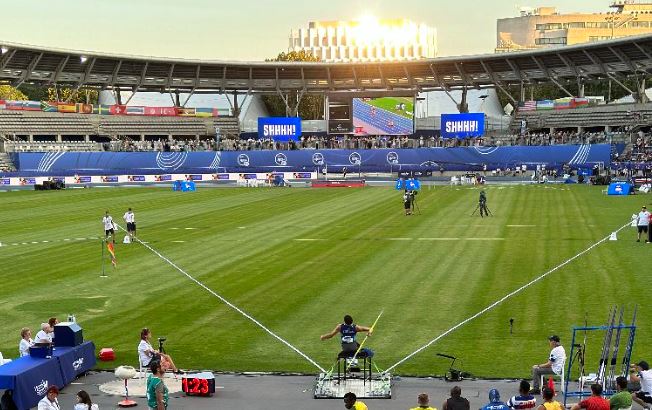
To date, Uzbekistan ranks 9th out of 169 countries in medals gained at  the Paris 024 Paralympic Games, with five gold, three silver, and three bronze. Placed 13th at the Paris 2024 Olympic Games with 13 medals, Uzbekistan continues to show robust performances in the Paralympic Games. Highlights include Asila Mirzayorova’s gold in the long jump - a paralympic record of 5.22 meters - and Yorqinbek Odilov’s gold in the men’s javelin throw. Uzbek athletes Elbek Sultanov and Qudratillokhan Marufkhojayev, flourished in the men’s shot put, winning the gold medal; Kubaro Hakimova won the silver medal, and Talibboy Yoldoshev won the bronze. In Paralympic Taekwondo, 22-year-old Asadbek Toshtemirov won gold in the under 80 kg category, while Ziyodakhon Isakova (47 kg) and Guljonoy Naimova (65 kg) took silver. Mokhigul Khamdamova added to the medal tally with a bronze in the women’s discus throw, and Muslima Odilova, with a bronze in the women’s 100m butterfly. Kazakh athletes finished the Paris 2024 Olympic Games in 43rd place with seven medals, and at the Paralympics,  Yerkin Gabbasov has won a silver in shooting. The remaining three Central Asian countries — Kyrgyzstan, Tajikistan, and Turkmenistan — have no medals as yet.

First ‘Comfortable’ Schools Open in Kazakhstan

On September 1, over 3.9 million pupils returned or newly enrolled in secondary schools across Kazakhstan. The date also marked the opening of seventy new schools in the country, including several built as part of the nationwide project ‘Comfortable School.’ Speaking at the opening of one such school in the capital, Astana, Kazakh Minister of Education Gani Beisembayev announced that almost 90,000 schoolchildren are starting the new academic year in brand new schools,  and over 200,000 pupils will study in schools that have undergone significant repairs. Initiated by President Kassym-Jomart Tokayev, the national project ‘Comfortable School’ aims to solve the shortage of student places and level the difference in the quality of education between rural and urban areas. Aimed to improve the educational environment, the new schools provide separate blocks for elementary and high school students, technology for teaching contemporary subjects, specially equipped classrooms to ensure pupils' safety, and a barrier-free environment for children with special educational needs. Kazakhstan plans to build 369 ‘Comfortable’ secondary schools by 2026, accommodating 740,000 pupils; 217 schools of which will be built in the 2024-2025 academic year.

Embracing the Spirit: An Interview with Nick Willert of the U.S. Team at the World Nomad Games

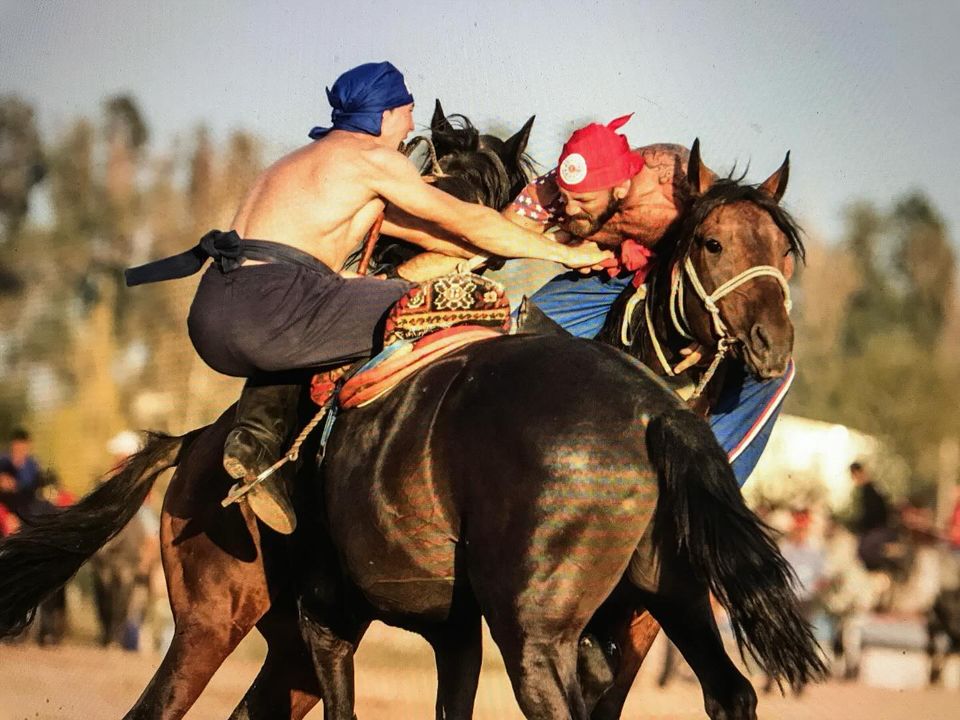
As Kazakhstan gears up to host the 5th World Nomad Games in Astana from September 8-13, a vibrant festive atmosphere is taking over the city with streets adorned with flags and banners celebrating this year's theme, "The Gathering of the Great Steppe." In the build-up to the games, which will host competitors from 89 countries, TCA spoke to Nick Willert, who will be representing the U.S. in kokpar, horseback wrestling, and kok boru. [caption id="attachment_22495" align="aligncenter" width="1080"] Kokpar; image: Nick Willert[/caption] TCA: What is your equestrian background, and when did you first hear about, become interested in, and start competing in kokpar and kok buru? Willert: I grew up on a horse ranch in Wyoming, so I have always been comfortable around horses, but equestrian sports were never my main focus. After I served in the United States Marine Corps, I worked as a professional skier and professional MMA fighter, as well as a surf instructor and salvage diver in California. In 2018, I was recruited by friends that I grew up with to compete in kokpar and kok boru in the World Nomad Games. That is where I also discovered horseback wrestling, and became the first American horseback wrestler. [caption id="attachment_22496" align="aligncenter" width="1080"] Image: Nick Willert[/caption] TCA: Have you traveled much in Central Asia before? Willert: Besides traveling to Central Asia two previous times for horseback wrestling and kokpar par/kok boru, I spent a lot of time in Asia working for a wildlife production company as their animal wrangler and scout locator. That is where I truly developed a deep love and admiration for Asia and Central Asia and the cultures that exist in those regions. [caption id="attachment_22497" align="aligncenter" width="423"] Image: Nick Willert[/caption] TCA: What kind of horses do you use for training? During the competition, what horses will your team use? Willert: Finding horses and having enough time to get to know each horse has always been a big challenge for the American team. However, our Kyrgyzstan colleagues have been a big help in facilitating the procurement of horses for our team. [caption id="attachment_22498" align="aligncenter" width="886"] Image: Nick Willert[/caption] TCA: Does your team try to imitate the Central Asian players, or are there some distinctive ways in which Americans play kokpar? Willert: I think it tends to be an interesting mix of imitation of the techniques that we have seen, as well as combining some western horsemanship skills and bringing those into play as well. [caption id="attachment_22499" align="aligncenter" width="826"] Image: Nick Willert[/caption] TCA: How do you expect your team to fare in the World Nomad Games? Willert: I’m aware that the U.S. team is considered underdogs in this sport, but are ready to play to the best of our ability, without fear, and have a lot of fun doing it!

Kazakh-German Business Council Meets to Expand Economic Cooperation

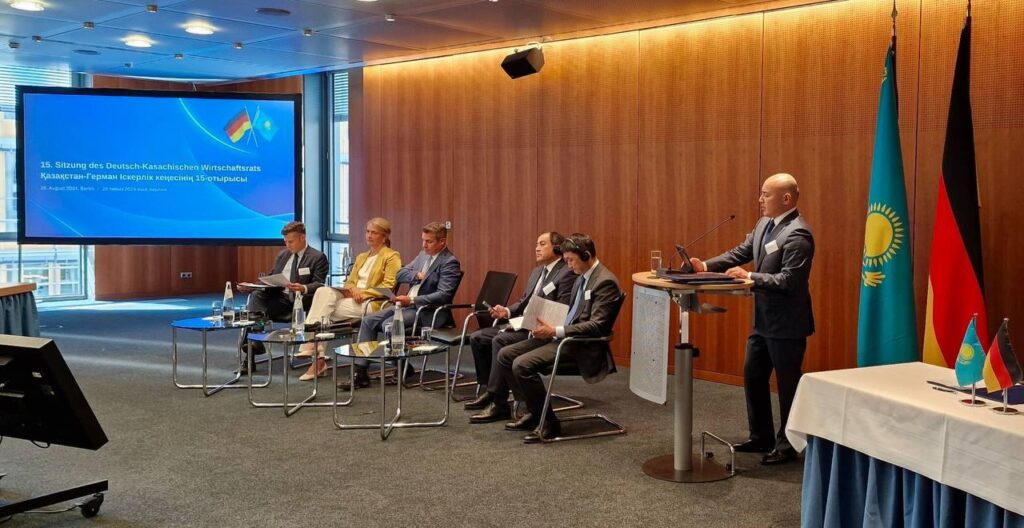
The 15th meeting of the Kazakh-German Business Council for Strategic Cooperation, co-chaired by First Deputy Prime Minister of Kazakhstan Roman Sklyar and Director of the Eastern Committee of the German Economy Michael Harms, was held in Berlin on August 28. The meeting gathered Kazakh government and business representatives and heads of leading German companies such as Siemens, Svevind Energy, CT Agro, CLAAS KGaA, Flight Design General Aviation, Deutsche Bahn, KfW Banken Gruppe, and Deutsche Bank. The co-chairs emphasized that the event was taking place ahead of Federal Chancellor of Germany Olaf Scholz's visit to Kazakhstan in September. The meeting focused on expanding Kazakh-German trade and economic cooperation, attracting investments, and implementing joint projects in the agro-industrial sector and processing industry. It was noted that Germany is Kazakhstan's largest trading partner in the European Union, and that Kazakhstan is among Germany's top 50 foreign trade partners. The lion's share of German investments in Kazakhstan go to the country’s non-raw materials sector — the processing industry, chemical industry, production of building materials, transport, and agro-industrial sector. Speaking on the sidelines of the event, Kazakhstan Deputy Minister of Foreign Affairs Alibek Kuantyrov urged further to intensify cooperation between the Kazakh and German business communities. Noting the critical role of German companies in Kazakhstan’s industrialization, Kuantyrov stated that German companies are implementing 66 projects in Kazakhstan for a total of $54 billion, creating about 15,000 jobs. Kuantyrov added that since 2005, German companies have invested about $7.8 billion in Kazakhstan’s economy, with a significant increase in the past year, reaching $770 million. He expressed confidence that the upcoming visit of Scholz to Kazakhstan will bring bilateral relations to a new level and give an additional impetus to strengthening existing and creating new economic ties. Kuantyrov emphasized the significance of cooperation in the context of the Trans-Caspian International Transport Route (TITR), also known as the Middle Corridor. He noted that cargo traffic through the Middle Corridor to Germany and the EU has increased almost threefold since the beginning of 2022 — to 1.5 million tons and 2.6 million tons, respectively, during the first seven months of this year, adding that the potential of TITR is estimated at 10 million tons of cargo a year. In this regard, Kuantyrov invited German partners to participate in developing Kazakhstan’s Caspian Sea ports of Aktau and Kuryk.

Lessons in Self-Defense for Kindergarten Kazakhs

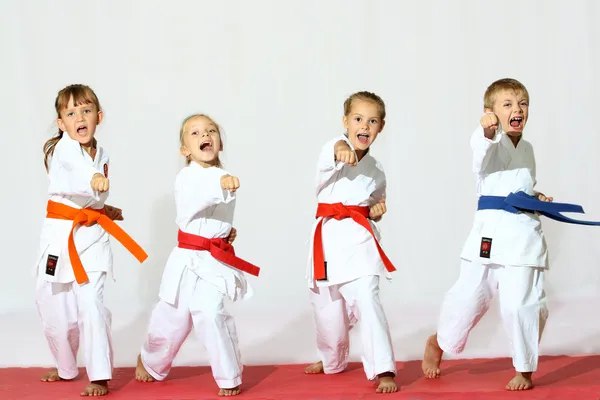
From September 1, Kazakhstan will introduce “Personal Safety” lessons to the curricula of its kindergartens, schools, and colleges. Developed by Kazakhstan's Ministry of Education, the program of 130 training sessions aims to teach children the basics of self-defense and develop a responsible attitude towards their own and others' safety. According to Nasymzhan Ospanova, Chair of the Committee for the Protection of Children's Rights, the lessons are tempered according to the children's age and developmental level to help motivate and support participants. Conducted in batches of weekly ten-minute classes, repeated three times a year, the training courses will include practical tips, games, interactive teaching methods, demonstrations, and videos, making the material accessible and exciting for children of all ages. It is worth noting that over the past three years, the number of children who have committed criminal offenses has increased by 20.3%. In 2023 alone, 1,823 juveniles were convicted. In most cases, crimes are committed by teenagers 16 - 17 years old (80.4%), with about 93.6% of juvenile offenders being boys. Statistics confirm that crime is higher among those with little education and those living in difficult situations. Thus, the share of those who neither study and nor work is 51.9%, the share of those who study in colleges is 26.9%, and in schools, gymnasiums, and lyceums, 20.6%.