• KGS/USD = 0.01144 0%
  • KZT/USD = 0.00216 0%
  • TJS/USD = 0.10663 0%
  • UZS/USD = 0.00008 0%
  • TMT/USD = 0.28530 0%
  • KGS/USD = 0.01144 0%
  • KZT/USD = 0.00216 0%
  • TJS/USD = 0.10663 0%
  • UZS/USD = 0.00008 0%
  • TMT/USD = 0.28530 0%
  • KGS/USD = 0.01144 0%
  • KZT/USD = 0.00216 0%
  • TJS/USD = 0.10663 0%
  • UZS/USD = 0.00008 0%
  • TMT/USD = 0.28530 0%
  • KGS/USD = 0.01144 0%
  • KZT/USD = 0.00216 0%
  • TJS/USD = 0.10663 0%
  • UZS/USD = 0.00008 0%
  • TMT/USD = 0.28530 0%
  • KGS/USD = 0.01144 0%
  • KZT/USD = 0.00216 0%
  • TJS/USD = 0.10663 0%
  • UZS/USD = 0.00008 0%
  • TMT/USD = 0.28530 0%
  • KGS/USD = 0.01144 0%
  • KZT/USD = 0.00216 0%
  • TJS/USD = 0.10663 0%
  • UZS/USD = 0.00008 0%
  • TMT/USD = 0.28530 0%
  • KGS/USD = 0.01144 0%
  • KZT/USD = 0.00216 0%
  • TJS/USD = 0.10663 0%
  • UZS/USD = 0.00008 0%
  • TMT/USD = 0.28530 0%
  • KGS/USD = 0.01144 0%
  • KZT/USD = 0.00216 0%
  • TJS/USD = 0.10663 0%
  • UZS/USD = 0.00008 0%
  • TMT/USD = 0.28530 0%

Viewing results 2383 - 2388 of 5019

Silk Road Treasures: A Few of My Favorite Things

Under the banner of "Silk Road Treasures", TCA’s people – journalists, editors, authors – share their personal experiences of Central Asia and her people, and by listing their favorite places, literature, films, art, architecture and archaeological sites, alongside encounters with customs and traditions, provide pointers for readers wishing to visit the region. Stephen M. Bland - Senior Editor and Head of Investigations Architecture: Bukhara - The Kalon Trinity [caption id="attachment_21936" align="aligncenter" width="2560"] The Kalon Mosque, Bukhara; image: TCA, Stephen M. Bland[/caption]   From the ninth century Pit of the Herbalists to the Ismail Samani Mausoleum and the bird market, the old town in Bukhara isn’t really about its separate sights, it’s the sum of its parts, the timeless city permeated by an air of antiquity like a window into the past. That having been said, however, the jewel in the crown of Bukhara is the trinity of the Kalon Mosque, Minaret, and the Mir-i-Arab Madrasah. Built as an inland lighthouse for desert caravans, the Kalon Minaret - “great” in Tajik - was probably the tallest building in Central Asia upon its completion in 1127. The third minaret to have been built on this site, previous incarnations had caught fire and collapsed onto the mosque below, officially because of the “evil eye.” Also known as the “Tower of Death,” over the centuries the minaret has seen countless bodies sewn into entrail catching sacks and tossed from its 47-meter-tall lantern. Particularly popular during Manjit times, this practice survived until the 1920s. [caption id="attachment_21937" align="aligncenter" width="2560"] The lantern of the Kalon Minaret, Bukhara; image: TCA, Stephen M. Bland[/caption]   Home of the first recorded use of the now ubiquitous blue tile in Central Asia, the 14 distinct bands of the minaret are majestic in the pink evening light, its scale and intricacy remarkable. While the sense of history lingers, everyday life continues unabated at its stout base, and when the heat of the day abates, head-scarfed babushkas sat chit-chatting on the cool stone steps of the Madrassa, while kids kick soccer balls against the ancient stones.   Art: The State Art Museum of the Republic of Karakalpakstan, Nukus [caption id="attachment_21939" align="aligncenter" width="500"] Lev Galperin - "On his Knees"[/caption]   Once a thriving agricultural center, Karakalpakstan is now one of the sickest places on Earth. Respiratory illness, typhoid, tuberculosis and cancers are rife, birth defects and infant mortality rates amongst the highest in the world. The deliberate destruction of the Aral Sea for irrigation purposes has caused toxic dust storms so vast they are visible from space, ravaging a 1.5-million-kilometre square area. Spreading nitrates and carcinogens, these storms used to hit once every five years, but now come ten times a year. Yet it is in the capital of Karakalpakstan, Nukus, that a remarkable collection of art has survived in part because of its inhospitable location. Risking denouncement as an “enemy of the people,” obsessive Ukrainian-born painter, archaeologist and art collector, Igor Savitsky spirited away thousands of avant-garde pieces banned in the Soviet Union....
Banker’s Murder: Former-FBI Director Speaks in Kazakhstan Over High-Stakes Tokmadi Parole Case

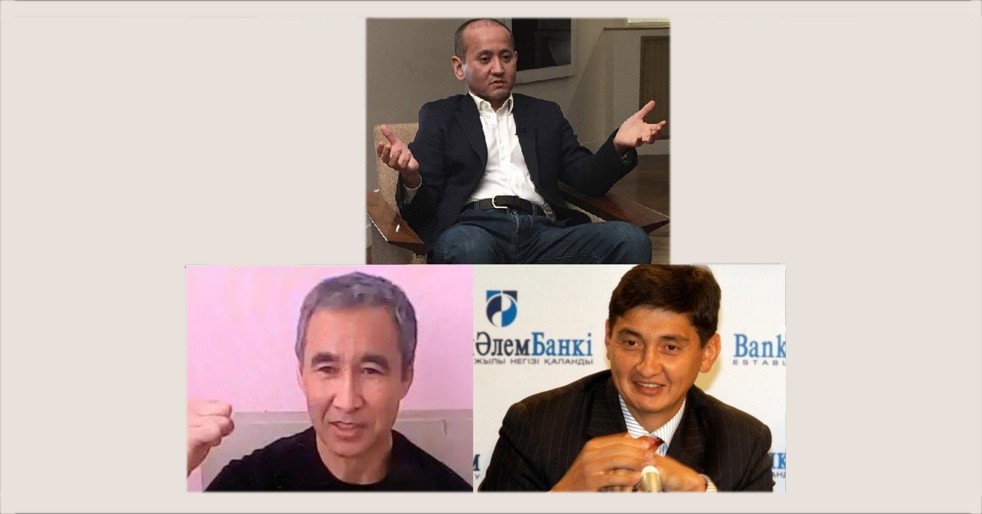
Louis Freeh, former director of the U.S. Federal Bureau of Investigation (FBI), will speak at a hearing of the Almaty Oblast Court on August 23 on the case to review the early release of businessman Muratkhan Tokmadi, who in 2018 was sentenced to ten and a half years for the 2004 murder of the BTA Bank chair, Yerzhan Tatishev. On August 9, it was ruled that Tokmadi should be released on parole after serving six and a half years. In 2017, Freeh led a team of U.S. investigators and forensic experts who were brought in by the Tatishev family to look into the death of Yerzhan Tatishev, one of the founders and co-owners of what was at the time Kazakhstan's largest bank. On the morning of the 23rd, Freeh, who served as a U.S. district judge before becoming the fifth director of the FBI, leading the agency from September 1993 to June 2001, shared details of his investigation with the media in Kazakhstan. "In 2018, Murakhan Tokmadi admitted that he killed Tatishev and said that he did it because Mukhtar Ablyazov promised to pay four million dollars. Ablyazov's goal was to gain control of BTA Bank," Freeh told reporters. "His accidental shooting is impossible... The gun didn't go off by itself." The probe and the findings of investigative firm Freeh Group International Solutions (FGIS), part of the law firm Freeh Sporkin & Sullivan LLP (FSS), since acquired by Alix Partners LLP, formed the basis of the original indictment against Tokmadi, after FSS and FGIS staff accessed documents which proved the banker's death was willful. The court hearing into Tokmadi's parole was initiated by the family of the deceased. On December 19, 2004, Yerzhan Tatishev died on a hunting trip whilst driving an SUV in the Zhambyl Region. At the car's wheel pursuing prey across the steppe, Tatishev handed a 12-gauge shotgun to Tokmadi, who was sitting beside him. According to the defense, the SUV suddenly hit a bump, and the gun fired accidentally, with Tatishev receiving a gunshot wound to the head, the bullet passing through his left eye. At the time, the killing was ruled to be an “accident,” with Tokmadi sentenced to one and a half years for manslaughter. One of the witnesses to the incident was the banker's security guard, Sergei Kozlikin, who swiftly fled Kazakhstan, saying he feared for his life. In 2017, the case was reopened, and Tokmadi was charged with extortion and the illegal possession of firearms. In his 2018 testimony, Tokmadi stated that he was fulfilling an order from fugitive oligarch Mukhtar Ablyazov, who was the co-owner of BTA Bank at the time. “Each time I met [Ablyazov] he argued that Yerzhan could not at any instant keep or sustain his word," Tokmadi testified. "He proposed to deal with the problem through the physical elimination of Yerzhan. This would happen during a hunting trip and look like an accidental death. And so it happened.” Some of the documents relating to the investigation -  which...

Poll Shows Over Half of Kazakhstanis Support Proposed Nuclear Plant

The Kazakhstan Institute for Strategic Studies has announced the results of a telephone survey concerning the proposed construction of a nuclear power plant in Kazakhstan. In his address to the nation on September 1, 2023, President Kassym-Jomart Tokayev emphasized the economic and political importance of the development of nuclear energy, and proposed resolving the issue of building the country’s first nuclear power plant through a nationwide referendum. In June 2024, Tokayev announced that the referendum on building a nuclear power plant would be held this fall, adding that the Cabinet of Ministers would set the exact date. The survey was conducted from August 7 to August 18 this year, among 1,200 respondents aged 18 and older from Kazakhstan’s 17 regions and the cities of Astana, Almaty, and Shymkent. Over half of respondents (53.1%) supported building a nuclear power plant, agreeing that it will help solve the problem of electricity shortages by 2030. 32.5% of the respondents oppose the construction of nuclear power plants, mainly because they fear possible accidents and their environmental consequences. 14.4% were uncertain of their stance. During the survey, 42.6% of the respondents expressed a firm intention to participate in a referendum on the issue of nuclear power plant construction, 16.4% said they are likely to participate, 25.3% do not plan to take part, 8.9% are unlikely to participate, and 6.8% are unsure. The Ministry of Energy estimates the cost of building a nuclear power plant at $10-12 billion. Energy Minister Almasadam Satkaliyev said that the nuclear power plant would be built by a foreign company that wins the tender — providing that the issue is approved in the referendum. In addition to companies from China, Russia, France, and South Korea, the ministry is considering companies from the United States and Japan as potential bidders. The proposed location of the nuclear power plant is the village of Ulken in the Karaganda region.

Kazakhstan and Tajikistan Sign Allied Relations Treaty

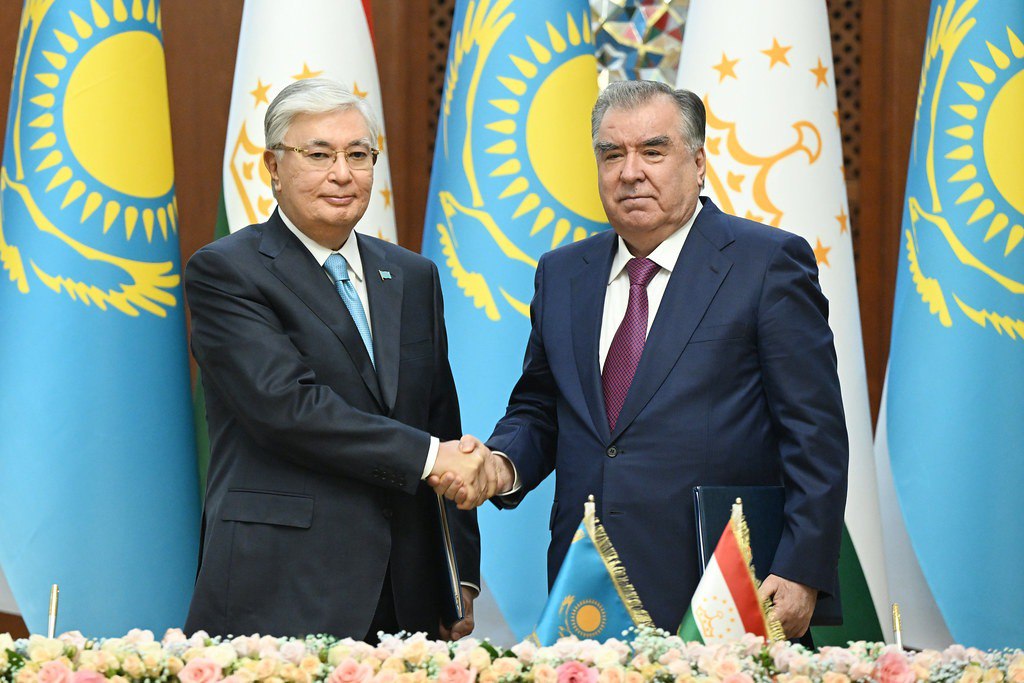
A treaty on allied relations between Kazakhstan and Tajikistan was signed on August 22 during Kazakh President Kassym-Jomart Tokayev's state visit to Tajikistan and talks with Tajik President Emomali Rahmon in Dushanbe. Noting its significance, Rahmon stated that the treaty opens a new page in the history of Kazakh-Tajik cooperation and will become a solid foundation for strategic partnership between the two nations. President Tokayev, in turn, emphasized that “there are no problematic issues between our countries” and announced plans to increase bilateral trade to $2 billion. Over the past five years, the annual trade volume between Kazakhstan and Tajikistan has more than doubled, exceeding $1 billion. Referencing Kazakhstan's readiness to increase supplies to Tajikistan of some 85 commodities valued at $200 million, Tokayev announced:  “We agreed to expand the range of goods supplied, systematically remove barriers that hinder trade and economic cooperation between our countries, and strengthen partnership in the transport and logistics sector. There is a serious potential for increasing bilateral trade in the agro-industrial sector. In the first six months of this year, agricultural trade between our countries increased by 12%, amounting to almost $300 million." Tokayev also emphasized the importance of cooperation in the water sector: “We agreed to continue the coordinated work on the rational use of resources of transboundary rivers of Central Asia. Kazakhstan is grateful to the Tajik side for timely decisions related to fulfilling obligations in the water and energy sector, particularly on [irrigation] water supplies to Kazakhstan.” During the talks, it was stated that over the past five years, Kazakhstan has invested $700 million in Tajikistan's economy. Today, more than 80 percent of Tajikistan's fruit and vegetable exports go to Kazakhstan, and Tajikistan imports large amounts Kazakh wheat, flour, and other grain products. On August 21, the eve of Tokayev’s visit, Dushanbe hosted a Kazakh-Tajik business forum, during which the parties signed 14 commercial contracts and cooperation agreements worth $1.2 billion.

Kazakhstan Summons Belarusian Ambassador After Lukashenko’s Criticism

In a significant development, Kazakhstan's Ministry of Foreign Affairs has summoned the Belarusian Ambassador in response to critical remarks made by Belarusian President, Aleksandr Lukashenko. This incident highlights underlying tensions between Kazakhstan and Belarus - two nations with a shared historical backdrop and intricate political ties – and are emblematic of wider diplomatic rifts across the post-Soviet landscape. Kazakhstan and Belarus have long enjoyed a multifaceted relationship which dates back to their time within the Soviet Union. Both are members of several regional organizations, including the Commonwealth of Independent States (CIS) and the Eurasian Economic Union (EAEU), which aim to foster economic and political cooperation among former Soviet republics. Kazakhstan ranks second in terms of foreign trade of the Republic of Belarus within the CIS countries, with exports to Belarus totaling $153.07 million in 2023. Since gaining independence in 1991, Kazakhstan and Belarus have navigated their transition to sovereign states with varying degrees of success. After brutally crushing a series of mass demonstrations in 2020-21, Lukashenko’s Belarus has drawn ever closer to its patrons in the Kremlin. Prior to suppressing these protests following what were widely deemed to be rigged elections, Lukashenko was perhaps best known in the popular Western consciousness for his suggestion that Covid could be cured by riding a tractor and drinking vodka. In sharp contrast, in recent years, following the demise of long-standing former-President Nazarbayev and his clique, Kazakhstan has followed a very different trajectory, seeking to rein in corruption, guarantee the rule of law, and adopting a multi-vector approach to its foreign policy as its global standing rises. In this latest incident, the diplomatic strain was triggered by President Lukashenko's public criticism of Kazakhstan. During an interview with Russian state television, Lukashenko stated that: “We are not starting to cheat like some post-Soviet states. They want to take something from Russia, but give nothing in return… It won't work that way… The time is not far away when you will come to the same Russia and ask for support and help. There is no one else to ask... Something happened in Kazakhstan - who was asked? China, India and Pakistan are nearby… No. Here, ‘Putin, Lukashenko – help!’ And we [CSTO troops] were transferred there.” In a statement released following a meeting between Belarusian Ambassador Pavel Utyupin and Kazakhstan’s Deputy Minister of Foreign Affairs, Murat Nurtleu, Kazakhstan expressed concern over Lukashenko’s statement and offered up a rebuke: “Kazakhstan pursues a balanced and peaceful foreign policy in accordance with the UN Charter and the fundamental norms of international law,” the statement reads. “Our country is firmly convinced that all disagreements between states should be resolved by political and diplomatic means. In the current geopolitical conditions, the foreign policy course of the country developed by the head of state has proven its effectiveness.” The summoning of the ambassador is an oft-used diplomatic tool in addressing grievances, whilst also opening a channel for dialogue and resolution. As members of the EAEU, both countries benefit from mutual trade agreements,...

Gods and Demons of Central Asia

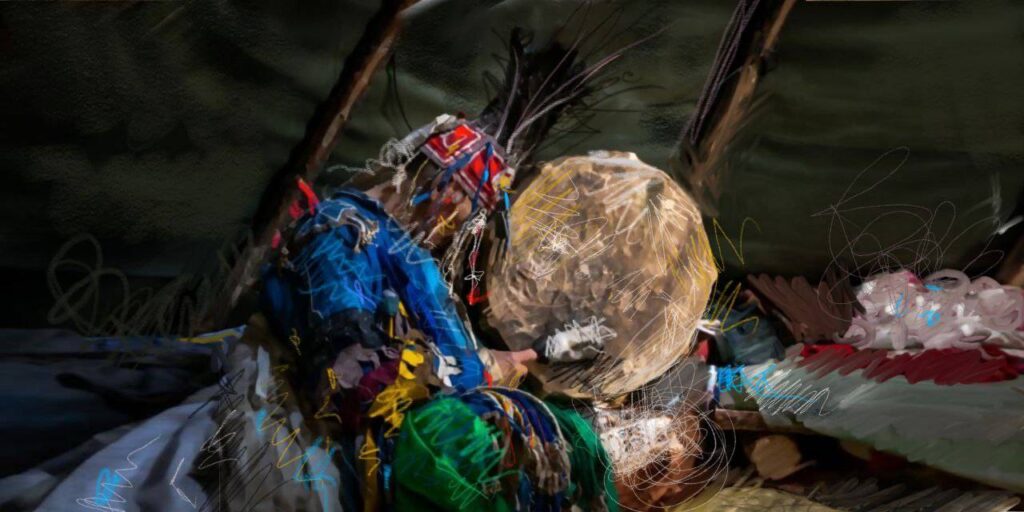
In today's dynamic world, Central Asia is emerging as a trendsetter in fashion, culture, lifestyle, and worldview. The ancient Tengrian faith, deeply rooted in Central Asian mythology and superstitions, may soon resurface creatively among the region's people, though it is unlikely to be reinstated as an official religion. While some in Kazakhstan attempt to distance themselves from Abrahamic religions, Tengrism remains a vital part of the cultural heritage, featuring gods, demigods, and dark entities that shaped the beliefs of our ancestors during the pre-Islamic era.   [caption id="attachment_22010" align="aligncenter" width="167"] photo: pininterest: Tengri's domain[/caption]   Divine entities According to Tatar scientist and writer Gali Rahim, shamanism attributes significant roles to various spirits and deities. Among the Turkic peoples, the supreme deity is Tengri, the eternal blue sky. Rahim's lectures on “The Folklore of the Kazan Tatars,” presented at the East Pedagogical Institute in the 1920s, describe Tengri as the primary god in Turkic cosmology, with the earth and humanity emerging from the union of the sky and the earth. Umai, the goddess associated with motherhood and children, stands next in importance. Ancient Turkic inscriptions and symbolic artifacts, such as the stone carving discovered in 2012 in the Zhambyl district of Almaty, Kazakhstan, depict her as a protective figure for children. Teleut pagans represented her as a silver-haired, young woman who descended from heaven on a rainbow to guard children with a golden bow, and the Kyrgyz appealed for her help during childbirth and when children fell ill. Motifs dedicated to Umai by Shorian shamans, were positioned around cradles. Boys' cradles were pierced with an arrow,  girls' with a spindle, and wooden arrows were placed within the those of both. Another prominent character common to Turkic, Mongolian, and Altaic mythology is Erlik or Yerlik Khan. Ruler of the underworld, the horned deity presides over the realm of the dead from a palace of black mud or blue-black iron on the bank of the Toibodym, a river of human tears. A single horsehair bridge is guarded by monsters known as dyutpa whilst the palace is protected by Erlik’s sentries or elchi, brandishing pike poles known as karmak. His breath, carried by a tan, a light warm breeze, was believed to paralyze anyone who inhaled it, which is why the Khakas term for paralysis, tan sapkhany, literally means “wind blow.” Kudai (Khudai), also known as Ulgen, is another central deity who, alongside his brother Erlik, created the land, its vegetation, mountains, and seas. Kudai created man from clay, and Erlik gave him his soul. Kudai created a dog but it was Erlik who clothed it in hair. Whilst Kudai created the first animals, the horse, the sheep, and the cow, Erlik created the camel, the bear, the badger, and the mole. Kudai brought down lightning from the sky and commanded thunder. In a dispute over who was the mightiest creator, Kudai won. The brothers parted ways, and after producing nine sons, from whom the tribes of Kpchak, Mayman, Todosh, Tonjaan, Komdosh, Tyus, Togus,...