• KGS/USD = 0.01144 0%
  • KZT/USD = 0.00201 0%
  • TJS/USD = 0.10581 0%
  • UZS/USD = 0.00008 0%
  • TMT/USD = 0.28571 0%
  • KGS/USD = 0.01144 0%
  • KZT/USD = 0.00201 0%
  • TJS/USD = 0.10581 0%
  • UZS/USD = 0.00008 0%
  • TMT/USD = 0.28571 0%
  • KGS/USD = 0.01144 0%
  • KZT/USD = 0.00201 0%
  • TJS/USD = 0.10581 0%
  • UZS/USD = 0.00008 0%
  • TMT/USD = 0.28571 0%
  • KGS/USD = 0.01144 0%
  • KZT/USD = 0.00201 0%
  • TJS/USD = 0.10581 0%
  • UZS/USD = 0.00008 0%
  • TMT/USD = 0.28571 0%
  • KGS/USD = 0.01144 0%
  • KZT/USD = 0.00201 0%
  • TJS/USD = 0.10581 0%
  • UZS/USD = 0.00008 0%
  • TMT/USD = 0.28571 0%
  • KGS/USD = 0.01144 0%
  • KZT/USD = 0.00201 0%
  • TJS/USD = 0.10581 0%
  • UZS/USD = 0.00008 0%
  • TMT/USD = 0.28571 0%
  • KGS/USD = 0.01144 0%
  • KZT/USD = 0.00201 0%
  • TJS/USD = 0.10581 0%
  • UZS/USD = 0.00008 0%
  • TMT/USD = 0.28571 0%
  • KGS/USD = 0.01144 0%
  • KZT/USD = 0.00201 0%
  • TJS/USD = 0.10581 0%
  • UZS/USD = 0.00008 0%
  • TMT/USD = 0.28571 0%
24 February 2026

Viewing results 1 - 6 of 284

Central Asia and the Global Water Crisis: A Test of Governance and Cooperation

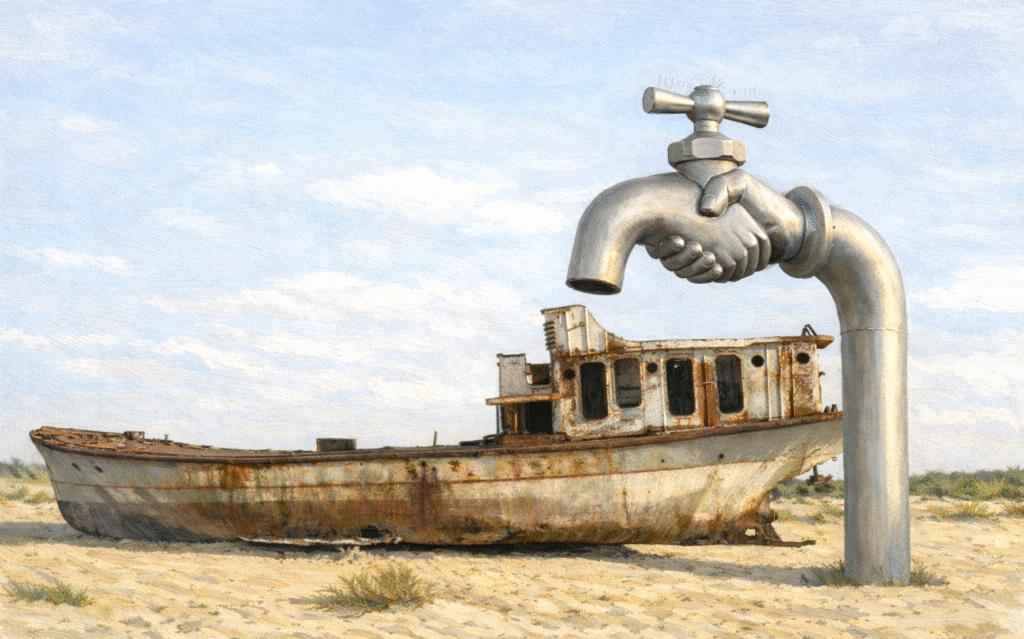
Water scarcity is rapidly transforming from a regional environmental concern into one of the defining global security challenges of the 21st century. UN-linked assessments estimate that around four billion people experience severe water scarcity for at least one month each year, and nearly three-quarters of the global population lives in countries facing water insecurity. Against this backdrop, Central Asia is not an exception but rather a concentrated example of global dynamics: climate pressure, population growth, and inefficient resource management. Regional initiatives, including proposals put forward by Kazakhstan, therefore have the potential to contribute not only to stability in Central Asia but to the development of a more coherent global water governance architecture. The Water Crisis as a Global Reality Water is increasingly regarded as a strategic resource on par with energy and food. Climate change is intensifying droughts, floods, and the degradation of aquatic ecosystems across all regions, from Africa and the Middle East to South Asia, Europe, and North America. Recent mapping and analysis by investigative groups and international media indicate that half of the world’s 100 largest cities experience high levels of water stress, with dozens classified as facing extremely high levels. Major urban centers, including Beijing, New York, Los Angeles, Rio de Janeiro, and Delhi, are among those under acute pressure, while cities such as London, Bangkok, and Jakarta are also categorized as highly stressed. In this context, Central Asia is not an outlier. It is confronting today what may soon become the global norm. Central Asia: Where Global Trends Converge A defining feature of the current environmental situation is that factors beyond natural ones drive the water crisis. Experts increasingly stress that shortages are often less about absolute physical scarcity and more about outdated management systems, infrastructure losses, and inefficient consumption patterns. In this respect, Central Asia can be seen as a testing ground for global water challenges, where multiple stress factors converge. The region, with mountain peaks exceeding 7,000 meters, contains some of the largest ice reserves outside the polar regions. The Pamir and Hindu Kush ranges, together with the Tibetan Plateau, the Himalayas, and the Tien Shan, form part of what is sometimes referred to as the “Third Pole,” the largest concentration of ice after the Arctic and Antarctic. [caption id="attachment_13410" align="aligncenter" width="2560"] The White Horse Pass, Tajikistan; image: TCA, Stephen M. Bland[/caption] However, the pace of change is alarming. By 2030-2040, water scarcity in Central Asia risks becoming chronic. Glaciers in the Western Tien Shan, for example, have reportedly shrunk by roughly 27% over the past two decades and continue to retreat, posing a direct threat to the flow of the Amu Darya and Syr Darya rivers. These rivers increasingly fail to reach the Aral Sea in sufficient volume, while the exposed seabed has become a major source of salt and dust storms. [caption id="attachment_21928" align="aligncenter" width="2560"] Moynaq, Karakalpakstan; image: TCA, Stephen M. Bland[/caption] Infrastructure inefficiencies compound the problem. Estimates suggest that in some systems, 40-50% of water can be lost in deteriorating...

Kyrgyzstan Plans Full Transition to Water-Saving Irrigation in Issyk-Kul Region

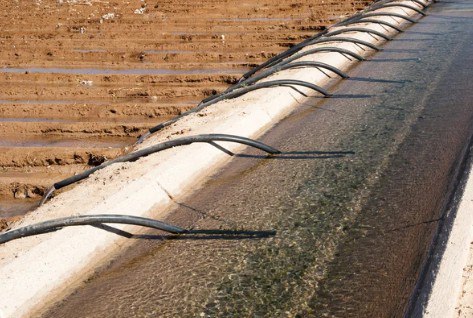
Kyrgyzstan’s government is preparing to fully transition the Issyk-Kul region to water-saving irrigation technologies, offering farmers preferential financing amid growing concerns over falling water levels in the country’s largest lake and key tourist destination. Speaking in parliament on February 11, Deputy Chairman of the Cabinet of Ministers and Minister of Water Resources, Agriculture, and Processing Industry Bakyt Torobaev announced that farmers adopting drip or sprinkler irrigation systems will be eligible for low-interest loans at a preferential 2% rate. Lending is expected to begin next month. Torobaev emphasized the urgency of reducing agricultural water consumption to stabilize inflows into Lake Issyk-Kul. “If we switch to drip irrigation, more water will flow into Issyk-Kul. If we use all the water for agriculture, none of it may reach the lake. Therefore, our goal is to fully transition the Issyk-Kul region to drip and sprinkler irrigation,” he told lawmakers. Environmental pressure on the Issyk-Kul basin has intensified due to climate change and accelerated glacier retreat. The basin contains 957 glaciers, covering about 560.8 square kilometers, many of which are shrinking rapidly. Although around 120 rivers feed the lake, only about 80 reach it during the summer months due to irrigation withdrawals. Between 1927 and 2003, the lake’s level dropped by 2.75 meters, an effect largely attributed to inefficient water use. Policy support for conservation has recently been formalized. In December 2025, the Cabinet of Ministers approved the Concept for the Sustainable Development of the Ecological and Economic System of Lake Issyk-Kul through 2030, alongside a detailed action plan prioritizing the adoption of water-saving agricultural technologies. Under current plans, modern irrigation systems will be installed on 100,000 hectares of farmland across the Issyk-Kul region, potentially redirecting up to 200 million cubic meters of water back into the lake annually. Nationwide, adoption of water-efficient irrigation remains limited but is accelerating. According to the Ministry of Water Resources, Agriculture, and Processing Industry, modern irrigation technologies currently cover around 16,000 hectares. The authorities aim to expand that area by 30,000-40,000 hectares each year, targeting 200,000 hectares under water-saving irrigation by 2030. State-funded installations are also increasing. In 2026, drip and sprinkler systems are scheduled to be deployed on 5,270 hectares. Between 2024 and 2025, such systems were installed on 2,369 hectares, 641 hectares with drip irrigation, and 1,728 hectares with sprinkler systems. Kyrgyzstan currently has approximately 1 million hectares of irrigated agricultural land overall.

Kazakhstan and Kyrgyzstan Resume Data Sharing on Reservoirs and Transboundary Rivers

Kazakhstan and Kyrgyzstan have renewed formal cooperation in hydrometeorology, agreeing to exchange key hydrological data on major reservoirs and transboundary rivers, a development officials say is vital for regional flood management and agricultural planning. The agreement covers data exchange on the Kirov, Orto-Tokoy, and Toktogul reservoirs, all located in Kyrgyzstan but directly influencing downstream water supply in Kazakhstan. The signing took place on February 9 in Astana, where Kyrgyzstan’s First Deputy Minister of Emergency Situations Mambetov Muratovich and Kazakhstan’s First Deputy Minister of Water Resources and Irrigation Nurlan Aldamzharov endorsed a 2026-2028 cooperation program between Kazhydromet and the Kyrgyz Hydrometeorological Service. Key Components of the Agreement The three-year program includes: Regular exchange of hydrological data on shared rivers and reservoirs Joint forecasting of basin runoff and water accumulation Mutual hazard and storm warnings Scientific and technical collaboration Professional exchange between agencies Describing the agreement as an achievement of "water diplomacy," Aldamzharov emphasized that timely data is critical to protecting populations and infrastructure downstream, especially during peak water flow and flood risk periods. Strategic Role of Kyrgyz Water Infrastructure Kyrgyzstan plays a pivotal upstream role in Central Asia’s water system, delivering seasonal irrigation flows to southern Kazakhstan’s Turkistan, Kyzylorda, and Zhambyl regions via the Chu, Talas, and Syr Darya rivers. Each of the reservoirs included in the data-sharing agreement serves a distinct strategic function: Kirov Reservoir: Located in Kyrgyzstan’s Talas region, near the Kazakh border; vital for irrigating farmland on both sides. Orto-Tokoy Reservoir: Situated on the Chu River, which flows into Kazakhstan, it regulates seasonal supply for downstream agriculture. Toktogul Reservoir: Kyrgyzstan’s largest, located on the Naryn River, the principal tributary of the Syr Darya, one of Central Asia’s main water arteries feeding Kazakhstan and Uzbekistan. According to Kazakhstan’s Ministry of Water Resources, during the 2025 growing season, Zhambyl region received 160 million cubic meters of water via the Chu River and 427.5 million cubic meters via the Talas River under existing water allocation frameworks. Water Stress Ahead of Growing Season Authorities warn that the Syr Darya basin continues to experience low-flow conditions. Reduced inflows to the Naryn-Syr Darya system are threatening irrigation reliability for the upcoming agricultural season. The Toktogul Reservoir may reach near-record low levels, heightening risks for downstream farmers. In response, agricultural authorities in southern Kazakhstan have urged the adoption of water-saving irrigation technologies, a shift away from water-intensive crops, and greater reliance on drought-resistant varieties-steps that make access to reliable hydrological forecasts increasingly urgent.

Kyrgyz MP Questions Why Uzbekistan and Kazakhstan Don’t Pay for Irrigation Water

A long-standing debate over Kyrgyzstan’s water resources resurfaced this week after a member of parliament questioned why Uzbekistan and Kazakhstan do not compensate Kyrgyzstan for irrigation water sourced from its reservoirs, according to a report by Kaktus Media. Speaking at a February 9 meeting of the parliamentary committee on agrarian policy, water resources, ecology, and subsoil use, MP Umbetaly Kydyraliev raised concerns about growing water shortages caused by climate change and the lack of economic return from water exports to neighboring countries. “About 80% of the water in our reservoirs goes to Kazakhstan and Uzbekistan,” said Kydyraliev. “How are we resolving this issue with them?” Regional Cooperation vs. Compensation In response, Deputy Prime Minister and Minister of Water Resources, Agriculture, and Processing Industry Bakyt Torobaev explained that while Uzbekistan and Kazakhstan are not making direct payments for water, they are contributing to major regional infrastructure projects, most notably, the Kambar-Ata-1 hydropower plant. Torobaev emphasized that cooperation is based on mutual benefit rather than transactional agreements. He noted that both countries have expressed strong interest in ensuring reliable access to water and have supported the hydropower initiative accordingly. Kambar-Ata-1: Strategic Investment Kambar-Ata-1, originally launched during the Soviet era and later shelved, is poised to become one of Central Asia’s largest hydropower plants. Once completed, it is expected to surpass the output of the Toktogul hydropower station, currently Kyrgyzstan’s main source of electricity. The plant's projected cost is around $3.6 billion. Who Should Pay for Upkeep? Kydyraliev also cited other key reservoirs, including Kempir-Abad (jointly managed with Uzbekistan), Kirov, and Orto-Tokoy, which remain under Kyrgyzstan’s jurisdiction. Annual intergovernmental commissions determine how much water is released from these facilities, yet no financial compensation is received. “Does this mean Kyrgyzstan gains no economic benefit from maintaining these hydropower facilities?” he asked. “We have to repair them, stabilize water levels, and inspect dams. These are real costs. Other countries pay for water under international law.” Official Position: No Demands for Payment Deputy Energy Minister Nasipbek Kerimov noted that the issue is being jointly studied by energy and water specialists. Torobaev added that details of these discussions are confidential but confirmed that President Sadyr Japarov has instructed officials not to demand payments from neighboring states for infrastructure maintenance. Instead, Kyrgyzstan will shoulder those costs itself, with any external assistance remaining voluntary.

Kyrgyzstan Draws International Attention to Climate Risks for Lake Issyk-Kul

Speaking at the World Governments Summit in Dubai on February 4, Bakyt Torobaev, Kyrgyzstan’s Deputy Chairman of the Cabinet of Ministers and Minister of Water Resources, Agriculture, and Processing Industry, highlighted the growing threat climate change poses to Lake Issyk-Kul, the country’s largest lake, a unique ecological reserve, and one of Central Asia’s leading tourist destinations. Torobaev described Issyk-Kul as a unique ecosystem of regional significance and a vital socioeconomic and environmental resource for Kyrgyzstan. However, in recent decades, the lake has experienced serious climate-related pressures, according to the Ministry of Water Resources. Since the mid-19th century, the lake’s water level has dropped by nearly 14 meters, while its total volume has decreased by approximately 85 billion cubic meters. The number of rivers flowing into the lake has also significantly declined, largely due to melting glaciers and increased agricultural water use. Torobaev warned that further declines in Issyk-Kul’s water level could lead to severe environmental and socioeconomic consequences, including threats to biodiversity, the lake’s tourism potential, and the well-being of the local population. Kyrgyzstan, he said, sees the preservation of Issyk-Kul as part of the broader global climate and water agenda, calling for a shift from short-term measures to long-term, science-based, and investment-driven solutions. He urged the international community to strengthen partnerships in sustainable water resource management, integrate climate, water, and ecosystem approaches, and support joint initiatives aimed at preserving ecologically significant natural sites. In December 2025, Kyrgyzstan’s Cabinet of Ministers approved the Concept for the Sustainable Development of the Ecological and Economic System of Lake Issyk-Kul until 2030, along with a corresponding Action Plan. The initiative aims to safeguard the lake and its surrounding biosphere from mounting environmental and human pressures while enhancing long-term economic resilience in the region. Torobaev also addressed the broader issue of water scarcity, which is becoming an increasingly critical factor for regional stability, food security, and sustainable development in the context of climate change. As a mountainous country that serves as a key source of Central Asia’s rivers, Kyrgyzstan bears particular responsibility for the sustainability of the region’s water ecosystems, he said, and consistently advances the water agenda at international forums. Also on February 4, Torobaev participated in a Global Councils on SDGs meeting at the summit, where he proposed greater global attention to the challenges facing mountain regions. He said that mountain ecosystems are among the most vulnerable to climate change. Melting glaciers, shifting precipitation patterns, and more frequent extreme weather events pose long-term risks to water resources, agriculture, and energy security in Central Asia and beyond. Kyrgyzstan, he said, advocates for recognizing mountain regions as special zones for sustainable development and ensuring their prioritized access to climate finance, adaptation technologies, and environmental monitoring systems. According to Torobaev, the sustainability of mountain regions is directly linked to the water and food security of millions of people, underscoring the need for systemic and coordinated international responses.

Bishkek’s Air Pollution Crisis Comes Under Parliamentary Scrutiny

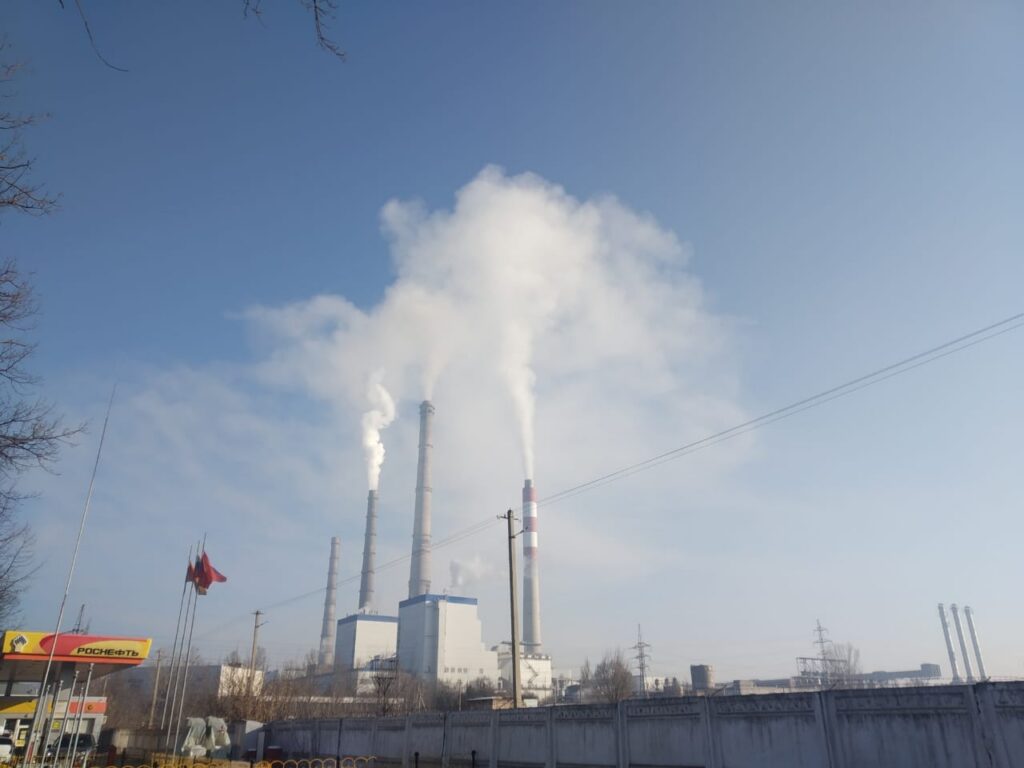
On February 2, Kyrgyzstan’s parliamentary committee on ecology and environmental protection convened to hear reports from senior officials on the worsening air pollution and winter smog in the capital. Air pollution remains a chronic challenge in Bishkek, a city of over one million residents. Conditions worsen sharply in winter, when widespread coal burning for heating and emissions from an aging vehicle fleet accumulate in the city’s basin-like topography. Bishkek consistently ranks among the world’s 10 most polluted cities on IQAir’s global air quality index. In January 2026 alone, the city appeared in the top five on at least eight separate days. Minister of Natural Resources, Ecology, and Technical Supervision Meder Mashiev told lawmakers that the primary sources of pollution are household coal burning (40%), vehicle emissions (30%), the city’s coal-fired thermal power plant (15%), wind-blown dust (13.5%), and industrial activity (1.5%). Mashiev underscored that vehicle emissions are a particularly significant contributor to the city’s smog. According to Mashiev, Kyrgyzstan has more than 1.9 million vehicles, a 13% increase compared to 2024. Of these, 972,000 run on gasoline, 339,000 on diesel, 56,900 on gas, and 37,000 are hybrids. Electric vehicles make up just 0.8% of the total, numbering around 15,200. An estimated 600,000-700,000 vehicles, more than 30% of the national total, are located in Bishkek. More than half are over 15 years old, contributing significantly to harmful emissions. Jarkynbek Kasymbekov, Director of the National Institute of Public Health, outlined the health implications. He reported a 2.5-fold increase in allergic rhinitis cases nationwide, particularly among young people, a trend he linked directly to poor air quality. While long-term studies are lacking, the rise in respiratory illnesses is well documented. Mashiev highlighted several measures taken in 2025 to address the crisis. Fifty-four residential areas in Bishkek were connected to natural gas, enabling more than 51,000 households to switch from coal heating. This transition is estimated to have reduced coal consumption in the capital by 100,000 tons. He also reported the long-awaited extinguishing of Bishkek’s decades-old smoldering landfill. A new waste-to-energy facility has been launched at the site, now generating electricity by incinerating solid waste. Additional efforts are underway to modernize urban transport and expand green spaces. “Work is currently underway to transition to environmentally friendly transport. A total of 1,447 gas-powered eco-buses and 120 electric buses now operate in Bishkek. There are already more than 100 electric charging stations in the city, and over 2,000 applications for new stations are under review,” Mashiev said. Bishkek Mayor Aibek Junushaliev added that 18,000 trees were planted in the capital last year, with plans to plant another 50,000 in 2026. Parliamentary committee chairman Bakyt Tentishev raised concerns about vehicles operating without catalytic converters. Kyrgyzstan is preparing to tighten environmental regulations on motor vehicles. A draft law currently under public discussion would mandate the presence and functionality of catalytic converters in vehicles originally manufactured with them. The absence of these devices significantly increases toxic emissions and fuel consumption, posing direct risks to public health.