• KGS/USD = 0.01143 0%
  • KZT/USD = 0.00216 0%
  • TJS/USD = 0.10633 -0.28%
  • UZS/USD = 0.00008 0%
  • TMT/USD = 0.28571 0%
  • KGS/USD = 0.01143 0%
  • KZT/USD = 0.00216 0%
  • TJS/USD = 0.10633 -0.28%
  • UZS/USD = 0.00008 0%
  • TMT/USD = 0.28571 0%
  • KGS/USD = 0.01143 0%
  • KZT/USD = 0.00216 0%
  • TJS/USD = 0.10633 -0.28%
  • UZS/USD = 0.00008 0%
  • TMT/USD = 0.28571 0%
  • KGS/USD = 0.01143 0%
  • KZT/USD = 0.00216 0%
  • TJS/USD = 0.10633 -0.28%
  • UZS/USD = 0.00008 0%
  • TMT/USD = 0.28571 0%
  • KGS/USD = 0.01143 0%
  • KZT/USD = 0.00216 0%
  • TJS/USD = 0.10633 -0.28%
  • UZS/USD = 0.00008 0%
  • TMT/USD = 0.28571 0%
  • KGS/USD = 0.01143 0%
  • KZT/USD = 0.00216 0%
  • TJS/USD = 0.10633 -0.28%
  • UZS/USD = 0.00008 0%
  • TMT/USD = 0.28571 0%
  • KGS/USD = 0.01143 0%
  • KZT/USD = 0.00216 0%
  • TJS/USD = 0.10633 -0.28%
  • UZS/USD = 0.00008 0%
  • TMT/USD = 0.28571 0%
  • KGS/USD = 0.01143 0%
  • KZT/USD = 0.00216 0%
  • TJS/USD = 0.10633 -0.28%
  • UZS/USD = 0.00008 0%
  • TMT/USD = 0.28571 0%

Viewing results 193 - 198 of 332

Kumtor Gold Boosts Kyrgyzstan Economy

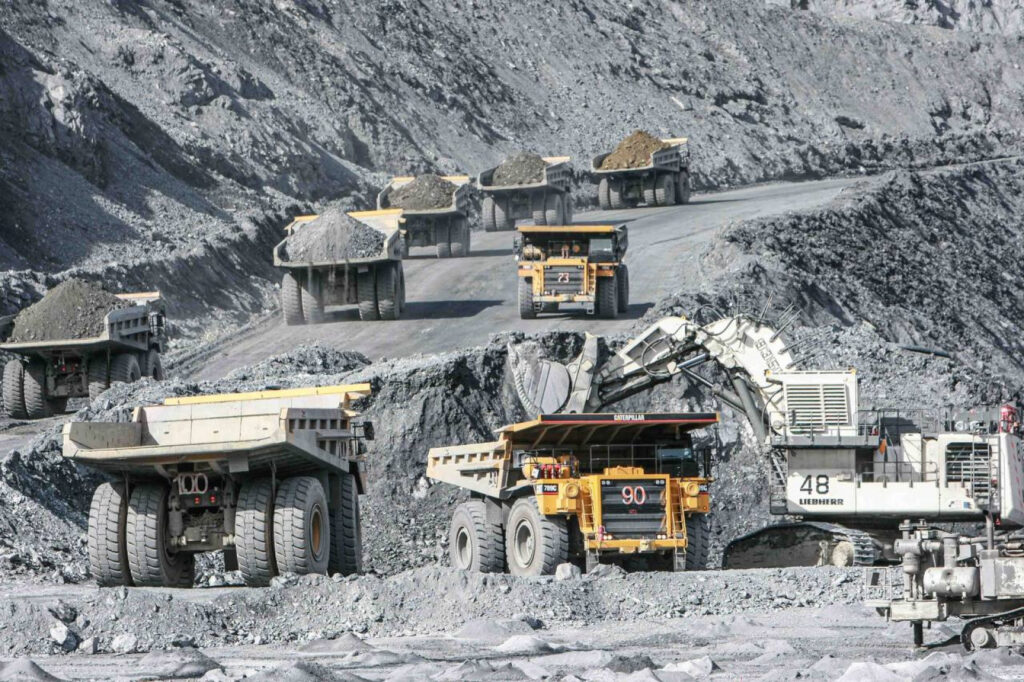
On May 7, Chairman of the Cabinet of Ministers of the Kyrgyz Republic Akylbek Japarov inspected the Kumtor gold mine in the permafrost zone of the Issyk-Kul region. Sitting 4,000 meters above sea level, the mine serves one of the world’s ten largest gold deposits and prior to being nationalized in 2021, was owned by Canadian company, Centerra Gold. The mine now has over 3,000 employees, 99.9% of whom are local specialists, and more than 800 specialist vehicles, machinery and equipment to ensure uninterrupted production. With reference to the significant developments to the site since nationalisation,  the Prime Minister emphasized the importance of the state’s role in maintaining its efficient operation. Last year, the mine generated 17.2 billion soms (over $194 million) in taxes and social payments - equivalent to roughly one-third of Kyrgyzstan’s state budget. Japarov also inspected Kumtor’s underground gold mining project, which launched in February, will enable the further extraction of about 115 tons of gold. At Kumtor’s open-pit mine, it currently takes one ton of processed ore and over 40 tons of extracted waste rock to produce 5-7 grams of gold. Underground mining has the potential to double that yield with less damage to the environment than its open-pit equivalent. Further to the prime minister’s visit, it was reported that from 2026, mining will begin on ore waste stored at the Kumtor mine tailings and according to estimates, will produce an additional 120 tons of gold. In 2023, the Kumtor mine produced 13,567 tons of gold, with a total revenue of $848 million, and net profit of $302.5 million.  

Campaign to Save Bishkek’s Trolleybuses

A campaign has been launched to prevent plans by the municipality of Bishkek to replace its trolleybuses with electric buses. According to a statement issued by the Bishkek municipality, “the issue of transferring trolleybuses along with their contact network and traction substations to the cities of Osh, Kara-Balta and Tokmok for their further operation there, is under consideration”. A key objection raised by the Save Bishkek Trolleybus campaign is that since the five proposed electric bus routes will simply replicate the existing trolleybus routes, the city will lose its existing network of environmentally- friendly public transport that introduced in the Soviet era, has been operating for many decades. The Save Bishkek Trolleybus has now launched an online petition to preserve its favoured mode of transport. According to the group behind the new initiative, the reason for abandoning the trolleybus network relates to the fact that one of the conditions of funding by the Asian Development Bank for electric public transport in Bishkek , was the replacement of trolleybus depots with new depots and substations to recharge electric buses. Kadyrbek Atambayev, leader of the Social Democratic faction in Bishkek’s City Council, argues that Bishkek’s trolleybus system should be developed, not eliminated. Regarding cost, he emphasizes that electric buses are four times more expensive than trolleybuses. The price of 100-120 electric buses along with charging stations is $50 million, while in 2017, 52 trolleybuses were purchased for 7 million euros. He also drew attention to the fact that operating batteries during Bishkek's cold winters would increase energy consumption and reduce the efficiency of electric buses. In his opinion, the liquidation of the trolleybus system would mean not only the loss of a convenient and affordable mode of public transport, but also the loss of a significant part of Bishkek’s cultural heritage.  

Tashkent Investment Forum Focus on Kyrgyzstan’s Kambarata HPP-1

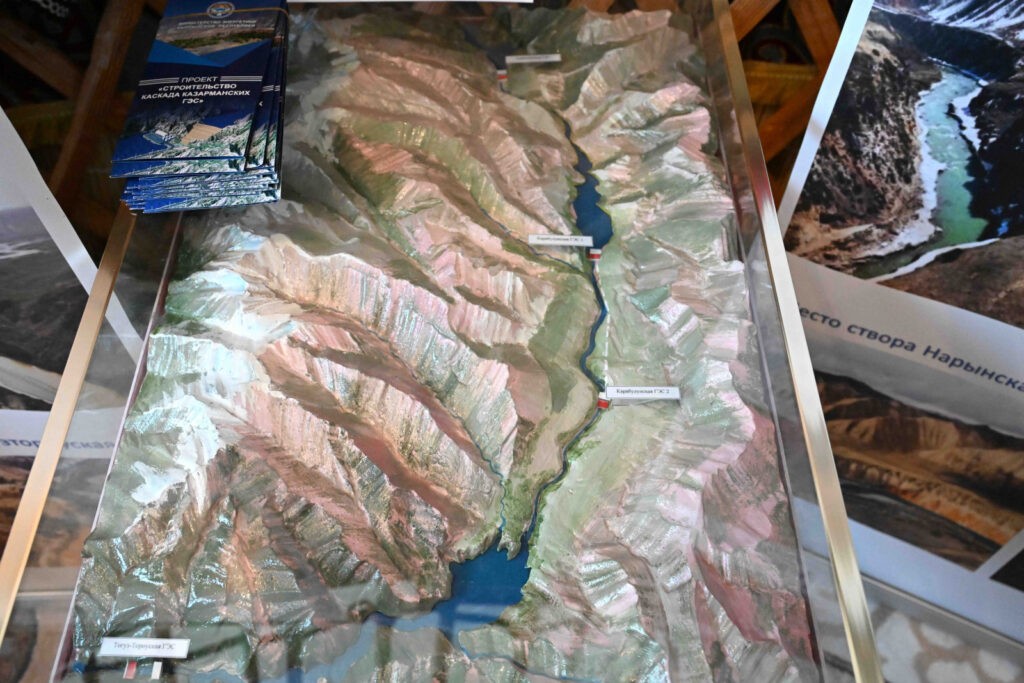
The construction of the Kambarata hydroelectric power plant (HPP)-1 on Kyrgyzstan’s Naryn River was at the forefront at the Third Tashkent International Investment Forum attended by Uzbekistan’s Prime Minister Abdulla Aripov and representatives of international organizations and financial institutions. At the panel session on energy, on 2 May, Chairman of the Cabinet of Ministers of the Kyrgyz Republic Akylbek Japarov, outlined the master plan behind Kambarata HPP-1, investment indicators,  and its potential benefits to water resources management and Central Asia’s electricity market. Japarov explained that generated by hydropower, almost all electricity in Kyrgyzstan is green, but stated, “We have so far used only about 13% of our existing potential. Taking into account global challenges and trends in the development of green energy, the Cabinet of Ministers of the Kyrgyz Republic has actively begun to implement infrastructure energy projects. The large-scale construction of Kambarata HPP-1, strategically important for the entire region, will up the pace of development in this field.” Kyrgyzstan, Kazakhstan, and Uzbekistan recently signed a Roadmap for joint construction of Kambarata HPP-1. If completed, Kambarata HPP-1 will have a capacity of 1860 MW and will generate 5.6 billion kWh of electricity per year. A forum for further discussions on foreign investment in the project is scheduled for early June in Vienna . Turning to plans for hydroelectric power plants elsewhere in the country, Kyrgyzstan’s Prime Minister, stated, “Work is underway to implement projects for the construction of a cascade of hydroelectric power plants on the Chatkal River, as well as a cascade of Kazarman hydroelectric power plants on the Naryn River. Our country needs foreign investment to develop energy, which is the main sector of the economy. We invite foreign companies to consider the possibility of participating in the construction of small and medium-sized hydroelectric power stations and renewable energy sources in Kyrgyzstan.”    

ADB Allocates $56 Million for Sewage Treatment Plant to Protect Issyk-Kul

The Asian Development Bank (ADB) has agreed to allocate money for the construction of a sewage treatment plant in Cholpon-Ata, Kyrgyzstan's main resort city on the northern shore of the high-mountain Lake Issyk-Kul, which is the crown jewel of the Kyrgyz  tourism industry. . According to the State Agency of Architecture and Construction, the ADB will allocate $31 million in the form of a grant and $25 million as a soft loan for the construction of a sewage treatment plant with a capacity of 14,200 cubic meters per day. The funds will also be used to build 18 sewage pumping stations, 45km of main sewers, and 109km of intra-square sewage networks in the city of Cholpon-Ata. "To date, the design and cost- estimate documentation for the sewage treatment plant, two main pumping stations and sewage collector in the city of Cholpon-Ata, and tender documents for them, [have been] sent for consideration by the Asian Development Bank," reported the press service of the State Construction Committee. The agency emphasizes that all local guest houses, sanatoriums and resorts will be able to connect to the central sewage system. Environmentalists have repeatedly warned of unfavorable ecological degradation of the waters of Lake Issyk-Kul, because of hundreds of hotels located in the coastal zone. Today, most sewage treatment facilities in the coastal towns of Balykchy, Karakol and Cholpon-Ata are out of operation. Those sewage systems were put into operation in the 1960s or 1970s, and received little maintenance or upkeep.

U.K. Company to Manufacture Innovative Material to Improve Irrigation in Kyrgyzstan

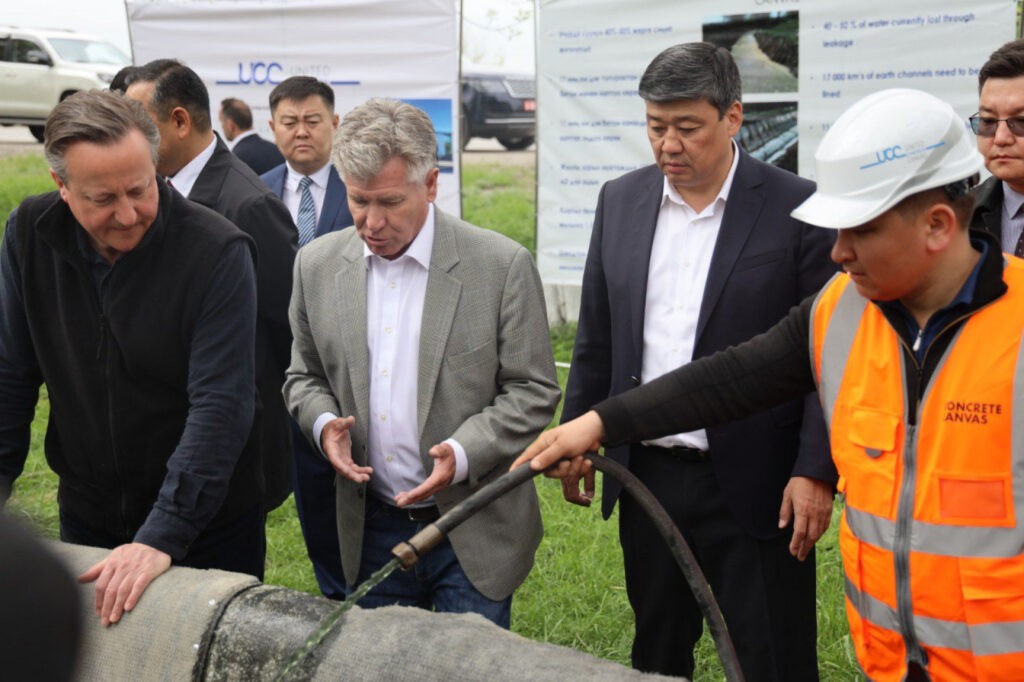
Back in November 2023, Chairman of the Cabinet of Ministers of the Kyrgyz Republic, Akylbek Japarov met head of Concrete Canvas, Will Crawford in Cardiff to discuss the establishment of a plant in Kyrgyzstan. On 23 April representatives of the company travelled to the Chui region of northern Kyrgyzstan for further negotiations attended by Kyrgyzstan’s Deputy Chairman of the Cabinet of Ministers - Minister of Water Resources, Agriculture and Processing Industry, Bakyt Torobayev and British Foreign Secretary David Cameron. Concrete Canvas, produces waterproof flexible concrete filled geosynthetic composite mats used for lining irrigation canals to prevent erosion and reduce seepage losses. Hailing the benefits of the product, Torobayev stated, “Across Kyrgyzstan, the length of canals is 30 thousand kilometres, including 11 thousand kilometres of -unsurfaced- canals. By laying concrete material on these canals, we will avoid seepage of water and ensure its efficient use. Kyrgyzstan is an agricultural country with a lot of arable land, so we really need such materials. The plan is to build the company’s plant in the Osh region in south Kyrgyzstan in the near future.” Material produced by the Kyrgyzstan plant will meet domestic demand and could also be exported to Russia and Uzbekistan.

Mudslides in Kyrgyzstan Flood Over 200 Homes

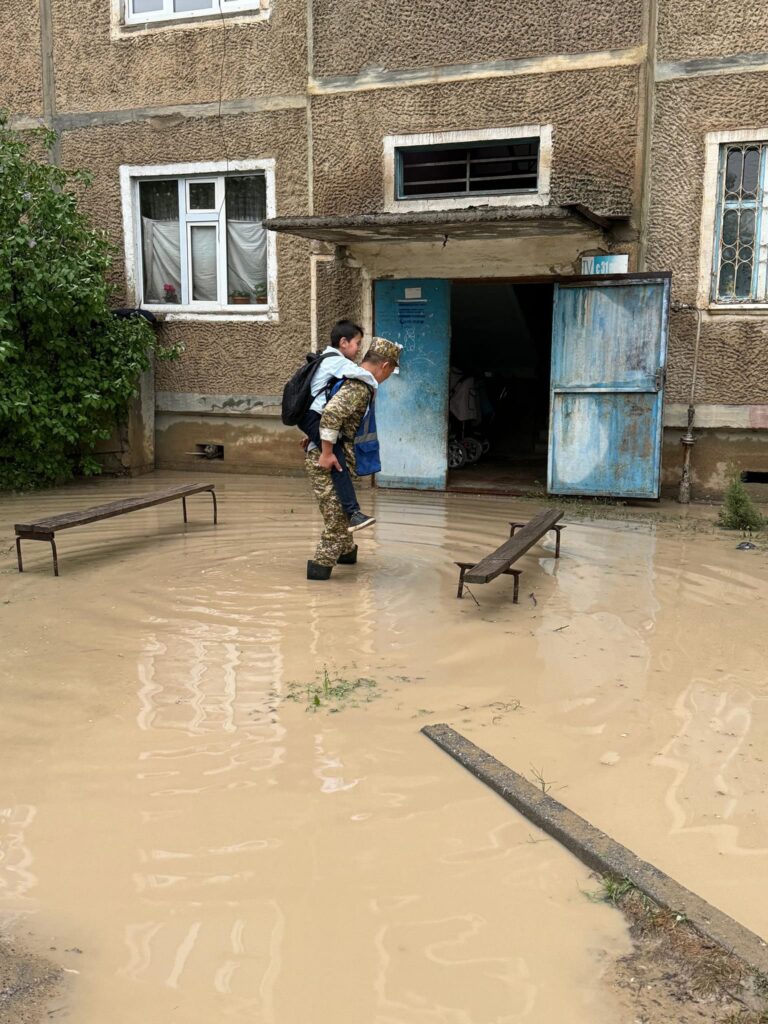
Kyrgyzstan's emergencies ministry has formed an operational headquarters to deal with recent flooding in the south of the country. Rescuers report that hundreds of local residents have been evacuated to safety. Flooding due to heavy rains began last week in Kyrgyzstan's southern Osh region, prompting the region to declare a state of emergency. More than 500 people, including local volunteers, are currently working to clear up the damage caused. "At about 22:00 (April 22), information was received that flood waters inundated houses and roads due to heavy rain in Mady, Besh-Moinok, Kyrgyz-Chek, Asan-Chek villages of the Kara-Suu district of Osh region," the emergency ministry has commented. Unstable weather and heavy rains have already caused mountain mudslides in four regions of Kyrgyzstan. In total more than 30 mudslides have been recorded in recent days, inundating more than 200 homes. Rescuers quickly cleared some villages and districts; however, meteorologists warn that avalanches and flooding may continue until April 26, as the water level in rivers will rise.