• KGS/USD = 0.01144 0%
  • KZT/USD = 0.00212 0%
  • TJS/USD = 0.10456 0.19%
  • UZS/USD = 0.00008 0%
  • TMT/USD = 0.28490 0%
  • KGS/USD = 0.01144 0%
  • KZT/USD = 0.00212 0%
  • TJS/USD = 0.10456 0.19%
  • UZS/USD = 0.00008 0%
  • TMT/USD = 0.28490 0%
  • KGS/USD = 0.01144 0%
  • KZT/USD = 0.00212 0%
  • TJS/USD = 0.10456 0.19%
  • UZS/USD = 0.00008 0%
  • TMT/USD = 0.28490 0%
  • KGS/USD = 0.01144 0%
  • KZT/USD = 0.00212 0%
  • TJS/USD = 0.10456 0.19%
  • UZS/USD = 0.00008 0%
  • TMT/USD = 0.28490 0%
  • KGS/USD = 0.01144 0%
  • KZT/USD = 0.00212 0%
  • TJS/USD = 0.10456 0.19%
  • UZS/USD = 0.00008 0%
  • TMT/USD = 0.28490 0%
  • KGS/USD = 0.01144 0%
  • KZT/USD = 0.00212 0%
  • TJS/USD = 0.10456 0.19%
  • UZS/USD = 0.00008 0%
  • TMT/USD = 0.28490 0%
  • KGS/USD = 0.01144 0%
  • KZT/USD = 0.00212 0%
  • TJS/USD = 0.10456 0.19%
  • UZS/USD = 0.00008 0%
  • TMT/USD = 0.28490 0%
  • KGS/USD = 0.01144 0%
  • KZT/USD = 0.00212 0%
  • TJS/USD = 0.10456 0.19%
  • UZS/USD = 0.00008 0%
  • TMT/USD = 0.28490 0%

Viewing results 409 - 414 of 949

Bishkek Court Upholds Decision to Dismantle Trolleybus Lines

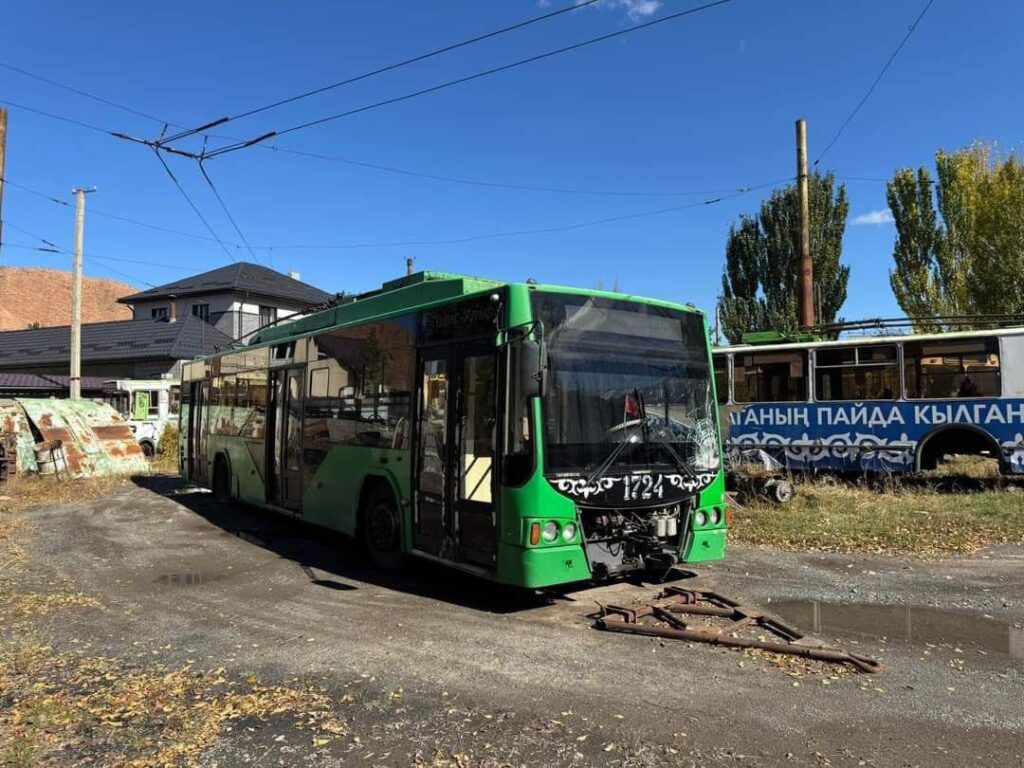
The Bishkek Administrative Court has ruled in favor of a decision by the city's Mayor’s Office to dismantle trolleybus lines legally. Representatives of the municipality successfully argued the legality of their actions. The city government plans to completely replace trolleybuses, an environmentally friendly mode of transportation, with buses. To implement this plan, workers have reportedly cut power lines at night, causing widespread transportation disruptions. This move has faced significant backlash from Bishkek residents, who filed a lawsuit and lodged a complaint with the European Bank for Reconstruction and Development (EBRD), which had financed the purchase of new trolleybuses. This decision follows months of controversy. Previously The Times of Central Asia reported that activists had opposed the dismantling of trolleybus lines, labeling the actions as illegal. A month ago, the same court had deemed the municipality’s actions unlawful after city officials failed to appear in court or provide necessary documentation. Municipal authorities argue that trolleybus operations are financially unsustainable and require substantial investment to maintain the infrastructure. “The city hall continues to work on improving urban space, modernizing public transport, and enhancing infrastructure to make the city safer, more comfortable, and attractive for residents and guests of the capital,” the municipality said. However, activist Bermet Borubayeva and other advocates for the preservation of trolleybuses expressed disappointment with the court’s decision. In an interview with The Times of Central Asia, Borubayeva criticized the ruling, noting that the mayor’s office had only substantiated the dismantling of lines on a few streets, not across the entire city. “Residents demand transparency and legality in the actions of the authorities and will continue to fight for the preservation of trolleybuses. Despite the wrongful actions of city officials, the judge recognizes them as legal. This ignores the interests of the plaintiffs,” Borubayeva said. Human rights groups have vowed to challenge the court’s decision. A new trial concerning Bishkek’s trolleybuses is scheduled for January 13.

Kyrgyz Authorities Tighten Control Over Energy Resource Usage

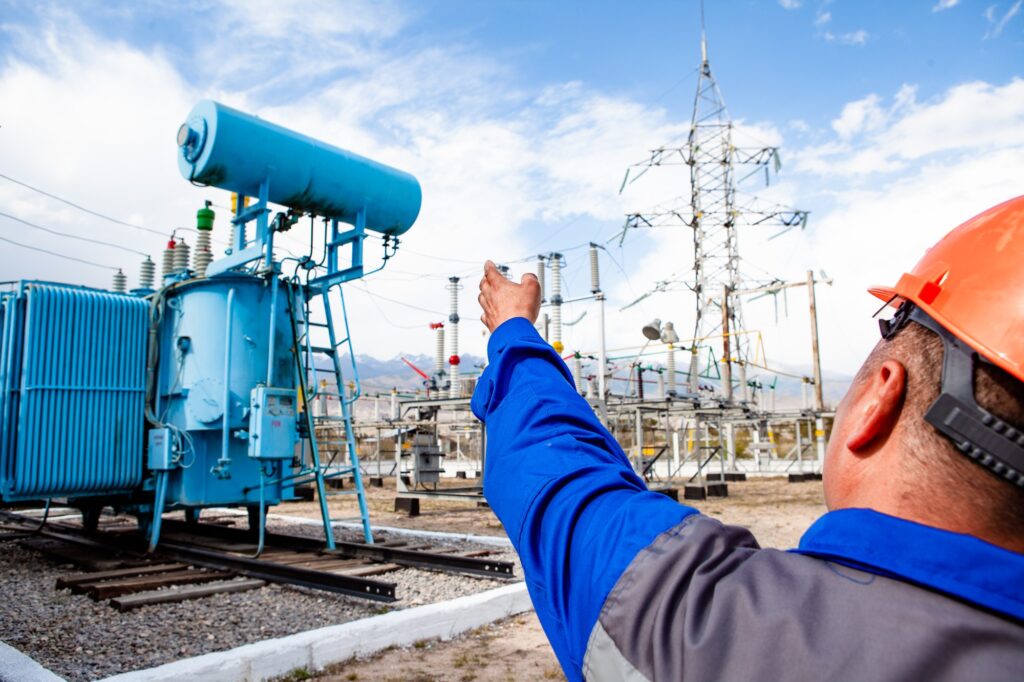
Kyrgyzstan has enacted a new law mandating efficient and rational use of energy resources across all enterprises, both state-owned and private​. The law establishes a dedicated government body tasked with inspecting organizations, enterprises, and buildings to ensure compliance with energy efficiency standards, regardless of ownership. This legislation, previously approved by parliament, assigns local state administrations and municipal authorities the responsibility of ensuring energy efficiency in buildings under their jurisdiction. This includes the adoption of highly efficient energy-consuming devices and equipment. The new law also requires authorities to provide consumers with metering devices for electricity, natural gas, and heat energy. These devices are to be installed in facilities where they are currently absent, allowing for more accurate monitoring and management of energy consumption. Kyrgyzstan continues to face an electricity deficit of 3.9 billion kilowatt-hours, exacerbated by economic growth, increased industrial activity, and rising energy demand​. Despite ongoing efforts, such as the construction of new hydroelectric power plants and importing electricity from neighboring countries, the shortage persists. This has resulted in rolling blackouts across nearly all regions during winter months. As previously reported by The Times of Central Asia, these shortages highlight the urgency of implementing measures to conserve energy​. President Sadyr Japarov has criticized citizens for their lack of responsibility in conserving natural resources. He expressed optimism that the new law would encourage greater accountability and help reduce electricity and heat consumption. By emphasizing energy efficiency and resource management, Kyrgyzstan aims to address its energy challenges while promoting sustainable development.

Kyrgyzstan Plans to Reclaim All Uranium Tailings Dumps

Kyrgyz President Sadyr Japarov addressed the pressing issue of uranium waste during the People's Kurultai (national congress), emphasizing ongoing efforts to reclaim radioactive tailing dumps across the country. According to Japarov, many tailing dumps were constructed during the Soviet era along riverbanks and in headwaters used by local communities for domestic water supply. “We turned to Russia, as the legal successor of the USSR, for assistance. Rosatom allocated RUB 2.1 billion ($20 million). Work is now underway to relocate radioactive waste from hazardous areas to safer locations,” Japarov stated. Japarov highlighted the completion of uranium waste reclamation in Issyk-Kul Oblast, where nuclear waste had posed a threat to Lake Issyk-Kul. Without intervention, the region faced the risk of an ecological disaster. Efforts in Naryn region are also nearing completion, and attention will soon turn to tailing dumps in southern Kyrgyzstan. Local residents have noted that uranium mined in this area was used in the first Soviet atomic bomb. The tailing dump in Jalal-Abad region is particularly concerning due to its potential impact on neighboring Uzbekistan. Toxic waste from the site threatens the region’s ecology through contamination of a local river. Russian companies tasked with reclaiming five tailing dumps in Naryn and Jalal-Abad regions will be exempt from taxes, as previously reported by The Times of Central Asia. This collaboration is part of an agreement to address Kyrgyzstan’s most dangerous uranium waste sites​. According to Kyrgyzstan’s Ministry of Emergency Situations, the country is home to 92 burial sites containing toxic and radioactive materials.

Important Deal Signed for China-Kyrgyzstan-Uzbekistan Railway Project

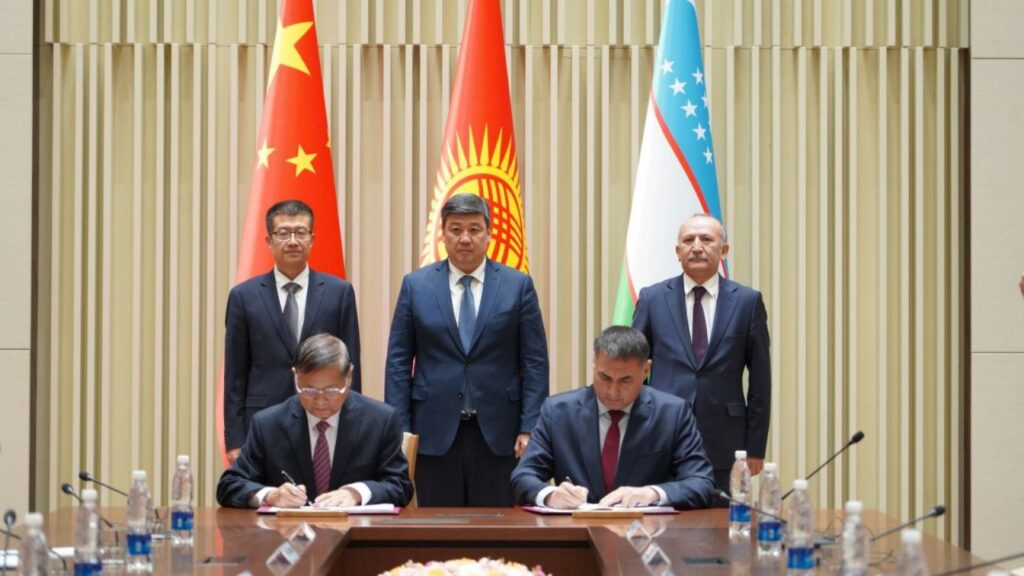
On December 20, Bishkek hosted the signing of an investment agreement between Kyrgyzstan’s Cabinet of Ministers and China-Kyrgyzstan-Uzbekistan Railway Company LLC. The agreement encompasses the design, construction, financing, operation, and maintenance of the China-Kyrgyzstan-Uzbekistan railway. The announcement came shortly after Kyrgyz President Sadyr Japarov revealed that construction on the strategic railway, which will connect the three nations, is set to begin on December 27. The agreement was signed by Kyrgyzstan’s Minister of Transport and Communications, Absattar Syrgabaev, and Zhong Shenggui, Chairman of the Board of Directors of China-Kyrgyzstan-Uzbekistan Railway Company LLC. A Historic Milestone The signing ceremony was attended by Kyrgyz Deputy Chairman of the Cabinet of Ministers and Minister of Water Resources, Agriculture, and Processing Industry Bakyt Torobayev; Li Baojie, Charge d’Affaires of the Chinese Embassy in Kyrgyzstan; and Saidikram Iyazkhodjaev, Uzbekistan’s Ambassador to Kyrgyzstan. In his remarks, Torobayev called the agreement a historic achievement for the three nations, marking the conclusion of a lengthy negotiation process and the start of practical implementation. “This large-scale infrastructure project is of both regional and international significance,” he emphasized. Strategic Importance of the Railway The China-Kyrgyzstan-Uzbekistan railway is a pivotal development for the transport strategies of the participating countries. Currently, neither Kyrgyzstan nor Uzbekistan has a direct railway link with China, while Central Asia’s rail connection to China is limited to a route through Kazakhstan. Furthermore, Kyrgyzstan and Uzbekistan lack a direct railway link between them. The project’s significance was cemented on June 6, 2024, when China, Kyrgyzstan, and Uzbekistan signed an intergovernmental agreement in Beijing. The 523-kilometer railway will traverse Kashgar (China), Torugart, Makmal, Jalal-Abad (Kyrgyzstan), and Andijan (Uzbekistan). Transit and logistics infrastructure will be developed along the route to support its operations. Once completed, the railway is expected to transport up to 15 million tons of cargo annually, significantly enhancing trade and connectivity in the region.

Kyrgyzstan Cracks Down on Major Religious Extremist Organization

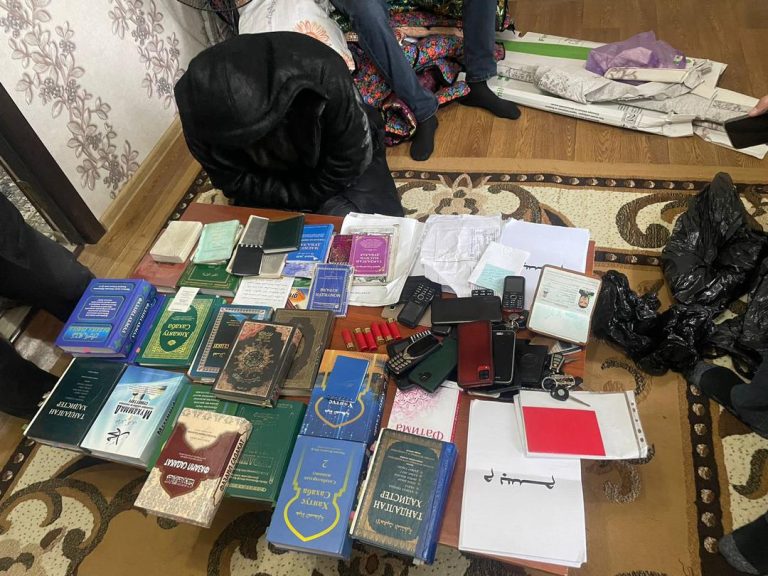
In Jalal-Abad, officers of Kyrgyzstan's State Committee for National Security (SCNS) neutralized one of the largest structural networks of the banned religious extremist organization Hizb ut-Tahrir. According to the SCNS press service, 22 active members of the organization were detained, including the leader (“masul”), five spiritual leaders (“nakibs”), and eight teachers (“mushrifs”) who taught extremist ideology to small groups of 3-5 students in clandestine settings. The SCNS reported that the detainees had been actively spreading destructive ideas, recruiting supporters, and distributing extremist materials for several years. During the operation, authorities discovered an underground printing house where extremist materials were being produced. A large cache of literature, as well as computers and copying equipment, was seized. The SCNS also noted that members of the network used drones to ensure the security of their meetings by detecting possible surveillance by law enforcement agencies. The detainees are currently being held in the SCNS detention center, and investigations are ongoing to identify additional members of the network and their activities. Hizb ut-Tahrir is an international religious extremist organization banned in Kyrgyzstan since 2003. Its goal is to establish a global Islamic caliphate by overthrowing secular governments. The organization is particularly active in Kyrgyzstan's southern regions, where it promotes extremist ideology and recruits new members. Kyrgyz authorities have been proactive in combating Hizb ut-Tahrir, regularly detaining its members and working to suppress its activities.

Kyrgyzstan Unveils Ambitious Growth Plans at People’s Kurultai

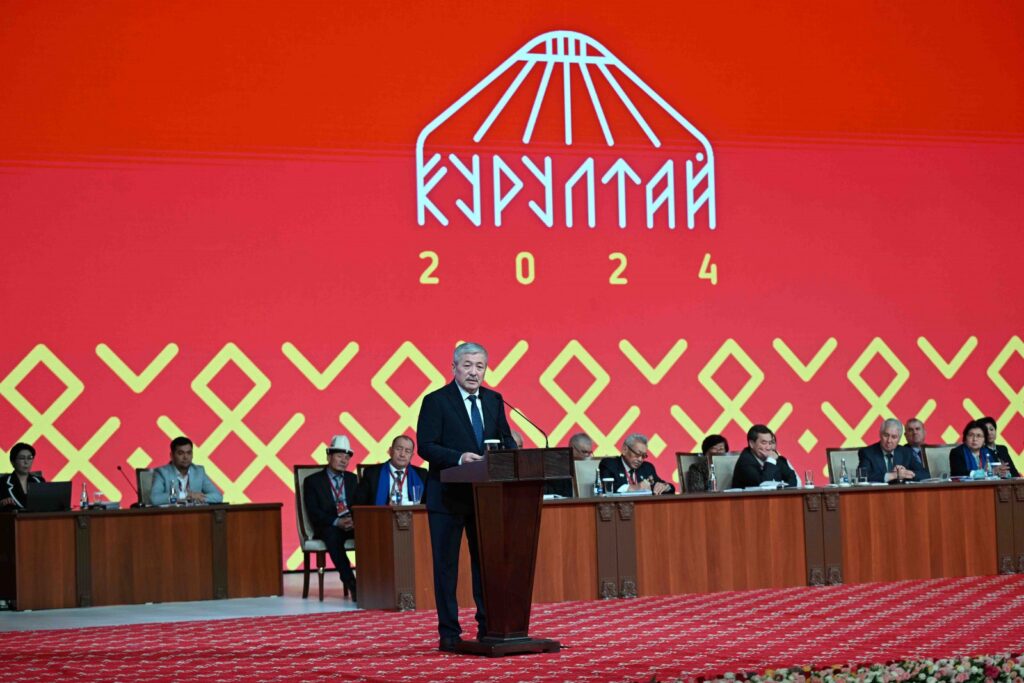
On December 20, Bishkek hosted the third People’s Kurultai (Congress), a platform for direct dialogue between representatives of local communities from across Kyrgyzstan and the country’s top leadership. The event featured opening remarks by President Sadyr Japarov and a detailed address by newly appointed Chairman of the Cabinet of Ministers, Adylbek Kasymaliyev, who outlined the government’s economic priorities and strategic plans for the future. Japarov set the tone for the event by sharing his vision for Kyrgyzstan’s development priorities. He announced that construction of the long-anticipated China-Kyrgyzstan-Uzbekistan railway will commence on December 27. Kasymaliev, in his address, emphasized Kyrgyzstan’s ability to sustain economic momentum, citing the country’s 9% annual GDP growth rate over the past three years. He highlighted key initiatives aimed at transforming Kyrgyzstan’s economic landscape, including: Strategic Infrastructure Projects: Kasymaliyev underscored the significance of the China-Kyrgyzstan-Uzbekistan railway, which is expected to create new economic centers and logistics hubs, effectively positioning Kyrgyzstan as a "land port" in the region. Hydropower and Renewable Energy: As a reliable partner in Central Asia’s hydropower sector, Kyrgyzstan will continue collaborating with Kazakhstan and Uzbekistan on the flagship Kambarata-1 hydroelectric power plant. Kasymaliyev also announced plans to expand solar and wind energy, eliminate state monopolies in the energy sector, and create conditions to attract private investment. Agriculture and Food Security: The government will prioritize agricultural processing to add value to raw products, ensuring food security and bolstering rural economic development. Construction as an Economic Driver: With construction contributing 7.4% of Kyrgyzstan’s GDP - a tenfold increase since 2013 - Kasymaliyev called the industry a vital indicator of economic growth. He noted that construction has significantly improved citizens' well-being over the past three years. Government’s Strategic Goals Kasymaliyev laid out an ambitious roadmap for the Cabinet of Ministers, aiming for the following by 2030: Economic Growth: Maintaining a GDP growth rate of 9% and achieving a GDP of $30 billion. Income Growth: Raising GDP per capita from $2,500 to $4,000. Economic Transition: Shifting from a services-oriented economy to an industrial-agrarian model. Support for Small and Medium Businesses: Increasing their share in GDP from the current 40.5% to 50%. Poverty Reduction: Lowering the poverty rate to 17%. Education Expansion: Ensuring 80% of preschool-age children have access to kindergarten. Kasymaliyev’s address underscored the government’s commitment to comprehensive economic reforms and regional cooperation. His plans reflected an optimistic vision for Kyrgyzstan’s development while addressing key challenges in energy, infrastructure, and social services.