• KGS/USD = 0.01143 0%
  • KZT/USD = 0.00208 0%
  • TJS/USD = 0.10438 -0.1%
  • UZS/USD = 0.00008 0%
  • TMT/USD = 0.28579 0%
  • KGS/USD = 0.01143 0%
  • KZT/USD = 0.00208 0%
  • TJS/USD = 0.10438 -0.1%
  • UZS/USD = 0.00008 0%
  • TMT/USD = 0.28579 0%
  • KGS/USD = 0.01143 0%
  • KZT/USD = 0.00208 0%
  • TJS/USD = 0.10438 -0.1%
  • UZS/USD = 0.00008 0%
  • TMT/USD = 0.28579 0%
  • KGS/USD = 0.01143 0%
  • KZT/USD = 0.00208 0%
  • TJS/USD = 0.10438 -0.1%
  • UZS/USD = 0.00008 0%
  • TMT/USD = 0.28579 0%
  • KGS/USD = 0.01143 0%
  • KZT/USD = 0.00208 0%
  • TJS/USD = 0.10438 -0.1%
  • UZS/USD = 0.00008 0%
  • TMT/USD = 0.28579 0%
  • KGS/USD = 0.01143 0%
  • KZT/USD = 0.00208 0%
  • TJS/USD = 0.10438 -0.1%
  • UZS/USD = 0.00008 0%
  • TMT/USD = 0.28579 0%
  • KGS/USD = 0.01143 0%
  • KZT/USD = 0.00208 0%
  • TJS/USD = 0.10438 -0.1%
  • UZS/USD = 0.00008 0%
  • TMT/USD = 0.28579 0%
  • KGS/USD = 0.01143 0%
  • KZT/USD = 0.00208 0%
  • TJS/USD = 0.10438 -0.1%
  • UZS/USD = 0.00008 0%
  • TMT/USD = 0.28579 0%

Viewing results 223 - 228 of 673

From Eurasia to Greater Central Asia: A Region Reclaims Its Voice

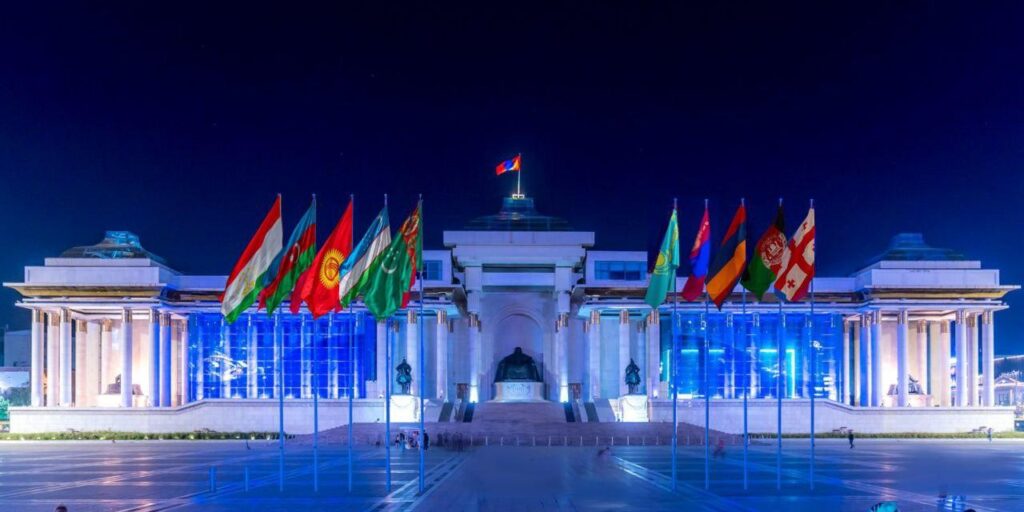
At its most basic, Eurasia refers to the combined landmass of Europe and Asia, stretching from the Atlantic Ocean in the west to the Pacific in the east, and from the Arctic in the north to South and Southeast Asia in the south. Yet when defined in political or economic terms, the concept becomes more complex. This vast region—covering over 36% of the world’s surface area—includes influential Western institutions in the west, such as the European Union and the Council of Europe. In contrast, the east is shaped by post-Soviet and Sino-Russian groupings, including the Commonwealth of Independent States (CIS), the Shanghai Cooperation Organization (SCO), and the Eurasian Economic Union (EAEU). In policy circles, the term "Eurasia" often refers more narrowly to the Caucasus (Armenia, Azerbaijan, Georgia) and Central Asia (Kazakhstan, Kyrgyzstan, Uzbekistan, Tajikistan, Turkmenistan, Mongolia, and Afghanistan). Yet countries in these regions rarely lead the institutions that shape their future. Instead, most regional organizations are dominated by larger powers, primarily Russia and China. One partial exception is the Organization of Turkic States (OTS), though it excludes non-Turkic members such as Tajikistan, Georgia, and Armenia. Many external actors—beginning with Japan's "Central Asia plus Japan" initiative in 2001—have formed dialogue platforms with the five post-Soviet Central Asian republics, often referred to collectively as the "C5." More recently, Turkey, China, the EU, and others have created similar frameworks. While these engagements have value, they are usually shaped by external agendas. The fundamental issue remains: Central Asia lacks strong, self-directed institutions of its own. In response to this institutional vacuum, Professor S. Frederick Starr proposed in 2015 a broader regional framing: Greater Central Asia. He called for moving beyond the Soviet-era definition of Central Asia to include neighboring regions with shared historical, cultural, and strategic ties. He also noted a stark reality: Greater Central Asia is the only region of its kind without its own exclusive institutions—ones not directed by outsiders. That may be starting to change. A more distinct regional identity is emerging, with new frameworks for cooperation gradually taking shape. As countries in the region increasingly define their own development priorities and diversify partnerships beyond Moscow and Beijing, there is growing momentum for a more autonomous and inclusive model of regional integration. One of the clearest examples is CAMCA—an initiative that reflects the full geographic and political scope of Greater Central Asia. Over the past decade, the Central Asia-Caucasus Institute (CACI), founded by Professor Starr, has worked with the Rumsfeld Foundation to support a new generation of regional leaders through the CAMCA Fellowship Program. Originally conceived by alumni of a joint initiative between Starr and former U.S. Secretary of Defense Donald Rumsfeld more than fifteen years ago, the CAMCA Network has become one of the few institutions uniting the entire Greater Central Asia region. Each year, the fellowship culminates in a regional forum hosted by a different CAMCA country. The most recent—held last week in Ulaanbaatar—marked the 11th such gathering and the second time the event has been hosted by CAMCA...

Tajikistan and Central Asia Face Escalating Water Crisis

Central Asia is emerging as one of the regions most vulnerable to drought, according to the latest Global Drought Outlook published by the United Nations. A Region Under Climate Pressure The report highlights a persistent rise in average annual temperatures, diminishing snow cover, and accelerated glacier retreat, particularly in the mountainous regions of Tajikistan and Kyrgyzstan, as key drivers of water insecurity. “Climate change is accelerating glacier retreat... This poses a long-term threat to the region's water security,” the report states. Tajikistan, which holds over 60% of Central Asia’s glaciers, plays a critical role in the region’s hydrology. Agriculture on the Brink The first sector to suffer from prolonged drought is agriculture, which underpins food security across Tajikistan, Uzbekistan, and Turkmenistan. Most agriculture in these countries relies on outdated irrigation systems ill-equipped to handle evolving climate conditions. According to the Food and Agriculture Organization (FAO), the global incidence of droughts rose by 29% between 2000 and 2023. In Central Asia, this trend has resulted in declining crop yields, income losses, and forced livestock sales. In Tajikistan’s Khatlon and Sogd regions, farmers experience income drops of 15-30% during dry years. Despite generating more than 60% of the region's freshwater through glaciers and high-altitude rivers, Tajikistan struggles with its own water shortages. Nearly 60% of water is lost due to leakage in dilapidated canals, compounded by inefficient water management. Rural communities are particularly affected, with thousands of families lacking regular access to clean water. Hydropower and Economic Risks Tajikistan relies on hydropower for over 90% of its electricity. However, inconsistent snowfall and prolonged summer droughts have drastically lowered reservoir levels, threatening national energy stability. More than half of the country’s 14,000 kilometers of irrigation canals require modernization. From 2000 to 2016, drought-related economic losses in Central Asia exceeded $2 billion. In 2023 alone, Tajikistan incurred $5.4 million in damages due to power shortages. Droughts are also impacting public health, employment, and migration. Natural disasters annually affect around 1.4 million people in Uzbekistan and 500,000 in Kazakhstan and Tajikistan. By 2050, drought-related losses are expected to reach 1.3% of regional GDP annually, with up to five million climate migrants projected. Regional and Global Responses Tajikistan, a signatory to the UN Convention to Combat Desertification, is pursuing land restoration and sustainable water management projects. Under the ISCAUZR-2 initiative (Central Asian Initiative on Sustainable Land Management), the country secured nearly $1.5 million to support sustainable agricultural practices. Efforts include the development of fruit tree nurseries, installation of drip irrigation systems, construction of freshwater reservoirs, and deployment of monitoring sensors at water sources. Agroforestry techniques and drought-resistant crop varieties are also being introduced. Despite these initiatives, the region continues to face rising temperatures, Asia has already surpassed a +1.04°C increase and Tajikistan has lost more than 1,000 glaciers. An estimated 10 million people across Central Asia lack sustainable access to safe drinking water. Natural phenomena increasingly compound one another: droughts cause dust storms, which in turn accelerate glacier melt. The UN report warns that without systemic...

Kyrgyz PM Highlights Belt and Road as Strategic Priority

Kyrgyzstan regards China’s Belt and Road Initiative (BRI) as a strategic pillar of bilateral cooperation aimed at modernizing infrastructure and attracting investment, Prime Minister Adylbek Kasymaliyev said during a panel session on BRI prospects at the 2025 Summer Davos in Tianjin on June 24. “In today’s geopolitical climate, marked by tension, uncertainty, and international fragmentation, the Belt and Road Initiative remains a vital platform for global cooperation,” Kasymaliyev stated. He emphasized that Kyrgyzstan was one of the first countries to support and actively participate in the initiative, which was launched 12 years ago and has since expanded to include numerous countries worldwide. Many of these nations, he noted, are already experiencing the tangible benefits of BRI-related cooperation. Five Pillars of Engagement Kasymaliyev outlined five strategic areas in which Kyrgyzstan is cooperating with China under the BRI framework: Transport Connectivity “Kyrgyzstan is ready to leverage its geographic location and transit potential to become a key logistics hub linking Asia and Europe,” he said. The construction of new transport corridors under the BRI is central to this vision, particularly in enhancing Eurasian connectivity. Trade and Economic Cooperation Kasymaliyev called for deeper trade and investment ties. He positioned Kyrgyzstan as a potential gateway for Chinese and other foreign investors to access markets in both the Eurasian Economic Union (EAEU) and the European Union. Financial Sector Development Highlighting ongoing reforms, he noted that Kyrgyzstan’s financial sector, including its capital market, is undergoing active development. Digitalization and Innovation Kyrgyzstan supports the development of the Digital Silk Road and is home to a high technology park offering favorable conditions for resident companies engaged in digital and tech innovation. Energy Cooperation Kasymaliyev pointed to ongoing and planned energy initiatives, including renewable energy projects, as a key area for future collaboration. “Kyrgyzstan remains committed to the principles of the Belt and Road Initiative, which is gaining even greater relevance in today’s complex global environment,” he concluded. High-Level Bilateral Dialogue Also on June 24, Kasymaliyev held talks with Chinese Premier Li Qiang. The Chinese premier reaffirmed Beijing’s commitment to aligning its development strategy with Kyrgyzstan’s and urged continued progress on interconnection projects, most notably the long-discussed China-Kyrgyzstan-Uzbekistan railway.

Kyrgyzstan Seeks Credit Rating Upgrade from Moody’s

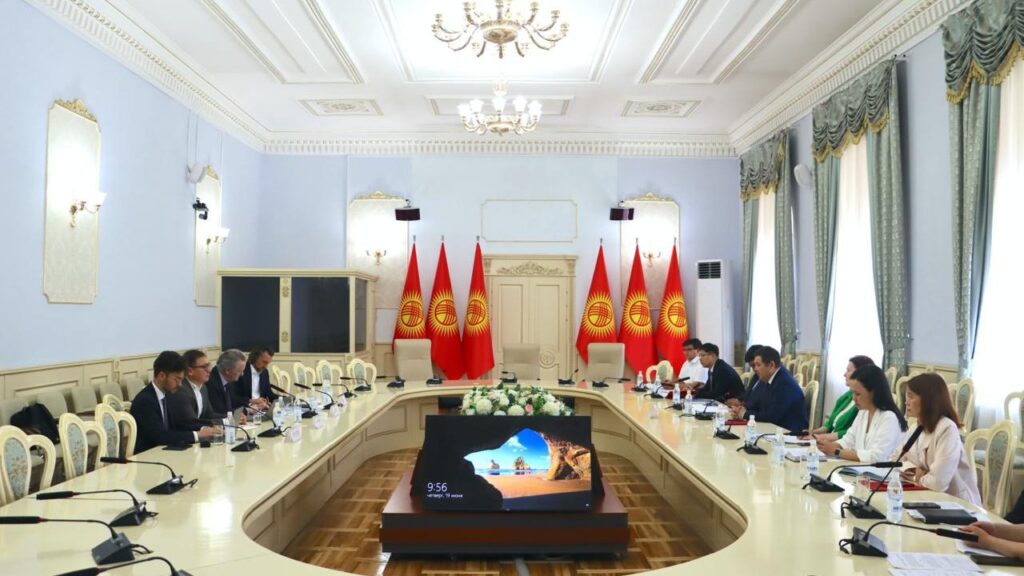
Kyrgyzstan is aiming to secure an upgrade to its sovereign credit rating following a visit by a delegation from international ratings agency Moody’s, and meetings with top government officials, including Minister of Economy and Commerce Bakyt Sydykov. During the discussions, Sydykov presented Moody’s analysts with an overview of Kyrgyzstan’s socio-economic performance, ongoing structural reforms, and fiscal priorities. He formally requested that Moody’s consider raising the country’s credit rating. “The Kyrgyz Cabinet is consistently implementing policies aimed at maintaining macroeconomic stability, fostering a competitive environment, and enhancing social protections for our citizens,” Sydykov stated. He noted that these measures are improving the investment climate and strengthening the country's financial position. Moody’s delegation also held separate consultations with representatives from the Ministry of Finance, the National Bank, and other key state institutions. The agency’s analysts focused on Kyrgyzstan’s fiscal policy, public debt sustainability, long-term economic growth prospects, and its investment climate. Government officials said that comprehensive data on macroeconomic indicators and policy initiatives were shared during what they described as a “constructive” dialogue. The consultations are seen as an important step in Kyrgyzstan’s engagement with international financial institutions. Moody’s currently assigns Kyrgyzstan a long-term sovereign credit rating of B3 with a stable outlook. This rating places the country in the speculative category, implying elevated credit risk, but with no immediate threat of default. In 2023, Moody’s revised Kyrgyzstan’s outlook from “negative” to “stable.” The agency at the time cited concerns over the nationalization of the Kumtor gold mine and the potential impact of Western sanctions on Russia, Kyrgyzstan’s primary trading partner. However, the feared capital flight and deterioration in economic indicators did not materialize. Despite this, Moody’s has continued to flag key vulnerabilities, including high levels of state intervention in the economy, lingering risks linked to domestic political instability, and the unpredictability of some government decisions. The next sovereign rating update from Moody’s is expected later this year.

Artificial Glacier Technology to Support Kyrgyz Farmers Amid Climate Change

Artificial glacier technology is emerging as a promising solution to help Kyrgyz farmers adapt to the growing challenges of climate change. By enhancing irrigation efficiency and ensuring a more reliable water supply, these innovations aim to strengthen the resilience of mountain communities dependent on agriculture. The technology was the focus of a roundtable discussion held on June 17 in Bishkek, titled “Technical Solutions for Improving Water Availability in Irrigation Systems for Mountain Communities in Kyrgyzstan Under Climate Change.” At the event, Oleg Guchgeldiyev, the Food and Agriculture Organization (FAO) Representative in Kyrgyzstan, presented a new FAO initiative to develop and expand artificial glacier infrastructure in the country. The project is being implemented in partnership with the Ministry of Water Resources, Agriculture and Processing Industry of Kyrgyzstan. With natural glaciers rapidly retreating due to global warming, water scarcity during the summer months has become a critical concern for Kyrgyz farmers. Artificial glaciers, engineered ice structures formed in winter and melted during warmer periods, offer a low-cost, scalable method of ensuring water availability during the growing season. “Artificial glaciers are not just a technological solution,” Guchgeldiyev said. “These innovations serve as a pillar of resilience for rural communities in a changing climate. Such projects strengthen food security and promote long-term agricultural development.” How the Technology Works The FAO’s “Glacier - Reservoir - Farmer” system combines artificial glaciers with small water reservoirs and modern irrigation methods such as drip systems. Water is collected from mountain springs and funneled through a pipeline to a vertical outlet pipe, 10 to 15 meters high. The elevation difference generates pressure that sprays water into the air. In winter, this spray freezes, gradually forming an ice cone. In summer, the stored ice melts and is directed to nearby reservoirs, from which it is distributed to fields for irrigation and livestock use. “Location is critical for glacier construction,” noted Matraim Jusupov, an FAO expert in agriculture and water management. “On average, one artificial glacier can supply water for 300 to 500 hectares of land.” The integration of reservoirs and pipeline systems minimizes water loss and enhances distribution efficiency, improving crop yields and rural livelihoods. Early Implementation and Expansion Kyrgyzstan already has over 30 artificial glaciers, with early projects implemented in the Uzgen, Kochkor, and Aksy districts.  As previously reported by The Times of Central Asia, In autumn 2024, seven more artificial glaciers were constructed in villages across the Batken region as part of the FAO’s broader climate adaptation strategy. These initiatives are part of Kyrgyzstan’s growing efforts to modernize its water infrastructure and build resilience against the intensifying impacts of climate change on its agriculture-dependent economy.

Citizens of Central Asia Face New Entry Restrictions To Russia and the U.S.

Citizens of Central Asian countries are encountering a wave of new travel restrictions from two major global powers, Russia and the United States. In recent weeks, Moscow and Washington have both introduced or expanded measures that complicate entry for citizens of the region, raising concerns about migration rights, bilateral relations, and regional security. Russia Tightens Border Rules Starting June 30, 2025, citizens from visa-free countries, including Kazakhstan, will be required to obtain a special QR code to enter Russia. The code must be secured in advance via the Gosuslugi RuID app, at least 72 hours before travel, or four hours in emergency cases. The app is not yet operational, but Russian Prime Minister Mikhail Mishustin has confirmed its planned launch on the same date. While Russia maintains visa-free arrangements with over 30 countries, including Argentina, Brazil, Israel, and all CIS members, these new digital entry requirements apply broadly. Exceptions include citizens of countries already subject to visa regimes, diplomats, and citizens of Belarus, a Union State member. Additionally, as of January 1, 2025, the allowable visa-free stay in Russia for citizens of these countries has been reduced from 90 days per half-year to 90 days per calendar year. Many Kazakhstani travelers fear that the new rules will result in long queues and technical delays at border crossings. More broadly, critics point out that the move undermines the spirit of the Eurasian Economic Union (EAEU), whose member states, Kazakhstan, Kyrgyzstan, Armenia, Belarus, and Russia, are supposed to enjoy facilitated mobility. Response to the Crocus City Hall Attack The changes come in the wake of the March 22, 2024 terrorist attack at Moscow’s Crocus City Hall, which left at least 145 dead and more than 500 injured. The suspects in the attack were reportedly citizens of Tajikistan, sparking a wave of anti-migrant sentiment in Russia. According to Temur Umarov, a Berlin-based political analyst at the Carnegie Center, Russian authorities are prioritizing security over economic necessity. "Russia is doing everything possible to reduce the number of migrants from Central Asia," he said, noting the vital role these workers play in several Russian industries. Regional Backlash Public figures and officials in Kyrgyzstan, Uzbekistan, and Tajikistan have expressed frustration over Russia’s tightened migration policy. In Kyrgyzstan, the Ministry of Foreign Affairs lodged a formal protest with the Russian ambassador following a widely publicized incident in which Kyrgyz citizens were forcibly removed from a Moscow bathhouse. Member of Parliament Zhana Akayev strongly condemned the treatment of Kyrgyz nationals: “Partners and allies do not behave like this. They are humiliating our citizens,” he said. Tajik Foreign Minister Sirojiddin Muhriddin criticized Russia’s approach as inhumane and called for migration policies that respect mutual interests and fundamental rights. In Uzbekistan, several bloggers have gone further, calling for entry bans on Russian public figures, including Foreign Ministry spokeswoman Maria Zakharova, for alleged chauvinistic remarks. Kazakhstan has taken a more measured stance. Aibek Smadiyarov, a spokesman for the Kazakh Foreign Ministry, emphasized that the QR code system does not constitute a...