• KGS/USD = 0.01144 0%
  • KZT/USD = 0.00207 0%
  • TJS/USD = 0.10419 -0.1%
  • UZS/USD = 0.00008 0%
  • TMT/USD = 0.28571 0%
  • KGS/USD = 0.01144 0%
  • KZT/USD = 0.00207 0%
  • TJS/USD = 0.10419 -0.1%
  • UZS/USD = 0.00008 0%
  • TMT/USD = 0.28571 0%
  • KGS/USD = 0.01144 0%
  • KZT/USD = 0.00207 0%
  • TJS/USD = 0.10419 -0.1%
  • UZS/USD = 0.00008 0%
  • TMT/USD = 0.28571 0%
  • KGS/USD = 0.01144 0%
  • KZT/USD = 0.00207 0%
  • TJS/USD = 0.10419 -0.1%
  • UZS/USD = 0.00008 0%
  • TMT/USD = 0.28571 0%
  • KGS/USD = 0.01144 0%
  • KZT/USD = 0.00207 0%
  • TJS/USD = 0.10419 -0.1%
  • UZS/USD = 0.00008 0%
  • TMT/USD = 0.28571 0%
  • KGS/USD = 0.01144 0%
  • KZT/USD = 0.00207 0%
  • TJS/USD = 0.10419 -0.1%
  • UZS/USD = 0.00008 0%
  • TMT/USD = 0.28571 0%
  • KGS/USD = 0.01144 0%
  • KZT/USD = 0.00207 0%
  • TJS/USD = 0.10419 -0.1%
  • UZS/USD = 0.00008 0%
  • TMT/USD = 0.28571 0%
  • KGS/USD = 0.01144 0%
  • KZT/USD = 0.00207 0%
  • TJS/USD = 0.10419 -0.1%
  • UZS/USD = 0.00008 0%
  • TMT/USD = 0.28571 0%

Viewing results 253 - 258 of 655

Central Asia’s Crypto Gamble: Growth Amid Uncertainty

Central Asian countries are approaching the cryptocurrency and crypto-mining industry at varying speeds. While some are just beginning to explore the sector, others have already taken significant, albeit sometimes contradictory, steps. Kazakhstan: From Mining Powerhouse to Regulatory Caution Kazakhstan once emerged as a global leader in bitcoin mining. Between mid-2021 and early 2022, the country ranked third in the world in terms of bitcoin mining capacity, accounting for 13.22% of global computing power, trailing only the United States and China. This boom was fueled by low electricity costs, favorable tax conditions, and an influx of miners fleeing stricter regulations in China. However, the rapid growth strained Kazakhstan’s energy infrastructure. The Ministry of Energy reported that while annual electricity consumption had previously grown by an average of 2%, in 2021 it surged by 6.1% and up to 12% in the densely populated southern energy zone. Digital mining was cited as the primary cause. By early 2025, Kazakhstan’s share of global mining capacity had dropped to just 1.4%, placing it outside the top five globally. Although around 60 companies are currently active in the sector, some operations have stalled. Tax legislation has tightened since 2022, with miners required to pay 1-2 tenge per kilowatt-hour depending on the energy source. Illegal mining and unlicensed exchanges remain a challenge; in 2024 alone, 12 criminal cases were launched against underground platforms. Despite these setbacks, experts see potential for a more sustainable and regulated industry. The Astana International Financial Center (AIFC) has become the hub for cryptocurrency operations. A 2023 law on digital assets and updated rules from the Astana Financial Services Authority (AFSA) in 2024 have laid a more comprehensive legal foundation, including provisions on cybersecurity and anti-money laundering. Over 10 licensed cryptocurrency exchanges now operate in Kazakhstan, including global names like Binance, Bybit, and Bitfinex Securities. New initiatives such as the digital tenge and the Cryptocard aim to further integrate blockchain into daily financial transactions. President Kassym-Jomart Tokayev reaffirmed the government's commitment to digital transformation in March 2025: “The development of the digital asset industry and blockchain technology plays a major role. Urgent measures must be taken to liberalize regulation, ensure the legal circulation of digital assets and crypto exchanges, and attract investment in digital mining,” he said. Uzbekistan: State-Supported Growth Uzbekistan has made blockchain and digital assets a policy priority. The National Agency for Perspective Projects (NAPP) is the main regulatory body. Between 2022 and 2024, the agency issued 14 licenses to cryptocurrency companies. The UzNEX exchange, an internationally licensed platform, has played a key role in developing the crypto market in both Uzbekistan and the wider region. Its services include crypto asset trading, staking, and NFT transactions. In 2024, it expanded its list of supported cryptocurrencies (including Toncoin) and plans to launch a digital art platform. Total trading volume exceeded $1 billion in 2024. Kyrgyzstan: Building a Legal Framework Since 2022, Kyrgyzstan has actively developed its regulatory environment for digital assets. The key legislation is the Law on Virtual Assets, which outlines...

Kyrgyz Drivers to Face On-the-Spot Traffic Rule Tests During Stops

Beginning September 1, drivers in Kyrgyzstan may be required to demonstrate their knowledge of traffic regulations during routine stops by traffic police. The directive aims to reduce road accidents by ensuring that motorists are familiar with basic driving rules. The new policy was announced by government spokesperson Askat Alagozov on his Facebook page. Oral Exams During Traffic Stops Under the initiative, drivers found violating traffic rules may be asked to take an oral exam on the spot. Those who fail will have their driver’s license temporarily suspended until they pass the test. According to Alagozov, the fee for the first retest attempt will be 500 Kyrgyz som (approximately $5.70). The cost increases with each failed attempt, 1,000 KGS ($11.50) for the second, 2,000 KGS ($23) for the third, and 4,000 KGS ($46) for the fourth try. The entire testing process will be recorded on video to help prevent corruption. Drivers will regain their licenses immediately upon successfully passing the exam. A Response to Rising Road Fatalities Alagozov said the initiative responds to the country’s high number of traffic accidents, which have claimed hundreds of lives. He attributed many of these incidents to drivers lacking basic knowledge of road safety rules. “Because of those who do not know the rules of the road, children become orphans, parents lose their sons and daughters, experiencing terrible tragedies. Many become disabled,” he said. He added that prior to 2020, driver's licenses were routinely sold for 15,000 to 20,000 KGS ($80 to $150), with only 20-30% of motorists having actually passed the required exams. Mixed Reactions From the Public The initiative has sparked heated debate on social media. While some citizens support the move as a necessary step toward improving road safety, others fear it could open the door to new forms of corruption and extortion by traffic police. Authorities maintain that the video-recorded testing procedure will act as a safeguard against abuse, and insist the new policy is a serious step toward safer roads in Kyrgyzstan.

Artificial Glaciers Created in Kyrgyzstan for Sustainable Agriculture and Climate Change Adaptation

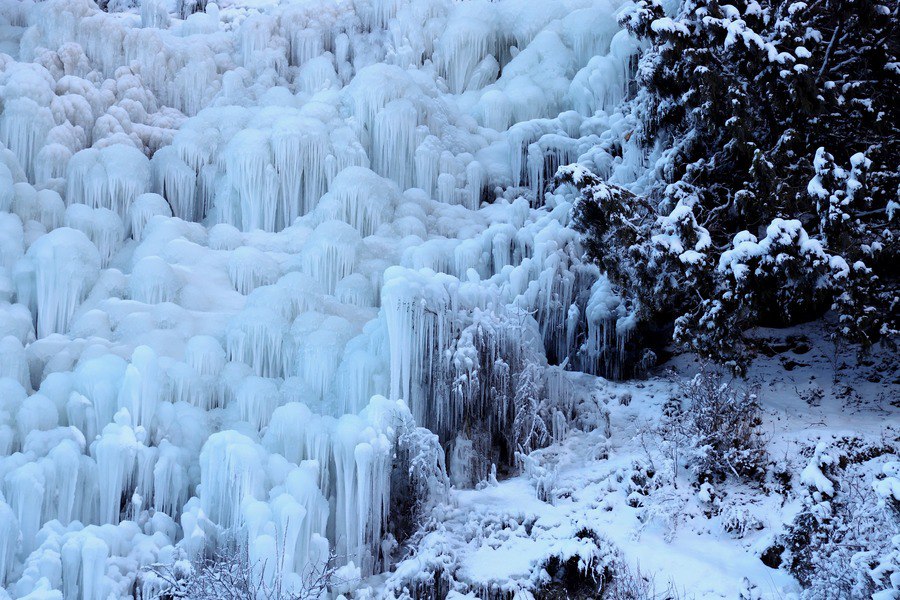
As the international community observed the first-ever World Day for Glaciers on March 21, a project led by the Food and Agriculture Organization of the United Nations (FAO) has demonstrated how artificial glaciers can help rural communities in Kyrgyzstan adapt to the effects of climate change. As part of the FAO initiative, seven artificial glaciers were constructed in villages across the Batken region of southern Kyrgyzstan in late autumn 2024​. Over the winter, these glaciers accumulated more than 1.5 million cubic meters of ice. As spring temperatures rise, the ice begins to melt, providing essential irrigation water for downstream agricultural lands. According to FAO experts, more than 1,750 hectares of land, equivalent to 2,451 football fields, can be irrigated using furrow irrigation. If modern systems are introduced, this could expand to as much as 15,000 hectares. These artificial glaciers are relatively simple structures designed to collect and freeze water in winter for agricultural use in summer, including for irrigation and livestock. On average, one glacier can support irrigation on 300 to 500 hectares. “The key is to choose the right location,” said Matraim Jusupov, FAO expert on water-saving technologies. “We channel water from a mountain spring through a pipeline ending in a vertical pipe 10-15 meters high. The elevation difference generates pressure, which allows us to spray water into the air. At sub-zero temperatures, it freezes and gradually forms an ice cone.” To build the glaciers, 6,956 meters of pipeline were laid. FAO supplied construction materials and technical guidance, while the work was carried out by local residents. The FAO office in Kyrgyzstan has since developed universal guidelines for building artificial glaciers and distributed them across the country. Based on this experience, new glacier construction is already underway in other regions. Global Glacier Melt According to the World Meteorological Organization (WMO) and the World Glacier Monitoring Service (WGMS), five of the past six years have seen the fastest glacier retreat ever recorded. The years 2022–2024 marked the largest three-year loss of glacier mass in history​. Once regarded as “eternal ice,” many glaciers are now unlikely to survive the 21st century. There are more than 275,000 glaciers worldwide, covering approximately 700,000 square kilometers. Along with ice sheets, glaciers store about 70% of the planet’s freshwater. Their depletion threatens water supplies for hundreds of millions of people. In response to this growing crisis, the UN General Assembly declared 2025 the International Year of Glaciers’ Preservation and designated March 21 as the annual World Day for Glaciers. The initiative aims to raise awareness of the critical role glaciers play in the global climate and hydrological systems, and their significance to economic and ecological stability. UNESCO and WMO are leading the global coordination effort, supported by over 200 organizations and 35 countries. Kyrgyzstan’s Initiatives A Kyrgyz delegation led by Dinara Kemelova, the President’s Special Representative for the Five Years of Action for Mountain Regions Development, participated in World Day for Glaciers events at UNESCO headquarters in Paris on March 20-21​. The meetings focused on...

Tajik Entrepreneurs Return to Kyrgyz Markets

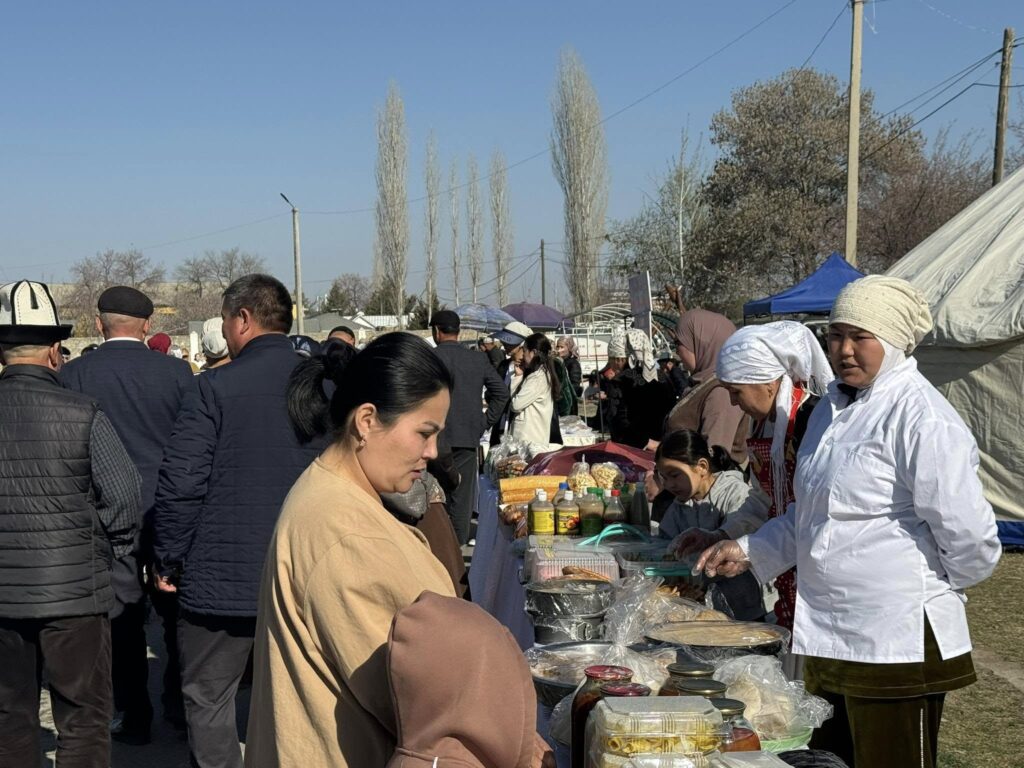
Following the reopening of the Kyrgyz-Tajik border, Tajik entrepreneurs have resumed visits to markets in Batken Oblast, Kyrgyzstan. Local media report that residents are welcoming the return of their southern neighbors​. Once a week, the market in Ak-Turpak village becomes a hub of activity, drawing sellers and buyers from across the region and neighboring countries. A major draw is Batken rice, which resellers purchase in bulk for export to Uzbekistan and Russia. According to local vendors, the market can sell up to 200 tons of rice on a busy day. Rice is cultivated across 3,000 hectares in this border region and remains a vital source of income for many farmers. With the border now open and economic ties restored, buyers from Isfara, Tajikistan, have begun frequenting the Ak-Turpak market, offering a welcome boost to Kyrgyz vendors. As previously reported by The Times of Central Asia, residents of Batken’s border districts also benefit from cross-border trade, often finding it more economical to purchase certain fruits and vegetables in Tajikistan than in Kyrgyzstan’s oblast centers. On March 13, 2025, following the signing of bilateral agreements, the Kairagach and Kyzyl-Bel border checkpoints in Batken Oblast officially reopened. According to Kyrgyzstan’s Border Guard Service, approximately 5,000 people crossed the Kyrgyz-Tajik border between March 13 and 17. An additional 500 individuals crossed by air. Prior to the agreement, all crossings had remained closed since 2021.

Power Shifts in Central Asia: The Unpredictable Path of Leadership

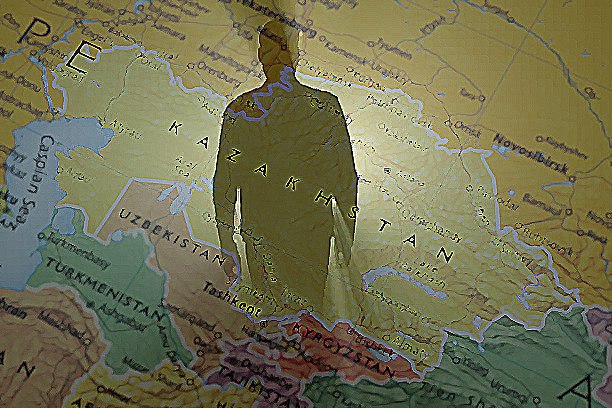
European Union Commissioner for International Partnerships Josef Sikela has concluded his tour of Central Asia, a visit conducted against the backdrop of global geopolitical turbulence. Unlike previous engagements, where European officials often criticized the region’s leadership for a lack of democratic progress, Sikela refrained from making demands on local governments. Historically, Europe has accused Central Asian states of authoritarianism and the entrenchment of long-serving leaders. However, the idea that power is uniquely permanent in the region is increasingly questioned. Critics point to Western examples, such as Angela Merkel’s 16-year tenure as Germany’s chancellor, and alleged electoral manipulation within the EU, such as in Romania, where elections were annulled after an undesired candidate’s victory. Meanwhile, in Central Asia, even presidents once considered “eternal” have eventually left office, sometimes peacefully, sometimes under turbulent conditions. Kyrgyzstan: The Unpredictable Outlier Kyrgyzstan is often described as a "democratic exception" within Central Asia, yet its history is marked by political instability and frequent leadership changes, arguably more so than in many of the world’s most conflict-prone regions. The country’s first president, Askar Akayev, held power from 1990 to 2005. Though re-elected three times, his rule ended in March 2005 when protests erupted over parliamentary election results that heavily favored pro-government candidates. Demonstrators stormed the Government House in Bishkek, prompting Akayev to flee. Reports, though unverified, claimed he was smuggled out wrapped in a carpet. Following Akayev’s ouster, Kurmanbek Bakiyev took power, but his rule ended in 2010 after violent unrest. His downfall was allegedly facilitated by Kazakhstan’s intelligence services, and he later found political asylum in Belarus under President Alexander Lukashenko. Since Bakiyev’s departure, Kyrgyzstan has continued to experience political turbulence. Presidents Almazbek Atambayev (2010-2017) and Sooronbai Jeenbekov (2017-2020) both left office under pressure. Atambayev’s tenure saw a diplomatic fallout with Kazakhstan, while Jeenbekov resigned in 2020 amid protests over parliamentary elections. His successor, Sadyr Japarov, remains in office, but whether he will complete his term is an open question. Uzbekistan: Reform Within Limits Islam Karimov, Uzbekistan’s first post-Soviet leader, ruled for over 26 years before his death in 2016. While he maintained a strictly centralized government, his tenure was also marked by violent crackdowns, most notably the Andijan uprising in 2005, which resulted in a Western diplomatic fallout​. His successor, Shavkat Mirziyoyev, has introduced some reforms, loosening restrictions on civil liberties and the economy. However, the fundamental structure of state control remains intact, with opposition movements still tightly monitored. Kazakhstan: From Nazarbayev to Tokayev Kazakhstan’s transition from Nursultan Nazarbayev to Kassym-Jomart Tokayev is often described as managed succession rather than a genuine power shift. Nazarbayev, who led Kazakhstan for nearly three decades, officially stepped down in 2019, yet retained significant influence until the January 2022 unrest, which forced him to relinquish much of his remaining power. These protests, initially sparked by fuel price hikes, rapidly escalated into anti-government riots. While official accounts describe the unrest as an attempted coup orchestrated by figures within Nazarbayev’s inner circle, critics suggest Tokayev used the crisis to consolidate power....

UN Human Rights Commissioner Raises Alarm Over Air Quality in Bishkek

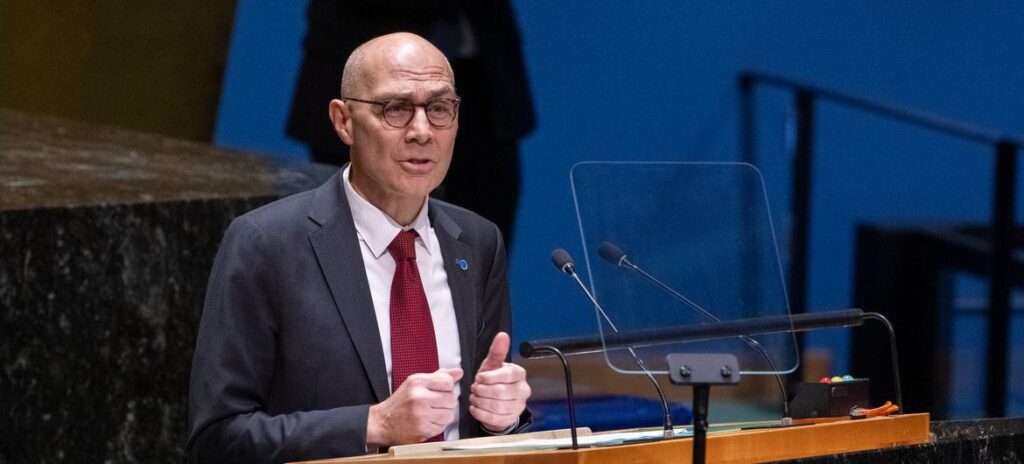
UN High Commissioner for Human Rights Volker Türk has expressed concern over deteriorating air quality in Bishkek during his official visit to Kyrgyzstan. The visit, focused on civil rights, freedom of speech, and economic development, also addressed pressing environmental issues affecting the Kyrgyz capital. Speaking at a press conference, Türk emphasized that Kyrgyzstan ranks among the most polluted countries in the region, and that air quality in Bishkek poses a serious threat to public health and the environment. “Despite some progress and financial support from international organizations, much more needs to be done to protect the environment,” he said. Türk urged Kyrgyz authorities to intensify efforts to combat climate change and to increase investment in green initiatives. He underscored the importance of climate finance and the need for comprehensive, cooperative action. “This issue must be addressed in partnership and through a climate change lens,” he said. “While there have been financial injections from international donors, they have not yet translated into sufficient results. Each country bears responsibility. Green investments are essential, not just for Kyrgyzstan, but for all nations. The government must take stronger, more effective action.” According to the 2024 World Air Quality Report from IQAir, cities across Central Asia consistently exceed World Health Organization (WHO) recommendations for fine particulate matter (PM2.5). The report notes the following annual average concentrations (in micrograms per cubic meter): Dushanbe: 46.3 Tashkent: 31.4 Bishkek: 21.2 Osh: 20.5 Almaty: 20.3 Astana: 15.4 For context, the WHO’s recommended safe limit for PM2.5 is no more than 5 micrograms per cubic meter.