• KGS/USD = 0.01144 0%
  • KZT/USD = 0.00216 0%
  • TJS/USD = 0.10659 0%
  • UZS/USD = 0.00008 0%
  • TMT/USD = 0.28530 0%
  • KGS/USD = 0.01144 0%
  • KZT/USD = 0.00216 0%
  • TJS/USD = 0.10659 0%
  • UZS/USD = 0.00008 0%
  • TMT/USD = 0.28530 0%
  • KGS/USD = 0.01144 0%
  • KZT/USD = 0.00216 0%
  • TJS/USD = 0.10659 0%
  • UZS/USD = 0.00008 0%
  • TMT/USD = 0.28530 0%
  • KGS/USD = 0.01144 0%
  • KZT/USD = 0.00216 0%
  • TJS/USD = 0.10659 0%
  • UZS/USD = 0.00008 0%
  • TMT/USD = 0.28530 0%
  • KGS/USD = 0.01144 0%
  • KZT/USD = 0.00216 0%
  • TJS/USD = 0.10659 0%
  • UZS/USD = 0.00008 0%
  • TMT/USD = 0.28530 0%
  • KGS/USD = 0.01144 0%
  • KZT/USD = 0.00216 0%
  • TJS/USD = 0.10659 0%
  • UZS/USD = 0.00008 0%
  • TMT/USD = 0.28530 0%
  • KGS/USD = 0.01144 0%
  • KZT/USD = 0.00216 0%
  • TJS/USD = 0.10659 0%
  • UZS/USD = 0.00008 0%
  • TMT/USD = 0.28530 0%
  • KGS/USD = 0.01144 0%
  • KZT/USD = 0.00216 0%
  • TJS/USD = 0.10659 0%
  • UZS/USD = 0.00008 0%
  • TMT/USD = 0.28530 0%

Viewing results 55 - 60 of 790

Russia Says TV Host’s Remarks on Central Asia Do Not Reflect State Policy

Russia’s Foreign Ministry moved on January 16 to distance the Kremlin from comments by television host Vladimir Solovyov after his remarks about potential military action in Central Asia provoked backlash across the region. Foreign Ministry spokesperson Maria Zakharova stated that comments by television presenters do not represent the official position of the Russian government and that Russia’s foreign policy is articulated only through authorized state channels, with relations with Central Asian countries described as based on partnership and respect for sovereignty. The clarification followed criticism in Uzbekistan, Kyrgyzstan, and Kazakhstan after Solovyov suggested that Moscow could extend its “special military operation” framework beyond Ukraine and into Central Asia. In Kyrgyzstan, public calls emerged to restrict Solovyov’s entry into the country, while officials indicated that the government would respond differently if similar claims were made by Russian state officials rather than a media figure. In Kazakhstan, political commentators warned that rhetoric questioning sovereignty risked damaging relations with Russia, even in the absence of a formal diplomatic protest. Solovyov made the remarks during a January 10 broadcast of his program “Solovyov Live.” During the segment, he described Central Asia as part of Russia’s sphere of influence and argued that international law should not constrain Moscow’s actions in territories it considers strategically important. He drew parallels with Russia’s military campaign in Ukraine and implied that states within Russia’s perceived geopolitical space could be treated differently from countries outside it. The language resonated strongly in Uzbekistan, where academics, analysts, and commentators criticized the implication that sovereignty could be conditional. Public discussion focused on the suggestion that Central Asian states might face pressure based on historical ties rather than be treated as independent actors. Critics described the framing as inconsistent with the principles of statehood established after the collapse of the Soviet Union in 1991. An Uzbek academic later issued a rebuttal rejecting the idea that Central Asia could be treated as a single external “zone” governed by different rules. The response emphasized that regional states have distinct political systems, alliances, and security priorities, and that none had delegated authority over those choices to outside powers. The episode highlighted the influence of Russian political talk shows during wartime. Figures like Solovyov command large domestic audiences and operate in an environment where commentary often overlaps with geopolitical messaging. In Central Asia, such remarks attract close scrutiny regardless of whether they carry formal policy status, particularly when they echo language used by Russian officials in other conflicts. Economic and social ties heighten that sensitivity. Millions of Central Asian citizens work in Russia, and remittances remain a significant factor in several regional economies. Russia also plays a role in regional security arrangements and energy transit routes. Statements implying that sovereignty could be overridden therefore carry weight far beyond television studios. No Central Asian government has announced formal diplomatic measures in response to Solovyov’s remarks, and Moscow’s intervention appears to have contained the immediate fallout. The episode nonetheless shows how rhetoric shaped by the war in Ukraine readily carries...
U.S. to Pause Immigrant Visa Processing; Central Asia Affected

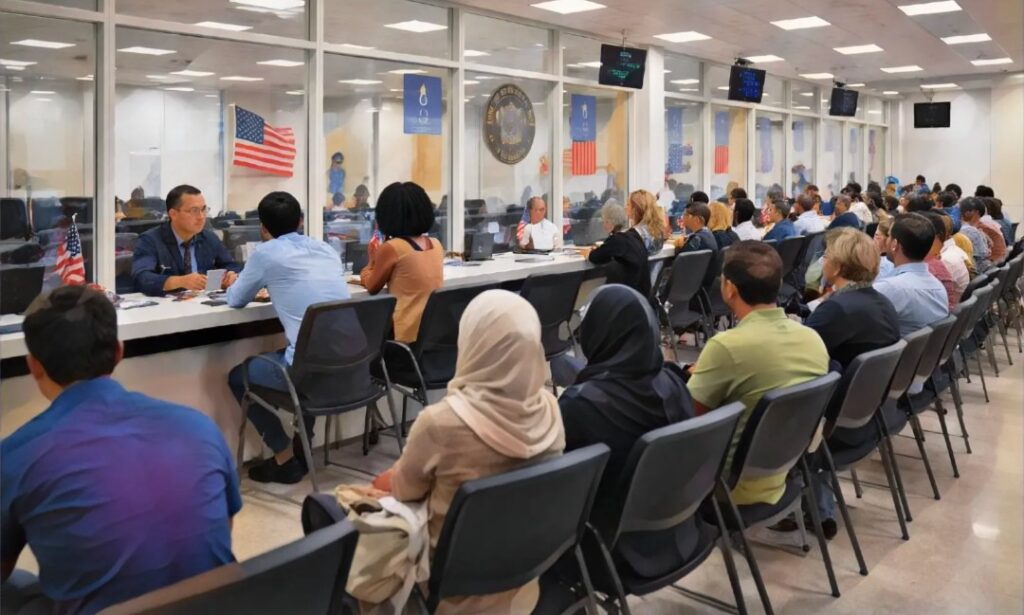
The U.S. State Department said on Wednesday that it will stop immigrant visa processing from 75 countries, and some reports said the affected nations include several in Central Asia.   The measure is part of a broad crackdown on immigration that has unfolded during the second term of U.S. President Donald Trump, who has said many people from other countries are threatening U.S. security and taking advantage of American resources. Critics say immigration raids and some other administration initiatives have gone too far, actually making U.S. cities less safe and violating basic rights.   “The State Department will pause immigrant visa processing from 75 countries whose migrants take welfare from the American people at unacceptable rates. The freeze will remain active until the U.S. can ensure that new immigrants will not extract wealth from the American people,” the U.S. agency said on X.  “The pause impacts dozens of countries – including Somalia, Haiti, Iran, and Eritrea – whose immigrants often become public charges on the United States upon arrival,” the State Department said. “We are working to ensure the generosity of the American people will no longer be abused.” The statement did not list all the countries affected by the new measure, which takes effect on January 21. Nor did it say how long the pause will last.  However, Fox News Digital, which reported that it had seen a State Department memo about the new policy, published a list of what it said were the 75 affected countries. It included Kazakhstan, Kyrgyzstan, and Uzbekistan. Tajikistan and Turkmenistan were not on the list. Some other media outlets reported the same information.  The State Department policy appeared to be partly linked to a Minnesota scandal in which dozens of people, including many Somali-Americans, were convicted of defrauding the state of welfare funds. Minneapolis, Minnesota’s biggest city, is currently a flashpoint for tension and protests over U.S. Immigration and Customs Enforcement (ICE) operations.   The new State Department measure does not apply to non-immigrant visas, which would include people traveling to the United States for tourism or business. But additional restrictions are also in place for people seeking those temporary visas.  Nationals from 38 countries, including Kyrgyzstan, Tajikistan, and Turkmenistan, are subject to U.S. visa bonds under a State Department policy. The policy took effect for citizens from Turkmenistan on January 1 and will be implemented for nationals from Kyrgyzstan and Tajikistan starting on January 21.

From Tehran to Tashkent: How Iran’s Crisis and U.S. Tariffs Reverberate Across Central Asia

At the end of 2025, Iran once again emerged as a flashpoint on the global political map. Mass protests erupted across the country, fueled by spiraling inflation and economic hardship. At present, the Iranian rial has plummeted to the point where it is effectively worth less than the paper it's printed on. The current wave of unrest, already the largest and deadliest nationwide unrest Iran has seen since 2022, is not occurring in isolation. U.S. President Donald Trump has renewed what his administration describes as a policy of “maximum pressure” on Tehran, and his administration is now pursuing what observers have characterized as a strategy of “pushing the falling,” a move aimed at reshaping the political order of the Middle East. What might this mean for neighboring Central Asia? Tajik political analyst Muhammad Shamsuddinov argues the crisis must be viewed within a broader geopolitical context. “The situation in Iran is directly tied to Trump’s second-term pressure campaign,” Shamsuddinov said, referencing a string of destabilizing events. “These include the 12-day U.S.-Israel war against Iran and the reimposition of U.N. sanctions in September 2025," he added, referring to the 12-day June 2025 conflict between Israel and Iran, during which U.S. forces also struck Iranian nuclear facilities. "All of these have deepened the domestic crisis in Iran.” In a further escalation, on January 12, Trump announced 25% tariffs on countries conducting trade with Iran. The move appears targeted primarily at Russia, China, and India - Iran’s largest international partners, but also has implications for Central Asian economies. In the first nine months of 2025, trade between Kazakhstan and Iran grew by nearly 45%, reaching $310.8 million. Tajikistan, which maintains the closest economic ties to Tehran among Central Asian states, reported trade worth $430.7 million in the first eleven months of 2025, an increase of 28% over the same period in 2024. Uzbekistan, while less directly exposed to Iran than Kazakhstan or Tajikistan, has also moved cautiously in recent years to expand trade links with Tehran, making it sensitive to further sanctions pressure. Turkmenistan, meanwhile, faces its own exposure through gas swap arrangements involving Iran, which could become collateral damage of escalating regional tensions. Iranian investments in Tajikistan are also substantial. Among the most prominent projects is the Sangtuda-2 hydroelectric power plant, estimated at $256 million. The Iranian government contributed approximately $180 million, with an additional $36 million from an Iranian contractor. The remainder was financed by Tajikistan. According to official data, roughly 160 companies with Iranian capital are currently operating in Tajikistan across multiple sectors. In Kazakhstan, around 650 Iranian companies are registered, with over 350 operational, primarily in manufacturing, infrastructure, and agriculture. By contrast, trade between Iran and Russia, a strategic partner since the signing of a bilateral cooperation agreement in January 2025, increased by only 8% in the first nine months of 2025, according to official figures. Despite modest growth, Russian analysts view the figures optimistically. “Growth is happening under challenging geopolitical conditions, with sanctions, logistical restructuring, and financial hurdles,” said...

Central Asian Tourists Among Injured in Boat Collision in Thailand

Police in Thailand are investigating a collision between a fishing vessel and a speedboat carrying tourists from countries including Russia, Kazakhstan, Kyrgyzstan, and Uzbekistan. A Russian citizen was killed, and dozens of others were injured, according to official accounts.  The collision happened at about 9 a.m. on January 11 while the speedboat was heading from Phuket to the Phi Phi Islands in the Andaman Sea, the Russian embassy in Thailand said.  “According to preliminary information, there were 33 Russian citizens on board the boat, as well as citizens from Kazakhstan, Kyrgyzstan, Uzbekistan, and several other countries,” the embassy said. “As a result of the incident, a Russian girl born in 2008 died. 23 of our citizens with various degrees of injuries were hospitalized in several medical institutions in Phuket, where they are receiving medical care.” Thai authorities said the Russian who died was 17 years old.  Kazinform, a state news agency in Kazakhstan, said eight nationals from that country were on the speedboat at the time of the accident and that three were hospitalized in stable condition.  Akhror Burkhanov, press secretary to Uzbekistan’s Foreign Minister Bakhtiyor Saidov, said on Tuesday that there were three people from Uzbekistan on the speedboat. Two suffered minor injuries and were released from a hospital after treatment, he said.  “In addition, all medical and other necessary expenses of the injured parties were fully covered by the insurance funds of the company that owns the speedboat,” Burkhanov said on X.  Kyrgyzstan’s Ministry of Foreign Affairs said its embassy in Malaysia had immediately worked with its honorary consul in Thailand and learned that two Kyrgyz citizens were on the speedboat but did not suffer injuries. It said the two tourists will return to Kyrgyzstan on January 15.  Thailand’s Department of Disaster Prevention and Mitigation said several Thai citizens were also injured and that government marine authorities, as well as private fishing vessels, helped the tourists after the collision. It said the accident between the speedboat, Koravich Marine 888, and the fishing vessel, Pichai Samut 1, is under investigation.  Video of the incident that was posted on Instagram by the Thai Enquirer publication showed an overturned boat and people in the water nearby. On Tuesday, the Russian embassy in Thailand urged people to obtain extended medical insurance, with coverage of at least $100,000 if possible, before traveling to the country. “The presence of a valid insurance policy allows for promptly receiving the necessary medical assistance, covering the costs of treatment, hospitalization or emergency evacuation, as well as significantly reducing financial risks in unforeseen situations,” the embassy said. 

U.S. Expands Visa Bond Policy for Kyrgyzstan, Tajikistan and Turkmenistan

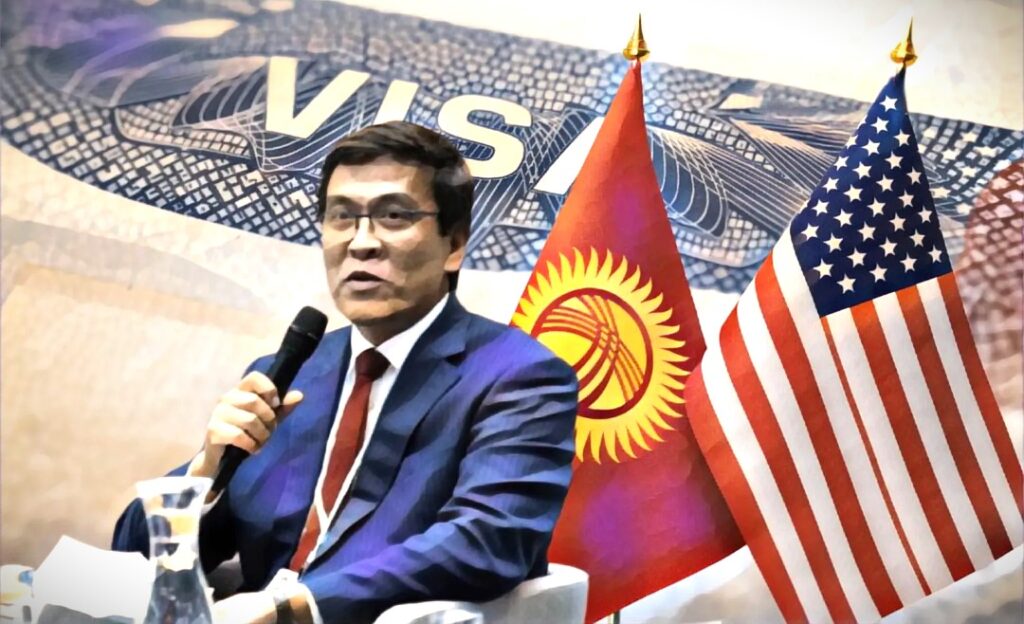
The United States has expanded a visa bond policy that increases the upfront cost of short-term travel for citizens of Kyrgyzstan, Tajikistan, Turkmenistan, and dozens of other countries. Under the policy, applicants for B-1 and B-2 business and tourism visas may be required to post bonds of $5,000, $10,000, or $15,000. The State Department set out the latest rules and the country list on its visa bond policy page. The program now covers nationals from 38 countries. In Central Asia, it was applied to Turkmenistan on January 1, and is scheduled to extend to Kyrgyzstan and Tajikistan starting from January 21. The bond is refundable when travelers follow visa terms and leave on time, but it can tie up large sums for the duration of a trip and may put U.S. travel beyond reach for many applicants. Turkmenistan, where emigration is tightly controlled, sees low numbers of its citizens entering the United States. Department of Homeland Security data for Fiscal Year 2024 indicates that the total number of Turkmen nationals issued B-1/B-2 visas to the U.S. was 1,759. Tajikistan, meanwhile, saw 1,772 visas granted, and Kyrgyzstan 9,625. By way of comparison, Saudi Arabia saw over 54,000 visas granted. The expansion has already triggered public pushback in Kyrgyzstan. In a post on X on Thursday, Edil Baisalov, the deputy chairman of Kyrgyzstan’s Cabinet of Ministers and a prominent ally of President Sadyr Japarov, urged the Kyrgyz authorities to review visa-free access for U.S. citizens. Kyrgyzstan currently allows U.S. travelers to enter without a visa for stays of up to 30 days. “I believe that we should initiate a review of our visa-free regime for U.S. citizens following the new visa requirements announced yesterday by the State Department, under which Kyrgyz citizens are required to pay a visa deposit of up to $15,000 when submitting visa applications,” Baisalov wrote. “Visa policy is a matter of parity and mutual respect. If such high barriers are introduced for our citizens, we cannot pretend that nothing has happened.” Baisalov did not specify precisely what changes Kyrgyzstan might pursue, and any escalation risks provoking a dispute with a far stronger partner. The remarks also come as Kyrgyzstan and other Central Asian governments seek closer engagement with President Donald Trump’s administration while managing competing pressures from Russia and China. The measure is a setback for Kyrgyz efforts to ease travel barriers with the United States. Kyrgyz Foreign Minister Zheenbek Kulubaev raised visa issues with U.S. Deputy Secretary of State Christopher Landau during a meeting on the sidelines of the U.N. General Assembly in New York in September. So far, Tajikistan has not matched Kyrgyzstan’s public stance, with no prominent statement appearing on Tajik government channels addressing the bond requirement or signaling reciprocity. Discussion has instead focused on what the new U.S. rules mean for applicants, the implementation timeline, and the bond amounts that may be set at the interview stage. For Turkmenistan, the requirement adds another hurdle to an already narrow path to U.S. travel. The country’s...

Kyrgyz Official Concerned Over “High Barriers” in U.S. Visa Bond Policy

Kyrgyzstan should review its visa-free system for American citizens after the United States expanded its visa bond policy to include the Central Asian country, according to a senior Kyrgyz official who said there should be “mutual respect.” The suggestion that there should be some reciprocity following the U.S. measure came from Edil Baisalov, deputy chairman of Kyrgyzstan´s Cabinet of Ministers and a prominent ally of President Sadyr Japarov. Currently, U.S. travelers to Kyrgyzstan can stay for up to 30 days without obtaining a visa. “I believe that we should initiate a review of our visa-free regime for U.S. citizens following the new visa requirements announced yesterday by the State Department, under which Kyrgyz citizens are required to pay a visa deposit of up to $15,000 when submitting visa applications,” Baisalov said on X on Thursday. “Visa policy is a matter of parity and mutual respect. If such high barriers are introduced for our citizens, we cannot pretend that nothing has happened.” However, he did not offer any analysis about what, if any, changes should be made to the visa-free system for U.S. visitors. Any visa dispute with the far more powerful United States could be risky for Kyrgyzstan, which has meanwhile joined with other Central Asian countries in trying to develop closer ties to the administration of U.S. President Donald Trump. Nationals from 38 countries, including Kyrgyzstan, Tajikistan and Turkmenistan, are subject to visa bonds under the U.S. State Department policy, which is part of a wider crackdown on immigration. The policy took effect for citizens from Turkmenistan on January 1 and will be implemented for nationals from Kyrgyzstan and Tajikistan starting on January 21. “Any citizen or national traveling on a passport issued by one of these countries, who is found otherwise eligible for a B1/B2 visa, must post a bond for $5,000, $10,000, or $15,000.  The amount is determined at the time of the visa interview,” the State Department said. B-1 (business) and B-2 (tourism) refer to non-immigrant visas for people who want to stay temporarily in the U.S. Visa holders who have posted bond are also required to enter the United States via designated international airports, including seven in the U.S. and two in Canada. The U.S. visa bond policy is a setback for Kyrgyzstan, which had previously appealed to the United States to relax its visa requirements. Kyrgyz Foreign Minister Zheenbek Kulubaev raised the issue during a meeting with U.S. Deputy Secretary of State Christopher Landau on the sidelines of the U.N. General Assembly in New York in September.