• KGS/USD = 0.01144 0%
  • KZT/USD = 0.00216 0%
  • TJS/USD = 0.10659 0%
  • UZS/USD = 0.00008 0%
  • TMT/USD = 0.28530 0%
  • KGS/USD = 0.01144 0%
  • KZT/USD = 0.00216 0%
  • TJS/USD = 0.10659 0%
  • UZS/USD = 0.00008 0%
  • TMT/USD = 0.28530 0%
  • KGS/USD = 0.01144 0%
  • KZT/USD = 0.00216 0%
  • TJS/USD = 0.10659 0%
  • UZS/USD = 0.00008 0%
  • TMT/USD = 0.28530 0%
  • KGS/USD = 0.01144 0%
  • KZT/USD = 0.00216 0%
  • TJS/USD = 0.10659 0%
  • UZS/USD = 0.00008 0%
  • TMT/USD = 0.28530 0%
  • KGS/USD = 0.01144 0%
  • KZT/USD = 0.00216 0%
  • TJS/USD = 0.10659 0%
  • UZS/USD = 0.00008 0%
  • TMT/USD = 0.28530 0%
  • KGS/USD = 0.01144 0%
  • KZT/USD = 0.00216 0%
  • TJS/USD = 0.10659 0%
  • UZS/USD = 0.00008 0%
  • TMT/USD = 0.28530 0%
  • KGS/USD = 0.01144 0%
  • KZT/USD = 0.00216 0%
  • TJS/USD = 0.10659 0%
  • UZS/USD = 0.00008 0%
  • TMT/USD = 0.28530 0%
  • KGS/USD = 0.01144 0%
  • KZT/USD = 0.00216 0%
  • TJS/USD = 0.10659 0%
  • UZS/USD = 0.00008 0%
  • TMT/USD = 0.28530 0%

Viewing results 73 - 78 of 790

Kyrgyzstan UN Security Council Bid Gains Backing from Central Asian Neighbors

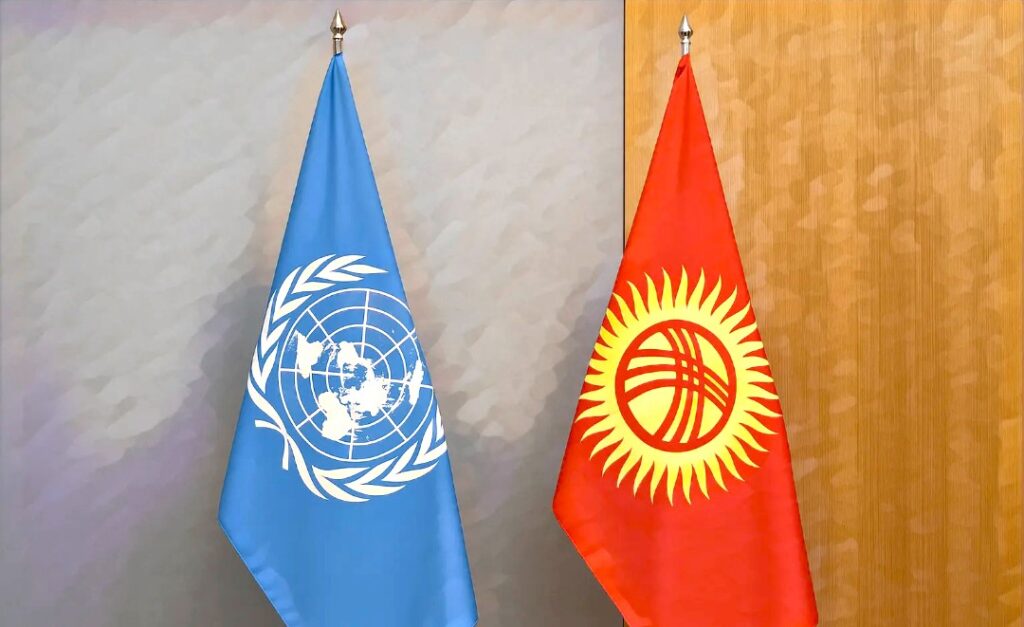
In a show of regional unity, the presidents of all of the Central Asian countries have endorsed Kyrgyzstan’s candidacy for a non-permanent seat on the United Nations Security Council for the 2027–2028 term. The joint appeal was announced on December 4 at a UN press briefing in New York by Uzbekistan’s Permanent Representative, Ulugbek Lapasov, who called on UN member states to support the bid. According to Lapasov, the endorsement reflects the region’s intent to strengthen its voice in international peace and security efforts. Kyrgyzstan’s Permanent Representative to the UN, Aida Kasymalieva, welcomed the unified support from neighboring states. Kasymalieva said the move reflects “a shared commitment to peace, dialogue, and a constructive multilateral approach,” and emphasized that her country, if elected, would serve as “a responsible and principled” Council member that amplifies the voices of smaller and developing nations. A Regional Campaign with Global Aspirations Kyrgyzstan first announced its intention to seek a Security Council seat in 2017. The campaign gathered momentum in 2024, when President Sadyr Japarov told the UN General Assembly that it was time to correct the “historical injustice” of dozens of UN member states - Kyrgyzstan among them - never having served on the Council. Japarov also called for broader representation, especially for African countries, and pledged that Kyrgyzstan would work to make the Council more effective, transparent, and inclusive. In April 2025, Kyrgyzstan officially launched its campaign with a reception at UN Headquarters in New York. Foreign Minister Jeenbek Kulubaev outlined Bishkek’s core priorities: conflict prevention, sustainable development for landlocked and mountainous nations, nuclear disarmament, and support for UN reform. The event drew diplomats from over 150 UN member states. The bid has become a central part of Bishkek’s foreign policy agenda, with senior officials describing it as a long-term investment in the country’s diplomatic standing. The vote for the 2027–2028 non-permanent seats will take place during the UN General Assembly session in June 2026, as scheduled under UN election procedures. Local media have reported that Kyrgyzstan’s main competitor for the Asia-Pacific seat is the Philippines, which has also announced its candidacy. This would not be the first time a Central Asian state has held a seat on the Council. Kazakhstan was elected for the 2017–2018 term, becoming the first country from the region to do so. Its campaign emphasized nuclear disarmament, regional security, and representing the interests of landlocked developing countries. Kyrgyzstan has framed its candidacy similarly, not just as a national endeavor, but as a platform for regional engagement on a global stage. Domestic Challenges, Global Aspirations While Kyrgyzstan pushes for a seat at the UN’s most powerful decision-making body, concerns persist over the country’s democratic trajectory. Once considered the most open society in Central Asia, Kyrgyzstan has seen a decline in civil liberties in recent years, with growing restrictions on independent media, increased pressure on NGOs, and a pattern of centralized political control under President Japarov. In 2021, Kyrgyzstan adopted a new constitution that expanded presidential powers and weakened checks and...
Kyrgyzstan Seeks to Deepen Economic Ties with Germany

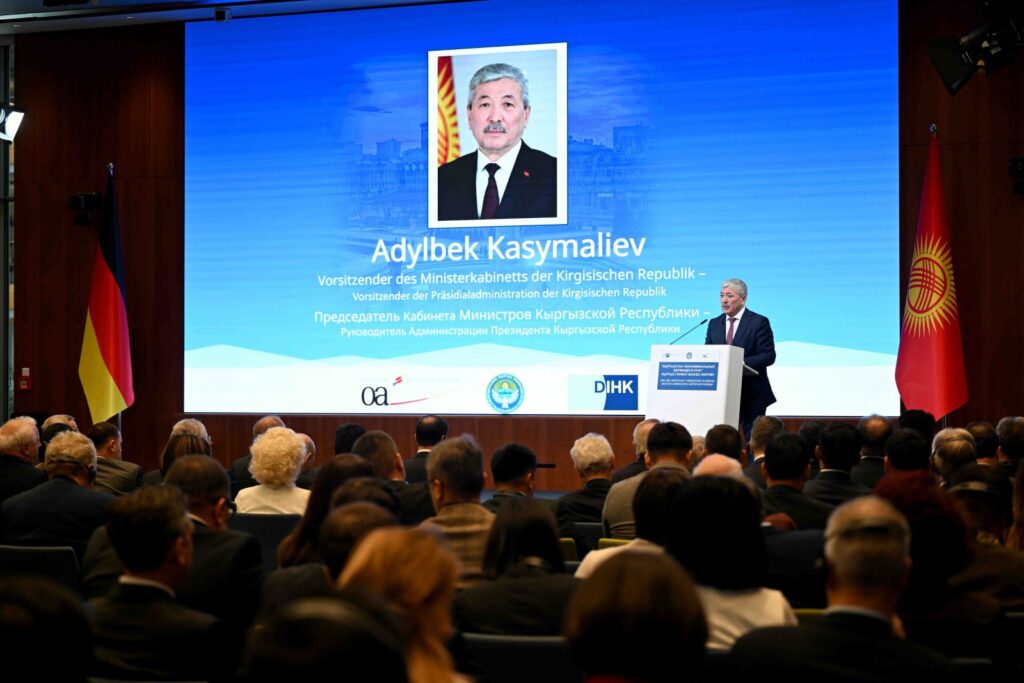
On November 28, Berlin hosted the Kyrgyz-German Business Forum and the fifth meeting of the Kyrgyz-German Business Council, with the participation of Adylbek Kasymaliev, Chairman of the Cabinet of Ministers of Kyrgyzstan. The event was organized by Kyrgyzstan’s National Investment Agency, the Eastern Committee of the German Economy, and the German Chamber of Commerce and Industry. It brought together over 300 participants from government agencies, financial institutions, and business sectors of both countries. Key areas of cooperation included the implementation of a dual vocational education system based on the German model, legal and organized labor migration from Kyrgyzstan to Germany, and joint projects in energy, green technologies, information technology, and agriculture. During the forum, Kasymaliev called on German companies to deepen engagement with Kyrgyzstan, from supplying equipment to investing in sustainable and green development initiatives. The primary purpose of Kasymaliev’s visit was to launch the second cycle of the “Days of the Economy of Kyrgyzstan and Germany,” a bilateral initiative aimed at strengthening economic cooperation and attracting foreign investment. At the Business Council meeting, Kasymaliev outlined three priority areas for collaboration. The first is financial and banking integration. He proposed establishing direct correspondent banking relationships between Kyrgyz and German financial institutions to enhance trade transparency, expedite transactions, and ensure greater security in bilateral trade. The second priority is cooperation in education and vocational training. Kyrgyzstan seeks to expand partnerships between universities, vocational schools, and industry centers, as well as to develop academic exchange and joint educational programs modeled on Germany’s experience. The third area of focus is labor migration. “Kyrgyzstan proposes to jointly develop targeted training programs, including professional and language training, as well as mechanisms for recognizing professional qualifications,” Kasymaliev stated. He emphasized that such cooperation would ensure fair working conditions and safeguard the rights of Kyrgyz citizens while addressing labor shortages in Germany. On November 29, Kasymaliev also visited the international postal exchange center of Kyrgyz Pochtasy (Kyrgyz Post) OJSC in Berlin. He noted that the establishment of such a center in the heart of Europe represents an important step toward boosting Kyrgyzstan’s export potential and expanding access for Kyrgyz businesses to European markets.

EU Supports Connectivity Improvements in Kazakhstan, Kyrgyzstan, and Uzbekistan as Part of Trans-Caspian Transport Corridor

On November 27, Tashkent hosted the Trans-Caspian Transport Corridor (TCTC) and Connectivity Investors Forum, where representatives of the European Union, Central Asian and South Caucasus states, Türkiye, and international development banks reaffirmed the strategic importance of the TCTC as a fast and reliable route linking Europe and Asia. The TCTC is the EU’s designation for the Trans-Caspian International Transport Route (TITR), also known as the Middle Corridor. This multimodal route connects China and Southeast Asia to Europe via Central Asia, the Caspian Sea, Azerbaijan, Georgia, and Türkiye in no more than 15 days, offering an alternative to the northern route through Russia. Participants discussed efforts to modernize both hard infrastructure, roads, railways, ports, and logistics hubs and soft connectivity, including digitalization, regulatory alignment, and trade facilitation. According to the EU Delegation in Uzbekistan, the forum, attended by European Commissioner for International Partnerships Jozef Síkela and European Commissioner for Enlargement Marta Kos, produced several new agreements to enhance multimodal connectivity in Central Asia. The EU has committed EUR 10.4 million within an EBRD loan of EUR 35 million to modernize Aktau Port in Kazakhstan, a key logistics hub on the Caspian Sea. The project will expand berths, introduce energy-efficient cranes, and increase container-handling capacity, strengthening the Middle Corridor’s competitiveness. An envisaged EIB loan of EUR 150 million, backed by an EU guarantee of EUR 8.8 million, will support road rehabilitation in Kazakhstan. The financing for national operator KazAvtoZhol aims to improve sustainable transport infrastructure linked to the TCTC. The EU will contribute EUR 15.46 million within an EBRD loan of EUR 35 million for the modernization of the Karabalta-Chaldovar road in Kyrgyzstan. Upgrading the 31.7-kilometer section will enhance connectivity between Kyrgyzstan and Kazakhstan, reduce travel time and costs, and improve road safety. In Uzbekistan, an anticipated EIB loan of up to EUR 100 million, supported by an EU guarantee of EUR 6 million, will finance the Nukus Highway Development Project. The upgrade of 87 kilometers of the A380 highway, one of the country’s main transport arteries, is expected to strengthen regional trade and streamline transport flows with neighboring states. Speaking at the forum, Commissioner Marta Kos stressed the geopolitical and economic value of reliable east-west transport links: “All of us have learnt the hard way that excessive dependencies make us vulnerable," she said. "Investments in transport infrastructure, digital and energy connectivity create more options and less risk of blackmail. We need credible, long-term alternatives to the Northern Corridor. Cargo along the Middle Corridor has grown four-fold between 2022 and today. By 2030 it could again triple, if the right investments are made to increase capacity and close gaps.”

CSTO Faces Uncertain Future as Putin Champions Russian Arms

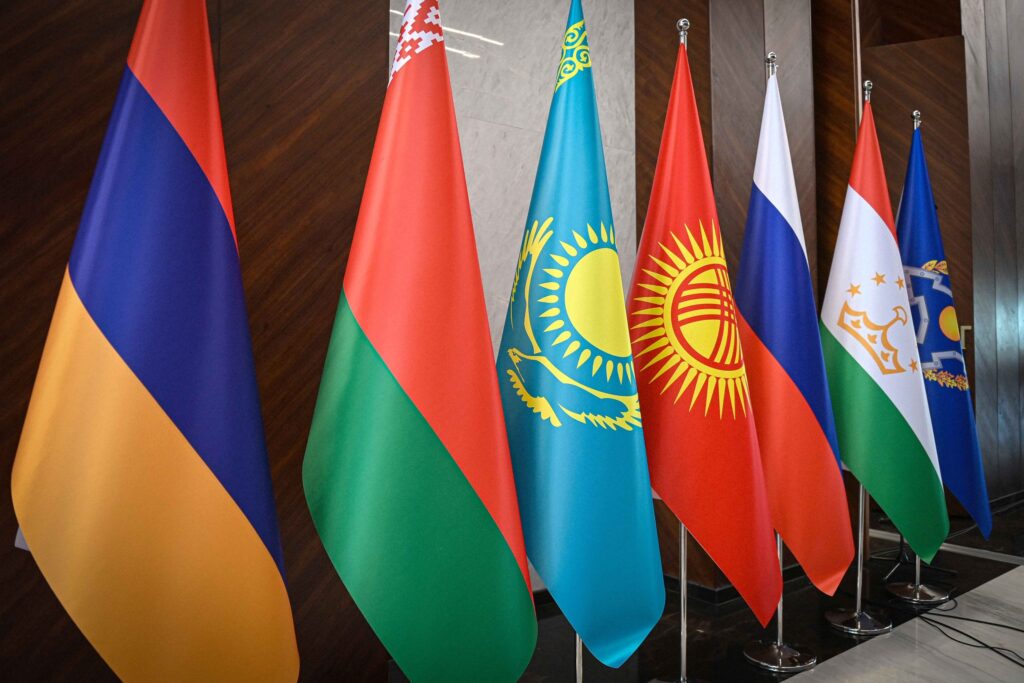
The session of the CSTO Collective Security Council on November 27 in Bishkek underscored a key reality: the bloc, once envisioned as the “Eurasian response to NATO,” now consists of just five active members. Armenia pointedly boycotted the summit, a gesture that spoke volumes about the alliance’s internal fractures. While the presidents of Kyrgyzstan, Russia, Belarus, Kazakhstan, and Tajikistan discussed “multipolarity” and “security,” Kyrgyz authorities erected a massive LED screen near the presidential residence, conveniently blocking the Ukrainian flag atop the Ukrainian embassy. Officials claimed the move was a “protocol requirement.” Moscow used the summit as a platform to outline its long-term strategic goals for the region, seizing the moment amid Armenia’s absence, growing debate over the CSTO’s purpose, and rising competition from other international security alliances in Eurasia. Yerevan’s decision to skip the gathering is a warning sign for fellow CSTO members. Armenia, having faced a real security crisis, evidently no longer views the alliance as a reliable guarantor. This casts doubt on the CSTO’s ability to adapt to a rapidly evolving regional security landscape, where flexibility, responsiveness, and tangible conflict support are increasingly in demand. In his report, CSTO Secretary General Imangali Tasmagambetov emphasized the bloc’s institutional development over the past three years, expanding collective forces, developing cyber capabilities, and establishing new international roadmaps. He also announced the creation of an Information and Analytical Department, signaling an effort to emulate more sophisticated military-political structures. Yet much of his address echoed the standard talking points delivered at previous summits. Tasmagambetov did address Armenia's absence, stating, “The CSTO respects Yerevan’s sovereign right.” Rather than defusing the issue, this acknowledgment only served to highlight the political rupture. Despite the tensions, CSTO leaders signed a broad set of documents, including a collective security strategy, an anti-drug initiative, and new military cooperation plans, reportedly one of the most comprehensive packages in recent years. Nonetheless, the summit’s spotlight belonged to Vladimir Putin and Alexander Lukashenko. The other leaders appeared relegated to the sidelines, affirming declarations to preserve a fragile collective consensus. Putin’s visit to Bishkek spanned two days, during which his pronouncements effectively became the summit’s agenda. He reiterated that the CSTO is a “guarantor of stability” and proposed equipping the bloc’s collective forces with Russian weapons “proven in combat conditions”, a clear reference to the war in Ukraine, though left deliberately vague. With Russia set to assume the CSTO chairmanship in 2026, the Kremlin appears to be steering the alliance toward deeper military-technical integration. Promoting its weapons to member states not only boosts Russia’s arms industry but also increases CSTO members’ reliance on Russian technologies and command systems. Some analysts suggest Moscow’s chairmanship priorities, from cybersecurity to aerospace defense, reflect an effort to position the CSTO as a counterweight to rival military-political blocs. President Lukashenko of Belarus added a European security dimension to the talks, citing NATO’s growing defense budgets and the military buildup in Poland, Germany, and the Baltic states as justification for reinforcing the CSTO. For Kazakhstan, Kyrgyzstan, and Tajikistan, the...

CSTO Signs New Security Roadmap in Bishkek Amid Armenia Boycott and Putin Ukraine Remarks

The Collective Security Treaty Organization (CSTO) reaffirmed its commitment to regional security and political coordination during its annual summit in Bishkek, Kyrgyzstan, on November 27. Leaders from five of the bloc’s six members - Russia, Belarus, Kazakhstan, Kyrgyzstan, and Tajikistan - attended the event and signed off on a series of military, security, and strategic cooperation agreements. Armenia, the sixth CSTO member, boycotted the summit for the second year running, continuing its protest against the alliance’s refusal to intervene during Armenia’s conflict with Azerbaijan, and marking another low in Armenia’s engagement with the CSTO after months of public grievances against the bloc. Despite Yerevan’s absence, the other members adopted a wide-ranging joint declaration reaffirming the alliance’s collective defense commitments and outlining new initiatives to modernize its security framework. Notably, Armenia did not oppose the adoption of the summit documents in its absence. The CSTO, founded in 2002 and led by Russia, has a charter that guarantees mutual defense among members, though the bloc has often struggled to act decisively during regional crises. Still, it remains the only formal security alliance connecting Russia with post-Soviet Central Asian republics. Kyrgyz President Sadyr Japarov hosted the summit, marking the end of his country’s chairmanship. Japarov handed over the role to Russian President Vladimir Putin, who announced that Russia will lead the CSTO in 2026 under the motto “Collective Security in a Multipolar World: Common Goal—Shared Responsibility.” The bloc also appointed Kyrgyzstan’s Taalatbek Masadykov as the next Secretary General. The former deputy head of Kyrgyzstan’s Security Council will begin his three-year term on January 1, 2026. In remarks during the summit, Putin also addressed global concerns about the war in Ukraine, stating that a 28-point peace plan proposed by former U.S. President Donald Trump could serve as a “basis for future agreements.” He added that Russia has no intention of attacking Europe, seeking to dispel fears of escalation while reaffirming Moscow’s security agenda. The summit ended with the adoption of a large number of documents. Among them were a strategy to combat drug trafficking and plans to improve border security, peacekeeping readiness, and anti-terrorism efforts. Russia used the summit to offer CSTO members a rearmament initiative. Putin proposed supplying allies with modern Russian-made weapons that had “proven their effectiveness” in recent conflicts. The offer included expanded cooperation in joint production and training. Military exercises will continue under the newly adopted five-year cooperation plan. In 2025, the CSTO held drills in Kyrgyzstan, Belarus, and Tajikistan under the banner “Indestructible Brotherhood.” The plan outlines regular future training, integration of air defense units, and enhancements to peacekeeping logistics. The alliance also adopted an Anti-Drug Strategy for 2026–2030 and signed a joint resolution to intensify Operation “Kanal,” which targets drug routes through Central Asia. The CSTO committed to upgrading its counterterrorism strategy and enhancing cyber defense capabilities, with Russia proposing broader coordination on information security and biosecurity. Tajik President Emomali Rahmon, meanwhile, used the summit to urge partners to accelerate border security aid along Tajikistan’s porous southern frontier...

Moldova To End Visa-Free Travel for Kyrgyzstan and Tajikistan

Moldova has formally withdrawn from the Commonwealth of Independent States (CIS) visa-free travel agreement, a move that will introduce visa requirements for citizens of Kyrgyzstan and Tajikistan. The Moldovan parliament approved the government’s proposal to terminate the 1992 Bishkek Agreement, according to inbusiness.kz. The CIS, which originally included 11 post-Soviet states upon its creation in 1991, now counts only seven full members. Although Moldova ended its membership in the CIS earlier, it had continued to uphold visa-free travel arrangements with several former Soviet republics, including countries in Central Asia. The new legislation does not affect Kazakhstan or Uzbekistan. Moldovan officials told local media that Chişinău intends to preserve visa-free travel with these two countries through separate bilateral agreements. “For citizens of Kazakhstan and Uzbekistan, the procedure for travel remains unchanged,” Azattyq.org reported, citing Moldovan government sources. In 2024, Moldova also announced plans to open its first embassy in Kazakhstan’s capital, Astana. The new visa requirements apply solely to citizens of Kyrgyzstan and Tajikistan, who will now need to obtain visas for work, study, or personal travel to Moldova. Authorities in Chişinău explained that the decision is part of Moldova’s broader effort to align its legal framework with European Union standards. EU regulations require visas for all CIS nationals, and Moldova is gradually adjusting its migration and visa policies in preparation for EU accession. The move comes in the wake of Moldova’s October 2024 referendum, in which voters supported the country’s path toward EU membership. Since then, the government has withdrawn from numerous CIS treaties, exited the CIS Interparliamentary Assembly, ceased payments to the Mir television network, and closed its local bureau. Relations between Moldova and Kyrgyzstan have been further strained by unresolved issues, including Kyrgyzstan’s calls for the repayment of a Soviet-era debt and Moldova’s ban on Kyrgyz airlines due to their inclusion on the EU’s aviation safety blacklist. Kyrgyz civil activist Almaz Tazhybay told Vesti.kg that Kyrgyz carriers will only regain access to Moldovan airspace after meeting EU safety requirements. Moldovan authorities have emphasized that the policy is not targeted at any specific country. Officials in Chişinău describe the changes as part of a broader legal realignment as Moldova pursues its goal of joining the European Union by 2030.