• KGS/USD = 0.01144 0%
  • KZT/USD = 0.00216 0%
  • TJS/USD = 0.10659 0%
  • UZS/USD = 0.00008 0%
  • TMT/USD = 0.28530 0%
  • KGS/USD = 0.01144 0%
  • KZT/USD = 0.00216 0%
  • TJS/USD = 0.10659 0%
  • UZS/USD = 0.00008 0%
  • TMT/USD = 0.28530 0%
  • KGS/USD = 0.01144 0%
  • KZT/USD = 0.00216 0%
  • TJS/USD = 0.10659 0%
  • UZS/USD = 0.00008 0%
  • TMT/USD = 0.28530 0%
  • KGS/USD = 0.01144 0%
  • KZT/USD = 0.00216 0%
  • TJS/USD = 0.10659 0%
  • UZS/USD = 0.00008 0%
  • TMT/USD = 0.28530 0%
  • KGS/USD = 0.01144 0%
  • KZT/USD = 0.00216 0%
  • TJS/USD = 0.10659 0%
  • UZS/USD = 0.00008 0%
  • TMT/USD = 0.28530 0%
  • KGS/USD = 0.01144 0%
  • KZT/USD = 0.00216 0%
  • TJS/USD = 0.10659 0%
  • UZS/USD = 0.00008 0%
  • TMT/USD = 0.28530 0%
  • KGS/USD = 0.01144 0%
  • KZT/USD = 0.00216 0%
  • TJS/USD = 0.10659 0%
  • UZS/USD = 0.00008 0%
  • TMT/USD = 0.28530 0%
  • KGS/USD = 0.01144 0%
  • KZT/USD = 0.00216 0%
  • TJS/USD = 0.10659 0%
  • UZS/USD = 0.00008 0%
  • TMT/USD = 0.28530 0%

Viewing results 79 - 84 of 790

CSTO Summit in Bishkek: Armenia’s Boycott, Russia’s Agenda, and a New Secretary General

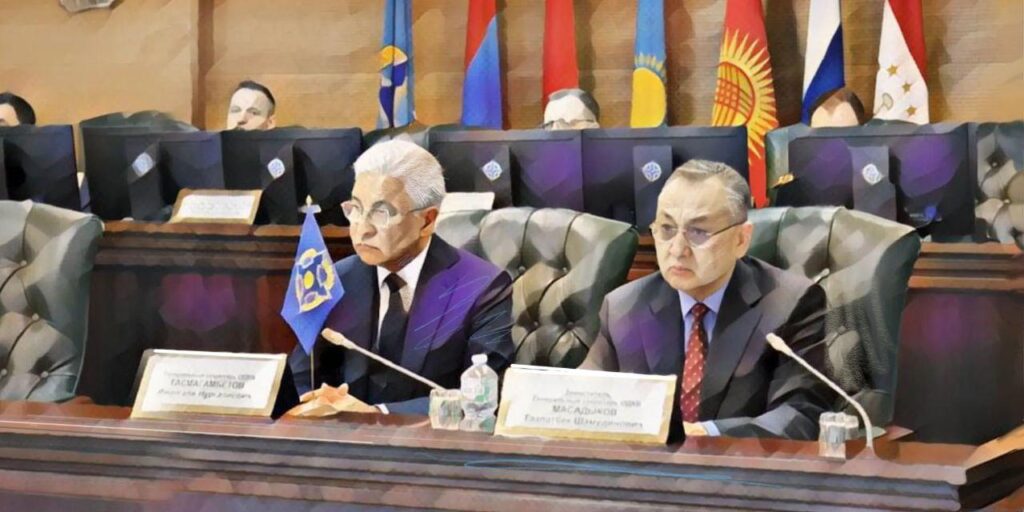
On November 27, Kyrgyzstan will host the annual summit of the Collective Security Treaty Organization (CSTO) in Bishkek, bringing together foreign ministers, defense ministers, and security council secretaries from member states. While often portrayed in Russian media as an Eurasian analogue to NATO, the CSTO remains an organization heavily dependent on Russian military power. Should Moscow withdraw or reduce its support, the Organization’s relevance would likely collapse. A stark illustration of this fragility is Armenia, whose Prime Minister Nikol Pashinyan will boycott the summit entirely. Russian Presidential Aide Yuri Ushakov confirmed that Armenia will not attend the session of the Collective Security Council, the CSTO’s highest governing body, though it does not object to the adoption of bloc-wide documents. According to the CSTO press service, the Council is expected to adopt a declaration outlining member states’ joint positions on current security challenges. Also on the agenda is the formal appointment of the next Secretary General for the 2026-2029 term, and the unveiling of Russia’s priorities for its upcoming presidency in 2026. President Vladimir Putin’s speech on these priorities is expected to dominate the summit. Armenia’s withdrawal highlights the CSTO’s waning cohesion, maintained largely by members' reliance on Russian security assistance, a dynamic in place since the Treaty’s inception in Tashkent on May 15, 1992. The original signatories included Armenia, Kazakhstan, Kyrgyzstan, Russia, Tajikistan, and Uzbekistan, with Azerbaijan, Belarus, and Georgia joining in 1993. The treaty entered into force in 1994. Its central provision, Article 4, mandates collective defense: an attack on one member is considered an attack on all, obligating military and other forms of assistance in line with Article 51 of the UN Charter. In 1999, Armenia, Belarus, Kazakhstan, Kyrgyzstan, Russia, and Tajikistan signed a protocol extending the treaty, establishing an automatic renewal every five years. The formal CSTO was created in 2002; its charter was registered with the UN the following year, and it has held observer status at the UN General Assembly since 2004. For Armenia, the CSTO’s relevance has waned dramatically since the bloc declined to intervene during the final phase of the Nagorno-Karabakh crisis. Yerevan’s disenchantment, however, predates 2023 and stretches back to the 2021–2022 border clashes, when it also felt the organization had failed to provide meaningful support. Kazakhstan, by contrast, remains a key beneficiary: the rapid CSTO deployment in January 2022 played a central role in stabilizing the country during a period of acute domestic unrest. As the current Secretary General, Imangali Tasmagambetov - an influential figure from the “Old Kazakhstan” elite - completes his term, the position is scheduled to rotate to Taalatbek Masadykov of Kyrgyzstan. Ushakov confirmed that Tasmagambetov will deliver a final report on the Organization’s activities and security concerns before officially stepping down on January 1. Masadykov, currently Deputy Secretary General, is expected to assume the role seamlessly. While Masadykov brings diplomatic gravitas, the question remains whether he can restrain Moscow and Minsk from pushing CSTO allies toward confrontation with NATO. Tasmagambetov leaves behind a significant legacy and an...
Russia Expands Soft Power Through New Cultural Center in Kyrgyzstan

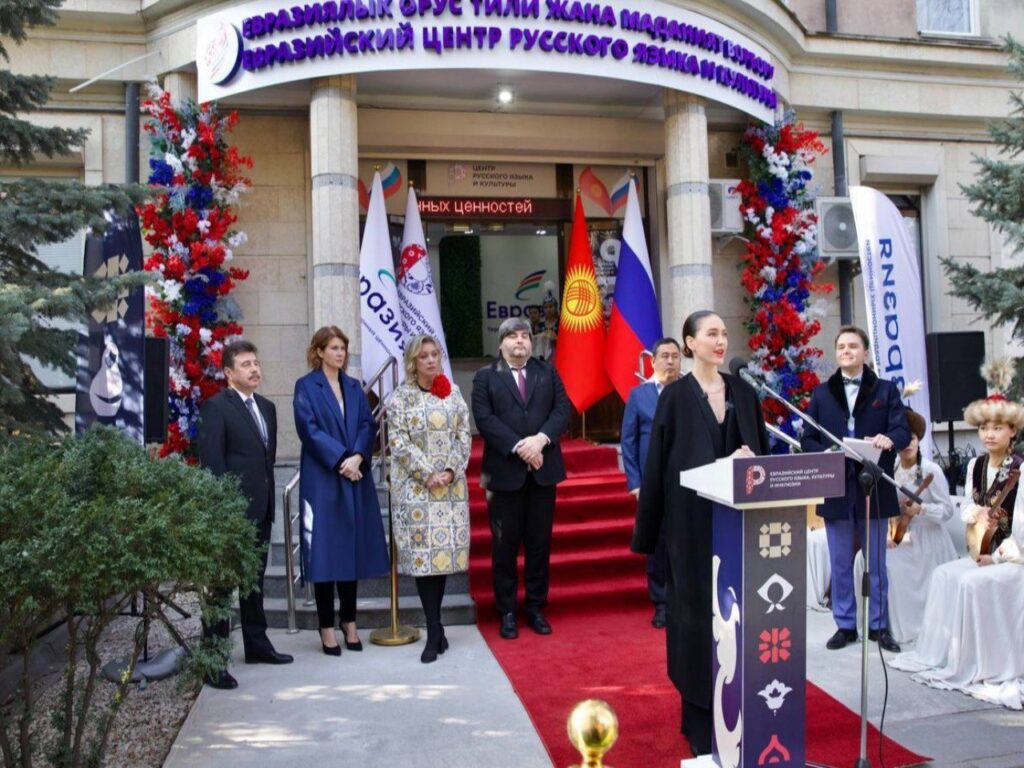
Russia’s international cooperation organization Evraziya has launched Kyrgyzstan’s first Eurasian Center for Russian Language and Culture in Bishkek. The initiative aims to promote the Russian language, support local educators, and advance bilateral humanitarian projects. The center’s opening came just days before Russian President Vladimir Putin’s state visit to Kyrgyzstan, which begins today on November 25. Evraziya, a Russian non-profit, presents itself as a vehicle for deeper integration in the post-Soviet space and is widely viewed as a key instrument of Moscow’s soft power strategy in Central Asia. High-Level Delegation at Launch The opening ceremony was attended by Russian Ambassador to Kyrgyzstan Sergey Vakunov, Russian Foreign Ministry spokesperson Maria Zakharova, Head of the Presidential Executive Office for Strategic Partnership and Cooperation Vadim Titov, State Duma Deputy and Chair of Eurasia’s Coordination Council Alyona Arshinova, and Kyrgyz Deputy Minister of Education and Science Albert Makhmetkulov. Arshinova noted that Evraziya had spent the past year enhancing cooperation with Kyrgyz institutions by offering teacher support, organizing educational forums, and providing professional development programs. “Kyrgyzstan is not just a partner; it is a country with which we share common values and a strategic vision,” she said. “The Russian language remains a foundation that connects our countries and opens opportunities for new educational and cultural initiatives.” Cultural and Educational Programming The new center will run a range of initiatives for schoolchildren and adolescents, including a theater studio, workshops in art and media, digital culture and programming courses, and the "Unboring Russian" project. For adults, the center will offer film clubs, discussion platforms, and a literary lounge. It will also serve as a training center for local teachers and coordinate bloggers focused on language and culture, reinforcing the Russian-language educational and cultural environment in Kyrgyzstan. Deputy Minister Makhmetkulov called the opening “a strategic step for education and interethnic dialogue,” describing the center as a space for both promoting Russian and fostering cultural exchange and professional growth. Evraziya plans to expand its network to other regions in Kyrgyzstan and eventually to other countries in the region. Wider Engagement Strategy Since 2024, Evraziya has intensified its presence in Kyrgyzstan through education, social, and humanitarian projects. In partnership with Russia’s Ministry of Education, the organization has dispatched young Russian teachers to Kyrgyz schools to teach various subjects in Russian. It has also donated 100 school buses to rural areas and financed renovations at schools in Bishkek and Kyzyl-Kyya. On August 28, in cooperation with Kyrgyzstan’s Cabinet of Ministers, Evraziya opened a $35 million amusement park in Bishkek. Two days earlier, the group launched its first social store in the capital, offering discounted essential goods to pensioners, veterans, large families, and people with disabilities. Russian Language as a Strategic Link The Russian language continues to be a central element in Moscow-Bishkek relations. During a July meeting at the Kremlin, Putin praised Kyrgyzstan’s decision to retain Russian as an official language. Russian remains one of Kyrgyzstan’s official languages and is widely used in public administration, education, and interethnic communication. As part of...

Opinion: Central Asia Is Consolidating Its Role as a Full-Fledged Actor in Global Processes

The seventh Consultative Meeting of the Heads of State of Central Asia, held in Tashkent, was far more than a routine regional gathering. It marked a pivotal moment with the potential to shape the political and economic architecture of the region for the next decade or two. President Shavkat Mirziyoyev’s keynote address stood out for articulating a forward-looking and comprehensive strategic vision. Notably, he proposed redefining the format itself from a loose “consultative mechanism” into a more cohesive and institutionalized “Central Asian Community.” At the summit, leaders endorsed several landmark documents: the Concept for Regional Security and Stability in Central Asia, the Catalogue of Threats to Central Asia’s Security and measures for their prevention for 2026-2028 and its implementation plan, a joint appeal supporting the Kyrgyz Republic’s candidacy for the UN Security Council, and the decision to admit Azerbaijan as a full-fledged participant. Taken together, these steps signal that Central Asia increasingly sees itself not as a passive bystander amid global geopolitical turbulence, but as an emerging regional actor capable of shaping its own trajectory. Two broader trends deserve special emphasis. First, the region is moving beyond reactive engagement with external initiatives and power blocs. Rather than relying solely on structures created by outside actors, Central Asia is beginning to develop its own institutions. This shift mirrors a global pattern: as the international order becomes more fragmented and unpredictable, regional communities are strengthening their internal mechanisms as a means of resilience. Second, the format envisioned in Tashkent diverges from “Brussels-style integration.” It does not require the transfer or dilution of sovereignty. Instead, it relies on soft integration, consultation, consensus-building, and phased convergence. As President Mirziyoyev noted, having a shared and realistic sense of “what we want our region to look like in 10-20 years” is essential. Without such a vision, Central Asia risks remaining the object of great-power competition rather than an autonomous participant in it. One of the summit’s most consequential developments was the decision to welcome Azerbaijan as a full-fledged member of the format. The emerging political and economic bridge between Central Asia and the South Caucasus is quickly becoming not only a transit nexus but also a cornerstone of a broader geopolitical space. The strengthening of Trans-Caspian corridors, the advancement of the “China – Kyrgyzstan – Uzbekistan” railway, the Trans-Afghan corridor, and the alignment of Caspian Sea transport routes will significantly expand the region’s strategic and economic potential. A further nuance is worth highlighting: Azerbaijan’s long-standing ties with the Western political and security architecture, through NATO partnership mechanisms and energy corridors, as well as its membership in the Organization of Turkic States, introduce new layers of connectivity. Its inclusion repositions the “Central Asian Community” from a post-Soviet platform into a wider geopolitical constellation spanning Eurasia, the South Caucasus, and the Middle East. For Central Asian states, this new configuration opens additional room for multi-vector diplomacy and reduces the risks of unilateral dependence.   The views expressed in this article are those of the author and do not...

Azerbaijan Joins Central Asia to Build a C6 Corridor Core

Central Asian leaders met in Tashkent on November 15–16 for the seventh Consultative Meeting of Heads of State. Azerbaijan attended as a guest with full rights, as it had done at the meetings last year and the year before. This time, the leaders agreed that Azerbaijan would sit as a full participant in future meetings, transforming the C5 into the C6. In his opening remarks, Uzbekistan’s President Shavkat Mirziyoyev proposed turning the loose consultative mechanism into a formal regional body under the working title, the “Community of Central Asia.” Mirziyoyev went further and suggested extending the mandate from economic integration to include security and environmental cooperation for the region as a whole. The Uzbek President called the decision to admit Azerbaijan “historic,” as the leaders framed the welcoming of Azerbaijan not as a courtesy to a neighbor but as part of a wider integration project that already runs across the Caspian and that is now seeking to bring a South Caucasus transit and energy hub directly into the frame. The consultative format is thus being asked to carry a heavier load than when it was created in 2018 as a careful space for political dialogue and security confidence-building. For governments and external partners, the practical question is whether this emerging “Central Asia plus Azerbaijan” geometry can evolve into a corridor community with its own regional rules, or whether it will remain largely declaratory while decisions continue to track external finance and great-power projects. Azerbaijan and Central Asia Begin to Co-Author the Agenda From the start, the consultative meetings of the Central Asian heads of state were conceived as a modest, leader-level forum to ease regional tensions and reopen direct dialogue after a decade of drift. The first gathering in Astana in March 2018 focused on borders, water management, and security issues that had festered since the 1990s, and that format’s agenda had mainly remained focused on political reconciliation and crisis management. The seventh meeting in Tashkent was different in kind. By bringing Azerbaijan formally into the room on a continuing rather than one-off basis, and by placing corridor and digital questions at the center of proceedings rather than on the margins, it reframed the forum from an inward-looking confidence-building device into a platform that aspires to shape external connectivity. Azerbaijan’s presence at earlier summits in 2023 and 2024 created a transitional phase in which Baku could test how far its own transit and energy agenda resonated with Central Asian priorities. In Tashkent, that ambiguity effectively ended. President Ilham Aliyev’s speech, delivered after the leaders had agreed that Azerbaijan would participate in future meetings as a full member, described Central Asia and Azerbaijan as forming “a single geopolitical and geo-economic region whose importance in the world is steadily growing.” He tied that claim to concrete developments along the Middle Corridor segment through Azerbaijan, the Alat port complex, upgraded customs procedures, and cross-Caspian energy and data links. For Kazakhstan, the Tashkent meeting offered a complementary opportunity. President Kassym-Jomart Tokayev used his speech...

Central Asian Leaders Welcome Azerbaijan’s Accession at Tashkent Summit

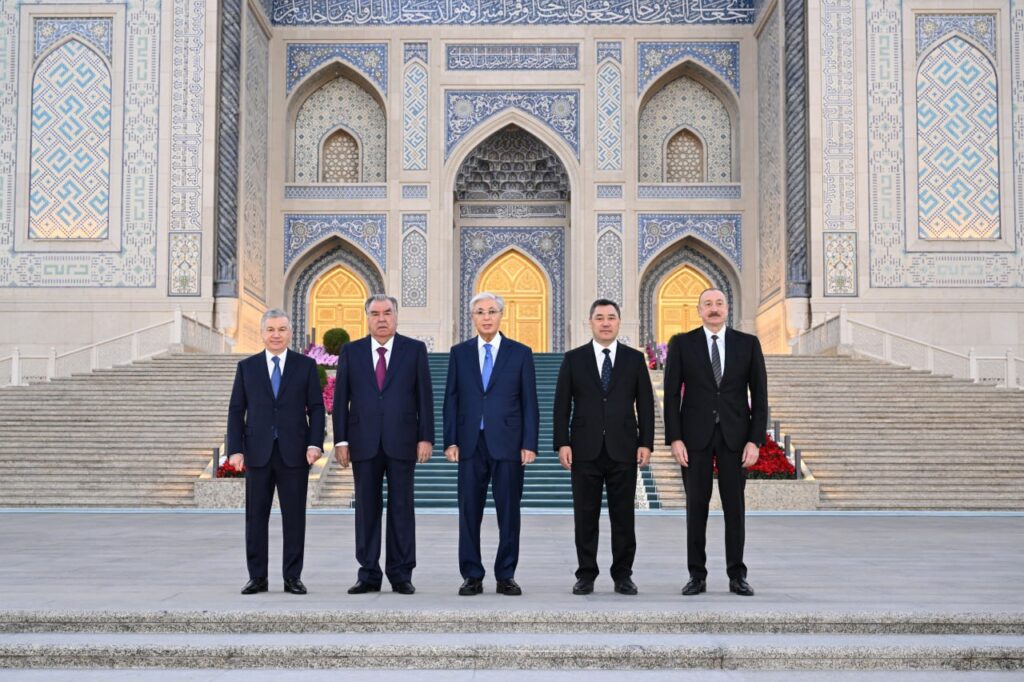
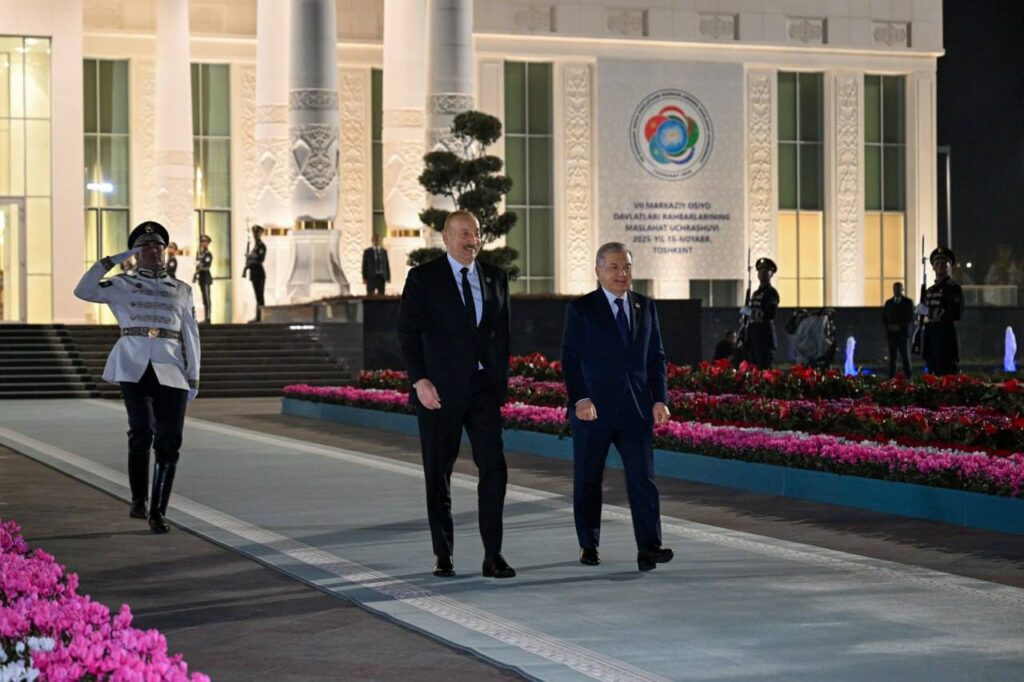
The leaders of Central Asia convened in Tashkent on November 16 for a high-level Consultative Meeting, marking a significant step toward deeper regional integration. The summit welcomed Azerbaijan as a full participant and endorsed a roadmap to formalize cooperation in trade, infrastructure, security, and water management. Hosted by Uzbekistan’s President Shavkat Mirziyoyev, the summit brought together the presidents of Kazakhstan, Kyrgyzstan, Tajikistan, Turkmenistan, and Azerbaijan, alongside a United Nations representative. Ahead of the meeting, Tashkent’s central streets were adorned with national flags and floral installations, underscoring the political and symbolic significance the Uzbek government placed on the event. Mirziyoyev hailed Azerbaijan’s accession as “a truly historic day,” as the country became a full member of the Consultative Meeting of the Heads of State of Central Asia. He proposed forming a “Community of Central Asia,” establishing a rotating Secretariat, appointing special presidential envoys for coordination, and creating a Council of Elders to promote cultural and humanitarian dialogue. [caption id="attachment_39410" align="aligncenter" width="1280"] Image: president.uz[/caption] Regional Economic and Connectivity Agenda Economic cooperation dominated the multilateral agenda. Leaders agreed to develop a Comprehensive Regional Program for Trade and Economic Cooperation through 2035 and to draft a Declaration on a Common Investment Space. “In essence, we will build a strong bridge between Central Asia and the South Caucasus and pave the way for the formation of a single space of cooperation, which will undoubtedly strengthen the strategic interconnectedness and stability of both regions,” said Mirziyoyev. Kazakhstan’s President Kassym-Jomart Tokayev also highlighted deepening bilateral ties with Uzbekistan. Trade between the two countries has reached $4 billion in 2025, with plans to increase it to $10 billion through expanded industrial cooperation and import substitution. Over 6,500 joint enterprises now operate between the two countries, with new projects worth more than $8 billion under development. Several initiatives, such as the Silkway Central Asia logistics center, new industrial facilities, and cultural programs, were launched in Tashkent during the visit. [caption id="attachment_39411" align="aligncenter" width="1280"] Image: president.uz[/caption] Tajikistan’s President Emomali Rahmon met with Mirziyoyev on the sidelines of the summit. The two leaders noted the steady growth in political dialogue and agreed to expand cooperation in energy, industry, agriculture, and innovation. Bilateral trade surpassed $440 million in the first nine months of 2025. They also discussed regional security, including collaboration against terrorism, extremism, cybercrime, and drug trafficking. Security, Water, and Cultural Cooperation To advance regional integration, Tashkent also hosted the first meeting of the Council of Ministers of Trade and Investment of Central Asian countries and Azerbaijan on November 13. Ministers discussed boosting trade, investment, and industrial cooperation, with the goal of increasing regional trade turnover to $20 billion. Plans were also made to develop joint production platforms under a “Made in Central Asia” label. Uzbekistan’s trade with Central Asian partners rose from $3.2 billion in 2017 to $6.9 billion in 2024, while trade with Azerbaijan has grown by 13% this year. Connectivity remained a focal point. Participants reaffirmed their commitment to the China-Kyrgyzstan-Uzbekistan railway and the Trans-Afghan corridor. Azerbaijan’s President...

With Shared Goals, Azerbaijan Draws Closer to Central Asia

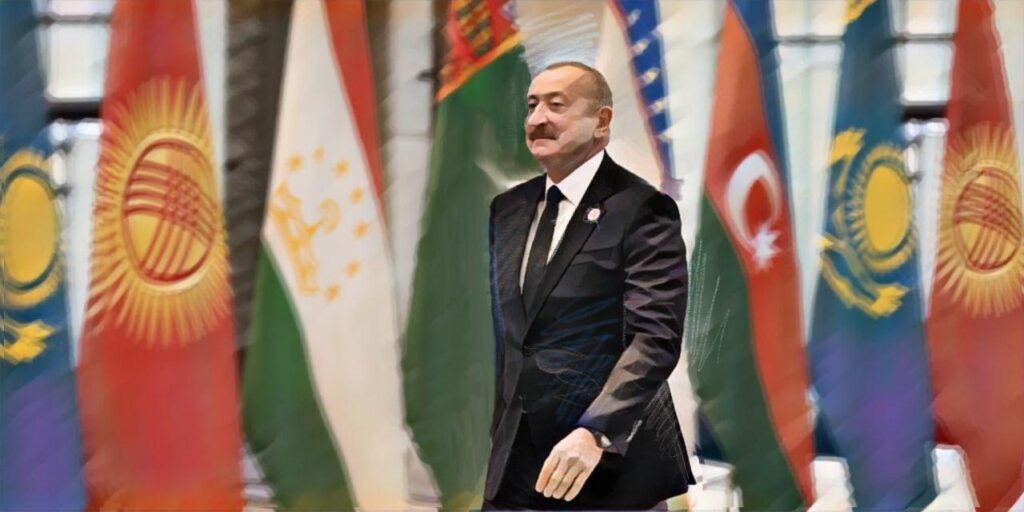
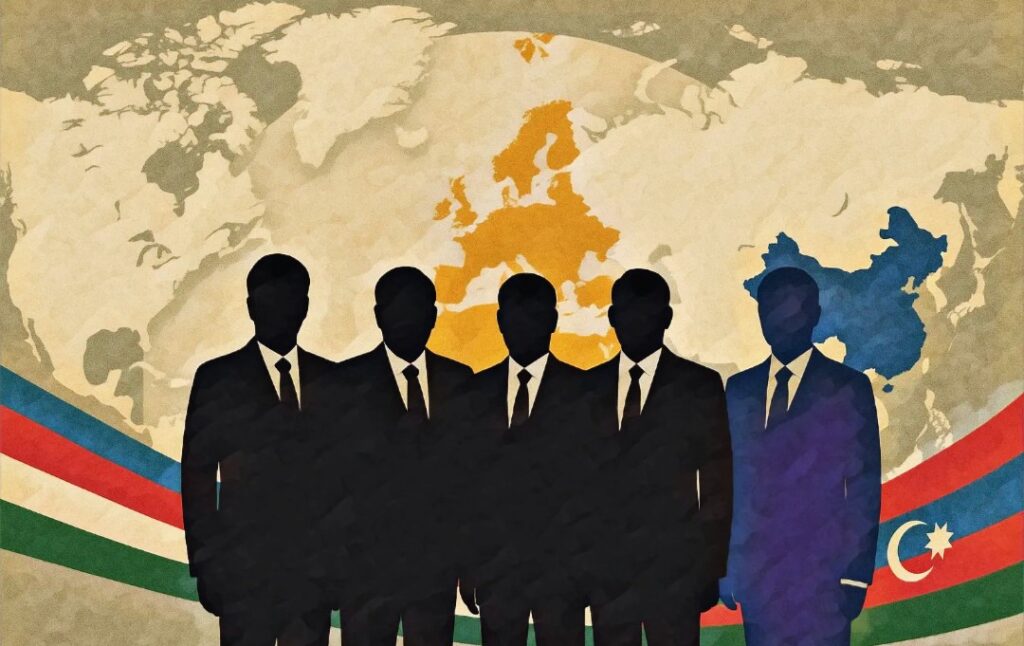
Then there were six. The five Central Asian countries of Kazakhstan, Kyrgyzstan, Tajikistan, Turkmenistan, and Uzbekistan are widely thought of as a group, united by geography, their shared history as former Soviet republics, and growing collaboration in recent years. Now, Azerbaijan is emerging as a sixth member of the group, even though it is in the South Caucasus. At a summit on Sunday, Central Asian leaders supported Azerbaijan’s accession to the region’s Consultative Meeting format as a full participant, “forming a unified space for interaction between Central Asia and the South Caucasus,” Uzbekistan’s presidency said. The Consultative Meeting format is a vehicle for high-level collaboration among Central Asian countries, which have taken steps to resolve border disputes and other sources of tension between them over the years. The format addresses trade, security, and other issues. All five Central Asian leaders, as well as President Ilham Aliyev of Azerbaijan, attended the annual meeting in Tashkent on Sunday. In a speech, Aliyev noted that he had visited Central Asian countries 14 times in the last three years, and that Central Asian leaders had visited Azerbaijan a total of 23 times during the same period. He said Azerbaijan and Central Asia “today form a single geopolitical and geo-economic region, whose importance in the world is steadily growing.” Azerbaijan, which is also a former Soviet republic, shares the Turkic background of some of the Central Asian nations. While all the countries have distinct national identities, they covet the goal of more robust trade routes linking Asia and Europe, as well as regional solidarity in an uncertain geopolitical environment where China, Russia, and the United States are dominant powers. After Azerbaijan was admitted to the Central Asian talks format, Azerbaijani presidential adviser Hikmet Hajiyev posted on X: “From now on, Central Asia stands as 6.”