• KGS/USD = 0.01144 0%
  • KZT/USD = 0.00209 0%
  • TJS/USD = 0.10438 0%
  • UZS/USD = 0.00008 0%
  • TMT/USD = 0.28490 0%
  • KGS/USD = 0.01144 0%
  • KZT/USD = 0.00209 0%
  • TJS/USD = 0.10438 0%
  • UZS/USD = 0.00008 0%
  • TMT/USD = 0.28490 0%
  • KGS/USD = 0.01144 0%
  • KZT/USD = 0.00209 0%
  • TJS/USD = 0.10438 0%
  • UZS/USD = 0.00008 0%
  • TMT/USD = 0.28490 0%
  • KGS/USD = 0.01144 0%
  • KZT/USD = 0.00209 0%
  • TJS/USD = 0.10438 0%
  • UZS/USD = 0.00008 0%
  • TMT/USD = 0.28490 0%
  • KGS/USD = 0.01144 0%
  • KZT/USD = 0.00209 0%
  • TJS/USD = 0.10438 0%
  • UZS/USD = 0.00008 0%
  • TMT/USD = 0.28490 0%
  • KGS/USD = 0.01144 0%
  • KZT/USD = 0.00209 0%
  • TJS/USD = 0.10438 0%
  • UZS/USD = 0.00008 0%
  • TMT/USD = 0.28490 0%
  • KGS/USD = 0.01144 0%
  • KZT/USD = 0.00209 0%
  • TJS/USD = 0.10438 0%
  • UZS/USD = 0.00008 0%
  • TMT/USD = 0.28490 0%
  • KGS/USD = 0.01144 0%
  • KZT/USD = 0.00209 0%
  • TJS/USD = 0.10438 0%
  • UZS/USD = 0.00008 0%
  • TMT/USD = 0.28490 0%

Viewing results 175 - 180 of 376

Elderly Kyrgyz Woman, Who Told of Mass Burial Site From 1930s Purges, Is Mourned

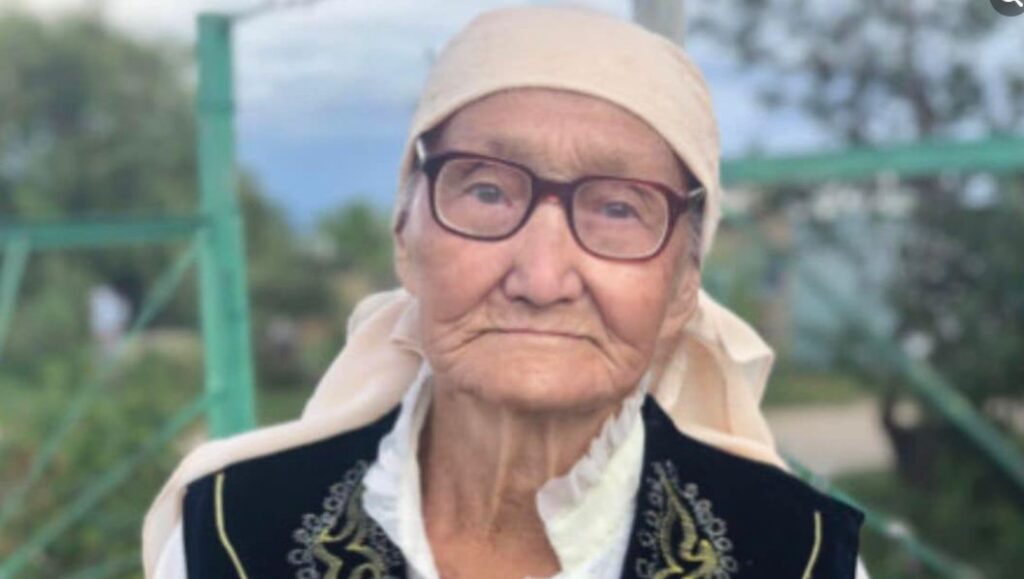
Bubuira Kydyralieva, a Kyrgyz woman who led authorities to a mass grave of victims of 1930s Stalinist purges that became a centerpiece of Kyrgyzstan’s national identity after Soviet rule, has died at the age of 96. Kydyralieva, who died on Wednesday, had provided details about the burial site at Chon-Tash, a village south of the capital of Bishkek, around the time of Kyrgyzstan’s independence from the Soviet Union in 1991. The revelation led to the construction of the nearby Ata-Beyit Memorial Complex, a tribute to about 140 people who were shot and buried at an abandoned brick factory in the village as well as the several tens of thousands believed to have been killed in Kyrgyzstan during years of repression under Soviet leader Josef Stalin. After her secret came to light, Kydyralieva was hailed by Kyrgyz officials as a patriotic citizen who helped to forge the character of the young nation by revealing the fate of a group of intellectuals and other prominent figures who were marked for death by Soviet enforcers. She had carried the burden of knowing for many years, learning about the burial site from her father, a local worker, during the Soviet era, but only finding a receptive audience for the information as Kyrgyzstan moved toward independence and a more open political climate. “We would not know many of our country’s founding fathers” if Kydyralieva had not spoken up, said Kyrgyz President Sadyr Japarov, referring to her affectionately as “Mother Bubuira.” She made “an immeasurable contribution to clarifying our history,” enabling Kyrgyzstan to learn about the ancestors who died while laying the groundwork for the eventual creation of a separate state, Japarov said on Facebook. After Kydyralieva told a Kyrgyz national security official about the mass grave, exhumations at Chon-Tash began promptly in 1991. The bodies were found, and a reburial service with government honors was held. In 2000, Kydyralieva was awarded Kyrgyzstan’s medal of courage. The Ata-Beyit site was later used to commemorate those who died during the ouster of an authoritarian government in 2010 as well as a 1916 uprising during Russian Tsarist rule. Foreign dignitaries visit the site. Some Kyrgyz politicians have said more funding is needed to prevent the complex falling into disrepair.

The Yurt : More Than a Humble Abode

Attracted by the region's spectacular, natural landscape, an ever-increasing number of tourists descends on Central Asia each year. For many, one of the highlights, is to experience a night or two in yurts, traditional, humble felt-clad tents which in use for over 2,500 years, were homes to most of Central Asia’s nomads until the 1930’s. [caption id="attachment_21791" align="aligncenter" width="2560"] Photo LH: herders' yurts[/caption] Today’s Kazakh, and Kyrgyz herders are semi-nomadic. Winters are spent in villages but during the warmer months, they migrate with their animals to summer pastures and like their ancestors before them,  live in yurts. More than a humble abode, the yurt encapsulates the cultural, philosophical, and aesthetic values of both Kazakh and Kyrgyz people; a fact recognized by its inclusion in 2014, in the UNESCO Representative List of Intangible Cultural Heritage of Humanity. [caption id="attachment_21792" align="aligncenter" width="1013"] Photo LH: shanyrak[/caption] To gain a better understanding of the cultural significance of the Kazakh yurt in particular, TCA spoke to Art historian Raushan Yeschanova who explained: “A yurt is not just a dwelling; it is a space that reflects the entire philosophy of Kazakh nomadic culture. It is a house that carries the idea of harmony, freedom and connection with nature. The yurt serves not only as a home, but also as a place for rituals, festivals, and gatherings, making it a central element of Kazakh society." A yurt consists of several key elements, each of which has a meaning beyond its mere function. [caption id="attachment_21793" align="aligncenter" width="1962"] Photo LH: shanyrak in situ[/caption] The Shanyrak or Crown The most cherished component of the yurt, carefully preserved and passed down generations from fathers to sons, the ‘crown’ is a circular structure of steam-bent wood located in the center of the roof to ventilate the interior and allow the escape of smoke from the stove. The cultural importance of the Kazakh shanyrak and Kyrgyz tunduk, is such that it features on the national flags of both Kazakhstan and Kyrgyzstan. Regarding rules in erecting the yurt, Raushan states: "In spite of the fact that construction is, as they say, a ‘man's business’, women are actively engaged in the construction of the yurt which takes up to three hours. Its assembly is a special ritual in which each element has its own sacral meaning. Only men are permitted to handle the shanyrak which is lifted to the upper part of the frame with a forked pole known as a bakan. Perceived as a symbol of masculinity, women are forbidden to touch the bakan except during childbirth when it is retained in place for them to lean on to ease their labour.” Kerege The circular foundation of the yurt comprises four or more sections of folding wooden lattice linked together on diagonal axes and to the doorframe with braided rope known as saganak. Uyk Traditionally fashioned from wild willow, these long, steam-bent, or straight wooden poles, extend from the kerege and slot into the crown, to form the roof of the yurt. [caption id="attachment_21794"...

UNICEF: Central Asia Must Work To Keep Children Out Of Alternative Care

About 60,000 children across the five Central Asian countries remain in alternative, care despite the known and devastating effects of family separation and child institutionalization, according to a new policy report released by UNICEF. Regina De Dominicis, UNICEF Regional Director for Europe and Central Asia, highlighted the dire and lifelong consequences of institutionalization for children and stressed the need for more investment in family support services. “We have seen progress in recent years in reducing the number of children in alternative care – including the closure of institutions. We must continue this work so that no child is ever placed in alternative care because of poverty, disability or challenging behavior, or because their family lacks access to services they need to care for their child at home,” she said. The report states that 203 children per 100,000 in the region live in care institutions, nearly double the world average of 105 per 100,000. While progress has been made in reducing the overall number of children in institutions, the report notes that children with disabilities are disproportionately represented in these homes. Between 2015 and 2021, the proportion of children with disabilities in residential institutions increased in all Central Asian countries except Kazakhstan, indicating persistent social norms and a lack of social services for these children. UNICEF emphasizes the need to close institutions and support families to prevent unnecessary placement of children in residential care. The organization offers a comprehensive approach to ensure that all children, regardless of their circumstances, grow up in a family environment: 1. Implement effective childcare reforms to keep children with their families where possible, including planning to close large-scale institutions and develop a comprehensive continuum of child and family support and protection services. 2. Investment in a range of child and family support services, including statutory family support services and a strong social service workforce, for the early identification of and intervention in situations when children are at risk of separation. 3. Securing family-based alternative care, including stronger support for extended family members who care for children and strategies to keep siblings together where possible. 4. Protecting children who are already in alternative care against violence, neglect, and abuse through robust safeguarding policies and practices. 5. Investing in more and better data on children who are at risk of family separation, in alternative care, or who have left care. 6. Raising public awareness of the benefits of keeping families together and the urgent need to prioritize family-based care. 7. Ensuring that children have a voice in the decisions that affect them and are consulted when new policies and practices are developed to meet their needs and rights. UNICEF works with governments and partners in Central Asia to keep and support families and community-based care. This also includes implementing deinstitutionalization policies, expanding family support services to prevent separation, а family reunification, and facilitating safe transitions to independent living.

Kyrgyzstan Establishes Center for “Information Security”

Kyrgyzstan has created the Information Environment Research Center (IERC), which will be part of the Ministry of Culture, Information, Sports, and Youth Policy; its main task is to monitor and analyze the country's information space in order to protect citizens' rights and freedoms and prevent the spread of misinformation and inaccurate information. The Center will identify and block illegal content on the internet and in the media and cooperate with the administrations of major social networks such as Facebook, Google, and TikTok. It will monitor compliance with legislation in the information sphere and provide recommendations on improving the information environment in Kyrgyzstan. The establishment of the Center is part of the state strategy to strengthen information security and control the observance of citizens' rights in the media space. Earlier, we reported that a unified TV channel and a regional media platform could appear in Central Asia, which would become important elements in strengthening information security and cultural exchange in the region. This year, Central Asia, and Kazakhstan in particular, has been the subject of swathes on disinformation on the internet. However, independent media in Kyrgyzstan has been the target of repression by the authorities, which UN Special Rapporteurs have denounced.

Central Asia’s Olympic Performance: A Regional Overview

On their return home from the Olympic Games in Paris, the Times of Central Asia reported a sense of regional unity as athletes from Uzbekistan, Turkmenistan, Tajikistan, Kyrgyzstan, and Kazakhstan celebrated each other's victories. Uzbekistan won 13 medals, including eight golds, two silvers, and three bronzes, placing it top amongst Central Asian countries, and in 13th place of the 206 countries on the medals table . The National Olympic Committee of Uzbekistan announced that the equivalent of $5,804,108 had been allocated in the first three months of this year to prepare for the Paris-2024 Olympic Games. Rewards for its medalists were also generous. Gold medalists were awarded $200,000, Chevrolet Tahoes, and two-story cottages, while their coaches received $50,000 each. The silver and bronze medalists received  cash prizes of $100,000 and $50,000, respectively, along with BYD Song Plus cars and apartments as a “President’s Gift", whilst their coaches received $25,000 for silver, and $12,500, for bronze. According to the Ministry of Tourism and Sports of the Republic of Kazakhstan, the equivalent of $13,551,603 was invested in preparing the national team for the Olympics. Kazakh Olympic champions received $250,000 for gold, $150,000 for silver, and $75,000 for bronze, and with one gold, three silver, and three bronze, Kazakhstan finished 43rd overall. Kyrgyzstan allocated $3,220,140 for training its athletes and awarded silver medal winners with $83,000, and bronze medal winners with $60,000. Bringing home two silver and four bronze medals, the Kyrgyz national team was placed 68th overall. With three bronze medals, for which each athlete received $4,500, Tajikistan took 79th place. Unfortunately, despite the participation of six athletes, Turkmenistan failed to win any medals. Details concerning funding for the Tajikistan and Turkmenistan’s teams have not been disclosed.    

Bishkek’s Iconic Elm and Poplar Trees Suffering From Beetle Infestation

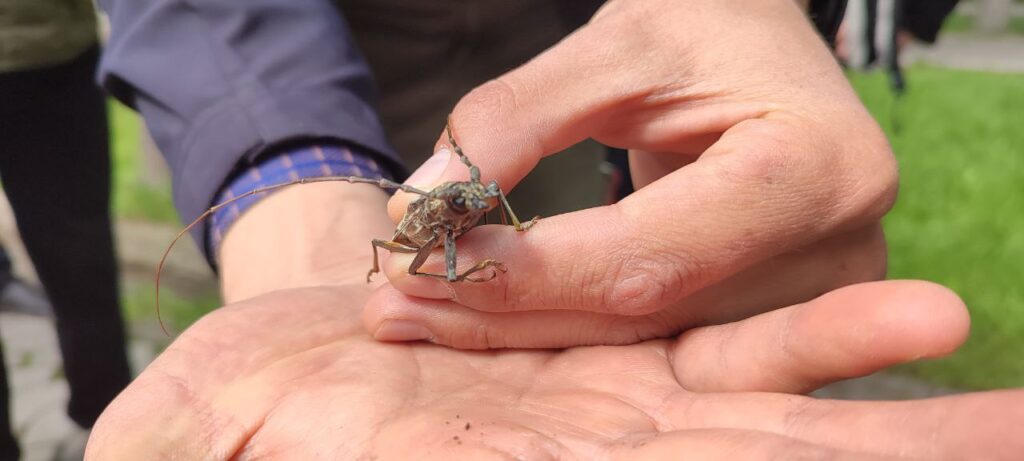
The larvae of the longhorn beetle (Aeolesthes sarta), commonly known as the woodcutter beetle, are destroying green spaces in Kyrgyzstan's capital Bishkek. The beetle appeared in the city ten years ago, but biologists have explained that its population has recently increased to worrying levels. The situation is being aggravated by the shortage of irrigation water in Bishkek, a result of faulty irrigation facilities. Trees in the capital are beginning to dry out, and their immunity to the effects of larvae infestation is weakening. The longhorn beetle lays its larvae in the bark of a tree, and as it matures, it eats the tree from the inside. The larvae's favorite trees, the elm and poplar, are the most common trees in Bishkek. Unlike other pests, the beetle cannot be irradicated with chemical treatments. Infested spaces must be destroyed completely. The Bishkek Zelenkhoz municipal enterprise, responsible for maintaining the city's green spaces, has reported that 90% of all adult elm trees and half of all poplars in the capital have become infected with longhorn beetle larvae. "Trees with signs of infestation remain green, and do not die immediately. After a while, the top dries up, and then the entire trunk follows. The death process takes about five years," Yuri Borvinok, head of the laboratory for woody and bush plants at the Kyrgyz Academy of Sciences, told The Times of Central Asia. Kyrgyz authorities are having difficulty controlling pests because of current laws. In Kyrgyzstan's populated areas, chemical treatment of greenery is prohibited to prevent harm to people, and burning plant debris such as leaves and branches is also forbidden. "When we used to burn plants and foliage, these measures deterred the miner moth, woodcutter beetles, and other pests; today, nothing prevents the mass spread of beetles," Borvinok said. Municipal officials are looking for an effective method to control the beetles. "Some trees we cut down, take out of town, and burn there. In addition to the elm trees, the woodcutter attacks poplars. There is a danger that it will move to other trees. This beetle can not be taken down by anything. That's why we are planting new species, linden, maple, and acacia," said Zhanybek Zhumaliyev, head of the Zelenkhoz enterprise's planning department.