• KGS/USD = 0.01144 0%
  • KZT/USD = 0.00205 0%
  • TJS/USD = 0.10429 0.29%
  • UZS/USD = 0.00008 0%
  • TMT/USD = 0.28571 0.28%
  • KGS/USD = 0.01144 0%
  • KZT/USD = 0.00205 0%
  • TJS/USD = 0.10429 0.29%
  • UZS/USD = 0.00008 0%
  • TMT/USD = 0.28571 0.28%
  • KGS/USD = 0.01144 0%
  • KZT/USD = 0.00205 0%
  • TJS/USD = 0.10429 0.29%
  • UZS/USD = 0.00008 0%
  • TMT/USD = 0.28571 0.28%
  • KGS/USD = 0.01144 0%
  • KZT/USD = 0.00205 0%
  • TJS/USD = 0.10429 0.29%
  • UZS/USD = 0.00008 0%
  • TMT/USD = 0.28571 0.28%
  • KGS/USD = 0.01144 0%
  • KZT/USD = 0.00205 0%
  • TJS/USD = 0.10429 0.29%
  • UZS/USD = 0.00008 0%
  • TMT/USD = 0.28571 0.28%
  • KGS/USD = 0.01144 0%
  • KZT/USD = 0.00205 0%
  • TJS/USD = 0.10429 0.29%
  • UZS/USD = 0.00008 0%
  • TMT/USD = 0.28571 0.28%
  • KGS/USD = 0.01144 0%
  • KZT/USD = 0.00205 0%
  • TJS/USD = 0.10429 0.29%
  • UZS/USD = 0.00008 0%
  • TMT/USD = 0.28571 0.28%
  • KGS/USD = 0.01144 0%
  • KZT/USD = 0.00205 0%
  • TJS/USD = 0.10429 0.29%
  • UZS/USD = 0.00008 0%
  • TMT/USD = 0.28571 0.28%

Viewing results 217 - 222 of 482

The Ferghana Valley: Navigating Complex Challenges in Central Asia’s Most Volatile Region

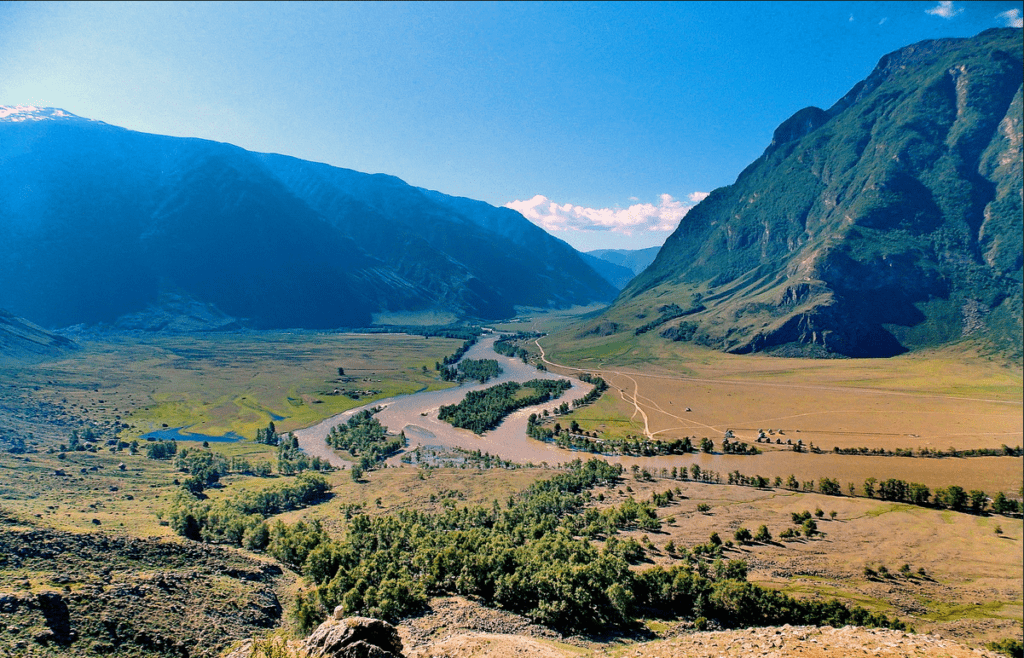
The Ferghana Valley is one of Central Asia’s most fertile and densely populated areas, but it is also among the most volatile. Spanning Uzbekistan, Kyrgyzstan, and Tajikistan, this landlocked region has long been a hotbed of ethnic tension, water disputes, and political instability. These challenges are deeply rooted in the geography, history, and sociopolitical landscape, making the valley a key focal point for understanding broader regional dynamics in Central Asia.   Geographical Importance and Ethnic Diversity Nestled between the towering Tien Shan and Pamir Mountain ranges, the Ferghana Valley covers over 22,000 square kilometers. It is fertile land nourished by the Syr Darya River, making it a critical area for cultivating cotton, fruits, and vegetables. These natural resources have historically drawn diverse populations, creating a vibrant ethnic mosaic. The valley is home to Uzbeks, Kyrgyz, and Tajiks, as well as smaller ethnic groups. While ethnic Uzbeks form the majority, significant Kyrgyz and Tajik minorities inhabit border regions. The ethnic diversity of the Ferghana Valley is both a strength and a source of tension. Soviet-era border policies exacerbated these divisions by creating artificial boundaries that crisscrossed the valley, leaving behind ethnic enclaves — pockets of one nationality surrounded by the territory of another. These enclaves have complicated governance and territorial integrity, making border management a persistent challenge.   The Soviet Legacy and Border Disputes During Soviet rule, the Central Asian republics were organized under Stalin’s divide-and-rule strategy, which deliberately created complex borders to weaken local identities and prevent regional unity. The Ferghana Valley, divided among three Soviet republics, is a prime example of this approach. After the Soviet Union's collapse in 1991, the administrative boundaries became international borders overnight between Uzbekistan, Kyrgyzstan, and Tajikistan. The lack of clearly defined borders has sparked numerous conflicts over territory, water, and land. A notable clash between Kyrgyzstan and Tajikistan in 2021 resulted in over 40 deaths and the destruction of homes and infrastructure. Many disputes revolve around access to scarce resources like water and arable land. These issues have escalated into violent confrontations, leading to casualties and the displacement of local populations.   Water: A Scarce and Contested Resource Water is the lifeblood of the Ferghana Valley, but disputes over its allocation are a major source of tension. The valley depends heavily on irrigation for its agricultural productivity, and the Syr Darya River, along with its tributaries, plays a crucial role in supplying water to the region. However, the division of the valley among the three countries complicates water management. Uzbekistan, the most populous of the three, relies on the valley’s water resources for its cotton industry, a cornerstone of its economy. Meanwhile, Kyrgyzstan and Tajikistan, which control the headwaters of the Syr Darya, often use their upstream position to leverage water access. This dynamic has led to frequent disagreements over water usage. For instance, Kyrgyzstan has at times threatened to withhold water unless it receives compensation, either through payments or electricity.   Ethnic Tensions and Political Instability Ethnic tensions further complicate the Ferghana Valley’s already volatile...

Kyrgyzstan to Modernize Oil Refinery in Jalal-Abad

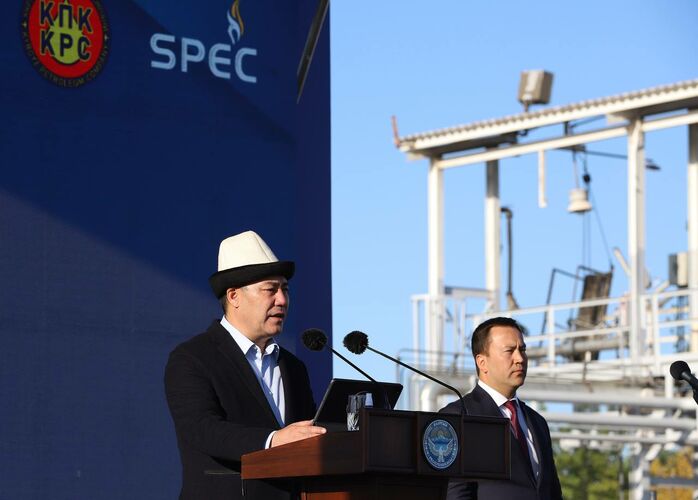
On September 28, Kyrgyzstan's largest oil refinery, located in the southern city of Jalal-Abad, began a large-scale modernization. Operated by Kyrgyz Petroleum Company, the refinery produces AI-80 gasoline, diesel fuel, and fuel oil. Kyrgyzstan's annual gasoline and diesel fuel demand is 1.4 million tons. The refinery in Jalal-Abad can meet only 6.5% of that demand. After the modernization project, the refinery will be able to meet 32% of the domestic demand. After modernization, AI-92 and AI-95 gasoline production would increase more than 12-fold, and diesel fuel production would grow by 40%. The total investment in modernizing the refinery will amount to $410 million, including $200 million in foreign investments and $110 million from the Kyrgyz government. Today, almost all gasoline and diesel fuel used by Kyrgyzstan is imported from Russia. The Times of Central Asia earlier reported that Kyrgyzstan proposed oil-rich Azerbaijan to sign a long-term contract to supply Azeri crude oil to Kyrgyzstan. Azeri crude oil is needed for Kyrgyzstan’s Junda oil refinery. Located in Kara-Balta, about 100 kilometers west of Bishkek, the refinery reopened late in August after a major overhaul. It now plans to reach its total annual capacity of processing 800,000 tons of crude oil by the end of this year.

World Justice Project: Kazakhstan Leads, Uzbekistan Improves, Kyrgyzstan Drops

The World Justice Project has announced the 2023 ranking of countries based on the rule of law. The ranking is based on eight indicators across 142 countries, which include constraints on government powers, the absence of corruption, open government, fundamental rights, order and security, regulatory enforcement, civil justice, and criminal justice. Denmark, Norway, and Finland occupy the highest places on the list. Kazakhstan has the highest score among the countries of Central Asia, placing in 65th. The country's ranking in terms of corruption, order and security, and civil justice all improved. Uzbekistan placed in 78th, with its indicators for order and security particularly high; the state is listed 17th in this category, with indicators for the absence of corruption also positive. Both Kazakhstan and Uzbekistan have improved their ranking by 2 points compared to last year. Kyrgyzstan, meanwhile, dropped one place to 103rd, whilst Tajikistan and Turkmenistan are not included in the rankings.

Gang Involved in Selling Children Abroad Neutralized in Kyrgyzstan

A transnational criminal gang engaged in the illegal adoption and sale of children abroad has been disrupted in Kyrgyzstan. The State Committee for National Security (SCNS) reported that the group included foreign and Kyrgyz citizens. In the period from 2022, the criminals used various manipulation tactics and bribery to obtain custody rights over children from socially vulnerable families, after which they illegally transported them out of the country for sale. As a result of investigative and operational measures, on September 20 the group's leaders were detained and placed in the SCNS's detention center. An investigation is ongoing to identify the remaining group members and those who assisted them. The situation with child trafficking in Kyrgyzstan remains an acute problem despite the efforts of the authorities. The country is a source and transit point for human trafficking, including children, who are often victims of sexual exploitation or illegal adoption. Criminal groups use corrupt connections and manipulation to gain custody of children from socially vulnerable families. One of the main problems is the lack of resources and coordination between law enforcement and social services, which makes it challenging to eradicate the trade. International organizations also point to the need to strengthen control over migration, as child trafficking is often associated with the export of minors out of the country. The Kyrgyz government is cooperating with international organizations such as the UN and Interpol to combat human trafficking, but further strengthening of law enforcement and prevention of such crimes is required to address the problem.

By End of Year, Kyrgyz Authorities Want to Insure All Houses in the Country

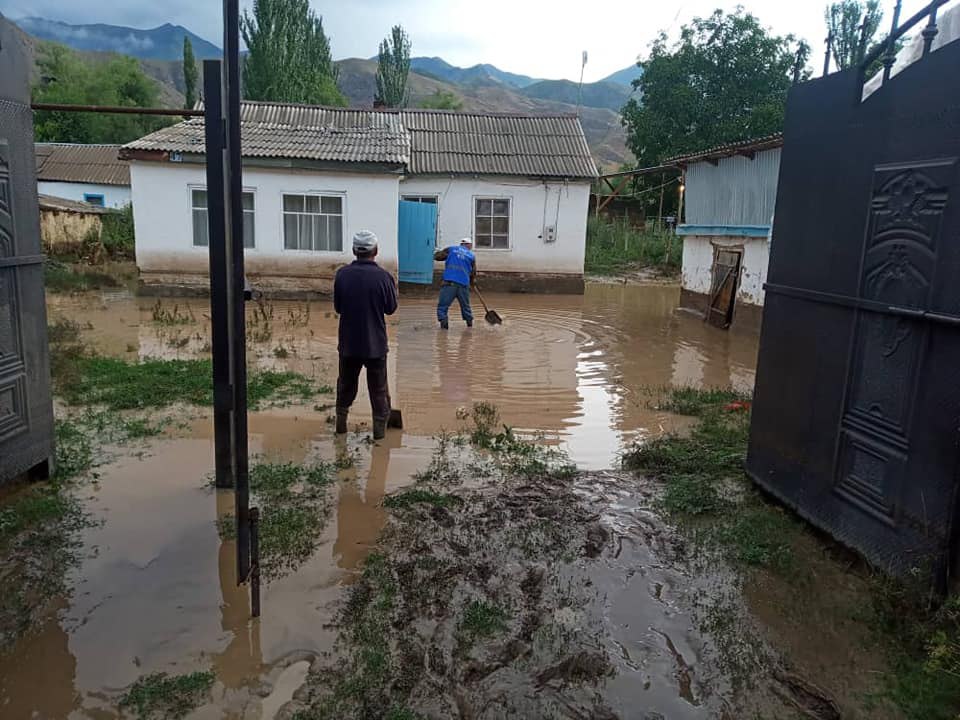
The Chairman of the Kyrgyzstan Cabinet of Ministers, Akylbek Japarov, instructed specialized government agencies to ensure the safety of all houses in the country, especially those in mudflow-prone areas. At the meeting devoted to natural disaster risk management, Japarov assigned specialized government agencies to ensure the safety of all houses in Kyrgyzstan. Thus, according to the head of the Cabinet of Ministers, the authorities will provide financial protection to citizens in case of natural disasters. This year, powerful mudslides flooded the south of Kyrgyzstan and the Issyk-Kul region. Over 5,000 households, dozens of social facilities, and hundreds of kilometers of roads were damaged. “Insurance will provide financial protection for citizens in such situations and minimize the consequences for families who lost their homes. Insurance will be an important tool to help people recover faster from natural disasters and reduce the burden on the state budget,” Japarov said. The head of the Cabinet emphasized that due to global warming, the number of natural disasters will continue to grow. Compulsory home insurance will ensure protection for citizens. It should be noted that the law on compulsory real estate insurance came into force in Kyrgyzstan on August 26, 2024. According to the law, residents must insure their real estate against fire and natural disasters. The State Insurance Organization (SIO) explained to The Times of Central Asia that legislative changes would be implemented gradually. The law on compulsory home insurance was first adopted in 2016, but the authorities postponed its implementation. There is no system of fines for lack of such insurance, at least not yet. “It is not profitable for private firms to engage in home insurance, as the rate is only 0.12%. That is, the cost of insurance is KGS 600 ($8), while payouts can be multi-million: KGS 500,000 ($6,000) for a village and KGS 1 mln ($12,000) for a city. Today in Kyrgyzstan, 143 thousand residences are insured,” the SIO noted.

The Illusion of Influence: The CSTO’s Journey From Symbolic Maneuvers To Real Challenges

Accompanied by a picture of military hardware - though in reverse gear as if symbolically - today, the CSTO (Collective Security Treaty Organization) website announced that “From 26 to 30 September, formations participating in the command-staff exercise 'Unbreakable Brotherhood-2024' with the CSTO Peacekeeping Forces are regrouping in the Republic of Kazakhstan. Contingents of CSTO troops are being sent from the Republic of Belarus, the Kyrgyz Republic, the Russian Federation, and the Republic of Tajikistan to the exercise area in accordance with the plan.” In reality, the history of the CSTO is one of refusals, inaction, and sometimes unexpected successes. On August 31, Armenia announced it had frozen its participation in the CSTO. Prime Minister Nikol Pashinyan said he would not name the day when Armenia would leave the CSTO and called the decision to freeze the republic's participation in all structures of the organization correct “at this stage.” In many ways, this half-hearted decision reflects a certain amorphousness that originally characterized the CSTO.   History The history of the structure's emergence reflects this lack of crystalline form. The Collective Security Treaty (CST) was signed in Tashkent between Armenia, Kazakhstan, Kyrgyzstan, Russia, Tajikistan and Uzbekistan on May 15, 1992. Azerbaijan, Belarus and Georgia later joined in 1993. The treaty came into effect in 1994 and was set to last five years. During the 1990s and the disintegration of Soviet-era institutions, organizations such as the CSTO or the previously created Commonwealth of Independent States (CIS), whose founding protocol was signed in Almaty, were created to facilitate a smooth “divorce” between the newly independent states. The CSTO was also seen as a force capable of curbing the regional conflicts which were boiling over, such as the Mujaheddin in Afghanistan. Tashkent's bet on Russian weapons in case of conflicts with the Taliban did not work out, however. From the turn of the 1990s into the 2000s, two serious fissures across the borders of Uzbekistan and Kyrgyzstan took place; the republics fought back with their own military and weapons, in addition to Kazakhstan coming to the rescue. The Collective Security Treaty expired in 1999, with Uzbekistan, Azerbaijan, and Georgia withdrawing, whilst Armenia, Belarus, Kazakhstan, Kyrgyzstan, Russia, and Tajikistan soldiered on under a new pact. The remaining states later transformed the CST into the Collective Security Treaty Organization in 2002. Uzbekistan joined as a full member of the CSTO in 2006 but then flip-flopped and suspended its membership in 2012.   A powerless organization While the CSTO was still developing, with President Vladimir Putin coming to power in Russia, the Kremlin's foreign policy changed substantively from that of the Yeltsin era, when Moscow remained indifferent to Nursultan Nazarbayev's integration initiatives. The new direction of Russian foreign policy was expressed in the concepts of “Russia rising from its knees” and the "gathering of lands.” Over time, this evolved into joint war games and military operations with the West in the Middle East and Africa, and for a period the Kremlin seemed to lose interest in Central Asia....