• KZT/USD = 0.00213
  • TJS/USD = 0.10800
  • UZS/USD = 0.00008
  • TMT/USD = 0.29850
  • KZT/USD = 0.00213
  • TJS/USD = 0.10800
  • UZS/USD = 0.00008
  • TMT/USD = 0.29850
  • KZT/USD = 0.00213
  • TJS/USD = 0.10800
  • UZS/USD = 0.00008
  • TMT/USD = 0.29850
  • KZT/USD = 0.00213
  • TJS/USD = 0.10800
  • UZS/USD = 0.00008
  • TMT/USD = 0.29850
  • KZT/USD = 0.00213
  • TJS/USD = 0.10800
  • UZS/USD = 0.00008
  • TMT/USD = 0.29850
  • KZT/USD = 0.00213
  • TJS/USD = 0.10800
  • UZS/USD = 0.00008
  • TMT/USD = 0.29850
  • KZT/USD = 0.00213
  • TJS/USD = 0.10800
  • UZS/USD = 0.00008
  • TMT/USD = 0.29850
  • KZT/USD = 0.00213
  • TJS/USD = 0.10800
  • UZS/USD = 0.00008
  • TMT/USD = 0.29850

Viewing results 49 - 54 of 59

SCO Summit in Astana: Correspondents from China Global Television Network, Times of Central Asia Discuss Upcoming Meeting

National leaders and other dignitaries from over 20 countries will be in the Kazakh capital of Astana this week for the annual summit of the Shanghai Cooperation Organization (SCO). The Times of Central Asia will be covering the SCO Summit live on 3 and 4 July from the city’s Palace of Peace and Reconciliation. The SCO is a political, security and economic alliance in the wider Eurasia region. This year’s Summit host Kazakhstan was a founding member of the Organization in 2001, alongside China and Russia, and its Central Asian neighbors Kyrgyzstan, Tajikistan and Uzbekistan. The last time the Summit was held in Astana, in 2017, India and Pakistan became full members. There are currently nine full member states, four observer states, and 14 dialogue partners, covering half of the world’s population, and almost a third of global GDP. This year's Summit will have significant implications for regional and global affairs. It is likely to produce initiatives aimed at reducing trade barriers, and promoting investments between SCO member states. High on the agenda will be the Belt and Road Initiative (BRI) – a crucial framework for enhancing connectivity and economic ties between China and its Central Asian partners. Other anticipated outcomes include new initiatives on climate change and sustainable development, as well as strengthened cultural and educational exchanges. Upon the initiative of Kazakhstan’s President Kassym-Jomart Tokayev, 2024 has been named the SCO “Year of Ecology”. Ahead of the Astana Summit, The Times of Central Asia’s senior editor Jonathan Campion spoke with an anchor from China Global Television Network, Mr Zhong Shi, about the role of the Shanghai Cooperation Organization plays in the Central Asia region. Their talk can be viewed in full in the videos below. In response to The Times of Central Asia’s question about what makes the SCO different from other alliances that the countries of Central Asia are aligned with, Mr Zhong explained that: “The SCO has been truly effective in combatting what we call the three enemies of all members, namely terrorism, extremism and separatism. There have been joint military drills conducted to enhance the coordination among armed forces”. Listen to Mr Zhong’s full response below: [video width="1920" height="1080" mp4="https://timesca.com/wp-content/uploads/2024/06/fullscreen-Zhong-Shi-answer-2-questions.mp4"][/video]   [video width="1920" height="1080" mp4="https://timesca.com/wp-content/uploads/2024/06/tw0-windows-Zhong-Shi-answer-2-questions.mp4"][/video] In turn, Mr Campion gave The Times of Central Asia’s perspective on the upcoming Summit. Asked about the impact that the Belt and Road Initiative has had on Central Asia, he replied: "Central Asia is evolving as a land bridge component to the Belt and Road Initiative linking China to the Caspian Sea. We’re seeing that investments in transport infrastructure are unlocking the region’s vast natural resources. With the world making a green transition, Kazakhstan stands out, as it has an abundance of critical materials – or green metals as they are known – that are used in the components of green technologies.” Listen to Mr Campion’s full response below: [video width="1920" height="1080" mp4="https://timesca.com/wp-content/uploads/2024/06/Jonathon-answer-Q2.mp4"][/video]   [video width="1920" height="1080" mp4="https://timesca.com/wp-content/uploads/2024/06/Jonathon-answer-Q3.mp4"][/video]  
Eurasian Connectivity Comes One Step Closer at the 2024 CAMCA Forum in Bishkek

The wider Eurasia region took another step towards cooperation and connectivity last week, as the 10th annual CAMCA Regional Forum was held in Bishkek. CAMCA – standing for Central Asia, Mongolia, the Caucasus and Afghanistan – is an initiative to accelerate dialogue between governments, private enterprises and media figures from these ten nations. Organized by the Washington, D.C.-based Central Asia-Caucasus Institute and the Rumsfeld Foundation, this year’s Forum – the first such event to take place in Kyrgyzstan – featured over 300 delegates across its two days, and presented insights from over 70 speakers. Attendees came from 25 countries in total. Professor Frederick Starr, the Central Asia-Caucasus Institute’s chairman, used his opening address to call on the countries of the region to start preparing for a future within a cohesive international bloc. Dr Starr reasoned that Russia and China, imperial powers that have traditionally had a controlling presence in Central Asia, may see their global influence wane in the coming decade. This would give the countries of Central Asia, and their neighbors, more space to create projects that serve their economies directly. A leading CAMCA regional project is the ‘Middle Corridor’ trade route, which bypasses Russia to transport goods more efficiently between Europe and China. Discussions are also taking place concerning the creation of single business and tourist visas for the whole Central Asia region. The importance of collaboration between countries in the Caucasus and Central Asia to mitigate the impact of climate change has never been so great. Addresses by senior members of the Kyrgyz government highlighted the progress that Kyrgyzstan has made since the administration of president Sadyr Japarov began its work in 2021. The country’s deputy prime minister Edil Baisalov reported that Kyrgyzstan is on track to double its GDP to $30 billion by 2030, while the minister for digital development, Nuria Kutnaeva, spoke about the rapid digitalization of the country’s government services.  In a noticeably warm and collaborative atmosphere, the event nonetheless highlighted the barriers that prevent the ten countries from forming a tangible ‘CAMCA’ space in the present. A key goal is the harmonization of their legislation and policy directions; however, no delegates from Tajikistan could travel to Bishkek for the Forum, as otherwise solid relations between Tajikistan and Kyrgyzstan are still strained by a dispute over their common border. Likewise, Armenian voices were also absent this time, in light of several of the sessions featuring Azerbaijani speakers and talking points. The event featured only one guest from Turkmenistan.  Even in these conflicts, however, Central Asian diplomacy is at work. The conflict on the Kyrgyz-Tajik border, mainly in Tajikistan’s Vorukh district, is being resolved through negotiations between the two countries’ governments, which would have been unthinkable even five years ago. Meanwhile, Kazakhstan is acting as a mediator between Baku and Yerevan in the aftermath of the war in Nagorno-Karabakh. Other topics on the agenda included security priorities for Central Asia, digital innovation in business, cooperation with Afghanistan, transitions in global energy markets, and infrastructure projects...

Signs of Racism in Central Asia

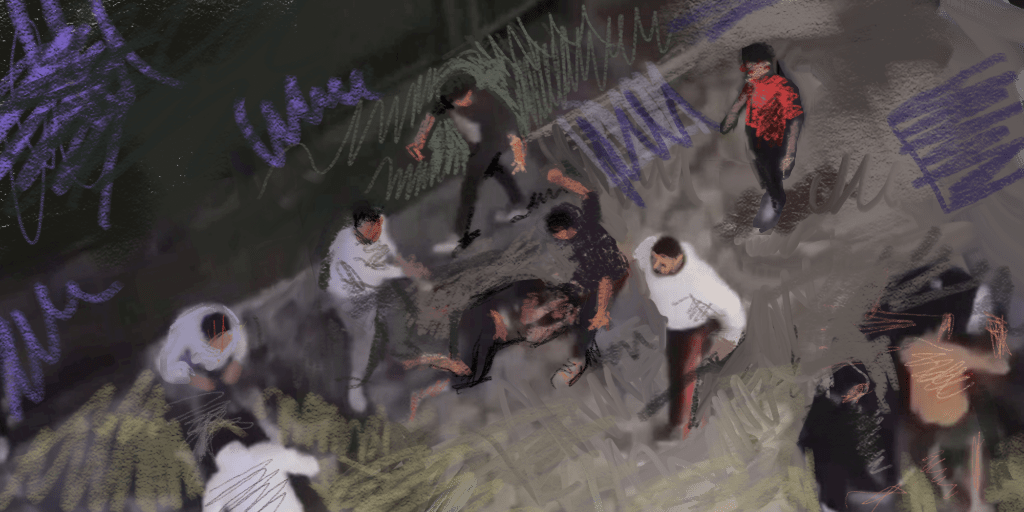
By Bruce Pannier Incidents in May showed two Central Asian countries – Kyrgyzstan and Turkmenistan – are afflicted by racism that is tacitly or explicitly supported by their governments. Overnight on May 17-18, hundreds of young Kyrgyz men gathered in eastern Bishkek near a dormitory used by foreign students. The Kyrgyz men were angered by a video posted on popular Kyrgyz social media sites on the morning of May 17 that showed a fight in Bishkek on May 13 between a small group of Kyrgyz and foreigners. The foreigners in the fight on May 13 turned out to all be Egyptians, and they were all detained. However, some social media posts claimed at least some of the foreigners involved in the fight were Pakistanis. Many people from Bangladesh, India, and Pakistan come to Kyrgyzstan to study at universities, particularly at medical colleges. More than 90% of foreign students at Kyrgyz universities are from India and Pakistan. A smaller number, in the low thousands, are working there illegally. In March, Kyrgyz authorities launched a campaign to find and deport illegal migrant laborers some 1,500 Pakistanis and 1,000 Bangladeshis have been caught. There have been isolated incidents when Kyrgyz were involved in physical altercations with South Asians in recent years, but nothing on scale of what happened in May 17-18. Besides bursting into the dormitory and assaulting foreign students, a group of some 60-70 Kyrgyz men broke into a sewing factory in Bishkek early morning May 18 and attacked foreign workers, who mostly from Bangladesh, India, and Pakistan. At least 41 people were injured, most of them South Asians. Pakistan in particular reacted, summoning the Kyrgyz Charge d'Affaires in Islamabad while a group of Pakistanis protested outside the Kyrgyz Embassy. Pakistani authorities also sent charter flights to Kyrgyzstan that brought back more than 1,000 Pakistani citizens. Kyrgyz authorities criticized the police for failing to calm the situation before it went out of control and later 10 policemen were sacked. Deputy Cabinet Chairman Edil Baisalov went to the dormitory to meet with some of the foreign students and apologize for the harm done to them “by a bunch of hooligans.” The top two people in the government – President Sadyr Japarov and head of security service Kamchybek Tashiyev – were more equivocal in their comments on the violence. Since coming to power in late 2020, Japarov and his longtime friend Tashiyev have promoted nationalist policies. Their emphasis on respecting Kyrgyz traditions and customs has gained them significant popularity in Kyrgyzstan. They need such support in a country that has had three revolutions since 2005, including the October 2020 revolution that resulted in them occupying their current positions. Young Kyrgyz men, like the hundreds who gathered on the evening of May 17, are an important pillar of support for Japarov and Tashiyev. President Japarov vaguely blamed “forces interested in aggravating the situation,” and added, “The demands of our patriotic youth to stop the illegal migration of foreign citizens and take tough measures against those...

Central Asia’s Combined ‘Army of Turan’: Could a Hypothesis Become a Reality?

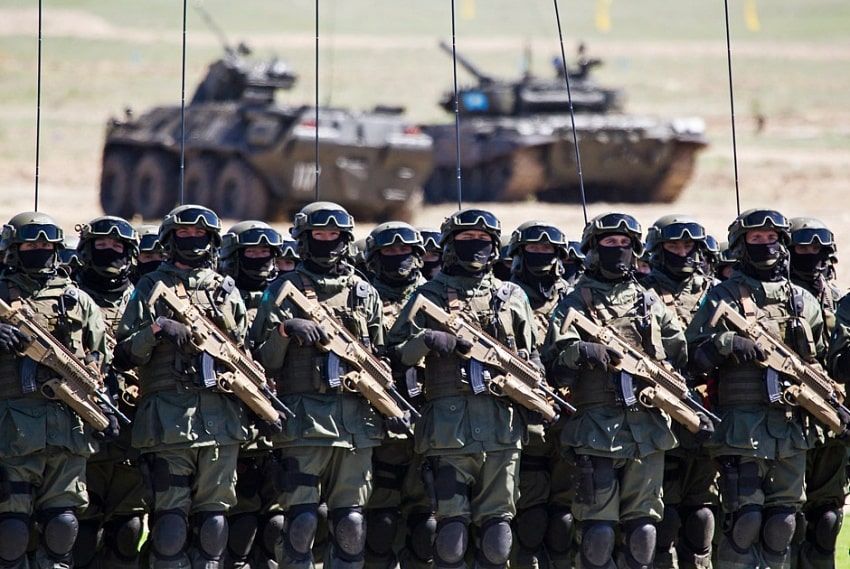
Kazakhstan will host the military exercise, "Birlestik-2024" in July of this year. Notably, this became known from the press service of the Ministry of Defense of Azerbaijan. The exercises will be jointly held by the Armed Forces of Azerbaijan, Kazakhstan, Kyrgyzstan, Tajikistan, and Uzbekistan. It is a convenient occasion to refresh the topic of the 'Army of Turan', which is periodically raised by experts both in Central Asia and neighboring countries. The Army of Turan is a hypothetical military bloc of Turkic-speaking countries. Its ideas have become relevant in the context of global geopolitical turbulence.   I hear the thunder of cannons... Most military analysts consider Azerbaijan to be Turkey's proxy in the South Caucasus. In general, Baku's rapprochement with the capitals of Turkic states (plus Dushanbe) meets Ankara's interests in creating a unified cultural and economic space: Turan. However, does the integration of Turkic states mean that they will eventually be able to create a NATO-style security pact in Central Asia? Such initiatives have resumed with renewed vigor after the end of the Azerbaijani-Armenian conflict, during which Turkey has shown the capability of its weapons. Indeed, in 2022, against the backdrop of the Russian invasion of Ukraine, Kazakhstan - the only country of the participants to share a land border with the Russian Federation - pondered how to protect itself from further expansion of the northern empire's borders. But in the run-up to the summer of 2024, fears have mostly subsided. Many were sobered by the obvious fact that loud declarations of assistance from strong states at best mean the delivery of obsolete weapons, but no more. At worst, your offender will be censured from high podiums, and you will be sympathized with. For example, Turkey, the most likely to defend Central Asia from outsider aggression, did not risk helping the Palestinians, its brothers in faith, and got away with accusing Israel of fascism. So, the 'Army of Turan' exists in the heads of fantasists and pan-Turkics, but in reality, something ordinary is going on — the arms trade. Let's see what the armies of the Central Asian republics are armed with, excluding Turkmenistan, which has declared neutrality.   Tajikistan and Kyrgyzstan The most troublesome neighbors in the region have not been able to complete their border delimitation process. As a result, quarrels periodically erupt, in which border guards from both sides intervene, staging mini-warfare. The cause of discord is usually the same: water. The Tajik and Kyrgyz militaries gain some combat experience in these micro-quarrels. Despite or based on this experience, Dushanbe relies on agreements with other countries -- Russia, China, India, Iran, and CSTO partners -- for its defense capability. Tajikistan's armed forces number only 9,000 men. They have 38 tanks (T-62 and T-72 modifications), 114 armored vehicles (APCs, BMPs, BRDMs), 40 artillery systems, and several short- and medium-range air defense units. The Air Force has four Czechoslovakian L-39 Albatross, combat trainers. Kyrgyzstan does not have much more power in the number of its troops, at around...

Is the China–Kyrgyzstan–Uzbekistan Railway Project Losing Steam Again?

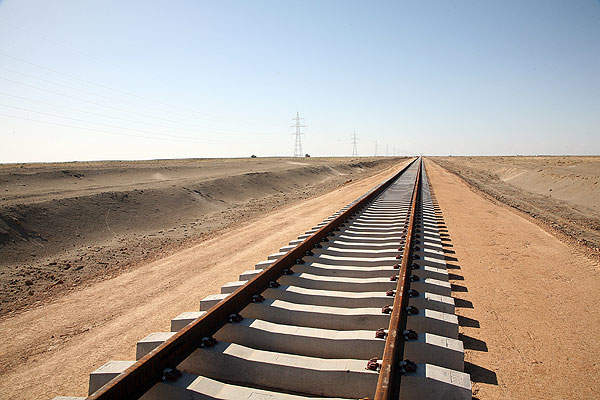
By Robert M. Cutler The China–Kyrgyzstan–Uzbekistan (CKU) railway was first proposed in 1997. There seemed finally to be a prospect for a start to the project after agreements at the Xi'an summit amongst China and the five Central Asian countries in May 2023. Construction on the 523-kilometre route was scheduled to begin several months after, but this has still not happened. Disagreements over the route and—still worse—over the funding risk relegating the project back to the drawing-boards where it has languished for over a quarter-century. After the initial agreement in 1997, it was these essentially unchanging disagreements over financing and the route within Kyrgyzstan that stalled negotiations, and over a final agreement of conditions for its construction in the early 2000s. These disagreements concern the geo-economic strategies of the respective parties, and they have not changed in over two decades.  China favors a shorter route, while Kyrgyzstan pushes for a longer one to benefit its domestic infrastructure. Specifically, Kyrgyzstan wants to use the railway's construction to establish better connections between the northern and southern parts of the country, which are separated by a mountain range.   Further difficulties in CKU implementation For Uzbekistan, a turning-point was its decision in 2017 to send railway experts to discuss the project with Kyrgyzstan. Then in 2019, Uzbekistan invited Turkey to co-finance the Kyrgyz section. The current cost of the whole project is estimated at $6 billion. A preliminary agreement has been reached on the division of this total, according to which each of the three parties will contribute 30 per cent (but at different stages of the project), with the source of the final 10 per cent including the cost of the feasibility study still to be determined. Despite this progress, public concerns in Kyrgyzstan over several critical practical issues remain unaddressed and continue to complicate a final agreement. These include the anticipated influx of Chinese workers, the professional development of local railway engineers, the allocation of investments for industrial projects along the railway corridor and the facilitation of increased exports of Kyrgyzstan's products to the Chinese market. These elements are essential for the long-term viability and success of the CKU railway initiative. Interestingly, these are very similar to the concerns of Kazakhstan that delayed the construction of the first (i.e., the Atasu–Alashankou) segment of the Kazakhstan–China oil export pipeline in the early 2000s. Moreover, China originally insisted on compensation from Bishkek for its contribution in the form of ownership of Kyrgyz mines, including the world’s second-largest iron-ore reserve at Zhetim Too, which Kyrgyz President Sadyr Japarov claims is worth at least $50 billion. It does not help matters that this site adjoins a large glacier, the water from which is crucial for irrigation of major Kyrgyz agricultural holdings.   Other Uzbek initiatives for infrastructure connectivity On 1 November 2023, at a forum of the Shanghai Co-operation Organization (SCO) meeting in Tashkent, transportation officials from Uzbekistan, Kyrgyzstan and Russia signed a memorandum to establish a new Kyrgyzstan–Russia trade corridor through Turkmenistan (who, incidentally,...

Kyrgyzstan’s Law on NGOs: What Alarms Human Rights Activists?

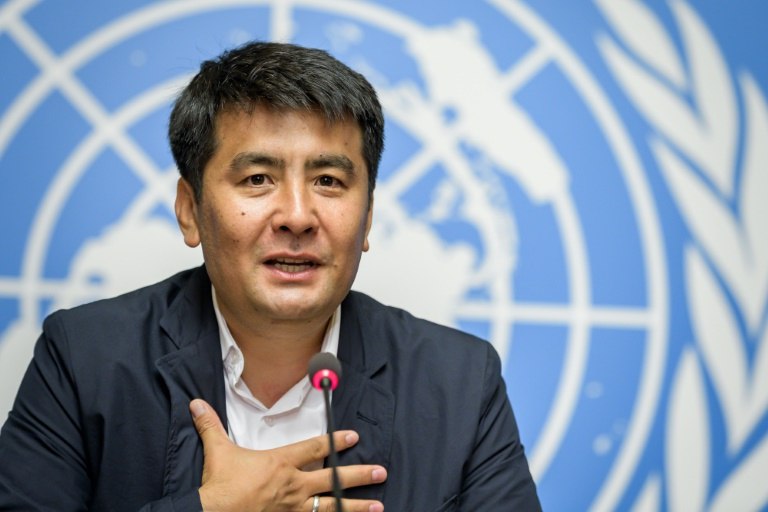
In April 2024 Kyrgyz President Sadyr Japarov signed a law on non-governmental organizations (NGOs). Now all NGOs must submit full financial reports and register with the Ministry of Justice. Despite the authorities' statements about the need for a document regulating the financing of such organizations, the law has numerous opponents. President Japarov himself claims that some NGOs have deceived donors by using foreign funds -- meant for roundtable discussions, training sessions and projects -- for personal purposes. "If you say that this is not true, I can prove it. Why do NGOs in developed countries register with the Ministry of Justice, tax service, open a bank account and do not do the same when they come to us? Or are we a second-rate country? No, we are not. We will not allow such dubious actions anymore," Japarov said after criticism from NGO representatives. Under the new legislation, an NGO that has received foreign aid will be called a "foreign representative". Public activists claim that the rule is consonant with the Russian law on foreign agent status for nonprofits that accept foreign funding. Such a situation will carry certain reputational risks: according to the law, organizations that receive funding from abroad and deal with political issues must be included in a special register and operate under the control of state bodies. In an interview with The Times of Central Asia, Azisbek Ashurov, head of the NGO 'Lawyers of Fergana Valley Without Borders' and a human rights activist, spoke about the pitfalls of the law. In Ashurov's opinion, the document is designed to limit the activities of the private sector. "We are concerned about the re-registration procedure itself. Either it is just an application procedure, or someone will approve, make decisions. When decisions are made, how transparent and non-corrupt will it be?" he asked. Ashurov gave the example that in Kyrgyzstan there are NGOs providing legal assistance to citizens. If there is a dispute with a government body, the decision is challenged in the courts. However, now such structures will be dependent on the state and will not be able to work fully independently. "State bodies have been authorized to interfere in the activities of NGOs. This is participation in their internal activities. We discuss some of our cases [via] collegiums, when lawyers discuss the strategy for different cases. Now, imagine, a representative of the state will sit and listen to confidential information that in the interest of the citizen we should not disclose. The balance is grossly upset. The adversarial principle is violated if we are preparing for court hearings against state bodies, for example, against the Ministry of Justice," Ashurov added. According to him, the Ministry of Justice was given the opportunity to suspend the activities of NGOs for violations. However, the current legislative framework doesn't specify the violations for which an NGO can be suspended. The law prescribes that state bodies may request information from NGOs -- however, it's not specified what kind of information should be provided. In...