• KGS/USD = 0.01144 0%
  • KZT/USD = 0.00208 0%
  • TJS/USD = 0.10440 -0.19%
  • UZS/USD = 0.00008 0%
  • TMT/USD = 0.28571 0.28%
  • KGS/USD = 0.01144 0%
  • KZT/USD = 0.00208 0%
  • TJS/USD = 0.10440 -0.19%
  • UZS/USD = 0.00008 0%
  • TMT/USD = 0.28571 0.28%
  • KGS/USD = 0.01144 0%
  • KZT/USD = 0.00208 0%
  • TJS/USD = 0.10440 -0.19%
  • UZS/USD = 0.00008 0%
  • TMT/USD = 0.28571 0.28%
  • KGS/USD = 0.01144 0%
  • KZT/USD = 0.00208 0%
  • TJS/USD = 0.10440 -0.19%
  • UZS/USD = 0.00008 0%
  • TMT/USD = 0.28571 0.28%
  • KGS/USD = 0.01144 0%
  • KZT/USD = 0.00208 0%
  • TJS/USD = 0.10440 -0.19%
  • UZS/USD = 0.00008 0%
  • TMT/USD = 0.28571 0.28%
  • KGS/USD = 0.01144 0%
  • KZT/USD = 0.00208 0%
  • TJS/USD = 0.10440 -0.19%
  • UZS/USD = 0.00008 0%
  • TMT/USD = 0.28571 0.28%
  • KGS/USD = 0.01144 0%
  • KZT/USD = 0.00208 0%
  • TJS/USD = 0.10440 -0.19%
  • UZS/USD = 0.00008 0%
  • TMT/USD = 0.28571 0.28%
  • KGS/USD = 0.01144 0%
  • KZT/USD = 0.00208 0%
  • TJS/USD = 0.10440 -0.19%
  • UZS/USD = 0.00008 0%
  • TMT/USD = 0.28571 0.28%

Viewing results 607 - 612 of 1265

Children’s Blood Lead Levels in Kyrgyzstan to be Investigated

Kyrgyzstan has started preparing for its first comprehensive study on blood lead levels in children between the ages of 1 and 6. This project is being implemented by the National Institute of Public Health, the National Center for Health Promotion and Mass Communication, and with the support of the Ministry of Health and the Department of Disease Prevention. The study will focus on three key areas. First, an information and education campaign to raise awareness among parents and healthcare providers about the risks of lead poisoning will be launched. Second, the prevalence of lead in children will be assessed to determine the extent of the problem. Third, the study will address environmental analysis to identify sources of lead contamination. Exposure to lead is hazardous for children, as this toxic metal can cause serious health problems even at low levels of exposure. Lead affects brain development, leading to decreased cognitive function, developmental delays, behavioral issues, impaired learning, and reduced concentration ability. Children exposed to lead can also develop kidney and blood pressure problems. On September 26-27, in preparation for the project, specialists from the Health Promotion Cabinets attended a communications training where they studied theoretical and practical aspects of the impact of lead on the body, methods of prevention, and the importance of public awareness. The problem of lead contamination in Kyrgyzstan is still understudied despite many sources of contamination, including tailing ponds, old batteries, and cottage industries. The study is being conducted within the framework of the project “Reducing the Risk of Lead Poisoning in Children” and was made possible through the cooperation of Kyrgyzstan's Ministry of Health, the Pure Earth project, and the public association “ECOIS-Bishkek.” The results of this study will become the basis for the development of targeted programs aimed at minimizing the impact of lead on children's health.

Rosatom Considering Constructing Nuclear Power Plant in Northern Kyrgyzstan

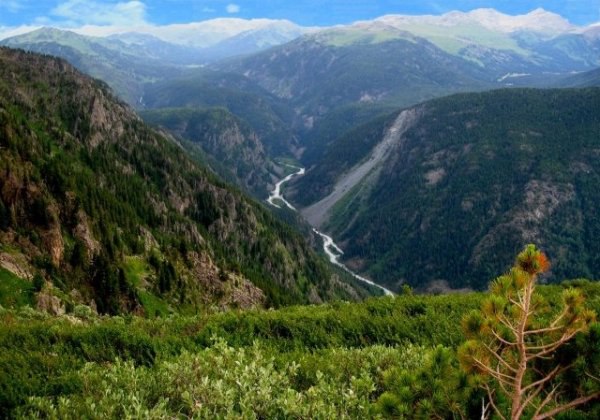
Representatives of the Russian company Rosatom announced at a briefing that a low-capacity nuclear power plant may be built in Kyrgyzstan's northern Chui region. According to them, a preliminary feasibility study has already been developed. According to Rosatom, the company's specialists have studied the seismic potential of southern Kyrgyzstan and concluded that there are many faults in the earth's crust. This fact is reason enough not to build the plant in the south of the country. In contrast, Kyrgyzstan's north is less prone to seismic fluctuations. “The most suitable location for this project is the northern Chui oblast [region], where seismicity is the lowest. But we have not been able to name a specific site so far. A detailed study is needed. There are places in Kyrgyzstan where a nuclear power plant can be built, but not many,” said Dmitry Konstantinov, general director of Rosatom's Russian representative office in Kyrgyzstan. He said many parameters must be considered when choosing a construction site. These include seismic activity, remoteness from population centers, power lines, and a water source needed to cool the plant. Rosatom stated that the design for the small nuclear power plant potentially being built in Kyrgyzstan was developed by adapting shipboard small-power technology currently used in ships. Each unit at the plant would have a capacity of 55 MW, with the possibility of installing up to six units, allowing the plant’s total capacity to reach 300 MW. For comparison, by 2025, Kyrgyz authorities aim to achieve a capacity of 400 MW (excluding the nuclear plant) through the completion of large hydroelectric power projects. Two years ago, a memorandum on constructing a low-capacity nuclear power plant was signed between Bishkek and Moscow. Since then, the Russian company has been working on a feasibility study and studying land plots for the plant's construction. According to the head of the representative office, serious discussions are continuing with the republic's authorities. “The decision to build a nuclear power plant in Kyrgyzstan will be made by the people together with the government. And we, for our part, will provide all the necessary information and technology to make it objective. We will inform the population about our technologies and decisions so that they feel safe,” emphasized Konstantinov. Rosatom signed a memorandum with Uzbek authorities on constructing a small nuclear power plant earlier this year. According to the Russian company, construction has already begun, and the first power unit may operate in 2029. On October 6, Kazakhstan will hold a popular referendum on constructing a nuclear power plant in Kazakhstan. Among the most likely candidates for construction are companies from Russia, China, South Korea, and France.

Kazakhstan to Build Airports in Katon-Karagay and Zaysan Resort Areas

Kazakhstan’s Ministry of Transport has chosen sites to construct new airports in the resort areas of Katon-Karagay and Zaysan in the country’s east. Katon-Karagay is Kazakhstan's largest national park, located in the picturesque region of Southern Altai, near the borders with Russia and China. One new airport will be built in the Katon-Karagay National Park near the village of Soldatovo, 38 kilometers from the village of Katon-Karagay. Another airport will be constructed at a former military airfield 25 kilometers from the town of Zaysan. One of the most beautiful lakes in Kazakhstan, Zaysan is a vast freshwater lake with lots of aquatic diversity. It is about 100 kilometers long, 30 kilometers wide, and 8 meters deep. Lake Zaysan is 239 kilometers from Ust-Kamenogorsk, the largest city in eastern Kazakhstan, which is currently home to the closest airport for both resort areas. The new airports will have 2,200-meter-long runways for short-haul planes, providing air service from the capital, Astana, and Almaty. Plans are in place to extend the runways in the future, which will allow the reception of large aircraft such as Airbus A320 and Boeing 737. According to Transport Minister Marat Karabayev, construction of the airports will begin in 2025.

Kazakhstan Establishes Coordination Council of Partners for Water Sector Development

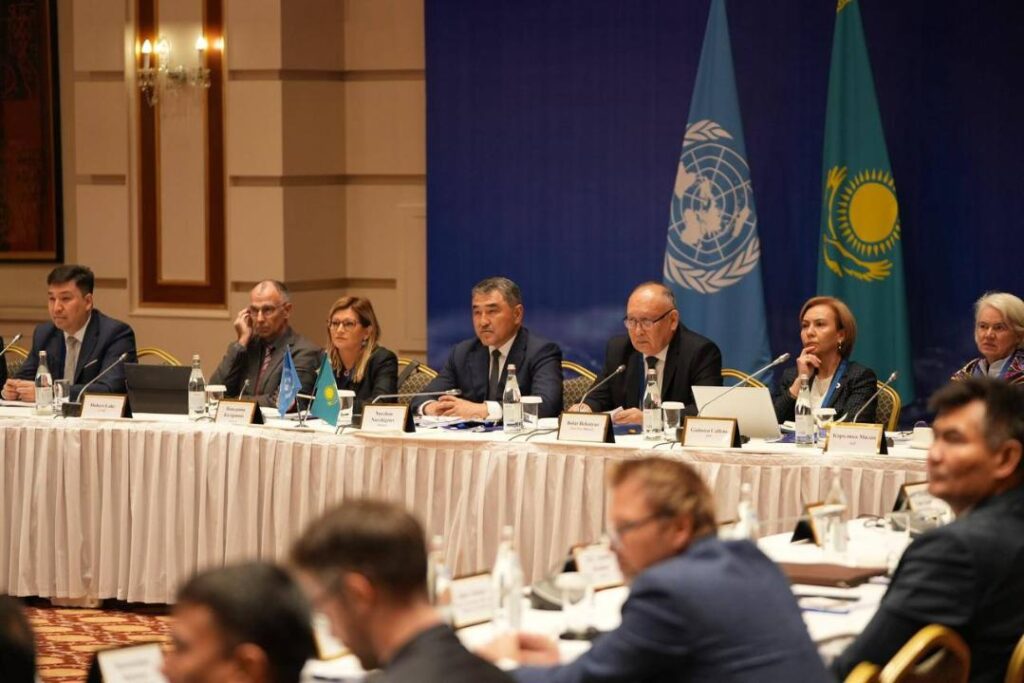
Kazakhstan has established a Coordination Council of Partners for the Development of the Water Sector. It includes the Kazakh Ministry of Water Resources and Irrigation representatives, the United Nations Development Programme (UNDP), and other international organizations and financial institutions. According to the ministry, the Coordination Council will coordinate the actions of government agencies, UNDP, international financial organizations, and donor communities according to national priorities in the water sector. The Council will mobilize and effectively distribute financial and technical resources to achieve the goals. The Council will support developing and implementing strategic documents, such as the Water Code, the Concept for the Development of the Water Resources Management System, and the Comprehensive Water Sector Development Plan, as well as strengthening the legislative framework and institutional mechanisms for sustainable water management. By implementing best international practices and innovative solutions in water resources management, the Council will organize the exchange of knowledge and experience, increase the capacity of specialists, and inform citizens about sustainable water resources management principles. Another key task for the Council is strengthening regional cooperation in water resources management and increasing resilience to climate change and natural disasters such as droughts and floods. Minister of Water Resources and Irrigation Nurzhan Nurzhigitov commented: “The establishment of the Coordination Council is an important step for the water sector in Kazakhstan. By coordinating the efforts of the Ministry, international organizations, and donor communities, the Council will play an important role in promoting the country's long-term environmental stability and economic development. The Coordination Council will help mobilize resources, strengthen governance, expand regional cooperation, and promote sustainable water resource management practices. These collective efforts will address growing climate challenges and ensure a stable future for Kazakhstan and Central Asia.” On September 30, the Coordination Council held its first meeting in Astana. The meeting discussed partnerships in managing Kazakhstan's water resources and presented a Water Partnership Initiative for 2024-2030, a joint proposal between the Ministry of Water Resources and Irrigation and UNDP. The document outlines specific activities, such as developing an information system for water resources, the modernization of water infrastructure to respond to climate challenges, implementing modern irrigation systems, and transboundary water cooperation. Katarzyna Wawiernia, UNDP Resident Representative in Kazakhstan, stated at the meeting: "Given the complexity of the water agenda, it is clear that no single government or organization can tackle these issues alone. Therefore, addressing these challenges requires combining resources, investments, technical expertise, and innovations. I hope that the Partnership Initiative proposed today by UNDP and the Ministry of Water Resources and Irrigation will be an important catalyst in this process." For decades, Kazakhstan has faced a host of water-related challenges, such as the shrinking Aral Sea, largely caused by decreasing water flows in transboundary rivers, devastating spring floods, and irrigation water shortages in the country’s southern regions.

Kyrgyzstan Complicates Re-Export of Goods to Russia

Re-exporting goods to Russia from third countries through Kyrgyzstan are to become more expensive due to a new rule implemented by the National Bank of the Kyrgyz Republic (NBKR). The new protocol prohibits banks from making payments for goods intended for foreign countries without actual delivery to the territory of Kyrgyzstan. The rule came into force on September 25 and effectively closed the channel of transit payments for goods from third countries to Russia through Kyrgyzstan. The move is seen as a response to requests from international financial institutions. It might be instrumental in putting an end to Russia’s practice of avoiding Western sanctions imposed due to Russia's war in Ukraine. The new NBKR rule would also benefit the Kyrgyz economy, as re-exported goods must now be delivered to Kyrgyzstan and subject to Kyrgyz customs duties and taxes. According to Russian media reports, Russian importers have already encountered difficulties associated with the new requirement to transport goods through Kyrgyzstan, and the corresponding customs and tax costs, which makes re-export less profitable. The NBKR requirement does not extend to the Trading Company, established by the Cabinet of Ministers of the Kyrgyz Republic on August 23. Wholly state-owned, the company oversees trade flows involving Kyrgyz firms that re-export goods without physically delivering them to Kyrgyzstan. The Trading Company has the exclusive right to carry out trade operations without actual delivery to Kyrgyzstan. Companies that previously carried out trade without delivery to the Kyrgyz territory must carry out operations through the Trading Company. Also, the NBKR rule does not apply to deliveries made through e-commerce marketplaces for personal use.

The Ferghana Valley: Navigating Complex Challenges in Central Asia’s Most Volatile Region

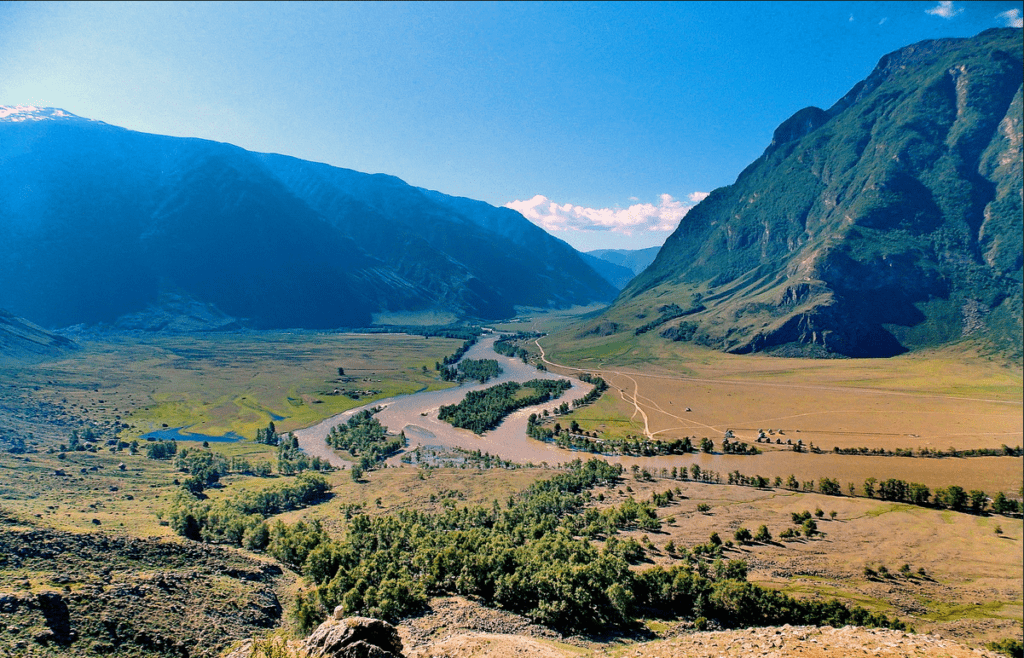
The Ferghana Valley is one of Central Asia’s most fertile and densely populated areas, but it is also among the most volatile. Spanning Uzbekistan, Kyrgyzstan, and Tajikistan, this landlocked region has long been a hotbed of ethnic tension, water disputes, and political instability. These challenges are deeply rooted in the geography, history, and sociopolitical landscape, making the valley a key focal point for understanding broader regional dynamics in Central Asia.   Geographical Importance and Ethnic Diversity Nestled between the towering Tien Shan and Pamir Mountain ranges, the Ferghana Valley covers over 22,000 square kilometers. It is fertile land nourished by the Syr Darya River, making it a critical area for cultivating cotton, fruits, and vegetables. These natural resources have historically drawn diverse populations, creating a vibrant ethnic mosaic. The valley is home to Uzbeks, Kyrgyz, and Tajiks, as well as smaller ethnic groups. While ethnic Uzbeks form the majority, significant Kyrgyz and Tajik minorities inhabit border regions. The ethnic diversity of the Ferghana Valley is both a strength and a source of tension. Soviet-era border policies exacerbated these divisions by creating artificial boundaries that crisscrossed the valley, leaving behind ethnic enclaves — pockets of one nationality surrounded by the territory of another. These enclaves have complicated governance and territorial integrity, making border management a persistent challenge.   The Soviet Legacy and Border Disputes During Soviet rule, the Central Asian republics were organized under Stalin’s divide-and-rule strategy, which deliberately created complex borders to weaken local identities and prevent regional unity. The Ferghana Valley, divided among three Soviet republics, is a prime example of this approach. After the Soviet Union's collapse in 1991, the administrative boundaries became international borders overnight between Uzbekistan, Kyrgyzstan, and Tajikistan. The lack of clearly defined borders has sparked numerous conflicts over territory, water, and land. A notable clash between Kyrgyzstan and Tajikistan in 2021 resulted in over 40 deaths and the destruction of homes and infrastructure. Many disputes revolve around access to scarce resources like water and arable land. These issues have escalated into violent confrontations, leading to casualties and the displacement of local populations.   Water: A Scarce and Contested Resource Water is the lifeblood of the Ferghana Valley, but disputes over its allocation are a major source of tension. The valley depends heavily on irrigation for its agricultural productivity, and the Syr Darya River, along with its tributaries, plays a crucial role in supplying water to the region. However, the division of the valley among the three countries complicates water management. Uzbekistan, the most populous of the three, relies on the valley’s water resources for its cotton industry, a cornerstone of its economy. Meanwhile, Kyrgyzstan and Tajikistan, which control the headwaters of the Syr Darya, often use their upstream position to leverage water access. This dynamic has led to frequent disagreements over water usage. For instance, Kyrgyzstan has at times threatened to withhold water unless it receives compensation, either through payments or electricity.   Ethnic Tensions and Political Instability Ethnic tensions further complicate the Ferghana Valley’s already volatile...