• KGS/USD = 0.01143 0%
  • KZT/USD = 0.00216 0%
  • TJS/USD = 0.10684 -0.28%
  • UZS/USD = 0.00008 0%
  • TMT/USD = 0.28571 0%
  • KGS/USD = 0.01143 0%
  • KZT/USD = 0.00216 0%
  • TJS/USD = 0.10684 -0.28%
  • UZS/USD = 0.00008 0%
  • TMT/USD = 0.28571 0%
  • KGS/USD = 0.01143 0%
  • KZT/USD = 0.00216 0%
  • TJS/USD = 0.10684 -0.28%
  • UZS/USD = 0.00008 0%
  • TMT/USD = 0.28571 0%
  • KGS/USD = 0.01143 0%
  • KZT/USD = 0.00216 0%
  • TJS/USD = 0.10684 -0.28%
  • UZS/USD = 0.00008 0%
  • TMT/USD = 0.28571 0%
  • KGS/USD = 0.01143 0%
  • KZT/USD = 0.00216 0%
  • TJS/USD = 0.10684 -0.28%
  • UZS/USD = 0.00008 0%
  • TMT/USD = 0.28571 0%
  • KGS/USD = 0.01143 0%
  • KZT/USD = 0.00216 0%
  • TJS/USD = 0.10684 -0.28%
  • UZS/USD = 0.00008 0%
  • TMT/USD = 0.28571 0%
  • KGS/USD = 0.01143 0%
  • KZT/USD = 0.00216 0%
  • TJS/USD = 0.10684 -0.28%
  • UZS/USD = 0.00008 0%
  • TMT/USD = 0.28571 0%
  • KGS/USD = 0.01143 0%
  • KZT/USD = 0.00216 0%
  • TJS/USD = 0.10684 -0.28%
  • UZS/USD = 0.00008 0%
  • TMT/USD = 0.28571 0%

Viewing results 25 - 30 of 1343

Kazakhstan Prepares for Its First-Ever Administrative Amnesty

President Kassym-Jomart Tokayev has announced plans to introduce Kazakhstan’s first-ever administrative amnesty. The statement was made during a ceremony marking the adoption of the country’s new Constitution. In the past, Kazakhstan has periodically granted amnesties to individuals convicted of criminal offenses, often timed to coincide with national anniversaries. The most recent such amnesty was carried out in 2025 to mark the 30th anniversary of the Constitution. The new initiative is linked to the adoption of the updated Constitution. On March 15, a nationwide referendum was held in which a majority of voters supported the new basic law. The document is scheduled to enter into force on July 1, 2026. Speaking at the ceremony, Tokayev said that constitutional reform represents a transition to a new stage in the country’s development and requires a reassessment of the relationship between the state and society. “The People’s Constitution is a strategic mandate of trust and a new social contract aimed at long-term goals and horizons of progress,” the president said. He instructed parliament to adopt an amnesty law by the end of the current session. The proposed amnesty is expected to cover a range of criminal and administrative offenses that do not pose a threat to public or national security. The current parliamentary session is due to conclude at the end of June. Under the new Constitution, however, the powers of the existing parliament will cease on July 1, 2026, the same day the new constitutional framework enters into force. In the near future, five new constitutional laws are expected to be submitted to parliament, including legislation governing the presidency, the Kurultai (the future parliament), the Halyk Kenesi (People's Council), as well as laws regulating the status of the capital and the country’s administrative-territorial structure. According to Tokayev, eight existing constitutional laws and more than 60 regulatory acts, including key legal codes, will also require revision. These legislative changes are expected to be synchronized with upcoming parliamentary elections. Elections to the new unicameral parliament are likely to take place before the opening of the next parliamentary session, which traditionally begins on September 1. As a result, voting could be held within the coming months. “By that time, preparation of the necessary legal framework must be fully completed. The comprehensive transformation of Kazakhstan’s legal and political system will continue throughout this year and possibly into the next,” the president said. According to Tokayev, the reforms envisage the creation of new state institutions, as well as structural and personnel changes within existing government bodies.

New Constitution Backed by Majority as Kazakhstan Reports Record Referendum Turnout

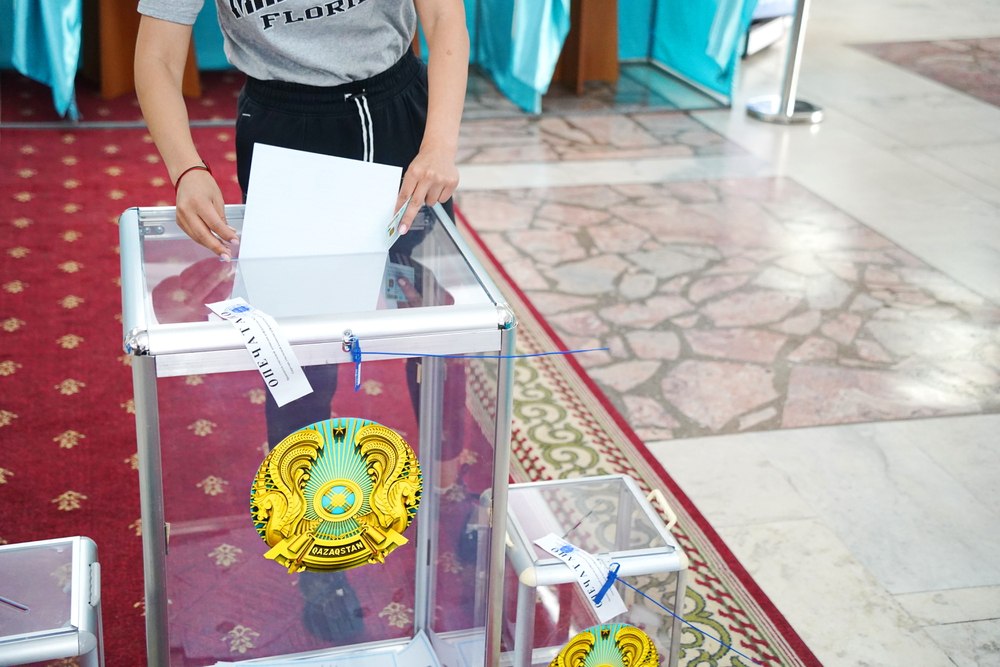
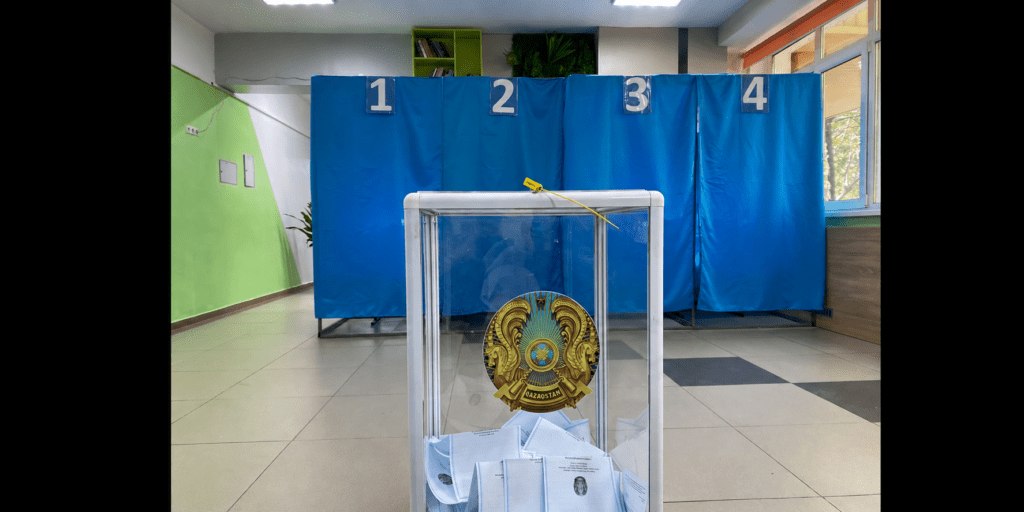
Kazakhstan’s Central Referendum Commission has announced the official results of the nationwide vote on the draft of a new constitution. According to the commission, voter turnout reached 73.12%, with a total of 9,127,192 citizens participating. Preliminary results show that 7,954,667 voters or 87.15%, supported the proposed amendments. A further 898,099 citizens voted against, while 146,558 ballots were declared invalid. On 15 March Kazakhstan held a national referendum, proposed by President Kassym‑Jomart Tokayev, on whether to adopt a new constitution. The draft constitution introduces major institutional reforms, including replacing the country’s bicameral parliament with a single chamber, restoring the post of vice-president (abolished in 1996), and creating a new People’s Council (Kurultai) with powers to initiate legislation and referendums. The reforms also allow the president to appoint key officials, and redefine some constitutional provisions, including the definition of marriage. Critics say the changes could strengthen presidential authority and potentially affect future term limits. Regional voting patterns reveal several notable trends. First, Pavlodar region recorded the highest level of support, with 94.14% of voters backing the amendments. Traditionally, Kazakhstan’s northern regions have demonstrated more moderate support for decisions initiated by the central authorities. This tendency was reflected in the Karaganda and North Kazakhstan regions, where support stood at around 83%. Second, two western regions, Aktobe (93.96%) and Mangistau (93.40%), also showed some of the strongest support for constitutional reform. Mangistau was widely regarded during the era of former president Nursultan Nazarbayev as one of the country’s most protest-prone areas. The unrest in January 2022 began with a strike by oil workers in the city of Zhanaozen. Third, residents of Almaty demonstrated a higher share of protest voting than those in the country’s other major cities, Astana and Shymkent, with nearly 30% voting against the amendments. Voter turnout in Almaty reached 33.43%, significantly higher than the slightly more than 25% recorded during the 2024 referendum on the construction of a nuclear power plant. Among those who cast ballots in Almaty, 71.36% supported the 2026 constitution. In Astana and Shymkent, just over 86% voted in favor. Turnout figures had already been analyzed a day earlier by Almaty-based political analyst Andrei Chebotarev on his Telegram channel. He cited preliminary data from the Central Referendum Commission indicating that 9,126,850 citizens, or 73.24% of the electorate, had participated in the vote. Chebotarev compared these figures with turnout in previous referendums. He noted that 7,985,769 citizens (68.05%) took part in the referendum on constitutional amendments held on June 5, 2022, while 7,820,204 voters (63.66%) participated in the October 6, 2024 referendum on the construction of a nuclear power plant. “It is evident that the increase in participation was primarily driven by the political significance of the referendum’s subject matter, namely, the draft of a new Constitution. The relatively frequent use of referendums in Kazakhstan over the past four years may also have contributed,” Chebotarev suggested. Political analyst Daniyar Ashimbayev also highlighted the high turnout, noting that participation exceeded the 70% threshold for the first time. He argued that the...

Turkmenistan’s Army Facing a Growing Exodus of Personnel

Turkmenistan’s Ministry of Defense is attempting to halt mass resignations among officers. Military personnel who have left their units without permission are being offered the opportunity to return to service on the condition that they are transferred to their home region. However, this measure has so far produced little effect and does not address the army’s core problems. Turkmenistan’s Minister of Defense, Begench Gundogdyyev, has sought to revise the government’s approach to the personnel crisis in the armed forces. At a meeting with unit commanders reviewing the results of the first two months of 2026, he addressed the issue of widespread officer resignations. Several commanders reportedly asked him to approve discharge requests for subordinates who had not reported to their units for an extended period. According to a source cited by turkmen.news, the minister reacted sharply and stated that he would not sign any such documents. “Lock them up in the armoury if you must, but don’t let them leave the army,” the source quoted him as saying. A few days after the meeting, some officers reportedly received phone calls from the Ministry of Defense offering them the chance to return to duty. In exchange, they were promised transfers to their home region. Such a practice had not existed previously. Since Soviet times, military personnel were typically assigned to serve in regions other than their own so that, in the event of unrest, they would defend state authority rather than side with local populations. Now, an exception has been made for those seeking discharge after leaving their units without permission, in some cases for more than a year. However, according to sources, almost no one has accepted the offer, and the number of officers wishing to leave the army continues to grow. Officers cite housing as the main problem. Two years ago, a ministerial order abolished the option to privatize service housing, which had previously been available based on length of service. Following this decision, the outflow of personnel reportedly intensified. About a year ago, the Ministry of Defense proposed that officers purchase newly built apartments with their own funds, requiring them to cover 100% of the cost while also prohibiting subsequent resale. Many officers view these conditions as unreasonable. According to them, several years of work abroad, for example in Russia, make it possible to save enough money to buy a home, a car, and secure their children’s future. Military personnel also report insufficient pay, hazing, and corruption affecting not only conscripts but officers as well. As a result, some officers who are unable to formally resign reportedly remain in service until retirement age. Sources claim that morale and discipline in the armed forces have deteriorated to such an extent that any conflict with commanders can prompt an officer to submit a resignation request and stop reporting for duty. The problems facing Turkmenistan’s armed forces come amid broader regional tensions. On February 27, Pakistan’s defense minister, Khawaja Asif, announced what he described as the start of an “open war”...

Kazakhstan’s Constitutional Referendum Opens the Door to Major Institutional Reform

Kazakhstan will hold its constitutional referendum on March 15 on a draft that would replace the current bicameral parliamentary structure, restore the vice presidency, and reset the legal framework for the country’s post-2022 political order. The Central Referendum Commission has presented the vote as procedurally ready. On February 20, Qazinform reported that the commission had briefed the OSCE/ODIHR mission on preparations, saying infrastructure upgrades at all polling stations were complete, that voter lists included 12,416,759 eligible citizens, and that online services would allow voters to check their registration status. The same report said that public information efforts were underway across multiple channels, including personalized voter invitations with QR codes, and that the legal conditions were in place for accredited civic associations, non-profit organizations, and media representatives to work at polling stations. Administrative readiness, however, is only part of the story. The referendum’s significance lies in what adoption would change and what measures will be employed to move to the implementation stage afterward. Earlier TCA coverage examined the draft’s broader constitutional architecture and discussed its implications for the reordering of state authority. The issue now is narrower. A “yes” vote would approve a new institutional framework, but it would not by itself answer every question about how that framework will be interpreted, implemented, or used. However, the new constitution could allow future laws to move through parliament more expeditiously. The referendum is more than a routine exercise in constitutional amendment. The move announced in February was toward a new constitution rather than a narrower package of revisions. The draft would replace the current bicameral parliament with a single chamber, reduce the number of lawmakers, and reinstate the office of vice president. The text now before voters is being treated as a new basic law, not merely as a technical adjustment to the 1995 constitution. If approved, it will establish a new legal baseline from which later political interpretation begins. In addition, adoption would set a tight institutional timetable. If approved, the constitution would enter into force on July 1, and parliamentary elections would follow in August. Polling will take place at 10,402 stations, including 71 abroad, and official results must be published within seven days. In practical terms, March 15 would settle the text and begin the transition from constitutional approval to institutional implementation. That implementation phase has its own political weight. The referendum is considered valid if more than half of the eligible voters participate. The draft constitution will be adopted if a majority of those voting support it, provided the measure also receives majority support in at least two-thirds of Kazakhstan’s regions, cities of national significance, and the capital. Those thresholds are not unusual, but in this case, the authorities are seeking a public mandate for a new constitutional order. At the same time, the package also reaches beyond institutional mechanics. The draft would change the constitutional wording on the Russian language so that it would be used “along with” Kazakh rather than “on an equal footing” with it, and...

Kazakhstan Faces Landmark Constitutional Referendum

On March 15, citizens will vote in a nationwide referendum on sweeping constitutional amendments that could significantly reshape Kazakhstan’s political system. Kazakhstan’s Constitution has undergone periodic revision since independence, with changes adopted in 1998, 2007, 2011, 2017, 2019, and most recently in 2022, when 56 amendments to the basic law were approved in a national referendum. According to official statements, the proposed draft would affect about 84% of the Constitution, making it the most extensive revision in the country’s modern history. President Kassym-Jomart Tokayev has described the proposed document as “essentially a new Constitution.” At the same time, the draft retains several core principles. Kazakhstan would continue to be defined as a secular, democratic, unitary state, with the people recognized as the sole source of state power. Attempts to overthrow the constitutional order would remain punishable by law. The draft also proposes the creation of a new representative body, the Kurultai, which would replace the current bicameral parliament, consisting of the Mazhilis (lower house) and the Senate (upper house), with a unicameral legislature. The scale of the proposed reforms has generated significant public attention. The draft Constitution has been widely debated, and the referendum campaign has been accompanied by a large-scale public information effort. Supporters argue that the changes could streamline governance and modernize political institutions, while critics have raised concerns about the concentration of authority and the pace of reform. Rights and Freedoms The current Constitution states that human rights and freedoms must not infringe on the rights of others, the constitutional order, or public morality. The new draft expands this provision, specifying that the exercise of rights and freedoms must not violate the rights or restrict the freedoms of other individuals, undermine the constitutional order, disrupt public order, threaten public health, or contradict societal morality. The document continues to guarantee freedom of speech and prohibit censorship, stating, “Freedom of speech and scientific, technical, and artistic creativity is guaranteed.” It also introduces an additional clause stipulating that the dissemination of information must not infringe upon the honor and dignity of others, public health, or public order. The list of prohibited forms of propaganda is also broadened. It includes advocacy for violent changes to the constitutional order, violations of territorial integrity and sovereignty, threats to national security, incitement to war or armed conflict, and the promotion of social, racial, national, ethnic, or religious superiority or discord, as well as the glorification of cruelty and violence. Supporters of the draft say these provisions are intended to strengthen social stability and national security. However, some observers note that broader restrictions linked to public order or morality may raise questions about how such norms would be interpreted and applied in practice. In family law, the draft specifies that marriage is defined as a voluntary and equal union between a man and a woman, registered by the state in accordance with the law. President and Vice President Proposed changes to the structure of executive power have been among the most widely discussed aspects of the...

Deportation Flight from U.S. Returns 65 Nationals to Uzbekistan

Some 65 Uzbekistani nationals have returned to Uzbekistan after being deported from the United States because they didn’t have legal authorization to be there, according to the U.S. government. The deportation flight concluded on Wednesday, in “the latest in a series of ongoing actions as the United States secures its borders,” the U.S. Embassy in Uzbekistan said. The embassy said the United States had deported more than 1,000 Uzbekistanis since President Donald Trump took office for a second term in January 2025. As it has done following previous deportations, the agency thanked Uzbekistan for its “close cooperation.” Trump launched an immigration crackdown, and Uzbekistan has urged its citizens in the United States to follow local laws. After one deportation flight last year, Uzbekistan said it had funded the transportation but later said its repatriated citizens should pay for their travel.