• KGS/USD = 0.01144 0%
  • KZT/USD = 0.00208 0%
  • TJS/USD = 0.10829 0%
  • UZS/USD = 0.00008 0%
  • TMT/USD = 0.28571 0.28%
  • KGS/USD = 0.01144 0%
  • KZT/USD = 0.00208 0%
  • TJS/USD = 0.10829 0%
  • UZS/USD = 0.00008 0%
  • TMT/USD = 0.28571 0.28%
  • KGS/USD = 0.01144 0%
  • KZT/USD = 0.00208 0%
  • TJS/USD = 0.10829 0%
  • UZS/USD = 0.00008 0%
  • TMT/USD = 0.28571 0.28%
  • KGS/USD = 0.01144 0%
  • KZT/USD = 0.00208 0%
  • TJS/USD = 0.10829 0%
  • UZS/USD = 0.00008 0%
  • TMT/USD = 0.28571 0.28%
  • KGS/USD = 0.01144 0%
  • KZT/USD = 0.00208 0%
  • TJS/USD = 0.10829 0%
  • UZS/USD = 0.00008 0%
  • TMT/USD = 0.28571 0.28%
  • KGS/USD = 0.01144 0%
  • KZT/USD = 0.00208 0%
  • TJS/USD = 0.10829 0%
  • UZS/USD = 0.00008 0%
  • TMT/USD = 0.28571 0.28%
  • KGS/USD = 0.01144 0%
  • KZT/USD = 0.00208 0%
  • TJS/USD = 0.10829 0%
  • UZS/USD = 0.00008 0%
  • TMT/USD = 0.28571 0.28%
  • KGS/USD = 0.01144 0%
  • KZT/USD = 0.00208 0%
  • TJS/USD = 0.10829 0%
  • UZS/USD = 0.00008 0%
  • TMT/USD = 0.28571 0.28%

Viewing results 19 - 24 of 1369

Welcome to Turkmenistan? President Says He Wants International Tourists to Visit

Turkmenistan, one of the world’s most closed countries, is hosting an international tourism conference this week. The “TurkmenTravel – 2026” event in the capital of Ashgabat aims to attract foreign visitors to a country that is generally difficult to visit because of tight controls, including required letters of invitation and the need to have licensed guides. While some travel agencies aim to address those challenges for tourists, Turkmenistan remains a little-understood country and lags far behind regional countries such as neighboring Uzbekistan in terms of infrastructure and accessibility for travelers. But the three-day tourism conference, which ends on Thursday, could be a tentative sign that Turkmenistan wants to open up, selectively, and within the limits of a tightly controlled system that restricts the internet and other sources of information for its citizens. [caption id="attachment_13432" align="aligncenter" width="1920"] Ashgabat Arch of Neutrality; image: Stephen M. Bland[/caption] Across Central Asia, governments increasingly treat tourism as both an economic sector and a tool of international image-building. Turkmenistan now appears to want some of that attention, but on its own carefully managed terms. The event was a priority for Turkmenistan’s government. President Serdar Berdimuhamedov delivered a message of encouragement to the participants and said tourism was growing in the Central Asian country whose stated policy is one of neutrality in international affairs. Statistics on tourism growth and other metrics are hard to come by in Turkmenistan, however. That makes the message from Ashgabat especially striking: a state known less for openness than for control is publicly promoting tourism growth while offering little transparent data to show how far that growth has actually come. [caption id="attachment_47157" align="aligncenter" width="2560"] Kunya-Urgench- The ancient Nejameddin Kubra and Sultan Ali Mausoleums; image: Stephen M. Bland[/caption] “Permanently neutral, Turkmenistan places great importance on expanding international cooperation in this area,” the president said. He noted collaboration with the U.N. World Tourism Organization and other international institutions. For years, Turkmenistan’s image abroad has rested less on mass tourism than on mystery: the white-marble capital, vast desert landscapes, major Silk Road sites, and a political system that has often kept outsiders at a distance. In Ashgabat, that mystery is part of the experience from the start. White marble towers rise in regimented lines, fountains splash into largely empty spaces, and broad avenues can feel strangely still. The city is visually extravagant but tightly controlled, with an atmosphere that can leave visitors unsure whether they are in a showcase capital, a stage set, or both. Berdimuhamedov listed some of Turkmenistan’s attractions: Ancient Merv, Nisa, and Kunya-Urgench, the Bereketli Garagum and Gaplaňgyr nature reserves, desert ecosystems, and the elaborate architecture in Ashgabat. [caption id="attachment_27727" align="aligncenter" width="2560"] Ashgabat - A row of marble towers in the Berzengi district; image: Stephen M. Bland[/caption] Cordula Wohlmuther, regional director for Europe of U.N. Tourism, was one of the listed speakers at the tourism conference. The agenda for the event included a session titled “How to promote Central Asian culture on the world stage.” One company, Asia Odyssey Travel, portrays Turkmenistan...

Kazakh MP Calls for a Legislative Ban on Radical Religious Movements

Kazybek Isa, a deputy of the Mazhilis (Kazakhstan's lower house of parliament ), has called for a legislative ban on radical religious movements, arguing that their spread poses a threat to social stability and national security. In a parliamentary inquiry addressed to the government and law enforcement agencies, Isa stated that the ability of such groups to recruit followers could undermine social cohesion and national values. “A legislative ban on radical religious movements is a matter of national security. Such movements threaten social stability, and the state is obligated to protect its citizens from their influence,” the deputy said. He added that the proposed measures are not aimed at religion itself, but at organizations promoting what he described as destructive ideologies. Several recent high-profile incidents prompted the inquiry. In March 2026, a blogger criticized the celebration of Nauryz, describing it as “not a Kazakh or Muslim holiday." He was subsequently detained, and a criminal case was opened against him on charges of inciting religious discord. In a separate case, a YouTube interview circulated featuring a man presenting himself as an imam who claimed to have given his second wife to a student. Following public backlash, he was held administratively liable and fined. According to Isa, existing regulations governing extremist and radical organizations are dispersed across multiple legal acts and are not always effectively enforced. He proposed developing a more comprehensive legislative framework focused on prevention. The deputy also raised concerns about compliance with laws regulating face-covering clothing. He referred to a court case in Aktobe in which the defendants’ wives attended hearings wearing niqabs, arguing that this highlighted the need for stricter enforcement of identification requirements. Kazakhstan previously adopted legislation on the prevention of offenses that includes fines for wearing clothing that conceals the face and hinders identification in public places, including niqabs. Isa further called for tighter oversight of individuals acting as religious preachers and questioned the role of the Spiritual Administration of Muslims of Kazakhstan in preventing the spread of radical ideologies. He warned that individuals presenting themselves as religious mentors may contribute to social polarization and the recruitment of young people into radical movements. As previously reported by The Times of Central Asia, in recent years, Kazakhstani authorities have strengthened measures to counter religious extremism, including efforts to prevent radicalization and curb the spread of extremist ideologies.

AI Will Help the Kyrgyz Parliament Speed Up the Legislative Process

The Jogorku Kenesh (Parliament of Kyrgyzstan) is introducing the e-Kenesh digital platform, which is intended to move parliamentary committee work into an electronic format and use artificial intelligence to help analyze draft legislation. According to the parliament’s press service, the platform is designed to replace paper-based workflows and provide lawmakers with access to all agenda materials via tablets already distributed to deputies. The software was developed by local specialists in cooperation with parliamentary staff. The e-Kenesh system will also allow civil servants and experts to participate in committee meetings remotely, joining discussions from their workplaces or while on official travel. Parliament says this should make participation easier for officials and experts and improve coordination around committee work. At the same time, key speakers will continue to attend meetings in person to respond to lawmakers’ questions. The platform is intended to make committee work and legislative tracking more transparent. Users will be able to track the history of each issue, including deliberations, decisions, authorship of legislative initiatives, and voting records. One of e-Kenesh’s new features is an AI module that can analyze draft laws and generate short summaries. This will help deputies quickly navigate documents and better understand the objectives of proposed legislation. “You will be able to see which issue was considered and when, as well as what decisions were made. It will also show which MP submitted a proposal and how they voted. Additionally, the app will provide a brief summary of each bill. Artificial intelligence is also being implemented to analyze bills and explain their content and objectives,” said Parliament Speaker Marlen Mamataliev. According to the Speaker, starting next week, all parliamentary committees are expected to fully abandon paper documents and transition to electronic document management. The shift reflects Kyrgyzstan’s broader push to digitize public administration and streamline legislative work. Developers noted that the system will continue to be refined during implementation, with any technical issues addressed as they arise.

Opinion – Kazakhstan’s New Constitution Sends a Key Signal for Global Partners

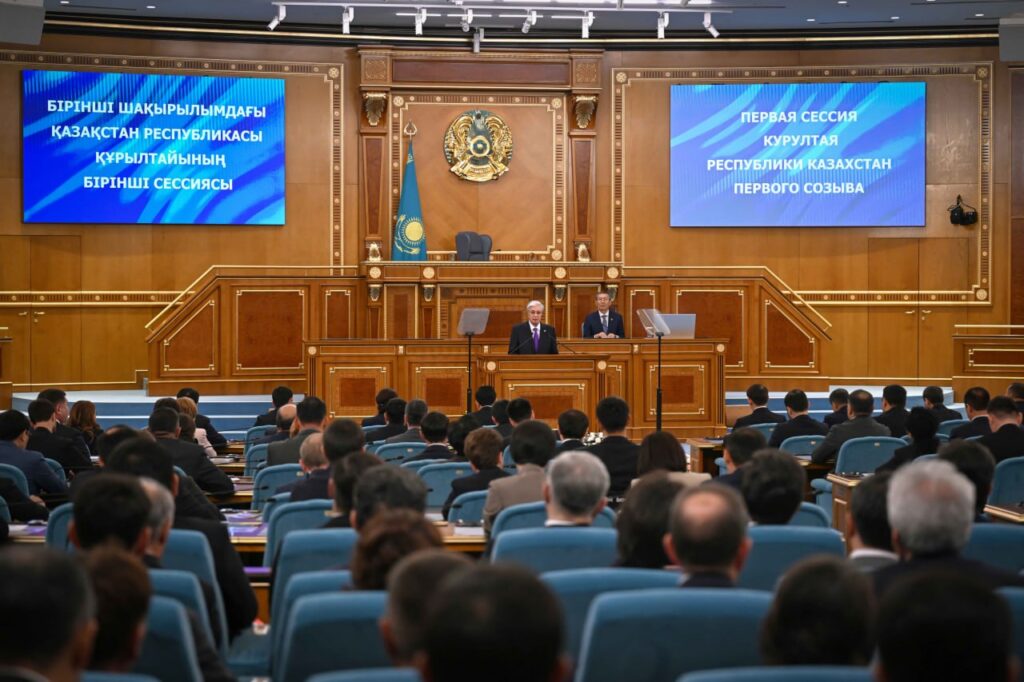
In a nationwide referendum on March 15, over 87% of voters approved a new constitution for Kazakhstan. It was a significant victory for President Tokayev and his administration, all the more so because voter turnout exceeded 73%. Kazakhstan’s new constitution is a key signal for global partners. It replaces the old bicameral system with a unicameral legislature, establishes the Halyk Kenesi (People’s Council), an advisory body intended to promote national dialogue, and creates a vice presidency to provide for clearer succession at the top of the state. The new constitution is the outcome of a strategy that has been building for some time. Now, backed by a clear majority, Kazakhstan’s leadership is seeking to strengthen governance by redistributing power, lessening political ambiguity, and grounding politics in shared values—however difficult that may be to accomplish. All of this is being pursued despite—and perhaps because of—the nation’s history of corruption and nepotism. Kazakhstan’s constitutional reforms were deliberate, structural measures designed to reorient the country’s governmental machinery toward what supporters describe as the common good. That, at least, is the stated intention, reflected in a slogan often used by backers of the new constitution: “A strong president, an influential parliament, and an accountable government.” Some outside observers have viewed the new constitution favorably, framing it as an effort to streamline governance and clarify institutional roles, while others have warned that the changes could impede sociopolitical progress and human rights by prioritizing stronger governance. Some also see the reforms as signaling a move toward more restrictive political practices. These alarmist interpretations are overstated. Astana’s constitutional reforms fit into an ongoing political effort, using the law to strengthen civic involvement and the well-being of the community as a whole, not just individual interests. The new constitution did not emerge ex nihilo for the purpose of freezing elite advantages at the expense of the people, as others in Kazakhstan and the broader region have done in the past. That interpretation of constitutional change in Central Asia overlooks the government’s broader reform agenda, whatever its perceived shortcomings. In his March 31 article, A New Constitution for a Just, Strong, and Prosperous Kazakhstan, President Tokayev framed Kazakhstan as a rules-oriented state, emphasizing rights, judicial independence, and impartial institutions—an approach that stands out regionally despite open questions about follow-through. Tokayev emphasized that “The new constitution is about people, not just better government.” The constitution’s largest section is dedicated to protecting freedoms and rights based on common sense and traditional values, including privacy, personal data, private property, and home inviolability. Judicial independence is reinforced to ensure that all citizens receive qualified, impartial defense – at least that’s the intent. Amendments require a public referendum, ensuring that fundamental choices remain popular. Religious liberty is guaranteed in a secular society. The constitution also presents Kazakhstan as a more attractive and predictable place to do business, for both domestic and foreign investors. The constitution, according to Tokayev, “sets clear rules for economic activity.” As such, the reforms create a political culture that aims...

Bukhara Demolitions Resurface as Developer Faces Financial Trouble

Concerns over demolition works linked to the “Eternal Bukhara” tourism project have resurfaced following renewed questions directed at Uzbekistan’s Cultural Heritage Agency, as the project’s main developer faces financial difficulties. In 2024, The Times of Central Asia reported that construction of the large-scale tourism complex near the historic center of Bukhara had drawn criticism from local residents and UNESCO. The project, located in the buffer zone surrounding the ancient city, was seen as a potential threat to the integrity of one of Central Asia’s most significant cultural sites. According to Uzbek outlet Uzdiplomat, the issue was raised again during a recent briefing, where journalists questioned officials about the consequences of last year’s demolitions. The project’s main investor, Enter Engineering, has since encountered financial problems and is reportedly selling assets to repay debts to banks, the government, and employees. While construction has slowed, concerns remain over the damage already caused to the cultural environment. The demolitions carried out in 2024 sparked strong reactions from the public, architects, and international organizations. Several buildings, including administrative and social facilities in central Bukhara, were reportedly demolished as part of preparations for the tourism complex. At the time, international heritage group Alerte Héritage called for a halt to the process, arguing that it could contradict global preservation commitments. Responding to questions, a representative of the Cultural Heritage Agency said the works were conducted outside UNESCO’s core protected area and instead took place in the buffer zone. According to the agency, all required documentation, including a master plan and impact assessments, was submitted, and UNESCO was informed of the process. Officials also addressed criticism over the demolition of buildings that, while not officially listed as cultural heritage, were considered by some to have historical value. Deputy head of the agency Tursunali Kuziyev said the agency can only intervene in cases involving officially registered heritage sites. He added that granting such status requires a formal scientific review and legal procedure. Questions about whether the agency could take a broader stance in defense of the public interest were met with similar responses. Officials reiterated that decisions regarding non-listed buildings fall under the authority of local governments and urban planning bodies.

Kazakh Lawmaker Proposes Tougher Penalties for Poaching

Kazakh Senator Andrei Lukin has called for tougher penalties for poaching amid a rise in violations, including illegal fish exports and document forgery. In a parliamentary inquiry, he urged a review of existing sanctions, greater transparency in industry subsidies through digital platforms, and stronger independence for relevant scientific organizations. Current legislation provides for fines of up to $27,000 and prison sentences of up to 10 years. However, Lukin argued that these measures are insufficient. According to his data, 84,000 tons of fish were seized from illegal trade between 2022 and 2025. At the same time, stocks of commercially important species are declining. In Lake Zaysan, pikeperch volumes fell from 9,300 to 4,000 tons, while carp has nearly disappeared. The senator also highlighted discrepancies between fishing quotas and export volumes. For example, with quotas set at 16,000 tons for 2022-2024, approximately 32,000 tons of pikeperch were exported, with a total value of around $115 million. He further criticized the effectiveness of the 2021-2030 fisheries development program. Of the $564 million allocated, only $38 million has been used. Cases of embezzlement of budget funds and the repeated use of documents in processing export licenses have also been identified. In response, Lukin proposed tightening export controls, ensuring compliance between quotas and actual catch volumes, and accelerating the rollout of the E-Fish digital system. The E-Fish system, mandatory since August 2025, automates the recording of catches and product turnover. According to the Ministry of Agriculture of Kazakhstan, more than 95% of market participants are registered in the system, which has reduced the shadow market by 2,000 tons. The Times of Central Asia previously reported on the expansion of state support for aquaculture, despite continued growth in fish production.