• KGS/USD = 0.01144 0%
  • KZT/USD = 0.00211 0%
  • TJS/USD = 0.10460 0.19%
  • UZS/USD = 0.00008 0%
  • TMT/USD = 0.28490 0%
  • KGS/USD = 0.01144 0%
  • KZT/USD = 0.00211 0%
  • TJS/USD = 0.10460 0.19%
  • UZS/USD = 0.00008 0%
  • TMT/USD = 0.28490 0%
  • KGS/USD = 0.01144 0%
  • KZT/USD = 0.00211 0%
  • TJS/USD = 0.10460 0.19%
  • UZS/USD = 0.00008 0%
  • TMT/USD = 0.28490 0%
  • KGS/USD = 0.01144 0%
  • KZT/USD = 0.00211 0%
  • TJS/USD = 0.10460 0.19%
  • UZS/USD = 0.00008 0%
  • TMT/USD = 0.28490 0%
  • KGS/USD = 0.01144 0%
  • KZT/USD = 0.00211 0%
  • TJS/USD = 0.10460 0.19%
  • UZS/USD = 0.00008 0%
  • TMT/USD = 0.28490 0%
  • KGS/USD = 0.01144 0%
  • KZT/USD = 0.00211 0%
  • TJS/USD = 0.10460 0.19%
  • UZS/USD = 0.00008 0%
  • TMT/USD = 0.28490 0%
  • KGS/USD = 0.01144 0%
  • KZT/USD = 0.00211 0%
  • TJS/USD = 0.10460 0.19%
  • UZS/USD = 0.00008 0%
  • TMT/USD = 0.28490 0%
  • KGS/USD = 0.01144 0%
  • KZT/USD = 0.00211 0%
  • TJS/USD = 0.10460 0.19%
  • UZS/USD = 0.00008 0%
  • TMT/USD = 0.28490 0%

Viewing results 157 - 162 of 266

The Middle Corridor is Being Funded Faster than Expected

According to Samuel Doveri Vesterbye, director of the independent think-tank, European Neighbourhood Council (ENC), a small group of high-ranking cabinet officials, ambassadors and other diplomats met in a closed-door round-table on May 15, representing the EU, Türkiye and countries in the South Caucasus and Central Asia. The meeting, organized by Turkish organizations International Transporters Association (UND) and the Turkish Industry and Business Association (TUSIAD), focused on the synergy between the EU's Global Gateway initiative and the projects of the Trans-Caspian International Trade Route (TITR). The fact of the meeting taking place has been confirmed by Türkiye’s Permanent Delegate to the EU. Doveri Vesterbye writes that the meeting "consisted of less than 30 individuals mostly linked to diplomacy, transport, logistics, business, critical infrastructure security, policy-making and supply chains" and "brought together four different Directorate Generals (DGs) and more than 10 nationalities of Director-and-Ambassador level." Significantly, also according to Doveri Vesterbye, the development of high-level coordination committees is under way. The meeting’s assessment that the TITR is being funded faster than expected is an extremely positive development. Dr. S. Frederick Starr, a well-known American expert and a Distinguished Fellow for Eurasia at the American Foreign Policy Council, told The Times of Central Asia that "the activation and coordination of both European and Turkish institutions is essential not only for the financing and construction of this mega-project, but also for its successful management thereafter." This is a very stabilizing development for international commerce. As other corridors are increasingly volatile, it would help to insulate trade between China and Europe from supply-chain shocks. It will also benefit the participating states themselves. Starr explained that the continuing European and Turkish involvement in building out the TITR "will help the transit states of Central Asia and the [South] Caucasus to balance their relations with China and Europe and will thereby undergird their sovereignties. Such balance creates what is literally a 'win-win-win' situation." According to a mid-2023 report, prepared jointly by the EBRD and the EU Commission, an estimated €18.5 billion is required in infrastructure investments in order to improve Central Asia's transport connectivity. Potential growth in transit container traffic by 2040 could be over 40-fold, with significant spill-over effects on education, tech hubs, business and middle-class development. At the same time, the TITR has been reconceptualized as a driver of regional trade and economic growth along the entire Europe–Türkiye–South Caucasus–Central Asia trajectory, with special attention given to the latter two regions. The EU Commission and the EBRD have already funded €10.5 billion in Central Asia via loans and grant investments promised only a few months ago, in January this year, at the Global Gateway Investment Forum in Brussels. This pace suggests significant commitment by such large bureaucratic organizations, and it augurs well for the unlocking of funds from the European Investment Bank (EIB) for investment in Turkey. Doveri Vesterbye writes that the heads of EU member-state missions in Brussels (COREPER) will work to synchronize EIB investments, with special attention on reforming the Customs Union, in order...
Central Asia’s Combined ‘Army of Turan’: Could a Hypothesis Become a Reality?

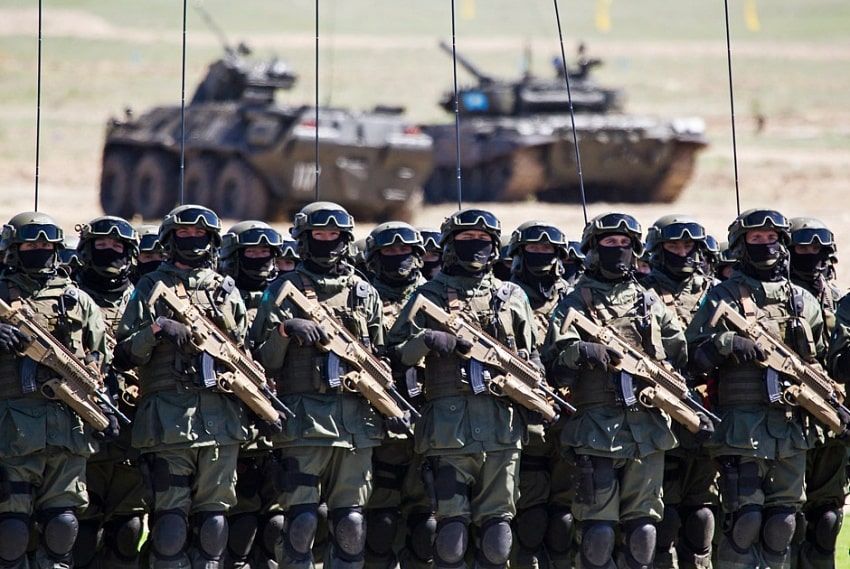
Kazakhstan will host the military exercise, "Birlestik-2024" in July of this year. Notably, this became known from the press service of the Ministry of Defense of Azerbaijan. The exercises will be jointly held by the Armed Forces of Azerbaijan, Kazakhstan, Kyrgyzstan, Tajikistan, and Uzbekistan. It is a convenient occasion to refresh the topic of the 'Army of Turan', which is periodically raised by experts both in Central Asia and neighboring countries. The Army of Turan is a hypothetical military bloc of Turkic-speaking countries. Its ideas have become relevant in the context of global geopolitical turbulence.   I hear the thunder of cannons... Most military analysts consider Azerbaijan to be Turkey's proxy in the South Caucasus. In general, Baku's rapprochement with the capitals of Turkic states (plus Dushanbe) meets Ankara's interests in creating a unified cultural and economic space: Turan. However, does the integration of Turkic states mean that they will eventually be able to create a NATO-style security pact in Central Asia? Such initiatives have resumed with renewed vigor after the end of the Azerbaijani-Armenian conflict, during which Turkey has shown the capability of its weapons. Indeed, in 2022, against the backdrop of the Russian invasion of Ukraine, Kazakhstan - the only country of the participants to share a land border with the Russian Federation - pondered how to protect itself from further expansion of the northern empire's borders. But in the run-up to the summer of 2024, fears have mostly subsided. Many were sobered by the obvious fact that loud declarations of assistance from strong states at best mean the delivery of obsolete weapons, but no more. At worst, your offender will be censured from high podiums, and you will be sympathized with. For example, Turkey, the most likely to defend Central Asia from outsider aggression, did not risk helping the Palestinians, its brothers in faith, and got away with accusing Israel of fascism. So, the 'Army of Turan' exists in the heads of fantasists and pan-Turkics, but in reality, something ordinary is going on — the arms trade. Let's see what the armies of the Central Asian republics are armed with, excluding Turkmenistan, which has declared neutrality.   Tajikistan and Kyrgyzstan The most troublesome neighbors in the region have not been able to complete their border delimitation process. As a result, quarrels periodically erupt, in which border guards from both sides intervene, staging mini-warfare. The cause of discord is usually the same: water. The Tajik and Kyrgyz militaries gain some combat experience in these micro-quarrels. Despite or based on this experience, Dushanbe relies on agreements with other countries -- Russia, China, India, Iran, and CSTO partners -- for its defense capability. Tajikistan's armed forces number only 9,000 men. They have 38 tanks (T-62 and T-72 modifications), 114 armored vehicles (APCs, BMPs, BRDMs), 40 artillery systems, and several short- and medium-range air defense units. The Air Force has four Czechoslovakian L-39 Albatross, combat trainers. Kyrgyzstan does not have much more power in the number of its troops, at around...

What Does Raisi’s Death Mean for the Caspian Sea Region?

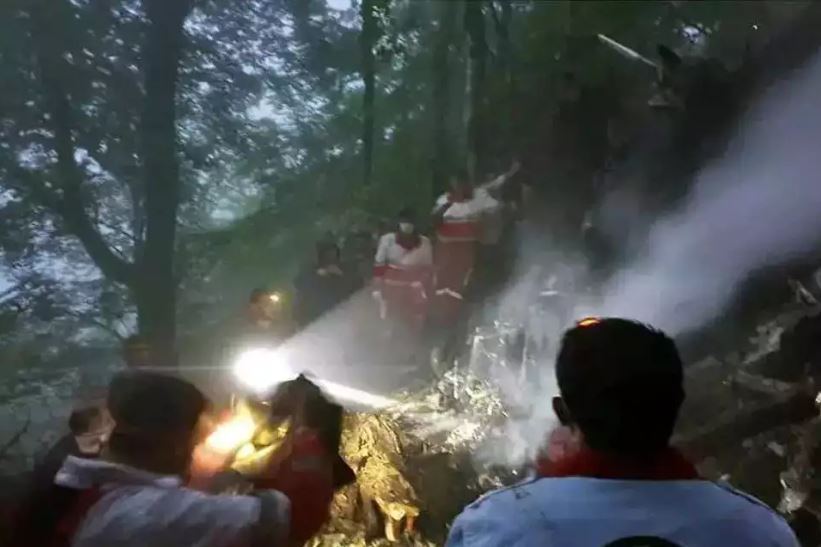
By Robert M. Cutler The death of Iranian President Ebrahim Raisi in a helicopter accident on May 19 will have significant effects on Iranian domestic politics and foreign policy. These include not only Iran's relations with Armenia and Azerbaijan directly, but also indirectly through the Trans-Caspian International Trade Route (TITR, also called the "Middle Corridor") and the International North–South Transit Corridor (INSTC). Despite conspiracy theories, the only reasonable alternative hypothesis to an accidental crash is that the pilot intentionally ran the helicopter into the mountain head-on at full speed. Both possibilities may be subsumed under the category "Act of God". Raisi was working to normalize relations with Azerbaijan and was seen as a potential - even likely - future Supreme Leader of Iran, succeeding the 85-year-old Ali Khamenei, who is in poor health. Now, however, it is not out of the question that his death leads to a reorientation of Tehran's foreign policy and a wave of radicalization. The outcome will depend upon the obscure machinations of the theocratic and security-service elite, for which the formal organizational and constitutional arrangements set the framework but do not determine the result. The Iranian president is not the most powerful individual in the country's political system, but he is still influential. Raisi had sought to improve ties with Azerbaijan, including water projects on the Aras River and discussions about transportation links. These initiatives may now face delays or even reversals. Yerevan's strategic significance for Tehran's relationship with Moscow and its broader regional ambitions will not diminish; indeed, their bilateral military-industrial cooperation has only grown since Russia's re-invigoration of its war of aggression against Ukraine in February 2022. At the same time, Tehran's relations with Baku are more complicated, for myriad present-day and historical reasons, not least but not only concerning the Azerbaijani minority in Iran.   The South Caucasus and Trans-Caspian Implications Armenia and Azerbaijan are nevertheless persevering in their bilaterally-based practical cooperation and peace negotiations, now proceeding without third-party mediation. The most recent high-level meeting in this process took place between their respective foreign ministers in Almaty on May 10–11. These significant discussions followed talks between them in Berlin in February of this year, and they took place in the context of ongoing efforts to delimit and demarcate the two countries' common border. Delimitation refers to drawing and describing lines on maps, whereas demarcation is the process of installing physical markers on the territory. Demarcation has already begun in the sensitive Tovuz region, and the Russian contingent assisting Armenian border guards under a bilateral agreement has already been withdrawn. In April, as a result of this process, Armenia returned four villages to Azerbaijan. Unresolved issues involve territorial claims against Azerbaijan in Armenia's constitution and the reopening of regional transit routes. Armenian Prime Minister Nikol Pashinyan's initiative for the necessary constitutional reforms, along with his border-demarcation initiatives and continuing peace negotiations, have provoked anti-government protests in Armenia, fueled by the irredentist and xenophobic segments of the diaspora, which are the best established, most...

The Outlook for Kazakhstan’s Rail Network

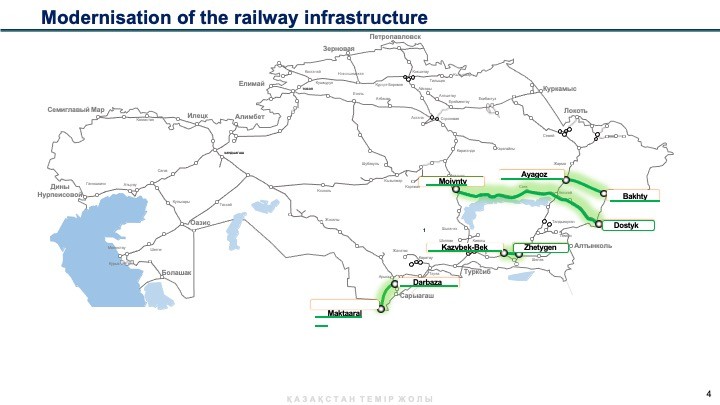
As a core infrastructure industry, railways play a strategic role in Kazakhstan’s economy. Today, over 50% of freight in the country is transported by rail, while the figure for passengers is 15%. Kazakhstan’s favorable geographical position between the largest producer of goods in the world, Asia, and the largest consumer, Europe, is spurring the development of transit freight transport and related income. However, government regulations and imperfect reforms have failed to reverse a degradation of Kazakhstan’s rail infrastructure and solve its capacity shortage problems. The robust rail network created during the Soviet period for a single national economy turned out to be ineffective under the new conditions of market dynamics. The country’s railway infrastructure, while reaching almost every region in Kazakhstan, meets neither current nor possible future needs of freight owners and has already nearly reached its limit in terms of throughput and processing capacity. The national railway carrier of both passengers and freight, Kazakhstan Temir Zholy (KTZ), cannot provide by itself the financial resources and investments at the scale needed to meet current and future challenges. The national budget is also unlikely to allocate such funding. A lack of prompt, large-scale modernization of key areas of rail transport, however, may hurt the country's economy.   Tentative sources of funding for improvements According to the Ministry of Transport’s plan for the modernization of rail infrastructure, 1,300 km of railway track is to be added by 2030, while 4,800 km of second track is to be constructed. The expected price tag for these additions is over $11 million. It is currently unclear where these funds will come from. There have been mentions of borrowing around $400,000 from the national pension fund. According to the Ministry of Transport’s modernization plan, private investments will also be a key source through public-private partnership projects (PPP). In recent years, state participation in financing the construction and reconstruction of sections of the rail network has been limited and paled in comparison to those involving road projects. As part of the Nurly Zhol (“Bright Path”) infrastructure initiative, $9.2 billion has been allocated for just two programs to develop roads versus only $16.1 million allocated for railways. Added to this is the involvement of KTZ in implementing major transport infrastructure projects – the Khorgos dry port, the Kuryk port ferry complex and more than 1,000 km of railway track built in recent years, among others – using borrowed funds. Thus, the company bears a considerable burden in terms of servicing and repaying loans already raised for these projects, which represent its long-term assets. Given this debt burden, it is clear that the rail industry remains underfunded.   Tariffs present a further dilemma Across the world, funding for the development of main rail networks is typically allocated from the national budget. In many European countries, for example, government funding covers up to 97% of operating and capital costs of rail infrastructure. Besides direct subsidies from the state, other sources of funds for modernizing and renewing rail infrastructure include bond...

Kuandyk Bishimbayev Given 24 Years in Prison — But Kazakhs Ask How Long He Will Really Serve

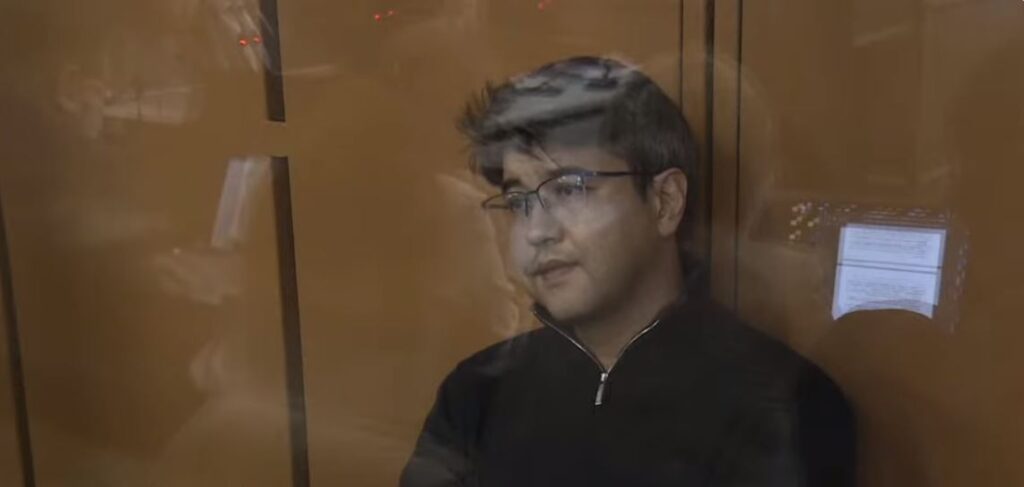
On May 13, Kazakhstan’s former Minister of National Economy Kuandyk Bishimbayev was sentenced to 24 years in prison for the torture and murder of his common-law wife Saltanat Nukenova in November 2023. While the length of the sentence is a victory for advocates against gender-based violence, both within Kazakhstan and in the many parts of Europe where the trial was also followed closely, many Kazakhs feel that it is still too early to say that justice has been done. In an open discussion that is rare in Central Asia, many citizens are posting their concerns on social media that the Nazarbayev-era official will find a way to get out of prison early: there is already speculation that Bishimbayev, a former member of the country’s elite, will leverage his political connections to secure an early release – or be recognized as terminally ill. Attempting to quell these fears, state prosecutor Aizhan Aimaganova has said that under Kazakhstani law, Bishimbayev will be able to apply for parole only after serving 16 years, two-thirds of his sentence – and only then with the consent of Saltanat Nukenova’s family, guided by her brother, Aitbek Amangeldy. Saltanat Nukenova's murder has shown that civil society is very much alive in President Kassym-Jomart Tokayev’s Kazakhstan. As previously reported, shortly after her death in November last year, a public movement called Zhana Adamdar organized an authorized rally in Almaty to raise awareness about violence against women and children. Yesterday, on the day of the sentencing, supporters of another Kazakh feminist movement, Feminita, protested in Almaty, Kazakhstan's biggest city. The group is demanding life imprisonment for Saltanat Nukenova’s murderer. "We do not agree with this sentence; [Bishimbayev] should sit in prison for life. He will come out sooner anyway – we urge you never to be silent: if you have the desire and will for it, resist," Vlast.kz quoted Feminita co-founder Zhanar Sekerbaeva as saying. The spokesperson for the Astana court where Bishimbayev was sentenced, Alma Yesymova, has commented that he has received the maximum possible sentence for the crimes he was found guilty of: murder and torture. "The punishment was imposed for committing a particularly grave crime – murder. The sanction for this is a maximum of 20 years of imprisonment. And by partial addition of terms [Bishimbayev] was given four more years for torture. Under the law the very maximum sentence is 25 years, while he was given 24 years," Yesymova said at a press conference after the trial. The trial itself drew criticism from Kazakhstan’s legal professionals. Lawyers and human rights activists are unsatisfied with how both the prosecution and the defense were conducted. Following Nukenova's death, President Tokayev signed a Decree in December 2023 to improve human rights and the rule of law, including by promoting gender equality, combating any form of domestic violence and enhancing the performance of the criminal justice system (which, among other things, involved increasing penalties for perpetrators of domestic violence). The human rights components of the President’s reform agenda was...

Why Kazakhstan’s Deepening Ties With Afghanistan Are Significant

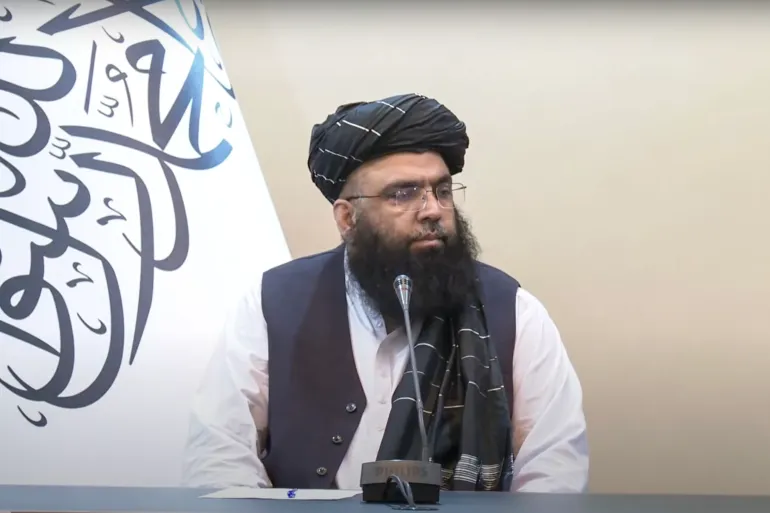
At the end of April a Kazakh delegation made an official visit to Kabul, where a meeting of the Kazakh-Afghan Business Forum and an exhibition of Kazakh products were held. This was the third bilateral event aimed at expanding trade and economic ties between Kazakhstan and Afghanistan. The visit to Kabul indicates Astana’s intention to enhance Kazakhstan’s relations with the new Afghan authorities, and not only through trade. This is evidenced by a number of details that differed from previous official contact. First, an unannounced trilateral government meeting took place between Afghanistan, Kazakhstan and Turkmenistan in Kabul. The result was the announcement that a new logistics route to Afghanistan through Turkmenistan and Kazakhstan would be developed. There is nothing earthshaking about this – Turkmenistan is set to become a transportation hub for international corridors passing through Kazakhstan, primarily the North-South and the Middle corridors, as well as the Lapis Lazuli Corridor (Turkey-Azerbaijan-Turkmenistan-Afghanistan). What is significant is that the sides are striving to create favorable conditions for logistics, especially more competitive transport tariffs so trains can pass through faster. This is particularly important given congestion in Uzbekistan, where bottlenecks occur. The announcement in Kabul also means a direct route to economically attractive western Afghanistan and further south. What else made the Kabul visit notable was the meeting between Kazakh deputy prime minister Serik Zhumangarin, who oversees trade, and Abdul Kabir, the Taliban’s deputy prime minister for political affairs. Given the reputation of the Taliban, it is not in the interests of Astana to simply stage a conversation for the cameras. Unfortunately, details about the Zhumangarin-Kabir meeting are few. According to the available information, the deputy prime ministers discussed security issues in Afghanistan, apparently in the context of how to grow the Afghan economy. Following the meeting, Kabir stated that Afghanistan does not want to be a threat to the region, and intends to improve relations with its neighbors through the progressive development of trade and economic relations. The Zhumangarin-Kabir meeting is said to have taken place on the initiative of the Afghan side. Considering Kabir’s closeness to the emir of the Taliban, it is likely that the initiative came from him. Other notable outcomes of the visit of the Kazakh delegation to Kabul included: discussion of joint projects for geological exploration, mining and processing of solid minerals in Afghanistan, as well as in the IT sector; discussion of the possibilities for supplying Kazakh-made cars and subsequent localization of service centers in Afghanistan; a rise in the quota for Afghan students at Kazakh universities from 30 to 60, as well as a 10-day trip to children’s camps in Kazakhstan for 30 Afghan children in the summer of 2024; and discussion of the possibility of establishing direct flights between the two countries. Aidar Borangaziev is a Kazakhstani diplomat. He has worked in the diplomatic service in Iran and Afghanistan. He is a founder of the Open World Center for Analysis and Forecasting Foundation (Astana). He is an expert in regional security.