• KGS/USD = 0.01144 0%
  • KZT/USD = 0.00212 0%
  • TJS/USD = 0.10432 -0.29%
  • UZS/USD = 0.00008 0%
  • TMT/USD = 0.28490 0%
  • KGS/USD = 0.01144 0%
  • KZT/USD = 0.00212 0%
  • TJS/USD = 0.10432 -0.29%
  • UZS/USD = 0.00008 0%
  • TMT/USD = 0.28490 0%
  • KGS/USD = 0.01144 0%
  • KZT/USD = 0.00212 0%
  • TJS/USD = 0.10432 -0.29%
  • UZS/USD = 0.00008 0%
  • TMT/USD = 0.28490 0%
  • KGS/USD = 0.01144 0%
  • KZT/USD = 0.00212 0%
  • TJS/USD = 0.10432 -0.29%
  • UZS/USD = 0.00008 0%
  • TMT/USD = 0.28490 0%
  • KGS/USD = 0.01144 0%
  • KZT/USD = 0.00212 0%
  • TJS/USD = 0.10432 -0.29%
  • UZS/USD = 0.00008 0%
  • TMT/USD = 0.28490 0%
  • KGS/USD = 0.01144 0%
  • KZT/USD = 0.00212 0%
  • TJS/USD = 0.10432 -0.29%
  • UZS/USD = 0.00008 0%
  • TMT/USD = 0.28490 0%
  • KGS/USD = 0.01144 0%
  • KZT/USD = 0.00212 0%
  • TJS/USD = 0.10432 -0.29%
  • UZS/USD = 0.00008 0%
  • TMT/USD = 0.28490 0%
  • KGS/USD = 0.01144 0%
  • KZT/USD = 0.00212 0%
  • TJS/USD = 0.10432 -0.29%
  • UZS/USD = 0.00008 0%
  • TMT/USD = 0.28490 0%

Viewing results 151 - 156 of 266

Central Asia Asks: Are Afghanistan’s Taliban Government Terrorists?

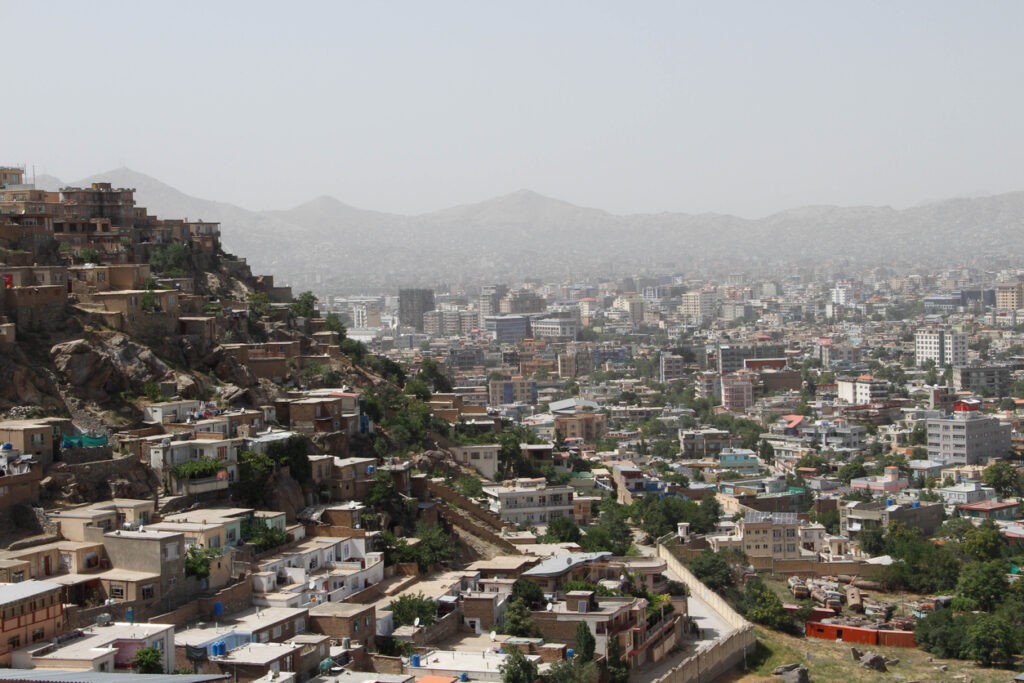
On June 3, Kazakhstani President Kassym-Jomart Tokayev met with speakers of CSTO countries’ parliaments, who were in Almaty for a meeting of the Council of the CSTO Parliamentary Assembly. At this event, Tokayev separately touched upon the situation in Afghanistan. In his view, one of the strategic tasks at this point is actively linking Afghanistan with the region. Tokayev recalled that “Kazakhstan had removed the Taliban regime from its list of terrorist organizations, basing this decision on the importance of developing trade and economic cooperation with today’s Afghanistan and the understanding that this regime is a long-term factor.” The last bit, namely that “Kazakhstan had removed the Taliban regime from its list of terrorist organizations,” was presented by many foreign media, probably due to its simplicity, as something that had just happened. For example, the Russian-language service of Deutsche Welle reported that “the Kazakh authorities have decided to exclude the Taliban movement from the list of terrorist organizations.” Similar stories were carried by various other news media, like RFE/RL’s Kazakh service, 24.kg and Amu TV, among others. However, some publications objectively covered Tokayev’s statement. For example, The Diplomat reported that “Tokayev explained his government’s decision in more detail,” while Sputnik India wrote that "Tokayev explained Almaty's decision in December to drop the group from the list.” Asia-Plus ran a similar story. Given all the noise, it would be useful to clarify the situation for readers. The decision to exclude the Taliban from the list of banned foreign organizations was made by Kazakhstan’s Supreme Court on December 20, 2023, almost six months ago. The Taliban had been put on the list in March 2005. At that time, they were actively fighting the NATO-led international coalition, which had launched the so-called Operation Enduring Freedom in October 2001 in response to the 9/11 terrorist attack. The Kazakhstani Foreign Ministry cited UN decisions to back up its move to take the Taliban off the terrorist list. Foreign Ministry spokesperson Aibek Smadiyarov said that “according to UN Security Council resolutions, which are binding, the Taliban movement is not included in the lists of terrorist organizations recognized as such by the UN Security Council.” As expected, at the time the reaction was mixed. Most of the negative commentary presented it as recognition of the Taliban regime, which, in fact, is not true – it was not a unilateral act of Kazakhstan giving international legal recognition to the Taliban. Meanwhile, another trend in the coverage of Tokayev’s recent remarks was to link Kazakhstan’s decision to remove the Taliban from its terrorist list with Russian plans to do the same. On May 27, the Russian Foreign Ministry and Justice Ministry reported to President Vladimir Putin that the Taliban movement could be excluded from the list of organizations banned in the country. Foreign Minister Sergei Lavrov remarked that this proposal “reflects a realization of reality,” adding that “[the Taliban] are the real government. We [and] our allies, especially in Central Asia, are not indifferent to Afghanistan.” In his own...
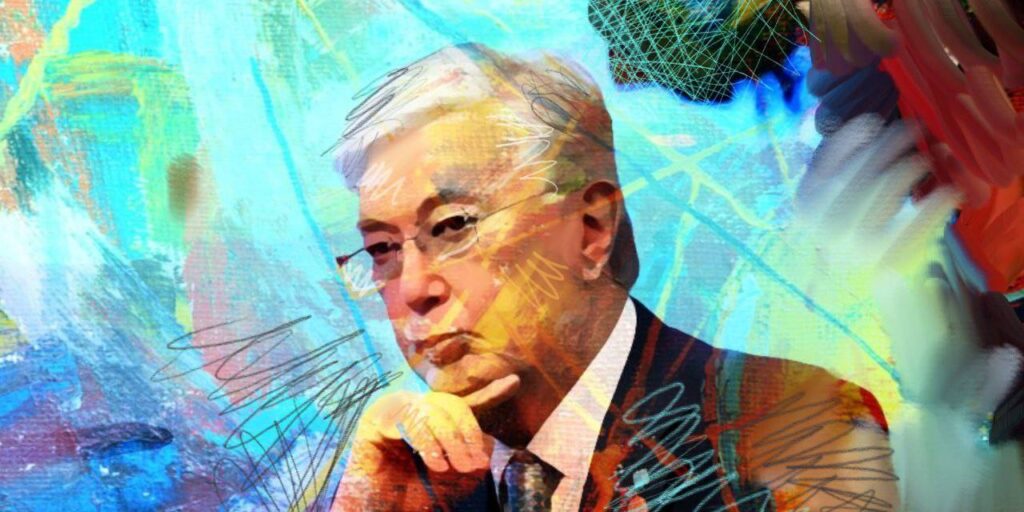
Kazakhstan’s President Tokayev Foresees a Bigger Role for Middle Powers in Solving the World’s Problems

Middle powers, sometimes called “swing states”, may rank below superpowers and great powers in terms of their international influence and capacity, but are still quite instrumental in world affairs as they can often remain neutral in big conflicts and benefit from such factors as their geostrategic location, natural resource wealth, diplomatic and economic strength, and/or military capabilities. They can play a key role in overcoming fragmentation of the world economy and secure supply chains through such transit routes as the Middle Corridor. Today, middle powers have the agility to navigate complex political situations in many parts of the world that greater powers simply lack whether due to their own internal dynamics or because they lack the trust of the parties involved in certain conflicts and issues. In terms of realizing the green transition, middle powers can help secure supplies of critical minerals and other key materials. These countries are also often proponents of finding multilateral solutions to international problems.  Kazakhstan is currently among the world’s influential middle powers. On the positive role his country can play, President Kassym-Jomart Tokayev recently wrote in a Euronews opinion piece that, “nations like ours possess the economic strength, military capabilities, and, perhaps more importantly, political will and diplomatic acumen necessary to exert significant sway in the global arena on issues ranging from food and energy security, green transition, and IT to the sustainability of supply chains.” These strengths are particularly relevant amidst a global discord where, in Tokayev’s words, “the traditional powerhouses – the world’s economic and political behemoths – are increasingly unable to work together”. Countries like Kazakhstan, on the other hand, “can ensure stability, peace and development in their immediate regions and beyond” and “carve paths toward compromise and reconciliation”. Kazakhstan has deepened its cooperation with other middle powers within Central Asia and the Caucasus to address cross-border challenges such as water security and countering terrorism and narcotrafficking. Its collaboration with Azerbaijan and Turkey has been critical to actualizing the Middle Corridor project that opens Central Asia to Western markets. Kazakhstan is working closely with European states to guarantee their energy needs. For Asian countries, Kazakhstan has come into focus as an attractive foreign investment destination. These middle power collaborations have been formalized through highest-level bilateral meetings. Tokayev has carried out dozens of such meetings in 2024 year alone.  Having come from a long diplomatic career himself, it is encouraging to see President Tokayev’s ongoing support for multilateralism and international cooperation. Kazakhstan will co-chair the inaugural One Water Summit later this year with France to address the global water crisis including the effects of climate change, biodiversity loss and pollution. The event is key to bringing together affected countries and communities from around the world. Additionally, leading regional efforts to counter the effects of climate change, Kazakhstan has offered to host a UN Regional Centre for Sustainable Development Goals on Central Asia and Afghanistan. The country is also undertaking initiatives to advance peace talks between Armenia and Azerbaijan. “With major powers increasingly unwilling to...

Protecting Women and Children Helps Preserve, Not Contradict, Traditional Family Values in Kazakhstan

In today's rapidly evolving world, traditional values can sometimes clash with progressive movements advocating for inclusivity and modern perspectives in many areas of life. While these values are often seen as barriers, they can instead serve as a source of stability and continuity when thoughtfully upheld. President Kassym-Jomart Tokayev is aligning legislative reforms with Kazakhstan's family values while integrating them with the society's progressive aspirations. At a recent meeting with young scientists in Almaty, President Tokayev took aim at domestic violence calling it “a manifestation of backwardness and moral degradation.”  He added that “only a society that values ​​and respects women can be considered truly civilized and cultured.”  Regulatory actions In his speech, Tokayev placed “strengthening of the institution of the family” at the center of modernizing Kazakhstani society. “After all, comprehensive protection of the rights of women and children does not at all contradict the preservation of traditional family values ​​and, on the contrary, contributes to their further strengthening”, he said. “From the first days of my presidency, I have been paying great attention to protecting the rights of women and children. We are consistently taking legislative and institutional measures in this direction,” he noted.  This is not a new issue for the President, who in his September 2022 address, had already ordered stricter penalties for domestic violence. His agenda to strengthen protective measures sped up following the high-profile murder of Saltanat Nukenova in November 2023 by her husband, an influential former minister.  The events following this tragedy helped bring about new laws, inspired a culture of zero tolerance for any form of violence, and perhaps even opened the way for further reforms. On April 15, 2024, Tokayev signed a landmark law criminalizing violence against women and children, reversing a 2017 decriminalization. In two weeks, these amendments will be put into effect. The government’s response to the death of Nukenova and to the events following it, including the public reaction, has garnered international praise.  Promoting a values-based society Tokayev in his Almaty speech expressed that “not all problems can be solved by passing or tightening the law,” and adding that “everyone must start with themselves changing for the better”. “Family values ​​should be established in every home”, he said, highlighting the key role of women in raising the new generation.  Tokayev also prescribed enforcing good values in educational institutions while acknowledging that the country’s education system still had shortcomings. This is another example of how the leadership’s rhetoric matters in advancing a society. Tokayev continues to set the tone for his country on women’s rights. As the Washington Post wrote on May 13, 2024, “Kazakhstan’s President Kassym-Jomart Tokayev has repeatedly spoken about strengthening protections for women.”  Tokayev’s messaging of values has indeed been consistent – with a focus on rule of law as a basis for the protection of rights of all citizens.  The future The President’s actions have already begun inculcating a culture of no tolerance for aggression against women. “Today, the problem of domestic violence is widely...

The Aral Sea: Addressing Water Issues, Crisis, and Striving for a Better Life in Central Asia

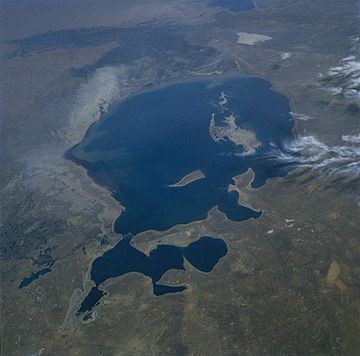
By Arindam Banik and Muhtor Nasirov   The world is currently grappling with the devastating impact of climate change, as rising temperatures have become an undeniable reality. In January 2024, the global temperature exceeded normal levels for the second consecutive month, pushing the global average temperature over the 1.5-degree threshold for the first time. Many human activities, such as unplanned water use, excessive groundwater extraction, and climate change, are thought to be contributing to this situation. One poignant example is the case of the Aral Sea in Central Asia. This once breathtaking and teeming endorheic lake, nestled between Kazakhstan and Uzbekistan, was not just a body of water. It was a symbol of life, a testament to the beauty and resilience of nature. Its azure waters and diverse marine life were a source of sustenance and livelihood for the region's people. It was a vibrant ecosystem, nourished by the almost entire flow of the two main rivers, the Amu Darya and the Syr Darya, in the upstream region of Central Asia. Interestingly, the Amu Darya River used to flow into the Caspian Sea through Uzboy Channel. However, a significant shift occurred during human settlement when the flow of these rivers was redirected into the Aral Sea, marking a crucial turning point in the region's hydrological history. Despite its former glory as the third-largest lake in the world, covering an area of 68,000 km2 (26,300 sq miles), the Aral Sea began shrinking in the 1960s after the rivers that fed it were diverted to support large-scale irrigation for cotton production intended for export. The irrigated area in the Aral Sea Basin has now expanded to eight million hectares. By 2007, it had decreased to only 10 percent of its original size, dividing into four lakes. By 2009, the southeastern lake had vanished, and the southwestern lake had shrunk to a thin strip at the western edge of the former southern sea. In the following years, occasional water flows partially replenished the southeastern lake. In August 2014, NASA satellite images revealed that the eastern basin of the Aral Sea had completely dried up, leading to the formation of the Aralkum Desert. This dramatic change has severely impacted the ecology, risking the survival of numerous fish subspecies and three endemic sturgeon species. The loss of these species disrupts the natural balance and affects the livelihoods of the local communities that depend on fishing. The herring, sand smelt, and gobies were the first planktivorous fish in the lake, and their decline led to the lake's zooplankton population collapse. Consequently, the herring and sand-smelt populations have not recovered. Except for the carp, snakehead, and possibly the pipefish, all introduced species survived the lake’s shrinkage and increased salinity. In an attempt to revive fisheries, the European flounder was introduced. This situation is urgent as the delicate balance of this ecosystem is on the verge of collapse. The region's once-prosperous fishing industry has been devastated, leading to unemployment and economic hardship. Additionally, the diverted Syr Darya River...

Kazakhstan Works with Armenia and Azerbaijan for South Caucasus Peace

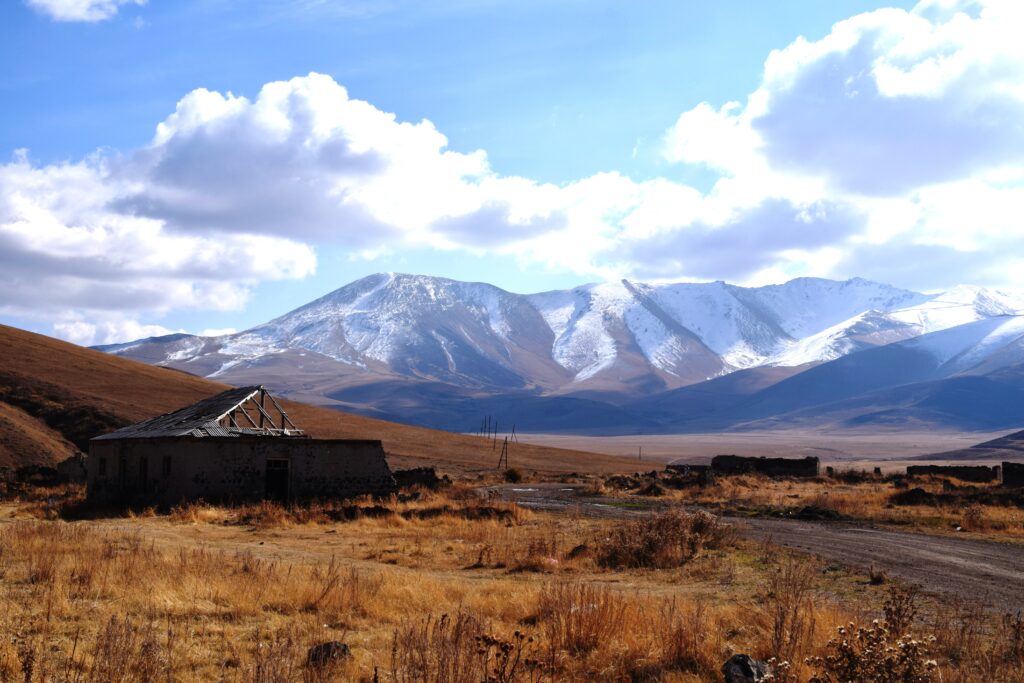
By Robert M. Cutler On May 10–11, Kazakhstan's President Kassym-Jomart Tokayev hosted peace talks between the Azerbaijani and Armenian foreign ministers. These constructive negotiations were strictly bilateral, with Kazakhstan absent from the room and only providing the venue for the meeting. The event illustrates the dedication by Tokayev and his foreign policy to regional stability and mediation. Kazakhstan has done this sort of thing in the past; it hosted Russia–Turkey–Iran talks over Syria until last year. It was also mentioned as a place for bilateral Russia–Ukraine negotiations, although that idea never materialized.   Armenia's Future is in the South Caucasus and Asia Tokayev had offered to provide the venue during his first official visit to Armenia, which took place on April 15 this year. His trip to Armenia may in retrospect be seen as a turning point. Former President Nursultan Nazarbayev had been forced to cancel a visit in 2016, following protests in Yerevan against Astana's support of Baku in the Karabakh conflict. Armenia’s participation in the new peace efforts, now under way for a couple of years, marks a significant shift after decades of rejecting such cooperation. It offers the prospect of renewed regional relations. Under Prime Minister Nikol Pashinyan, Armenia has lately been trying to shift its foreign policy, reaching out to Western countries such as France and the U.S. in order to decrease its long-standing dependence on (some would say, vassalage to) Russia. But Armenia is a state in the South Caucasus, not in Europe or America. For this reason, the state’s objective interests (as opposed to those of the far-flung diaspora) are geopolitically compatible with those of Azerbaijan and Turkey, and also of Kazakhstan more distantly. Astana’s ties with Baku and Ankara, and Azerbaijan’s strengthening of its own ties with Central Asia, reflect strategic manoeuvring in the region. These partnerships enhance Kazakhstan's and Turkey's roles in promoting stability and development in the South Caucasus. They consequently offer Armenia a new path to prosperity. Peace with Azerbaijan would lead to the lifting of the Turkish embargo on Armenia and open the possibility of Armenia's integration into the Trans-Caspian International Trade Route (TITR, "Middle Corridor"). Such an opening would further widen Armenia's diplomatic vistas and decrease its dependence on Russia. Turning to Europe and the U.S. can offer some advantages, but Armenia must be cautious of the influence of a bellicosely irredentist Armenian diaspora, whose interests are not first and foremost the well-being of Armenians living in Armenia. Prioritizing regional integration and cooperation with its South Caucasus neighbours and other TITR participants will enable Armenia proper to build a more stable and prosperous future.   Infrastructure and Connectivity Initiatives With the assistance of the international financial institutions, the European Union and Central Asia are developing the TITR as a critical trade corridor that will also contribute significantly to the prosperity and stability of the countries lying along its route. Azerbaijan and Kazakhstan have long been key players in the promotion and realization of this plan. The Middle Corridor,...

Signs of Racism in Central Asia

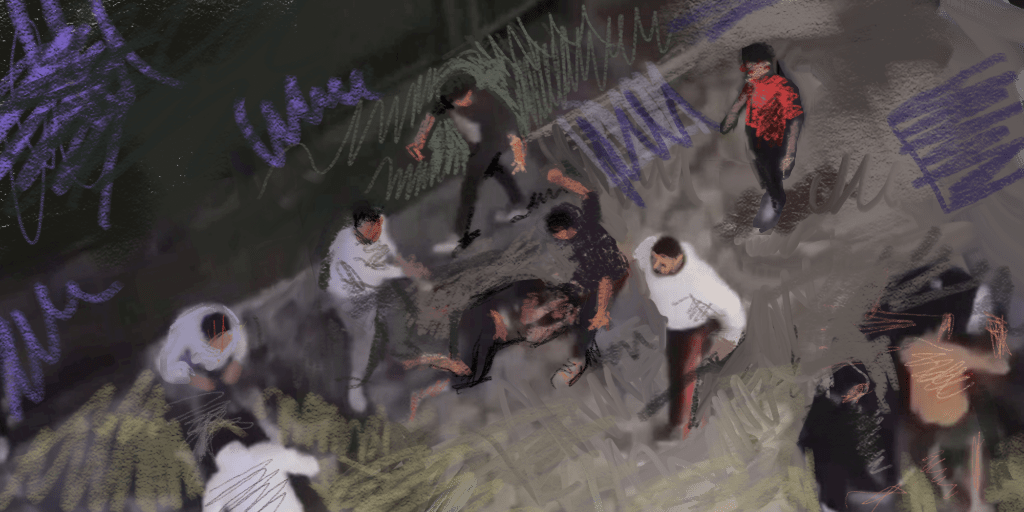
By Bruce Pannier Incidents in May showed two Central Asian countries – Kyrgyzstan and Turkmenistan – are afflicted by racism that is tacitly or explicitly supported by their governments. Overnight on May 17-18, hundreds of young Kyrgyz men gathered in eastern Bishkek near a dormitory used by foreign students. The Kyrgyz men were angered by a video posted on popular Kyrgyz social media sites on the morning of May 17 that showed a fight in Bishkek on May 13 between a small group of Kyrgyz and foreigners. The foreigners in the fight on May 13 turned out to all be Egyptians, and they were all detained. However, some social media posts claimed at least some of the foreigners involved in the fight were Pakistanis. Many people from Bangladesh, India, and Pakistan come to Kyrgyzstan to study at universities, particularly at medical colleges. More than 90% of foreign students at Kyrgyz universities are from India and Pakistan. A smaller number, in the low thousands, are working there illegally. In March, Kyrgyz authorities launched a campaign to find and deport illegal migrant laborers some 1,500 Pakistanis and 1,000 Bangladeshis have been caught. There have been isolated incidents when Kyrgyz were involved in physical altercations with South Asians in recent years, but nothing on scale of what happened in May 17-18. Besides bursting into the dormitory and assaulting foreign students, a group of some 60-70 Kyrgyz men broke into a sewing factory in Bishkek early morning May 18 and attacked foreign workers, who mostly from Bangladesh, India, and Pakistan. At least 41 people were injured, most of them South Asians. Pakistan in particular reacted, summoning the Kyrgyz Charge d'Affaires in Islamabad while a group of Pakistanis protested outside the Kyrgyz Embassy. Pakistani authorities also sent charter flights to Kyrgyzstan that brought back more than 1,000 Pakistani citizens. Kyrgyz authorities criticized the police for failing to calm the situation before it went out of control and later 10 policemen were sacked. Deputy Cabinet Chairman Edil Baisalov went to the dormitory to meet with some of the foreign students and apologize for the harm done to them “by a bunch of hooligans.” The top two people in the government – President Sadyr Japarov and head of security service Kamchybek Tashiyev – were more equivocal in their comments on the violence. Since coming to power in late 2020, Japarov and his longtime friend Tashiyev have promoted nationalist policies. Their emphasis on respecting Kyrgyz traditions and customs has gained them significant popularity in Kyrgyzstan. They need such support in a country that has had three revolutions since 2005, including the October 2020 revolution that resulted in them occupying their current positions. Young Kyrgyz men, like the hundreds who gathered on the evening of May 17, are an important pillar of support for Japarov and Tashiyev. President Japarov vaguely blamed “forces interested in aggravating the situation,” and added, “The demands of our patriotic youth to stop the illegal migration of foreign citizens and take tough measures against those...