• KGS/USD = 0.01144 0%
  • KZT/USD = 0.00216 0%
  • TJS/USD = 0.10663 0%
  • UZS/USD = 0.00008 0%
  • TMT/USD = 0.28530 0%
  • KGS/USD = 0.01144 0%
  • KZT/USD = 0.00216 0%
  • TJS/USD = 0.10663 0%
  • UZS/USD = 0.00008 0%
  • TMT/USD = 0.28530 0%
  • KGS/USD = 0.01144 0%
  • KZT/USD = 0.00216 0%
  • TJS/USD = 0.10663 0%
  • UZS/USD = 0.00008 0%
  • TMT/USD = 0.28530 0%
  • KGS/USD = 0.01144 0%
  • KZT/USD = 0.00216 0%
  • TJS/USD = 0.10663 0%
  • UZS/USD = 0.00008 0%
  • TMT/USD = 0.28530 0%
  • KGS/USD = 0.01144 0%
  • KZT/USD = 0.00216 0%
  • TJS/USD = 0.10663 0%
  • UZS/USD = 0.00008 0%
  • TMT/USD = 0.28530 0%
  • KGS/USD = 0.01144 0%
  • KZT/USD = 0.00216 0%
  • TJS/USD = 0.10663 0%
  • UZS/USD = 0.00008 0%
  • TMT/USD = 0.28530 0%
  • KGS/USD = 0.01144 0%
  • KZT/USD = 0.00216 0%
  • TJS/USD = 0.10663 0%
  • UZS/USD = 0.00008 0%
  • TMT/USD = 0.28530 0%
  • KGS/USD = 0.01144 0%
  • KZT/USD = 0.00216 0%
  • TJS/USD = 0.10663 0%
  • UZS/USD = 0.00008 0%
  • TMT/USD = 0.28530 0%

Viewing results 43 - 48 of 289

Opinion: A Railway to the Future – Uzbekistan’s Bold Path to Connectivity and Carbon Cuts

I still remember the thrill of boarding the sleek high-speed train from Tashkent to Bukhara. What could have been an ordinary journey turned into something unforgettable - the kind of experience that stays alive in the memory long after the trip ends. The speed, the comfort, and above all, the hospitality of Uzbekistan Railways revealed more than just modern engineering; it was a glimpse into the vision of a country determined to connect its people and its future to the wider world. The resonance of this project is deep. The Silk Road was once the artery of global exchange, moving not just goods but ideas, cultures, and entire civilizations between East and West. From Xi’an to Samarkand, Bukhara, and Tashkent, caravans carried silk, porcelain, and paper eastward, while wool, stones, fruits, and glassware travelled west. The CKU Railway is not simply another infrastructure project; it is the revival of this legacy, adapted for the 21st century. By shortening transport routes by nearly 900 kilometers and halving transit times, it promises to transform Uzbekistan’s geographic disadvantage into a strategic strength. For a landlocked country, this is more than steel on tracks - it is a lifeline to global markets. That is where railways carry an underappreciated advantage. Beyond the economics, rail is also a climate solution. The International Energy Agency (IEA) has found that rail freight is three to four times more energy-efficient than trucks. Trains use 65–80% less fuel per kilogram of cargo. The European Environment Agency calculates that a ton of freight moved by train emits 14–20 grams of CO₂ per kilometer, while the same tonnage on trucks produces 60–120 grams. That is a four- to fivefold difference. If the 20th century belonged to highways, the 21st must belong to railways. To grasp what this means for Central Asia, consider the region’s emissions profile. According to the EDGAR 2023 dataset, annual greenhouse gas emissions (excluding LULUCF, 2022) stand at roughly 320 MtCO₂e for Kazakhstan, 214 MtCO₂e for Uzbekistan, 99 MtCO₂e for Turkmenistan, 22 MtCO₂e for Kyrgyzstan, and 21 MtCO₂e for Tajikistan. Transport is responsible for around a tenth of that, and road freight dominates. The opportunity for reductions through a modal shift is therefore enormous. Take Uzbekistan as a case in point. The country moves about 90 billion ton-km of freight annually, within a regional total of some 350 billion. At present, 70% of this moves by road and 30% by rail. Imagine that by 2035, half of current road freight shifts to electrified rail - around 32 billion ton-km. On trucks, that freight would generate 2.9 MtCO₂e per year. On electrified trains, it would produce only 0.54 MtCO₂e. The savings: 2.4 MtCO₂e annually, or more than 1% of Uzbekistan’s entire national emissions. For a single infrastructure project, that is an extraordinary return in climate terms. The regional potential is just as striking. If similar shifts occurred across Central Asia, annual savings would reach 7–9 MtCO₂e by 2035 - the equivalent of removing two million cars from the road....
Opinion: Kazakhstan in the Digital Era: Human Capital and AI as Foundations for Regional Leadership

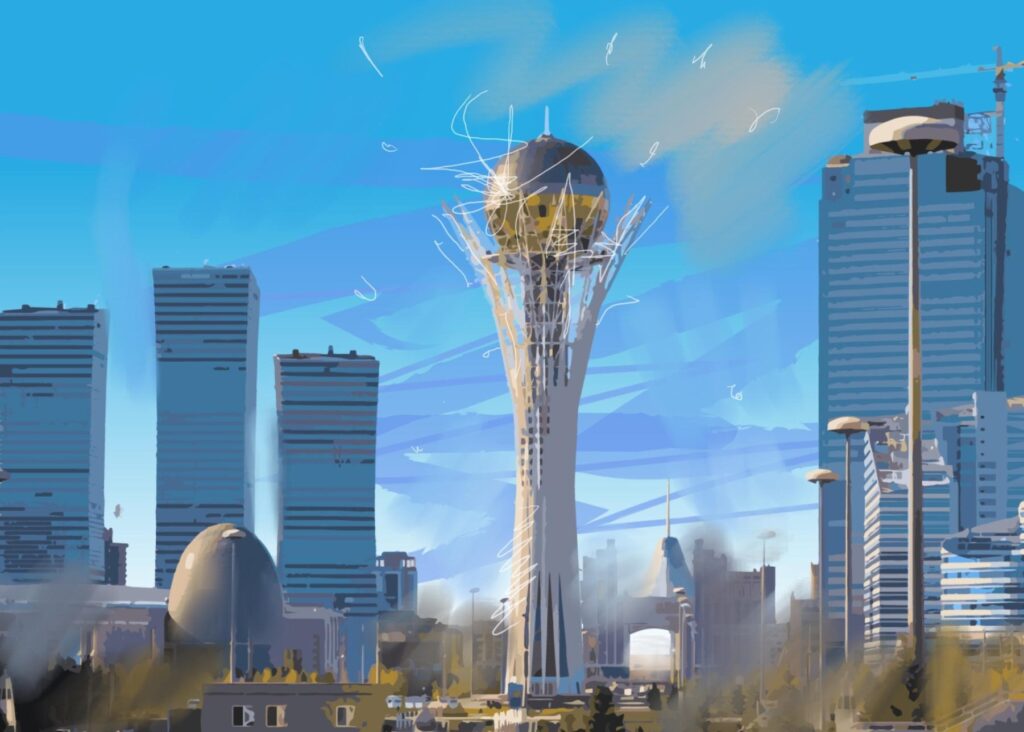
On September 8, in his annual address to the nation, President Kassym-Jomart Tokayev outlined key initiatives in forming a new institutional framework for the country’s digital transformation. These steps signify a qualitative shift from fragmented digital solutions to a more systemic approach to artificial intelligence and advanced technologies. A New Phase: Institutionalizing the Digital Agenda The Ministry of Artificial Intelligence, to be established by presidential order, will become a specialized government body responsible for developing, implementing, and monitoring AI policy. The ministry's core task will be to balance innovation with risk oversight, including ethical, economic, and social considerations. A Digital Code, to be adopted, will serve as the primary legal instrument in the digital sphere. It will consolidate norms relating to personal data, digital rights, AI regulation, electronic platforms, and digital identity. This will enable Kazakhstan to move from fragmented legislation to a codified, resilient legal system for the digital economy. The State Digital Asset Fund under the National Bank is being established to build a crypto reserve and finance key digital infrastructure projects. This model promotes independent financing for innovation, with a focus on sovereignty, resilience, and long-term investment. The Regulatory Intelligence Center, also announced in the address, will act as a ‘policy lab’ for testing new regulatory models within the digital economy. The town of Alatau, envisioned as a national hub of innovation and business activity, is set to become the first fully digital city in the region, combining advanced Smart City technologies with a highly livable urban environment. President Tokayev’s address emphasized the need to establish a special legal status for Alatau City via presidential decree, granting it direct subordination to the government, followed by a dedicated law regulating its governance and financial model. Drawing inspiration from global examples such as Shenzhen, the project will involve a leading Chinese company that participated in building that renowned technopolis. As the president underlined, this special legal status is not a privilege, but a necessary institutional tool, without which the vision of Alatau City risks remaining on paper. The city is intended to become a symbol of Kazakhstan’s future, reflecting the country’s technological ambitions and commitment to human- centered innovation. The use of the digital tenge, the National Bank’s digital currency, also deserves attention. It is already being used to fund projects through the National Fund. In his address, Mr Tokayev instructed that its use be expanded across the entire public finance system, including national and local budgets and state holdings. The digital tenge is thus becoming not only a technological innovation, but also a tool of macroeconomic policy, supporting a more flexible and digitally-driven financial model. All of these initiatives are integrated into the national program Digital Kazakhstan, the update and redesign of which has been assigned to the government. The renewed program will span key areas, from artificial intelligence and digital education to infrastructure and cybersecurity, reflecting Kazakhstan’s pivot toward a fully digital transformation. These steps create a system-wide architecture for integrating AI into the economy, education, governance,...

Opinion: The Contact Group on Afghanistan – Central Asia Formulates a Regional Position

On August 26, special representatives on Afghanistan from Kazakhstan, Kyrgyzstan, Tajikistan, and Uzbekistan met for the first time in Tashkent. The meeting resulted in the creation of a permanent regional platform: the Contact Group on Afghanistan. This gathering was not only a continuation of commitments outlined in the joint statement from the most recent Consultative Summit of Central Asian heads of state, but also a step toward preparing for the next high-level format, scheduled for November in Tashkent. Formally, Turkmenistan was absent. Available information suggests the reasons were purely technical. Ashgabat was ready to join and expressed support for the results through its foreign ministry channels. The key outcome is that Central Asian states have, for the first time, shown their readiness to speak with one voice on an issue long shaped by competing external interests. This is not the start of forming a common position; that had already developed de facto in recent years. All Central Asian countries have supported trade and transit with Afghanistan, continued supplying electricity and food, and maintained working contacts with the Taliban, while avoiding extremes. The Tashkent meeting institutionalized this approach: parallel tracks have now shifted, cautiously, toward coordination. Informal unity has been formalized into a tool. Unlike external players, who often cloak interests in grand rhetoric, Central Asia acts openly and pragmatically. The logic is simple: whatever is done for Afghanistan is, in fact, done for oneself. That is the distinctive feature of the regional approach - no ideological cover, no attempts to reshape Afghanistan. Examples are straightforward. Electricity continues to flow even when payments are delayed - not as charity, but as an investment in security. A blackout in Afghanistan could trigger refugee flows and threats heading north. Exports of flour and fuel sustain Afghan markets but also expand outlets for Central Asian producers. Participation in trans-Afghan corridors is not a gift to Kabul but an opportunity for Central Asia to anchor itself in southern logistics routes. Ultimately, every step “for Afghanistan” is primarily for the region itself. If Kabul ignores basic rules, cooperation will simply stop. In politics, there are no eternal friends, only eternal interests. The new format does not yet imply collective pressure on the Taliban. Rather, it creates conditions for each country to conduct more substantive bilateral dialogue, but grounded in a shared position. Until now, Central Asia has mainly spoken to the Taliban about trade, transit, and infrastructure. The Contact Group now makes it possible to add another dimension: clarifying boundaries of what is acceptable on issues like extremism, border escalation, or water pressure. For now, “red lines” are unlikely, since the Taliban have not crossed them. The situation remains manageable, leaving room for constructive dialogue. Equally important, the Contact Group is not a threat or ultimatum. Coordination is meant to expand opportunities for dialogue, not limit them. In the long run, this could evolve into a sustainable C5+A format. Afghanistan would then be integrated into regional frameworks not as a problem to be managed, but as...

Opinion: Victory Day Parade Puts China’s Military Might and Alliances on Full Display

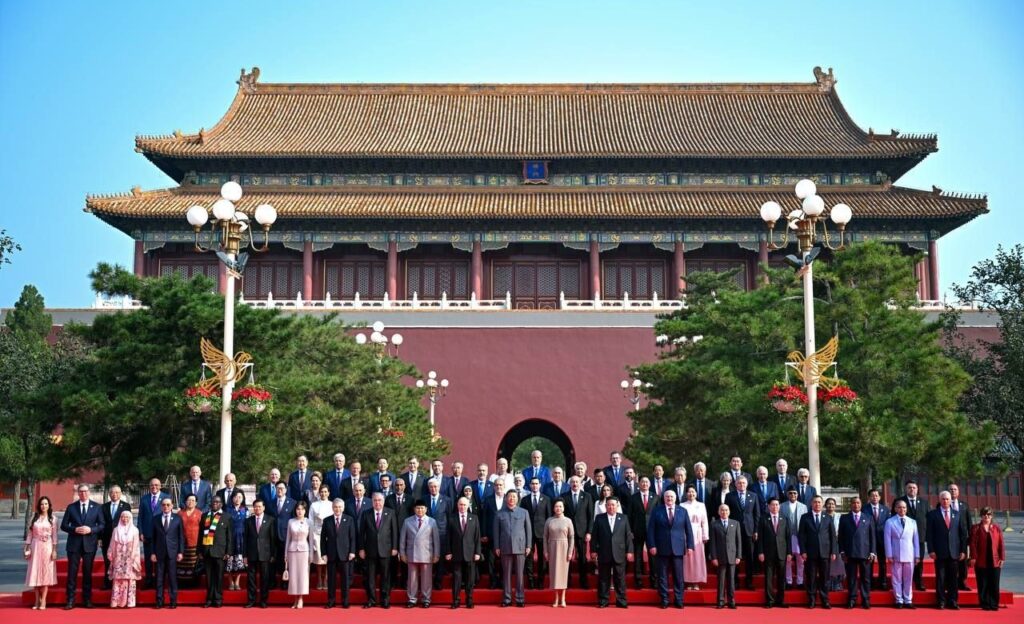
The Shanghai Cooperation Organization summit coincided with China’s lavish commemorations of the "80th anniversary of victory in the War of Resistance Against Japanese Aggression and the broader World Anti-Fascist War." The culminating moment, a grand military parade, was followed by a formal reception hosted by President Xi Jinping for visiting foreign dignitaries. All five Central Asian heads of state attended the parade. As the summit concluded, Xi seized the opportunity to issue a pointed warning to the West, particularly the United States and President Donald Trump, who had made it clear that he was closely following events in Tianjin and Beijing. In a post on Truth Social, Trump wrote, "Please give my warmest regards to Vladimir Putin and Kim Jong Un as you conspire against the United States of America." Kim Jong Un’s high-profile visit to Beijing, including a prolonged meeting with Putin, signaled the emergence of a visible military alignment between North Korea and Russia. This visit served as a strategic complement to China's Victory Day display of military might. [caption id="attachment_35739" align="aligncenter" width="1280"] Image: president.uz[/caption] For the first time, China publicly exhibited components of its strategic nuclear triad: the air-launched Jinglei1 missile, submarine-launched Julang3, and land-based ICBMs such as the Dongfeng61 and Dongfeng31 (and reportedly the DF5C). Analysts saw this as a deliberate signal to the U.S., regional powers like India and Russia, and potential international arms buyers, positioning China as a formidable strategic actor. Also on display were China’s anti-drone “triad”, missile-gun systems, high-energy lasers, and high-power microwave weapons, highlighting advances in counter-drone technology. Additionally, the parade showcased hypersonic and cruise missiles, unmanned aerial and underwater systems, and even robotic dog units, demonstrating China’s futuristic military capabilities. While noting the parade's impressive visuals, analysts cautioned that the true readiness of many showcased systems, for example, torpedo drones or laser weapons, remains uncertain. [caption id="attachment_35741" align="aligncenter" width="1280"] Image: president.uz[/caption] Diplomatically, the summit also reinforced Sino-Russian ties. Putin, who described relations with China as “unprecedentedly” close, and Xi signed over 20 bilateral agreements, including a major energy deal, Power of Siberia 2, a gas pipeline delivering 50 billion cubic metres annually to China via Mongolia. Meanwhile, China announced a trial visa-free entry policy for ordinary Russian passport holders, effective from September 15, 2025, to September 14, 2026, allowing visits up to 30 days for tourism, business, or family purposes. Together, the military spectacle and deepening diplomatic and people-to-people ties affirm Xi’s confidence as he prepares for crucial negotiations with President Trump, an unmistakable projection of strength and strategic resolve.

Opinion: China’s Diplomatic Power Play Unfolds in Tianjin

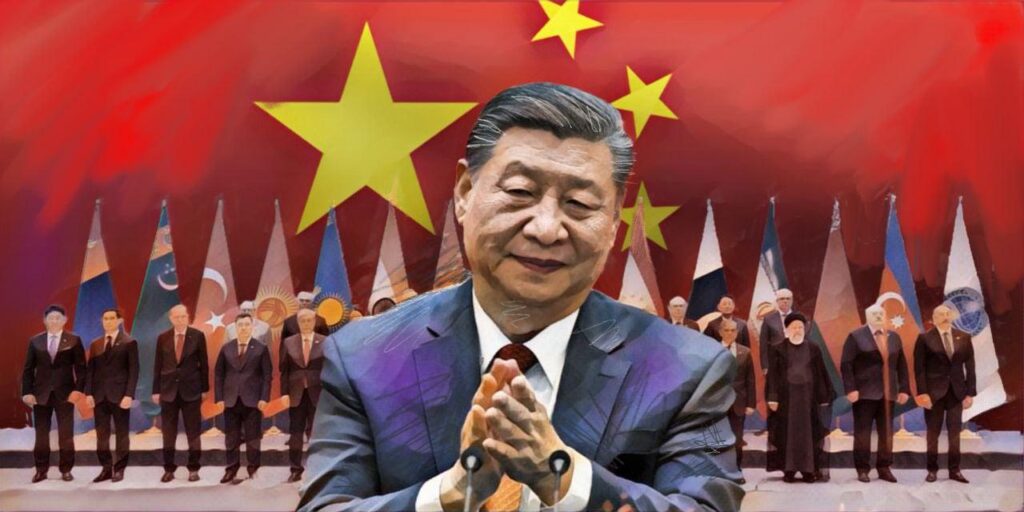
On August 31, the next SCO Plus summit will begin in the Chinese city of Tianjin and run through to September 1. Judging by the list of participants, China, under Chairman Xi Jinping, is positioning itself to challenge the United States for influence over the global geopolitical agenda. As part of the Shanghai Cooperation Organization (SCO) summit, Xi will host a formal banquet for the attending heads of state, according to the Chinese Foreign Ministry. Xi is also scheduled to chair the 25th meeting of the SCO Council of Heads of State and lead the expanded SCO Plus session - the largest since the establishment of the organization - where he will deliver a keynote address. Clues to the themes of Xi’s speech can be found in the diverse array of leaders expected to attend. Chinese Deputy Foreign Minister Liu Bin confirmed at a Beijing press conference that among the SCO member states, participants will include Russian President Vladimir Putin, Indian Prime Minister Narendra Modi, Pakistani Prime Minister Shahbaz Sharif, Iranian President Masoud Pezeshkian, Belarusian President Alexander Lukashenko, Kazakh President Kassym-Jomart Tokayev, Kyrgyz President Sadyr Japarov, Tajik President Emomali Rahmon, and Uzbek President Shavkat Mirziyoyev. Several leaders from non-member states will also join, including Turkish President Recep Tayyip Erdoğan; Mongolian President Ukhnaagiin Khurelsukh; Azerbaijani President Ilham Aliyev; Indonesian President Prabowo Subianto; and Turkmen President Serdar Berdimuhamedov, whose participation suggests Ashgabat’s cautious but growing interest in regional dialogue. Also in attendance will be the prime ministers of Armenia (Nikol Pashinyan), Cambodia (Hun Manet), Nepal (Khadga Prasad Sharma Oli), Egypt (Mostafa Madbouly), Malaysia (Anwar Ibrahim), and Vietnam (Pham Minh Chinh). The summit will also host key international institutional leaders, including UN Secretary-General António Guterres; SCO Secretary-General Nurlan Yermekbayev; CIS Secretary-General Sergey Lebedev; ASEAN Secretary-General Kao Kim Hourn; CSTO Secretary-General Imangali Tasmagambetov; EAEU Chairman Bakytzhan Sagintayev; and AIIB President Zhou Ji. Kazakhstan will be prominently represented. In addition to President Tokayev, three high-profile Kazakhs mentioned above - Yermekbayev, Tasmagambetov, and Sagintayev - will attend in their capacities as heads of international organizations. Their presence signals Astana’s growing diplomatic weight and reflects the strategic outreach led by Tokayev, himself a former UN Deputy Secretary-General. This background likely contributes to the rapport between Kazakhstan and Guterres. The summit will also inevitably draw attention due to the presence of the Armenian and Azerbaijani leaders, figures central to the ongoing realignment in the South Caucasus. Both Baku and Yerevan have increasingly distanced themselves from Moscow, favoring closer ties with Turkey and the United States. The recent peace agreement between Aliyev and Pashinyan, signed in the presence of President Trump, underscored the growing American role in the region and the diminishing influence of Russia. While Moscow appears willing to tolerate this shift, Tehran views it with deep concern, especially after its recent 12-day conflict with Israel. Russia, for its part, seems to be signaling disengagement from the region. Its silence in response to Baku and Yerevan’s Western overtures suggests strategic apathy, if not withdrawal. Beijing, of course, is...

Insider’s View: Uzbekistan’s Competitiveness and Advantages in the SCO Tourism Market

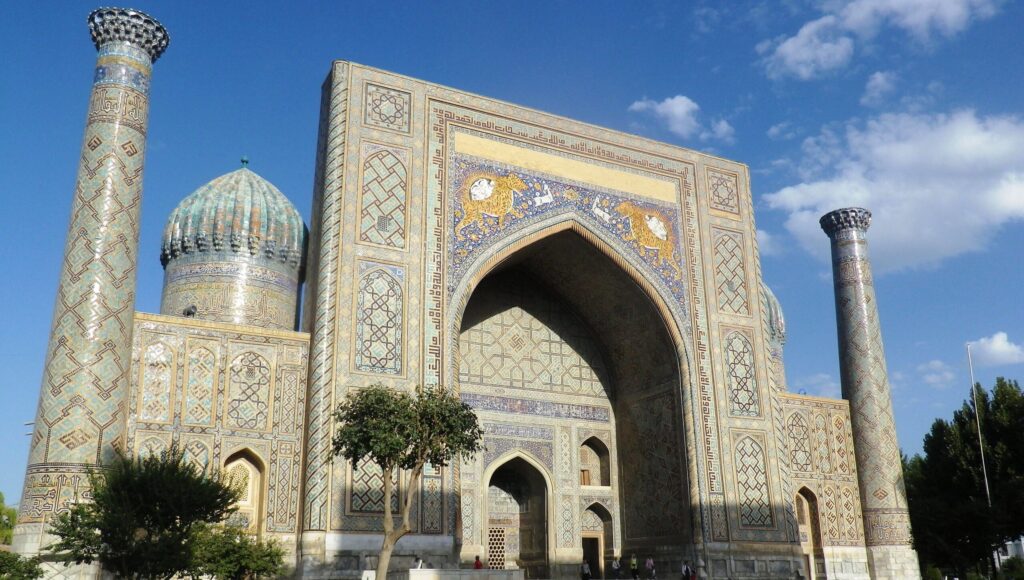
In recent years, Uzbekistan has strengthened its position in the international tourism market, particularly in the region of the Shanghai Cooperation Organization (SCO). From January to June 2025, the country welcomed over 5.3 million international tourists, more than double the figure of the previous year, while tourism service exports rose to $2.4 billion, marking a 164% increase. For the SCO member states, tourism serves as a driver of economic growth and an important tool for cultural exchange and diplomatic rapprochement. Uzbekistan stands out within the Organization thanks to its rich cultural heritage, modern infrastructure, and liberal visa policy. Uzbekistan’s historical landmarks provide the country with a significant competitive advantage within the SCO region. Cities such as Samarkand, Bukhara, and Khiva - all included on the UNESCO World Heritage List - have become major cultural magnets for tourists. These cities are home to hundreds of architectural monuments, mosques and madrasahs, traditional markets, and craft centers, offering travelers a truly unique experience. Building on this heritage, Uzbekistan has also expanded its hospitality sector. In the first half of 2025, Uzbekistan established 60 new hotels, 287 family guest houses, 146 hostels, and 24 other accommodation facilities - a total of 517 new establishments offering 12,800 additional beds. As a result, the total number of accommodation facilities reached 6,448, with overall capacity exceeding 170,000 beds. In recent years, Uzbekistan has actively cooperated with global hotel brands, with international chains such as Hilton, Intercontinental, Bentley, Bill Wyndham & Co., and Azimut implementing investment projects across various regions of the country. This has had a positive impact on both the quality of service and the level of trust from the international community. Additionally, 368 new tourism companies and travel agencies were established in the country, bringing the total number of tour operators to 4,052. Across the republic, 3,415 tour guides are currently active, with 215 new specialists trained in just the first half of this year. These developments have improved the quality of tourism services and significantly enhanced conditions for visitors to the country. Uzbekistan's visa policy is also one of the most progressive in the region. Today, citizens of more than 90 countries can enter the country visa-free, while an additional 56 countries have access to an electronic visa system. This has become a key factor in the growth of tourist arrivals. All of these measures have contributed to a significant increase in the number of tourists visiting Uzbekistan. In the first six months of 2025 alone, more than 4.3 million tourists from SCO member states visited the country, accounting for over 80% of all international visitors. Uzbekistan is also actively promoting its tourism image on the international stage. Cooperation is underway with global media companies such as World Media Group, Blue Sky, Sky One, Wanderlust, Euronews, the BBC, National Geographic, CNN, Travel Tomorrow, Warner Bros. Discovery, Saga Travel Group, as well as with online platforms like Ctrip.com, Holiday Factory, Voyage Privé, and others. In 2024, Uzbekistan participated in 22 international tourism exhibitions held in...