• KGS/USD = 0.01144 0%
  • KZT/USD = 0.00207 0%
  • TJS/USD = 0.10443 0.19%
  • UZS/USD = 0.00008 0%
  • TMT/USD = 0.28490 0%
  • KGS/USD = 0.01144 0%
  • KZT/USD = 0.00207 0%
  • TJS/USD = 0.10443 0.19%
  • UZS/USD = 0.00008 0%
  • TMT/USD = 0.28490 0%
  • KGS/USD = 0.01144 0%
  • KZT/USD = 0.00207 0%
  • TJS/USD = 0.10443 0.19%
  • UZS/USD = 0.00008 0%
  • TMT/USD = 0.28490 0%
  • KGS/USD = 0.01144 0%
  • KZT/USD = 0.00207 0%
  • TJS/USD = 0.10443 0.19%
  • UZS/USD = 0.00008 0%
  • TMT/USD = 0.28490 0%
  • KGS/USD = 0.01144 0%
  • KZT/USD = 0.00207 0%
  • TJS/USD = 0.10443 0.19%
  • UZS/USD = 0.00008 0%
  • TMT/USD = 0.28490 0%
  • KGS/USD = 0.01144 0%
  • KZT/USD = 0.00207 0%
  • TJS/USD = 0.10443 0.19%
  • UZS/USD = 0.00008 0%
  • TMT/USD = 0.28490 0%
  • KGS/USD = 0.01144 0%
  • KZT/USD = 0.00207 0%
  • TJS/USD = 0.10443 0.19%
  • UZS/USD = 0.00008 0%
  • TMT/USD = 0.28490 0%
  • KGS/USD = 0.01144 0%
  • KZT/USD = 0.00207 0%
  • TJS/USD = 0.10443 0.19%
  • UZS/USD = 0.00008 0%
  • TMT/USD = 0.28490 0%

Viewing results 55 - 60 of 98

In Doha, Central Asian Artists Dismantle Orientalism

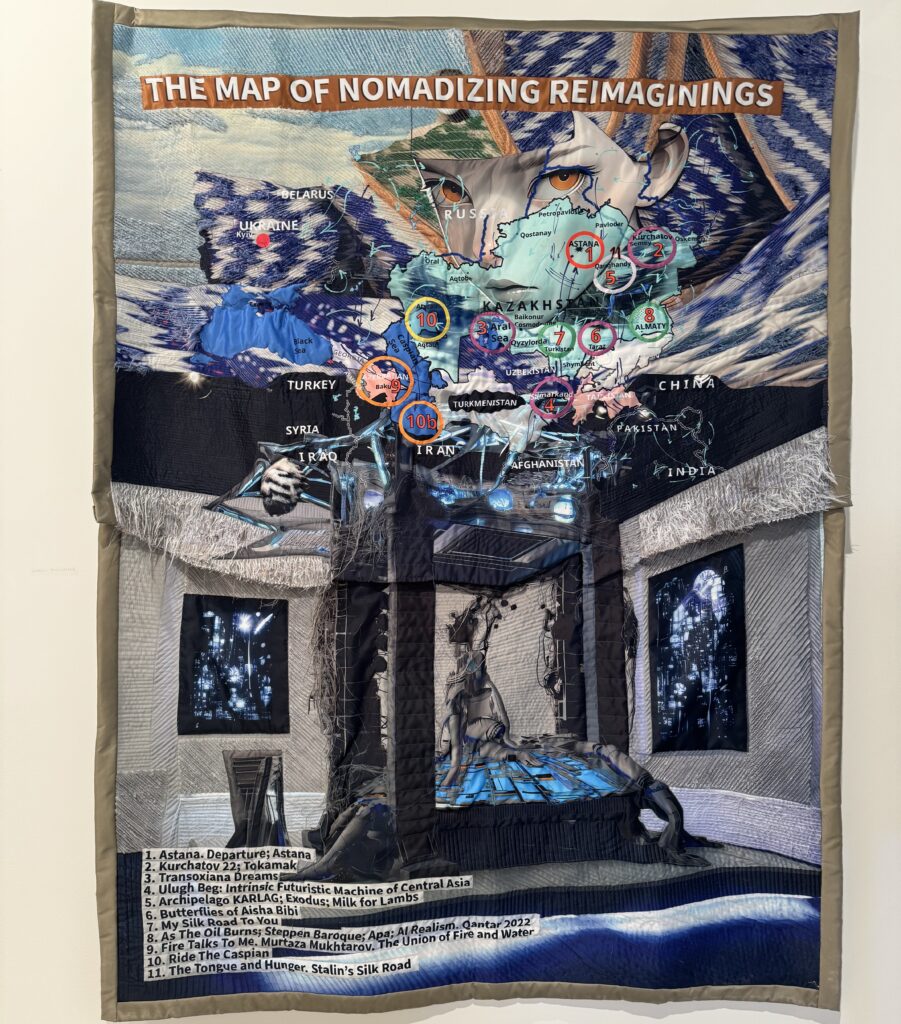
Completely covered by a huge textile patchwork piece, softly moved by the wind, the façade of the Mathaf Museum in Doha promises visitors something fascinating and alluring. Coming closer, attendees could read a series of statements in various languages on the fabric. The effect of familiarity and estrangement at once was the purpose of Azerbaijani artist Babi Badalov, who realized the piece. By layering phrases in Arabic, Cyrillic, and Latin with calligraffiti and employing disjointed grammar and syntax, the artist meant to visually disrupt “linguistic imperialism” and show how Europe’s modern civilization owes much to Arab civilization. [caption id="attachment_27513" align="aligncenter" width="2560"] The Mathaf Museum in Doha; image: TCA, Naima Morelli[/caption] This specially commissioned work, called Text Still (2024), is nothing but an appetizer for the show Seeing is Believing: The Art and Influence of Gérôme. Organized by the forthcoming Lusail Museum — an institution under development in northern Doha that will house the largest collection of the so-called Orientalist art — the exhibition features loans from institutions such as the Metropolitan Museum of Art in New York and the Islamic Arts Museum in Malaysia. The main part of the show is dedicated to French artist Jean-Léon Gérôme, who lived and worked in the 19th century and was profoundly influential in his depictions of the Middle East, North Africa, and South Asia. His works shaped Western perceptions of these regions during an era when colonialism and “Oriental Studies” were cementing global power dynamics. The show included a historical and biographical exploration of Gérôme’s life, timed to celebrate the 200th anniversary of his birth, as well as a photographic section curated by Giles Hudson dedicated to visions of the Orient from Gérôme’s time to today. But it is in the third section, centered on contemporary art and called “I Swear I saw That”, that Central Asian artist really enter into a close dialogue with Gérôme’s Orientalism, turning it on its head. Sara Raza, curator of this section, takes Badalov’s textile work as a case in point: “Badalov inverts Edward Said’s mission of examining Western perceptions of the Orient, focusing instead on Eastern perceptions of the Occident, and vice versa,” she told The Times of Central Asia. Edward Said’s concept of Orientalism, as detailed in his groundbreaking 1978 work of the same name, is an institutionalized program of Western knowledge, based mostly on projections, mystification, and imagination - and includes works of art as well as the academy - which is directed to justify a supposed Western superiority and imperialism over Eastern populations. “I Swear I Saw That” interrogates Jean-Leon Gerome’s way of seeing, which Sara Raza recognizes as a “fantastical and highly mythologized vision of the East,” and looks at how artists from both the Middle East, the Arab world and Central Asia fought back. A Central Asia and Caucasus expert who works extensively in the Middle East, Raza has examined the process of the exoticization of Eastern populations for a long time. She coined the term “Punk Orientalism,” which also became the...
Art Against All Odds: The State Museum of Karakalpakstan’s Tale of Survival and Defiance

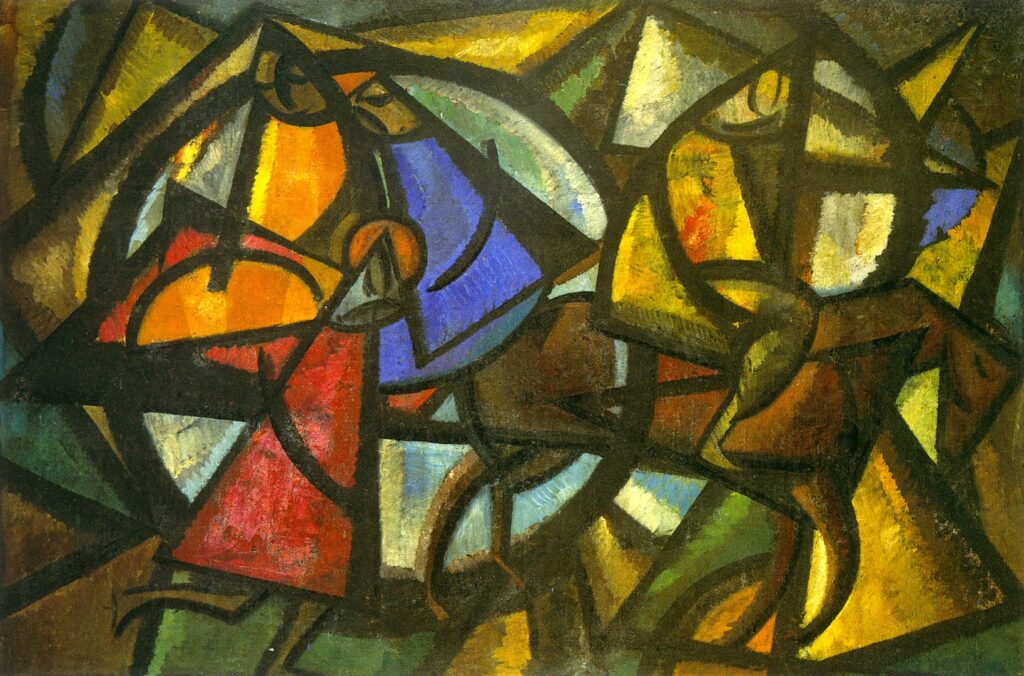
Once a flourishing hub of agriculture, Karakalpakstan has been transformed into one of the most perilous environments on Earth. Rampant health crises, including respiratory diseases, typhoid, tuberculosis, and cancer, plague its population. Birth defects and infant mortality rates are alarmingly high. The root of this devastation lies in the deliberate collapse of the Aral Sea, drained for irrigation, which has triggered toxic dust storms blanketing a 1.5 million square kilometer area. Carrying carcinogens and nitrates, these storms, once rare, now strike ten times per year, spreading sickness and despair. [caption id="attachment_27445" align="aligncenter" width="2560"] The State Museum of Karakalpakstan; image: TCA, Stephen M. Bland[/caption] Amid this harsh and desolate landscape lies a surprising beacon of cultural preservation — the State Art Museum of the Republic of Karakalpakstan, located in its capital, Nukus. Its existence is extraordinary, not least because of how it came to be and how it has endured. Protected by the remoteness of the region, this museum safeguards one of the most remarkable collections of banned avant-garde art, amassed through the daring vision of Igor Savitsky. The Ukrainian-born painter, archaeologist, and art collector defied the Soviet regime, risking being labeled an enemy of the state, to rescue thousands of prohibited works. These pieces, forged by a forgotten generation of artists, now provide an extraordinary glimpse into a turbulent period of history. [caption id="attachment_27446" align="aligncenter" width="972"] Aleksandr Volkov, Chaikhana with a Portrait of Lenin; image: TCA, Stephen M.. Bland[/caption] Among the luminaries memorialized in the museum is Aleksandr Volkov, whose vibrant oil paintings brim with the energy and colors of Central Asian life. Born in Ferghana, his Cubo-Futurist style clashed sharply with Stalin’s Soviet ideals, leading to his ostracism as a bourgeois reactionary. Dismissed from his roles and expelled from Russian galleries, Volkov lived out his final years in isolation, banned from contact with the artistic community. Though he escaped the gulags, he was silenced until his death in 1957 under orders from Moscow. Volkov’s work, a symphony of geometric brilliance, survive today as a testament to his resilience. [caption id="attachment_27447" align="aligncenter" width="500"] Lev Galperin, On His Knees; image: TCA, Stephen M. Bland[/caption] Painted defiance is also seen in Lev Galperin's surviving piece, On His Knees. A unique fusion of Dada and Cubism, it represents his bold challenge to Soviet authority. Galperin, a well-traveled artist from Odessa, returned to the Soviet Union in 1921 only to be ensnared. Arrested on Christmas Day in 1934 for his so-called counter-revolutionary art, his trial marked him as an outspoken critic of the regime. Sentenced to execution, his sole piece saved from oblivion speaks of his courage and the high cost of dissent. [caption id="attachment_27448" align="aligncenter" width="1170"] Nadezhda Borovaya, Sawing Firewood; image: nukus.open-museum.net[/caption] The gallery also hosts haunting sketches by Nadezhda Borovaya, which vividly document life in the Soviet gulags. Borovaya’s tragedy began in 1938 when her husband was executed, after which she was exiled to the Temnikov camp. There, she clandestinely captured the harrowing realities of camp life. Savitsky acquired these pieces by...

UAE Embracing the Silk Road Narrative: Central Asia at Art Abu Dhabi 2024

More than at any other time in recent history, the entire art world is this year tackling geopolitical identity issues. And while we usually delegate Biennales and non-commercial art events to take the pulse of our contemporary reality, this time an art fair took up this task: Art Abu Dhabi. This year the fair was bigger than ever and had a hugely relevant Central Asian and Caucasus section, curated by Elvira Eevr Djaltchinova-Malec, which was aptly called “Drifting identities.” Founder of the Warsaw Institute for Modern and Contemporary Asian Art (WIMCAA) Foundation - based on the spreading of Asian and global art – Djaltchinova-Malec was invited by the fair's artistic director, Dyala Nusseibeh, to curate a section that presented different aspects of the rich cultural tapestry of the region without shying away from the political concerns and instability which often characterize this part of the world. [caption id="attachment_26543" align="aligncenter" width="928"] From left to right, Abdelmonem Alserkal - prominent art patron based in Dubai, founder of the Alserkal Avenue, Alserkal Foundation, Elvira Eevr Djaltchinova-Malec, Almagul Menlibayeva, and Danagul Tolepbay image: Elvira Eevr Djaltchinova-Malec[/caption] Djaltchinova-Malec has been working on this concept of the Silk Road in different shows – namely Silk Road 2.0 - Artists re-loaded conference in Warsaw, Silk Road 2.0 - New Opportunities panel for art for 021 Art fair in Shanghai - adapting it to the changing geopolitical landscape of the region. "Our foundation was established in 2016, and already, eight years ago, we started to explore the topic of the Silk Road,” Djaltchinova-Malec told TCA. “We wanted to understand the desire of China and countries who joined Chinese projects for the New Silk Road, and we invited artists and art professionals from Vietnam, the United Kingdom, Central Asia, Kazakhstan, Germany, Tibet, France, and Ukraine for the foundation’s first conference.” The Belt and Road Initiative, sometimes referred to as the New Silk Road, is a global infrastructure development strategy adopted by the Chinese government in 2013 to invest in more than 150 countries and international organizations. [caption id="attachment_26545" align="aligncenter" width="2560"] Tapestry by Almagul Menlibayeva; image: Elvira Eevr Djaltchinova-Malec[/caption] It’s the first time that the curator is presenting these artistic geographies in the context of the Gulf. On one hand, this is opening up Central Asian narratives to an Arab public that might be curious to learn more about art in this region. On the other hand, it is helping to open markets and create access to a different pool of new collectors. Thanks to an individual outreach which started well before the fair, the experiment proved successful. "Fortunately, many collectors from the Gulf already know artists from Central Asia, as there are a few art galleries in the UAE which represent them, as well as institutions like the Sharjah Foundation,” Djaltchinova-Malec stated. In addition, many collectors and artists from Russia who are knowledgeable about Central Asian narratives and sensitive to colonization issues, are now based in the UAE. “We tried to involve as many collectors from other circles as...

Kazakh Rituals Included in UNESCO’s Intangible Cultural Heritage List

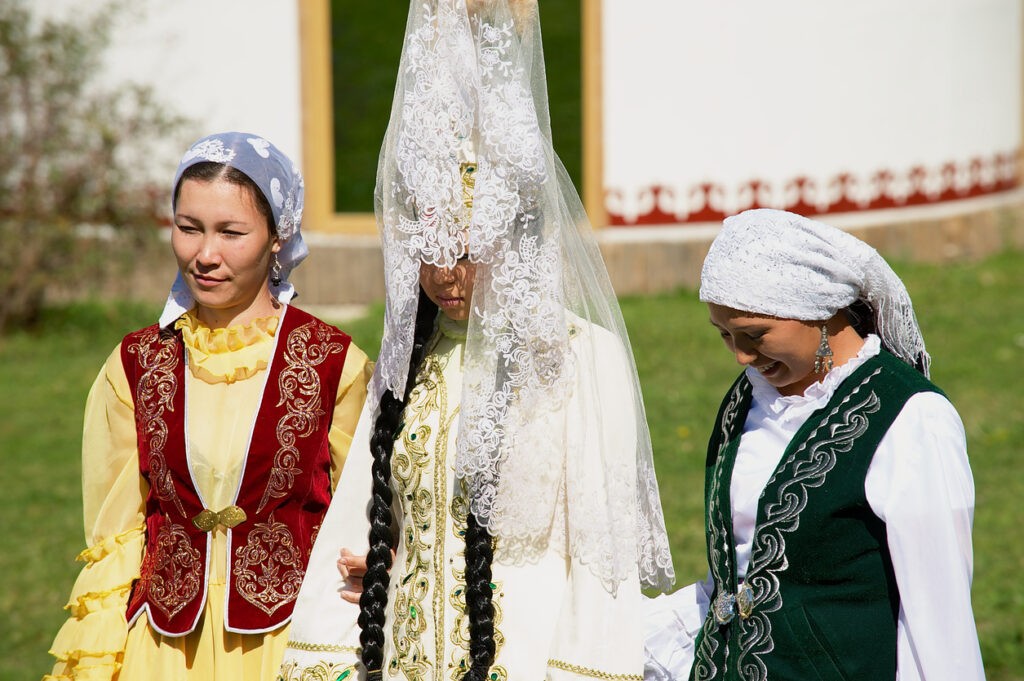
The Kazakh wedding ritual of Betashar has been officially recognized by UNESCO as part of the Representative List of the Intangible Cultural Heritage of Humanity. This inclusion highlights the enduring beauty and cultural significance of Kazakhstan's ancient traditions. In this article, we explore the Betashar ritual, other celebrated customs, and the challenges posed by certain archaic practices in modern times. Betashar: Revealing the Bride's Face During the UNESCO Committee for the Safeguarding of the Intangible Cultural Heritage meeting in Asunción, Paraguay, Betashar was officially added to the list of intangible cultural heritage. State Counselor Yerlan Karin announced the decision, which underscores Kazakhstan's commitment to preserving its rich cultural legacy. Kazakhstan ratified UNESCO’s Convention for the Safeguarding of the Intangible Cultural Heritage in 2011, pledging to protect and promote cultural traditions. Today, 13 Kazakh practices are on UNESCO’s list, including kiiz үi (yurt), kүi (instrumental music), aitys (improvised poetry duels), Nauryz (spring festival), kүres (wrestling), and togyzkymalak (a traditional board game). Betashar—literally "revealing the face"—is a wedding rite introducing the bride to her husband's family. Historically, the bride spent three days secluded with the women of her community before being ceremonially presented to her new family. Her face, hidden under a large cloth, was uncovered in front of the gathered relatives while a zhirshy (singer-improviser) performed the betashar zhyry, a song introducing the family members. In return, they pledged gifts to the couple. The ritual concluded with the bride serving tea to her in-laws. While modern weddings often simplify Betashar, its symbolic meaning remains deeply cherished. Preserving Other Traditions Another ritual presented to UNESCO is Salburyn, an ancient hunting custom. Hunters once gathered on horseback for multi-day expeditions, accompanied by falcons and hounds. These hunts began with feasts and competitions, emphasizing camaraderie and skill. Today, while hunting is less necessary, Salburyn is celebrated as part of cultural events, such as during the Nauryz festivities in Kyzylorda region. The custom of Tusau Kesu—cutting a child’s “fetters”—is a joyous milestone in Kazakh culture. When a child begins to walk, their legs are symbolically tied with a colorful string, which is then cut by a respected relative. The ceremony includes laying out a symbolic “white path” (ak zhol), representing a prosperous future. Items such as money, a whip, a dombra, or a book are placed along the path to hint at the child’s potential destiny. Addressing Harmful Practices Not all traditions are compatible with contemporary values or legal norms. Bride kidnapping, an archaic practice still occurring in some regions, has drawn criticism and calls for stricter legal measures. Mazhilis deputy Murat Abenov recently urged tougher penalties for bride abduction, highlighting gaps in the Criminal Code that leave many cases unresolved. “Many victims are coerced into claiming they went voluntarily,” Abenov explained, citing examples where cultural products like songs and videos romanticize the practice. Despite its criminalization after the October Revolution, the issue persists. In 2023, there were 13 officially recorded cases of bride abduction, though Abenov believes the real figure is higher due to...

Archaeologists Uncover Rare Silk Road Artifacts in Uzbekistan

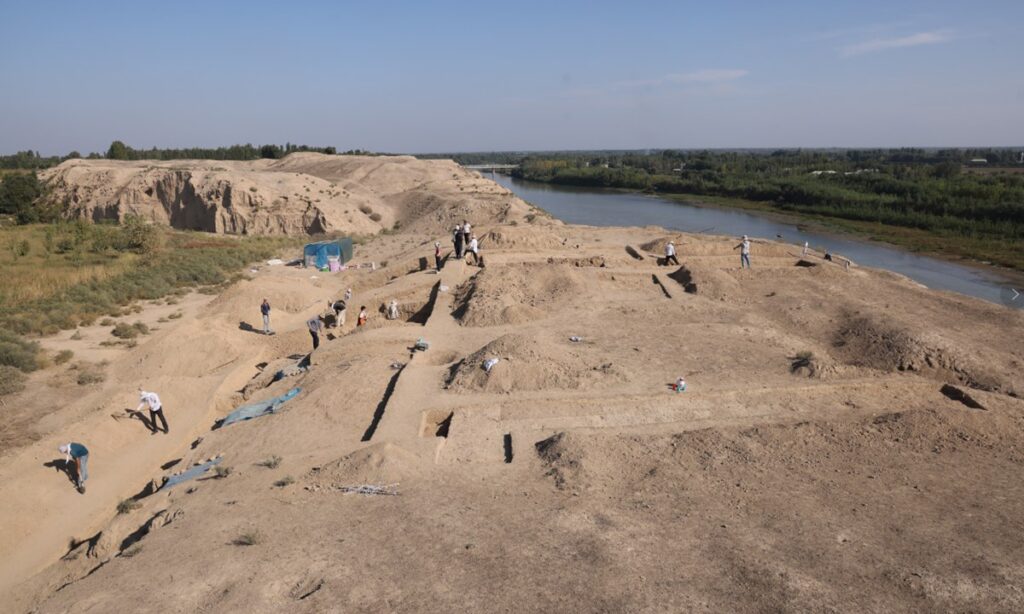
A joint archaeological expedition from China and Uzbekistan has made remarkable discoveries at Mengchaktepa, a key Silk Road site located on the northern bank of the Syr Darya River. Known as the “Living Fossil of the Silk Road,” the site has been under investigation by the Chinese Academy of Social Sciences (CASS) and Uzbekistan’s Institute of Archaeology since 2012. The team, led by CASS archaeologist Liu Tao, unearthed seven tombs, two buildings, and numerous artifacts, including silk fabrics, leather goods, bronze mirrors, square-holed coins, and beads. Among the most significant finds are silk fragments, the first such discovery in the region since 1986, which bridges a 40-year gap in the study of ancient silk in the Ferghana Valley. According to Liu, these silk fragments highlight the advanced weaving techniques of antiquity. Abdulhamidjon Anarbayev, a professor at Uzbekistan's National Center for Archaeology, praised the Chinese team’s contributions to advancing Uzbekistan’s field archaeology through modern excavation and preservation methods. He noted that the research underscores the high standards of Chinese archaeology globally. Mengchaktepa holds immense value for studying cultural connections along the Silk Road. Ancient Chinese chronicles from the Qin and Han dynasties (221 BC–220 AD) describe how Zhang Qian, an emissary of the Western Han dynasty, established trade links between China and Central Asia. Through Dayuan, the ancient region corresponding to the modern Ferghana Valley, silk, paper, and Chinese technology reached Europe, while grapes and alfalfa were introduced to China. Excavations at Mengchaktepa have been ongoing since 1986. Early discoveries included nine cave tombs containing well-preserved remains, silk garments, and jewelry from the 5th to 8th centuries. This year, researchers are focusing on the necropolis’s scope, tomb structures, and their artifacts, with special attention to preserving organic materials like silk, leather, and reeds for laboratory analysis. Liu explained that the findings provide new insights into the region’s early medieval funerary practices, belief systems, and architectural traditions. Artifacts such as Han-style objects and relics linked to Zoroastrianism affirm Mengchaktepa’s pivotal role in East-West cultural exchanges along the Silk Road.

The Impact of Korean Culture on Kazakhstan: Personal Stories and Impressions

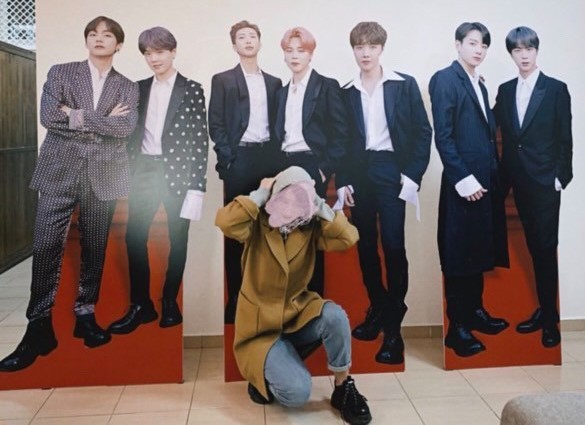
In recent years, Korean culture - including K-pop and doramas (dramas) - has gained incredible popularity in Kazakhstan. It has had a significant impact on young people, offering not only entertainment, but also support, motivation, and new opportunities to socialize and express themselves. To better understand how Korean culture is influencing life in Kazakhstan, TCA talked to young people about their stories and experiences. [caption id="attachment_26045" align="aligncenter" width="585"] Image: TCA[/caption] Alua, 22, computer club administrator For me, as an insecure teenager, K-pop and doramas have been a tremendous support and help in shaping my personality. Songs about self-love, with words of encouragement and motivation give many teens a foothold they often can't get from their environment. The doramas teach us and show us that nothing is impossible, that everything is in our hands. They also show young girls what healthy relationships should look like. That's what I love about Korean culture, the lack of gender boundaries and the promotion of healthy attitudes. I think this kind of influence has a great effect on the youth of Kazakhstan. Doramas are television series produced in South Korea and other Asian countries. They cover a wide range of genres: romance, drama, comedy, sci-fi, historical subjects, and more. Doramas are known for their high-quality productions, plot twists, and colorful characters. [caption id="attachment_26046" align="aligncenter" width="585"] Image by Nastya, from the official BTS film festival in Kino Park, Astana[/caption] Nurlan, 19, student at a pedagogical faculty I like Korean culture because of its unconventionality. For example, K-pop groups such as BTS have always fought against male stereotypes and I’m inspired by it. I think it's really great, because in Kazakhstan there are big problems with the perception of gender roles. In addition to male stereotypes, they are also breaking down female stereotypes through female groups like BLACKPINK, who present themselves as confident girls who are not afraid of getting their own way. Also in Kazakhstan, many convenience stores like the Korean 7/11 are opening up where you can eat noodles and tokpoki, and sit with friends, just like in the doramas. I really like it, and I’m happy that Korean trends that are reaching us in Kazakhstan. [caption id="attachment_26049" align="aligncenter" width="585"] Image: TCA[/caption] Sarah, 21, store administrator and student I started getting into Korean culture back in 2010, when my sister showed me the dorama Boys More Beautiful Than Flowers. After that, K-pop and doramas helped me not to get discouraged during difficult moments, offering an interactive culture that nurtured a sense of love and support. Even if it wasn't fashionable then and I was made fun of, K-pop kept me going. Now, however, it’s a worldwide phenomenon, and that’s nothing short of heartwarming. So many people around the world have discovered a whole new genre of music, movies, TV series and things in the Korean media space, such as albums and photocards, fan-sites, merch, and concerts. Doramas and shows like Running Man and Apartment 404 have become my favorite part of celebrity promotion in Korea....