• KGS/USD = 0.01144 0%
  • KZT/USD = 0.00210 0%
  • TJS/USD = 0.10563 0%
  • UZS/USD = 0.00008 0%
  • TMT/USD = 0.28530 0%
  • KGS/USD = 0.01144 0%
  • KZT/USD = 0.00210 0%
  • TJS/USD = 0.10563 0%
  • UZS/USD = 0.00008 0%
  • TMT/USD = 0.28530 0%
  • KGS/USD = 0.01144 0%
  • KZT/USD = 0.00210 0%
  • TJS/USD = 0.10563 0%
  • UZS/USD = 0.00008 0%
  • TMT/USD = 0.28530 0%
  • KGS/USD = 0.01144 0%
  • KZT/USD = 0.00210 0%
  • TJS/USD = 0.10563 0%
  • UZS/USD = 0.00008 0%
  • TMT/USD = 0.28530 0%
  • KGS/USD = 0.01144 0%
  • KZT/USD = 0.00210 0%
  • TJS/USD = 0.10563 0%
  • UZS/USD = 0.00008 0%
  • TMT/USD = 0.28530 0%
  • KGS/USD = 0.01144 0%
  • KZT/USD = 0.00210 0%
  • TJS/USD = 0.10563 0%
  • UZS/USD = 0.00008 0%
  • TMT/USD = 0.28530 0%
  • KGS/USD = 0.01144 0%
  • KZT/USD = 0.00210 0%
  • TJS/USD = 0.10563 0%
  • UZS/USD = 0.00008 0%
  • TMT/USD = 0.28530 0%
  • KGS/USD = 0.01144 0%
  • KZT/USD = 0.00210 0%
  • TJS/USD = 0.10563 0%
  • UZS/USD = 0.00008 0%
  • TMT/USD = 0.28530 0%

Viewing results 157 - 162 of 1540

EBRD and EU Allocate €43 Million to Modernize Tajikistan’s Power Grid

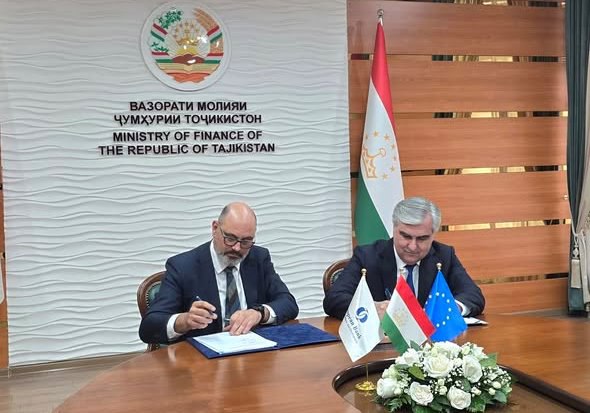
The European Bank for Reconstruction and Development (EBRD) and the European Union have announced a joint initiative to enhance the reliability and transparency of Tajikistan’s electricity distribution system. Under the agreement, a €43 million financing package will support the state-owned electricity distributor Shabakahoi Taqsimoti Barq (STB). The funding aims to reduce technical losses and improve efficiency by upgrading essential infrastructure. The “Energy Loss Reduction” project was officially signed on December 4 at Tajikistan’s Ministry of Finance. The agreement was endorsed by Minister of Finance Faiziddin Kahhorzoda and the EBRD’s permanent representative in Tajikistan, Holger Wiefel. The project is backed by €28 million in sovereign loans from the EBRD and €15 million in EU grants via the Asia-Pacific Investment Fund. Funds will be directed toward upgrading billing systems and installing new electricity metering equipment in nine cities across the Sughd and Khatlon regions. These areas are among the most affected by outdated infrastructure, which contributes to technical power losses, inaccurate metering, and the reduced financial viability of STB. The modernization program includes digitizing STB’s core operations and implementing cybersecurity measures to safeguard the national power grid. Technical assistance from both the EU and EBRD will support the rollout of these reforms. A key component of the initiative is human capital development. Specialized training programs on sustainable technologies and modern energy sector skills will be offered, with a focus on youth and women. This is intended to enhance the qualifications of local professionals and strengthen the regional labor market. The EBRD remains one of Tajikistan’s most significant international investors. To date, the bank has invested more than €1 billion across 188 projects in various sectors. The new energy initiative reflects the continued strategic role of international partners in supporting the modernization of Tajikistan’s critical infrastructure.

Revolut Blocks Top-Ups from Central Asian Bank Cards for EU-Based Users

Russian citizens residing in the European Union have reported being unable to top up their Revolut accounts using bank cards issued in Kazakhstan, Uzbekistan, and Tajikistan. According to Oninvest, at least five individuals encountered the same issue, with Revolut rejecting the transfers and stating that the cards used are “no longer supported.” Revolut’s customer support confirmed that as of December 1, the bank no longer processes top-ups from cards issued in Kazakhstan, Uzbekistan, and Tajikistan for users living in EU member states. The restriction is not temporary; the bank said similar transactions will not be accepted going forward. Notably, none of the banks in question are subject to international sanctions. Revolut attributed the change to internal policies and updated compliance requirements from international payment systems. These systems have reportedly classified Kazakhstan, Uzbekistan, and Tajikistan as high-risk jurisdictions for card-based top-up operations. The bank emphasized that the decision was mandated by its payment partners, not initiated by Revolut itself. Users also reported that top-up attempts through mobile apps of Central Asian banks resulted in error messages. However, Revolut advised that alternative methods, such as Apple Pay, Google Pay, and international bank transfers, remain available. Some customers based in France received a notification from Revolut stating that the platform will no longer accept card transfers from 52 countries. The list includes several countries where Russians relocated after 2022, such as Armenia, Georgia, Kazakhstan, Kyrgyzstan, Uzbekistan, Turkey, Serbia, and the UAE, as well as popular travel destinations like Thailand and Vietnam.

Reuters News Agency Pulls Report on Tajik-Russian Talks on Guarding Afghan Border

The Reuters news agency has withdrawn a story, denied by Tajikistan, that Tajikistan was negotiating with Russia about joint patrols along its troubled border with Afghanistan.  The removal of the news story comes as China urges Tajikistan to upgrade security along the border, where security officials say five Chinese workers were killed in two separate attacks launched into Tajikistan from Afghanistan last week. Tajik President Emomali Rahmon met senior security officials in his government this week to discuss border security.  “A Reuters story about Tajikistan holding talks with Russia about helping guard its Afghan border has been withdrawn following a post-publication review showing insufficient evidence. There will be no substitute story,” Reuters said in a statement from Almaty, Kazakhstan.  Tajikistan has previously said it seeks to collaborate with the Collective Security Treaty Organization (CSTO), a regional group in which Russia is the most powerful member, on efforts to conter threats along its border with Afghanistan. As far back as 2013, the organization said it was planning to provide “military-technical assistance” to Tajikistan’s border of nearly 1,400 kilometers with Afghanistan.  But Tajikistan's Ministry of Foreign Affairs denied the Reuters report about “alleged discussions between Tajikistan and the Collective Security Treaty Organization regarding the involvement of Russian military personnel” in joint patrols along the Tajik-Afghan border. “The Ministry emphasizes that this publication is untrue and that the dissemination of such false information misleads the international audience,” the ministry said on Wednesday.  Tajikistan is “constantly” taking steps to strengthen the border with Afghanistan and that the situation there “remains stable and is under the full control of the competent authorities” in the country, according to the foreign ministry. Even so, Chinese media reported that the Chinese embassy in Tajikistan has urged its nationals to urgently leave the border area.  The ruling Taliban in Afghanistan condemned the border attacks and pledged to collaborate in efforts to find those responsible. Mohammad Naeem, the deputy foreign minister, told Zhao Xing, China’s top diplomat in Afghanistan, during a meeting in Kabul that investigations were underway, the Afghan government said Wednesday.   

Taliban Arrests Suspects After Deadly Attacks on Chinese Citizens Near Tajik-Afghan Border

The Taliban has announced the arrest of two suspects following two deadly attacks on Chinese workers in Tajikistan’s border regions, which left five dead and several others injured. Afghan media, citing Taliban officials, reported that two individuals were detained in connection with the killings of Chinese nationals in Tajikistan. According to Ehsanullah Kamgar, a spokesperson for the Taliban’s security department in Afghanistan’s Badakhshan province, the arrests took place in the Maymay district. The identities of the suspects have not been disclosed. Tajikistan’s security services believe that the militants crossed the border from this area before launching an assault in the Darvaz district on November 30. The attack targeted Chinese workers from a road construction company in the village of Shodak, killing two and injuring two more. Authorities said the assault occurred around 6:45 p.m. local time. The border situation has deteriorated rapidly. Within one week, two armed attacks were carried out from Afghan territory targeting Chinese nationals in Tajikistan. The first incident occurred on November 26 in the Shamsiddin Shokhin district, where three employees of the Shokhin-SM company were killed and one other was injured in a drone strike. The second attack took place on November 30, when a terrorist group crossed from Ruzvayak, a village in Badakhshan, Afghanistan, and targeted workers from the China Road and Bridge Corporation. The outcome was again tragic: two Chinese workers were killed and two were wounded. Tajik border guards emphasized that these attacks have occurred despite heightened security in the border regions. “Criminal groups continue to destabilize the situation,” the border agency said in a statement. Following the violence, the Chinese embassy in Dushanbe issued a strong demand for the Tajik authorities to “take all necessary measures” to protect Chinese citizens and employees of companies operating near the Afghan border. On December 1, Tajikistan’s President Emomali Rahmon convened an emergency meeting with the heads of the country’s law enforcement agencies. He “strongly condemned the illegal and provocative actions of Afghan citizens” and ordered tighter security controls to prevent further cross-border attacks.

Why Tajikistan Chose the Desert Partridge as Its Symbol for 2026

Tajikistan has designated the desert partridge as its “Bird of the Year 2026”, a move environmentalists say could mark a turning point in the country’s approach to protecting fragile desert ecosystems. The National Academy of Sciences of Tajikistan concluded its annual public vote by officially selecting the desert partridge, locally known as chil or kabki zirak, as the national avian symbol for the coming year. This rare and elusive species inhabits the southern and western desert zones of the country, areas that remain among the least studied in Tajikistan’s environmental landscape. Although no systematic population surveys exist, ornithologists agree that the desert partridge is in decline. Primary threats include habitat degradation, overgrazing, agricultural expansion, and the absence of long-term ecological monitoring. Environmental advocates hope the bird’s new status will encourage state-led conservation efforts in arid regions that have historically received little attention. Measuring 30-35 centimeters in length and weighing up to 450 grams, the desert partridge is ideally adapted to its environment. Its sandy plumage offers effective camouflage in rocky deserts, while distinctive dark stripes on its head help distinguish it from other species. The bird rarely flies, instead relying on swift footwork to navigate between shrubs. Its preferred habitat includes plains, foothills, and dry plateaus. One of the most resilient species in Central Asia’s deserts, the partridge can survive without access to open water, making it a model of adaptation to extreme conditions. Scientists say the selection of the desert partridge is a conscious signal that Tajikistan must begin prioritizing the study and protection of desert ecosystems. The Bird of the Year status will facilitate comprehensive population monitoring and draw public and institutional attention to the environmental impact of climate change. In 2025, Tajikistan named the great bustard, one of its rarest bird species, as its bird of the year. Approximately 23 nesting pairs and up to 60 individuals during migration have been documented. Launched in 2007, the Bird of the Year program has previously featured notable species such as the eagle owl, blue magpie, white stork, Tibetan snowcock, hoopoe, peregrine falcon, swallow, golden eagle, oriole, goldfinch, turtle dove, and the beautiful bustard.

Tajikistan Reports New Militant Attack from Afghanistan; Chinese Citizens Killed

A deadly cross-border attack has once again drawn attention to the volatile security situation along the Tajik-Afghan border. Armed militants opened fire on foreign workers in Tajikistan, prompting sharp condemnation from Dushanbe and renewed calls for Kabul to enhance control over its border regions. According to the press center of Tajikistan’s State Committee for National Security (GKNB), the latest incident occurred on November 30 at approximately 6:45 p.m. near the village of Shodak, located in the rural village of Vishkharv, Darvaz district. The gunfire reportedly came from the Afghan village of Ruzvayak, in the Mohi Mai district of Badakhshan province. Militants targeted employees of the China Road and Bridge Corporation, a Chinese state-owned construction company. Two Chinese nationals were killed in the attack, and two others were wounded. This was not an isolated incident. On November 26, militants launched a similar cross-border assault in the Shamshiddin Shohin district, resulting in the deaths of three Chinese employees of the Shokhin-SM company and injuring another. Both attacks originated from Afghanistan’s Badakhshan province, raising serious concerns among Tajik authorities about what appears to be a growing pattern of cross-border violence. Despite ongoing efforts to enhance security, Dushanbe acknowledged continued attempts by armed criminal groups to destabilize the situation. “The Tajik side, expressing deep concern, strongly condemns these alarming actions by criminal groups and calls on the current authorities of Afghanistan to take timely and effective measures,” read a statement from the Border Troops press center. The GKNB stated that additional measures are being implemented to strengthen border protection and ensure the safety of both Tajik citizens and foreign workers. Authorities also reported that the situation remains “stable and under control,” and that investigations are underway. In a separate statement, the Ministry of Foreign Affairs of Tajikistan condemned the attacks as “brutal actions by terrorist groups” and urged the Afghan authorities to guarantee the security of border areas. Official reactions followed from Kabul, Islamabad, and Tehran. Representatives of the Taliban (designated as a terrorist organization and banned in several countries) extended condolences to both Tajikistan and China. They asserted that the attacks were carried out by factions seeking to “create tension and mistrust between countries in the region,” and expressed willingness to cooperate in the investigation and information exchange. On December 1, President Emomali Rahmon convened an emergency meeting with the heads of Tajikistan’s law enforcement and security agencies. According to the presidential press service, Rahmon “strongly condemned the illegal and provocative actions of Afghan citizens,” called for tougher preventive measures, and instructed security forces to reinforce surveillance and control along the entire border zone.