
• KGS/USD = 0.01144 0%
  • KZT/USD = 0.00208 0%
  • TJS/USD = 0.10492 0.1%
  • UZS/USD = 0.00008 0%
  • TMT/USD = 0.28571 0%
  • KGS/USD = 0.01144 0%
  • KZT/USD = 0.00208 0%
  • TJS/USD = 0.10492 0.1%
  • UZS/USD = 0.00008 0%
  • TMT/USD = 0.28571 0%
  • KGS/USD = 0.01144 0%
  • KZT/USD = 0.00208 0%
  • TJS/USD = 0.10492 0.1%
  • UZS/USD = 0.00008 0%
  • TMT/USD = 0.28571 0%
  • KGS/USD = 0.01144 0%
  • KZT/USD = 0.00208 0%
  • TJS/USD = 0.10492 0.1%
  • UZS/USD = 0.00008 0%
  • TMT/USD = 0.28571 0%
  • KGS/USD = 0.01144 0%
  • KZT/USD = 0.00208 0%
  • TJS/USD = 0.10492 0.1%
  • UZS/USD = 0.00008 0%
  • TMT/USD = 0.28571 0%
  • KGS/USD = 0.01144 0%
  • KZT/USD = 0.00208 0%
  • TJS/USD = 0.10492 0.1%
  • UZS/USD = 0.00008 0%
  • TMT/USD = 0.28571 0%
  • KGS/USD = 0.01144 0%
  • KZT/USD = 0.00208 0%
  • TJS/USD = 0.10492 0.1%
  • UZS/USD = 0.00008 0%
  • TMT/USD = 0.28571 0%
  • KGS/USD = 0.01144 0%
  • KZT/USD = 0.00208 0%
  • TJS/USD = 0.10492 0.1%
  • UZS/USD = 0.00008 0%
  • TMT/USD = 0.28571 0%

Viewing results 469 - 474 of 1447

Opinion: How Central Asia Has Strengthened Ties with the West Since 2022

The Russian invasion of Ukraine has changed the relationship between Russia and Central Asia. Russia’s decision to invade a neighboring country, and the devastation and destruction that followed, has forced Central Asia to reconsider its relationship with the Russian Federation.  Russia is no longer seen as an “invincible superpower,” meaning it cannot be relied on to protect other members of the CSTO (Collective Security Treaty Organization). In addition, the U.S. and European countries have levied heavy sanctions on Russia for its invasion of Ukraine. Russia has attempted to evade these sanctions by conducting business with third parties, but the international community has warned several organizations and countries not to partake in these relations. Otherwise, should these businesses and countries opt to help Russia, then the international community has said that it will impose stiff penalties on these Russian intermediaries as well. Given these events, the Central Asian states have now been actively pursuing new relationships beyond Russia to bolster national, economic, and energy security within the region. During this process, China has attempted to assert itself as Central Asia’s new ally. Like Russia, China already has a significant trade relationship with Central Asia. In addition, China is Central Asia’s largest gas consumer, meaning the Chinese have attempted to force Central Asia into an economic and energy partnership. Despite this relationship, the countries of Central Asia have opted not to increase their reliance on China. Instead, recent developments have led them to improve their relations with the United States, the United Kingdom, and the European Union. But how has the West strengthened its relationship with Central Asia since 2022? Take, for example, the United States. When Russia’s invasion began in February 2022, the then U.S. Secretary of State Antony Blinken met with foreign ministers from Kazakhstan, Kyrgyzstan, Tajikistan, and Uzbekistan to discuss the war. During their meeting, Secretary Blinken stated that the United States supports Central Asia’s “sovereignty, independence, and territorial integrity.” He also said that the United States will continue to strengthen its relationship with the region. Since this meeting, Blinken has met with foreign ministers from Central Asia on several occasions in 2023 and 2024, where they further discussed how Central Asia can “develop the strongest possible capacities for their own security, their growing economic prosperity, and the strength and resilience of their societies.” Furthermore, U.S. President Joe Biden met with senior officials from Central Asia. During his meeting with his Central Asian counterparts in September 2023, Biden said that the United States would help “invest in and develop Central Asia’s energy infrastructure.” The United States also established a new business initiative with Central Asia, where the United States has provided hundreds of millions of dollars in assistance to the region. Then, during the United States-Central Asia Trade Investment Framework Council in June 2024, the United States and the Central Asian states discussed new investment opportunities and how they could diversify trade. These discussions were well received, and the United States called for future engagements between it and Central...

World Bank Report Examines Migration Trends in Central Asia

The World Bank has released a report titled The Way Forward: Supporting Successful Migration in the Europe and Central Asia Region, which analyzes migration trends and their impact on countries in the region, including Uzbekistan, Kazakhstan, Kyrgyzstan, and Tajikistan. Migration remains a significant issue in Europe and Central Asia, a region home to 100 million migrants, one-third of the world’s total migrant population. People move across borders in search of better job opportunities, as well as in response to changing demographics, climate change, and conflicts. This trend is expected to continue. According to the report, most migrants from Tajikistan and Kyrgyzstan head to Russia, with over 80% of migration from these countries directed there in 2023. Migration from Uzbekistan is more diverse, with 57% of Uzbek migrants residing in Russia, 15% in Kazakhstan, and 10% in Ukraine. The Economic Role of Labor Migration Labor migration plays a crucial role in the economies of Central Asian nations. In 2024, remittances accounted for: 45% of Tajikistan’s GDP 24% of Kyrgyzstan’s GDP 14% of Uzbekistan’s GDP Many households rely heavily on money sent home by migrants. The report highlights that without remittances, the poverty rate among Kyrgyz households with migrant family members would rise from 10% to 50%, while in Uzbekistan, it would increase from 9.6% to 16.8%. The total volume of remittances sent to Uzbekistan in 2024 reached a record $14.8 billion. Recommendations for Better Migration Management The report underscores the need for improved migration policies, as its full potential remains underutilized. If managed effectively, migration can help address economic and demographic challenges. The World Bank recommends several measures to enhance migration management: Developing tailored strategies for skilled and unskilled workers. Integrating labor migration into national economic planning to support growth. Implementing policies to mitigate "brain drain" and encourage skilled workers to return home. Improving migrant registration and formalizing agreements with destination countries. Providing migrants with accurate job information to ensure safer and more organized migration processes. The report concludes that with the right policies in place, migration has the potential to serve as a powerful tool for economic development in Central Asia.

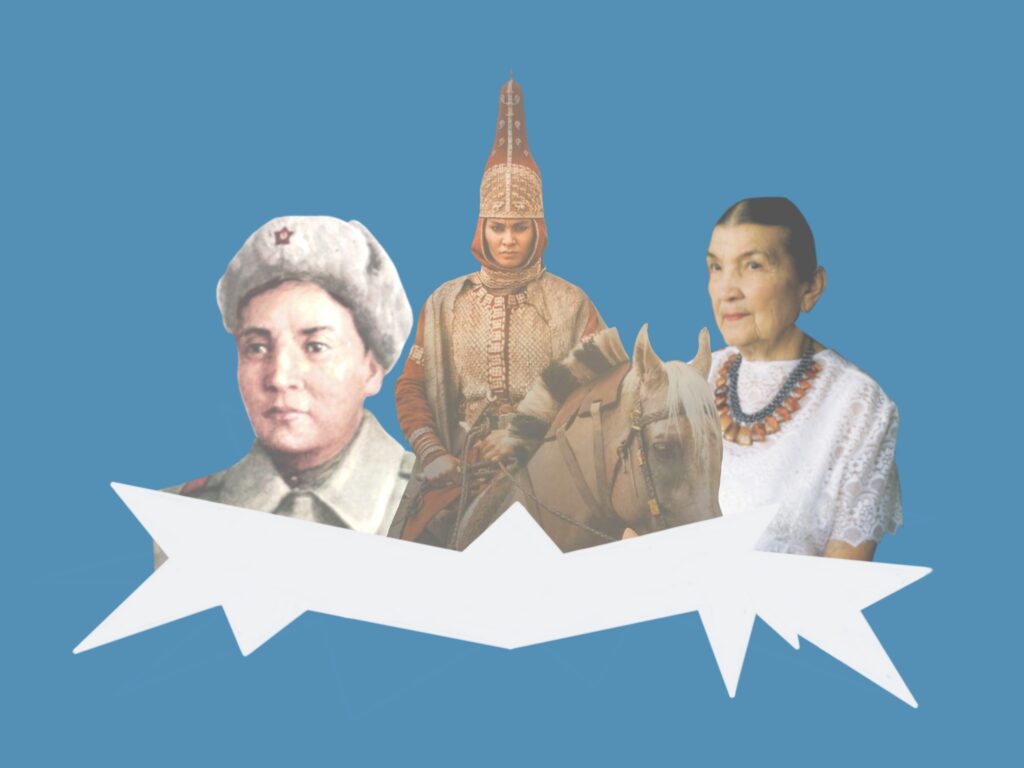
How Women in Central Asia Celebrate International Women’s Day

March 8, International Women’s Day, holds a special place in Central Asia. Over the years, the holiday has evolved from its Soviet-era roots into a modern celebration that blends tradition with contemporary interpretations. The Soviet Past: March 8 as a Day for Working Women During the Soviet Union, March 8 was more than a celebration of spring and femininity, it symbolized the struggle for women’s rights and equality. The day honored working women, with official ceremonies highlighting their achievements. State-run enterprises and organizations staged formal events and presented flowers and gifts to female employees, and media outlets published articles about the country’s outstanding women. The Transition Period: The 1990s Following the collapse of the Soviet Union, Central Asian countries began redefining their identities, which was reflected in how they marked March 8. The holiday took on a more personal and familial character, with less ideological emphasis. While state celebrations continued, they became more subdued. Men still gifted flowers and presents to women, but the political significance of the day gradually faded into the background. Modern Celebrations: Balancing Tradition and New Trends Today, March 8 in Central Asia is primarily a day to recognize women’s contributions and express gratitude. The holiday remains widely celebrated across Kazakhstan, Kyrgyzstan, Uzbekistan, Tajikistan, and Turkmenistan, though each country has developed its distinct traditions. Kazakhstan: Major cities host flash mobs, charity events, and cultural programs. In recent years, feminist activism has gained momentum, with some using the holiday to highlight gender inequality. “For me, March 8 is not just about receiving flowers, it’s a reminder that equality is not a privilege but a necessity,” Ainur, 24, from Almaty told TCA. Uzbekistan: The holiday remains warm and family-oriented. Women receive flowers, sweets, and gifts from colleagues and relatives, while government agencies organize concerts and celebrations. “My friends and I always celebrate March 8. It’s wonderful to receive gifts from my brothers, friends, and husband, but I wish there was more year-round appreciation for women,” Madina, 27, from Tashkent told TCA. Kyrgyzstan: Alongside traditional celebrations, women's organizations and activists hold marches and discussions on gender rights, reflecting a shift toward reinterpreting the holiday. “I participate in the women’s rights march every year because this day is not just about flowers; it’s about our opportunities and freedoms,” Gulzat, 23, from Bishkek told TCA. Tajikistan and Turkmenistan: March 8 remains an official holiday, but without any strong political agenda. “For me, this day is a time to gather with family, but I see that younger women are giving it a new meaning,” Zarina, 40, from Dushanbe told TCA. Changing Values and Perspectives Each year, debates over the significance of March 8 grow stronger. Some argue that it should remain a celebration of spring and femininity, while others emphasize its role in promoting gender equality. Regardless of interpretation, International Women’s Day remains an important occasion that unites different generations of women and reinforces the need for respect and support. Over time, the holiday in Central Asia has evolved from a Soviet...

Tajik Women Unite to Urge Rahmon to Grant Leniency for Journalist Rukhshona Khakimova

A group of 130 women in Tajikistan have appealed to President Emomali Rahmon, requesting leniency for journalist Rukhshona Khakimova, who was sentenced to eight years in prison. A Plea for Mercy In their appeal, the women expressed deep concern over the fate of Khakimova’s two young daughters, one of whom is an infant still in need of breastfeeding. “This verdict has shaken us to the core, but most of all, it has shattered the lives of her two tiny daughters, Shakhnura and Shukrona, who overnight lost the most precious thing a child has, a mother's love, warmth, and care. Ten-month-old Shukrona was deprived not only of her mother’s hands but also of her mother’s milk, which is not just nourishment but the very essence of the mother-child bond. We cannot imagine the pain of these children, who cannot yet speak but already feel the cruel emptiness that nothing and no one can fill,” the letter reads. The signatories emphasized that they were not calling for the sentence to be overturned but rather for clemency. They urged the government to apply legal mechanisms that would allow Khakimova to serve an alternative sentence while remaining with her children. “We believe there are lawful ways to take her motherhood into account and ensure that two young children are not left without maternal care,” the appeal stated. A Controversial Conviction Khakimova was charged with high treason under Article 305 of Tajikistan’s Criminal Code, with the case initiated by the General Prosecutor’s Office in June 2024. According to sources familiar with the investigation, her prosecution is linked to a survey on China’s influence in Tajikistan. She was sentenced on February 5 during a closed trial at the Dushanbe detention center, alongside other defendants in the so-called “coup d’état case”. Before the verdict, she had been allowed to remain free, albeit with restricted movement, due to her responsibilities as a mother. However, her documents had been confiscated, preventing her from traveling. Following the court ruling, she was taken into custody immediately. International Outcry International human rights organizations have condemned the sentence. The International Coalition for the Protection of Human Rights Defenders (The Observatory for the Protection of Human Rights Defenders) has called for Khakimova’s immediate release. Similar statements have been issued by Human Rights Watch (HRW) and Reporters Without Borders (RSF), both of which have criticized the court’s decision.

How Trump’s Trade War on China Affects Central Asia

When elephants fight, it is the grass that suffers. U.S. President Donald Trump’s decision to impose tariffs on China and the European Union could have severe consequences not only for Brussels and Beijing, but also for economies around the world. Central Asia is no exception, as it could easily be caught in the crossfire. Although no country in Central Asia sees the United States as its major economic partner, Trump’s trade war with the EU and China is expected to impact all Central Asian nations in one way or another. Their strong economic ties with China and the growing EU presence in the region were once seen as a strategic advantage. Now, it seems to represent a double-edged sword.  As a result of the Russian invasion of Ukraine, all Central Asian states have sought to strengthen economic relations with Beijing and Brussels. Their partnerships with China and the EU have grown through trade and investments, but Washington’s tariffs on Chinese and European goods could result in a reduction in demand for various items in Central Asia.  Trump’s tariff policy could also give Beijing certain leverage over Washington in the strategically important region. According to Mark Temnycky, Nonresident Fellow at the Atlantic Council Eurasia Center, as a way to counter the impact of U.S. tariffs, the Chinese could increase their trade and energy relations with the countries of Central Asia. “This would further accelerate China’s relationship with Central Asia, and it could result in the regional states becoming more dependent on the Chinese for trade. Given the proximity of China to Central Asia, this may also result in the regional nations reducing their trade relations with the European Union as well as with the United States, as they favor Chinese prices,” Temnycky told The Times of Central Asia in an interview.  U.S. bilateral trade in the region has never been particularly strong. The exception is Kazakhstan – the region’s largest economy – which is the only country in Central Asia whose trade with the U.S. exceeds one billion dollars. According to official statistics, in 2024 America’s total goods trade with Kazakhstan was estimated at $3.4 billion. Uzbekistan, Kyrgyzstan, Tajikistan, and Turkmenistan combined have a lower trade volume with the United States than Kazakhstan. But all that is just a drop in the ocean compared to the $89.4 billion trade China reached with Central Asian in 2023. “Trump’s tariff policy could lead to an even greater Central Asian states’ dependency on China, potentially creating a Chinese monopoly on Central Asian trade and energy. In other words, regional countries would no longer have a diversified economy and market, thus tightening China's control over the area,” Temnycky stressed. That, however, does not necessarily mean that Beijing will, in the long term, benefit from Washington’s tariff policy. According to Tyler Schipper, an economist and Associate Professor at the University of St. Thomas, China is “arguably at one of its economically weakest points in the last several decades,” which means that any trade war with the...

Central Asia’s AI Pursuit: A Tale of Ambition and Progress

The term “rare earth metals” has become a buzzword in the modern geo-economic lexicon, popularized by U.S. President Donald Trump in contexts where American investments are expected. However, before that, “artificial intelligence” (AI) had already emerged as a global symbol of technological advancement and economic competitiveness. At least four of the five Central Asian republics have joined the race to implement AI technologies, though, until recently, two of them lacked the necessary prerequisites for such a leap. Kazakhstan Sets the Pace A key factor for the successful adoption of AI is the level of digitalization, an area in which Kazakhstan has made significant progress. The country’s digital transformation began with the banking sector and later expanded to public services, with nearly 100% of government services now available online. The COVID-19 pandemic accelerated this shift, making digital access to state institutions and banks a necessity. Since 2022, when AI became synonymous with technological leadership, exemplified by developments in China and the U.S., Kazakh President Kassym-Jomart Tokayev has actively promoted AI initiatives. In the summer of 2023, the government adopted the Concept for the Development of Artificial Intelligence for 2024-2029. During discussions on this initiative, officials reviewed measures already in place, such as Smart Data Ukimet, a centralized system integrating data from 93 government databases. Plans include deploying a supercomputer, expanding data processing centers, launching a national AI platform, and enhancing fiber-optic networks. Additionally, the Ministry of Science and Higher Education is working on a large language model (LLM) focused on the Kazakh language and cultural heritage. Prime Minister Olzhas Bektenov has set a clear goal: “By 2029, the number of AI-based products should increase fivefold. The share of educational programs related to AI must also expand. We need qualified specialists in this field, and it is crucial to consider the needs of domestic companies, which will have a multiplier effect on the economy.” Bektenov also emphasized the role of the National Center for AI in fostering youth involvement, developing human capital, and promoting AI culture. Furthermore, he instructed the Ministry of Justice to enhance legal frameworks for AI regulation​. In December 2024, President Tokayev presented Kazakhstan’s first Kazakh language AI model, KazLLM, expressing satisfaction with its development: “We have taught artificial intelligence to think, analyze, and communicate in Kazakh. This achievement opens new prospects for our language in the digital sphere. We must build a Multimodal Language Model, capable of processing various data types simultaneously.” On March 3, 2025, Kazakhstan’s Mazhilis (lower house of parliament) reviewed a draft law, On Artificial Intelligence. If passed, it will be the world’s second AI law after the European AI Act. Uzbekistan's Ambitious Strategy Uzbekistan, another Central Asian country vying for AI leadership, has similarly prioritized digitalization. However, it lags slightly behind Kazakhstan in implementation speed. On October 14, 2024, Uzbekistan adopted its Strategy for the Development of Artificial Intelligence Technologies Until 2030, which outlines several ambitious targets: Increasing AI-driven software and services to $1.5 billion Expanding AI-powered government services on the Single Portal of...
