
• KGS/USD = 0.01144 0%
  • KZT/USD = 0.00212 0%
  • TJS/USD = 0.10456 0.19%
  • UZS/USD = 0.00008 0%
  • TMT/USD = 0.28490 0%
  • KGS/USD = 0.01144 0%
  • KZT/USD = 0.00212 0%
  • TJS/USD = 0.10456 0.19%
  • UZS/USD = 0.00008 0%
  • TMT/USD = 0.28490 0%
  • KGS/USD = 0.01144 0%
  • KZT/USD = 0.00212 0%
  • TJS/USD = 0.10456 0.19%
  • UZS/USD = 0.00008 0%
  • TMT/USD = 0.28490 0%
  • KGS/USD = 0.01144 0%
  • KZT/USD = 0.00212 0%
  • TJS/USD = 0.10456 0.19%
  • UZS/USD = 0.00008 0%
  • TMT/USD = 0.28490 0%
  • KGS/USD = 0.01144 0%
  • KZT/USD = 0.00212 0%
  • TJS/USD = 0.10456 0.19%
  • UZS/USD = 0.00008 0%
  • TMT/USD = 0.28490 0%
  • KGS/USD = 0.01144 0%
  • KZT/USD = 0.00212 0%
  • TJS/USD = 0.10456 0.19%
  • UZS/USD = 0.00008 0%
  • TMT/USD = 0.28490 0%
  • KGS/USD = 0.01144 0%
  • KZT/USD = 0.00212 0%
  • TJS/USD = 0.10456 0.19%
  • UZS/USD = 0.00008 0%
  • TMT/USD = 0.28490 0%
  • KGS/USD = 0.01144 0%
  • KZT/USD = 0.00212 0%
  • TJS/USD = 0.10456 0.19%
  • UZS/USD = 0.00008 0%
  • TMT/USD = 0.28490 0%

Viewing results 505 - 510 of 1498

Simurgh Self-Help: Slavs and Tatars’ New Show Rethinks National Symbolism

“It’s interesting that in Western symbolism you never see a delicate female eagle,” notes Payam, one-half of the artist collective Slavs and Tatars, from his studio in Berlin. “But the central-Asian Simurgh is gender-fluid, metaphysical. It doesn’t belong to this world.” The mythological figure of the Simurgh is the focus of Slavs and Tatars’ latest show at the gallery The Third Line in Dubai called “Simurgh Self-Help”. The show speaks of the importance of reclaiming and reframing cultural memories in a fractured world, and an invitation to think beyond the artificial, top-down confines of nationalism, to find cultural unity. [caption id="attachment_28951" align="aligncenter" width="2560"] Slavs and Tatars Samovar Vacuum-formed plastic, acrylic paint; Image: Courtesy of the artist and The Third Line, Dubai[/caption] The exhibition extends a lineage of conceptual inquiry, drawing upon the mystical bird Simurgh, ever-present in Persian and Central Asia mythologies, as a counterpoint to the ubiquitous, secularized eagle of Western heraldry. A constant companion of Zeus in Greek mythology, the eagle is a recurring symbol in the Western world: “Everywhere you look in the West, you find eagles,” notes Payam. “It’s on the German flag, on American football teams, on the Albanian flag. It’s a tired, secularized symbol, heavy with the weight of imperial history.” In contrast, the Simurgh exists on a different plane, one that rejects hierarchies in favor of collective transformation. [caption id="attachment_28952" align="aligncenter" width="1874"] Slavs and Tatars Samovar Vacuum-formed plastic, acrylic paint; Image: Courtesy of the artist and The Third Line, Dubai[/caption] Today the Simurgh is going through a similar secularization to the Western eagle, with Turkish SIM cards and Azerbaijani soccer teams called Simurgh. "It's easy, in some sense, for as an artist to take something which is very high and important, let's say spiritual or religious, and make it make fun of it, bring it down in a caricatural way,” says Payam. “What's very hard as an artist is to take something which has been debased and make it high again." In the show, we see works that go in either direction, presenting an alternative mythology, one that shows that cultures are fluid and interconnected. “Simurgh Self-Help,” which had previous iterations in Warsaw, Athens, and Baden-Baden, was originally started two years ago as a conceptual echo of Marcel Broodthaers’ Musée d'Art Moderne: Département des Aigles. This was a conceptual museum/artistic project created by the Belgian artist in 1968, full of artworks referenced by Slavs and Tatars in their show. [caption id="attachment_28953" align="aligncenter" width="2500"] Slavs and Tatars, Soft Power_2023, Woolen Yarn; Image: Courtesy of the artist and The Third Line, Dubai[/caption] The Simurgh, Payam explains, traverses territories from Kazakhstan to Ukraine, yet remains absent in Poland. “It’s a question of defining a region not through imposed political structures but through the myths that bubble from the ground up,” remarks Payam. The Simurgh becomes a cipher for alternative cartographies, a challenge to the top-down imposition of nationhood. If the eagle stands for conquest and dominance, the Simurgh stands for the dissolution of categories and unity...

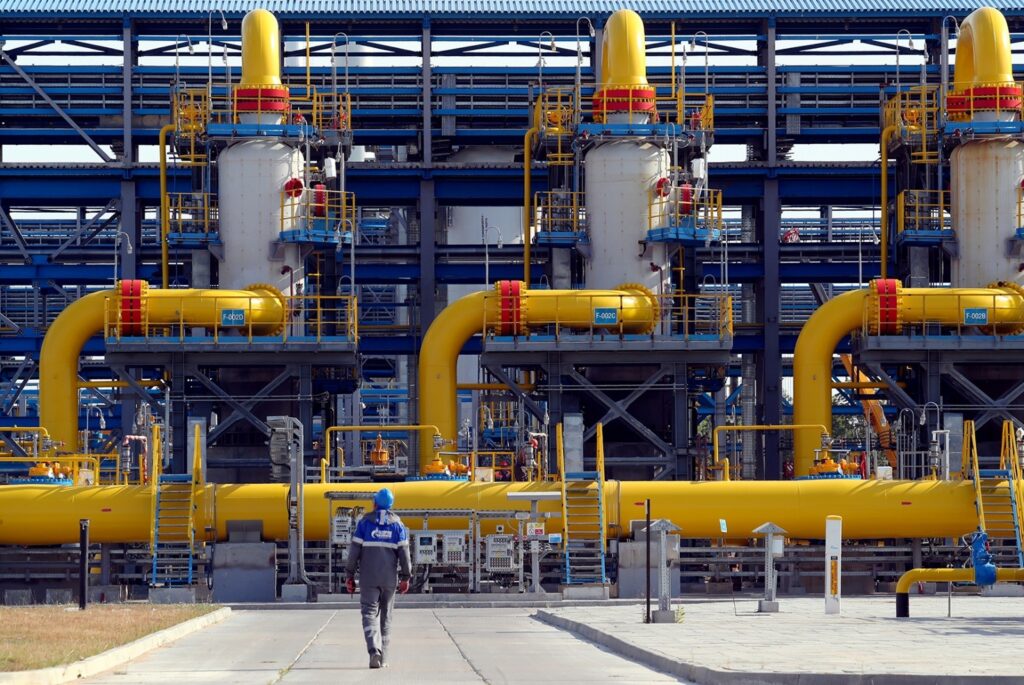
Central Asia Receives Half of Eurasian Investments from China, Turkey, Iran, and Gulf States

The Eurasian Development Bank (EDB) has released a new study analyzing mutual direct investment (MDI) flows across the Eurasian region. The report examines investment trends between 13 Eurasian countries - Armenia, Azerbaijan, Belarus, Georgia, Kazakhstan, Kyrgyzstan, Moldova, Mongolia, Russia, Tajikistan, Turkmenistan, Ukraine, and Uzbekistan - and external partners, including China, Turkey, Iran, and the Gulf states, from 2016 to the first half of 2024. Key Findings on Investment Trends According to the EDB, total MDI stock in the region reached $90.4 billion by mid-2024, reflecting a 6.4% increase from 2023. China remains the largest investor in the Eurasian region, holding an MDI stock of $58.6 billion at the end of H1 2024, accounting for 64.8% of the total. Other major investors include: Turkey - $12.3 billion (13.6%) United Arab Emirates (UAE) - $12.2 billion (13.5%) Iran - $3.2 billion (3.5%) Saudi Arabia - $2.3 billion (2.5%) Qatar - $1.6 billion (1.8%) Among these, Iran showed the highest investment growth, doubling its investments since 2016, with 90% directed toward Azerbaijan. Turkey demonstrated broad sectoral diversification, while Saudi Arabia and Qatar emerged as new investors, making their first investments in 2021 and 2024, respectively. Investment Distribution in Eurasia The largest investment recipients in the Eurasian region include: Russia - $23.5 billion (26%) Turkmenistan - $17.5 billion (12.5%) Kazakhstan - $15.5 billion (11.1%) Mongolia - $10.3 billion (7.4%) Uzbekistan - $8.8 billion (6.3%) Central Asia received 51% of all investments from China, Turkey, Iran, and the Gulf states, totaling $46.2 billion, an increase of 25% since 2022. Outbound Investment from Eurasia The report also highlights outbound investments from the Eurasian region, which totaled $49.4 billion, doubling since 2016. Turkey received 80% of these investments, with a significant portion originating from Russia. Sectoral Trends: Energy, Manufacturing, and Greenfield Investments China continues to expand its investments in energy and manufacturing, although its traditional focus on extractive industries has declined. As of mid-2024, Chinese investment in mining and resource extraction stood at $36.2 billion, comprising 61.7% of its total investments in Eurasia. Other notable sectoral trends include: Energy sector - Chinese investment grew 2.1-fold in 18 months to $4.1 billion, with 85% directed toward Uzbekistan. Manufacturing sector - Investment increased 8% to $11.8 billion, with most projects concentrated in Central Asia. The Gulf states are also expanding their investments in the region: The UAE invested $12.2 billion, with 90% of its projects in Central Asia. Saudi Arabia increased investments from $300 million in 2021 to $2.3 billion in 2024, primarily in Uzbekistan’s power sector. Qatar made its first major investment in Kazakhstan in 2024, committing $1.6 billion to the telecom sector. Rise of Greenfield Investments Greenfield projects - new businesses and infrastructure developments - remain the dominant form of MDI, totaling $57 billion, nearly double the 2016 level. These projects now account for 63% of total investments, driven by the economic growth of Central Asia and increasing investor interest in energy, manufacturing, and extractive industries.

Tajikistan to Replace Kazakh Liquefied Petroleum Gas with Russian Supply in 2025

Tajikistan will begin replacing Kazakh liquefied petroleum gas (LPG) with Russian supplies in 2025, Oil and Gas of Kazakhstan reports. Tajik importers plan to increase rail deliveries from Russia next year, following the European Union’s embargo on Russian LPG imports, which took effect on December 20, 2024. As a result, Kazakhstan has redirected more of its LPG exports to Europe, making Russian LPG more competitively priced for Central Asian buyers. Last year, Tajikistan was the largest importer of Kazakh LPG, accounting for 48% of Kazakhstan’s total LPG exports. In December and January, Russian suppliers sent trial batches of LPG to Tajikistan, and discussions are now underway for long-term supply contracts. More than 97% of Tajikistan’s LPG imports arrive by rail through two Uzbek border crossings: Bekabad, which supplies the northern regions, and Kudukli, which serves the southern and central regions, including Dushanbe. At the same time, European imports of Russian liquefied natural gas (LNG) have increased despite EU efforts to reduce reliance on Russian fossil fuels. According to The Guardian, data from Rystad Energy shows that European ports received 17.8 million tonnes of Russian LNG in 2024, over 2 million tonnes more than the previous year. Meanwhile, Kazakhstan has officially banned the export of gasoline and diesel fuel by road and rail. The decision, effective January 29, 2025, is outlined in amendments to the joint order “On Some Issues of Export of Oil Products from the Territory of the Republic of Kazakhstan.” The restriction was approved by the Minister of Energy, the Chairman of the National Security Committee (KNB), and the Ministers of Finance and Internal Affairs, as previously reported by The Times of Central Asia.

What Awaits Central Asia When the War in Ukraine Ends?

U.S. President Donald Trump seems resolute in his goal to end, or at least freeze, the war in Ukraine. To achieve such an ambitious objective, he is using a strategy of gradually normalizing relations with Russia, with his recent talks with Russian leader Vladimir Putin playing an important part. But how will Trump’s Russia policy impact Central Asia – a region that has traditionally been in Moscow’s geopolitical orbit, but is now aiming to develop closer ties with the West? Ever since Russia launched its full-scale invasion of Ukraine, on February 24, 2022, Kazakhstan – the region’s largest country – has been offering its services as a mediator. Astana hoped to eventually host peace talks between Russian and Ukrainian representatives. Such a possibility, at least at this point, does not seem very realistic, given that Putin and Trump are reportedly scheduled to meet in Saudi Arabia, and Kyiv and Moscow still refuse to negotiate directly.  In the month since Trump returned to the White House, he has not focused on Central Asia. That, however, does not mean that Kazakhstan, as well as the other Central Asian countries, will not play a significant role in the post-war period.  Several Russian analysts claim that Washington’s ultimate goal is to “turn Russia against China” and use Moscow as an instrument against Beijing in a potential new Cold War between the United States and the People’s Republic. Given the strategic importance of Central Asia for both Russia and China, in the long term, the region could very well become a theater for various proxy conflicts.  For the time being, however, such a scenario does not seem very probable, as there is no strong anti-Chinese sentiment in Russia, and Central Asian nations are determined to continue pursuing their “multi-vector” foreign policies, rather than picking a side in global conflicts. Thus, once the Ukraine war comes to an end, regional actors will undoubtedly seek to strengthen their political, economic, and military positions, aiming to avoid being involved in another Great Game.  Although economic indicators in Central Asia are trending upwards in many respects, higher wages in areas such as construction and the broader services sector can still be earned outside the region. Although Russia has traditionally been the top destination for Central Asian migrants, that might soon change. Faced with the growing anti-migrant sentiment that came as a result of the Crocus City Hall terrorist attack in 2024, and the fact that Russia is actively recruiting labor migrants to fight in Ukraine, many of them are expected to look for new destinations, where they can find safer conditions and better opportunities. A post-war Ukraine could be one of them. According to Vasily Voskoboynik, President of the All-Ukrainian Association of Companies for International Employment, in 2023 Ukraine needed 4.5 million migrant workers, while the International Organization for Migration and the International Labor Organization believe that it will need 8.2 million laborers. In Voskoboynik’s view, it is necessary to consider countries such as Bangladesh, Nepal, and India, as...

Central Asia’s Growing Domestic Drug Problem

It’s in the headlines every few days now in Central Asian countries. February 1 – Uzbekistan’s law enforcement agencies report raiding a laboratory producing synthetic drugs, and seizing narcotics worth more than $800,000.  February 3 – Uzbek law enforcement announces that their latest counter-narcotics operation has resulted in the seizure of 111 kilograms of illegal drugs. February 10 – police in Kyrgyzstan’s northern Chuy region seize 1.5 kilograms of hashish and 1 kilogram of marijuana. February 11 – Kazakhstan’s Committee for National Security (KNB) announces it had uncovered a laboratory in Almaty region that was producing synthetic drugs. More than 15 kilograms of these synthetic drugs were seized and 200 liters of precursor materials. In the first decade after the five countries of Central Asia became independent in 1991, many of the reports from foreign media were about Central Asia being a major transit route for narcotics coming out of Afghanistan that were for buyers in Russia and Europe. Thirty years later, drugs are still coming into Central Asia from Afghanistan, but it is no longer just opium and heroin. And now it seems a good portion of these illicit narcotics are being consumed in Central Asia. Made in Central Asia Drug-producing laboratories are multiplying, and while there are no precise figures for the number of addicts, it is clear an increasing number of young people in Central Asia are using drugs. Ashita Mittal, the regional representative of the UN Office on Drugs and Crime in Central Asia, said in January 2025 that during the “last several years in just Kazakhstan, law enforcement agencies have uncovered and destroyed 87 laboratories producing synthetic drugs, and in Kyrgyzstan about 11-12.” Law enforcement agencies in Kazakhstan said earlier in January that they had destroyed 63 laboratories producing illegal narcotics just in 2024. Tajikistan’s Agency for Narcotics Control said at the end of its Kuknor-2024 counter-narcotics campaign in December 2024 that it had confiscated more than 1 ton of synthetic drugs. The synthetic drugs most often mentioned in these seizures are mephedrone, a type of amphetamine and stimulant that causes euphoria, and a-PvP, another stimulant. However, there are many types of synthetic drugs now available in Central Asia.  Batum Estebesova, director of Kyrgyzstan’s Sotsium drug rehabilitation center, said the variety of synthetic drugs is increasing quickly. “We can’t keep up with all the new drugs to add them to the list of prohibited substances,” Estebesova said. UN Office on Drugs and Crime representative Mittal said part of the problem comes from Afghanistan. Mittal noted in 2023, there was a 95 percent reduction in heroin production in Afghanistan, but at the same time there was an “exponential growth” in the production of methamphetamines crossing into the bordering Central Asian countries – Tajikistan, Turkmenistan, and Uzbekistan. In May 2023, Uzbek border guards noticed some strange marking on several boxes of pomegranate juice coming from Afghanistan.  Testing showed bottles of juice in those boxes contained methamphetamine. Apparently, the buyers intended to evaporate the liquid and then collect...

Tajikistan’s Supreme Court Breaks Silence on Alleged Coup Case

For the first time, Tajikistan’s Supreme Court has publicly commented on a high-profile case involving leading politicians accused of high treason and attempting to seize power by force. Shavkat Lutfullozoda, first deputy chairman of the Supreme Court, told a press conference on February 13 that “the case materials contain circumstances indicating that their actions were directly aimed at high treason and the violent seizure of power.” However, he declined to disclose further details, citing the closed nature of the trial. The proceedings were held behind closed doors, but Lutfullozoda stated that they took place “with the participation of the judge and people's assessors.” The following individuals were convicted and sentenced on February 5, 2025, at the Dushanbe Detention Center. The verdicts take effect on February 15: Hamrohon Zarifi, former foreign minister: 27 years in prison and a 10,000 somoni fine on five counts, including high treason and the forcible seizure of power. Saidjafar Usmonzoda, former head of the Democratic Party: 27 years for high treason and inciting discord. Jamshed Boboyev, retired GKNB colonel: 21 years for high treason and forcible seizure of power. Akhmadshokh Komilzoda, former deputy chairman of the Democratic Party: 19 years for attempted violent seizure of power. Akbarshokh Iskandarov, former head of the Supreme Soviet: 18 years on similar charges. Shokirjon Khakimov, lawyer and first deputy chairman of the Social Democratic Party: 18 years for inciting discord and high treason. Nurahmad Ganizoda, retired GKNB colonel: 18 years for violent seizure of power. Abdulfayiz Atoi, former head of the Foreign Ministry’s press service: 17 years for forcible seizure of power and document forgery. Rukhshona Khakimova, journalist: 8 years for complicity in state treason. Mass arrests began in June 2024, following the detention of Saidjafar Usmonzoda. Authorities soon arrested Zarifi, Iskandarov, Komilzoda, Khakimov, Atoi, Ganizoda, and Boboyev. Prosecutor General Yusuf Rakhmon stated that most of the detainees were linked to Usmonzoda’s case. Journalist Rukhshona Khakimova initially remained at large due to having a young child. However, she was arrested after the verdict was handed down. The first court hearing took place on November 14, 2024, and the trial lasted more than six months, held behind closed doors at a pre-trial detention center.
