• KGS/USD = 0.01144 0%
  • KZT/USD = 0.00196 0%
  • TJS/USD = 0.10750 -0.09%
  • UZS/USD = 0.00008 0%
  • TMT/USD = 0.28490 -0.28%
  • KGS/USD = 0.01144 0%
  • KZT/USD = 0.00196 0%
  • TJS/USD = 0.10750 -0.09%
  • UZS/USD = 0.00008 0%
  • TMT/USD = 0.28490 -0.28%
  • KGS/USD = 0.01144 0%
  • KZT/USD = 0.00196 0%
  • TJS/USD = 0.10750 -0.09%
  • UZS/USD = 0.00008 0%
  • TMT/USD = 0.28490 -0.28%
  • KGS/USD = 0.01144 0%
  • KZT/USD = 0.00196 0%
  • TJS/USD = 0.10750 -0.09%
  • UZS/USD = 0.00008 0%
  • TMT/USD = 0.28490 -0.28%
  • KGS/USD = 0.01144 0%
  • KZT/USD = 0.00196 0%
  • TJS/USD = 0.10750 -0.09%
  • UZS/USD = 0.00008 0%
  • TMT/USD = 0.28490 -0.28%
  • KGS/USD = 0.01144 0%
  • KZT/USD = 0.00196 0%
  • TJS/USD = 0.10750 -0.09%
  • UZS/USD = 0.00008 0%
  • TMT/USD = 0.28490 -0.28%
  • KGS/USD = 0.01144 0%
  • KZT/USD = 0.00196 0%
  • TJS/USD = 0.10750 -0.09%
  • UZS/USD = 0.00008 0%
  • TMT/USD = 0.28490 -0.28%
  • KGS/USD = 0.01144 0%
  • KZT/USD = 0.00196 0%
  • TJS/USD = 0.10750 -0.09%
  • UZS/USD = 0.00008 0%
  • TMT/USD = 0.28490 -0.28%
15 January 2026

Viewing results 187 - 192 of 310

USAID Supports Central Asian Women Working in Hospitality

The U.S. Agency for International Development (USAID) and the International Association of Businesswomen “Tadbirkor Ayol” last week hosted a Central Asian Conference on “Women of Central Asia in the Hospitality Business: Current Challenges and Opportunities”. The event in Tashkent attracted some 200 women entrepreneurs, professionals, and industry experts from Uzbekistan, Tajikistan, and Kyrgyzstan to discuss achievements, trends, and challenges in the region’s hospitality sector. As reported by the U.S. Embassy in Uzbekistan, the conference focused on service quality, digitalization, and modern standards in tourism, culminating in recommendations to enhance regional cooperation in tourism and hospitality. Praising the resilience and creativity of women in the hospitality industry and emphasizing their role in the sector’s future, Edward Michalski, USAID Deputy Mission Director in Uzbekistan, commented: “Investing in women and girls is essential to transforming communities. When women do better, families do better, communities do better, and countries do better.” Gulnora Makhmudova, Chairwoman of “Tadbirkor Ayol,” noted that the growing importance of the region’s hotel business and the increasing involvement of women, had spurred the association into launching “Women in the Hotel Business: Hospitality from the Future;” a project aimed to introduce innovation and digitalization in the hospitality sector. Since its launch in April 2024, with support from USAID, the project has provided training for 115 women in modern hotel management in Tashkent, Andijan, and Samarkand.  

Dreaming of Paris, Fighting for Power: Electricity in Central Asia

The COP28 UN Climate Change Conference in December 2023 highlighted the important role of developing countries – which include the Central Asian republics – in reducing dependence on fossil fuels thanks to the use of cleaner, renewable energy sources. Indeed, Central Asia is believed to have something to offer the world in the fight against climate change, being home to numerous sources of clean energy, including solar, wind, and hydropower.   The "electricity ring" Last year, fossil fuels accounted for 95% of the total energy supply in the five Central Asian countries, according to the UN. To meet their commitments under the Paris Agreement and the transition to a low-carbon and sustainable energy system, the region will need to make a giant leap from fossil fuels to renewable energy sources. The main issue is that this transition must be made by different electrical grids across Central Asia, most of which are linked to the Central Asian Power System (CAPS). CAPS, also known as the "electricity ring," is a joint power transmission network connecting Uzbekistan, Tajikistan, Turkmenistan, Kyrgyzstan, and some southern parts of Kazakhstan. It was created in 1960, with the aim of ensuring the reliable transmission of electricity and steady cooperation between the republics. The energy systems of these regions are united into a single structure, which allows for parallel operation even when individual sections of the grid go down, meaning that if one part of the ring goes down, the other parts continue to function, improving reliability and efficiency. This system plays an important role in ensuring energy security and promoting cooperation and interaction. The creation and maintenance of any power system requires coordinated work by all participants. In the past, some countries temporarily withdrew from CAPS for various reasons, but in most cases, they sought to resume cooperation and their link to the “electricity ring.”   Blackout On January 25, 2022, consumers in the ring experienced a blackout. The lights went out almost instantly in the south of Kazakhstan (the city of Almaty, as well as Turkestan, Kyzylorda, Almaty and Zhambyl regions), in Kyrgyzstan (the cities of Bishkek and Osh and the Issyk-Kul region) and Uzbekistan (the city of Tashkent, the Fergana Valley and Syr Darya, Jizzakh, Samarkand, Navoi and Kashkadarya regions). The widespread power outage paralyzed transportation, shut down important social infrastructure, and spurred popular discontent in the three countries affected. The Kazakhstani pundit Petr Svoik, a former professional power engineer who ran a thermal power plant (TPP), described the blackout as an unprecedented event, noting, however, that the technology worked perfectly and that the sudden loss of 1,500 MW of electricity did not lead to any major consequences. The Kazakhstani energy system consists of two insufficiently connected parts – north and south. The north is actually a continuation of the Russian power system, part of the Russian “energy bridge” - though, of course, it also has importance for the whole of Kazakhstan - whilst the south is part of the Central Asian ring. Looking at the...

Islamic Development Bank Supports Rogun HPP Project in Tajikistan

News agency Khovar has reported on the Islamic Development Bank (IDB) support in the construction of the Rogun Hydropower Plant (HPP) in Tajikistan. Dr. Muhammad Suleiman Al-Jasser, President of the IDB Group, announced this after a meeting with Tajik President, Emomali Rahmon. The meeting detailed Tajikistan's history towards economic development and outlined the country's priorities for the future. "The Islamic Development Bank has cooperated closely and successfully with Tajikistan for many years. Financing under this agreement has amounted to more than $900 million. We are satisfied with the current level of cooperation. One of the projects under consideration today is support for the Rogun Hydroelectric Power Plant project. The Islamic Development Bank has decided to sign an agreement with the Government of the Republic of Tajikistan,” Muhammad Suleiman Al-Jasser stated. Al-Jasser noted that IDB funds allocated to Tajikistan are directed to energy, education, industry, agriculture, transportation, and other key economic sectors. “We are confident that the current cooperation will be expanded and will serve as an invitation to other participants and investors,” Al-Jasser concluded.

Farms in Tajikistan Being Abandoned Due to Lack of Money

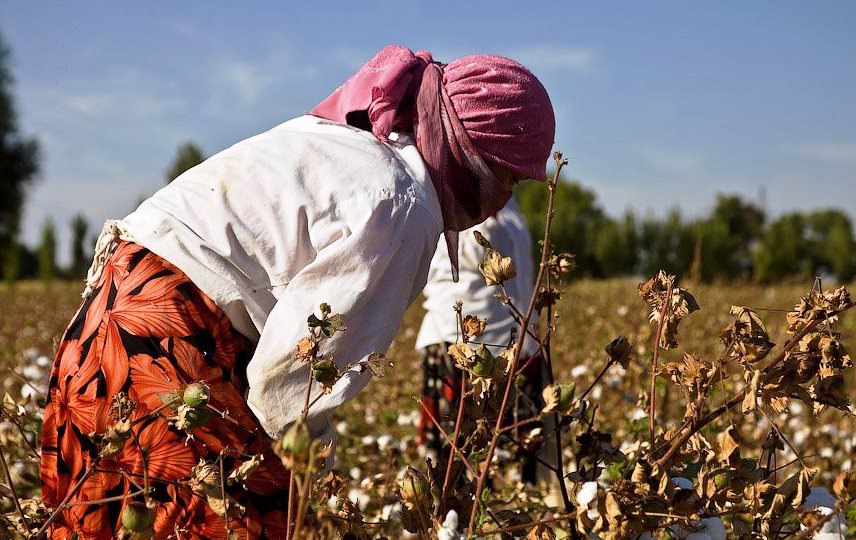
Farmers in Tajikistan are being forced to abandon their farms, explaining that there is no way to earn a living from them. One farmer in the Sino Dekhkan farm in the Vosei district said he was forced to stop operating because of financial problems. “I used to take a loan from Amonatbank to run my business. But they don't give loans anymore. They say you are already old; you will die, and who will pay you back? The land has been standing for two years. It's a cotton field. I haven't found a single somoni for sowing,” the man said. Another problem, farmers say, is the shortage of irrigation water, and the situation only worsens yearly. “I have not been on my land for three years. Because there is no water in the canal. The Nazar State Farm, in Kukhnashahr, takes all the water, and we don't have a drop left,” complained a resident of Kamolobod village in Kulyab. Farmers in Sughd region, adjacent to Dushanbe, face the same problem. Some farmers complain that the authorities force them to plant crops to their detriment. As a result, they say, they not only do not make a profit but also remain at a disadvantage. Economist Foziljon Fatkhulloyev said the agriculture industry will only develop once farmers are given more benefits and preferences. “They give benefits, for example, for six months, but do not consider that farmers' profits do not cover their expenses. If they provide more benefits, the prices of agricultural products on the market would be reduced by 5-10 percent. They should at least give agrarians tax breaks,” he suggested. About 70% of Tajikistan's population lives in rural areas, and developing the agricultural sector will help solve many of its residents' socio-economic problems. Agriculture and labor migration are a source of income for many families. Data is needed on how many farms were forced to close last year, and how many farmers still need to yield products. Representatives of Tajikistan's Ministry of Agriculture do not comment on the situation. At press conferences, the ministry's leadership reports on the development of agriculture and the success of farms.

In Unequal Relationship, Trade Turnover Between Tajikistan and Russia Increases

From January to April 2024, Russia retained the status of Tajikistan's leading trade partner, with trade between the countries increasing by 24.2% compared to the same period last year and reaching $636.8 million, according to the Statistics Agency under the President of Tajikistan. Symptomatic of the deeply unequal relationship is that during this period, Tajikistan bought Russian goods worth $600.7 million, while the Russian Federation only bought $36.1 million from Tajikistan. According to the Statistics Agency, Tajikistan's other top trading partners are China (+19.7%, up to $548.7 million), and Kazakhstan ($441.6 million). From January to April, Tajikistan's total foreign trade volume exceeded $2.7 billion, an increase of 28.7% compared to last year.

Kyrgyzstan Plans to Export Electricity to Pakistan Next Year

Kyrgyzstan's energy ministry has presented a project to develop the country's National Energy Program until 2035. As part of this project, both Kyrgyzstan and Tajikistan will export electricity to Pakistan next year. The CASA-1000 (Central Asia - South Asia) program plans to supply electricity to Afghanistan and Pakistan. The Kyrgyz side forecasts that around 1.25 billion kilowatt-hours of summertime electricity will be exported to South Asia in 2025. In summer Kyrgyzstan's reservoirs are full, and hydroelectric power plants produce a lot of electricity, which has nowhere to go -- unlike in winter, when there is an electricity shortage in the country. At the same time, officials plan to increase electricity production and exports yearly. In 2026 supplies are expected to grow to 1.7 billion kWh. Electricity exports starting from 2028 will average 1.75 billion kWh. At the beginning of this year Kyrgyzstan signed a joint declaration with Pakistan and Tajikistan to resume the CASA-1000 project. It began constructing high-voltage power lines near the border with Tajikistan, after construction had been halted due to the border conflict between Bishkek and Dushanbe. Power lines were also resumed in Afghanistan, where construction was also stopped after the Taliban came to power.