• KGS/USD = 0.01144 0%
  • KZT/USD = 0.00214 0%
  • TJS/USD = 0.10508 0%
  • UZS/USD = 0.00008 0%
  • TMT/USD = 0.28490 0%
  • KGS/USD = 0.01144 0%
  • KZT/USD = 0.00214 0%
  • TJS/USD = 0.10508 0%
  • UZS/USD = 0.00008 0%
  • TMT/USD = 0.28490 0%
  • KGS/USD = 0.01144 0%
  • KZT/USD = 0.00214 0%
  • TJS/USD = 0.10508 0%
  • UZS/USD = 0.00008 0%
  • TMT/USD = 0.28490 0%
  • KGS/USD = 0.01144 0%
  • KZT/USD = 0.00214 0%
  • TJS/USD = 0.10508 0%
  • UZS/USD = 0.00008 0%
  • TMT/USD = 0.28490 0%
  • KGS/USD = 0.01144 0%
  • KZT/USD = 0.00214 0%
  • TJS/USD = 0.10508 0%
  • UZS/USD = 0.00008 0%
  • TMT/USD = 0.28490 0%
  • KGS/USD = 0.01144 0%
  • KZT/USD = 0.00214 0%
  • TJS/USD = 0.10508 0%
  • UZS/USD = 0.00008 0%
  • TMT/USD = 0.28490 0%
  • KGS/USD = 0.01144 0%
  • KZT/USD = 0.00214 0%
  • TJS/USD = 0.10508 0%
  • UZS/USD = 0.00008 0%
  • TMT/USD = 0.28490 0%
  • KGS/USD = 0.01144 0%
  • KZT/USD = 0.00214 0%
  • TJS/USD = 0.10508 0%
  • UZS/USD = 0.00008 0%
  • TMT/USD = 0.28490 0%

Viewing results 55 - 60 of 707

From Tehran to Tashkent: How Iran’s Crisis and U.S. Tariffs Reverberate Across Central Asia

At the end of 2025, Iran once again emerged as a flashpoint on the global political map. Mass protests erupted across the country, fueled by spiraling inflation and economic hardship. At present, the Iranian rial has plummeted to the point where it is effectively worth less than the paper it's printed on. The current wave of unrest, already the largest and deadliest nationwide unrest Iran has seen since 2022, is not occurring in isolation. U.S. President Donald Trump has renewed what his administration describes as a policy of “maximum pressure” on Tehran, and his administration is now pursuing what observers have characterized as a strategy of “pushing the falling,” a move aimed at reshaping the political order of the Middle East. What might this mean for neighboring Central Asia? Tajik political analyst Muhammad Shamsuddinov argues the crisis must be viewed within a broader geopolitical context. “The situation in Iran is directly tied to Trump’s second-term pressure campaign,” Shamsuddinov said, referencing a string of destabilizing events. “These include the 12-day U.S.-Israel war against Iran and the reimposition of U.N. sanctions in September 2025," he added, referring to the 12-day June 2025 conflict between Israel and Iran, during which U.S. forces also struck Iranian nuclear facilities. "All of these have deepened the domestic crisis in Iran.” In a further escalation, on January 12, Trump announced 25% tariffs on countries conducting trade with Iran. The move appears targeted primarily at Russia, China, and India - Iran’s largest international partners, but also has implications for Central Asian economies. In the first nine months of 2025, trade between Kazakhstan and Iran grew by nearly 45%, reaching $310.8 million. Tajikistan, which maintains the closest economic ties to Tehran among Central Asian states, reported trade worth $430.7 million in the first eleven months of 2025, an increase of 28% over the same period in 2024. Uzbekistan, while less directly exposed to Iran than Kazakhstan or Tajikistan, has also moved cautiously in recent years to expand trade links with Tehran, making it sensitive to further sanctions pressure. Turkmenistan, meanwhile, faces its own exposure through gas swap arrangements involving Iran, which could become collateral damage of escalating regional tensions. Iranian investments in Tajikistan are also substantial. Among the most prominent projects is the Sangtuda-2 hydroelectric power plant, estimated at $256 million. The Iranian government contributed approximately $180 million, with an additional $36 million from an Iranian contractor. The remainder was financed by Tajikistan. According to official data, roughly 160 companies with Iranian capital are currently operating in Tajikistan across multiple sectors. In Kazakhstan, around 650 Iranian companies are registered, with over 350 operational, primarily in manufacturing, infrastructure, and agriculture. By contrast, trade between Iran and Russia, a strategic partner since the signing of a bilateral cooperation agreement in January 2025, increased by only 8% in the first nine months of 2025, according to official figures. Despite modest growth, Russian analysts view the figures optimistically. “Growth is happening under challenging geopolitical conditions, with sanctions, logistical restructuring, and financial hurdles,” said...
U.S. Expands Visa Bond Policy for Kyrgyzstan, Tajikistan and Turkmenistan

The United States has expanded a visa bond policy that increases the upfront cost of short-term travel for citizens of Kyrgyzstan, Tajikistan, Turkmenistan, and dozens of other countries. Under the policy, applicants for B-1 and B-2 business and tourism visas may be required to post bonds of $5,000, $10,000, or $15,000. The State Department set out the latest rules and the country list on its visa bond policy page. The program now covers nationals from 38 countries. In Central Asia, it was applied to Turkmenistan on January 1, and is scheduled to extend to Kyrgyzstan and Tajikistan starting from January 21. The bond is refundable when travelers follow visa terms and leave on time, but it can tie up large sums for the duration of a trip and may put U.S. travel beyond reach for many applicants. Turkmenistan, where emigration is tightly controlled, sees low numbers of its citizens entering the United States. Department of Homeland Security data for Fiscal Year 2024 indicates that the total number of Turkmen nationals issued B-1/B-2 visas to the U.S. was 1,759. Tajikistan, meanwhile, saw 1,772 visas granted, and Kyrgyzstan 9,625. By way of comparison, Saudi Arabia saw over 54,000 visas granted. The expansion has already triggered public pushback in Kyrgyzstan. In a post on X on Thursday, Edil Baisalov, the deputy chairman of Kyrgyzstan’s Cabinet of Ministers and a prominent ally of President Sadyr Japarov, urged the Kyrgyz authorities to review visa-free access for U.S. citizens. Kyrgyzstan currently allows U.S. travelers to enter without a visa for stays of up to 30 days. “I believe that we should initiate a review of our visa-free regime for U.S. citizens following the new visa requirements announced yesterday by the State Department, under which Kyrgyz citizens are required to pay a visa deposit of up to $15,000 when submitting visa applications,” Baisalov wrote. “Visa policy is a matter of parity and mutual respect. If such high barriers are introduced for our citizens, we cannot pretend that nothing has happened.” Baisalov did not specify precisely what changes Kyrgyzstan might pursue, and any escalation risks provoking a dispute with a far stronger partner. The remarks also come as Kyrgyzstan and other Central Asian governments seek closer engagement with President Donald Trump’s administration while managing competing pressures from Russia and China. The measure is a setback for Kyrgyz efforts to ease travel barriers with the United States. Kyrgyz Foreign Minister Zheenbek Kulubaev raised visa issues with U.S. Deputy Secretary of State Christopher Landau during a meeting on the sidelines of the U.N. General Assembly in New York in September. So far, Tajikistan has not matched Kyrgyzstan’s public stance, with no prominent statement appearing on Tajik government channels addressing the bond requirement or signaling reciprocity. Discussion has instead focused on what the new U.S. rules mean for applicants, the implementation timeline, and the bond amounts that may be set at the interview stage. For Turkmenistan, the requirement adds another hurdle to an already narrow path to U.S. travel. The country’s...

Independent Audit Raises Concerns Over Financial Reporting at Tajikistan’s Rogun Hydropower Plant

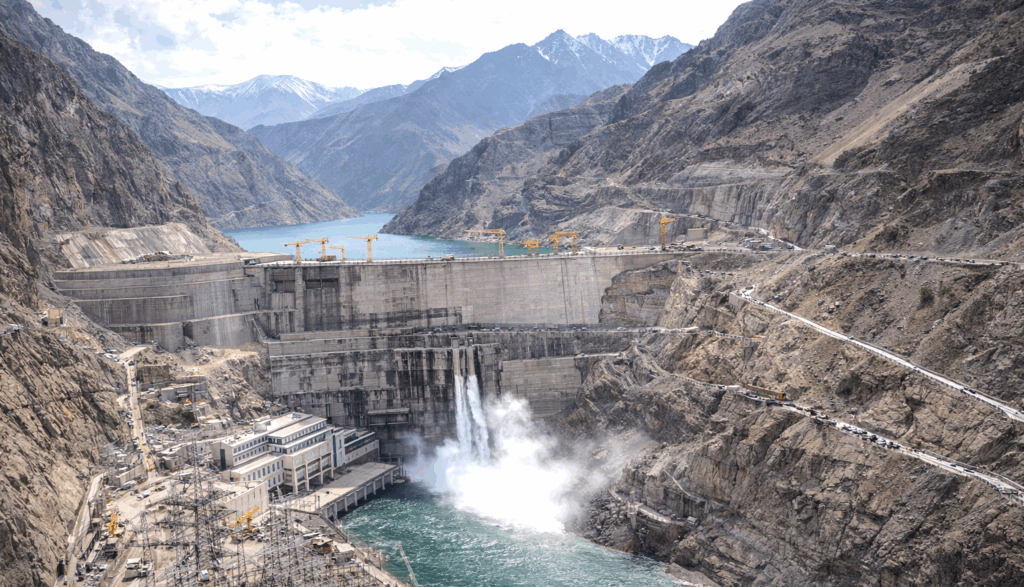
An independent audit of Tajikistan’s flagship Rogun Hydropower Plant (HPP) has flagged serious financial reporting concerns, including a possible understatement of the company’s share capital. The findings, cited by Asia-Plus from the auditor’s conclusion, point to broader risks in the management of one of Central Asia’s most ambitious infrastructure projects. The audit, covering Rogun’s 2024 financial statements, was conducted by Baker Tilly Tajikistan, a registered member of the international Baker Tilly network. The auditors issued a qualified opinion, meaning they were unable to fully confirm the accuracy of the company’s accounts and highlighted several material issues. The audited report has been published on the official Rogun HPP website. Among the key concerns, auditors stated they had not been involved in scheduled or annual inventories of cash, fixed assets, or other inventories as of December 31, 2024. This limited their ability to verify the existence and condition of parts of the company’s assets through alternative procedures, raising the risk of potential misstatements in the financial records. The audit also noted that Rogun’s fixed assets had not been revalued in recent years, despite signs that their book value may significantly differ from their fair market value. Under International Financial Reporting Standards (IFRS), such assets are required to be revalued periodically. The failure to do so may distort the company’s true financial position. A particularly striking finding involved discrepancies in the company’s reported share capital. Rogun’s financial statements list share capital at 40.03 billion somoni, while the Unified State Register of Legal Entities records it at 45 billion somoni. The difference, 4.97 billion somoni, or approximately $540 million, may indicate that the company has understated its equity. According to the audit, Rogun’s management did not provide adequate documentation to support the lower figure. As of the end of 2024, Rogun reported total assets of 49.48 billion somoni, up from the previous year. The bulk, 35.33 billion somoni, was classified as construction in progress, reflecting the plant’s ongoing development phase. The book value of fixed assets stood at 9.28 billion somoni, with most 2024 expenditures directed toward equipment and construction work. The company reported 2024 revenues of 258.4 million somoni, primarily from electricity sales. However, operating costs exceeded income, totaling 367.4 million somoni, resulting in a net loss of 277.3 million somoni. This marks a modest improvement over 2023, when the net loss was 332.8 million somoni. The auditors described these losses as systemic, emphasizing that the plant has not yet reached full operational capacity. Despite the loss, Rogun HPP generated a positive operating cash flow of more than 3.2 billion somoni in 2024. This was largely attributed to increased liabilities from founders and settlements with state institutions. Baker Tilly stressed that the company’s continued operation depends heavily on sustained government support, which is regularly allocated through Tajikistan’s state budget. The auditors also issued a warning over material uncertainty regarding the company’s ability to continue as a going concern. However, Rogun’s management maintains that the project is a strategic national asset, vital to Tajikistan’s...

Recent Stories From Tajikistan That You May Have Missed

Hydropower strain returns as rationing tightens A dry autumn has translated into a difficult start to winter for Tajikistan’s electricity system, with renewed restrictions tied to low reservoir levels. A recent Reuters report on rationing described a drop in water levels feeding the country’s hydropower fleet, with the reservoir at Nurek, the backbone of generation, reported to be substantially below the same point last year. The measures announced go beyond household inconvenience: restrictions have been accompanied by reduced lighting and tighter electricity allocations for public institutions, while officials explore imports and balancing arrangements with neighbors.  Rogun’s mitigation narrative hardens as oversight grows The Rogun hydropower project remains the long-term answer Dushanbe puts forward for these seasonal crunches, and also the project that draws the most intense international scrutiny. The Times of Central Asia’s coverage of Rogun’s environmental planning highlighted a shift in framing: a “no net loss” biodiversity approach, built around compensatory habitat restoration exceeding the estimated footprint of land losses. That messaging is designed to reassure lenders and stakeholders that the dam’s scale will be matched by formal safeguards, and to keep financing pathways open at a time when environmental and social governance has become central to major infrastructure underwriting.  But “no net loss” is also an invitation for closer measurement, and criticism has increasingly focused on whether offsets can meaningfully address river-system impacts, not only terrestrial habitat.  Advocacy briefs circulating around Rogun argue that aquatic biodiversity mitigation and downstream ecological risk remain the hardest pieces to quantify and enforce, especially on long timelines where implementation phases stretch years beyond core construction. In other words, Rogun’s external story is evolving: it is no longer only about generating electricity and exporting surplus. It is also about whether international standards can be applied credibly to a project of this size — and whether promised safeguards hold up under cross-border water politics and long-term monitoring. A border-security story triggers a rare media confrontation If energy is the long-term strategic theme, border security remains the most sensitive. That sensitivity spilled into public view after a Reuters dispatch on alleged Tajik–Russian border talks suggested Dushanbe was considering deeper cooperation with Moscow and the CSTO for monitoring the Afghan frontier. Tajikistan’s response was unusually direct. In a sharply worded statement reported by Eurasianet’s account of the dispute, the Foreign Ministry said the report “does not correspond to reality” and insisted the border situation was under national control. Shortly afterwards, The Times of Central Asia’s report on Reuters withdrawing the story underscored how rare it is for a major international outlet to retract a piece following an official denial in the region. For Western governments, the episode illustrates how the Afghan border remains a geopolitical pressure valve, and how carefully Dushanbe manages the optics of any foreign military footprint, particularly at a time when Russia’s regional role is politically charged and China’s security profile is rising. Land degradation moves from “environmental” to “economic risk” Finally, an issue that has long sat in the “environment” column is...

Deadly Clashes and Gold Mines Fuel Tensions on the Tajik-Afghan Border

Along a short strip of the Tajik-Afghan border, there has been a lot of activity in recent months, including the most serious incidents of cross-border violence in decades. Most of this activity has involved Tajikistan’s Shamsiddin Shohin district, a sparsely inhabited area where the population ekes out a living farming and herding in the foothills of the Pamir Mountains. Why the situation changed so suddenly is not entirely clear, but it is clear that the district is now the hot spot along the Tajik-Afghan frontier. A Dubious Post-Independence Reputation The Shamsiddin Shohin district is in Tajikistan’s southwestern Khatlon region. The district is located near the place where Afghan territory starts to make its northern-most protrusion. The elevation across most of the district is between 1,500-2,000 meters. The district is about 2,300 square kilometers and has a population of some 60,000. Shuroobad, population roughly 11,000, is the district capital, and the entire district was once called Shuroobad. It was renamed Shamsiddin Shohin in 2016 to honor the Tajik poet and satirist of the late 19th century, who was born in the area. Tajikistan and Afghanistan are divided by the Pyanj River, which further downstream merges with other rivers to become the Amu Darya, known to the Greeks as the Oxus, one of Central Asia’s two great rivers. [caption id="attachment_41640" align="aligncenter" width="2560"] The road to Shuroobad; image: TCA, Stephen M. Bland[/caption] The Tajik-Afghan frontier is about 1,360 kilometers. Some 70 kilometers is the southern border of the Shamsiddin Shohin district, but it is the first area, traveling downstream, where the current of the Pyanj River slows significantly. In the first years after the Bolshevik Revolution broke out, many Tajiks fled through what is now the Shamsiddin Shohin district into Afghanistan. Some seventy years later, thousands of Tajiks again fled through the district into Afghanistan when the newly independent state of Tajikistan was engulfed by civil war. The United Tajik Opposition (UTO), the group fighting against the Tajik government during the 1992-1997 civil war, made frequent use of the Shamsiddin Shohin area to bring weapons from Afghanistan. UTO fighters had safe havens in Afghanistan, and they often made their way through this district, retreating south of the border and returning via the district once they were rested and resupplied. There are only a few roads in the Shamsiddin Shohi district. The European Union funded the construction of the Friendship Bridge, which was completed in 2017, and connects the district to Afghanistan. It has often been closed by the Tajik authorities due to security concerns emanating from the Afghan side of the border. Anyone crossing illegally from Afghanistan into the Shamsiddin Shohin district could easily hide in the rugged hills and abundance of caves in the area, making it ideal for smugglers and other intruders. Aside from a few small villages along the banks, there are no settlements for 20 to 30 kilometers north of the river. Border posts were built during the time Tajikistan was a Soviet republic. Russian border guards remained in...

2025: The Year Central Asia Stepped Onto the Global Stage

For much of the post-Soviet era, Central Asia occupied a peripheral place in global affairs. It mattered to its immediate neighbors, but rarely shaped wider debates. In 2025, that changed in visible ways. The region became harder to ignore, largely not because of ideology or alignments, but because of assets that the world increasingly needs: energy, minerals, transit routes, and political access across Eurasia. One of the clearest signs came in April, when the European Union and the leaders of Kazakhstan, Kyrgyzstan, Tajikistan, Turkmenistan, and Uzbekistan met in Samarkand for their first summit at the head-of-state level. The meeting concluded with a joint declaration upgrading relations to a strategic partnership, with a focus on transport connectivity, energy security, and critical raw materials. The document marked a shift in how Brussels views Central Asia, moving beyond development assistance toward geopolitical cooperation, as outlined in the official EU–Central Asia summit joint declaration. European interest is rooted in necessity. Russia’s war in Ukraine has forced EU governments to rethink energy imports, supply chains, and overland trade routes. Central Asia sits astride the most viable alternatives that bypass Russian territory. It also holds resources essential to Europe’s green transition, including uranium and a range of industrial metals. The region’s leaders spent much of the year framing their diplomacy around these tangible advantages, rather than abstract political alignments. The United States followed a similar track. Through the C5+1 format, Washington deepened engagement with all five Central Asian states, with particular emphasis on economic cooperation and supply-chain resilience. A key element has been the Critical Minerals Dialogue, launched to connect Central Asian producers with Western markets. This initiative formed part of a broader U.S. effort to diversify access to strategic materials and reduce dependence on Russia and China. Russia remained a central but changing presence in Central Asia throughout 2025. Economic ties, labor migration, and shared infrastructure ensured that Moscow continued to matter across the region. At the same time, however, Russia’s war in Ukraine constrained its ability to act as the dominant external power it once was. Central Asian governments maintained pragmatic relations with Moscow, but they increasingly treated Russia as one partner among several rather than the default reference point. Trade continued, security cooperation persisted, and political dialogue remained active, yet the balance shifted toward hedging rather than dependence. Uranium sits at the center of this shift, with the United States having banned imports of certain Russian uranium products under federal law, with waivers set to expire no earlier than January 1, 2028. As Washington restructures its nuclear fuel supply chain, Central Asia’s role has grown sharply. According to the U.S. Energy Information Administration’s 2024 Uranium Marketing Annual Report, Kazakhstan supplied 24% of uranium delivered to U.S. reactor operators, while Uzbekistan accounted for about 9%. Canada and Australia remain major suppliers, but the Central Asian share is now strategic rather than marginal. That economic weight translated into political visibility. In December, U.S. President Donald Trump said he would invite Kazakhstan and Uzbekistan to attend...