• KGS/USD = 0.01144 0%
  • KZT/USD = 0.00198 -0%
  • TJS/USD = 0.10901 0%
  • UZS/USD = 0.00008 0%
  • TMT/USD = 0.28490 0%
  • KGS/USD = 0.01144 0%
  • KZT/USD = 0.00198 -0%
  • TJS/USD = 0.10901 0%
  • UZS/USD = 0.00008 0%
  • TMT/USD = 0.28490 0%
  • KGS/USD = 0.01144 0%
  • KZT/USD = 0.00198 -0%
  • TJS/USD = 0.10901 0%
  • UZS/USD = 0.00008 0%
  • TMT/USD = 0.28490 0%
  • KGS/USD = 0.01144 0%
  • KZT/USD = 0.00198 -0%
  • TJS/USD = 0.10901 0%
  • UZS/USD = 0.00008 0%
  • TMT/USD = 0.28490 0%
  • KGS/USD = 0.01144 0%
  • KZT/USD = 0.00198 -0%
  • TJS/USD = 0.10901 0%
  • UZS/USD = 0.00008 0%
  • TMT/USD = 0.28490 0%
  • KGS/USD = 0.01144 0%
  • KZT/USD = 0.00198 -0%
  • TJS/USD = 0.10901 0%
  • UZS/USD = 0.00008 0%
  • TMT/USD = 0.28490 0%
  • KGS/USD = 0.01144 0%
  • KZT/USD = 0.00198 -0%
  • TJS/USD = 0.10901 0%
  • UZS/USD = 0.00008 0%
  • TMT/USD = 0.28490 0%
  • KGS/USD = 0.01144 0%
  • KZT/USD = 0.00198 -0%
  • TJS/USD = 0.10901 0%
  • UZS/USD = 0.00008 0%
  • TMT/USD = 0.28490 0%
08 December 2025

Viewing results 229 - 234 of 489

Repatriating Islamic State Fighters and Families: Balancing Security and Humanity

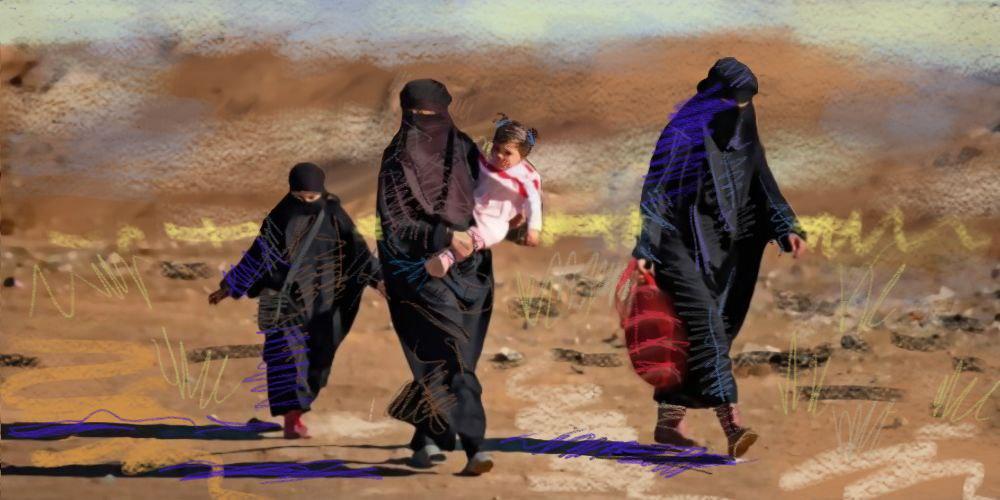
With the fall of the Assad regime in Syria, repatriating foreign fighters is a pressing issue at the intersection of global security, humanitarian principles, and national responsibility. Central Asian governments — namely, Kazakhstan, Uzbekistan, Kyrgyzstan, and Tajikistan — have emerged as proactive players in repatriating their citizens from camps in northeastern Syria. While these efforts are laudable, they come with challenges and unanswered questions. Tens of thousands of people, many of them women and children associated with former ISIS or the Islamic State of Iraq and Syria - a terrorist organization known for its extreme ideology and violent actions of its’ fighters — remain trapped in the camps of northeastern Syria. Their lives are defined by squalor and uncertainty, and they face a bleak future. Central Asian nations have stepped up where many others have faltered, asserting their responsibility to help their citizens who languish there. Yet, this commitment is not without its limits. Repatriating men — many of whom were fighters — remains a challenge that even the most ambitious programs have struggled to address. This issue looms large, as it intertwines with broader questions. These include reintegration, security risks, and the potential for radicalization, both in prison systems and broader society. The scale of efforts undertaken by four of the Central Asian countries is significant. Together, they have repatriated around 2,200 citizens: Kazakhstan, the most, 754 individuals, followed by others with numbers ranging from 381 to 533. These figures represent more than just logistical achievements. They reflect these governments' commitment to humanitarian principles. However, the path has not been entirely smooth, as some of the repatriated women and children have returned back to conflict zones. As counterintuitive as this may seem, they might do so out of ideological commitment, social ties, coercion or threats, trauma bonding, or difficulty reintegrating into their home societies. All this suggests cracks in reintegration programs that must be addressed. The strategies employed by the Central Asian states, despite their common goal, differ in focus and execution. Kazakhstan’s “Operation Zhusan” is often mentioned as a model of coordination and commitment. It has gone beyond mere repatriation to a vision embracing comprehensive reintegration, including other services, such as DNA testing to identify orphaned children. Yet such efforts rely heavily on state resources and long-term political will, neither of which can be taken for granted. Uzbekistan’s Mehr ("Kindness") initiative has particularly focused on protecting children and supporting the unification of families. Yet even with international appreciation, Uzbekistan faces the same challenges as its neighbors: how to sustain this momentum and address lingering societal stigmas toward returnees. Kyrgyzstan paused its repatriation operations in Iraq due to legal roadblocks and has turned its attention to Syria. However, Kyrgyzstan relies significantly on international cooperation, as its own economic resources for such activities are comparatively limited. So far, it has repatriated 511 citizens. Tajikistan’s steady progress highlights even more pointedly the role of international cooperation with organizations like UNICEF and the European Union. The Tajik authorities have worked closely with...


Deportations of Central Asians from the U.S. Increased in 2024

U.S. Immigration and Customs Enforcement (ICE) has released its Fiscal Year 2024 Annual Report, detailing the agency’s accomplishments over the past year. The report highlights how ICE’s directorates and program offices met their mission objectives. Established in the aftermath of the 9/11 attacks, ICE is tasked with protecting the American public, ensuring public safety, and promoting national security. According to the report, ICE’s Enforcement and Removal Operations (ERO) deported 271,484 non-citizens with final orders of removal to 192 countries. This total includes 88,763 individuals charged with or convicted of criminal offenses, 3,706 known or suspected gang members, 237 known or suspected terrorists, and eight human rights violators. More than 30% of those deported had criminal histories, with an average of 5.63 convictions or charges per individual. ERO also assisted in identifying and arresting individuals wanted in their home countries for serious crimes, including terrorism and torture. The Times of Central Asia examined the report with a focus on Central Asian countries. In 2024, the US deported 572 Uzbek nationals - a dramatic increase compared to 88 in 2013, 21 in 2021, and 55 in 2022. Deportations of Tajik citizens also surged, reaching 77 in 2024 compared to only four annually in 2019, 2020, 2022, and 2023. Kazakhstan saw the deportation of 23 of its citizens this year, up from 14 in 2023. Deportations to Kyrgyzstan also spiked, with 69 individuals removed in 2024. By comparison, only three Kyrgyz citizens were deported in 2020, eight in 2021, one in 2022, and 14 in 2023. Meanwhile, deportations of Turkmen nationals remained low, but still showed an upward trend. In 2024, five Turkmen citizens were deported, compared to four in 2019, one in 2022, and three in 2023.

Tajikistan Captures Four Suspected of Konibodom Night Murders

Tajikistan's Prosecutor General's Office has announced that it has detained four men in connection with a series of murders that have terrified the town of Konibodom, in the country's northern Sughd region. The office's statement says that operational and investigative measures led to the arrest of four Tajik citizens. The detainees are: Solehjon Khudojberdiev, born in 1998, a resident of Firuzoba Jamoat, Gulbog village; Akhajon Tukhtaev, born in 1997, also from Firuzoba Jamoat, Gulbog village; Bakhtiyor Ravshanov, born in 1988, a resident of Lohuti Jamoat, Sanchidzor village; Manuchehr Odilov, born in 1996, in M. Abdulloyev street, Khamroboyev Jamoat. All four are residents of Konibodom. The Prosecutor General's Office said that the investigation is being conducted under the direct supervision of the country's top leadership. Earlier this year, The Times of Central Asia reported that Konibodom residents had endured a wave of night murders in the spring. Between late March and late May, 13 people -- ethnic Tajiks, and Kyrgyz from the region near the Kyrgyz border -- were killed. The victims, ranging from children to the elderly, were murdered in different parts of the town. While authorities initially claimed the suspects had been caught and the killings had stopped, violence returned in December. On December 9, six more people were murdered, followed by four more found dead in their homes on December 16.

Fear Returns to Tajikistan’s Konibodom Area

A series of murders in spring had residents in the area around Tajikistan’s northern city of Konibodom on edge for weeks. Thirteen people were killed between late March and late May, apparently by someone who broke into their homes at night. The victims ages ranged from young children to elderly people; they were ethnic Tajiks and Kyrgyz (Konibodom is located near the border with Kyrgyzstan), and the crimes happened in different areas around the city. The murders stopped, and later the Tajik authorities said they had captured the suspects, but on December 9, the nightmare started again with six people being killed, and on December 16, four more people were found dead in their homes.   The Killing Starts Again On December 9, the bodies of six people were found in the Shurkurgon neighborhood of Konibodom. All six were members of the Nematov family. Thirty-seven-year-old Naimjon was found hanged on a tree in the courtyard of the family’s home. His body showed signs of a struggle. His 33-year-old wife and four children, the youngest only two years old, were all strangled inside the family’s home. Local authorities and police have not commented on the killings. On December 16, reports said the bodies of 35-year-old Gaibullo Majidov and his 28-year-old wife Zarnigor were found in their home in Konibodom’s Hisorak neighborhood. Their three children were reportedly unharmed. On the same day in the same neighborhood, the bodies of 70-year-old Oyisha Shokirova and her 44-year-old son Javlon were found. Reports said all appeared to have died violent deaths, but the exact cause was not given. Police have also not commented on these murders. Prior to these latest killings, it appeared the police had caught at least some of the people responsible for a wave of murders in the spring that had local residents talking about “men in black” who prowled the streets in the middle of the night.   The Authorities’ Version On July 31, Konibodom Mayor Abdusalom Tukhtasunzoda said a suspect had been caught for the May 28-29 killings of six people in the village of Sanjidzor, on the outskirts of Konibodom. Tukhtasunzoda did not give any details about the suspect or the motive, except to say the person had been detained the week before. The Konibodom mayor said the murders in May were not connected to the earlier killings of five members of the Sharipov family in March, or to Muzaffar Urmonov and his wife Inoyat Urmanova in April. Tukhtasunzoda also dismissed the tales being told of men dressed in black clothing and masks being responsible for any of the murders. “There were no people ‘in black’ in the city of Konibodom,” Tukhtasunzoda said, “The video, which is distributed on social networks, was not filmed in Konibodom. Such footage is being circulated to frighten people.” On August 8, First Deputy Interior Minister Abdurahmon Alamshozoda told a press conference the was “nothing sensational” about the murders in Konibodom the previous spring. Alamshozoda said the incidents in March and April were the...

A Final Deal Along Central Asia’s Deadliest Border

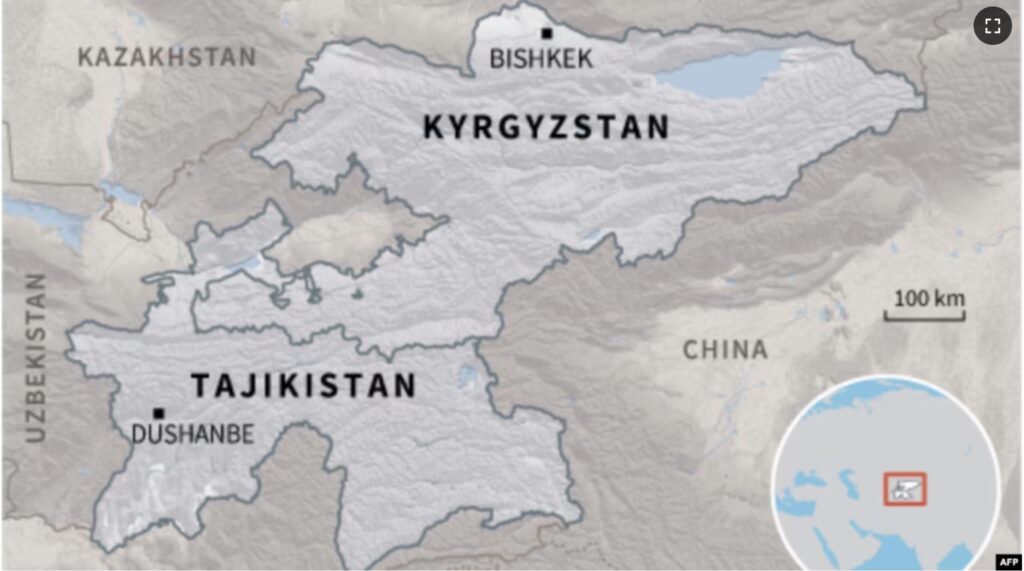
It took some 33 years, but on December 4, Kyrgyz and Tajik officials reached a final agreement on delimitation of the last sections of their 972-kilometer border. It is a relief for the entire Central Asian region. In those 33 years the five Central Asian countries (including Kazakhstan, Turkmenistan, and Uzbekistan) have been independent, the only open conflicts between the armed forces of two Central Asian countries happened between Kyrgyzstan and Tajikistan. In the southern Kyrgyz city of Batken on December 4, Kyrgyz security chief Kamchybek Tashiyev and Tajik counterpart Saimumin Yatimov announced an agreement that Tajik state news agency Khovar said “fully completed the delimitation of the remaining sections of the Tajik-Kyrgyz state border.” Most of the Kyrgyz-Tajik border runs through the Pamir Mountains. The eastern part, approximately two-thirds of the common frontier, passes through remote and sparsely inhabited areas. Agreement on where the dividing line between the two countries was easy to reach in this section. The remaining one-third of the border in the west proved far more difficult to find compromises. [caption id="attachment_26293" align="aligncenter" width="2256"] Road near the Kyrgyz village of Ak-Sai. On one side of the road is Tajikistan, the other side, Kyrgyzstan; image: Bruce Pannier[/caption] Kyrgyz and Tajiks are two of the oldest peoples in Central Asia. Their ancestors lived in what is now the border area many hundreds of years before there were any borders. The Soviet Union changed that when it created the Kyrgyz and Tajik Soviet Socialist Republics, not only drawing lines on a map, which were redrawn more than once, but also including enclaves on either side of the border. Roads in the area zigzagged back and forth, one minute through Kyrgyzstan, and few minutes later through Tajikistan, over and over again. As border tensions began to appear toward the end of the 2000-2010 period, both countries started building roads to avoid crossing into the neighboring state, but the terrain is rugged, limiting possibilities for alternate routes. Also, new road construction is expensive and Kyrgyzstan and Tajikistan are both poor countries. [caption id="attachment_26294" align="aligncenter" width="2256"] The entrance to Tajikistan's Vorukh enclave; image: Bruce Pannier[/caption] The lone road leading from Batken to the Kyrgyz village of Ak-Sai and the Tajik enclave of Vorukh weaves through both countries several times and in some places, the road is the border. Visible from any village in this area are the snow-capped mountains, but down in the valleys, water has always been a problem. Like the roads, small rivers and canals meander across both sides of the border, and unsurprisingly, water use is a major source of tensions and has been a significant obstacle in deciding where the border should be. The first hints of trouble came after 2000 and involved petty vandalism, usually children throwing rocks at passing vehicles with license plates from the neighboring country. This escalated and after 2010, when incidents of physical altercations between members of border communities started, followed by vandalism targeting homes and businesses in border villages. Since much of...

Kyrgyz, Tajik Delegations Finalize Border Deal After Long Dispute

Kyrgyzstan and Tajikistan have fully agreed on the demarcation of their border, Kyrgyz officials said Wednesday, in a major step toward ending the conflict between the two Central Asian countries that spilled into violence as recently as 2022.  Delegations from the two nations “reached agreements and fully completed the description of the remaining sections of the Kyrgyz-Tajik state border,” Kyrgyzstan’s state-run Kabar news agency reported. It cited the press service of the Cabinet of Ministers of Kyrgyzstan. The delegation chiefs of the two sides ordered working groups to finalize documents on the border agreement, Kabar said. It published photos of the meeting in the Kyrgyz town of Batken, including an image of the delegation chiefs in military uniform and shaking hands with each other.  The Kyrgyz-Tajik border is nearly 1,000 kilometers long and the agreement followed months of negotiations over various stretches of the mountainous territory.  In 2014, the border between the two countries was closed to Kyrgyz and Tajik citizens following clashes over a bypass road in disputed territory; mortars were fired and both armies suffered casualties. Violence broke out again in 2021 and 2022, resulting in more casualties and the evacuation of more than 100,000 civilians.