• KGS/USD = 0.01144 0%
  • KZT/USD = 0.00212 0%
  • TJS/USD = 0.10549 -0.28%
  • UZS/USD = 0.00008 0%
  • TMT/USD = 0.28530 0%
  • KGS/USD = 0.01144 0%
  • KZT/USD = 0.00212 0%
  • TJS/USD = 0.10549 -0.28%
  • UZS/USD = 0.00008 0%
  • TMT/USD = 0.28530 0%
  • KGS/USD = 0.01144 0%
  • KZT/USD = 0.00212 0%
  • TJS/USD = 0.10549 -0.28%
  • UZS/USD = 0.00008 0%
  • TMT/USD = 0.28530 0%
  • KGS/USD = 0.01144 0%
  • KZT/USD = 0.00212 0%
  • TJS/USD = 0.10549 -0.28%
  • UZS/USD = 0.00008 0%
  • TMT/USD = 0.28530 0%
  • KGS/USD = 0.01144 0%
  • KZT/USD = 0.00212 0%
  • TJS/USD = 0.10549 -0.28%
  • UZS/USD = 0.00008 0%
  • TMT/USD = 0.28530 0%
  • KGS/USD = 0.01144 0%
  • KZT/USD = 0.00212 0%
  • TJS/USD = 0.10549 -0.28%
  • UZS/USD = 0.00008 0%
  • TMT/USD = 0.28530 0%
  • KGS/USD = 0.01144 0%
  • KZT/USD = 0.00212 0%
  • TJS/USD = 0.10549 -0.28%
  • UZS/USD = 0.00008 0%
  • TMT/USD = 0.28530 0%
  • KGS/USD = 0.01144 0%
  • KZT/USD = 0.00212 0%
  • TJS/USD = 0.10549 -0.28%
  • UZS/USD = 0.00008 0%
  • TMT/USD = 0.28530 0%

Viewing results 235 - 240 of 728

India and Pakistan: A Central Asian Perspective on Two Military Giants

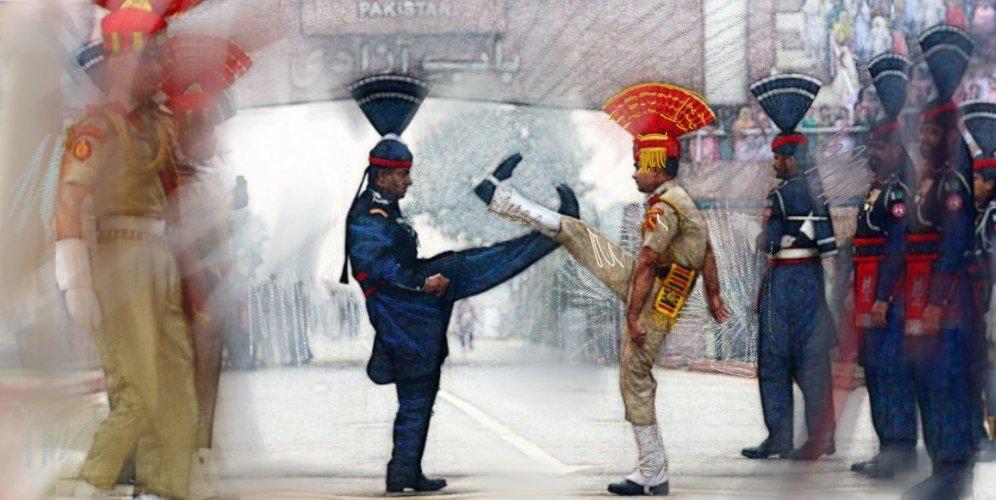
The new round of heavy clashes involving India and Pakistan over the disputed region of Kashmir – then settled by a bilateral adherence to a “full-scale ceasefire” – has also been a confrontation involving the players surrounding the two Asian giants. The involvement of some of them took place in plain sight: take the case of Turkey's President Recep Tayyip Erdoğan, a staunch ally of Pakistan, which sent the country a military ship and a group of fighter jets. Or China, which in recent years has invested tens of billions of dollars in Pakistan under the Belt & Road Initiative, and has become by far the largest supplier of military equipment to Islamabad. Beijing immediately called on both sides to engage in diplomacy. On the Indian front, as reported by recent research on the subject, New Delhi is purchasing weapons from an increasingly varied group of countries, including Russia, France, Israel and the United States. The ceasefire saw direct involvement from Washington, which acted as mediator between the two sides. Given also its geographical proximity to the Indian subcontinent, when it comes to Central Asia it is clear that the region may be called into question in any confrontation between India and Pakistan – or that, at least, would be heavily affected by it. During the strikes carried out by India against Pakistan following the deadly attack in Indian-controlled Kashmir, the Indian media emphasized the strategic role that the military base India allegedly operates in Tajikistan could play in a possible open confrontation with Pakistan. Indian experts pointed out that the base could have given New Delhi the ability to strike Pakistan from the west, seriously compromising Islamabad's air defense capabilities. Furthermore, China was also called into question in India's alleged use of the military outpost, as New Delhi is said to be monitoring China's movements on the northern front using its presence in Tajikistan. This base is Ayni Airbase, a Soviet-era military facility located near the Tajik capital Dushanbe. The facts we know for certain point to an Indian involvement in the Tajik base which appears to have ended around 2015. In 2002, India, in collaboration with Tajikistan and Russia, financed an operation to refurbish the base, investing around $70 million in the project. Among the changes made was the lengthening of the runway, which was intended to ensure that it could be used by aircraft operated by the Indian armed forces. As also stated in the report on Central Asian armed forces drafted by the DC-based The Oxus Society for Central Asian Affairs, after a phase in which it seemed that India would play a concrete role in the management of the base, Dushanbe subsequently backtracked, partly due to pressure from Russia. The same path was followed by New Delhi's involvement in the Farkhor airbase, initially used to reach Afghanistan by land by landing Indian cargo planes at the base, located near the border between Tajikistan and Afghanistan. Over the years, the logistical importance of the structure gradually...
Victory Day in Central Asia: Honoring Sacrifice Amid Shifting Narratives

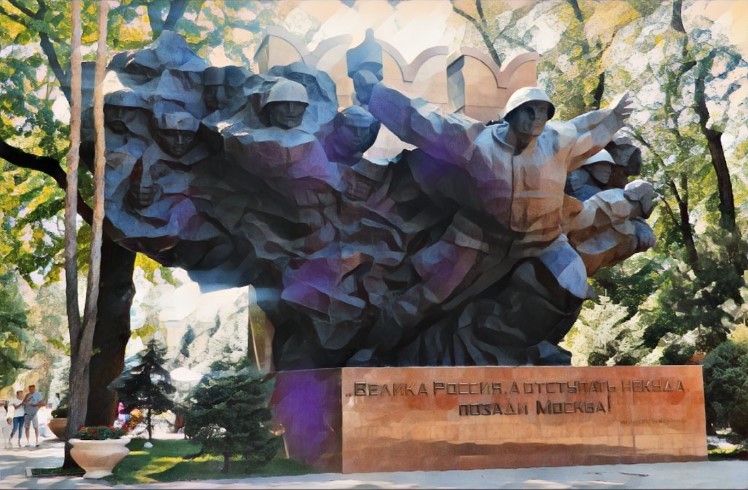
For the countries of Central Asia, Victory Day holds a deep significance. Although debates over the nature of the May 9 commemorations have intensified in recent years, the importance of the holiday remains unchallenged. A War That Touched Every Family Attitudes toward the celebration marking the defeat of Nazi Germany are largely shaped by each nation's level of participation in the war effort. Kazakhstan mobilized over 1.2 million people, nearly 20% of its pre-war population of 6.5 million. Of these, more than 600,000 perished at the front, with an additional 300,000 dying in the rear due to malnutrition, forced labor, and inadequate medical care. With a similar sized population, Uzbekistan sent approximately 1.95 million people to the front - or one in every three residents. Around 400,000 Uzbeks did not return home. Over 500 Kazakhstani and more than 300 Uzbekistani soldiers were awarded the title Hero of the Soviet Union. [caption id="attachment_31602" align="aligncenter" width="2560"] Eternal flame and Crying Mother Monument, Tashkent; image: TCA, Stephen M. Bland[/caption] Kyrgyzstan, home to just 1.5 million people at the time, sent over 363,000 to the front. Approximately 100,000 perished, and 73 received the Hero of the Soviet Union medal. Tajikistan mobilized more than 300,000 troops, with over 100,000 never returning. Fifty-five Tajiks received Hero of the Soviet Union honors. Turkmenistan, with a population of 1.3 million, sent around 200,000 soldiers and officers; 16 received Hero status. Central Asian soldiers played vital roles in major battles, including the defense of Moscow. They helped liberate territories across the Soviet Union and Eastern Europe. The region also contributed 20-30% of its horse population, then a central component of local economies, for military use. The war profoundly reshaped Central Asia. Thousands of Soviet enterprises were relocated to the region, fueling industrialization. Millions of refugees from Nazi-occupied zones found sanctuary in Central Asian republics. Many children were taken in by local families and raised as their own. Today, many in Central Asia feel that outsiders fail to grasp the weight of Victory Day. While countries like the UK, U.S., Italy, and France recorded wartime deaths of 380,000, 417,000, 479,000, and 665,000 respectively, the USSR suffered over 26 million losses. German losses are estimated at 8.4 million. Celebrating Amid Controversy Recent years have brought a shift in how Victory Day is perceived in Central Asia. Symbols such as the Guards ribbon, criticized for echoing imperial Russian motifs, have sparked debate. Some argue that the holiday reflects colonial oppression, as the peoples of Soviet Asia were conscripted into a foreign war. These debates have grown louder since Russia annexed Crimea in 2014, with some now viewing the May 9 celebrations as a tool of Russian influence in the region. Nonetheless, Central Asian leaders have rejected efforts to "cancel" Victory Day, reaffirming its deep personal and national resonance. Efforts to distinguish the celebration from Russian state narratives are evident. Many events now emphasize patriotism rather than Soviet nostalgia. On May 7, Kazakhstan held its first military parade in Astana in seven years,...

Victory Day Diplomacy: Central Asia’s Balancing Act and Putin’s Diminished Spotlight

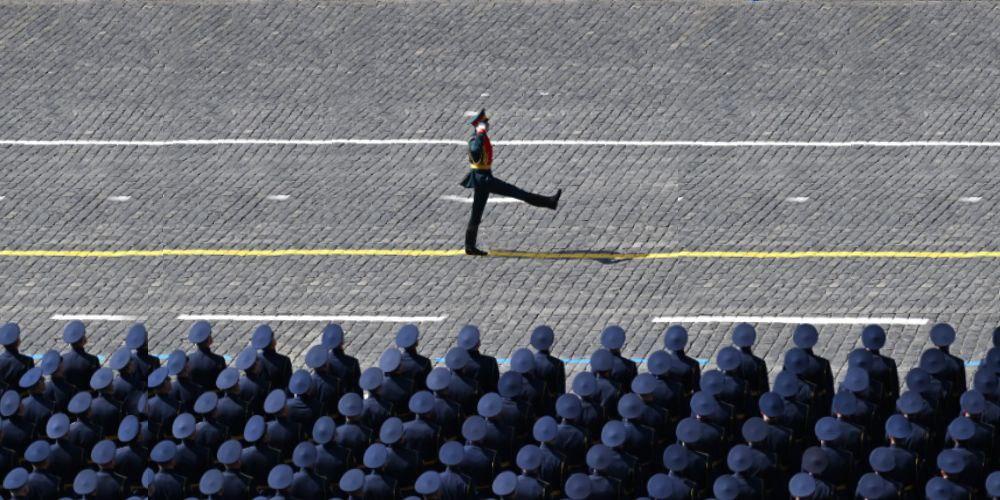
Every year, Moscow’s Red Square transforms into a stage for one of Russia's most celebrated traditions: Victory Day, an event which marks the Soviet Union’s triumph over Nazi Germany in World War II. Yet, as tanks roll through the cobblestone streets and military bands echo under the Kremlin walls, the occasion feels more heavily laden with geopolitical undertones than historical reminiscence these days. Against the backdrop of ongoing conflicts and shifting alliances, the presence of Central Asian leaders at this year’s event speaks to the region’s delicate relationship with the Russian Federation. But the question remains: amidst the pomp and circumstance, is there much for Vladimir Putin to celebrate? Central Asia’s Careful Balancing Act The attendance of Central Asian leaders at the Victory Day parade is a striking show of diplomatic choreography. On the surface, their presence will underscore the shared historical legacy of the Soviet era, when the sacrifices of the Central Asian republics contributed to the Allied victory in the Second World War. However, a more pragmatic lens reveals a balancing act that defines the region’s foreign policy. The region finds itself at the crossroads of global powers vying for influence in Central Asia. While Moscow leans on historical ties and cultural commonalities to retain its sway, Beijing’s economic clout continues to reshape the region’s trade networks and infrastructure projects. Meanwhile, as the inaugural EU-Central Asia Summit attests to, the European Union is eager to expand its reach, whilst hungry for Rare Earth Elements in which the region is rich, the U.S. is waiting in the wings. For Central Asian leaders, participating in Victory Day celebrations signals a nod to Russia’s historic role but also keeps the door open for economic and security cooperation. Amidst the shifting architecture of global politics, their diplomatic strategy remains one of pragmatism, seeking benefits from multiple partners while avoiding any over-alignment. What Does Russia Gain from the Optics? The presence of 29 leaders from across the globe – including Chinese President Xi Jinping - offers Moscow valuable optics at a time when its international relationships face significant strain. Last year, only nine attended. Isolated by Western sanctions over the invasion of Ukraine and with much of the world’s media painting Russia as cut off from the global stage, the impression of a united front with Central Asia helps the Kremlin portray the opposite. Victory Day, therefore, becomes a geopolitical tool, with the attendance of Central Asian leaders enabling Putin to send a message of shared unity within Russia’s historical sphere of influence. It tells both domestic and international audiences that Moscow retains significant allies, reinforcing the image of resilience despite ongoing challenges. How Much Does Moscow Truly Celebrate? The Victory Day parade is an event that is watched by an estimated three-quarters of the Russian public, drumming up patriotism as the state seeks to become the custodian of collective memory. Behind the spectacle, however, signs of disquiet are proving hard to ignore. Russia’s invasion of Ukraine has disrupted trade and migration flows...

Central Asian Perspectives Take Center Stage in Milan

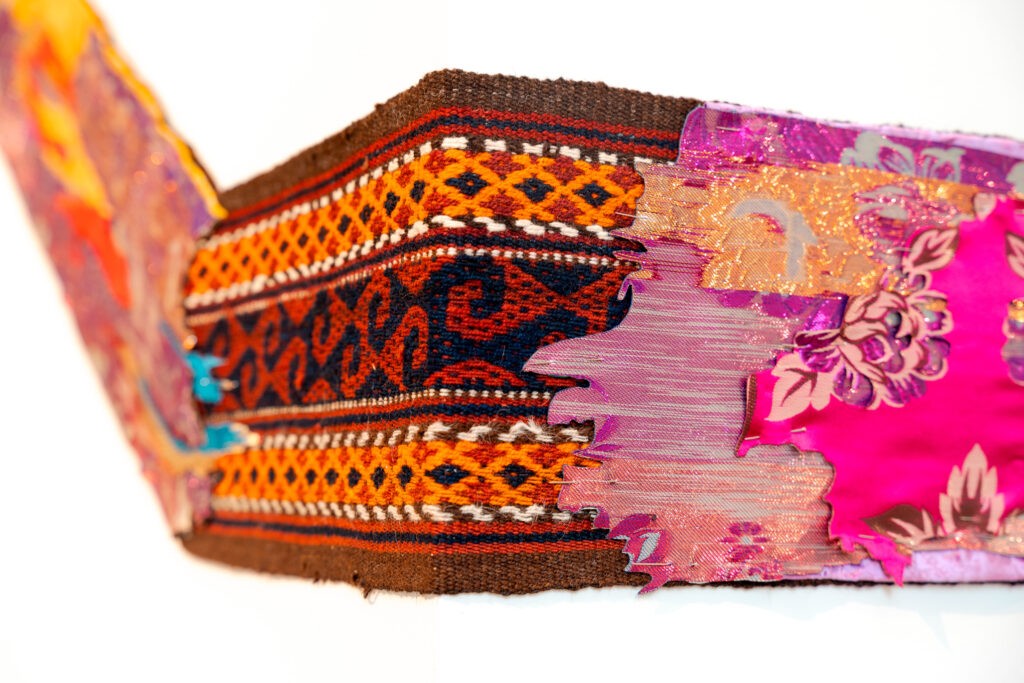
A pale Milanese dawn draped the city in shifting greys, as visitors crossed the threshold into the space of Fondazione Elpis, a foundation created to promote dialogue with emerging geographies and young artists. This time, it was Central Asian artists who were in the spotlight, claiming a shared history fractured by Soviet rule and global currents. The show YOU ARE HERE: Central Asia redraws a regional map, allowing artists to redraw the borders of their belonging beyond nation-states. At the same time, it invites each visitor to relate to the works by locating its place within these stitched, erased, and reconfigured narratives. Curators Dilda Ramazan and Aida Sulova orchestrated twenty-seven artists into a living constellation: from Munara Abdukakharova’s rolled patchwork, its golden hammer-and-sickle motifs softened by the hand-stitched curves of Kyrgyz kurak korpe, to Vyacheslav Akhunov’s furious erasures of scraped notes, the show reassembled in unexpected patterns stories of resilience, resistance, and reimagined belonging. YOU ARE HERE not only reframed Central Asia for a European audience but asserted that the region’s histories are neither static nor singular, they are stitched, erased, reconfigured, and claimed anew by the very people who live them. The Times of Central Asia spoke with Kazakh curator, Dilda Ramazan. [caption id="attachment_31541" align="aligncenter" width="2560"] "YOU ARE HERE. Central Asia", installation view, primo piano, Fondazione Elpis, Milano © Fabrizio Vatieri Studio[/caption] TCA: Can you tell us about the genesis of the show? The show emerged after the invitation of the Fondazione Elpis, whose founder, Marina Nissim, became interested in the region and its artists after seeing one of the Central Asian pavilions at the Venice Biennale. By presenting the complex Central Asian landscape to a European public who might not know it very well, we wanted to give artists the platform for free expression without framing the region from the stereotypical perspective, as is often the case in the Western context. We wanted the artists to reflect on the idea of space and belonging through the idea of locating oneself. TCA: Do you feel there is a growing awareness of Central Asia in Europe? Yes, I can feel and see it, but it is a natural process one should expect within the logic of globalization. The exhibition addressed the impact of Soviet and post-Soviet transitions on the cultural identities of Central Asian nations by showcasing artists of several generations. Some of them had a direct experience of living under the Soviet regime, so again the artists spoke for themselves and the region’s past through their works. [caption id="attachment_31542" align="aligncenter" width="2560"] Emil Tilekov, Traces and Shadows, 2024 © Fabrizio Vatieri Studio[/caption] TCA: How is the theme of migration explored in the exhibition, particularly concerning its economic and emotional implications for Central Asian communities? Migration was one of the key aspects evoked in the show because it is still an experience lived by the artists and/or their relatives and families. Two Kyrgyz artists, for example, raised this issue in their projects. This was the case in the video by Chingiz...

Tajikistan Has the Harshest Fines Relative to Income in Central Asia

Tajikistan ranks first among Central Asian countries in the ratio of maximum fines to average salaries, a disparity that has sparked growing dissatisfaction among the population. Structure and Scale of Fines Fines in Tajikistan fall into two categories: administrative and criminal. Administrative fines apply to less serious infractions, such as traffic violations, breaches of sanitary rules, and disorderly conduct. Criminal fines, by contrast, target serious offenses including fraud, tax evasion, and property crimes. Administrative penalties are more common and tend to disproportionately impact ordinary citizens. As of January 1, 2025, the minimum administrative fine for individuals and sole proprietors is 75 Tajikistani somoni (TJS), or approximately $7.20. For government officials, the minimum fine is 225 TJS ($21), and for legal entities it is 750 TJS ($72). The upper threshold for administrative fines is capped at $780 for individuals, $1,400 for officials, $2,120 for entrepreneurs, and $7,200 for legal entities. Regional Comparisons Compared to its neighbors, Tajikistan's fine-to-salary ratio is starkly higher. In Kazakhstan, the maximum fine for individuals is roughly $1,537, or about 80.5% of the average monthly salary ($851 as of January 2025). In Kyrgyzstan, the maximum individual fine of approximately $229 represents just 50.9% of the average salary ($450). In Uzbekistan, where the maximum individual fine is limited to $145, it amounts to about 35% of the average salary of $414. In contrast, the maximum administrative fine in Tajikistan for individuals exceeds the country’s average monthly income by more than 2.8 times, placing it at the bottom of the regional ranking in terms of fairness and affordability. Calls for Reform Experts have proposed that Tajikistan consider adopting a proportional system of fines based on the offender’s income. Such systems, already implemented in various European countries, aim to ensure that penalties are equitable across income groups. In Finland, traffic fines are linked to annual income; in Sweden and Norway, they depend on monthly earnings. Other countries, including Germany, Switzerland, Austria, and France, also tailor financial penalties to income. Estonia and Latvia have initiated similar reforms, signaling a broader European trend. Adopting such a model in Tajikistan could improve perceptions of justice and encourage compliance with laws, particularly among higher-income groups. However, experts caution that successful implementation would require sweeping legal reforms, along with mechanisms to accurately monitor and verify income levels.

Central Asia’s Green Energy Dream: Too Big to Achieve?

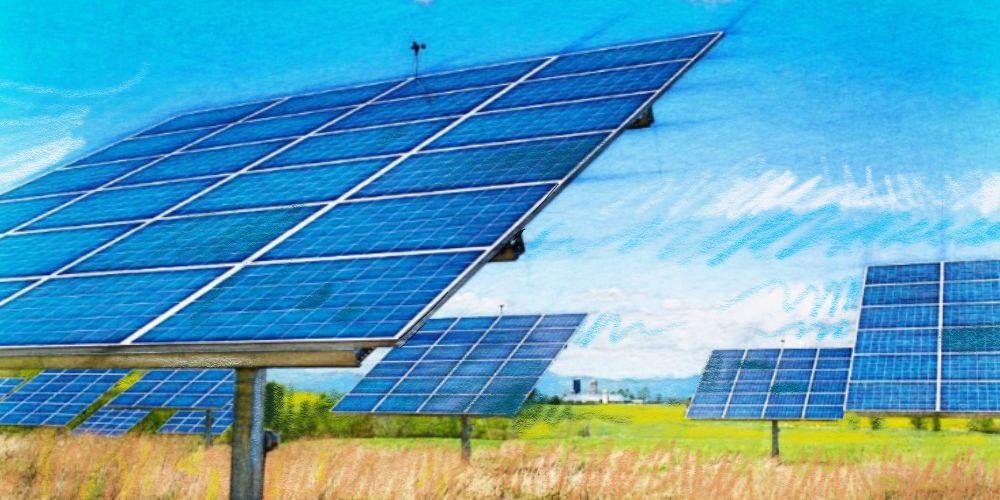
Although most Central Asian nations are heavily dependent on fossil fuel production and exports, they are aiming to significantly increase the use of renewable energy, hoping to eventually become crucial suppliers of so-called green electricity to Europe. Achieving such an ambitious goal will be easier said than done, given that developing the green energy sector in the region requires massive investment. What Central Asian states – struggling to attract long-term private capital into clean energy projects – need is financing for projects that modernize power networks, improve grid stability, and enable cross-border electricity flows. These upgrades are essential for large-scale renewable energy deployment and regional trade in power. Most actors in Central Asia seem to have taken major steps in this direction. In November 2024, at the COP29 climate conference held in Baku, Kazakhstan signed several deals worth nearly $3.7 billion with international companies and development institutions to support green energy projects. Neighboring Uzbekistan, according to reports, has attracted more than €22 billion ($23.9) in foreign investment in renewable energy, while Kyrgyzstan, Turkmenistan, and Tajikistan – which is aiming to generate all its electricity from green energy sources by 2032 – have developed strategies to help increase their renewable potential. But to turn their goals into reality, all these nations will need funding – whether from oil-rich Middle Eastern countries, China, the European Union, or various international financial institutions. Presently, the development of the Caspian Green Energy Corridor – which aims to supply green electricity from Central Asia to Azerbaijan and further to Europe – remains the region’s most ambitious project. According to Yevgeniy Zhukov, the Asian Development Bank's (ADB) Director General for Central and West Asia, this initiative is a strategic priority for Kazakhstan, Uzbekistan, and Azerbaijan. “While the prospect of exporting green electricity to Europe is part of the long-term vision, the core goal of the initiative is to accelerate green growth within the region,” Zhukov told The Times of Central Asia. Together with the Asian Infrastructure Investment Bank, the ADB is funding a feasibility study for this proposed transmission corridor. The study will assess the technical and economic viability of such a system, along with the environmental and regulatory requirements. In the meantime, the ABD is expected to continue funding other green energy projects in the region. The financial entity, according to Zhukov, invested $250 million in Uzbekistan in 2023 to support renewable energy development and comprehensive power sector reforms, while in other Central Asian countries, it remains “firmly committed to driving the green energy transition.” “For instance, in Tajikistan we are exploring the potential to co-finance the Rogun Hydropower Project alongside the World Bank and other international partners. In Kyrgyzstan, our focus has been on supporting foundational reforms in the energy sector, including strengthening the policy and regulatory environment to attract private investment in renewables. In Turkmenistan, we’ve launched a total of $1.75 million technical assistance initiative to help lay the groundwork for future renewable energy development,” Zhukov stressed, pointing out that these efforts are part...