• KGS/USD = 0.01144 0%
  • KZT/USD = 0.00212 0%
  • TJS/USD = 0.10432 -0.29%
  • UZS/USD = 0.00008 0%
  • TMT/USD = 0.28571 0.28%
  • KGS/USD = 0.01144 0%
  • KZT/USD = 0.00212 0%
  • TJS/USD = 0.10432 -0.29%
  • UZS/USD = 0.00008 0%
  • TMT/USD = 0.28571 0.28%
  • KGS/USD = 0.01144 0%
  • KZT/USD = 0.00212 0%
  • TJS/USD = 0.10432 -0.29%
  • UZS/USD = 0.00008 0%
  • TMT/USD = 0.28571 0.28%
  • KGS/USD = 0.01144 0%
  • KZT/USD = 0.00212 0%
  • TJS/USD = 0.10432 -0.29%
  • UZS/USD = 0.00008 0%
  • TMT/USD = 0.28571 0.28%
  • KGS/USD = 0.01144 0%
  • KZT/USD = 0.00212 0%
  • TJS/USD = 0.10432 -0.29%
  • UZS/USD = 0.00008 0%
  • TMT/USD = 0.28571 0.28%
  • KGS/USD = 0.01144 0%
  • KZT/USD = 0.00212 0%
  • TJS/USD = 0.10432 -0.29%
  • UZS/USD = 0.00008 0%
  • TMT/USD = 0.28571 0.28%
  • KGS/USD = 0.01144 0%
  • KZT/USD = 0.00212 0%
  • TJS/USD = 0.10432 -0.29%
  • UZS/USD = 0.00008 0%
  • TMT/USD = 0.28571 0.28%
  • KGS/USD = 0.01144 0%
  • KZT/USD = 0.00212 0%
  • TJS/USD = 0.10432 -0.29%
  • UZS/USD = 0.00008 0%
  • TMT/USD = 0.28571 0.28%

Viewing results 73 - 78 of 509

Rahmon Outlines Measures to Address Tajikistan’s Winter Power Shortages

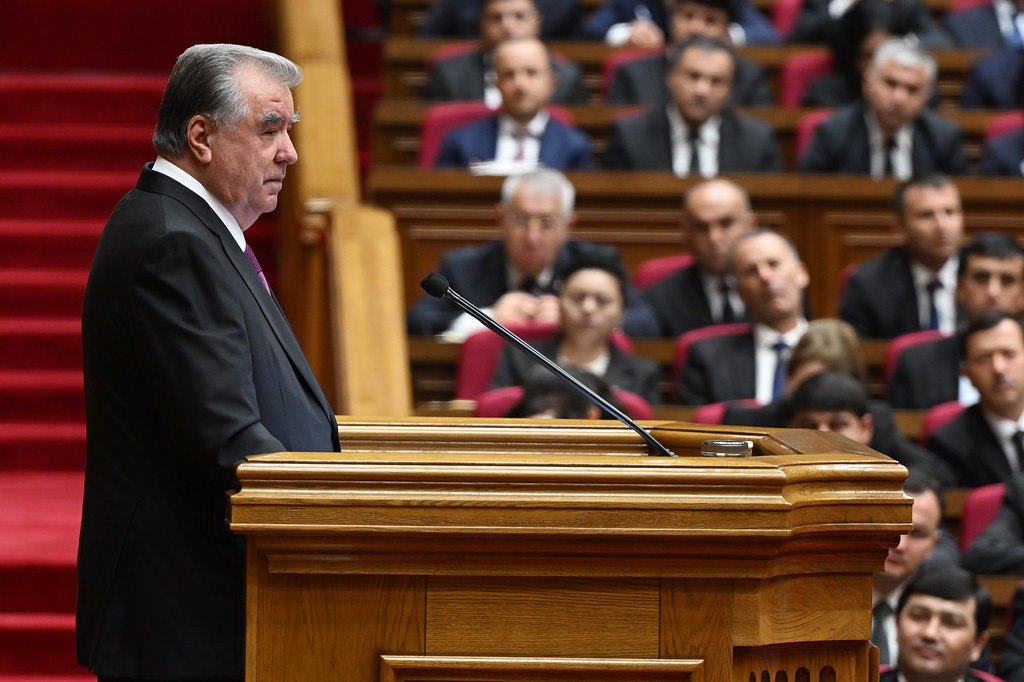
President Emomali Rahmon has acknowledged that Tajikistan’s population continues to endure severe electricity rationing during the winter months, and has outlined steps the government is taking to alleviate the crisis. “We are fully aware of the challenges faced by the people of Tajikistan during the period of temporary restrictions on electricity supply,” Rahmon said in his annual address to parliament on December 16, adding that authorities are implementing all necessary measures to address the issue. Rahmon attributed the shortages primarily to rapid population growth and the expansion of industrial production, both of which have significantly increased domestic electricity consumption. He also cited unfavorable weather conditions, including below-average rainfall last autumn, which reduced water inflows into reservoirs that supply the country’s hydropower plants. He noted that since independence, 1.3 million new homes have been built to accommodate over 8.4 million people. In the past seven years alone, 2,600 new industrial enterprises have begun operations, further raising electricity demand. Despite these pressures, Tajikistan has steadily increased electricity production. Over the past decade, annual generation has risen by 7 billion kilowatt-hours, from 17.2 billion in 2015 to 24.2 billion in 2025, an increase of approximately 40%. However, domestic demand is projected to grow by an additional 31% by 2030 compared to 2025 levels. Over the past ten years, investments in the energy sector have added 1,017 megawatts to the country’s installed capacity. A further 200 megawatts were gained through the rehabilitation and modernization of existing plants. One of the most recent projects was the modernization of the Kairakkum Hydroelectric Power Plant, completed in November 2025, which increased its capacity from 114 megawatts to 174 megawatts. While Tajikistan possesses vast hydropower potential, it has long struggled with chronic energy shortages. In response, the government has prioritized large-scale hydropower projects, particularly the Rogun Dam and Hydropower Plant, which is expected to be central to achieving domestic energy security and establishing Tajikistan as a regional electricity exporter. Rahmon announced that the third generating unit of the Rogun plant is scheduled for commissioning in September 2027, marking a key milestone on the path to full energy independence. In parallel, construction has begun on two large solar power plants, each with a capacity of 250 megawatts, in the Sughd and Khatlon regions. Both facilities are expected to be operational by August 2026. He also emphasized the importance of improving energy efficiency alongside expanding generation capacity. Electricity losses remain high, exceeding 3 billion kilowatt-hours annually. Rahmon called for accelerating the rollout of a nationwide digital billing system, which he said has already reduced losses. The introduction of modern digital billing and payment technologies revealed that 30% to 40% of households were previously not paying for electricity. Since the system’s implementation, losses have declined. In the first 11 months of 2025, total electricity losses stood at approximately 3 billion kilowatt-hours, 500 million kilowatt-hours less than during the same period the previous year.

Glacier Melt Threatens Central Asia’s Water Security, Experts Warn at Regional Forum

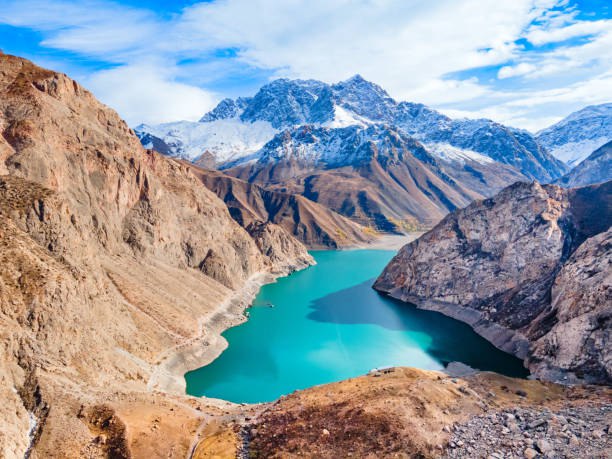
The accelerating retreat of glaciers poses a serious risk to water security across Central and West Asia, scientists and journalists warned during an online media forum jointly hosted by the Asian Development Bank (ADB) and the International Centre for Integrated Mountain Development (ICIMOD) on December 10, according to Asia-Plus. The forum focused on the growing impact of glacial melt in mountain regions, including the Pamirs, Tien Shan, Hindu Kush, and Himalayas, where shrinking ice reserves are increasingly disrupting water supplies for agriculture, energy, and drinking water. A key highlight was the ADB’s Glacier to Farms (G2F) program, presented by senior climate adaptation specialist Chris Dickinson. The initiative, spanning nine countries including Tajikistan, Uzbekistan, Armenia, and Georgia, aims to link glacier monitoring with practical, climate-resilient policy measures. Unlike past approaches that primarily diagnosed the problem, G2F offers technical and financial solutions designed to support communities in adapting to climate change. The $3.5 billion initiative, backed in part by $250 million from the Green Climate Fund, leverages a co-financing model that aims to attract $10 in additional investment for every dollar committed. The program envisions a full climate adaptation chain from satellite-based glacier monitoring and mountain observation stations to downstream interventions such as crop insurance, farmer support, and modernization of water infrastructure. “Glaciers are the origin of the entire food and water system,” Dickinson said. “Their rapid retreat threatens lives and livelihoods far beyond mountain regions.” Tajikistan serves as a pilot site for the program due to its heavy reliance on hydropower and its largely mountainous terrain. One of the project's key goals is to enhance the country’s hydrometeorological services and strengthen monitoring of snow cover, glacier movement, landslides, and related hazards. A modern early warning system is being developed for the Panj River basin, combining data on glacial lakes, mudflows, precipitation, and seismic activity. The alerts will be sent to vulnerable communities via mobile networks, complemented by local training programs to ensure proper responses. Forum participants noted that the effects of glacial retreat are already evident. Glaciers in the Tien Shan and Pamir ranges feed the Amu Darya and Syr Darya rivers, vital water sources for Central Asia’s agriculture, energy, and drinking needs. An estimated 74% of the Amu Darya’s flow comes from snow and glacier melt. In the Indus basin, the figure is about 40%. Yet only a small number of the region’s more than 54,000 glaciers are regularly monitored, leaving gaps in early warning systems and long-term planning. Experts from ICIMOD and ADB described glacier melt as a “cascading crisis.” Rising temperatures are fueling more frequent landslides, floods, and mudflows, while droughts reduce crop yields and damage pastures. Glacial lake outburst floods, sudden and destructive releases of water, pose grave risks to nearby settlements. Since the 19th century, the region has recorded around 500 such incidents, and their frequency could triple by the end of this century. Heatwaves and water quality issues further compound the risks. Recent glacial activity in Tajikistan underscored the forum’s urgency. In October, a massive...

How Tajikistan Is Struggling to Keep the Lights On Amid Winter Power Shortages

As winter grips Tajikistan, severe electricity restrictions have become a daily reality. While officials claim that recent rainfall has helped partially stabilize the country’s largest hydroelectric power plant, residents across multiple regions report worsening shortages, with power barely available for a few hours each day. Government officials say that water inflow into the Nurek Reservoir has increased following recent rains. Kurbon Ahmadzoda, a representative of the state energy company Barki Tojik, reported an increase of 30-40 cubic meters per second, enabling authorities to supply electricity for four to five hours daily. Earlier, the government had attributed stricter electricity limits to a drop in water levels at the Nurek Hydroelectric Power Plant, which generates over half of Tajikistan’s electricity. A prolonged dry spell had reduced reservoir levels, triggering the latest round of supply cuts. “As of December 9, around seven meters of the reservoir’s total 53-meter reserve have already been used,” Ahmadzoda said, adding that recent rainfall had improved inflows into the Vakhsh River, which feeds the plant. Dustmurod Toirov, head of the Transmission Networks Control Center, confirmed a 15-20% increase in water inflow. As a result, daily depletion of the reservoir dropped from 23 centimeters to 17 centimeters. This, he said, allowed authorities to extend supply in some areas by an additional two to two-and-a-half hours. Toirov also claimed that residents in Khujand, Bokhtar, Kulob, and the Rudaki district were receiving consistent electricity, with high-rise buildings fully supplied. However, social media posts paint a different picture. Dozens of residents report receiving only one to three hours of electricity per day, describing increasing hardship as winter progresses. To address consumption, authorities have implemented strict rationing measures. Toirov said automated power cuts are triggered when household usage exceeds 4 kW, a move he claims has already led to more economical electricity use. In late November, the “Distribution Electric Networks” company sent mass SMS warnings to citizens: exceeding usage limits would result in 30-minute power cuts. Amid the broader energy crisis, the government has also introduced new penalties targeting illegal cryptocurrency mining, which officials say consumes large amounts of stolen electricity. Electricity rationing in Tajikistan typically begins in mid-autumn and continues through spring. However, in the past two years, restrictions have started earlier, as soon as September. The 2024-2025 winter has seen some of the harshest limits yet, with some regions receiving just two to four hours of electricity per day.

EDB Establishes Investment Bridge Between Gulf Capital and Central Asian Projects

The Eurasian Development Bank (EDB), headquartered in Almaty, has opened a representative office in Abu Dhabi Global Market (ADGM), the United Arab Emirates’ international financial center, marking a strategic move to connect Gulf Cooperation Council (GCC) investors with high-potential projects across Central Asia. According to the Bank, the new platform will offer GCC investors structured investment opportunities backed by EDB analytics, regional expertise, and strong ties with the governments of its member states, Armenia, Belarus, Kazakhstan, Kyrgyzstan, Russia, Tajikistan, and Uzbekistan. Through this initiative, investors will gain access to infrastructure and sustainable development projects with optimized risk-return profiles. At the launch ceremony, EDB Management Board Chairman Nikolai Podguzov underscored the strategic significance of the move. “We are creating an ‘investment highway’ between Gulf capital and opportunities in Central Asia. Our new office in Abu Dhabi reinforces our role as a regional bridge, combining local knowledge with tailored financial instruments. Investors gain access to proven projects with favorable risk-return dynamics, while Central Asian economies unlock new development funding.” A centerpiece of the new platform is a specialized credit fund dedicated to financing infrastructure development in Central Asia. Registered under ADGM jurisdiction, the fund will focus on debt financing for EDB’s infrastructure portfolio. The Bank highlighted ADGM’s regulatory advantages, noting that the fund will offer Middle Eastern and global investors a secure and efficient entry point into the region’s development landscape. EDB will serve as both a structuring partner and co-investor, providing access to a diversified project pipeline. Priority Sectors for Investment Transport and Logistics: The development of the North-South Corridor could boost transit volumes through Central Asia by up to 40%, significantly reducing shipping distances between the Gulf and key Eurasian markets. Water Sector and Agribusiness: The irrigation equipment market in Central Asia is valued at approximately $426 million annually, while the broader water supply sector is worth up to $2 billion. Renewable Energy: The sector continues to attract major players such as the UAE’s Masdar, which has established a growing footprint across Central Asia. Strengthening Gulf-Central Asia Economic Ties In recent years, the Gulf states have become major trading partners and investors in Central Asia. According to EDB data, trade between the Gulf and Central Asia reached $3.3 billion in 2024, a 4.2-fold increase since 2020. Imports from the Gulf made up 80% of the total trade turnover. Top Central Asian trading partners with the Gulf in 2024 were: Turkmenistan - $2 billion (61%) Uzbekistan - $740 million (23%) Kazakhstan - $302 million (9%) The highest trade growth rates were recorded in: Turkmenistan - up 9.9 times Kyrgyzstan - up 9.5 times Uzbekistan - up 8.1 times The UAE accounted for 97% of all Gulf-Central Asia trade. For Turkmenistan, Gulf trade represented around 10% of total foreign commerce, while Kyrgyzstan’s share stood at approximately 1%, with even lower figures across other regional states. The EDB projects continued growth in trade, citing an unrealized potential of $4.9 billion, including $4.4 billion in potential Gulf exports (motor vehicles, electronics, jewelry) and $500...

Hydropower, Social Media and Climate Change: Some News From Tajikistan That You May Have Missed

Drought Triggers Power Rationing at Nurek Hydro Station In early December, the Tajik government reintroduced electricity rationing after reservoir levels at the Nurek Hydroelectric Power Station fell sharply, due to an unusually dry autumn. The station normally supplies around 70% of the national grid, but current water levels are significantly below last year’s benchmark, affecting both domestic consumption and exports. According to Reuters, water levels have dropped more than three meters in the past month. With shortages now affecting many regions, authorities have ordered public buildings to cut electricity outside of working hours and have switched off most street lighting. Tajikistan is seeking emergency imports from Uzbekistan, Turkmenistan and Kazakhstan to stabilize supply. The crisis highlights vulnerabilities in a system dominated by hydropower. While Tajikistan has invested heavily in modernizing Nurek and other plants to improve winter reliability, lower precipitation remains a persistent threat. For regional energy markets, particularly those looking at cross-border electricity trade, the situation demonstrates how even large renewable systems are becoming more unpredictable under climate stress. Rogun: Progress, Profits, and Persistent Disputes Ambition continues to define the Rogun hydropower project, intended to make Tajikistan a top electricity exporter in the Eurasia region. With a projected capacity of 3,780 MW, Rogun is designed to host the world’s tallest dam. Financing momentum is building: the Asian Infrastructure Investment Bank has launched a $500 million multi-phase initiative, and Tajikistan has signed an energy-sale agreement with Uzbekistan at 3.4 US cents per kWh, paving the way for long-term regional integration. But Rogun’s size continues to attract scrutiny, especially downstream. An investigation has been approved by the World Bank’s Inspection Panel into claims from Uzbekistan and Turkmenistan that altered flows on the Amu Darya river could damage farmland and ecosystems. The project’s social footprint is also expanding, with resettlement estimates reaching as high as 60,000 people. Development banks have slowed some financing, pending stricter environmental and regional safeguards. Local environmental researchers and activists argue that international oversight is still insufficient, warning that the cumulative ecological impact of Central Asian dam-building could become irreversible if accountability is delayed. Digital “Likes” Decriminalised, But Restrictions Remain President Emomali Rahmon has signed amendments to remove criminal penalties for “liking” or otherwise reacting to online content labelled as "extremist". Under previous legislation, social media users could face up to 15 years in prison for interacting with banned material. More than 1,500 people have been prosecuted under those rules, according to Reuters. The government presented the reform as a correction of overly zealous enforcement, following Rahmon’s public criticism of harsh prosecutions. Yet rights monitors see only minimal change. The latest Human Rights Watch report on Tajikistan notes a continued clampdown on media, opposition figures and citizen journalists. The Committee to Protect Journalists ranks Tajikistan among the most restrictive media environments in Eurasia. European officials have echoed these concerns. An OSCE-backed statement by European embassies denounced the opaque eight-year treason conviction of journalist Rukhshona Khakimova, reportedly linked to analysis of Chinese policy. For many observers, the relaxed online...

Tajikistan Introduces Prison Terms for Crypto Mining Using Stolen Electricity

Tajikistan has formally introduced criminal liability for the unauthorized use of electricity to mine cryptocurrency. On December 3 the country’s parliament approved amendments to the Criminal Code, adding Article 253(2): “Illegal use of electricity for the production of virtual assets.” Under the new law, violators face penalties ranging from fines of $1,650 to $8,250 or prison sentences of two to eight years, depending on the severity of the offense. The base-level offense, using stolen electricity for mining, carries a fine equivalent to $1,650 to $4,070. If committed by a group acting in coordination, penalties increase to $4,125-8,250 or two to five years' imprisonment. In cases involving organized groups and “particularly large-scale” electricity theft, offenders may face five to eight years in prison. Presenting the bill to parliament, Attorney General Khabibullo Vokhidzoda warned that unregulated mining has already contributed to regional power outages and an uptick in related crimes. “The illegal circulation of virtual assets contributes to a number of crimes, such as electricity theft, damage to state infrastructure, and the laundering of criminal proceeds,” Vokhidzoda said. He reported that damages from illegal mining operations have reached $3.52 million to date, with four to five criminal cases currently under investigation. Law enforcement officials have recorded cases of mining equipment being smuggled into the country and illegally connected to the national grid. Member of Parliament Shukhrat Ganizoda outlined the technical challenges posed by such operations. “A typical ASIC consumes up to 3.5 kWh, while more powerful models use 5–6 kWh. Large farms run thousands of these devices, placing an enormous strain on the electrical system,” he said. Ganizoda added that perpetrators often bypass meters or make illegal connections to reduce operating costs and maximize profits. The new legislation, he said, aims to deter tax evasion schemes, unauthorized data encryption, and attempts to circumvent commodity tracking systems. The law will take effect after it is signed by President Emomali Rahmon and officially published in state media. Tajikistan had already strengthened penalties for illegal electricity use and non-payment. Currently, such offenses are punishable by fines ranging from $2,970 to $9,900 or prison terms of three to ten years. The legislative crackdown comes amid the country's annual autumn-winter energy crisis. This year, electricity shortages are particularly severe, with some regions receiving just two to four hours of power per day. Authorities hope the new measures will ease pressure on the national grid and help prevent further outages.