• KGS/USD = 0.01144 0%
  • KZT/USD = 0.00212 0%
  • TJS/USD = 0.10432 0%
  • UZS/USD = 0.00008 0%
  • TMT/USD = 0.28490 0%
  • KGS/USD = 0.01144 0%
  • KZT/USD = 0.00212 0%
  • TJS/USD = 0.10432 0%
  • UZS/USD = 0.00008 0%
  • TMT/USD = 0.28490 0%
  • KGS/USD = 0.01144 0%
  • KZT/USD = 0.00212 0%
  • TJS/USD = 0.10432 0%
  • UZS/USD = 0.00008 0%
  • TMT/USD = 0.28490 0%
  • KGS/USD = 0.01144 0%
  • KZT/USD = 0.00212 0%
  • TJS/USD = 0.10432 0%
  • UZS/USD = 0.00008 0%
  • TMT/USD = 0.28490 0%
  • KGS/USD = 0.01144 0%
  • KZT/USD = 0.00212 0%
  • TJS/USD = 0.10432 0%
  • UZS/USD = 0.00008 0%
  • TMT/USD = 0.28490 0%
  • KGS/USD = 0.01144 0%
  • KZT/USD = 0.00212 0%
  • TJS/USD = 0.10432 0%
  • UZS/USD = 0.00008 0%
  • TMT/USD = 0.28490 0%
  • KGS/USD = 0.01144 0%
  • KZT/USD = 0.00212 0%
  • TJS/USD = 0.10432 0%
  • UZS/USD = 0.00008 0%
  • TMT/USD = 0.28490 0%
  • KGS/USD = 0.01144 0%
  • KZT/USD = 0.00212 0%
  • TJS/USD = 0.10432 0%
  • UZS/USD = 0.00008 0%
  • TMT/USD = 0.28490 0%

Viewing results 151 - 156 of 509

Tajikistan Authorities Step Up Crackdown on Illegal Mining and Electricity Theft

Tajikistan’s Prosecutor General Khabibullo Vokhidzoda has reported a rise in illegal cryptocurrency mining operations and electricity theft across the country. Illegal Cryptocurrency Mining In the first half of 2025, authorities identified and recovered 32 million somoni ($3.52 million) in damages linked to stolen electricity used to power cryptocurrency mining equipment. “There are individuals who import mining equipment from abroad and operate cryptocurrency farms illegally,” Vokhidzoda said. Currently, 4-5 criminal cases are under investigation involving the installation and operation of such devices. Cryptocurrency, he noted, is a digital currency maintained through a decentralized payment system, with mining requiring high-powered computers, stable internet, and substantial electricity consumption. Although Tajikistan does not have a legal framework regulating cryptocurrency mining, law enforcement regularly shuts down illegal farms. Recently, the Sughd Region Prosecutor’s Office uncovered seven cases in which 135 mining devices were found operating inside residential buildings, causing an estimated 287,939 somoni ($31,673) in damages. Widespread Electricity Theft Illegal electricity use remains a major problem. Since January, 3,988 individuals have faced administrative or disciplinary action, while 190 criminal cases have been opened. The total damages recovered so far amount to 38.7 million somoni ($4.26 million). Electricity debts are also mounting: subscribers accumulated 273 million somoni ($30 million) in unpaid bills in the first half of 2025. Nationwide, total arrears stand at 4.6 billion somoni ($506 million), with 1.6 billion somoni ($176 million) owed by households and the rest by enterprises and organizations. Tougher Penalties Introduced This year, Tajikistan increased fines for electricity theft and non-payment. Under the Criminal Code, violations can now result in fines from 27,000 to 90,000 somoni ($2,970-$9,900) or imprisonment for three to ten years. The Administrative Offenses Code also provides for fines ranging from 1,500 to 22,500 somoni ($165-$2,475) for misuse of electricity and heat.

Archaeologists in Tajikistan Uncover 7th-Century Sewer System

Archaeologists in Istaravshan, in Tajikistan's northwestern Sughd region, have unearthed a remarkably well preserved sewer system dating back to the 7th century AD. The discovery was announced by architect and excavation participant Amindjon Khomid. The system was first uncovered in 2023 in the Kala-i-Mugh area during work conducted jointly with Professor Rakhim Nabiev, Doctor of Historical Sciences from Khujand. Ancient Engineering in Istaravshan Preliminary estimates place the sewer system’s age at around 1,300 years. Geological studies suggest even older cultural layers may lie beneath, potentially dating to the 1st century AD and as far back as five millennia. During excavations, archaeologists also found ceramic jugs from the 3rd and 6th centuries, as well as earlier eras. One 6th-century jug was made of concrete and lined with clay on the inside, an unusually advanced technology for its time. Khomid noted that the design and condition of the artifacts point to a high level of ancient engineering skill. Unique Jug from Khalkajjar As reported by The Times of Central Asia, earlier this year, archaeologists from the National Museum of Tajikistan uncovered another significant artifact at the Khalkajjar monument near the village of Sarband. In May 2025, they discovered a clay vessel bearing a complete inscription in the Bactrian language, dating to the Kushan Empire (1st-3rd centuries). The inscription, written in a distinctive broken script, was translated by Professor Nicholas Sims-Williams and numismatist Joe Cribb. It reads: “This water jug belongs to the woman Sagkina.” Researchers say such inscriptions are rare and provide valuable insights into literacy, property ownership, and social life in the Kushan Empire. The Kushan Empire was one of the largest states in ancient Central Asia, encompassing parts of modern Afghanistan, Pakistan, India, southern Uzbekistan, and Tajikistan. The Bactrian language, widely used in administration and trade at the time, remains a key tool for understanding the region’s history. Traces of Ancient Life in the Zeravshan Valley In November 2024, an international archaeological team reported the discovery of the multi-layered Soi Khavzak site in the Zeravshan Valley, containing evidence of human activity dating back 150,000 years. Led by Professor Yossi Zeidner of the Hebrew University, excavations revealed stone tools, animal bones, and plant remains from periods spanning the late to middle Paleolithic. Scientists believe the region may have served as a migration corridor for both Homo sapiens and Neanderthals, providing a place where they could meet and interact. The site’s excellent preservation of organic matter, including bones and wood, offers the possibility of discovering human remains, a find that could help identify the species of ancient inhabitants in Central Asia. Experts say these recent discoveries not only expand understanding of Tajikistan’s engineering and cultural history, but also highlight the region’s role as a hub of human innovation and migration over thousands of years.

China-Central Asia Trade Nearly Triples Since 2020

Trade between China and the countries of Central Asia reached $66.2 billion in 2024, nearly triple the 2020 level, according to the Eurasian Development Bank (EDB). Imports from China accounted for about 60% of total trade turnover. China’s largest trading partner in the region is Kazakhstan, with bilateral trade valued at $30.1 billion (46% of total China-Central Asia trade), followed by Uzbekistan at $18 billion (27%) and Turkmenistan at $10.6 billion (16%). China’s share in Central Asia’s overall trade turnover has risen sharply, from 17.7% in 2020 to 24.1% in 2024. However, the level of dependence on Chinese trade varies by country: Turkmenistan - 55% of its total trade is with China. Kyrgyzstan - around 35%. Kazakhstan, Uzbekistan, and Tajikistan - between 20-22%. The EDB estimates significant untapped trade potential of $39.3 billion, about 60% of the current turnover. This includes $32 billion in potential Chinese exports to Central Asia (such as automobiles, electronics, and consumer goods) and $7.3 billion in potential Central Asian exports to China (including copper products, gold, and uranium). With deepening economic ties and major infrastructure links through the Belt and Road Initiative, analysts expect China-Central Asia trade to continue expanding in the coming years.

World Bank Approves $50 Million Grant for Tajikistan’s Economic Reforms

The World Bank’s Board of Executive Directors has approved a $50 million grant to support Tajikistan’s reform agenda, aimed at fostering competition, improving market conditions for the private sector, and strengthening public sector service delivery. The financing, announced by the Bank’s press service, comes from the International Development Association (IDA), its fund for low-income countries. The First Competitive and Inclusive Tajikistan Development Policy Operation (DPO) aligns with the country’s National Development Strategy 2030. Its primary goal is to help implement key government policies for building a more competitive and equitable economy. “We are proud to support these ambitious reforms designed to unlock the country’s economic potential and deliver tangible benefits to Tajik citizens,” said Wei Winnie Wang, Acting Country Manager for the World Bank Group in Tajikistan. “Fostering a more competitive and open market environment helps create new opportunities for businesses and consumers alike.” The DPO targets several priority areas: Increasing competition and improving governance in telecommunications and the digital sector. Expanding air transport connectivity. Strengthening the legal framework for foreign investment. Enhancing transparency in subsidies and power sector financing. By making energy sector funding more transparent, the reforms aim to encourage greater private investment in renewable energy. Another focus is improving the policy, legal, and financial frameworks for the Benefit Sharing Program (BSP) under the Rogun Hydropower Plant (HPP) Project. The BSP will channel part of Rogun’s electricity sales revenue to support poor and vulnerable households, complementing existing social safety nets. Development Policy Operations are one of the World Bank’s key tools for supporting policy and institutional reforms that drive sustainable growth and poverty reduction. The Bank last approved a similar operation for Tajikistan in 2023. Currently, the World Bank finances 26 projects in the country totaling $1.9 billion, combining IDA grants and highly concessional credits. As previously reported by The Times of Central Asia, poverty reduction in Tajikistan remains gradual. According to the World Bank’s Poverty, Prosperity, and Planet Report 2024, more than 25% of the population lives on less than $3.65 per day, even after the extreme poverty threshold was revised from $2.15 to $3.00.

No Kremlin Needed: Peace Breaks Out in Post-Soviet Eurasia

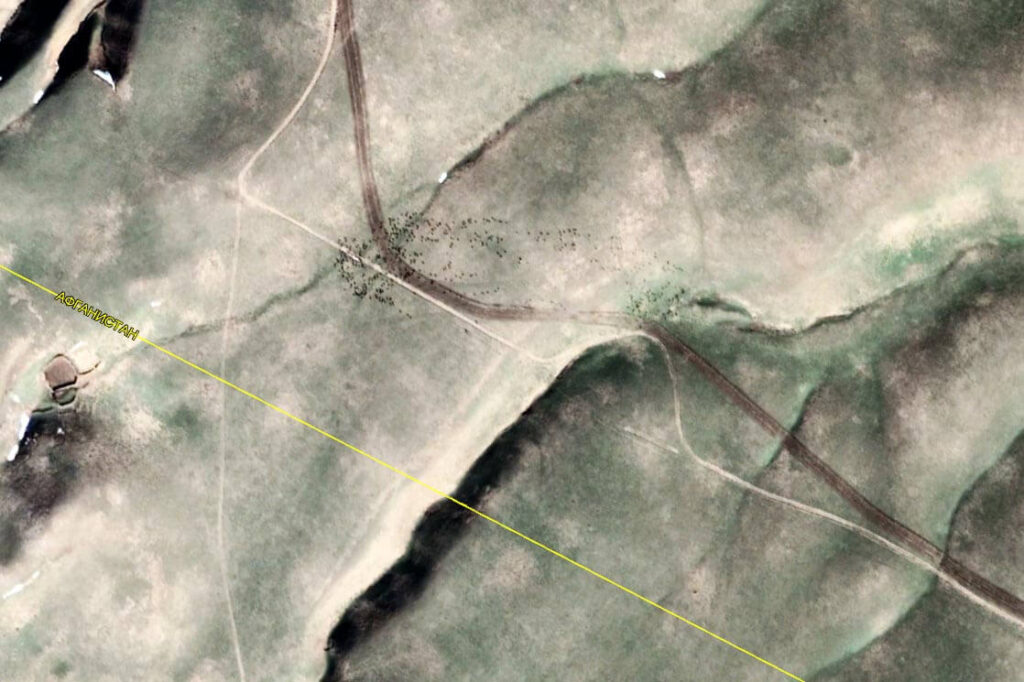
Two decades ago, no border dispute in the former Soviet space was resolved without a Kremlin handshake. Moscow was the central mediator. Not anymore. In March 2025, Tajikistan and Kyrgyzstan signed a historic border agreement without Moscow at the table. Not long after, Armenia and Azerbaijan began finalizing a peace treaty of their own. Now there’s talk of the two leaders traveling to the White House to sign the deal. Russia is losing its position as a peace broker in its near abroad. For decades, Russia played the “big brother” and mediator, inserting itself into every conflict with the implicit message: nothing moves without Moscow. Today, we are witnessing a different pattern. Regional actors are no longer passive clients of Russian peace making. Tajikistan and Kyrgyzstan resolved a decades-long border dispute without outside pressure. Armenia and Azerbaijan, once frozen in a Kremlin-managed stalemate, are building a peace path with Western and regional partners instead. The Armenia–Azerbaijan Case: Peace Without Moscow Once the unchallenged mediator in the Nagorno-Karabakh conflict, Moscow now finds itself watching from the sidelines as Armenia and Azerbaijan step toward a historic peace deal. After the 2020 war and Azerbaijan’s decisive 2023 offensive that reabsorbed Nagorno-Karabakh, Armenia was left exposed. Moscow, tied down in Ukraine and facing a credibility crisis, withdrew its peacekeepers from Karabakh in mid-2024. Yerevan, once loyal to Russia and the CSTO, found itself abandoned. The Kremlin neither enforced security guarantees nor deterred Azerbaijani advances. As public trust in Russia collapsed, Armenian leadership pivoted West. This vacuum opened the door for the U.S., and specifically Donald Trump, to step in. Armenian and Azerbaijani leaders met in Abu Dhabi in July, brokered by Emirati and American intermediaries. The Trump administration has since accelerated the process, with reports of a draft treaty offering mutual recognition, demilitarization zones, and the establishment of a strategic corridor linking Azerbaijan to Nakhchivan on a 100-year lease supervised by the U.S. This creative proposal, unimaginable under Russian mediation, has gained serious traction. If finalized at the White House, the agreement would represent the first U.S.-brokered peace deal in the post-Soviet space, a dramatic break with 30 years of Kremlin-led diplomacy. For the region, it’s a significant development: the Caucasus is no longer Russia’s to manage. Even more visible is Azerbaijan’s shift. Though long pursuing a multi-vector foreign policy, Baku now leans heavily toward Turkey, Israel, and the Gulf. Talks are reportedly underway for Baku to join a version of the Abraham Accords, with support from Washington and Riyadh.  The Tajikistan–Kyrgyzstan Case: Local Solutions In March 2025, Tajikistan and Kyrgyzstan signed a final border delimitation agreement. It ended three decades of violence, and territorial ambiguity. The signing came without Kremlin mediation, a sharp departure from Cold War-era norms when Moscow acted as both arbiter and enforcer in Central Asia’s internal affairs. The shift didn’t happen overnight. After the bloody clashes of 2021 and 2022, Russia distanced itself from active mediation, with the Kremlin signaling as early as late 2022 that it had no...

Central Asia Cuts Hunger Fivefold in Two Decades, FAO Reports

The number of people facing hunger in Central Asia has fallen sharply over the past two decades, according to a new report from the UN Food and Agriculture Organization (FAO). The share of the population suffering from undernourishment dropped from 13.1% in 2005 to just 2.8% in 2024, equivalent to a decline from 7.8 million people to 2.3 million. Much of this progress was achieved before 2019. The COVID-19 pandemic temporarily disrupted that trend: between 2020 and 2021, undernourishment rose to 2.5 million. However, with the introduction of stronger food security policies and an economic rebound, the region has since regained positive momentum. The FAO report notes that a healthy diet in Central Asia now costs an average of $3.78 per person per day. While this is below the global average of $4.46, it remains unaffordable for many low-income households, particularly in rural Tajikistan. In 2024, FAO estimates that approximately 14% of the region’s population, roughly 11.5 million people, still could not afford a balanced diet. Child health indicators have also improved. The prevalence of stunting among children under five has halved since 2012, falling from 14.8% to 7.4%. Rates of acute malnutrition have also declined, and childhood obesity rates have decreased slightly. Nonetheless, persistent challenges remain: anemia affects about one-third of women of reproductive age, and adult obesity is on the rise, increasing from 18.8% to 25.1% over the past decade. In 2024, Tajikistan remained the most food-insecure country in the former Soviet Union. According to the Global Hunger Index published by the International Food Policy Research Institute, 8.7% of its population faces food shortages, placing the country 65th out of 127 worldwide. In a sign of regional engagement, Uzbekistan officially joined the Global Alliance to Combat Hunger and Poverty in December 2024, reinforcing its commitment to the Sustainable Development Goals and to global cooperation on food security.