• KGS/USD = 0.01144 0%
  • KZT/USD = 0.00204 0%
  • TJS/USD = 0.10394 -0.38%
  • UZS/USD = 0.00008 0%
  • TMT/USD = 0.28571 0%
  • KGS/USD = 0.01144 0%
  • KZT/USD = 0.00204 0%
  • TJS/USD = 0.10394 -0.38%
  • UZS/USD = 0.00008 0%
  • TMT/USD = 0.28571 0%
  • KGS/USD = 0.01144 0%
  • KZT/USD = 0.00204 0%
  • TJS/USD = 0.10394 -0.38%
  • UZS/USD = 0.00008 0%
  • TMT/USD = 0.28571 0%
  • KGS/USD = 0.01144 0%
  • KZT/USD = 0.00204 0%
  • TJS/USD = 0.10394 -0.38%
  • UZS/USD = 0.00008 0%
  • TMT/USD = 0.28571 0%
  • KGS/USD = 0.01144 0%
  • KZT/USD = 0.00204 0%
  • TJS/USD = 0.10394 -0.38%
  • UZS/USD = 0.00008 0%
  • TMT/USD = 0.28571 0%
  • KGS/USD = 0.01144 0%
  • KZT/USD = 0.00204 0%
  • TJS/USD = 0.10394 -0.38%
  • UZS/USD = 0.00008 0%
  • TMT/USD = 0.28571 0%
  • KGS/USD = 0.01144 0%
  • KZT/USD = 0.00204 0%
  • TJS/USD = 0.10394 -0.38%
  • UZS/USD = 0.00008 0%
  • TMT/USD = 0.28571 0%
  • KGS/USD = 0.01144 0%
  • KZT/USD = 0.00204 0%
  • TJS/USD = 0.10394 -0.38%
  • UZS/USD = 0.00008 0%
  • TMT/USD = 0.28571 0%

Viewing results 169 - 174 of 470

Experts Warn Tajikistan’s Melting Glaciers Threaten Regional Food Security

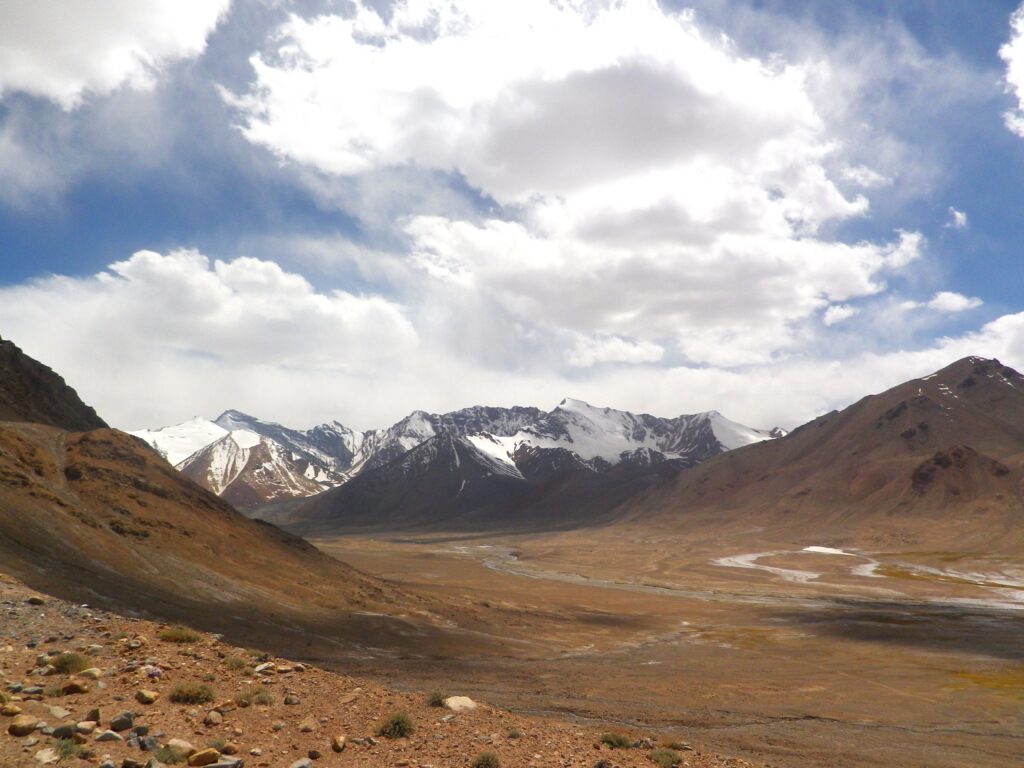
From May 29 to 31, Dushanbe is hosting the first-ever International Conference on Glacier Preservation. The event has drawn more than 2,500 representatives from 80 countries to the Tajik capital. On the eve of the forum, alarming data was released: Tajikistan has lost more than 1,000 glaciers over the past 23 years, a trend that jeopardizes food security for millions across Central Asia. Glaciers in Retreat, Climate in Crisis Tajikistan’s Deputy Prime Minister Dilrabo Mansuri noted that average air temperatures in the country have risen between 0.7°C and 1.9°C over the past 65 years, depending on the region. In the same period, glaciers have lost 20% of their volume and 30% of their area. “The disappearance of glaciers is not a distant threat, but a constant crisis,” emphasized Agasi Arutyunyan, the Food and Agriculture Organization's (FAO) representative in Tajikistan. Bahodur Sheralizoda, Chairman of the Committee on Environmental Protection, highlighted the increasing frequency of natural disasters, landslides, droughts, and floods, that threaten both the economy and daily life. UNICEF Executive Director Catherine Russell warned that up to 27% of regional water resources could be lost, with children and vulnerable groups being disproportionately affected. Amina Mohammed, Deputy Secretary-General of the United Nations, stressed the need for immediate resource mobilization and reliance on scientific data. Her UN colleague, Armida Salsiah Alisjahbana, Executive Secretary of ESCAP, proposed a regional meeting ahead of the 2026 UN Water Conference to build momentum. Agriculture Under Climate Stress Adham Musallam, Director of the World Food Programme in Tajikistan, reiterated that more than 1,000 glaciers have vanished since 2000, leading to water shortages and degradation of arable land. Forum participants underscored the urgency of adopting climate-resilient agricultural practices. Tajikistan is home to around 14,000 glaciers, with a combined volume exceeding 845 km³. Approximately 1,000 glaciers have disappeared over the last 150 years. The Vangjakh glacier, for example, is retreating by more than 16 meters annually. According to UNEP, Central Asia could lose over 50% of its glaciers by 2050, endangering the water supply of more than 70 million people. Tajik glaciers currently contribute over 80% of the Amu Darya’s flow, 1% of the Syr Darya’s, and around 64 km³ to the Aral Sea basin. Their decline could severely disrupt the region’s water balance and worsen shortages in neighboring countries. Regional Initiatives and Scientific Collaboration The forum emphasized the importance of inclusive climate action, particularly the leadership roles of women and youth. Yasmine Siddiqui of the Asian Development Bank stated, “Women must not only be participants, but also leaders in environmental decisions.” New initiatives included the launch of the Blue World of Central Asia 2.0 project and promotion of the WEFE Nexus approach, integrating water, energy, food, and ecosystem management to enhance cross-border cooperation. Participants also discussed establishing a regional glaciology coordination center, expanding satellite glacier monitoring, and leveraging science diplomacy to mitigate climate risks. The melting of Central Asia’s glaciers is no longer a future concern, it is a present-day crisis impacting water availability, food production, public health, and...

Global Report on Food Crises 2025: Tajikistan and Kyrgyzstan Identified as at Risk

For the first time, the 2025 Global Report on Food Crises, produced by the Food Security Information Network, has officially identified parts of Central Asia, particularly Tajikistan and Kyrgyzstan, as areas of concern for food security. Central Asia in the Spotlight The Food Security Information Network (FSIN) is a technical global platform for the exchange of expertise, knowledge and best practises on food security and nutrition analysis. Published on May 16, its food crises report for this year outlines a convergence of economic instability, persistently high food prices, and climate-related stressors that threaten to deepen food insecurity in the region. “In Central Asia, especially in Tajikistan and Kyrgyzstan, the situation is worrying due to economic difficulties, high food prices, and vulnerability to climate shocks,” the report states. The region’s inclusion in the list of at-risk areas marks a significant development, highlighting the urgency for both international attention and national-level action. External Dependence and Structural Fragility The report emphasizes the region’s heavy reliance on remittances and its ongoing struggle with inflation. Climate-related disruptions, such as droughts and temperature extremes, are already impacting agricultural yields, placing additional strain on the food system. Tajikistan is particularly vulnerable due to a combination of weak infrastructure, a small domestic market, and high poverty levels. While it has not yet been categorized among the 59 countries facing acute food crises, its identification as a potential hotspot signals a growing risk. This is not the first warning. In August 2024, the Eurasian Development Bank projected that Tajikistan’s food security could drop from 56.7% to 53% by 2035. The same forecast anticipated a 15% reduction in grain yields and a 9-11% decline in fruit and vegetable production, largely due to climate change. These projections align with observable trends: rising prices for basic goods, falling agricultural output, water shortages, and escalating logistical challenges driven by global conflicts. Acknowledging the Crisis President Emomali Rahmon addressed the issue directly during a May 17 seminar-meeting in the Danghara district, calling food security a national strategic priority. He warned that 2025 could be the hottest year on record and noted the compounding impact of global warming, inflation, and trade disruptions. Among the remedies proposed were the more efficient use of land, adoption of energy-saving technologies and agricultural innovations, investment in scientific research, and expanded replanting initiatives. The president also highlighted systemic issues in the sector, including declining meat and egg production, non-operational irrigation systems, and inadequate planting of vegetables and potatoes. The Road Ahead Tajikistan’s inclusion in the Global Report on Food Crises 2025 underscores the need for swift, coordinated efforts to strengthen food system resilience. Key priorities include addressing structural deficiencies in agriculture, adapting to climate change, and fostering regional and international cooperation.

Italy Raises the Bar in Central Asia: What to Expect from Giorgia Meloni’s Visit

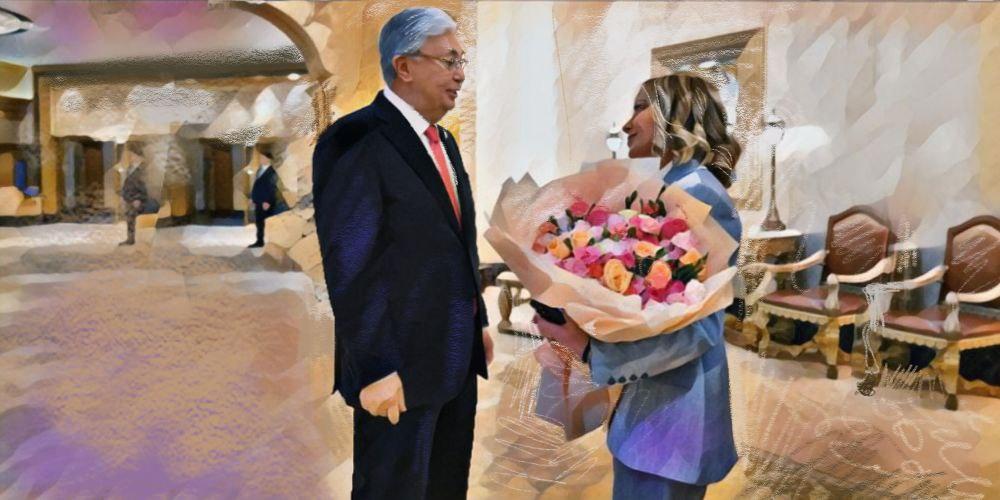
In recent years, Italy has emerged as one of the European countries most keen to maintain close relations with the countries of Central Asia. In mid-April, confirmation arrived that Prime Minister Giorgia Meloni would be travelling to the region this spring. The purpose of the trip is to visit Uzbekistan and Kazakhstan and attend a summit in Astana with the presidents of the five countries.  Meloni's visit is scheduled for the end of May, although the exact dates are not yet known. Italy was the first European country to involve the Central Asia region in a "1+5" summit. The first meeting was held in Rome in December 2019, and involved the then Italian Foreign Minister, Luigi Di Maio, and all Central Asian Foreign Ministers. This meeting took place a few months after Italy, the first and only EU country to take this step, signed a memorandum of understanding with China on the Belt & Road Initiative (in 2023, Rome decided to withdraw from the project). Central Asia is one of the regions at the heart of the original BRI project: the launch was announced in Kazakhstan in 2013. The most recent meeting at foreign minister level took place in May 2024, again in Rome, and was attended by the current Italian Foreign Minister, Antonio Tajani. But now Italy has decided to raise the bar and directly involve Meloni and her Central Asian counterparts. The multilateral forum is complemented by frequent visits to Italy by leaders from the region: Uzbekistan's Mirziyoyev in June 2023, Kazakhstan's Kassym-Jomart Tokayev in January 2024 and Tajikistan's Emomali Rahmon at the end of April 2024. For Italy, President Sergio Mattarella visited Uzbekistan in November 2023 and Kazakhstan in March 2025. Italy is one of the main economic partners in the region, and especially in Kazakhstan; the country ranks third (behind only China and Russia) in terms of trade with Astana. Trade turnover between Kazakhstan and Italy rose 25% in 2024 and reached almost $20 billion. The relationship is particularly strong in the energy sector, with over $18 billion accounted for exports of Kazakh oil and petroleum products in 2024. The Italian national oil and natural gas company Eni has been present in Kazakhstan since 1992, where it is a co-operator of the Karachaganak oil field and participates in the North Caspian Sea PSA consortium responsible for operations at the Kashagan oil field. Other significant sectors of trade between Italy and Kazakhstan are those of agricultural machinery and agricultural production. One area that could be subject to greater cooperation is defense, as demonstrated by the visit to Italy by Kazakhstan's Minister of Defense, Ruslan Zhakssylykov, in March this year. The potential is truly remarkable: during Mattarella's aforementioned flash visit to the country this March, with a meeting with Tokayev held directly at Astana airport, the Italian president emphasized the potential for further deepening the strategic partnership between Rome and Astana, which has been in place since 2011. Speaking of official documents, in June 2023, Italy and Uzbekistan...

Parents of Imprisoned Tajik Journalist Rukhshona Khakimova Urge Rahmon to Intervene

The parents of Rukhshona Khakimova, a Tajik journalist sentenced in February 2025 to eight years in prison on charges of treason, have issued an open letter to President Emomali Rahmon, urging him to reconsider their daughter’s case and facilitate her release. Family Appeals for Clemency A copy of the letter, signed by Khakimova’s parents, Zokir Khakimov and Makhsuda Sharopova, was published on social media on May 3. In the letter, the couple described their daughter’s upbringing in a family of educators committed to national values, patriotism, and humanism. Khakimov, a former school director in Kanibadam, and Sharopova, a retired teacher, emphasized their daughter’s achievements. “Our daughter graduated from school and university with honors, received a presidential scholarship, and always worked honestly and within the law,” they wrote. “We can say with complete confidence that Rukhshona could not have committed treason.” They appealed to Rahmon to intervene, especially considering that Khakimova is the mother of two young children. “We respectfully request and implore you, as the supreme leader of the nation, to take steps for her release,” the letter states. Background on the Charges Khakimova, 31, was convicted under Article 305, Part 2, Paragraph “c” of Tajikistan’s Criminal Code, “treason using her official position.” She was sentenced to eight years in prison following a closed trial. Human rights groups claim the charges were linked to her journalistic investigation into China’s influence in Tajikistan. Complicating the case is the fact that Khakimova is reportedly the niece of an opposition figure sentenced to 18 years for attempting a coup. Prior to her arrest, she had been placed under house arrest, her documents were confiscated, and on February 5, she was detained in the courtroom immediately following the verdict. An appellate court upheld the decision. Subsequently, about 230,000 somoni, savings intended for purchasing a home, were withdrawn from her bank account. On April 22, she was transferred from a pre-trial detention center in Dushanbe to a women’s correctional facility in Nurek. Public and International Reaction Khakimova’s sentencing has sparked condemnation both domestically and abroad. Journalists and human rights advocates described the case as emblematic of worsening conditions for press freedom in Tajikistan. Activists claim she faced repeated threats prior to her arrest. Earlier this year, a group of women and civil society activists also submitted a letter to Rahmon requesting leniency. International organizations including Human Rights Watch, Reporters Without Borders, and The Observatory for the Protection of Human Rights Defenders have called for her immediate release. Despite multiple appeals, Tajik authorities have yet to respond, and the sentence remains in effect.

OSCE, European Embassies Concerned About Media Freedom in Tajikistan

A conference was held in Dushanbe to mark World Press Freedom Day, celebrated annually on May 3. Despite Tajikistan's slight rise in the 2025 Press Freedom Index, international observers remain unconvinced that the situation in the country has improved. Official ratings vs. real-world conditions The event was organized by the media unit of the OSCE Office of Programs in Tajikistan, with support from Internews, the EU Delegation, and the embassies of Germany, France, and the United Kingdom. Discussions focused on the state of free speech, prospects for sustainable media development, and the role of women in journalism. According to Reporters Without Borders, Tajikistan ranked 153rd out of 180 countries in 2025, an improvement of two places from the previous year. However, Nuriddin Karshiboev, chairman of the National Association of Independent Media of Tajikistan (NAIMT), argued that the ranking does not reflect the lived reality. “The reality is different. The situation with freedom of expression and freedom of the press remains tense due to the prosecution of journalists, pressure on their relatives, self-censorship, and other factors,” he said. Karshiboev also criticized the ineffectiveness of existing mechanisms to protect journalists and a lack of understanding among some international media-support organizations. Freedom of speech is a right, not a privilege EU Ambassador to Tajikistan Raimundas Karoblis emphasized that journalism should never be grounds for intimidation or imprisonment. “No journalist should be subjected to intimidation or imprisonment for doing their job,” he told forum participants. Karoblis underlined that freedom of expression is not a political stance or cultural nuance, but a universally recognized right. “Freedom of expression in the media is a right, not a crime. The European Union’s protection of media freedom is not an external imposition. It is not a ‘European or Western value’ that can be exported or imposed, it is a universal human right recognized by all who believe in justice, dignity, and responsibility,” he said. He added that independent media do not threaten social stability but rather form its cornerstone. “Dynamic, independent media are not a threat to stability. They are the foundation of peace, democratic and economic progress,” Karoblis said, reaffirming the EU’s commitment to supporting journalists in Tajikistan and globally. High-profile cases against journalists In February 2025, Reporters Without Borders published a report highlighting increased repression of media figures in Tajikistan. One of the most notable cases involved freelance journalist Rukhshona Khakimova, who was sentenced to eight years in prison for treason following a closed trial. Her alleged offense was writing an analytical article on Chinese influence in Tajikistan. Khakimova is also the niece of an opposition politician sentenced to 18 years for an alleged coup attempt. Another case involved Ahmad Ibrohim, editor-in-chief of the weekly Payk, who was arrested in August 2024 on charges of corruption, extortion, and extremism. His trial was also held behind closed doors. According to media reports, the case was triggered by an officer from the State Security Committee demanding a bribe in exchange for renewing the paper’s state registration. Despite prosecution...

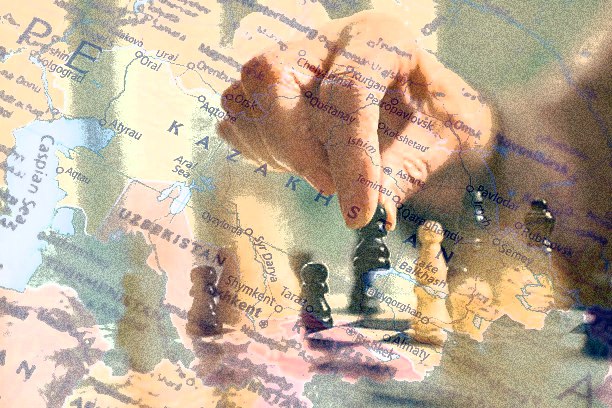
Breaking Old Ties: Central Asia’s Delicate Dance Between Russia and the West

Central Asian countries are increasingly asserting their independence in foreign policy, distancing themselves from traditional centers of global influence. Recent developments highlight a nuanced balancing act as states in the region navigate growing tensions between Russia and the West. Kyrgyzstan Pushes Back In Kyrgyzstan, the recent arrest of Natalya Sekerina, an employee of the Russian House in Osh, marked a notable assertion of sovereignty. Sekerina was detained under Part 1 of Article 416 of the Criminal Code of the Kyrgyz Republic, which pertains to the recruitment, financing, and training of mercenaries for armed conflict or attempts to overthrow state authority. Earlier, Sergei Lapushkin, an employee of Osh city hall, and two others were also detained in connection with the case.  All suspects were later placed under house arrest. Nevertheless, the arrests are seen by observers as a clear signal that Kyrgyzstan is not simply aligning with Russian policy, despite its economic dependence on Moscow, particularly due to labor migration. The move was reportedly a response to the April 17 detention of over 50 Kyrgyz nationals in a Moscow bathhouse, where Russian security forces allegedly used excessive force. The Kyrgyz Ministry of Foreign Affairs issued a formal note of protest. Russia later stated that the detainees were in the country illegally and some were suspected of links to radical groups.  At the same time, Kyrgyzstan is scrutinizing Western influence as well. In February, U.S. President Donald Trump announced funding cuts and a wind-down of the U.S. Agency for International Development (USAID). The announcement triggered debate in Kyrgyzstan, where some voices argued that while USAID had supported civil society, it also fostered instability and economic dependency. Critics claim the agency promoted Western values and helped establish a network of NGOs that played outsized roles in the country’s politics.  Kazakhstan and Uzbekistan Seek Equilibrium In Kazakhstan, USAID also came under fire. Parliamentary Deputy Magherram Magherramov criticized the agency for promoting what he described as values alien to Kazakh society, referencing controversial events such as women’s rights marches and LGBTQ+ parades in Almaty. He called for a formal review of foreign-funded NGOs.  Meanwhile, Uzbekistan witnessed a diplomatic rift during an April visit by Russian Foreign Minister Sergey Lavrov to the “Grieving Mother” memorial in Samarkand. Lavrov commented on the absence of a Russian-language inscription, provoking widespread backlash on Uzbek social media. Sherzodkhon Kudratkhodzha, rector of the University of Journalism and Mass Communications, responded sharply: “We are not their colony.” He also cited ongoing discrimination against Uzbek migrants in Russia, which, he argued, has been met with silence from Russian officials.  A More Independent Foreign Policy Central Asian nations are increasingly holding intra-regional and international meetings, often excluding Russia. On April 25, intelligence chiefs from the region gathered in Tashkent to coordinate on regional security threats.  The following day, a meeting of foreign ministers from Central Asia and China took place in Almaty. It was attended by Kazakh Foreign Minister Murat Nurtleu, Chinese Foreign Minister Wang Yi, and counterparts from Kyrgyzstan, Tajikistan, Uzbekistan, and a...