• KZT/USD = 0.00223
  • TJS/USD = 0.10810
  • UZS/USD = 0.00009
  • TMT/USD = 0.29850
  • KZT/USD = 0.00223
  • TJS/USD = 0.10810
  • UZS/USD = 0.00009
  • TMT/USD = 0.29850
  • KZT/USD = 0.00223
  • TJS/USD = 0.10810
  • UZS/USD = 0.00009
  • TMT/USD = 0.29850
  • KZT/USD = 0.00223
  • TJS/USD = 0.10810
  • UZS/USD = 0.00009
  • TMT/USD = 0.29850
  • KZT/USD = 0.00223
  • TJS/USD = 0.10810
  • UZS/USD = 0.00009
  • TMT/USD = 0.29850
  • KZT/USD = 0.00223
  • TJS/USD = 0.10810
  • UZS/USD = 0.00009
  • TMT/USD = 0.29850
  • KZT/USD = 0.00223
  • TJS/USD = 0.10810
  • UZS/USD = 0.00009
  • TMT/USD = 0.29850
  • KZT/USD = 0.00223
  • TJS/USD = 0.10810
  • UZS/USD = 0.00009
  • TMT/USD = 0.29850
22 September 2026

Viewing results 25 - 30 of 141

Prosecutor Seeks Life Sentences for Crocus City Hall Attack Defendants

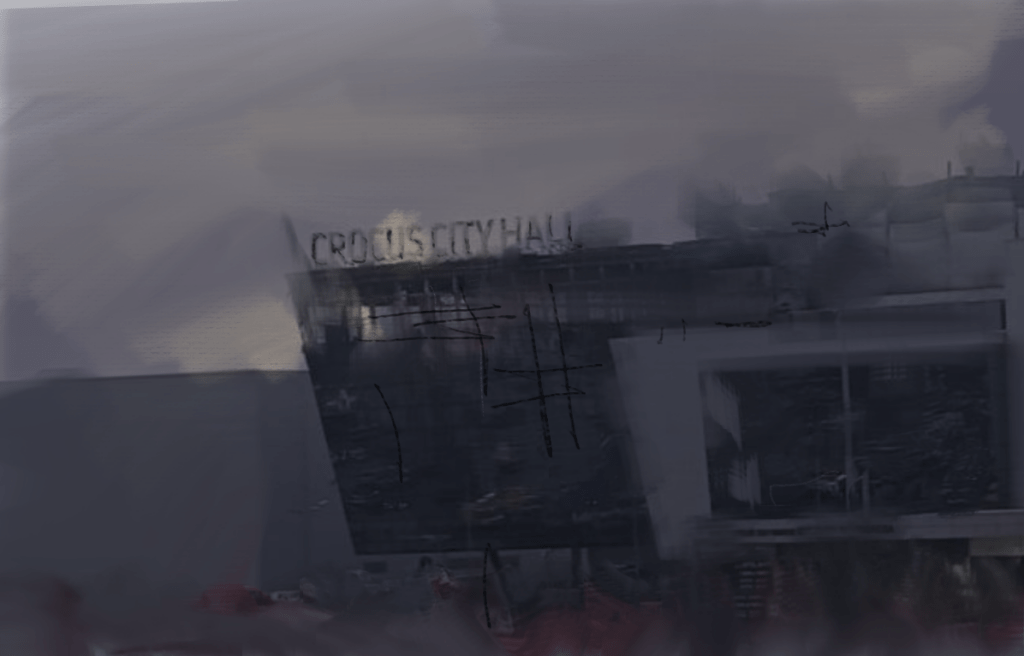
A state prosecutor has asked the Moscow City Court to sentence the alleged perpetrators of the Crocus City Hall attack to life imprisonment in a maximum-security penal colony. The request was made during closing arguments, lawyer Daniil Gauthier, who represents victims in the case, told RBC. According to the report, Fariduni Shamsiddin, Dalerjon Mirzoev, Muhammadsobir Faizov, and Saidkrom Rachabalizoda are charged with undergoing training for the purpose of carrying out terrorist activities, illegal arms trafficking, participation in the activities of a terrorist organization, and committing a terrorist act under several articles of the Criminal Code. The state prosecutor also requested life sentences for 11 other defendants whom investigators consider accomplices. For four additional suspects, prosecutors are seeking prison terms ranging from 11 years and 9 months to 22 years and 10 months. Lawyer Lyudmila Ayvar, representing the victims, said the injured parties are insisting on the harshest possible punishment for both the direct perpetrators and their alleged accomplices. “Responsibility for terrorists must be inevitable, and the punishment must be proportionate to the scale of the grief caused and the public danger of what was committed,” she told RBC. She added that victims are asking the court to satisfy civil claims totaling more than 65 million rubles. “Terrorism is a crime that strikes not only specific individuals but also the very sense of security in the country. Leniency in sentencing would sound like permission to repeat it,” Ayvar said. The attack took place on March 22, 2024, at the Crocus City Hall concert venue in Krasnogorsk, in the Moscow region. According to investigators, four armed men entered the hall, opened fire on the audience, and set the building on fire. As a result, 149 people were killed and more than 550 were injured. The building was almost completely destroyed by the blaze.

Shooting in Tajikistan’s Detention Center: Prosecutor General’s Office Reveals Details of January Incident for the First Time

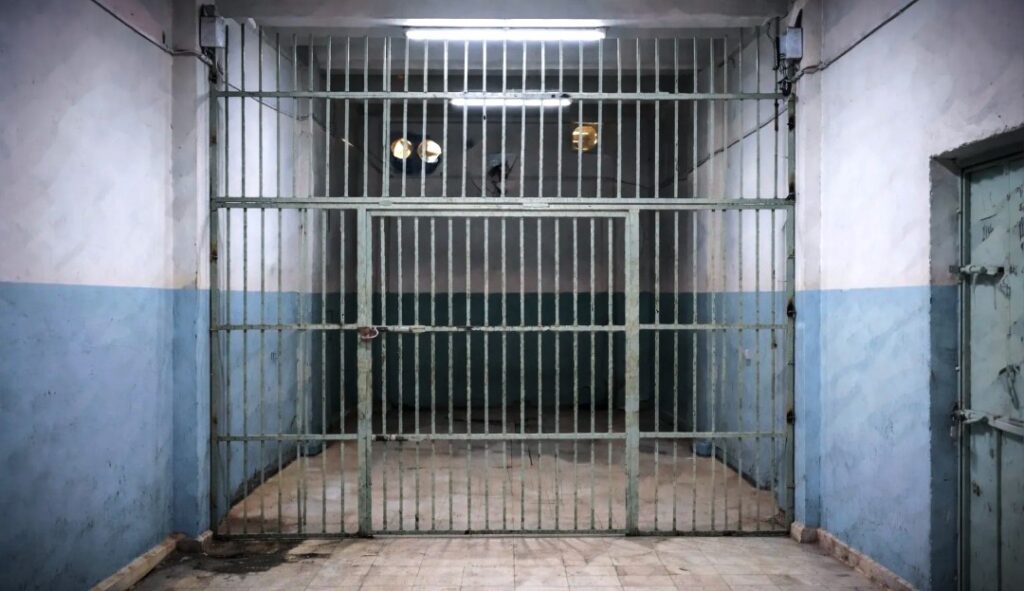
Tajik authorities have for the first time officially commented on the incident on January 31 at a detention facility in the city of Khujand. Tajikistan’s Prosecutor General, Khabibullo Vokhidzoda, disclosed details during a press conference in Dushanbe that was reported by Asia-Plus. Vokhidzoda confirmed that an armed confrontation took place at the Khujand pre-trial detention center. According to him, three prisoners attacked facility staff while in the exercise yard. The prosecutor general stated that the inmates used “various objects” to inflict bodily harm on staff members and assaulted another prisoner who was present. He said they ignored repeated demands to cease their actions and resisted, posing what he described as a serious threat to employees’ lives. As a result, the three prisoners were “neutralized” by security personnel. “While in the Khujand pre-trial detention center, in the exercise yard, they attacked the facility’s staff using various objects, causing them bodily harm and even beating another prisoner who was there. They ignored the staff’s demands to stop their actions and resisted, posing a serious threat to the lives of the facility’s employees. In this situation, they were neutralized by staff members responsible for the security of the correctional facility,” Vokhidzoda said. He emphasized that no staff members were killed, although they sustained injuries. He did not specify the number of injured employees. According to the prosecutor general, the three inmates had previously been sentenced to 12 to 14 years’ imprisonment for terrorist and extremist offenses. He added that they had repeatedly violated prison regulations, leading a court to impose stricter detention conditions. At the time of the incident, the prisoners were being temporarily held in the Khujand facility pending transfer. A criminal case has been opened under Articles 332 and 365 of Tajikistan’s Criminal Code. “How it happened, why it happened, who did it, all these questions will be clarified during the investigation,” Vokhidzoda said. This marks the first official confirmation of the incident. Earlier, Radio Ozodi reported on the events, citing sources who claimed casualties among both guards and inmates. At the time, journalists’ attempts to obtain official comment were unsuccessful. The Minister of Justice, whose ministry oversees correctional institutions, declined to comment. The January 31 incident is not the first serious episode of violence in Tajikistan’s penitentiary system, including in Khujand. In November 2018, a large-scale riot erupted at maximum-security prison 3/3 in Khujand. According to official data, 21 prisoners were killed during efforts to restore order. Two prison staff members were also killed and five guards were seriously injured. On February 3, 2025, unrest broke out at correctional facility No. 3/2 in the town of Vahdat, commonly known as “Kirpichny.” Official reports stated that three prisoners and three employees, including the prison director, were killed. On May 19, 2019, another riot occurred at the same Vahdat facility. According to official information, 30 inmates armed with knives and other sharp objects seized three employees and killed them. Five prisoners were also killed. During the subsequent suppression of the riot, 29...

Tajikistan Expands Asset Disclosure Requirements for Officials

Tajikistan has broadened the scope of officials required to submit income and asset declarations, as part of amendments to its Anti-Corruption Law. The updated legislation now includes employees of the National Bank, other state-run credit and financial institutions, and officials working in Tajikistan’s foreign missions and representative offices abroad. The revised law updates parts 4 and 5 of Article 21 and introduces six new provisions detailing the conditions and procedures for filing declarations. Officials who fail to submit required information or who submit “knowingly false” declarations, face dismissal or removal from office. Under the new rules, declarations must be filed by individuals performing organizational, managerial, administrative, or financial functions at state enterprises and institutions, as well as entities in which the state holds a stake of at least 50%. Technical and maintenance personnel are exempt. A specific clause obligates civil servants in diplomatic missions and other foreign-based institutions to file a property certificate. The range of assets subject to disclosure has been significantly expanded. Officials must now declare: residential properties, dachas, and other real estate; garden and agricultural plots, with size specified; vehicles and equipment; livestock and poultry; shares in commercial enterprises; securities and bank deposits; precious metals and gemstones, both in Tajikistan and abroad. The income declaration must include earnings from primary and secondary employment, as well as income from academic, creative, and teaching activities; property rentals; agricultural production; bank deposits; and other sources, with specific identification of income type. Newly appointed officials must file a declaration upon taking office. All officials are required to submit annual declarations by April 1 for the preceding year. High-ranking officials appointed by the president or the government must file with the tax authority at their place of residence and submit a certified paper copy to the Executive Office of the President. Members of parliament report via the Majlisi Namoyandagon, while village and settlement leaders submit declarations to district or city administrations. Failure to comply, or the discovery of false information, may result in denial of appointment or dismissal from a current post. Tajikistan introduced asset declaration requirements in 2004, initially covering only real estate, land, and securities. In 2020, the rules were broadened to include other forms of property, including livestock. However, declarations have never been made public. In 2019, then-head of the Civil Service Agency, Juma Davlat, explained that “Tajik society is not ready for this.” He added that the issue of transparency would be reconsidered “once the level of thinking and understanding in society rises to the level of Western countries.”

Dushanbe Teen Develops Tajikistan’s First AI Legal Assistant

Tajikistan has launched its first AI-powered legal assistant, designed to simplify access to legal information by explaining laws in plain language. The project, called Moni, was developed by 15-year-old Foteh Azizov, a tenth-grade student at School No. 6 in Dushanbe. Already, the platform is being used not only by the general public but also by practicing lawyers.  Azizov said the idea for Moni came from his own experience. While helping with content and promotion at his uncle’s law firm, he noticed how difficult it was for ordinary people and even himself, to understand the complex language used in legal documents. “Laws are often written in a complicated style, full of terminology,” Azizov explained. “That’s when I came up with the idea of creating a tool that explains the law in simple and accessible language for everyone.” He pitched the idea to his uncle, who supported the initiative and helped organize the project. “My motivation only grew, I wanted to build something that could really help people,” Azizov said. He taught himself the fundamentals of artificial intelligence, working through trial and error to create a functional prototype. A professional programmer later joined the team, assisting with website development and refining the platform’s features. Since its launch, Moni has proven useful not just to citizens but also to legal professionals, who use it as a convenient reference tool. The service is a free AI assistant specializing in Tajik law. It helps users locate relevant articles across a wide range of legal areas, including tax, land, labor, civil, and administrative law. Moni supports queries in multiple languages, including Tajik, Russian, English, and Kazakh. All inquiries are anonymous, and the platform does not collect any personal data. Its responses are based solely on publicly available legal documents. The most frequently asked questions revolve around taxes, business regulations, employment law, civil rights, and administrative violations. Looking ahead, Azizov says the team has many ideas for improving the platform, but their immediate goal is to continue developing the current product. “Our aim is to remain a free, user-friendly resource and become an indispensable legal advisor for everyone,” he said.

Tajikistan Condemns Fatal Stabbing of Boy in Russia Citing Ethnic Hatred

Tajikistan has condemned what it called an “ethnic hatred” attack in Russia after a 10-year-old boy from a Tajik family was stabbed to death at a school near Moscow, in a rare public rebuke aimed at a key partner for labor migration and security ties. The killing happened on December 16 in the village of Gorki-2 in the Odintsovo district of the Moscow region, according to Russia’s Investigative Committee, which said a minor attacked people at an educational institution, killing one child and injuring a school security guard. A video of the attack circulated on Russian social media after the incident. According to reporting by Asia-Plus, footage published by the Telegram channel Mash shows the teenage assailant approaching a group of students while holding a knife and asking them about their nationality. The video then shows a school security guard attempting to intervene before the attacker sprays him with pepper spray and stabs him. The assailant subsequently turns the knife on the children, fatally wounding the 10-year-old boy. A statement released by Tajikistan’s interior ministry said it feared the case could “serve as a pretext for incitement and provocation by certain radical nationalist groups to commit similar crimes.” Tajikistan’s response also drew attention after the foreign ministry said the attack was “motivated by ethnic hatred.” Dushanbe subsequently summoned the Russian ambassador to protest the attack, handing him a missive “demanding that Russia conduct an immediate, objective, and impartial investigation into this tragic incident.” The condemnation is particularly notable as Tajikistan rarely issues public criticism of Russia, which remains its main destination for migrant labor and a key security partner. According to Russian media, the attacker, who has admitted their guilt, subscribed to neo-Nazi channels and had sent his classmates a racist manifesto entitled "My Rage," in which he expressed hostility toward Jews, Muslims, anti-fascists, and liberals, a few days before the incident. Tajik migrants form one of the largest foreign labor communities in Russia and across Central Asia. Millions of Tajik citizens work abroad each year, most of them in Russia, sending remittances that are a critical source of income for families at home. According to the World Bank, remittances account for roughly half of Tajikistan’s gross domestic product in some years, making labor migration a cornerstone of the country’s economy. Many Tajik migrants work in construction, services, and transport, often in precarious conditions and with limited legal protections. The killing comes as Central Asian migrants in Russia face growing pressure to enlist in the war in Ukraine, with coercion through detention, deportation threats, and promises of legal status having been reported. The killing has also renewed scrutiny of rising xenophobia in Russia, particularly toward migrants from Central Asia. The Times of Central Asia has previously reported an increase in hate speech, harassment, and violent attacks targeting migrants, especially following major security incidents. Human Rights Watch has warned that Central Asian migrants in Russia face growing discrimination, arbitrary police checks, and racially motivated abuse, trends that have intensified in recent...

Tajikistan Introduces Prison Terms for Crypto Mining Using Stolen Electricity

Tajikistan has formally introduced criminal liability for the unauthorized use of electricity to mine cryptocurrency. On December 3 the country’s parliament approved amendments to the Criminal Code, adding Article 253(2): “Illegal use of electricity for the production of virtual assets.” Under the new law, violators face penalties ranging from fines of $1,650 to $8,250 or prison sentences of two to eight years, depending on the severity of the offense. The base-level offense, using stolen electricity for mining, carries a fine equivalent to $1,650 to $4,070. If committed by a group acting in coordination, penalties increase to $4,125-8,250 or two to five years' imprisonment. In cases involving organized groups and “particularly large-scale” electricity theft, offenders may face five to eight years in prison. Presenting the bill to parliament, Attorney General Khabibullo Vokhidzoda warned that unregulated mining has already contributed to regional power outages and an uptick in related crimes. “The illegal circulation of virtual assets contributes to a number of crimes, such as electricity theft, damage to state infrastructure, and the laundering of criminal proceeds,” Vokhidzoda said. He reported that damages from illegal mining operations have reached $3.52 million to date, with four to five criminal cases currently under investigation. Law enforcement officials have recorded cases of mining equipment being smuggled into the country and illegally connected to the national grid. Member of Parliament Shukhrat Ganizoda outlined the technical challenges posed by such operations. “A typical ASIC consumes up to 3.5 kWh, while more powerful models use 5–6 kWh. Large farms run thousands of these devices, placing an enormous strain on the electrical system,” he said. Ganizoda added that perpetrators often bypass meters or make illegal connections to reduce operating costs and maximize profits. The new legislation, he said, aims to deter tax evasion schemes, unauthorized data encryption, and attempts to circumvent commodity tracking systems. The law will take effect after it is signed by President Emomali Rahmon and officially published in state media. Tajikistan had already strengthened penalties for illegal electricity use and non-payment. Currently, such offenses are punishable by fines ranging from $2,970 to $9,900 or prison terms of three to ten years. The legislative crackdown comes amid the country's annual autumn-winter energy crisis. This year, electricity shortages are particularly severe, with some regions receiving just two to four hours of power per day. Authorities hope the new measures will ease pressure on the national grid and help prevent further outages.