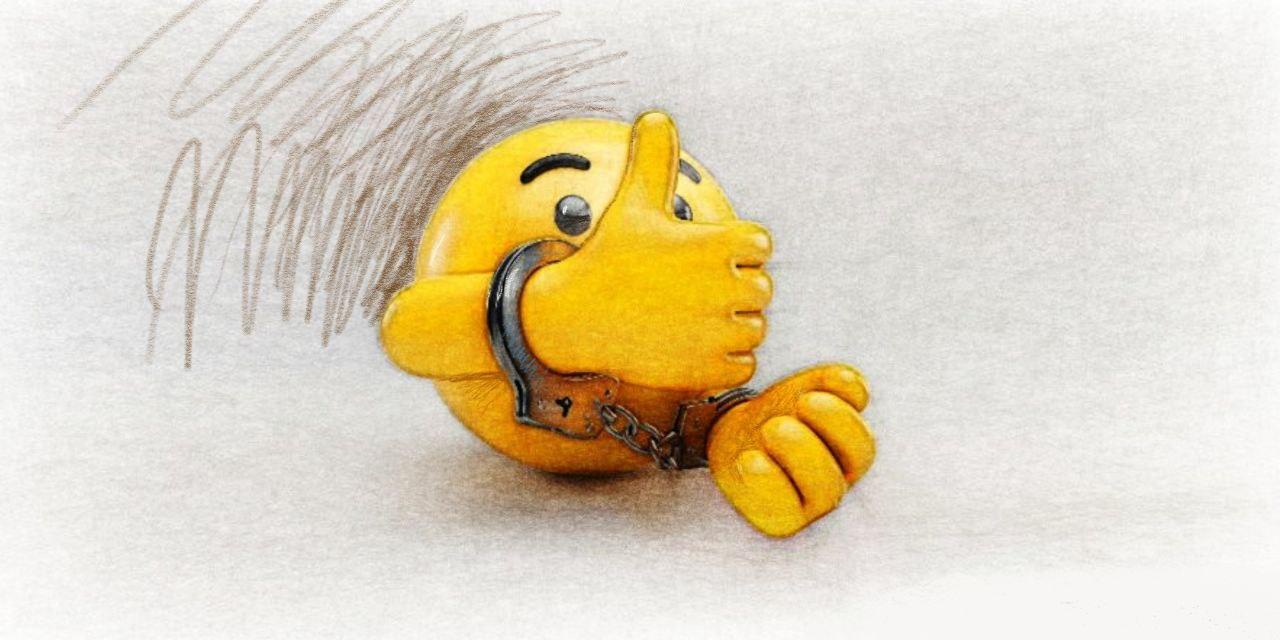
Tajikistan’s Prosecutor General has reported a decrease in terrorist and extremist crimes. Officials attributed the decrease to the easing of penalties for “likes” and shares on the internet, which came into force in early May 2025, when the authorities stated that “liking” certain types of online materials and sharing them on social networks would no longer, in themselves, constitute a criminal offense.
From 2018 onward, criminal liability was applied to the distribution, storage, or public endorsement of materials deemed extremist or prohibited. According to human rights groups, more than 1,500 Tajiks were imprisoned under the policy. Following recent changes, however, Prosecutor General Habibullo Vohidov said the number of terrorist and extremist crimes had decreased by more than 23%, by 314, compared to 2024.
According to Reuters, the clarification applies to online materials deemed extremist or terrorist in nature; “likes” or shares of such content would no longer automatically trigger criminal liability.
The recent changes implemented in Tajikistan have led to heated discussions among the public in Uzbekistan, where liability for online “likes”, posts, and comments continues. International organizations have for years characterized Uzbekistan’s enforcement of online speech provisions as a form of pressure on freedom of expression.
In Uzbekistan, enforcement previously focused primarily on materials related to extremism and terrorism, but legal changes in 2021 introduced criminal liability for online “discrediting” of the president and state authorities.
Local activist Rasul Kusherbayev wrote the following on his Telegram channel: “This issue is urgent for us, too. Law enforcement agencies, which lack the ‘nerve’ to punish officials who are illegally destroying the property of citizens, are not ashamed to hold citizens liable for a ‘like’”.
Some observers argue that Uzbekistan’s legislation is more regulated compared to that in Tajikistan. While liability for prohibited content had been established in Tajikistan, the exact list of prohibited materials was not consistently disclosed. In Uzbekistan, however, this list has been regularly updated and publicly announced in recent years.
Article 244.1 and the Prohibited List
Draft decisions related to prohibited information have appeared in Uzbek legislation since the 1990s. Documents regarding information policy signed in March 1999 on the Lex.uz website speak about banned information.
However, what was included in this list was not announced in open sources in Uzbekistan for years. The draft law on disclosing the list to the public was signed in 2014. Publicly available information about the evidentiary basis for earlier cases remains limited.
The list of social network accounts and sites prohibited in Uzbekistan was last updated in January 2026. Around 1,600 channels, pages, and materials were included in the list. Specifically, it includes 249 pages and channels on Facebook, 790 on Telegram, 265 on Instagram, 167 on YouTube, 36 on the Odnoklassniki social network, and 53 on TikTok. Materials in audio, video, and text formats on websites and social networks were included.
Although the list is publicly available, questions have arisen regarding its comprehensibility and clarity. Observers argue that the breadth of the list risks encompassing ordinary religious and political expression. Activists emphasize that the breadth of the list, besides creating inconvenience, also makes it nearly impossible to remember all of them.
The May 2025 changes in Tajikistan clarified that criminal liability would apply primarily to the intentional production or dissemination of extremist materials, narrowing the scope for cases based solely on passive or incidental online interaction. According to Article 244.1 of the Criminal Code, for the preparation, storage, distribution, or demonstration of materials that threaten public safety and public order, strict penalties are set, ranging from fines to imprisonment.
In 2023, Jahongir Ulugmurodov was sentenced for distributing a prohibited nashida (an Islamic religious song) on Telegram; his testimony stated that he did not know the nashida was on the “prohibited” list. After public discussions and a series of appeals, the verdict was modified, and the sentence of three years’ imprisonment was changed to three years’ house arrest.
The case prompted online debate and appeals from activists. Most of them condemned the practice of taking the list, which is “difficult to understand,” as a basis for strict criminal liability.
Entrepreneur Zafar Hoshimov expressed his reaction to this situation: “A 21-year-old student reportedly received a three-year prison sentence for a nashida he took from YouTube (an open source) a year ago and sent to his classmates without knowing… Only after a religious committee reviewed the nashida was it deemed harmful. After all, a young man could have listened to the song on YouTube and not understood these aspects of it.”
The government does not publish comprehensive statistics on how many people have been prosecuted in connection with prohibited materials on the internet. International human rights organizations, including Human Rights Watch and Amnesty International, have described the government’s extensive regulation of social networks as a threat to freedom of expression.
These laws remain under criticism by international human rights organizations. Specifically, the CPJ (Committee to Protect Journalists) criticized the law regarding the “discrediting the president” as early as 2021. Article 244.1, which is viewed by the international community as a threat to internet freedom, is still the subject of wide-ranging debates.
Protests against these provisions have also been voiced by local activists. Public opinion appears divided. While some have called on the government to cancel these articles, others continue to support the policy.
Government official Khushnudbek Khudoyberdiyev has emphasized that people must regulate the content they are receiving.
“There is no room for debate regarding the illegality of these actions, because Uzbekistan, as a secular state, has defined in laws exactly what is possible or what is not possible. To put it in simple terms, those guys who distributed prohibited religious materials are not defended by saying ‘they are innocent, they were wrongly accused,’ but it is being said, ‘let’s review the punishment.’ The difference between these two is very large,” he wrote on Telegram.
Other observers have expressed concern that this policy, which the government claims is for “regulation,” causes fear among the population. Activist Komil Jalilov has spoken about how these laws are contrary to the democratic principles viewed as the essence of Uzbek statehood.
“In general, in a democratic state, freedom of speech is seen as a fundamental right and a necessary condition for the development of society. In such a state, people are not tried or held liable simply for a word, for some song (or its link) (even if it is in a religious context), or for hitting ‘like’ … on some materials.”
According to Jalilov, by playing with words or using vague phrases, it is possible to adapt the execution of the law to the situation and interpret it in different ways. This allows for the interpretation of the boundary between restricting freedom of speech and regulating the flow of information.
“As for holding someone liable for concepts not defined in the law (for example, ‘aqidaparastlik’ [dogmatism/extremism]), there can be no talk of this in a democratic (or one that calls itself ‘democratic’) state,” he stated.
The views expressed in this article are those of the author and do not necessarily reflect the official policy or position of the publication, its affiliates, or any other organizations mentioned.