• KZT/USD = 0.00223
  • TJS/USD = 0.10810
  • UZS/USD = 0.00009
  • TMT/USD = 0.29850
  • KZT/USD = 0.00223
  • TJS/USD = 0.10810
  • UZS/USD = 0.00009
  • TMT/USD = 0.29850
  • KZT/USD = 0.00223
  • TJS/USD = 0.10810
  • UZS/USD = 0.00009
  • TMT/USD = 0.29850
  • KZT/USD = 0.00223
  • TJS/USD = 0.10810
  • UZS/USD = 0.00009
  • TMT/USD = 0.29850
  • KZT/USD = 0.00223
  • TJS/USD = 0.10810
  • UZS/USD = 0.00009
  • TMT/USD = 0.29850
  • KZT/USD = 0.00223
  • TJS/USD = 0.10810
  • UZS/USD = 0.00009
  • TMT/USD = 0.29850
  • KZT/USD = 0.00223
  • TJS/USD = 0.10810
  • UZS/USD = 0.00009
  • TMT/USD = 0.29850
  • KZT/USD = 0.00223
  • TJS/USD = 0.10810
  • UZS/USD = 0.00009
  • TMT/USD = 0.29850
23 September 2026

Viewing results 49 - 54 of 141

Tajik Asylum Seeker Wins UK Appeal Over Fear of Forced Beard Shaving

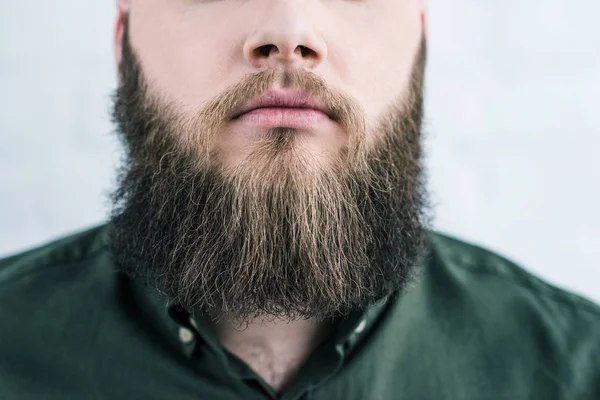
A Tajik man has been granted the right to remain in the United Kingdom after successfully arguing that he would face persecution in his home country for refusing to shave his beard. The case, first reported by The Telegraph, underscores how personal religious expression can form the basis of asylum claims. The asylum seeker, whose identity remains undisclosed, had his initial claim rejected by the UK Home Office. On appeal, he argued that Tajik authorities routinely detain bearded men, forcibly shave them, and collect their fingerprints. He maintained that he would only shave his beard out of fear of harm, not due to personal preference or societal expectations. Tajikistan has in recent years pursued an unofficial campaign linking beards to religious extremism. A BBC investigation found that in one region alone, police forcibly shaved nearly 13,000 men as part of an “anti-radicalisation” drive. Human Rights Watch has similarly documented cases of men with beards being detained, fingerprinted, and groomed under duress. The appellant’s legal team contended that his beard is a core element of his religious identity as a practicing Muslim, and that being compelled to shave it under threat would constitute a violation of his human rights. The appeal was evaluated under Article 3 of the European Convention on Human Rights, which prohibits torture and inhuman or degrading treatment. In his ruling, Deputy Judge Parminder Saini of the UK’s Upper Tribunal stated that the initial judge failed to adequately assess the true reasons the man would remove his beard. “If he wears a beard out of religious conviction but will conform for reasons of securing his safety, he may be entitled to international protection,” Saini wrote. The judge also noted that credible background evidence, such as widespread reports of arbitrary detentions and forced grooming, had not been properly considered in the original decision. “Thousands of Tajik men have had their beards forcibly shaved. These examples were relevant and should have informed the tribunal’s decision,” he added. The case has been remanded to the First-tier Tribunal for a fresh hearing. This ruling illustrates how deeply personal expressions of faith, such as maintaining a beard, can warrant legal protection when in conflict with state practices in the country of origin. It also reflects the complex legal and evidentiary hurdles asylum seekers must overcome to prove a credible fear of persecution.

Bans and Beliefs: Understanding Central Asia’s Most Controversial Restrictions

A recent controversy involving the Spiritual Administration of Muslims of Kazakhstan (SAMK) has reignited public debate over seemingly bizarre bans in Central Asia. SAMK was asked to comment on whether popular video games such as Counter-Strike 2, Dota 2, GTA, League of Legends, Minecraft, and Genshin Impact are permissible under Islamic law. SAMK responded that, from a Sharia perspective, all of these games are prohibited. The public interpreted this as an official ban, possibly even a fatwa, sparking a media uproar. But the reaction wasn’t unfounded: Central Asian republics often make headlines with prohibitions that, from the outside, can appear surreal. Yet, context often provides a more nuanced explanation. Turkmenistan: The Regional Champion of Bans Turkmenistan remains unmatched in its record of curious restrictions. Under its first president, Saparmurat Niyazov, the state banned smoking in cars, mobile phones, radios, stereo systems, clowns, and lip-syncing. Public smoking was also prohibited, and officials were barred from having gold teeth. Other bans targeted personal appearance. Men were forbidden from wearing long hair, beards, or mustaches, while makeup was banned for television presenters. Niyazov justified the latter by claiming it was difficult to distinguish men from women on screen and that Turkmen women’s natural “wheat-colored” complexion should be visible. Cultural life was similarly curtailed. Niyazov abolished ballet, opera, the circus, and even the national folk dance ensemble. “I don’t understand ballet. Why do I need it?” he said. “You can’t instill a love for ballet in Turkmen people if it’s not in their blood”. His successor, Gurbanguly Berdimuhamedov, retained many of these restrictions, particularly the sweeping limitations on internet access. According to Turkmen.news, as of 2023, approximately 75% of global IP addresses were blocked in Turkmenistan. The list of banned platforms includes Facebook, Instagram, TikTok, Telegram, YouTube, WhatsApp, and X (formerly Twitter). Cloud services such as Google Cloud, Microsoft Azure, and Dropbox are also blocked, along with most public DNS servers and online games such as Minecraft, Dota 2, and League of Legends. Dushanbe Follows Suit Kazakhstan and Turkmenistan are not alone in targeting video games. In 2024, the Interior Ministry in Tajikistan’s capital, Dushanbe, banned the distribution of games and video clips deemed violent or immoral. Authorities argued that such content negatively influenced youth behavior and contributed to crime. Games like Counter-Strike and GTA were explicitly named. Tajikistan has also imposed a range of non-digital bans. In 2018, the Committee for Architecture and Construction ordered that rooftops follow a citywide color scheme: green on one side of the river, burgundy on the other. The directive was short-lived. That same year, the mayor banned wearing house clothes, galoshes, and slippers in public, citing the need to uphold the capital’s dignity. The city also outlawed drying laundry on balconies to preserve the urban aesthetic. While these rules may seem odd, they reflect the ongoing transformation of societies that, until recently, were largely agrarian. Urbanization has brought with it an effort to instill new norms and behaviors. Sorcery, Beards, and Dress Codes This same logic applies...

U.S. Prosecutors Charge Two Tajik Nationals in Human Smuggling Operation

Two men from Tajikistan have been arrested and charged in Pennsylvania for allegedly smuggling people into the United States via the border with Mexico. Federal prosecutors said the defendants were charged with trying to bring a foreign citizen into the United States for financial gain and also conspiring to bring other foreigners into the U.S. as part of the smuggling operation. If convicted, they face a maximum of 10 years in prison for each count. “The indictment alleges that, as part of their conspiracy, the defendants assisted in smuggling Co-Conspirator #1 into the United States, and then received referrals through Co-Conspirator #1 to smuggle additional illegal aliens into the U.S.,” the U.S. Attorney’s Office for the Eastern District of Pennsylvania said in a statement on Tuesday. The statement identified the defendants as Bekhzod Rakhmatov, 30, of Maineville, Ohio, and Munis Khojiev, 31, of Philadelphia. It said they had also illegally entered the United States. Allegations against the suspects say that from about December 2022 to about May 2025, the two men worked to secure visas and passports for people who traveled through a number of countries with the aim of reaching the U.S.-Mexico border. “The defendants solicited and received funds from, and on behalf of, illegal aliens, as payment for smuggling the illegal aliens into the United States,” federal prosecutors said. The indictment comes as the U.S. cracks down on migration, including from some countries in Central Asia. Citizens from Turkmenistan face restrictions on travel to the United States under an order signed by President Donald Trump that bans or curbs the entry of nationals from 19 countries. The order took effect on June 9. Kyrgyzstan has expressed concern about reports that it might be included in another group of countries that will possibly be subject to similar U.S. bans and restrictions.

Central Asian Migrants Coerced Into Russia’s War in Ukraine

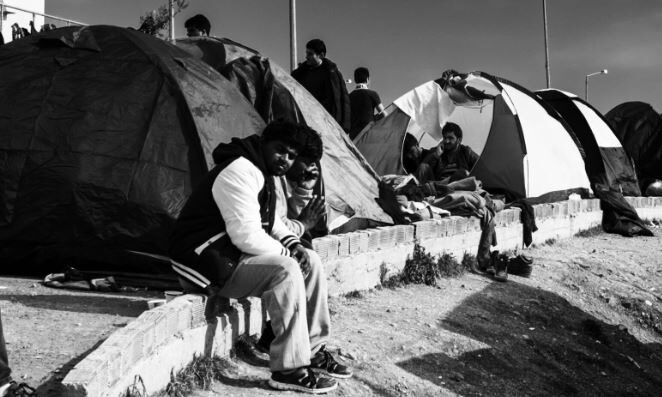
Citizens of Central Asian countries, including Uzbekistan and Tajikistan, are increasingly being coerced into joining Russia’s war effort in Ukraine, according to a recent statement from Ukraine’s military intelligence agency. Many of those affected are labor migrants who originally traveled to Russia for work but were later pressured or misled into signing military contracts. Reports suggest that Russian army representatives have been enticing migrants with promises of fast money through short-term enlistment. In practice, however, many of these so-called “volunteers” are deployed to the most dangerous front-line positions. Ukraine’s Defense Intelligence claims most do not survive. Among the recently reported casualties were nationals from Uzbekistan and Tajikistan who had enlisted earlier this year. Ukraine's warning also highlights the legal risks facing survivors. Returning home after fighting in a foreign conflict can expose them to criminal charges and potentially long prison sentences under national laws that prohibit participation in overseas military operations. Russian officials have also acknowledged the recruitment of migrants. Alexander Bastrykin, head of Russia’s Investigative Committee, stated during a legal forum in St. Petersburg that his office had identified around 80,000 individuals who received Russian citizenship but then attempted to evade military service. Of those, approximately 20,000 are currently serving on the front lines in Ukraine, according to Bastrykin. As of September 2024, Russia hosted nearly four million citizens from Central Asia. Uzbekistan accounted for the largest share with an estimated 1.79 million migrants, followed by Tajikistan and Kazakhstan. While some migrants sign military contracts out of economic desperation, others reportedly face coercion, threatened with the loss of citizenship or imprisonment for avoiding conscription. The practice of deploying foreign labor migrants to the battlefield has caused mounting concern across Central Asia. Families fear for the fate of relatives drawn into a distant and escalating conflict, often without clear legal protection or state support.

Detention Extended for Four Suspects in Moscow Crocus City Hall Attack

The Moscow City Court has extended the detention of four Tajik citizens accused of participating in the deadly terrorist attack at Crocus City Hall in March. According to the court’s press service, the suspects will remain in custody for an additional three months and 28 days. The individuals, Fariduni Shamsiddin, Saidkrom Rachabalizoda, Dalerjon Mirzoev, and Muhammadsobir Faizov, have been named by Russian authorities as the primary perpetrators. They reportedly opened fire and set the concert venue ablaze on the evening of March 22. All four have been officially added to Russia’s federal list of terrorists and extremists. The attack, which occurred during a live performance at Crocus City Hall in Krasnogorsk, just outside Moscow, left 146 people dead. The gunmen used automatic weapons and later ignited a fire in the main concert area, making it one of the deadliest terrorist incidents in Russia in recent history. Russia’s Investigative Committee has charged 27 individuals in total in connection with the attack. Committee Chairman Alexander Bastrykin confirmed that all have been formally charged and that the investigation is ongoing. So far, 12 people have been arrested, with the principal suspects all identified as Tajik nationals. As previously reported by The Times of Central Asia, Turkish prosecutors are also pursuing charges related to the attack. The Istanbul Prosecutor’s Office is seeking prison terms ranging from 7.5 to 15 years for five Central Asian nationals believed to be connected to the same network. Investigations in both Russia and Turkey are continuing as authorities work to uncover the full scope of the group responsible for the massacre.

Tajikistan Decriminalizes Likes and Other Reactions to Provocative Social Media Posts

Tajik citizens need no longer fear that they will be imprisoned for clicking “like” on social media posts that the Tajik authorities do not like. Among several laws that Tajik President Emomali Rahmon signed on May 14 was one that decriminalized liking posts on social networks that originate from individuals or organizations the Tajik government considers extremist. Crackdown on Social Media In 2018, President Rahmon signed amendments to Article 179 of the Criminal Code, making it a crime to repost, comment favorably on, or like posts that, in the opinion of Tajik authorities, are public calls to commit or justify acts of violence and terrorism. According to that law, those found guilty of liking such posts face up to 15 years in prison. Since the law came into effect, 1,507 Tajik citizens have been imprisoned. The Tajik authorities often have a broad interpretation of what constitutes public calls to commit or justify serious crimes or acts of terrorism, but it usually boils down to comments that are critical of the Tajik government. Weeks after the law was passed, Alijon Sharipov, a resident of the Vakhsh district in Tajikistan’s southern Khatlon Region, was sentenced to 9.5 years in prison for reposting a video of an interview with the leader of the banned Islamic Renaissance Party of Tajikistan, Muhiddin Kabiri. In July 2019, Ibrohim Kosimov from the western Tajik city of Panjakent received the same prison sentence for “pushing ‘likes’ and ‘shares’ on the posts belong[ing] to opposition figures.” An activist of the Democratic Party of Tajikistan, Rustam Mamajonov, was sentenced to seven years in prison in June 2021 for reposting a video of Sharofiddin Gadoyev, a leader of the banned organization, Group 24. Mamajonov, who was 59 years old at the time, said he did not know how the video appeared on his Facebook page and the repost was a mistake caused by his poor knowledge of how to use the platform. Tajik political activist Abdullo Shamsiddin was deported from Germany back to Tajikistan in January 2023 and was convicted weeks later in March of sedition and sentenced to seven years in prison. Shamsiddin’s trial was held behind closed doors and it was difficult to obtain details about the case, but apparently, he was convicted for clicking “like” on a social network post, though there is no information about what was in the post. Shamsiddinov’s case shows the social network use of Tajik citizens who are outside Tajikistan is also being monitored by Tajik authorities. A Strange Change of Heart The reasons for the decision to decriminalize “posting a like or other sign on social networks,” as it officially reads in the law Rahmon signed, is unclear. Certainly, rights groups have called on the Tajik authorities to overturn the decision to criminalize likes, comments, or reposts of what to the Tajik government are undesirable posts on social networks. However, for years Tajikistan’s government has ignored appeals from rights organizations, the United Nations, and individual governments over the Tajik authorities’ rights abuses....