• KGS/USD = 0.01144 0%
  • KZT/USD = 0.00208 0%
  • TJS/USD = 0.10439 0%
  • UZS/USD = 0.00008 0%
  • TMT/USD = 0.28571 0%
  • KGS/USD = 0.01144 0%
  • KZT/USD = 0.00208 0%
  • TJS/USD = 0.10439 0%
  • UZS/USD = 0.00008 0%
  • TMT/USD = 0.28571 0%
  • KGS/USD = 0.01144 0%
  • KZT/USD = 0.00208 0%
  • TJS/USD = 0.10439 0%
  • UZS/USD = 0.00008 0%
  • TMT/USD = 0.28571 0%
  • KGS/USD = 0.01144 0%
  • KZT/USD = 0.00208 0%
  • TJS/USD = 0.10439 0%
  • UZS/USD = 0.00008 0%
  • TMT/USD = 0.28571 0%
  • KGS/USD = 0.01144 0%
  • KZT/USD = 0.00208 0%
  • TJS/USD = 0.10439 0%
  • UZS/USD = 0.00008 0%
  • TMT/USD = 0.28571 0%
  • KGS/USD = 0.01144 0%
  • KZT/USD = 0.00208 0%
  • TJS/USD = 0.10439 0%
  • UZS/USD = 0.00008 0%
  • TMT/USD = 0.28571 0%
  • KGS/USD = 0.01144 0%
  • KZT/USD = 0.00208 0%
  • TJS/USD = 0.10439 0%
  • UZS/USD = 0.00008 0%
  • TMT/USD = 0.28571 0%
  • KGS/USD = 0.01144 0%
  • KZT/USD = 0.00208 0%
  • TJS/USD = 0.10439 0%
  • UZS/USD = 0.00008 0%
  • TMT/USD = 0.28571 0%

Viewing results 19 - 24 of 50

Securing Central Asia’s Future: EBRD’s Regional Head on the Fight for Water Sustainability

Every fourth inhabitant of Central Asia, home to more than 83 million people, does not have regular access to safe drinking water. The region spans more than four million square kilometers, and over 15% of its territory is covered by the Karakum and Kyzylkum deserts, as well as waterless places such as the Ustyurt Plateau (similar in size to the United Kingdom), which stretches across Kazakhstan, Uzbekistan, and Turkmenistan. The extreme heat common to Central Asia in summer makes water a precious resource. To make matters worse, irresponsible human activity, particularly wasteful water use for irrigation, has led to one of the most devastating ecological catastrophes globally. The Aral Sea, where up to 60,000 tonnes of fish were caught annually only 30 years ago, has practically ceased to exist. Most of Central Asia’s freshwater intake relies on glacial melts affected by global warming.  The World Resources Institute forecast in its 2023 Aqueduct Water Risk Atlas that an additional one billion people globally will live with extremely high water stress by 2050. This will disrupt economies and agricultural production. Most Central Asian countries will be severely affected. While the European Bank for Reconstruction and Development (EBRD) cannot reverse the global warming process or tackle its impacts alone, it can certainly contribute to climate change mitigation efforts, securing better water access, and promoting its rational use. There is frequently no water supply or water treatment infrastructure in rural areas of the regions where it invests.  Most municipal water supply and treatment utilities across Central Asia have not seen much investment or refurbishment over the last 30 years. The EBRD has been working to address this issue, and many of its investment projects are already impacting people’s lives. [caption id="attachment_29070" align="aligncenter" width="1600"] Image: EBRD[/caption] In Kazakhstan, the Bank’s work with Vodnye Resoursy Marketing (VRM)/Shymkent water company, the country’s only privately owned municipal water utility, perfectly illustrates why the EBRD is such a strong advocate of private-sector involvement in the provision of municipal services. Over many years, we have enjoyed excellent cooperation with this company, which has translated into high-quality water supply services for more than 1.2 million residents of Shymkent. It has become a benchmark for the region for its effective and efficient operations. Thanks to VRM’s efforts, with 1.2 million residents, Shymkent became the first city in Kazakhstan to install a water meter for every consumer. User habits have changed: personal daily water consumption has decreased from 456 liters 27 years ago to 150 liters. The water savings achieved during this period will enable Shymkent to meet the needs of its population for another 20 years.  The EBRD started working with VRM in 2009 and has financed five projects totaling €60 million. With the Bank’s financial assistance, VRM has introduced an automated network monitoring system, improved power supply at twelve pumping stations, constructed eleven electrical substations, and built a European Union standards-compliant biogas facility (the only one of its kind in Central Asia), which helps VRM to meet all of its thermal...

Does the European Parliament Judge Central Asia Fairly?

In 2024, European Parliament (EP) resolutions on Central Asia emphasized its increasing significance in a world that is being reshaped by Russia’s war on Ukraine and China’s growing assertiveness. They focused on strengthening the EU’s partnerships with Central Asia while seeking to advance democratic values and human rights. These Enhanced Partnership and Cooperation Agreements aim to support economic reforms, foster sustainable development, and encourage regional cooperation. At the same time, reflecting the EU’s strategic focus on stability and resilience in the region, the EP’s resolutions urged the Central Asian states to decrease their dependency on Russian energy and avoid facilitating sanctions evasion. For the Central Asian countries, all these initiatives present opportunities to address pressing challenges and pave the way for growth. Advancing democratic governance and protecting fundamental rights, for example, can foster more inclusive and stable societies. Deeper engagement with the EU also offers access to advanced technologies and investments (as well as global markets), which are necessary for innovation and infrastructure upgrades. Likewise, the diversification of energy sources enhances regional self-reliance, reducing vulnerabilities that are tied to over-dependence on a single partner. Alignment with EU priorities, including resistance to autocratic pressures, gives Central Asia a better chance to develop its resilience and interconnected future. Some voices in the region, however — particularly among government officials and more traditionally-minded citizens — view the European Parliament's 2024 resolutions as overly critical, indeed influenced by special interests that fail to take into account the region’s unique challenges and priorities. From a Central Asian perspective, the criticisms contained in the EP’s resolutions lack essential context, focus narrowly on perceived shortcomings, and fail to give adequate consideration to the complex situation underlying governmental decisions. Such a one-sided approach, they suggest, overlooks essential cultural, historical, socio-political, and geopolitical factors. The result is a significant gap between the EU’s expectations on the one hand, and, on the other, what is reasonable to expect given the realities on the ground. The drafters of these documents often focus excessively on identifying deficiencies in democratic processes. They report violations without contextualizing the governments’ choices and often omit any mention of the views of the general public. The unfortunate consequence is that such criticisms vitiate good-faith attempts to build cooperation and partnership. The ideal becomes the enemy of the possible. Most Europeans still have a poor understanding of Central Asia. Many MEPs lack the time or resources to grasp the region’s complexity. Instead, their decisions are too often informed by resolutions that are drafted by a small group of “experts”. The language of these resolutions often reflects the drafters’ personal biases, which in turn risk deforming Europe’s strategic relationships with the region. A lack of proper scrutiny is all the more alarming in light of the Qatargate scandal, which exposed how state-funded lobbyists can distort human rights narratives to advance specific agendas. Maria Arena, the former head of the European Parliament's Subcommittee on Human Rights (DROI), played a central role in shaping judgments on democratic practices in Central Asia,...

Opinion: What Will a New Trump Presidency Mean for Central Asia?

During his first presidency, Donald Trump introduced a foreign policy approach that recalibrated U.S. engagement with Central Asia, a region strategically critical yet overshadowed by the influence of China and Russia. Trump’s policies, targeting the collective challenge of CRINK (China, Russia, Iran, and North Korea), aimed to foster regional autonomy and counter external dependency. This policy shift, aimed at countering the global influence of CRINK has extended to the vital region of Central Asia. Further, it is geographically wedged between Russia and China and serves as a critical bridge for U.S. interests. The CRINK nations, in their regional strategies, have made substantial inroads in Central Asia. Additionally, each nation is pursuing influence through economic, political, or military avenues. China’s Belt and Road Initiative (BRI) and Russia’s Eurasian Economic Union, for instance, have been noted as major forces reshaping Central Asian economies as well as infrastructure. In 2013, the BRI of China was launched, which has channeled billions into roads, railways, and other infrastructure projects in Central Asia, seeking to create new trade routes connecting Asia to Europe. On the other side, Russia has promoted its Eurasian Economic Union as a trading bloc that has aimed at fostering economic integration among Central Asia and neighboring countries. These initiatives have provided economic incentives for Central Asia but also intensified its reliance on external powers, particularly China and Russia​. During his presidency, Trump emphasized a CRINK-focused strategy, which prioritized Central Asia's sovereignty and reduced dependency on China and Russia. This strategy laid the groundwork for U.S. engagement in the region, influencing current policy directions. In 2020, Trump’s administration unveiled a comprehensive strategy for Central Asia, marking the first such effort in over two decades. The policy emphasized U.S. support for border security and defense collaboration, including financial aid to Tajikistan and military training for Kazakhstan and Uzbekistan. These measures, though initiated under Trump, continue to shape current U.S. approaches to combating terrorism and fostering regional stability. For example, the U.S. has established the C5+1 initiative as a dialogue platform between the United States and the five Central Asian nations (Kazakhstan, Uzbekistan, Kyrgyzstan, Turkmenistan, and Tajikistan). It was developed further to promote mutual goals in regional security, economic development, and environmental resilience​. Security cooperation is a vital aspect of this U.S. strategy which has given the threats of terrorism and also potential instability at CRINK’s peripheries (Sciutto, 2024). In particular, Afghanistan’s proximity to Central Asia poses both risks as well as opportunities for these nations. The U.S. has provided financial support to Tajikistan to strengthen border security and counter drug trafficking. Furthermore, while also assisting Kazakhstan and Uzbekistan with training and equipment to improve their defense capabilities the US has financially supported the nation. This military cooperation has aimed to prevent the encroachment of extremist groups like ISIS, which could exploit regional instability and threaten U.S. interests​. Trump’s presidency emphasized private sector investments as an alternative to China’s Belt and Road Initiative. Although modest compared to China’s commitments, these investments reflected an effort to...

Risk and Reward: Why Savvy Investors Should Dive into Central Asia-Caspian Region

Central Asia-Caspian basin has long been a geopolitical chessboard — fragmented by conflict but dependent on cooperation. In an era of shifting alliances, political instability, and economic uncertainty, multinational corporations (MNCs) must reassess their strategies. While the region's challenges remain considerable, it also presents unique investment opportunities that should not be overlooked. Since the 1990s, operating in post-Soviet Eurasia has been synonymous with political risks. The Central Asian states have sought foreign direct investment (FDI) but face significant obstacles, including weak rule-of-law, inconsistent regulatory frameworks, and entrenched corruption. Yet despite these barriers, the region continues to attract international capital, signaling its long-term potential. Traditionally reliant on oil and gas exports, these countries are now pivoting toward diversification. Nations like Azerbaijan, Kazakhstan, and Turkmenistan are strengthening ties with the European Union (EU) to balance their historical reliance on Russia’s energy network. This shift is opening new frontiers for investment, particularly in green energy, infrastructure, and technology. However, geopolitical instability remains a critical risk. The war in Ukraine has intensified uncertainties, with Russia, China, the EU, and the U.S. vying for influence. Energy security, once an afterthought, has become a central issue. The closure of the Novorossiysk terminal in early 2023, halting Kazakh oil exports, underscored how quickly geopolitical disruptions can affect supply chains, prompting companies like ExxonMobil to reassess their regional strategies. Yet this volatility also creates opportunities. The region’s economic shift away from resource dependence toward a knowledge-based economy offers fertile ground for businesses willing to invest in infrastructure, technology, and renewable energy. The Caspian basin’s strategic location, as a transit hub for energy to Europe, only heightens its importance in the EU’s efforts to reduce dependency on Russian supplies. For international businesses, this means new markets, sectors, and investment channels are emerging. The post-Covid landscape adds complexity, with digital transformation accelerating across industries. Countries in the Central Asia-Caspian basin are under pressure to adopt these technologies, which could drive long-term economic growth. Yet the gap between ambitious reform plans and their implementation remains wide. Regulatory inefficiencies and bureaucratic hurdles continue to hamper progress, presenting a challenge for foreign investors looking for stability. For multinational corporations, the region presents both risks and significant upsides. On one hand, border disputes, political unpredictability, and regulatory uncertainty create barriers. On the other, the region’s growing role as an energy transit hub and its emerging sectors, from green energy to infrastructure, offer promising avenues for investment. Azerbaijan and Kazakhstan, in particular, have been proactive in bolstering energy exports to Europe, positioning themselves as critical players in the global energy transition. If the conflict in Ukraine continues to escalate, the region’s geopolitical risks will undoubtedly increase. However, external actors — particularly the U.S., the EU, and China — are also likely to deepen their involvement, further reshaping the region’s economic and political landscape. The rise of Sino-American tensions only adds another layer of complexity to an already volatile environment. Yet, for companies that can navigate these complexities, the rewards are significant. Central Asia-Caspian basin remains...

The Ferghana Valley: Navigating Complex Challenges in Central Asia’s Most Volatile Region

The Ferghana Valley is one of Central Asia’s most fertile and densely populated areas, but it is also among the most volatile. Spanning Uzbekistan, Kyrgyzstan, and Tajikistan, this landlocked region has long been a hotbed of ethnic tension, water disputes, and political instability. These challenges are deeply rooted in the geography, history, and sociopolitical landscape, making the valley a key focal point for understanding broader regional dynamics in Central Asia.   Geographical Importance and Ethnic Diversity Nestled between the towering Tien Shan and Pamir Mountain ranges, the Ferghana Valley covers over 22,000 square kilometers. It is fertile land nourished by the Syr Darya River, making it a critical area for cultivating cotton, fruits, and vegetables. These natural resources have historically drawn diverse populations, creating a vibrant ethnic mosaic. The valley is home to Uzbeks, Kyrgyz, and Tajiks, as well as smaller ethnic groups. While ethnic Uzbeks form the majority, significant Kyrgyz and Tajik minorities inhabit border regions. The ethnic diversity of the Ferghana Valley is both a strength and a source of tension. Soviet-era border policies exacerbated these divisions by creating artificial boundaries that crisscrossed the valley, leaving behind ethnic enclaves — pockets of one nationality surrounded by the territory of another. These enclaves have complicated governance and territorial integrity, making border management a persistent challenge.   The Soviet Legacy and Border Disputes During Soviet rule, the Central Asian republics were organized under Stalin’s divide-and-rule strategy, which deliberately created complex borders to weaken local identities and prevent regional unity. The Ferghana Valley, divided among three Soviet republics, is a prime example of this approach. After the Soviet Union's collapse in 1991, the administrative boundaries became international borders overnight between Uzbekistan, Kyrgyzstan, and Tajikistan. The lack of clearly defined borders has sparked numerous conflicts over territory, water, and land. A notable clash between Kyrgyzstan and Tajikistan in 2021 resulted in over 40 deaths and the destruction of homes and infrastructure. Many disputes revolve around access to scarce resources like water and arable land. These issues have escalated into violent confrontations, leading to casualties and the displacement of local populations.   Water: A Scarce and Contested Resource Water is the lifeblood of the Ferghana Valley, but disputes over its allocation are a major source of tension. The valley depends heavily on irrigation for its agricultural productivity, and the Syr Darya River, along with its tributaries, plays a crucial role in supplying water to the region. However, the division of the valley among the three countries complicates water management. Uzbekistan, the most populous of the three, relies on the valley’s water resources for its cotton industry, a cornerstone of its economy. Meanwhile, Kyrgyzstan and Tajikistan, which control the headwaters of the Syr Darya, often use their upstream position to leverage water access. This dynamic has led to frequent disagreements over water usage. For instance, Kyrgyzstan has at times threatened to withhold water unless it receives compensation, either through payments or electricity.   Ethnic Tensions and Political Instability Ethnic tensions further complicate the Ferghana Valley’s already volatile...

Why Does Energy-Rich Kazakhstan Want Tajikistan’s Uranium?

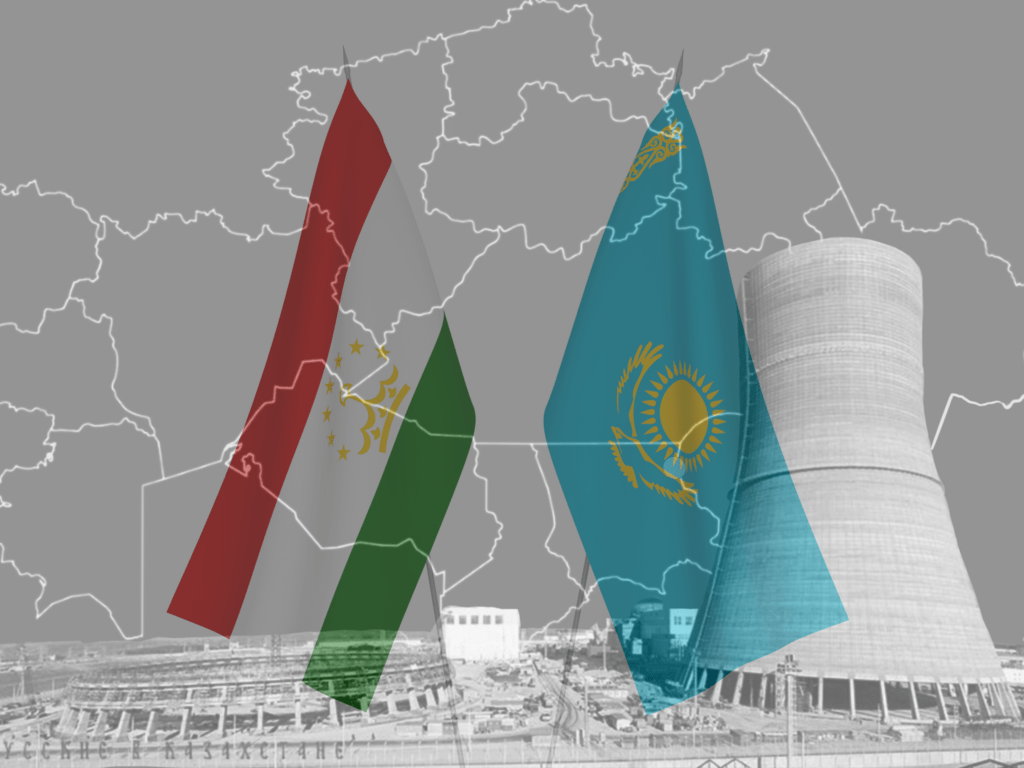
Despite having significant uranium resources, Tajikistan does not plan to build a nuclear plant anytime soon, if it all. Quite aware of that, Kazakhstan – Dushanbe’s ally in the Russian-dominated Collective Security Treaty Organization (CSTO) – is reportedly eyeing Tajikistan’s uranium. But why? "I would rather earn a profit from the resources of others than my own," John D. Rockefeller, a prominent industrialist, is often paraphrased as saying. Policymakers in Astana could soon begin implementing such a strategy in regard to uranium. Kazakhstan is the largest producer of natural uranium worldwide. In 2022, the energy-rich nation produced the largest share of uranium from mines (43% of world supply), followed by Canada (15%) and Namibia (11%) (ref). In spite of that, Astana could eventually start purchasing the radioactive element from Tajikistan. On August 22, following Kazakh President Kassym-Jomart Tokayev’s visit to Dushanbe, the Tajik Rare-Earth Metals Company, TajRedMet, and Kazakhstan’s national atomic company, Kazatomprom, signed a memorandum of understanding and cooperation in the extraction and processing of uranium and rare-earth metals. Signing such a protocol aligns with Astana’s ambitions to build a nuclear power plant in the country. In that context, Kazatomprom – the world's largest uranium producer – is likely seeking to play an active role in producing uranium fuel for the proposed nuclear plant. Given the global resurgence of nuclear energy and the ensuing “race for uranium,” Kazatomprom is keen to assess the current status of Tajikistan's uranium reserves, and, if feasible, expand its resource base. Uranium is considered one of the main natural resources of Tajikistan. It is believed that the first atomic bomb developed by the Soviet Union contained raw materials from Tajikistan. But after the collapse of the USSR, uranium mining was curtailed in the mountainous country. According to various estimates, 14% of the world's reserves of uranium are located on the territory of the landlocked country of around 10 million people. But compared to other nations, Tajikistan does not have significant uranium mining operations, meaning its uranium deposits remain underdeveloped. However, the fact that Russian companies are interested in exploration and mining of uranium in the Tajikistan suggests that Kazatomprom might have serious competition. It is entirely possible that other foreign corporations will also eventually join the “race for uranium” in Tajikistan. Meanwhile, Kazakhstan will almost certainly be inclined to consolidate its own uranium market. In terms of uranium production in the largest Central Asian state, the Russian State Nuclear Energy Corporation Rosatom is the leader due to its shares in five enterprises operating in Kazakhstan. Since Astana aims to develop closer ties with the West, it is no surprise that France is looking to strengthen its position in the energy-rich country, particularly in its nuclear and uranium sectors. Russia and China are unlikely to give up easily on their ambitions to preserve their influence in the Central Asian nation, however. In 2022, Kazakhstan exported around half of its uranium to China. From January to October 2023, Astana shipped uranium worth $922.7 million to the...