• KGS/USD = 0.01143 -0%
  • KZT/USD = 0.00193 -0%
  • TJS/USD = 0.10881 0%
  • UZS/USD = 0.00008 0%
  • TMT/USD = 0.28575 0%
  • KGS/USD = 0.01143 -0%
  • KZT/USD = 0.00193 -0%
  • TJS/USD = 0.10881 0%
  • UZS/USD = 0.00008 0%
  • TMT/USD = 0.28575 0%
  • KGS/USD = 0.01143 -0%
  • KZT/USD = 0.00193 -0%
  • TJS/USD = 0.10881 0%
  • UZS/USD = 0.00008 0%
  • TMT/USD = 0.28575 0%
  • KGS/USD = 0.01143 -0%
  • KZT/USD = 0.00193 -0%
  • TJS/USD = 0.10881 0%
  • UZS/USD = 0.00008 0%
  • TMT/USD = 0.28575 0%
  • KGS/USD = 0.01143 -0%
  • KZT/USD = 0.00193 -0%
  • TJS/USD = 0.10881 0%
  • UZS/USD = 0.00008 0%
  • TMT/USD = 0.28575 0%
  • KGS/USD = 0.01143 -0%
  • KZT/USD = 0.00193 -0%
  • TJS/USD = 0.10881 0%
  • UZS/USD = 0.00008 0%
  • TMT/USD = 0.28575 0%
  • KGS/USD = 0.01143 -0%
  • KZT/USD = 0.00193 -0%
  • TJS/USD = 0.10881 0%
  • UZS/USD = 0.00008 0%
  • TMT/USD = 0.28575 0%
  • KGS/USD = 0.01143 -0%
  • KZT/USD = 0.00193 -0%
  • TJS/USD = 0.10881 0%
  • UZS/USD = 0.00008 0%
  • TMT/USD = 0.28575 0%
21 December 2025

Viewing results 85 - 90 of 819

Central Asia and Regional Integration: Logistics, Water, Energy

Central Asia is undergoing a profound transformation, where questions of domestic development and the region’s ability to act in a coordinated way are coming to the forefront. For many years, Central Asian states were viewed as fragmented, each pursuing separate strategies that often put them in competition. Today, however, shared challenges and growing interdependence are making gradual convergence increasingly likely. The region now confronts common pressures such as water scarcity, energy imbalances, environmental degradation, and the fallout of instability in Afghanistan -- issues that no single country can effectively address in isolation. Increasingly, regional platforms such as the Interstate Commission for Water Coordination (ICWC) are being leveraged to mediate water-energy tradeoffs, while joint initiatives in transport, transit, and energy infrastructure foster new integration. Moreover, leading actors like Kazakhstan and Uzbekistan are pushing coordinated strategies -- modernizing rail and aviation links, coordinating transboundary water allocations, and exploring nuclear cooperation -- that point toward a more interconnected regional future. Shared Challenges and Points of Convergence The region faces problems that no country can solve alone. These include water shortages, energy imbalances, environmental risks, and instability in Afghanistan. Such challenges can be seen as both threats and opportunities, since they also represent areas of overlapping interest. Joint action in these fields can deliver more than fragmented national strategies. Water is particularly important, remaining one of the most sensitive issues in interstate relations. Yet it also offers opportunities for coordinated action through existing regional platforms, such as the Interstate Commission for Water Coordination of Central Asia. The “water for energy” model is increasingly seen as a practical tool, already under discussion and applied in bilateral and multilateral projects. Environmental issues are similarly shared. The disappearance of the Aral Sea, land degradation, air pollution, and glacier melt create threats that transcend national borders. Joint monitoring, data exchange, and coordinated adaptation measures, particularly within the United Nations Regional Centre for the Sustainable Development Goals for Central Asia and Afghanistan, opened in August 2025 in Almaty, could become a new direction for regional cooperation. Afghanistan remains another risk factor that affects the security of the entire region. At the same time, transportation and energy projects linking Central Asia with South Asia through Afghan territory can turn a challenge into an opportunity. Reducing instability and integrating Afghanistan into regional trade and transit networks serves the interests of all Central Asian states. Kazakhstan and Uzbekistan as leading forces To understand how closer integration might work in practice, it is useful to examine the strategies of the region’s two key players: Astana and Tashkent. The major agreements concluded by Kazakhstan and Uzbekistan with the United States in transport and aviation should be viewed not as isolated deals, but as evidence of the complementary strengths of the two largest economies in Central Asia. Kazakhstan signed its largest locomotive contract to date with U.S. company Wabtec, a $4.2 billion agreement for 300 TE33A freight locomotives to be assembled at the Wabtec Kazakhstan plant in Astana, along with servicing support. This will modernize...

Afghanistan’s Qosh Tepa Canal Raises Water Security Fears

Water has long been one of Central Asia’s most contested resources, shaping agriculture, energy policy, and diplomacy across the region. Recently, Afghanistan’s Qosh Tepa Canal project has emerged as a central point in this debate. Promoted by the Taliban as a vital step toward achieving food security and economic growth, the canal also raises alarm bells among downstream neighbors who heavily depend on the Amu Darya River. Now, according to Islamic Emirate spokesman Zabihullah Mujahid, the second phase of the project is expected to be completed within five months, raising further concerns among downstream countries about its potential impact on regional water security. Progress on the Ground In August, the Afghan authorities stated that 93% of the second phase had been completed. Videos show the canal lined with concrete and stone in some sections, alongside the construction of large and medium-sized bridges to link surrounding settlements. The project spans 128 kilometers from Dawlatabad district in Balkh province to Andkhoy district in Faryab province and involves over 60 contractors, making it one of Afghanistan’s largest infrastructure projects. Origins and International Support The canal’s roots trace back to earlier international efforts. While some sources attribute its conceptual origins to Soviet or British engineers in the 1960s, significant development began in 2018 under President Ashraf Ghani. The project was supported by the U.S. Agency for International Development (USAID) and Indian engineering firms. According to the Scientific-Information Center of the Interstate Commission for Water Coordination (SIC ICWC), a $3.6 million feasibility study was launched in Kabul in December 2018, funded by USAID and conducted by AACS Consulting and BETS Consulting Services Ltd. The study was coordinated with several Afghan ministries, but has not been published. Following the Taliban’s takeover, the Islamic Emirate held an official inauguration ceremony on March 30, 2022. The full canal is designed to stretch 285 kilometers, measuring 100 meters wide and 8.5 meters deep, and is expected to divert an estimated six to ten cubic kilometers of water annually from the Amu Darya. Afghan media have quoted water management expert Najibullah Sadid, who projected the canal could generate between $470 million and $550 million in annual revenue. Regional Concerns and Environmental Risks The project has raised alarm in Uzbekistan, Turkmenistan, and Tajikistan, countries that depend heavily on the Amu Darya for irrigation. Experts at SIC ICWC point out that no environmental impact assessment was conducted for downstream states, nor were they formally notified of the construction, as required by international water conventions. In December 2022, Uzbek President Shavkat Mirziyoyev called for practical dialogue with Afghanistan and the international community to strengthen regional water security. Adroit Associates estimates that the canal could eventually divert up to 13 billion cubic meters annually, nearly one-quarter of the Amu Darya’s average flow. Environmental risks are also mounting. Analysts warn that Uzbekistan, which relies heavily on the river for agriculture, could face soil degradation and declining crop yields. Turkmenistan, where agriculture accounts for 12% of GDP, may also suffer severe disruptions. Some studies suggest Uzbekistan and...

Turkmen Cotton Farmers Frustrated by Mechanized Harvesting Delays and Losses

In Turkmenistan’s Lebap region, tenant farmers are expressing growing frustration over delayed payments and crop losses linked to the government’s push for mechanized cotton harvesting. While the use of combine harvesters is intended to boost efficiency, many farmers say the reality on the ground is causing financial hardship and lower yields. Delayed Payments Compound Financial Pressure In the Chokhbetde village council of Halach district, farmers were told they would not be paid for cotton harvested by combine machines until the entire campaign is complete. All revenues first go to the State Association for Agricultural Technical Services, Turkmenobakhyzmat, which owns the harvesters. Because accounting is based on the season overall rather than by individual field or tenant, farmers are expected to wait for payment. This delay is particularly painful for rural communities that rely on regular cash flow. A tenant farmer from Mashpaya village noted that pickers brought in from urban areas must be paid every ten days, and the payment postponement makes this increasingly difficult. The core complaint, however, is with the quality of mechanized harvesting itself. “Because the combines are poorly adjusted, 10-15% of the cotton ends up on the ground and must be collected by hand,” the Mashpaya farmer said. “Government employees are brought in for this, and they also need to be paid on time.” Beyond the immediate spillage, poorly calibrated machinery damages the plants: drums crush unopened cotton bolls, preventing them from maturing and leading to permanent yield losses. “Two Shifts” and Self-Funded Repairs Concerns about machinery use and maintenance are longstanding. During preparations for the summer grain harvest in Lebap, each combine at local Obahyzmat units was assigned two operators to run in alternating shifts. However, operators were required to fund maintenance and repairs themselves, even for foreign-made equipment such as John Deere and Case combines. The association only supplied tires, promising that repair costs would be reimbursed after the harvest as part of output-based wages and bonuses. In practice, combine crews absorbed heavy expenses. A machine operator from Bayramaly district described frequent technical failures: broken cutter bars, damaged threshing drum pulleys, faulty bearings, and worn connecting rods. “My colleague and I have already borrowed and spent 15,000 manats each, $4,300 at the official exchange rate, or $769 on the black market, just on spare parts,” he said. While some parts are now being produced locally, a repair facility in Turkmenabat has reportedly exceeded production targets for farm machinery components, these improvements have yet to reach most farmers. For now, the burden of keeping equipment running falls largely on the operators and tenant farmers themselves, with financial relief promised only at the end of the harvest season.

Afghanistan Absent, Not Forgotten – Central Asia’s UNGA Strategy

From September 23–29, 2025, the UN General Assembly’s general debate unfolded without an Afghan delegation addressing those assembled amid the unresolved UN seat issue. Yet Afghanistan was hardly absent. Central Asian presidents used their platform to project a collective stance that stopped short of recognition while rejecting isolation. Their message reflected a regional doctrine of managed engagement: keep the neighbor connected enough to limit collapse, through corridors, energy grids, and humanitarian channels. President Shavkat Mirziyoyev of Uzbekistan offered the clearest blueprint, urging the international community to “prevent [Afghanistan’s] isolation,” and calling for support to develop transport and energy corridors across Afghan territory. That language aligns with initiatives already underway: a multilateral framework signed in Kabul on July 17 to move the Trans-Afghan railway toward feasibility, and fresh agreements on the 500 kV Surkhan–Pul-i-Khumri line designed to stabilize Afghanistan’s power supply while linking it to a regional grid. Mirziyoyev’s message was a bid to convert geography into risk management. Kazakhstan struck a technocratic note. Kassym-Jomart Tokayev told the Assembly that “inclusive development in Afghanistan” is the basis for long-term regional peace and stability. This phrasing matches Almaty’s UN-backed hub for the Sustainable Development Goals and Astana’s self-image as the region’s administrative center. The goal is to stabilize the weakest link so trade and transit do not fracture. Kyrgyz President Sadyr Japarov used part of his brief UN address to demand that roughly $9 billion in Afghan central-bank assets frozen in Western jurisdictions be returned to “the Afghan people,” and called isolation “unacceptable.” In a remittance-dependent economy like Kyrgyzstan’s, collapse next door risks hunger, displacement, and crime. His remarks were both moral and practical, and marked the sharpest public challenge to Western policy voiced by any Central Asian leader this week. Traditionally, Tajikistan has taken the hardest line on the Taliban. This time, Emomali Rahmon emphasized humanitarian assistance, citing drought-hit regions and areas devastated by the August 31 eastern Afghanistan earthquake, and said Dushanbe supports peace, stability, and socio-economic development next door. The quake killed more than 2,000 people and destroyed thousands of homes across Kunar, Nangarhar, and Laghman just as aid budgets were shrinking. Turkmenistan took a different approach. President Serdar Berdimuhamedov did not mention Afghanistan, instead promoting Ashgabat’s permanent neutrality as a proposed UN agenda item, “Neutrality for Peace and Security,” along with broad transport and energy initiatives. This approach preserved flexibility on projects like TAPI without committing to specifics in New York. What makes these speeches consequential is how closely they mirror work on the ground. The Trans-Afghan railway, long dismissed as only a plan, now has a political framework and a declared security pledge from Kabul. Whether it moves forward depends on both capital and security, but for Tashkent, a southern outlet to Pakistani ports is the difference between landlocked and land-linked. The Surkhan–Pul-i-Khumri line is more conventional and urgent: a 200-kilometer fix to keep the lights on and the revenues flowing. The long-troubled CASA-1000 power corridor is also inching back into view after being paused post-2021, with...

ADB Approves $75M Loan to Boost Nursing Sector in Turkmenistan

The Asian Development Bank (ADB) has approved a $75 million loan and an additional $2 million grant from the Japan Fund for Prosperous and Resilient Asia and the Pacific to expand and improve the nursing and midwifery workforce in Turkmenistan. According to an ADB statement, this marks the bank’s first health sector project in the country. “The project aims to provide high-quality health services based on people’s needs and ensure equitable access to health care through strengthening the nursing profession and education,” said ADB Country Director for Turkmenistan Artur Andrysiak. He noted that this is ADB’s third project in Turkmenistan, reflecting a growing partnership as the Bank and the country celebrate 25 years of cooperation. The Turkmen government has prioritized healthcare reform, with a focus on improving the education and qualifications of health workers. Nurses, often the first point of contact in the health system, will be empowered to deliver both essential care and preventive services under the new initiative. Plans include the design and construction of a climate-resilient nursing school in Ashgabat, featuring state-of-the-art facilities such as clinical simulation labs, dormitories, a mother-friendly room, and an edible garden to promote nutrition. The project will also provide new medical and educational equipment and update curricula, teaching methods, and faculty training in line with international standards. The total project cost is estimated at $98 million, with the Turkmen government contributing $23 million in counterpart financing. The initiative builds on ADB’s growing cooperation with Turkmenistan in recent years. In August 2024, ADB adopted a new country partnership strategy for Turkmenistan covering 2024-2028. The strategy focuses on supporting the transition to a climate-resilient and sustainable economy, enhancing competitiveness through diversification and human capital development, and advancing structural reforms and institutional capacity.

The Unseen Animals of Central Asia: A Photography Exhibit by Bogna Wiltowska

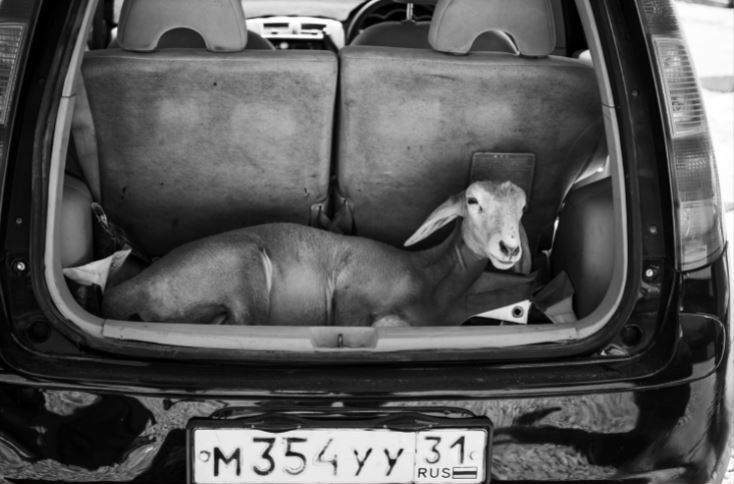
For six months, Polish photographer Bogna Wiltowska documented animals in farms and slaughterhouses in Central Asia as a We Animals Fellow. On World Farmed Animals Day (Oct 2nd), a virtual exhibition of her work will open, allowing everyone to witness the untold stories of the animals Bogna encountered in Kyrgyzstan and Kazakhstan - countries experiencing the gradual industrialization of animal agriculture. Explaining her choice to focus on animals in this yet unexplored region, Bogna said, “Until now, the lives of farmed animals in Central Asia have remained largely undocumented. At the same time, I knew that an animal advocacy movement led by passionate grassroots activists was slowly beginning to emerge there. This was the perfect moment to take a closer look at what was happening and give animals a voice in countries where they aren’t often considered.” [caption id="attachment_36666" align="aligncenter" width="734"] Image: Bogna Wiltowska[/caption] Every year, We Animals awards a small number of Animal Photojournalism Fellowships, which support up-and-coming photojournalists to tell the stories of animals used for food. Fellows work remotely with We Animals’ founder, award-winning photojournalist Jo-Anne McArthur, for approximately six months. The Fellow receives funding to cover project costs and a stipend for the duration of the Fellowship, totalling $6,500 CAD ($4,670). Based in Poland, Bogna is the Director of Investigations at the non-profit Otwarte Klatki and has worked in several countries documenting industrial farming and rescuing animals. Despite witnessing enormous suffering, she remains committed to a better world for animals. [caption id="attachment_36667" align="aligncenter" width="732"] Image: Bogna Wiltowska[/caption] Bogna was awarded the fellowship in recognition of her experience, well-planned project, and desire to grow in the field of animal photojournalism. Her project illuminates underrepresented animals and provides advocates in Central Asia with strong visuals for their work. Reflecting on this project, Bogna said, “The Fellowship was one of the most important experiences in my work for animals. After over a decade of working for animals and managing a large organization with an investigations team, I felt deeply tired and overwhelmed. The Fellowship placed me in a completely new role. This time, I was the one receiving support (instead of giving it), and I had the chance to learn from the best in areas where I had previously been self-taught.” [caption id="attachment_36668" align="aligncenter" width="1163"] Image: weanimals.org[/caption] The virtual exhibition will run from October 2nd to 31st, 2025. The free event is entirely virtual and available in English. It contains some graphic imagery.