• KGS/USD = 0.01144 0%
  • KZT/USD = 0.00209 0%
  • TJS/USD = 0.10438 0%
  • UZS/USD = 0.00008 0%
  • TMT/USD = 0.28490 0%
  • KGS/USD = 0.01144 0%
  • KZT/USD = 0.00209 0%
  • TJS/USD = 0.10438 0%
  • UZS/USD = 0.00008 0%
  • TMT/USD = 0.28490 0%
  • KGS/USD = 0.01144 0%
  • KZT/USD = 0.00209 0%
  • TJS/USD = 0.10438 0%
  • UZS/USD = 0.00008 0%
  • TMT/USD = 0.28490 0%
  • KGS/USD = 0.01144 0%
  • KZT/USD = 0.00209 0%
  • TJS/USD = 0.10438 0%
  • UZS/USD = 0.00008 0%
  • TMT/USD = 0.28490 0%
  • KGS/USD = 0.01144 0%
  • KZT/USD = 0.00209 0%
  • TJS/USD = 0.10438 0%
  • UZS/USD = 0.00008 0%
  • TMT/USD = 0.28490 0%
  • KGS/USD = 0.01144 0%
  • KZT/USD = 0.00209 0%
  • TJS/USD = 0.10438 0%
  • UZS/USD = 0.00008 0%
  • TMT/USD = 0.28490 0%
  • KGS/USD = 0.01144 0%
  • KZT/USD = 0.00209 0%
  • TJS/USD = 0.10438 0%
  • UZS/USD = 0.00008 0%
  • TMT/USD = 0.28490 0%
  • KGS/USD = 0.01144 0%
  • KZT/USD = 0.00209 0%
  • TJS/USD = 0.10438 0%
  • UZS/USD = 0.00008 0%
  • TMT/USD = 0.28490 0%

Viewing results 295 - 300 of 1120

Two Key Environmental Initiatives Completed in Turkmenistan

Turkmenistan has marked the successful completion of two major agro-environmental initiatives aimed at enhancing natural resource management and climate change adaptation. These efforts represent significant progress in addressing environmental challenges both nationally and across the broader Central Asian region. Regional Project on Natural Resource Management The first project concluded was the second phase of the regional program titled “Integrated Natural Resource Management in Drought-Prone and Salinized Agricultural Production Landscapes of Central Asia and Turkey,” which commenced in 2018. This initiative focused on pilot sites in the Karakum Desert, the mountain village of Nokhur, and the Turkmen sector of the Aral Sea region. Key achievements include the establishment of mini GIS laboratories at the Scientific and Information Center under the Interstate Commission on Sustainable Development, the National Institute of Deserts, Flora and Fauna, and within the environmental control departments of the Ministry of Agriculture. These facilities are now equipped with modern tools to support research and monitoring efforts. The project also delivered resource-efficient agricultural equipment, drought-resistant seeds and seedlings, water pumps for various intakes, and rapid soil analysis equipment to agricultural universities. Twenty wells and sardobs (traditional water reservoirs) were constructed for livestock centers and nurseries utilizing drip irrigation systems. Additionally, the project cleaned parts of the collector drainage system and developed reclamation plans to rehabilitate degraded land. Another notable contribution was the continued publication of the international scientific journal “Problems of Desert Development,” which has been issued in Ashgabat since 1967. National Climate Change Adaptation Plan The second completed initiative, “Development of the National Adaptation Planning Process in Turkmenistan”, was carried out by the Ministry of Environmental Protection in partnership with the United Nations Development Programme (UNDP) and the Green Climate Fund. Launched in 2021, the project sought to implement the National Climate Change Strategy by defining specific adaptation measures and implementation mechanisms. The initiative resulted in the development of a comprehensive Roadmap for implementing the National Adaptation Plan, the creation of a national climate finance concept, and new guidelines for integrating climate adaptation into water resource management. These tools aim to bolster Turkmenistan’s resilience to the adverse effects of climate change. Central Asian Climate Conference in Ashgabat From May 13 to 15, Ashgabat will host the Seventh Central Asian Conference on Climate Change (CACCC-2025), organized by the Regional Environmental Centre for Central Asia (CAREC) with support from the World Bank, CAWEP, RESILAND Tajikistan, and GIZ. CACCC-2025 will serve as a key regional platform to transform climate ambitions into actionable strategies. The agenda includes mobilizing financial resources for adaptation and mitigation, enhancing regional cooperation, and sharing best practices. Participants will engage in plenary sessions, thematic panels, and field visits to sites that exemplify successful adaptation measures. One of the conference’s strategic goals is to develop a plan for increasing regional climate finance by 25% over the next five years. Delegates are also expected to present updated national contributions (NDCs 3.0) under the Paris Agreement and promote cross-border cooperation for sustainable development. With the region facing accelerating climate threats, such as...
L’Étranger: Paris Hosts the Reclusive Leader of Turkmenistan

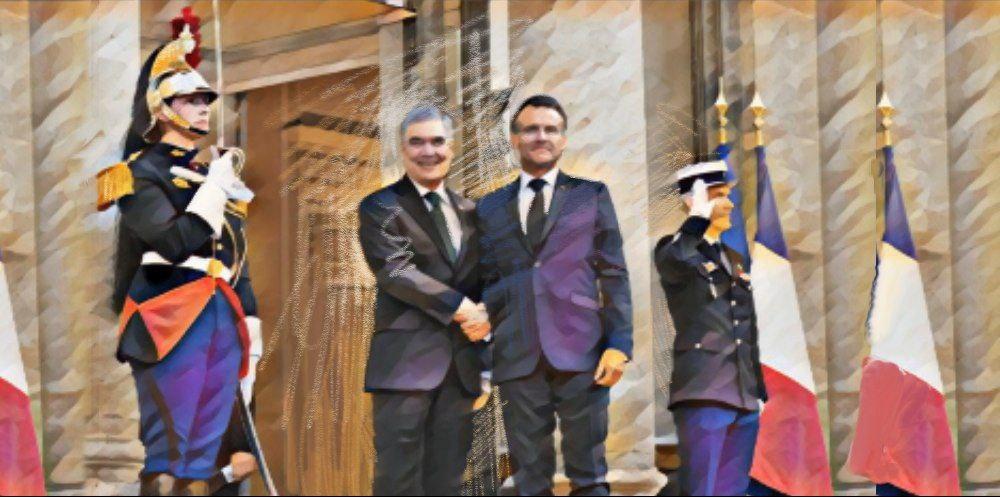
Gurbanguly Berdimuhamedov, Turkmenistan’s longtime ruler, no longer holds the title of president; that has been passed, along with much of the public burden, to his son. He now reigns from the shadows as Hero-Arkadag (“Hero-Protector”), but he retains the ability to open doors. Nearly 14 years after his last official visit, Berdimuhamedov landed at Paris’ Orly airport last Monday. He was in France ostensibly to attend the Franco-Turkmen Economic Forum, but the visit also saw him ushered into the Élysée Palace for an audience with President Emmanuel Macron. Characteristically, his presence in Paris was kept quiet, receiving very little coverage even in the French media. “It was much less discussed than the near-concurrent visit of the Syrian leader, Ahmed Al-Charaa,” Michaël Levystone, co-founder of l'Observatoire de la Nouvelle Eurasie, a Paris think tank told The Times of Central Asia. “You have to understand that Turkmenistan is a country that is virtually unknown to the general public in France – and for good reason: it goes out of its way to remain extremely discreet!” Nevertheless, the visit marks a rare moment of high-level Western diplomacy with one of the world’s most opaque regimes, as well as an extremely uncommon public diplomatic appearance from Berdimuhamedov Senior since ceding formal power in 2022. The questions are why France? And why now? What Was Discussed The two readouts of the encounter were notably different. The Élysée offered a terse summary on its website, noting vaguely that the meeting “provided an opportunity to review the bilateral relationship between Turkmenistan and France as well as regional issues.” Macron then followed this up with an equally laconic post on X, noting that the two had “signed several agreements between Turkmenistan and France in the areas of energy transition, infrastructure, education, and culture. They demonstrate the strengthening of our cooperation. We also took stock of major regional and international crises, including Russia's war of aggression against Ukraine and the situation in the Middle East.” On the other hand, the state-run news service Turkmenistan Today provided what can only be described as a detailed travelogue, noting the many dignitaries who had the pleasure of meeting the Hero-Arkadag on his whistle-stop tour of the City of Lights. According to the Turkmens, the visit yielded a flurry of agreements. A memorandum of understanding was inked between state-owned Türkmengaz and French tech firm Kayrros SAS, while France’s Thales Alenia Space Group signed a framework deal to provide Ashgabat with a second communications satellite. There were further promises of joint work on green energy, education, and archaeological research. A Foot in the Door One French company in particular is responsible for much of the engagement between the two countries. As part of his trip to Paris, Berdimuhamedov met with construction magnate Martin Bouygues, CEO of the firm that bears his family’s name. [caption id="attachment_31644" align="aligncenter" width="2560"] The Presidential Palace and ministries complex, built by the French company Bouygues; image: TCA, Stephen M. Bland[/caption] “Bouygues has built numerous monumental buildings in Ashgabat since Turkmenistan's independence,” Levystone told...

Victory Day in Central Asia: Honoring Sacrifice Amid Shifting Narratives

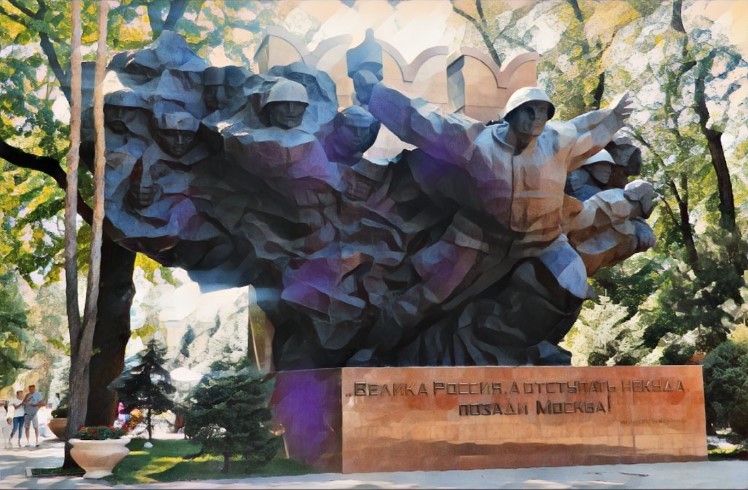
For the countries of Central Asia, Victory Day holds a deep significance. Although debates over the nature of the May 9 commemorations have intensified in recent years, the importance of the holiday remains unchallenged. A War That Touched Every Family Attitudes toward the celebration marking the defeat of Nazi Germany are largely shaped by each nation's level of participation in the war effort. Kazakhstan mobilized over 1.2 million people, nearly 20% of its pre-war population of 6.5 million. Of these, more than 600,000 perished at the front, with an additional 300,000 dying in the rear due to malnutrition, forced labor, and inadequate medical care. With a similar sized population, Uzbekistan sent approximately 1.95 million people to the front - or one in every three residents. Around 400,000 Uzbeks did not return home. Over 500 Kazakhstani and more than 300 Uzbekistani soldiers were awarded the title Hero of the Soviet Union. [caption id="attachment_31602" align="aligncenter" width="2560"] Eternal flame and Crying Mother Monument, Tashkent; image: TCA, Stephen M. Bland[/caption] Kyrgyzstan, home to just 1.5 million people at the time, sent over 363,000 to the front. Approximately 100,000 perished, and 73 received the Hero of the Soviet Union medal. Tajikistan mobilized more than 300,000 troops, with over 100,000 never returning. Fifty-five Tajiks received Hero of the Soviet Union honors. Turkmenistan, with a population of 1.3 million, sent around 200,000 soldiers and officers; 16 received Hero status. Central Asian soldiers played vital roles in major battles, including the defense of Moscow. They helped liberate territories across the Soviet Union and Eastern Europe. The region also contributed 20-30% of its horse population, then a central component of local economies, for military use. The war profoundly reshaped Central Asia. Thousands of Soviet enterprises were relocated to the region, fueling industrialization. Millions of refugees from Nazi-occupied zones found sanctuary in Central Asian republics. Many children were taken in by local families and raised as their own. Today, many in Central Asia feel that outsiders fail to grasp the weight of Victory Day. While countries like the UK, U.S., Italy, and France recorded wartime deaths of 380,000, 417,000, 479,000, and 665,000 respectively, the USSR suffered over 26 million losses. German losses are estimated at 8.4 million. Celebrating Amid Controversy Recent years have brought a shift in how Victory Day is perceived in Central Asia. Symbols such as the Guards ribbon, criticized for echoing imperial Russian motifs, have sparked debate. Some argue that the holiday reflects colonial oppression, as the peoples of Soviet Asia were conscripted into a foreign war. These debates have grown louder since Russia annexed Crimea in 2014, with some now viewing the May 9 celebrations as a tool of Russian influence in the region. Nonetheless, Central Asian leaders have rejected efforts to "cancel" Victory Day, reaffirming its deep personal and national resonance. Efforts to distinguish the celebration from Russian state narratives are evident. Many events now emphasize patriotism rather than Soviet nostalgia. On May 7, Kazakhstan held its first military parade in Astana in seven years,...

Victory Day Diplomacy: Central Asia’s Balancing Act and Putin’s Diminished Spotlight

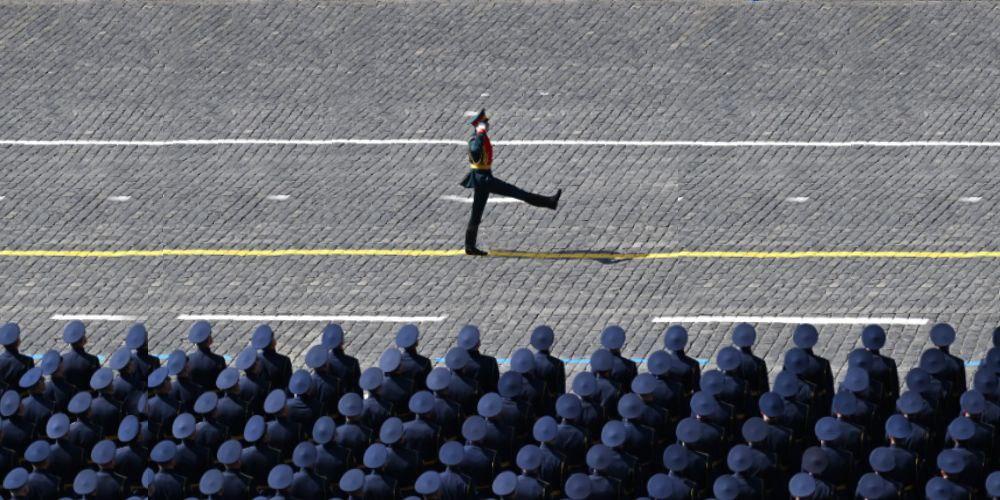
Every year, Moscow’s Red Square transforms into a stage for one of Russia's most celebrated traditions: Victory Day, an event which marks the Soviet Union’s triumph over Nazi Germany in World War II. Yet, as tanks roll through the cobblestone streets and military bands echo under the Kremlin walls, the occasion feels more heavily laden with geopolitical undertones than historical reminiscence these days. Against the backdrop of ongoing conflicts and shifting alliances, the presence of Central Asian leaders at this year’s event speaks to the region’s delicate relationship with the Russian Federation. But the question remains: amidst the pomp and circumstance, is there much for Vladimir Putin to celebrate? Central Asia’s Careful Balancing Act The attendance of Central Asian leaders at the Victory Day parade is a striking show of diplomatic choreography. On the surface, their presence will underscore the shared historical legacy of the Soviet era, when the sacrifices of the Central Asian republics contributed to the Allied victory in the Second World War. However, a more pragmatic lens reveals a balancing act that defines the region’s foreign policy. The region finds itself at the crossroads of global powers vying for influence in Central Asia. While Moscow leans on historical ties and cultural commonalities to retain its sway, Beijing’s economic clout continues to reshape the region’s trade networks and infrastructure projects. Meanwhile, as the inaugural EU-Central Asia Summit attests to, the European Union is eager to expand its reach, whilst hungry for Rare Earth Elements in which the region is rich, the U.S. is waiting in the wings. For Central Asian leaders, participating in Victory Day celebrations signals a nod to Russia’s historic role but also keeps the door open for economic and security cooperation. Amidst the shifting architecture of global politics, their diplomatic strategy remains one of pragmatism, seeking benefits from multiple partners while avoiding any over-alignment. What Does Russia Gain from the Optics? The presence of 29 leaders from across the globe – including Chinese President Xi Jinping - offers Moscow valuable optics at a time when its international relationships face significant strain. Last year, only nine attended. Isolated by Western sanctions over the invasion of Ukraine and with much of the world’s media painting Russia as cut off from the global stage, the impression of a united front with Central Asia helps the Kremlin portray the opposite. Victory Day, therefore, becomes a geopolitical tool, with the attendance of Central Asian leaders enabling Putin to send a message of shared unity within Russia’s historical sphere of influence. It tells both domestic and international audiences that Moscow retains significant allies, reinforcing the image of resilience despite ongoing challenges. How Much Does Moscow Truly Celebrate? The Victory Day parade is an event that is watched by an estimated three-quarters of the Russian public, drumming up patriotism as the state seeks to become the custodian of collective memory. Behind the spectacle, however, signs of disquiet are proving hard to ignore. Russia’s invasion of Ukraine has disrupted trade and migration flows...

Underground Tunnel Proposed to Channel Water from Black Sea to Caspian Sea

Azerbaijan’s ADOG company, in partnership with Zira Sea Port, has proposed an ambitious plan to construct an underground tunnel linking the Black Sea to the Caspian Sea. The goal is to counteract the rapid decline in the Caspian’s water level, which presents mounting environmental, economic, and infrastructural risks for the five littoral states. According to the analytical portal Minval Politika, the project envisions a 10-meter diameter tunnel connecting the Black Sea, either from the Georgian or Russian coastline, to the Caspian Sea. Engineers propose using the natural elevation difference between the two bodies of water to enable gravity-fed flow from the Black Sea into the Caspian, eliminating the need for pumps. ADOG has stated that the proposed project would undergo comprehensive environmental monitoring and include measures to preserve biodiversity in both marine ecosystems. The company has expressed readiness to begin a feasibility study and initiate the mobilization of necessary resources. Project proponents have submitted a request for the initiative to be considered at the state level and are calling for the launch of preliminary intergovernmental consultations. The urgency behind the proposal is grounded in alarming recent data. As previously reported by The Times of Central Asia, the Caspian Sea has been shrinking at a faster-than-expected rate. Environmental group Save The Caspian Sea reports that the sea level has dropped by two meters in the past 18 years, with projections warning of a further decline of up to 18 meters by 2100 if current trends continue. Such a drop could have catastrophic consequences for regional biodiversity, fisheries, port infrastructure, and climate stability, evoking fears of an ecological disaster akin to the desiccation of the Aral Sea. While the proposed tunnel remains at a conceptual stage, its geopolitical and environmental implications will likely generate serious debate among the Caspian littoral states: Azerbaijan, Iran, Kazakhstan, Russia, and Turkmenistan.

Central Asia’s Green Energy Dream: Too Big to Achieve?

Although most Central Asian nations are heavily dependent on fossil fuel production and exports, they are aiming to significantly increase the use of renewable energy, hoping to eventually become crucial suppliers of so-called green electricity to Europe. Achieving such an ambitious goal will be easier said than done, given that developing the green energy sector in the region requires massive investment. What Central Asian states – struggling to attract long-term private capital into clean energy projects – need is financing for projects that modernize power networks, improve grid stability, and enable cross-border electricity flows. These upgrades are essential for large-scale renewable energy deployment and regional trade in power. Most actors in Central Asia seem to have taken major steps in this direction. In November 2024, at the COP29 climate conference held in Baku, Kazakhstan signed several deals worth nearly $3.7 billion with international companies and development institutions to support green energy projects. Neighboring Uzbekistan, according to reports, has attracted more than €22 billion ($23.9) in foreign investment in renewable energy, while Kyrgyzstan, Turkmenistan, and Tajikistan – which is aiming to generate all its electricity from green energy sources by 2032 – have developed strategies to help increase their renewable potential. But to turn their goals into reality, all these nations will need funding – whether from oil-rich Middle Eastern countries, China, the European Union, or various international financial institutions. Presently, the development of the Caspian Green Energy Corridor – which aims to supply green electricity from Central Asia to Azerbaijan and further to Europe – remains the region’s most ambitious project. According to Yevgeniy Zhukov, the Asian Development Bank's (ADB) Director General for Central and West Asia, this initiative is a strategic priority for Kazakhstan, Uzbekistan, and Azerbaijan. “While the prospect of exporting green electricity to Europe is part of the long-term vision, the core goal of the initiative is to accelerate green growth within the region,” Zhukov told The Times of Central Asia. Together with the Asian Infrastructure Investment Bank, the ADB is funding a feasibility study for this proposed transmission corridor. The study will assess the technical and economic viability of such a system, along with the environmental and regulatory requirements. In the meantime, the ABD is expected to continue funding other green energy projects in the region. The financial entity, according to Zhukov, invested $250 million in Uzbekistan in 2023 to support renewable energy development and comprehensive power sector reforms, while in other Central Asian countries, it remains “firmly committed to driving the green energy transition.” “For instance, in Tajikistan we are exploring the potential to co-finance the Rogun Hydropower Project alongside the World Bank and other international partners. In Kyrgyzstan, our focus has been on supporting foundational reforms in the energy sector, including strengthening the policy and regulatory environment to attract private investment in renewables. In Turkmenistan, we’ve launched a total of $1.75 million technical assistance initiative to help lay the groundwork for future renewable energy development,” Zhukov stressed, pointing out that these efforts are part...