• KZT/USD = 0.00220
  • TJS/USD = 0.10860
  • UZS/USD = 0.00008
  • TMT/USD = 0.29760
  • KZT/USD = 0.00220
  • TJS/USD = 0.10860
  • UZS/USD = 0.00008
  • TMT/USD = 0.29760
  • KZT/USD = 0.00220
  • TJS/USD = 0.10860
  • UZS/USD = 0.00008
  • TMT/USD = 0.29760
  • KZT/USD = 0.00220
  • TJS/USD = 0.10860
  • UZS/USD = 0.00008
  • TMT/USD = 0.29760
  • KZT/USD = 0.00220
  • TJS/USD = 0.10860
  • UZS/USD = 0.00008
  • TMT/USD = 0.29760
  • KZT/USD = 0.00220
  • TJS/USD = 0.10860
  • UZS/USD = 0.00008
  • TMT/USD = 0.29760
  • KZT/USD = 0.00220
  • TJS/USD = 0.10860
  • UZS/USD = 0.00008
  • TMT/USD = 0.29760
  • KZT/USD = 0.00220
  • TJS/USD = 0.10860
  • UZS/USD = 0.00008
  • TMT/USD = 0.29760
03 November 2026

Viewing results 49 - 54 of 293

Business Leaders from Turkmenistan Talk Trade on U.S. Tour

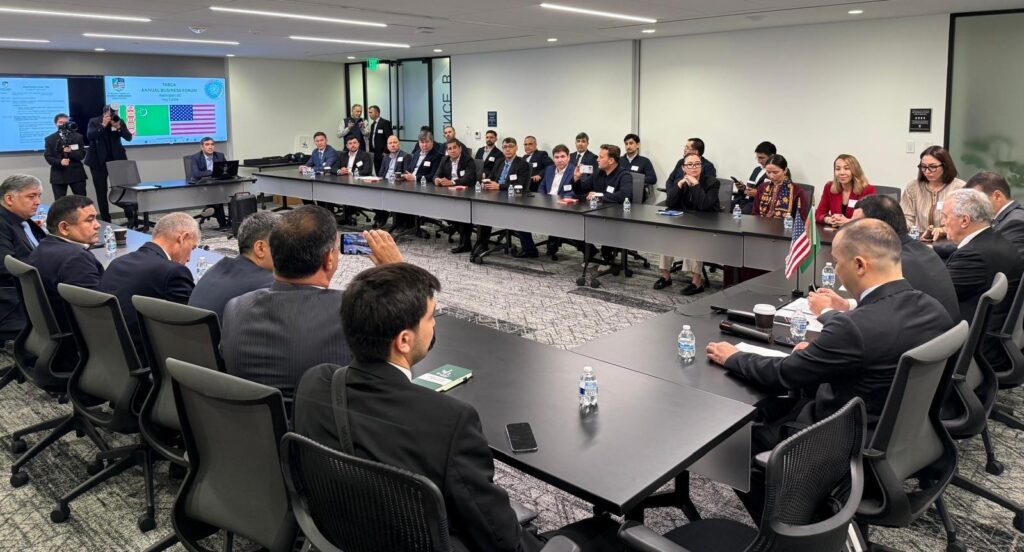
Dozens of business executives from Turkmenistan and the United States have met in Washington amid efforts by the two countries to strengthen trade. The conference of the Turkmen American Business Cooperation Association, also known by its acronym TABCA, was held on Thursday, according to Turkmenistan’s embassy in the U.S. It said the association is a “new practical platform” for expanding economic ties, with a focus on small and medium-sized enterprises. Earlier this month, business leaders from Turkmenistan attended the SelectUSA Investment Summit, an event hosted by the U.S. Department of Commerce that was designed to connect investors, companies and experts from around the world. The investment forum was held in National Harbor, Maryland. Ambassador Esen Aydogdyyev of Turkmenistan, meanwhile, has been making contacts since he was appointed to his new post in Washington in March. On May 1, Aydogdyyev met S. Paul Kapur, U.S. Assistant Secretary of State for South and Central Asian affairs. On April 22, the Turkmen ambassador held talks with Patryk Łoszewski, an executive director of the International Monetary Fund. U.S. goods trade with Turkmenistan was $152.7 million in 2025, according to U.S. government data. U.S. goods exports to Turkmenistan last year were $113.3 million, up 43.6% from the previous year, and U.S. goods imports from Turkmenistan were $39.4 million, up 169% from 2024. While those numbers are relatively low compared to the volume of trade between the United States and its bigger trading partners, the annual percentage increase is notable. One of Turkmenistan’s biggest exports to the U.S. is fertilizer. Turkmenistan has major reserves of natural gas and oil, and the Central Asian country is working to diversify its trading partners. U.S. and other foreign companies are hoping for reforms in the highly controlled country that would make it a more attractive place to invest.
Turkmenistan’s White City Casts Itself as Cutting Edge

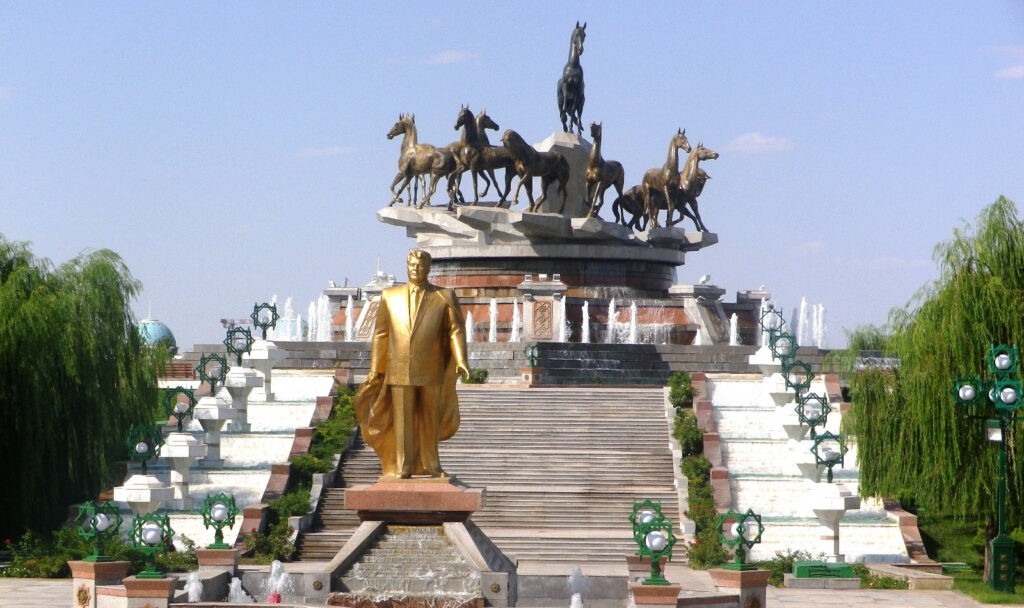
Turkmenistan’s so-called “white city” of Ashgabat, where hundreds of buildings are clad in white marble, will host a conference this month aimed at attracting international investment and innovation to the showcase capital. Organizers of the government-backed White City Ashgabat 2026 forum, scheduled for May 24-25, say the delegates will include investors, architects, and engineers, and that the agenda will cover urban planning, digital technologies, and the modernization of water, transport, and other infrastructure. Organizers of the government-backed White City Ashgabat 2026 forum, scheduled for May 24-25, say delegates will include investors, architects, and engineers, and that urban planning, digital technologies, and the modernization of water, transport, and other infrastructure will be discussed. Turkish Airlines and S&P Global Energy are listed as partners for the event. Media partners include several Middle Eastern outlets. Listed speakers include Rahym Gandymov, mayor of Ashgabat; Japanese Ambassador Sasaki Hiroshi; and Francesco La Camera, director-general of the Abu Dhabi-based International Renewable Energy Agency. First-time visitors to Turkmenistan’s capital, with its broad avenues, squares and elaborate monuments, sometimes describe it as eerie and unusual. In 2013, the city made it into the Guinness World Records for the highest density of white marble-clad buildings. Perceptions of Ashgabat can range from a futuristic “smart” city to a grandiose display only made possible by the wealth from Turkmenistan’s immense energy resources and the whims of its leaders. Turkmen officials are trying to shape a positive narrative about the city by hosting more international events and focusing on the idea of sustainability. Erfan Ali is director of the regional office for eastern Europe and Central Asia of UN-Habitat, which promotes social and environmental priorities in towns and cities. He said he was looking forward to the Ashgabat conference this month. “Discussions will focus on advancing resilient, inclusive, and smart cities, from climate action to digital transformation, while highlighting practical pathways for future-ready urban systems globally,” Ali said on X. In recent years, Turkmenistan has also focused on the development of Arkadag, a city that lies about 30 kilometers from Ashgabat and features plenty of white marble as well. Arkadag means “protector,” a reference to the formal title of Gurbanguly Berdimuhamedov, the former president who retains some power even though his son, Serdar, is now the president. This month, the elder Berdimuhamedov visited Arkadag to check on what state media described as the “second phase” of the construction of Arkadag, which formally opened in 2023. A delegation from the city will attend the World Urban Forum, a United Nations conference on sustainable urbanization in Baku, Azerbaijan, on May 17-22.

Turkmenistan Advances Galkynysh Gas Field Development to Increase Exports to China

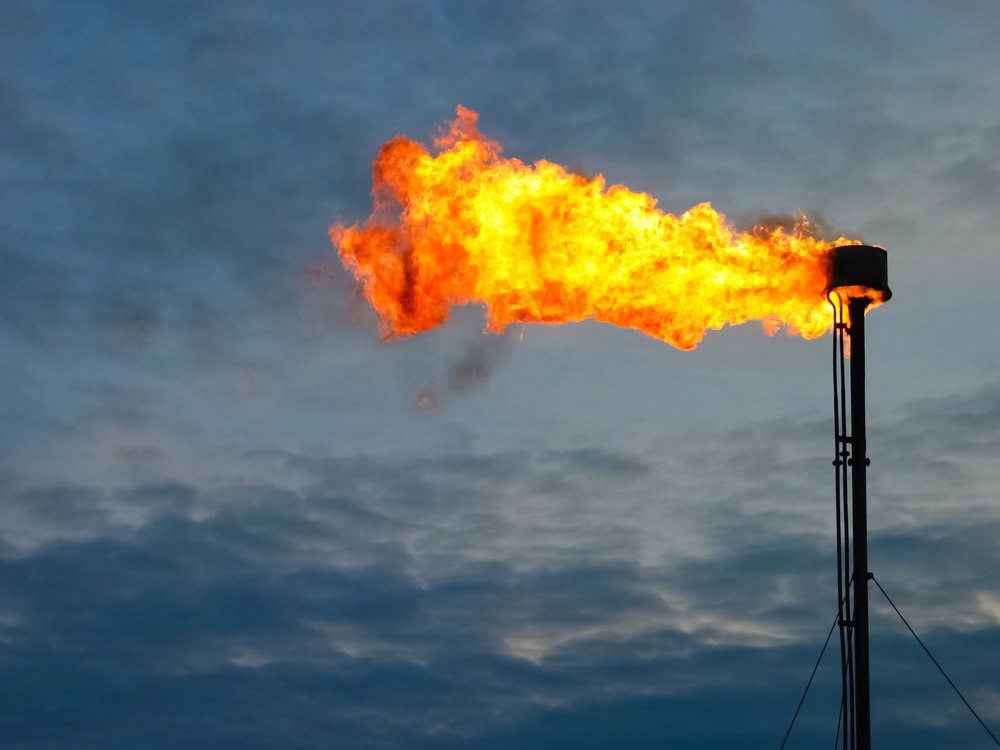
Chinese Vice Premier Ding Xuexiang and Gurbanguly Berdymuhamedov, Tukmenistan's former President and the current Chairman of its highest representative body, the Halk Maslahaty, have launched the fourth phase of industrial development of the Galkynysh gas field in Mary region. Located about 400 km southeast of Ashgabat, the Galkynysh field has been producing natural gas since 2013 and is considered one of the world’s largest in terms of reserves. The British consulting firm GaffneyCline estimates the reserves of Galkynysh, together with the neighboring fields Garakol and Yashlar, at 27.4 trillion cubic meters of natural gas. On April 16, the State Concern Turkmengas and China’s CNPC Amudarya Petroleum Company Ltd. signed a contract for the turnkey construction of the fourth phase of the field’s development. The project includes the drilling of production wells and the construction of a gas processing facility with a capacity of 10 billion cubic meters of commercial gas per year. According to industry publication Nebit-Gaz, the Galkynysh field is being developed in phases. The first phase, which included the construction of three gas processing plants with a total capacity of 30 billion cubic meters per year, is currently operational. The second, third, and fourth phases are planned for the near future. Upon full development, the field’s gross annual production could reach nearly 200 billion cubic meters of natural gas. The Galkynysh field serves as the main resource base for Turkmen gas exports to China. China remains the largest buyer of Turkmen natural gas. Three lines (A, B, and C) of the Turkmenistan-China gas pipeline system currently deliver approximately 40 billion cubic meters of gas annually. With the planned commissioning of a fourth line (Line D), export volumes are expected to increase to around 65 billion cubic meters per year. The resource base of Galkynysh is a key factor in the planned construction of Line D, which is expected to significantly increase gas supplies to China. According to Guvanch Agajanov, Vice-Chairman of Turkmenistan's Cabinet of Ministers, total Turkmen gas exports to China have exceeded 462 billion cubic meters over the past 20 years. The Galkynysh field has also been designated as the resource base for the Turkmenistan-Afghanistan-Pakistan-India (TAPI) gas pipeline, which is under construction and is expected to have a capacity of 33 billion cubic meters per year.

Why Strong Economic Growth in Central Asia Masks Underlying Risks

Central Asian countries are significantly outperforming the global average in GDP growth, largely due to differing economic models across the region. However, rapid expansion does not remove deep structural vulnerabilities. As early as March, data showed that the combined economies of Central Asian countries grew by nearly 7% in 2025 compared to the previous year. The World Bank estimates regional growth at 6.2%, while the Eurasian Development Bank (EDB) places it at 6.6%. These calculations include Kazakhstan, Uzbekistan, Kyrgyzstan, and Tajikistan; Turkmenistan is excluded due to limited statistical transparency. By comparison, growth rates in advanced economies are much lower. The EDB expects around 1.6% growth in the U.S. and approximately 1.1% in the eurozone in 2026, while China’s economy is projected to expand by about 4.6%. Nevertheless, experts note that the region’s economic outlook remains complicated by high inflation, income inequality, and continued dependence on external factors. Investment activity and domestic demand have been the key drivers of growth, according to the EDB. Kazakhstan recorded its highest growth in 13 years (6.5%), with industry leading the expansion: mining grew by 9.4% and manufacturing by 6.4%. In 2026, the non-resource sector is expected to play a greater role. Kyrgyzstan has led the region in GDP growth for the third consecutive year: GDP grew by 11.1% in 2025 and by 9% in January 2026. In Uzbekistan, GDP increased by 7.7% in 2025 (up from 6.7% a year earlier), supported by investment, trade, services, and construction. Tajikistan’s GDP rose by 8.4% in 2025, matching the previous year’s performance. Growth continues to be driven by expanding industrial production and strong domestic demand. Early 2026 data suggest this momentum is holding. Uzbekistan’s Record In April, the World Bank highlighted Uzbekistan’s resilience to external challenges and strong growth dynamics. According to its updated report, the country’s 2025 GDP growth was revised upward by 1.5 percentage points to 7.7%. The outlook is 6.4% for 2026 and 6.7% for 2027. Key drivers include high global gold prices, investment inflows, expanded lending, and ongoing structural reforms. Rising household incomes have also played an important role, supported by remittances, which increased by 37% last year to reach $18.9 billion. By the end of 2025, Uzbekistan ranked among the fastest-growing economies in developing countries in Europe and Central Asia, alongside Kyrgyzstan and Tajikistan. The region as a whole is experiencing its highest growth rates in 14 years. At the same time, analysts point to persistent structural constraints, including a large public sector and the dominance of state-owned enterprises, which hinder private sector development. External risks, including geopolitical instability and potential disruptions in energy and fertilizer supplies, remain significant. In 2025, Uzbekistan’s GDP exceeded €133 billion, compared to approximately €56 billion nine years earlier. Over the same period, GDP per capita rose from about €1,750 to around €3,220, nearly doubling average income levels. Investment in fixed capital increased by more than 15% year-on-year in 2025, while export value grew by over 33%. Persistently high global gold prices played a major role: export...

Beyond the Belt and Road: China’s New Playbook in Central Asia

In the Kyzylorda Region, near the town of Shieli, the silos and conveyor belts of a Chinese-backed plant rise out of the fine brown dust that dominates the landscape. It is the kind of project the Belt and Road was supposed to deliver in Central Asia: heavy industry, fixed capital, and a visible mark on the landscape. But it is also a reminder that China’s role in the region has become narrower, more contested, and less sweeping than the old rhetoric suggested. In photographs, the Gezhouba Cement Plant looks like a self-contained industrial island on the steppe. For nearby villagers, it became something else: a source of jobs and local prestige for some, but also of years of complaints about dust clouds and whether the state was quicker to defend a flagship Chinese-backed project than the people living beside it. Projects like the plant in Shieli also help explain why views of China across Central Asia remain mixed. Beijing is seen as a source of trade, investment, and technology, but that promise is tempered in some places by concerns over transparency, environmental costs, and who really benefits when a project arrives. China has become Central Asia’s dominant trading partner, but investment has not kept pace with the surge in commerce. The gap says a lot about how Beijing now works in the region: with a sharper focus on sectors that matter to its long-term influence. In 2025, trade in goods between China and the five Central Asian states reached $106.3 billion, up 12% year on year. Chinese exports to the region totaled $71.2 billion, while imports from Central Asia reached $35.1 billion. Trade has grown fast enough to reshape the region’s external balance, but long-term investment has been far more selective. Over 2005–2025, the five Central Asian states accounted for about 3% of China’s global overseas investment and construction total. The picture changes once direct investment is separated from trade and construction contracts. China’s FDI stock in the five Central Asian states stood at about $36 billion by mid-2025. Roughly 90% was concentrated in Kazakhstan, Uzbekistan, and Turkmenistan. The structure of that capital has also changed. Extractive industries still accounted for 46% of the portfolio, but manufacturing and energy together made up more than one third, and greenfield projects rose from 43% to 60%. China has not poured money into Central Asia on the scale once implied by early Belt and Road rhetoric. Instead, it has invested in sectors that strengthen its industrial position. Kazakhstan remains at the center of this relationship. It is China’s biggest commercial partner in Central Asia, and the main destination for Chinese capital in the region. Kazakhstan-China trade reached $43.8 billion in 2024. The country’s portfolio of projects with Chinese participation includes 224 ventures worth about $66.4 billion. Some are still at the planning stage, but the range of projects is telling. Recent developments have included a hydrogen energy technology innovation center in Almaty and a large wind farm with electricity storage. Kazakhstan still sells...

Turkmenistan Fuel Duties Force Truck Drivers to Dump Diesel

Since early April, Turkmenistan has imposed restrictions limiting the amount of fuel in the tanks of trucks leaving the country to no more than 300 liters. Any excess fuel may be retained only upon payment of a duty of $5.72 per liter, about 20 times higher than the official domestic price. Faced with these costs, many drivers have opted to dispose of surplus diesel instead. On April 5, turkmen.news posted a video on its Telegram channel showing foreign truck drivers dumping large quantities of diesel directly onto the ground. According to the outlet, the practice is a response to the country’s fuel regulations. Foreign truck drivers are required to pay the duty in U.S. dollars at the official exchange rate, rather than in the local currency. As a result, each additional liter effectively costs about $5.70. By comparison, diesel prices in Hong Kong, often cited among the highest globally, are nearly $2 lower per liter. In Kazakhstan, diesel costs approximately $0.70 per liter, while in Uzbekistan it is around $1. Within Turkmenistan, domestic fuel prices remain heavily subsidized at roughly $0.05 per liter. Only citizens of Turkmenistan are permitted to pay the duty in the national currency, the Turkmen manat. All others must pay in dollars, which are then converted into manats at the official exchange rate of 3.5 manats per dollar. Experienced drivers transiting Turkmenistan typically obtain manats in advance for local expenses. In this case, however, the requirement to pay in foreign currency appears to serve an additional fiscal purpose. As a result, rather than preventing fuel shortages, the policy has caused environmental damage, with significant quantities of diesel dumped onto the soil. Turkmenistan drivers are also reported to engage in similar practices, particularly those traveling to or through Kazakhstan, where refueling is cheaper than paying approximately $1 per excess liter at home. The impact is not limited to environmental concerns. Freight carriers operating within Turkmenistan have already begun increasing logistics prices, reflecting the added costs associated with the new regulations.