• KZT/USD = 0.00220
  • TJS/USD = 0.10860
  • UZS/USD = 0.00008
  • TMT/USD = 0.29760
  • KZT/USD = 0.00220
  • TJS/USD = 0.10860
  • UZS/USD = 0.00008
  • TMT/USD = 0.29760
  • KZT/USD = 0.00220
  • TJS/USD = 0.10860
  • UZS/USD = 0.00008
  • TMT/USD = 0.29760
  • KZT/USD = 0.00220
  • TJS/USD = 0.10860
  • UZS/USD = 0.00008
  • TMT/USD = 0.29760
  • KZT/USD = 0.00220
  • TJS/USD = 0.10860
  • UZS/USD = 0.00008
  • TMT/USD = 0.29760
  • KZT/USD = 0.00220
  • TJS/USD = 0.10860
  • UZS/USD = 0.00008
  • TMT/USD = 0.29760
  • KZT/USD = 0.00220
  • TJS/USD = 0.10860
  • UZS/USD = 0.00008
  • TMT/USD = 0.29760
  • KZT/USD = 0.00220
  • TJS/USD = 0.10860
  • UZS/USD = 0.00008
  • TMT/USD = 0.29760
03 November 2026

Viewing results 43 - 48 of 293

Can Caspian Cargo Fleets Meet Middle Corridor Demands?

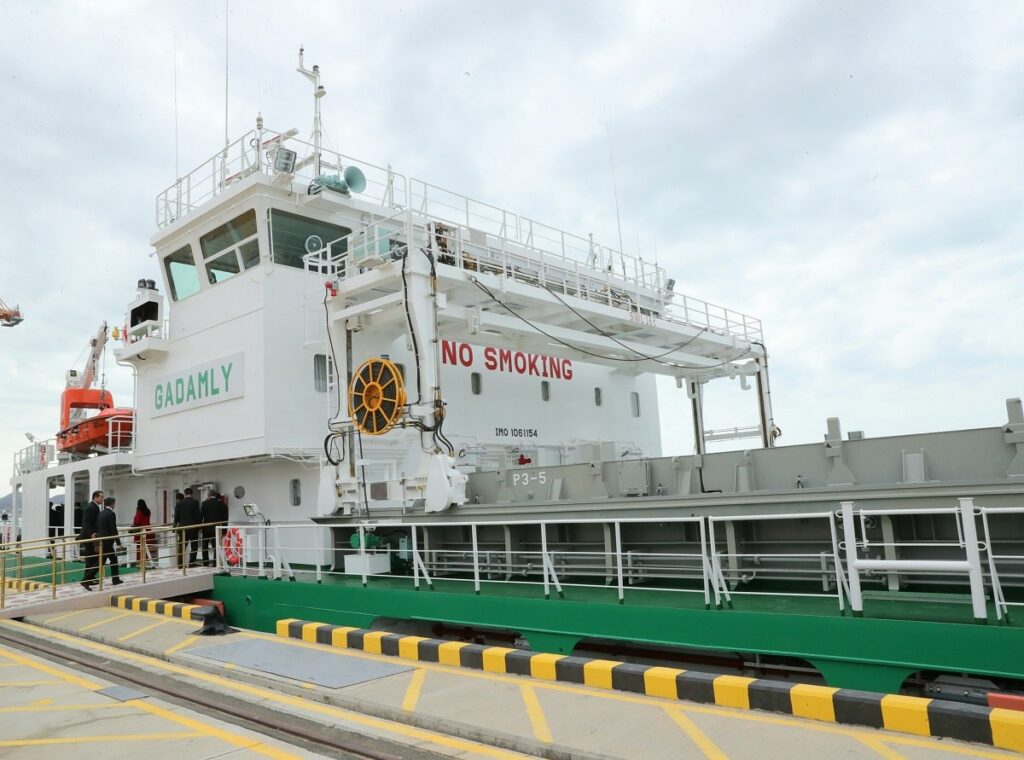
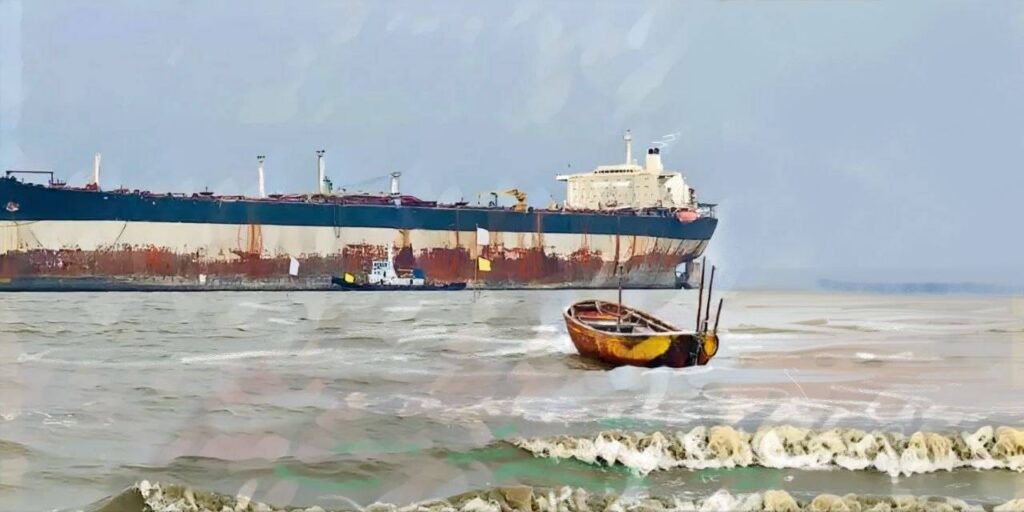
Construction of infrastructure along the Middle Corridor, also called the Trans-Caspian International Trade Route, to ship goods between China and Europe is progressing at a frantic pace. When Russia launched its full-scale invasion of Ukraine in late February 2022, it inadvertently gave a new impetus to the development of a trade network through Central Asia and the South Caucasus that had been slowly taking shape since the end of the 1990s. One of the most formidable challenges along the Middle Corridor is boosting maritime cargo across the Caspian Sea. Steps are being made, including some significant recent moves, but the capacity of shipping east-to-west over the Caspian Sea faces challenges in meeting the ever-growing demand for commercial vessels. By Leaps and Bounds In 2022, the volume of cargo through the Middle Corridor was some 1.5 million tons, more than twice the amount transported in 2021. In 2023, it topped 2.7 million tons, in 2024 was about 4.5 million tons, and in 2025 it was expected to be approximately 5.2 million tons. Turkish President Recep Tayyip Erdogan visited Kazakhstan on May 13-14, where his host, President Kassym-Jomart Tokayev, said the figure could reach 10 million tons “in the near future,” and are predictions it could happen as soon as 2027. The roads, railways, and port facilities along the Middle Corridor are expanding rapidly. However, according to a report from Azerbaijan’s Trend news agency in mid-May, the Azerbaijani Caspian Shipping Company (ASCO) says that since 2013, only “a total of 35 new vessels have been commissioned.” The Merchant Fleets of Kazakhstan and Turkmenistan On the eastern side of the Caspian Sea, Kazakhstan and Turkmenistan have been working to increase their maritime shipping. Both countries invested heavily in upgrading their Caspian ports, in Kazakhstan’s case at Aktau and Kuryk, and for Turkmenistan at Turkmenbashi City. Since the end of April, both countries have moved to boost their potential to ship cargo across the Caspian. Kazakhstan’s state railway company, Kazakhstan Temir Zholy (KTZ), announced on April 30 that it would build its own maritime fleet starting with six new vessels, each with a deadweight of up to 9,900 tons and able to carry up to 537 twenty-foot equivalent units (TEU). Once completed, those six cargo ships will join the two dry cargo and three container vessels in the Caspian Sea operated by Kazakhstan’s state maritime shipping company Kazmortransflot. The three container ships – Berkut, Sunkar, and Barys – all started operation in 2019, have a deadweight of 5,200 tons, and can each carry up to 350 TEU. The two dry cargo ships, the Beket Ata and Turkestan, have a deadweight of 5,467 tons and can carry 4,182 tons. On May 12, the dry cargo ship Gadamly arrived at the Baku International Sea Port. The Gadamly is Turkmenistan’s first dry cargo vessel and is able to carry up to 240 TEU. A second cargo vessel, Manzil, should be launched before the end of this year. Arif Aghayev, the deputy chairman of Azerbaijan Railways, said at...
Turkmenistan Pushes for Food Security with International Help

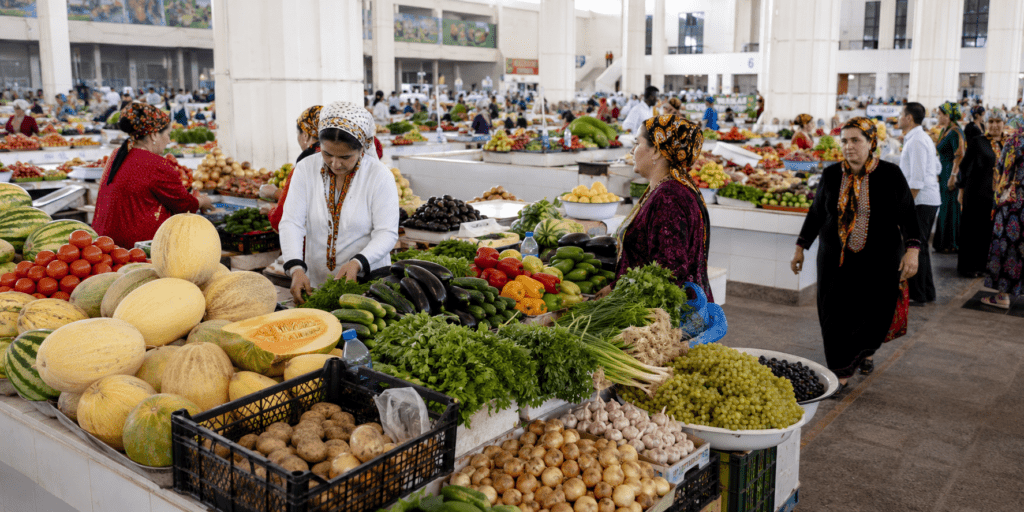
As Turkmenistan works to modernize food production, representatives from dozens of foreign companies were in the country this week for meetings on the agricultural and food industries as well as the packaging of goods. The Agro Pack Turkmenistan-2026 event reflected the Central Asian country’s efforts to turn the corner on reported food shortages, import dependence and high prices over many years – and evolve as an exporter. The impact of climate change on farming yields, along with recent shipping disruptions and higher fuel and transport costs linked to the Iran war, pose challenges to many regions working to maintain a stable supply. The Food and Agriculture Organization, a U.N. agency dedicated to food security, signed a deal to open an office in Turkmenistan in January as the country stepped up its campaign to improve production and quality with international help. Visiting Turkmenistan at the time, FAO Director-General Qu Dongyu said it was the last country in the region without “representation” of the U.N. agency and that a “turning point” had arrived. “In Turkmenistan, traditional agriculture has its limits,” Qu said. “But through innovation and modern technology, you can unleash the biggest potential of your land in this region.” During his visit, Qu said he had spoken to President Serdar Berdimuhamedov for one hour – far longer than he had expected. This week, Berdimuhamedov said in a message to participants in the May 12-14 Agro Pack conference that the state was coordinating with foreign companies to introduce “high technologies and innovative initiatives into large investment projects.” In addition, the president said, state-backed private Turkmen producers are making progress in “farming, livestock farming, the development of poultry complexes, greenhouse farms, meat and milk processing, the production of confectionery, fruit juices, juices and processed vegetables and melons.” The conference was held at Turkmenistan’s Chamber of Commerce and Industry in Ashgabat and drew diplomats and business executives from Pakistan, Azerbaijan, Türkiye, China, and other countries. Azerbaijani companies participated in the exhibition, according to Azerbaijan’s embassy. One was Gözel Seeds, which has seed breeding operations in Spain, Türkiye, Azerbaijan, and Uzbekistan. In another development, Kirill Zaitov, director of the Russian company AgroExport, said at the conference that there are plans to increase wheat flour supplies to Turkmenistan to 400 tons per day. Currently, the company exports 6,000 tons of products to Turkmenistan every month, according to the Business Turkmenistan website. Reports of food problems, including in Turkmenistan’s military, have persisted until recently. However, Turkmenistan reported a successful spring sowing campaign for potatoes and other crops that aims to increase domestic supply and reduce the need for imports.

Opinion: The Southern Dimension of the Middle Corridor – Afghanistan’s Role in Eurasia’s New Logistics Landscape

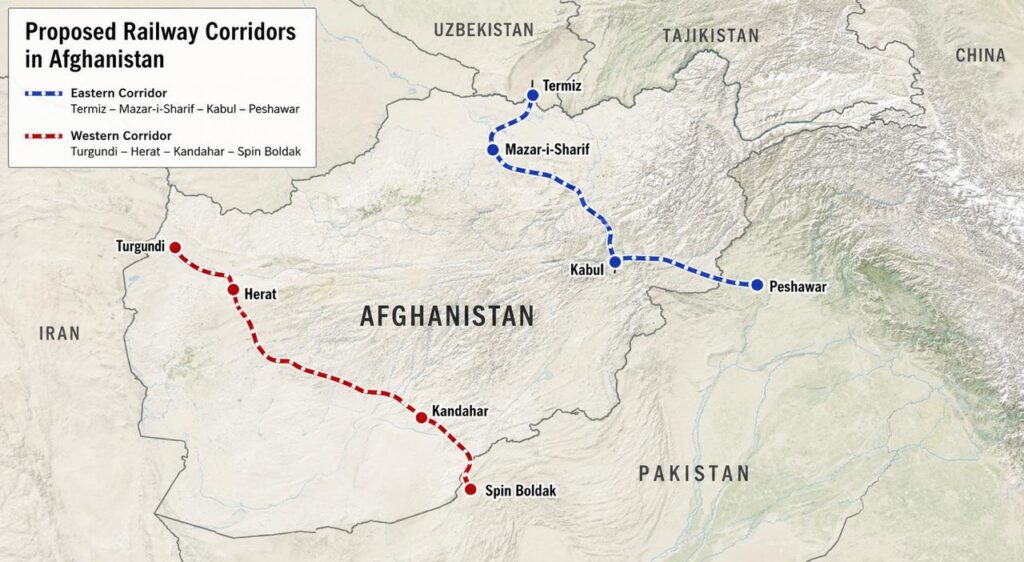
Afghanistan’s integration into the Trans-Caspian International Transport Route (TITR) is extending beyond local logistics and evolving into one of Eurasia’s key geo-economic projects. Amid the global transformation of supply chains, Central Asia has an opportunity to move beyond its role as a transit periphery and become an active participant in shaping new economic corridors, creating a full-fledged “southern dimension” of Eurasian connectivity. Two Routes: Strategic and Operational Two main directions for Afghanistan’s integration into the Eurasian transport system are currently under discussion, each reflecting a distinct development logic: strategic and pragmatic. The “Eastern Branch” (Termez-Mazar-i-Sharif-Kabul-Peshawar) is traditionally viewed as the primary trans-Afghan route. Its key advantage is direct access to the ports of Karachi and Gwadar, providing the shortest connection between Central Asia and the Indian Ocean. At the same time, geography makes the project highly complex. The route passes through the central and eastern regions of Afghanistan, including the Hindu Kush mountain range, where long tunnels and bridges would be required. This would sharply increase construction and maintenance costs, extend implementation timelines, and heighten security and infrastructure risks. According to available estimates, the project could cost around $5 billion and handle 15-20 million tons of cargo annually. However, the lengthy investment cycle and dependence on political stability mean implementation remains a long-term prospect. The “Western Branch” (Turgundi-Herat-Kandahar-Spin Boldak) represents an alternative logistics corridor based on more favorable geography. Western Afghanistan is characterized by predominantly flat, semi-arid terrain, reducing the need for complex engineering structures and allowing the project to be implemented in phases. This significantly lowers capital costs, shortens construction timelines, and reduces infrastructure risks. The western route’s initial capacity is estimated at 7-10 million tons of cargo annually, making it the more realistic option for medium-term planning. An additional advantage is its geo-economic flexibility. Via Herat, the route could be integrated not only southward through Pakistan, but also westward through Iran, providing access to Persian Gulf ports. This would transform it into a multi-directional corridor capable of serving several logistics flows simultaneously. The Eastern Branch, therefore, remains the strategic option offering the shortest route to the ocean but requiring substantial investment and time. The Western Branch, meanwhile, presents a more pragmatic solution: faster to implement and more flexible from a geo-economic standpoint. The Role of Turkmenistan and Kazakhstan in the “Western Maneuver” The implementation of the western trans-Afghan corridor depends on close coordination between two key regional players, Kazakhstan and Turkmenistan, which form the northern foundation of the future route by providing access to the Caspian Sea and, beyond it, global markets. Astana and Ashgabat are effectively creating a new geo-economic framework that could transform Central Asia from an isolated region into a strategic crossroads linking the Caspian Sea with the Indian Ocean. In 2026, Kazakhstan moved toward deeper institutionalization of the initiative, making the route through Herat and Kandahar a government priority. Astana’s strategy is multifaceted. In addition to establishing a permanent interdepartmental commission, Kazakhstan is actively seeking to attract international operators such as the Emirati AD...

Turkmenistan Launches First Locally Built Dry Cargo Vessel

Turkmenistan has launched its first dry cargo vessel built at the Balkan Shipbuilding and Repair Yard. According to the state news agency TDH, the new ship has been named Gadamly. The vessel is designed to transport dry cargo and has a carrying capacity of 6,100 tons. It can also transport up to 240 20-ton containers. The project was implemented jointly by local specialists and the South Korean company Koryo Shipbuilding Industry Technology. During the launch ceremony, the company’s head, Choi Young Wook, presented the shipyard with international certificates recognizing its engineering development and construction quality standards. Additional certification confirming compliance with international standards, including environmental requirements, was awarded by the French company Bureau Veritas Marine & Offshore. State media coverage of the event focused on the project’s industrial significance as well as the traditional customs associated with launching a new vessel. According to TDH, respected elder women scattered white flour over the ship as part of the traditional blessing ritual “ak zat alnyňa ýagşy,” while an aladja, a traditional protective talisman, was tied to the ship’s wheel. A festive sadaka, or charitable offering for people in need, was also held. Turkmenistan has announced plans to continue cooperation in shipbuilding. President Serdar Berdimuhamedov said another cargo vessel, Menzil, is expected to enter service in the near future. Opened in 2018, the Balkan Shipbuilding and Repair Yard is part of the Turkmenbashi International Seaport complex. The Turkmen government reportedly invested around $1.5 billion in the port project. The shipyard is designed to build four to six vessels annually.

Kazakhstan Ready to Become Key Food Hub in Eurasia

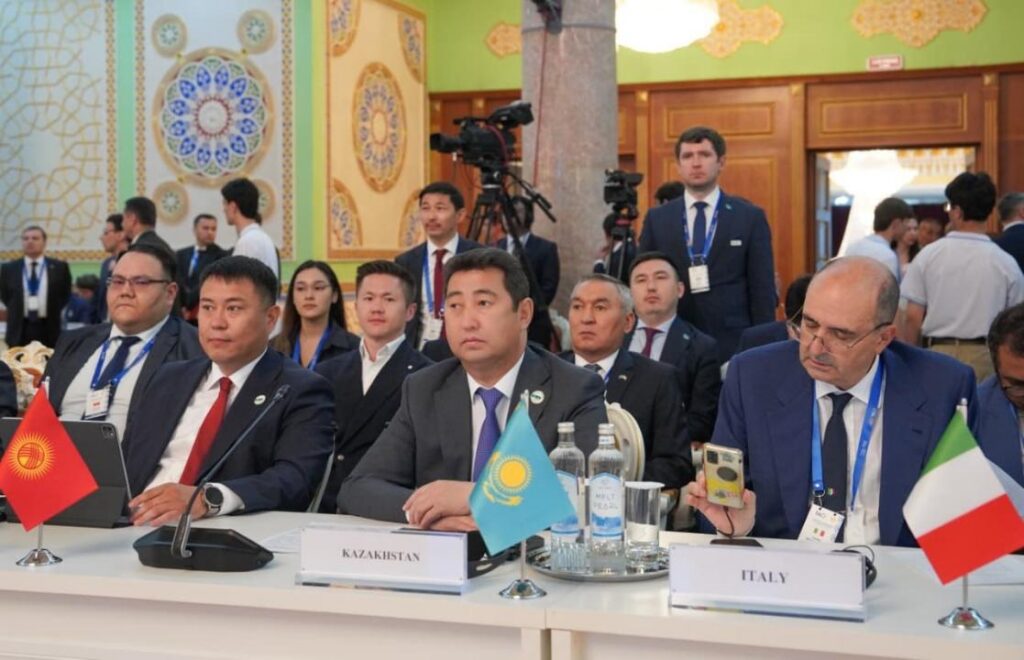
Tajikistan is hosting the 35th Session of the FAO Regional Conference for Europe from May 11 to 15, bringing together members of the Food and Agriculture Organization (FAO) of the United Nations from Europe and Central Asia for discussions on regional food security and agricultural development priorities. The conference has gathered agriculture ministers from Azerbaijan, Kazakhstan, Kyrgyzstan, Tajikistan, Turkmenistan, and Uzbekistan to address the most pressing challenges facing the sector, review FAO activities in Europe and Central Asia in 2024-2025, and outline priorities for 2026-2027. Speaking at the conference, Kazakhstan’s Minister of Agriculture Aidarbek Saparov said the country occupies a strategically important position in the global food security system and remains among the world’s leading grain producers. According to Saparov, Kazakhstan harvested around 27 million tons of grain for the second consecutive year in 2025, along with nearly 5 million tons of oilseeds and approximately 1 million tons of legumes. During the latest agricultural season, the country exported 15.3 million tons of grain. Kazakhstan currently ranks 10th globally in grain exports, second in flour exports, and eighth in sunflower oil exports, supplying agricultural products to around 50 countries. “Against the backdrop of population growth, climate change, and instability in global markets, food security is becoming a key factor in the sustainable development of states. Under these conditions, Kazakhstan is capable of occupying a strategic niche as a regional center for the production, storage, processing, and supply of grain products,” Saparov said. The minister added that Kazakhstan is implementing a comprehensive livestock development plan for 2026-2030 aimed at increasing livestock numbers and expanding the sector’s export potential. Saparov said Kazakhstan possesses the resources necessary to strengthen its position as one of Eurasia’s key food hubs and is prepared to ensure stable, rapid, and cost-effective supplies of grain and processed grain products to Central Asia, the Middle East, Europe, and other regions.

Washington Meets Ashgabat as Turkmen-American Business Cooperation Association Debuts

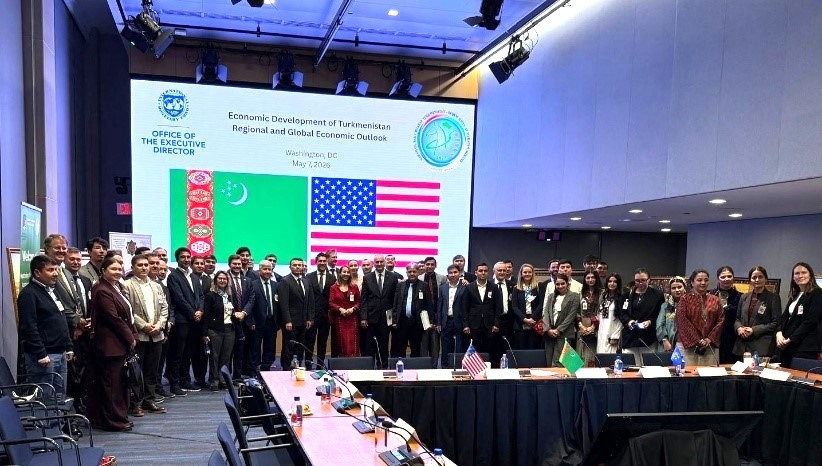
On May 7, the Turkmen-American Business Cooperation Association (TABCA) and the Embassy of Turkmenistan in Washington marked the organization’s official launch through a series of daylong events attended by members of the business community, diplomats, and dignitaries, including senior representatives from the U.S. Department of Commerce. Serving as a definitive bridge between the business communities of the United States and Turkmenistan, TABCA aims to promote bilateral trade, support market access initiatives, and encourage strategic partnerships and innovation across key sectors. More than 50 Turkmen and American companies joined the meetings, underscoring Ashgabat’s continued push toward a more open and globally engaged economy—one that inevitably brings both opportunity and risk. According to Esen Aydogdyyev, Turkmenistan’s Ambassador to the United States, “We are committed to cultivating broad international partnerships where agreements contribute to national development, economic resilience, and long-term independence for its citizens. Ashgabat is seeking broader investor and commercial engagement, which is compatible with our strategic autonomy and non-aligned status.” [caption id="attachment_48630" align="aligncenter" width="901"] (L/R) Viktoriya Frolova, Commerical Specialist, U.S. Embassy Turkmenistan, former Ambassador of Turkmenistan to the U.S., Meret Orozov, Chairman of the Board, Turkmen American Business Cooperation Association Nurgeldi Meredov, and Mr.Maksat Annamyradov, Board Member, Turkmen American Business Cooperation Association. Image: Kakajan Ovezov, Begench Arazalyyev[/caption] The initiative reflects Turkmenistan’s effort to strengthen ties with Western investors while maintaining its neutrality and independent foreign policy. Economic growth is strongest, the participants echoed, when enterprise creates broad opportunity and shared prosperity. Ambassador Aydogdyyev said that “priority areas for cooperation include trade and commerce, energy, transportation and communications, agriculture, renewable energy, the chemical and food sectors, as well as environmental protection. We especially value entrepreneurship and small business partnerships between Turkmenistan and the United States. In addition, we want Turkmen entrepreneurs to play a role in supporting economic growth and employment opportunities in the United States, which they are already contributing to today.” Win-Win is the Guiding Principle TABCA’s official launch in Washington is more than symbolic—it reflects a meaningful new chapter in U.S.-Turkmenistan relations, grounded in practical business cooperation and a shared commitment to cross-border investment. While some observers in Turkmenistan remain cautious about the risk of outside geopolitical agendas or economic models that favor a narrow set of interests under the banner of long-term prosperity and commercial diplomacy, the focus today is on building fair opportunity, productive partnership, and tangible commercial results. “U.S. and Turkmen businesses are already helping drive jobs and economic growth in both countries—a reminder of why stronger commercial ties matter,” said Nurgeldi Meredov, TABCA’s Chairman. “Our goal is to expand trade, boost investment, and create long-term partnerships that open new opportunities for companies on both sides.” [caption id="attachment_48631" align="aligncenter" width="712"] Jamila Kerimova, founder of “Ish nokady” (standing); image: Kakajan Ovezov, Begench Arazalyyev[/caption] At TABCA’s morning session, Turkmen businesses highlighted B2B engagement and SME growth opportunities, showcasing companies in logistics, e-commerce, manufacturing, consulting, and real estate. The presentations were followed by networking aimed at fostering direct commercial partnerships. Nurgeldi Meredov, alongside Meret Orazov, former Ambassador of Turkmenistan...