• KGS/USD = 0.01144 0%
  • KZT/USD = 0.00214 0%
  • TJS/USD = 0.10617 1.05%
  • UZS/USD = 0.00008 0%
  • TMT/USD = 0.28490 0%
  • KGS/USD = 0.01144 0%
  • KZT/USD = 0.00214 0%
  • TJS/USD = 0.10617 1.05%
  • UZS/USD = 0.00008 0%
  • TMT/USD = 0.28490 0%
  • KGS/USD = 0.01144 0%
  • KZT/USD = 0.00214 0%
  • TJS/USD = 0.10617 1.05%
  • UZS/USD = 0.00008 0%
  • TMT/USD = 0.28490 0%
  • KGS/USD = 0.01144 0%
  • KZT/USD = 0.00214 0%
  • TJS/USD = 0.10617 1.05%
  • UZS/USD = 0.00008 0%
  • TMT/USD = 0.28490 0%
  • KGS/USD = 0.01144 0%
  • KZT/USD = 0.00214 0%
  • TJS/USD = 0.10617 1.05%
  • UZS/USD = 0.00008 0%
  • TMT/USD = 0.28490 0%
  • KGS/USD = 0.01144 0%
  • KZT/USD = 0.00214 0%
  • TJS/USD = 0.10617 1.05%
  • UZS/USD = 0.00008 0%
  • TMT/USD = 0.28490 0%
  • KGS/USD = 0.01144 0%
  • KZT/USD = 0.00214 0%
  • TJS/USD = 0.10617 1.05%
  • UZS/USD = 0.00008 0%
  • TMT/USD = 0.28490 0%
  • KGS/USD = 0.01144 0%
  • KZT/USD = 0.00214 0%
  • TJS/USD = 0.10617 1.05%
  • UZS/USD = 0.00008 0%
  • TMT/USD = 0.28490 0%

Viewing results 55 - 60 of 584

“We Can’t Help You”: How Turkmenistan’s Ministry of Justice Handles Citizens’ Complaints

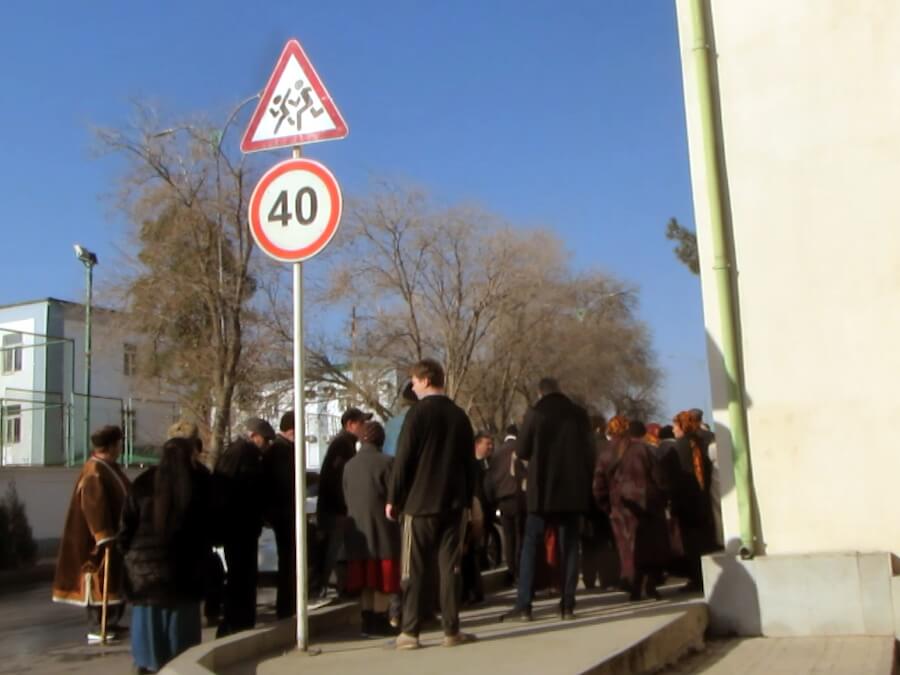
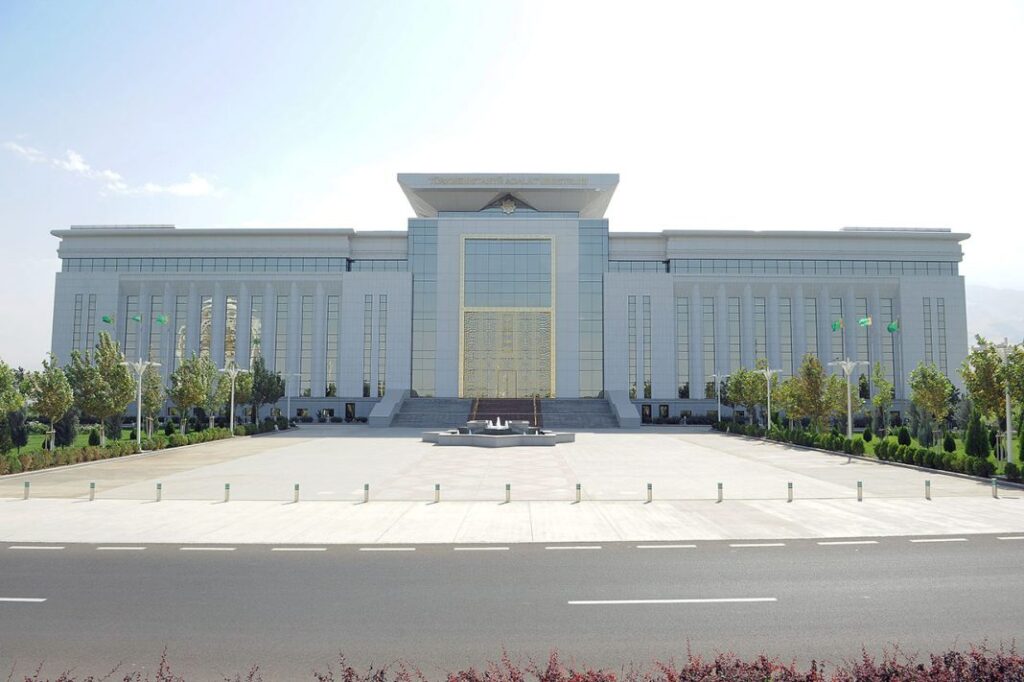
A recent public reception at Turkmenistan’s Ministry of Justice has highlighted the formal and often unproductive nature of interactions between citizens and state institutions in the country. On January 10 the ministry held a legal consultation session, officially scheduled to run from 9:00 a.m. to 12:00 p.m. In practice, however, visitors were not admitted until 10:00 a.m. According to Chronicles of Turkmenistan, more than 50 citizens attended the reception, many of whom had previously appealed to state agencies multiple times. They arrived with letters, formal statements, and supporting documentation in hand. Entry was granted in groups of three. The commission included representatives from the Ministry of Justice, the Prosecutor General’s Office, the Supreme Court, and the Bar Association. Each individual was given no more than five minutes. Despite the format suggesting legal support, the outcome for most attendees was discouragingly uniform. After speaking with 38 participants, journalists reported that all had received the same response: “We can’t help you.” Several attendees stated that officials did not even review the documents submitted with their complaints. As a result, nearly all who came seeking redress left empty-handed. Many expressed hopelessness, stating that they had no viable path to resolve their issues, and that government institutions had effectively denied them access to justice. The Times of Central Asia previously reported on the broader challenges faced by Turkmen citizens in navigating bureaucratic procedures and, in particular, how elderly residents endured long waits at social security offices. Although the process appears straightforward on paper, in practice it becomes a burdensome ordeal, especially given the government’s continued refusal to index pensions and social benefits. Missing a single appointment can result in suspended payments, with delays of up to six months before back payments are processed.

From Tehran to Tashkent: How Iran’s Crisis and U.S. Tariffs Reverberate Across Central Asia

At the end of 2025, Iran once again emerged as a flashpoint on the global political map. Mass protests erupted across the country, fueled by spiraling inflation and economic hardship. At present, the Iranian rial has plummeted to the point where it is effectively worth less than the paper it's printed on. The current wave of unrest, already the largest and deadliest nationwide unrest Iran has seen since 2022, is not occurring in isolation. U.S. President Donald Trump has renewed what his administration describes as a policy of “maximum pressure” on Tehran, and his administration is now pursuing what observers have characterized as a strategy of “pushing the falling,” a move aimed at reshaping the political order of the Middle East. What might this mean for neighboring Central Asia? Tajik political analyst Muhammad Shamsuddinov argues the crisis must be viewed within a broader geopolitical context. “The situation in Iran is directly tied to Trump’s second-term pressure campaign,” Shamsuddinov said, referencing a string of destabilizing events. “These include the 12-day U.S.-Israel war against Iran and the reimposition of U.N. sanctions in September 2025," he added, referring to the 12-day June 2025 conflict between Israel and Iran, during which U.S. forces also struck Iranian nuclear facilities. "All of these have deepened the domestic crisis in Iran.” In a further escalation, on January 12, Trump announced 25% tariffs on countries conducting trade with Iran. The move appears targeted primarily at Russia, China, and India - Iran’s largest international partners, but also has implications for Central Asian economies. In the first nine months of 2025, trade between Kazakhstan and Iran grew by nearly 45%, reaching $310.8 million. Tajikistan, which maintains the closest economic ties to Tehran among Central Asian states, reported trade worth $430.7 million in the first eleven months of 2025, an increase of 28% over the same period in 2024. Uzbekistan, while less directly exposed to Iran than Kazakhstan or Tajikistan, has also moved cautiously in recent years to expand trade links with Tehran, making it sensitive to further sanctions pressure. Turkmenistan, meanwhile, faces its own exposure through gas swap arrangements involving Iran, which could become collateral damage of escalating regional tensions. Iranian investments in Tajikistan are also substantial. Among the most prominent projects is the Sangtuda-2 hydroelectric power plant, estimated at $256 million. The Iranian government contributed approximately $180 million, with an additional $36 million from an Iranian contractor. The remainder was financed by Tajikistan. According to official data, roughly 160 companies with Iranian capital are currently operating in Tajikistan across multiple sectors. In Kazakhstan, around 650 Iranian companies are registered, with over 350 operational, primarily in manufacturing, infrastructure, and agriculture. By contrast, trade between Iran and Russia, a strategic partner since the signing of a bilateral cooperation agreement in January 2025, increased by only 8% in the first nine months of 2025, according to official figures. Despite modest growth, Russian analysts view the figures optimistically. “Growth is happening under challenging geopolitical conditions, with sanctions, logistical restructuring, and financial hurdles,” said...

U.S. Expands Visa Bond Policy for Kyrgyzstan, Tajikistan and Turkmenistan

The United States has expanded a visa bond policy that increases the upfront cost of short-term travel for citizens of Kyrgyzstan, Tajikistan, Turkmenistan, and dozens of other countries. Under the policy, applicants for B-1 and B-2 business and tourism visas may be required to post bonds of $5,000, $10,000, or $15,000. The State Department set out the latest rules and the country list on its visa bond policy page. The program now covers nationals from 38 countries. In Central Asia, it was applied to Turkmenistan on January 1, and is scheduled to extend to Kyrgyzstan and Tajikistan starting from January 21. The bond is refundable when travelers follow visa terms and leave on time, but it can tie up large sums for the duration of a trip and may put U.S. travel beyond reach for many applicants. Turkmenistan, where emigration is tightly controlled, sees low numbers of its citizens entering the United States. Department of Homeland Security data for Fiscal Year 2024 indicates that the total number of Turkmen nationals issued B-1/B-2 visas to the U.S. was 1,759. Tajikistan, meanwhile, saw 1,772 visas granted, and Kyrgyzstan 9,625. By way of comparison, Saudi Arabia saw over 54,000 visas granted. The expansion has already triggered public pushback in Kyrgyzstan. In a post on X on Thursday, Edil Baisalov, the deputy chairman of Kyrgyzstan’s Cabinet of Ministers and a prominent ally of President Sadyr Japarov, urged the Kyrgyz authorities to review visa-free access for U.S. citizens. Kyrgyzstan currently allows U.S. travelers to enter without a visa for stays of up to 30 days. “I believe that we should initiate a review of our visa-free regime for U.S. citizens following the new visa requirements announced yesterday by the State Department, under which Kyrgyz citizens are required to pay a visa deposit of up to $15,000 when submitting visa applications,” Baisalov wrote. “Visa policy is a matter of parity and mutual respect. If such high barriers are introduced for our citizens, we cannot pretend that nothing has happened.” Baisalov did not specify precisely what changes Kyrgyzstan might pursue, and any escalation risks provoking a dispute with a far stronger partner. The remarks also come as Kyrgyzstan and other Central Asian governments seek closer engagement with President Donald Trump’s administration while managing competing pressures from Russia and China. The measure is a setback for Kyrgyz efforts to ease travel barriers with the United States. Kyrgyz Foreign Minister Zheenbek Kulubaev raised visa issues with U.S. Deputy Secretary of State Christopher Landau during a meeting on the sidelines of the U.N. General Assembly in New York in September. So far, Tajikistan has not matched Kyrgyzstan’s public stance, with no prominent statement appearing on Tajik government channels addressing the bond requirement or signaling reciprocity. Discussion has instead focused on what the new U.S. rules mean for applicants, the implementation timeline, and the bond amounts that may be set at the interview stage. For Turkmenistan, the requirement adds another hurdle to an already narrow path to U.S. travel. The country’s...

Turkmen Pensioners Endure Long Queues to Prove They Are Alive

At the start of each year, elderly citizens and benefit recipients across Turkmenistan are forced to endure long hours in line at social security offices, as part of a biannual process requiring them to prove they are still alive. This routine formality has become a grueling ordeal, especially amid growing discontent over the government’s refusal to adjust payments as it had in previous years. Twice annually, in January and July, pensioners and beneficiaries must appear in person at local offices to receive a stamp in their pension books, confirming eligibility and the amount of payment for the next six months. Failure to do so results in an immediate suspension of payments. While retroactive disbursements are promised upon eventual reappearance, surviving without income for six months is an impossible burden for many. Reports of queues have emerged from across the country. Beneficiaries point out that the process could be easily streamlined with scheduled appointments or structured lists. However, no such measures are being implemented. Instead, in freezing cold or scorching heat, elderly people, women with young children, and individuals with disabilities must wait for hours. In the city of Turkmenbashi, residents expressed particular frustration. Many pensioners reportedly held out hope until the last moment for the traditional 10% increase in payments and were shocked to find it canceled this year. For those in rural areas, even an extra $2.50 to $3 per month can make a significant difference. The Times of Central Asia previously reported that the cancellation of the 2026 pension and benefit indexation triggered sharp discontent among older residents. Many only learned of the decision during their January visits and openly expressed their anger. The move stems from a position voiced in the fall of 2025 at a parliamentary session. Honorary elder Yazmyrat Atamyradov proposed a complete freeze on wage, pension, benefit, and scholarship growth, claiming the standard of living for Turkmenistan’s “happy people” was rising sufficiently. 

Turkmenistan Opens Door to Crypto Mining, Keeps Firm Grip on Exchanges

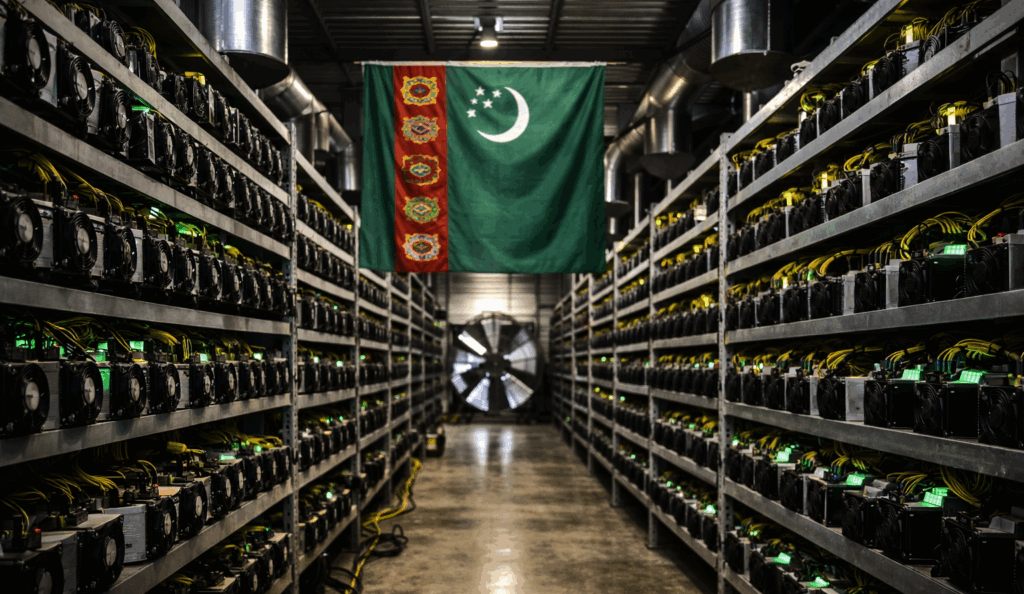
Turkmenistan has taken a rare step toward opening a tightly controlled economy by legalizing cryptocurrency mining and the operation of crypto exchanges under a new “Law on Virtual Assets”. First reported by The Times of Central Asia in early December 2025, the law came into effect on January 1, 2026, creating a state-run licensing system overseen by the Central Bank of Turkmenistan, while keeping strict limits on how crypto can be used inside the country. The legal change, signed by President Serdar Berdimuhamedov, brings “virtual assets” under civil law, meaning that crypto is treated as property, rather than money. Under the framework, cryptocurrencies are not recognized as legal tender and cannot be treated as a currency or security for domestic payments. As previously reported by The Times of Central Asia, the law covers the creation, storage, issuance, and circulation of virtual assets. It also states that the government is not responsible for losses incurred through crypto platforms or for drops in asset value. Mining rights are available to individual entrepreneurs and legal entities that register electronically with the central bank, and the law explicitly bans “hidden mining” that uses someone else’s computing resources without permission. For exchanges and related service providers, the licensing requirements are central. Licensed firms can offer exchange, transfer, storage, and management services, and conduct initial offerings, but they must follow customer identification rules aligned with anti-money-laundering controls. The law also places strict limits on who can operate crypto exchanges inside Turkmenistan. Individuals and legal entities registered in offshore jurisdictions are barred from establishing exchanges, and founders with offshore bank accounts are disqualified from obtaining licenses, reinforcing a framework designed to keep ownership and control within a tightly regulated domestic system. Advertising restrictions further underscore the government’s cautious approach. Crypto service providers are prohibited from making promises of profitability or offering inducements to attract customers. Promotional materials must include explicit warnings that virtual assets are not state-backed and may lose value, reflecting official concerns over speculation and consumer risk. The shift is widely seen as significant for one of the world’s most closed economies, though structural constraints remain. Turkmenistan’s heavily regulated internet environment poses a challenge for both trading platforms and large-scale exchange operations, particularly those requiring uninterrupted access to global networks. The move also fits within a broader effort to reduce reliance on gas exports by cautiously diversifying the economy. The commercial question now is whether legal clarity and access to low-cost electricity can outweigh these limitations. The model combines ultra-cheap energy with a license-driven regulatory system, a structure that may attract some miners while deterring firms that depend on flexible compliance regimes or unrestricted connectivity. Across Central Asia, governments have taken divergent approaches to regulating digital assets. Kazakhstan has experimented with special regulatory zones and later expanded oversight nationwide. Turkmenistan’s approach is more centralized, creating a narrow legal pathway that keeps regulatory authority concentrated with the state and the central bank. The government has signaled incremental openness in other areas, including the introduction of electronic...

Turkmenistan’s Arkadag to Face Cristiano Ronaldo’s Al-Nassr in AFC Champions League

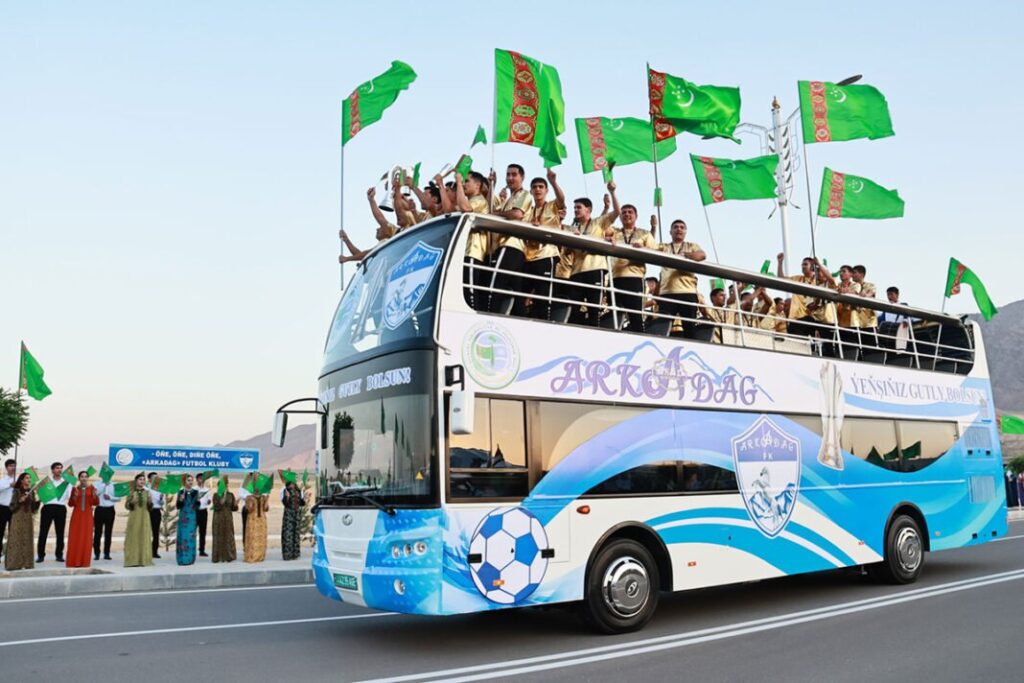
Turkmenistan’s Arkadag football team has drawn Saudi Arabia’s Al-Nassr, one of the favorites to win the AFC Champions League, in the round of 32. The Riyadh-based club features global football icon Cristiano Ronaldo. The play-off stage draw was held on December 30 in Kuala Lumpur. Arkadag could have faced Jordan’s Al-Hussein or the UAE’s Al-Wasl, but the outcome proved more challenging. Al-Nassr, widely considered a top contender for the title, will now travel to Ashgabat for a critical away match. Cristiano Ronaldo has been with the Saudi club for three seasons but has yet to play a match in Central Asia. In both 2023 and 2025, Al-Nassr shared a group with Tajikistan’s Istiklol. However, in each case, the matches in Dushanbe occurred late in the group stage, with Al-Nassr having already secured qualification, prompting the club to rest its key players. The upcoming encounter may break that pattern. As the first match of a two-legged tie, Al-Nassr is unlikely to underestimate its opponent. Arkadag, the reigning AFC Challenge League champion, has established itself as a formidable home team, maintaining an unbeaten record since its founding. In last season’s Challenge League playoffs, Arkadag defeated India’s East Bengal 2-1 and Kuwait’s Al-Arabi 3-0 on home turf. In this season’s AFC Champions League, the team has continued its strong form, securing a 1-0 win over Bahrain’s Al-Khalidiya and drawing 1-1 with both Uzbekistan’s Andijan and Qatar’s Al-Ahli. For Al-Nassr, the match represents an away challenge against a little-known but dangerous opponent. Arkadag's home advantage, unwavering support from local fans, and spotless home record make the team a serious threat, even for a club boasting global superstars. The first-leg match is scheduled for February 10 or 11 in Turkmenistan, with the return leg set for February 17 or 18 in Saudi Arabia. Arkadag is Central Asia’s sole representative in the AFC Champions League round of 32. However, the region will also be represented in the AFC Challenge League playoffs, with Kyrgyzstan’s Muras United advancing to the next stage. The Ashgabat fixture may become not only the highlight of Turkmenistan’s football winter, but also a rare opportunity for Central Asian fans to witness one of the world’s greatest players compete on regional soil.