• KGS/USD = 0.01144 0%
  • KZT/USD = 0.00211 0%
  • TJS/USD = 0.10526 0%
  • UZS/USD = 0.00008 0%
  • TMT/USD = 0.28530 0%
  • KGS/USD = 0.01144 0%
  • KZT/USD = 0.00211 0%
  • TJS/USD = 0.10526 0%
  • UZS/USD = 0.00008 0%
  • TMT/USD = 0.28530 0%
  • KGS/USD = 0.01144 0%
  • KZT/USD = 0.00211 0%
  • TJS/USD = 0.10526 0%
  • UZS/USD = 0.00008 0%
  • TMT/USD = 0.28530 0%
  • KGS/USD = 0.01144 0%
  • KZT/USD = 0.00211 0%
  • TJS/USD = 0.10526 0%
  • UZS/USD = 0.00008 0%
  • TMT/USD = 0.28530 0%
  • KGS/USD = 0.01144 0%
  • KZT/USD = 0.00211 0%
  • TJS/USD = 0.10526 0%
  • UZS/USD = 0.00008 0%
  • TMT/USD = 0.28530 0%
  • KGS/USD = 0.01144 0%
  • KZT/USD = 0.00211 0%
  • TJS/USD = 0.10526 0%
  • UZS/USD = 0.00008 0%
  • TMT/USD = 0.28530 0%
  • KGS/USD = 0.01144 0%
  • KZT/USD = 0.00211 0%
  • TJS/USD = 0.10526 0%
  • UZS/USD = 0.00008 0%
  • TMT/USD = 0.28530 0%
  • KGS/USD = 0.01144 0%
  • KZT/USD = 0.00211 0%
  • TJS/USD = 0.10526 0%
  • UZS/USD = 0.00008 0%
  • TMT/USD = 0.28530 0%

Viewing results 61 - 66 of 587

Turkmenistan’s Arkadag to Face Cristiano Ronaldo’s Al-Nassr in AFC Champions League

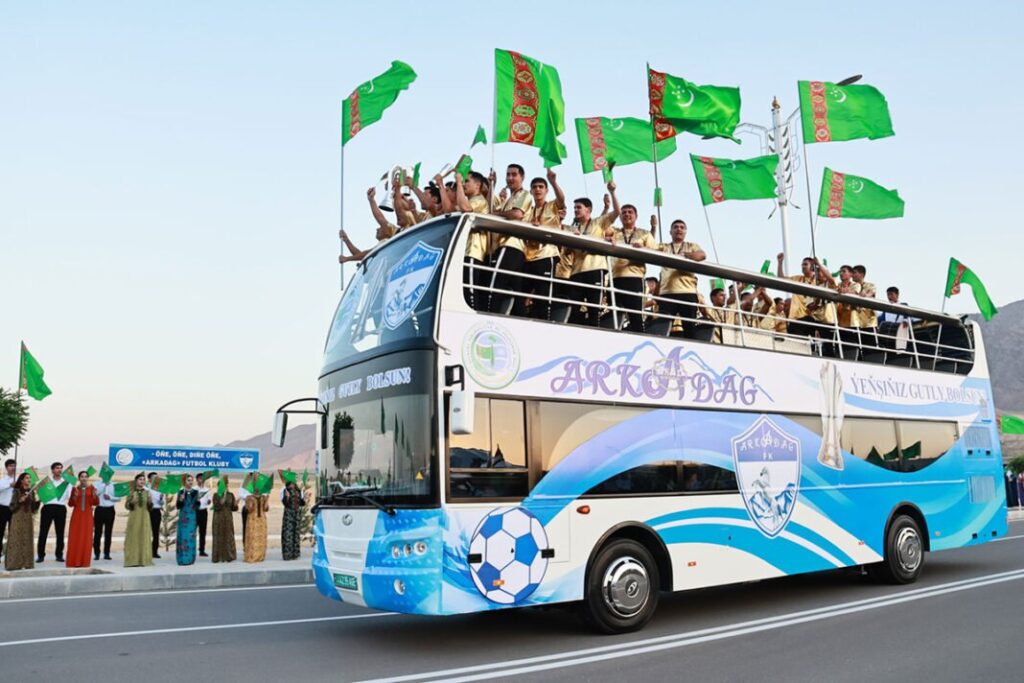
Turkmenistan’s Arkadag football team has drawn Saudi Arabia’s Al-Nassr, one of the favorites to win the AFC Champions League, in the round of 32. The Riyadh-based club features global football icon Cristiano Ronaldo. The play-off stage draw was held on December 30 in Kuala Lumpur. Arkadag could have faced Jordan’s Al-Hussein or the UAE’s Al-Wasl, but the outcome proved more challenging. Al-Nassr, widely considered a top contender for the title, will now travel to Ashgabat for a critical away match. Cristiano Ronaldo has been with the Saudi club for three seasons but has yet to play a match in Central Asia. In both 2023 and 2025, Al-Nassr shared a group with Tajikistan’s Istiklol. However, in each case, the matches in Dushanbe occurred late in the group stage, with Al-Nassr having already secured qualification, prompting the club to rest its key players. The upcoming encounter may break that pattern. As the first match of a two-legged tie, Al-Nassr is unlikely to underestimate its opponent. Arkadag, the reigning AFC Challenge League champion, has established itself as a formidable home team, maintaining an unbeaten record since its founding. In last season’s Challenge League playoffs, Arkadag defeated India’s East Bengal 2-1 and Kuwait’s Al-Arabi 3-0 on home turf. In this season’s AFC Champions League, the team has continued its strong form, securing a 1-0 win over Bahrain’s Al-Khalidiya and drawing 1-1 with both Uzbekistan’s Andijan and Qatar’s Al-Ahli. For Al-Nassr, the match represents an away challenge against a little-known but dangerous opponent. Arkadag's home advantage, unwavering support from local fans, and spotless home record make the team a serious threat, even for a club boasting global superstars. The first-leg match is scheduled for February 10 or 11 in Turkmenistan, with the return leg set for February 17 or 18 in Saudi Arabia. Arkadag is Central Asia’s sole representative in the AFC Champions League round of 32. However, the region will also be represented in the AFC Challenge League playoffs, with Kyrgyzstan’s Muras United advancing to the next stage. The Ashgabat fixture may become not only the highlight of Turkmenistan’s football winter, but also a rare opportunity for Central Asian fans to witness one of the world’s greatest players compete on regional soil.
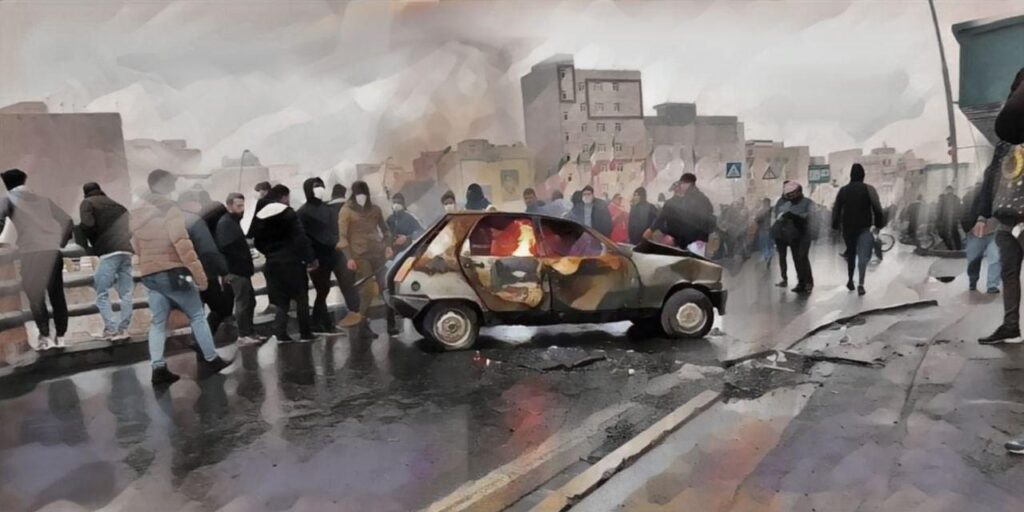

The Trump Factor: Why Central Asia Has Remained Silent on Iran’s Protests

The wave of protests that erupted in Iran in late December and spread to at least 27 of the country’s 31 provinces has become the largest since 2022, when mass demonstrations followed the death of 22-year-old Mahsa Amini in the custody of Iran’s morality police. The unrest has raised new concerns across the region about political stability, energy markets, and the risk of external intervention. Rights monitors say protests have been reported in hundreds of locations nationwide, with death and detention tolls still contested. Human rights groups and independent monitoring organizations estimate that dozens of people have been killed and more than 2,000 detained, while Iranian officials have offered varying accounts and blamed violence on what they describe as “rioters.” In Kazakhstan, observers are drawing comparisons to the country’s own January 2022 unrest, officially labeled an attempted coup that ended in a violent crackdown. But beyond the parallels with Kazakhstan’s ‘Qantar’ events, analysts are focusing on the wider implications, particularly the potential impact of Iran’s domestic turmoil on global oil markets. For Kazakhstan, the stakes are heightened by the country’s reliance on hydrocarbon exports and the sensitivity of global energy markets to supply shocks. Any sharp change in Iranian output, even if temporary, could place downward pressure on prices and complicate budget planning for oil-dependent economies across Central Asia. Kazakh financial analyst Rasul Rysmambetov has voiced concern that unrest in Iran could trigger a surge in oil production aimed at funding social spending, a move that could drive down global oil prices and harm Kazakhstan’s oil-dependent economy. “Iran could add half a million barrels a day within six months and cause oil prices to collapse, but it would not do so casually. The Middle East is very sensitive and knows how to negotiate. Still, if the protests persist, Tehran might ramp up production to finance social needs. [This would be] painful for Kazakhstan. If Venezuela is a bear cub, then Iran is a grizzly bear in the bushes with its oil,” Rysmambetov warned on his Telegram channel. While political unrest typically raises oil prices by increasing supply risk, analysts note that Iran’s response could be atypical. Faced with fiscal pressure, Tehran may opt to increase production to stabilize revenues, a move that would push prices lower despite heightened instability. Iran’s chronic social issues, exacerbated by inflation and the collapse of the national currency, have fueled public discontent for more than a decade. While the Iranian authorities acknowledge the severity of the economic crisis and have conceded that some demands are legitimate, they have also warned of further hardships. On January 5, the judiciary announced that no leniency would be shown toward those detained during the protests. Russian experts, meanwhile, have framed the unrest in geopolitical terms. Irina Fedorova of the Russian Academy of Sciences’ Institute of Oriental Studies cited renewed sanctions, critical shortages of water and electricity, and foreign interference as the root causes. However, she dismissed the likelihood of regime change, pointing to disunity among opposition factions. “The difference...

U.S. Adds Turkmenistan to Visa Bond List, Raising Entry Costs for Travelers

The Trump administration has added seven countries, including Turkmenistan, to a list requiring some visa applicants to post bonds of up to $15,000 to enter the United States, according to a notice published on the U.S. State Department’s travel website. The measure took effect on January 1. The newly designated countries are Bhutan, Botswana, the Central African Republic, Guinea, Guinea-Bissau, Namibia, and Turkmenistan. With these additions, the total number of countries subject to the bond requirement has risen to thirteen, most of them in Africa. As reported by the Associated Press, the policy applies to passport holders from the listed countries seeking certain non-immigrant visas who are considered at higher risk of overstaying. According to U.S. officials, the bonds, ranging from $5,000 to $15,000, are intended to ensure compliance with visa conditions. The State Department has stated that the requirement is designed to encourage timely departure from the U.S. Payment of the bond does not guarantee visa issuance; if a visa is denied, or if the applicant complies with all visa terms, the bond is refunded. The policy is part of a broader tightening of U.S. entry rules under President Donald Trump. Recent changes include mandatory in-person interviews for most visa applicants, expanded disclosure of social media histories, and more detailed reporting of personal travel and residency records. For Turkmenistan, the move marks a shift in U.S. policy. Although the six-month suspension on issuing new U.S. visas to Turkmen citizens has been partially lifted, access to the U.S. has, in practice, become significantly more restricted. Heightened scrutiny and increased financial requirements have sharply narrowed the pool of applicants eligible for tourist and business visas. In effect, travel to the U.S. is now largely limited to a small segment of Turkmen citizens who can demonstrate sufficient financial means and meet stricter security and compliance criteria. As a result, the formal easing of visa restrictions has not translated into broader mobility but instead introduced new filtering mechanisms. A similar approach has previously been observed in Turkmenistan’s outbound travel policies. According to turkmen.news, Turkmen travel agencies require a security deposit of $500 when arranging 60-day visas to the United Arab Emirates. The measure is intended to offset fines imposed if travelers fail to leave the UAE after their visa expires. In December of last year, The Times of Central Asia reported that the United States had lifted its suspension on the entry of Turkmen citizens holding non-immigrant visas. That suspension had been imposed under a June executive order signed by President Trump that restricted entry from nineteen countries. A subsequent order expanded controls on nations the White House said had serious deficiencies in screening and vetting procedures, paving the way for measures such as the visa bond requirement. Tajikistan and Kyrgyzstan were also added to the U.S. list. Restrictions on citizens of these countries are set to take effect on January 21, 2026. In July of last year, the U.S. State Department imposed additional restrictions on the issuance of B-1/B-2 visas for Kyrgyz...

Turkmen Pensioners Decry Government’s Refusal to Index Payments

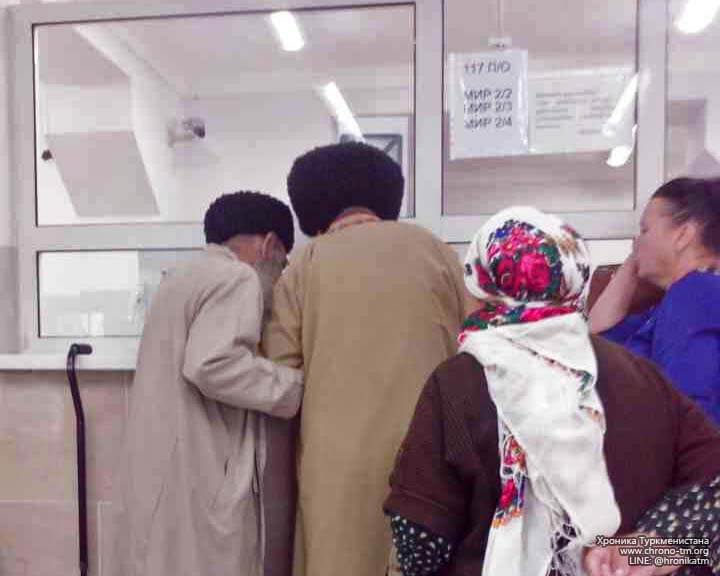
The Turkmen government's decision to forgo its customary annual increase in pensions and benefits in 2026 has sparked sharp discontent among elderly citizens. Pensioners, arriving to have their documents updated for the year, have discovered that payment amounts remain unchanged and many are not hiding their anger.  Since January 2, retirees have been visiting social security offices where pension amounts are officially recorded in their books. In previous years, this annual procedure was typically accompanied by an indexation of around 10%, helping to offset inflation and rising prices. That practice has been discontinued. Pension and social benefit levels remain frozen, despite the ongoing increase in living costs. The decision not to index pensions was announced in autumn 2025 during a parliamentary session, where honorary elder Yazmyrat Atamyradov proposed a complete halt to increases in salaries, pensions, state benefits, and scholarships. He claimed the “happy people” of Turkmenistan already enjoy a steadily improving standard of living, making additional financial support unnecessary. The response from the public has been stark. Pensioners are openly criticizing the government and President Serdar Berdimuhamedov, not only in social services offices but also in markets, on public transport, and in other public places. Many older citizens recall a similarly severe decision under the country’s first president, Saparmurat Niyazov, when pensions were abolished entirely. Witnesses from that time report that some elderly individuals, left without support, were pushed to the brink of survival. The current cost-of-living crisis has exacerbated the backlash. Over the past year, food prices have surged. Beef has risen from $17.40-$20.30 to $31.90-$33.40 per kilogram, and local apples have jumped from $4.35 to $7.69 per kilogram. As of January 1, 2025, the minimum pension in Turkmenistan was set at $159.50. That figure remains unchanged in 2026, despite the deepening economic pressures faced by retirees.

Turkmen Scientists Develop Plan to Extinguish the Darvaza Gas Crater

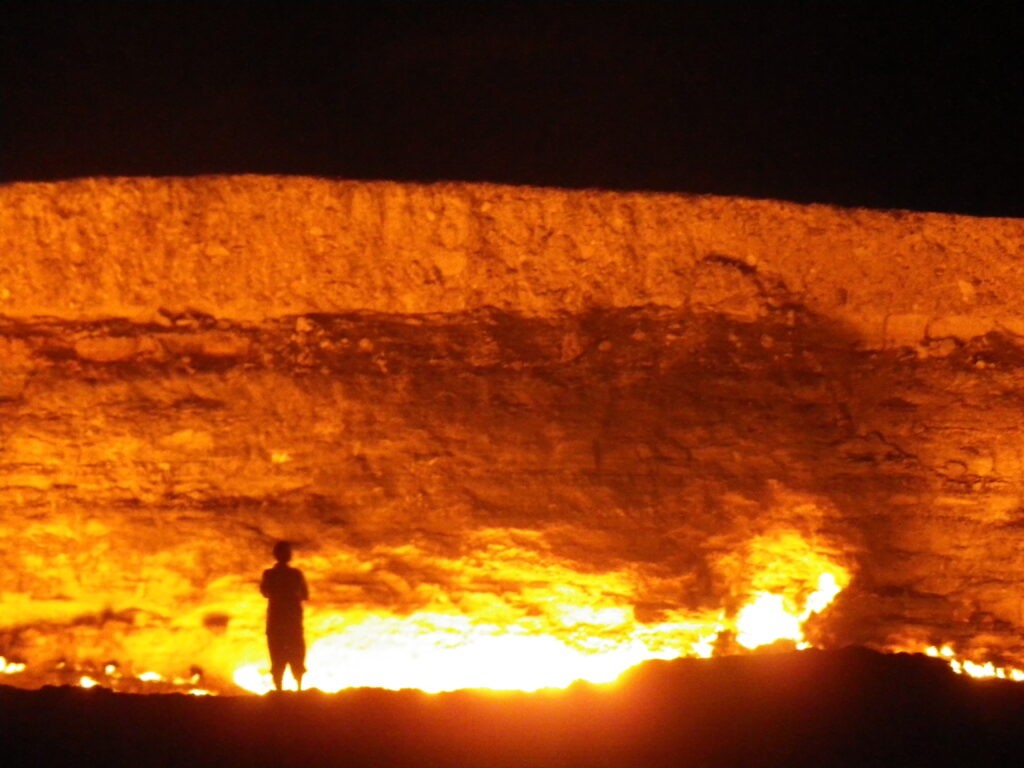
Scientists from the Scientific Research Institute of Natural Gas, under the state concern Turkmengaz, have proposed a method to extinguish the Darvaza gas crater, an uncontrolled fire that has been burning for decades in Turkmenistan’s Karakum Desert. The development was reported by Nebit-Gaz. The proposed solution involves drilling a new well to divert natural gas away from the crater. Researchers believe this strategy could significantly reduce, and eventually halt, the gas flow fueling the fire. If successful, the plan would allow Turkmenistan to mitigate environmental damage and conserve valuable energy resources. Turkmen officials have increasingly framed the Darvaza fire as both an environmental liability and an economic loss. Burning methane contributes to greenhouse gas emissions, while the continuous flare represents wasted natural gas in a country heavily dependent on energy exports for revenue. Located roughly 270 kilometers north of Ashgabat, the crater, officially named the “Glow of the Karakum”, sits atop the Chaljulba structure of the Zeagli-Darvaza group of gas fields. It measures approximately 60 meters in diameter and is 20 meters deep. The formation resulted from the collapse of an exploratory gas well. To prevent methane from harming local populations and wildlife, scientists ignited the gas, expecting the fire to burn out within days. However, the blaze has continued uninterrupted. Gas has been burning at the site since 1971, making the crater one of Central Asia’s most unusual natural and industrial spectacles. Researchers at the institute have conducted in-depth studies of the region’s geological structure, identifying a complex network of thin gas-bearing layers between 200 and 950 meters underground. These layers are interspersed with water-bearing and dense rock formations and are often hydrodynamically connected, enabling gas migration between them. Experts caution that extinguishing the fire has never been straightforward. The crater is fed not by a single reservoir but by multiple interconnected gas pockets, complicating efforts to isolate and shut off the fuel source. This interconnectivity explains why the fire persists despite the initial reservoir being relatively modest. Previous attempts to extinguish the fire included examining the crater floor to locate the original wellbore. Turkmengaz safety teams descended into the crater in hopes of installing flow-control equipment, but gas was found to be leaking from multiple surface outlets, rendering those efforts ineffective. Engineers found that sealing individual outlets risked increasing pressure elsewhere in the field, raising concerns that poorly planned interventions could trigger new leaks rather than resolve the problem. Now, using updated geological and production data, scientists have proposed drilling an operational and appraisal well in the Chaljulba field. By intensively extracting gas from the most productive reservoir, they aim to alter subsurface pressure conditions and redirect the gas away from the crater. According to Nebit-Gaz, this scientifically grounded approach offers a realistic path toward halting the fire and minimizing its environmental impact. If successful, the strategy could also allow some of the diverted gas to be captured for industrial use, potentially turning a long-standing liability into a limited economic resource. The Darvaza fire has drawn global attention...

2025: The Year Central Asia Stepped Onto the Global Stage

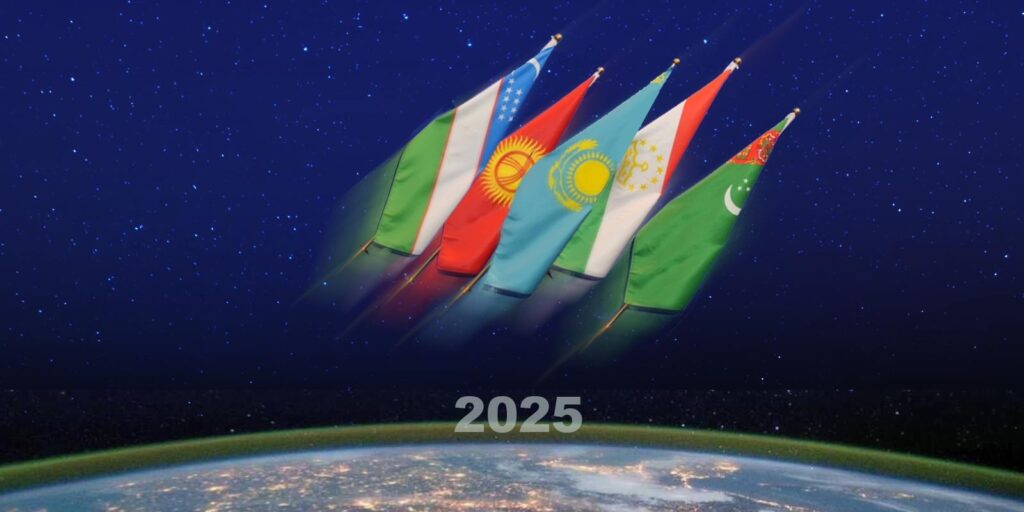
For much of the post-Soviet era, Central Asia occupied a peripheral place in global affairs. It mattered to its immediate neighbors, but rarely shaped wider debates. In 2025, that changed in visible ways. The region became harder to ignore, largely not because of ideology or alignments, but because of assets that the world increasingly needs: energy, minerals, transit routes, and political access across Eurasia. One of the clearest signs came in April, when the European Union and the leaders of Kazakhstan, Kyrgyzstan, Tajikistan, Turkmenistan, and Uzbekistan met in Samarkand for their first summit at the head-of-state level. The meeting concluded with a joint declaration upgrading relations to a strategic partnership, with a focus on transport connectivity, energy security, and critical raw materials. The document marked a shift in how Brussels views Central Asia, moving beyond development assistance toward geopolitical cooperation, as outlined in the official EU–Central Asia summit joint declaration. European interest is rooted in necessity. Russia’s war in Ukraine has forced EU governments to rethink energy imports, supply chains, and overland trade routes. Central Asia sits astride the most viable alternatives that bypass Russian territory. It also holds resources essential to Europe’s green transition, including uranium and a range of industrial metals. The region’s leaders spent much of the year framing their diplomacy around these tangible advantages, rather than abstract political alignments. The United States followed a similar track. Through the C5+1 format, Washington deepened engagement with all five Central Asian states, with particular emphasis on economic cooperation and supply-chain resilience. A key element has been the Critical Minerals Dialogue, launched to connect Central Asian producers with Western markets. This initiative formed part of a broader U.S. effort to diversify access to strategic materials and reduce dependence on Russia and China. Russia remained a central but changing presence in Central Asia throughout 2025. Economic ties, labor migration, and shared infrastructure ensured that Moscow continued to matter across the region. At the same time, however, Russia’s war in Ukraine constrained its ability to act as the dominant external power it once was. Central Asian governments maintained pragmatic relations with Moscow, but they increasingly treated Russia as one partner among several rather than the default reference point. Trade continued, security cooperation persisted, and political dialogue remained active, yet the balance shifted toward hedging rather than dependence. Uranium sits at the center of this shift, with the United States having banned imports of certain Russian uranium products under federal law, with waivers set to expire no earlier than January 1, 2028. As Washington restructures its nuclear fuel supply chain, Central Asia’s role has grown sharply. According to the U.S. Energy Information Administration’s 2024 Uranium Marketing Annual Report, Kazakhstan supplied 24% of uranium delivered to U.S. reactor operators, while Uzbekistan accounted for about 9%. Canada and Australia remain major suppliers, but the Central Asian share is now strategic rather than marginal. That economic weight translated into political visibility. In December, U.S. President Donald Trump said he would invite Kazakhstan and Uzbekistan to attend...