• KGS/USD = 0.01144 0%
  • KZT/USD = 0.00208 0%
  • TJS/USD = 0.10439 0%
  • UZS/USD = 0.00008 0%
  • TMT/USD = 0.28571 0%
  • KGS/USD = 0.01144 0%
  • KZT/USD = 0.00208 0%
  • TJS/USD = 0.10439 0%
  • UZS/USD = 0.00008 0%
  • TMT/USD = 0.28571 0%
  • KGS/USD = 0.01144 0%
  • KZT/USD = 0.00208 0%
  • TJS/USD = 0.10439 0%
  • UZS/USD = 0.00008 0%
  • TMT/USD = 0.28571 0%
  • KGS/USD = 0.01144 0%
  • KZT/USD = 0.00208 0%
  • TJS/USD = 0.10439 0%
  • UZS/USD = 0.00008 0%
  • TMT/USD = 0.28571 0%
  • KGS/USD = 0.01144 0%
  • KZT/USD = 0.00208 0%
  • TJS/USD = 0.10439 0%
  • UZS/USD = 0.00008 0%
  • TMT/USD = 0.28571 0%
  • KGS/USD = 0.01144 0%
  • KZT/USD = 0.00208 0%
  • TJS/USD = 0.10439 0%
  • UZS/USD = 0.00008 0%
  • TMT/USD = 0.28571 0%
  • KGS/USD = 0.01144 0%
  • KZT/USD = 0.00208 0%
  • TJS/USD = 0.10439 0%
  • UZS/USD = 0.00008 0%
  • TMT/USD = 0.28571 0%
  • KGS/USD = 0.01144 0%
  • KZT/USD = 0.00208 0%
  • TJS/USD = 0.10439 0%
  • UZS/USD = 0.00008 0%
  • TMT/USD = 0.28571 0%

Viewing results 85 - 90 of 319

Kazakhstan and Turkmenistan Finalize $555 Million Investment and Trade Agreement

Kazakhstan’s Senate on September 4 ratified a bilateral agreement with Turkmenistan aimed at bolstering mutual investment and economic cooperation, Kazinform reported. The agreement, which sets out conditions for the promotion and protection of investments, is expected to create a more transparent and predictable environment for investors from both countries. Senator Amangeldy Nugmanov emphasized that the agreement provides comprehensive legal safeguards for investment across all sectors, from state-led initiatives to private enterprise. For the first time at the interstate level, Kazakhstan and Turkmenistan have formalized clear guarantees to protect investor interests. The agreement includes provisions for dispute resolution, including access to international arbitration, and ensures fair and equal treatment for foreign investments. Energy Sector as Strategic Priority Energy cooperation figures prominently in the agreement. Kazakhstan has expressed readiness to invest in the development of Turkmenistan’s gas condensate fields and to support the expansion of pipeline infrastructure. Nugmanov highlighted a separate agreement signed between Kazakhstan’s QazaqGaz and Turkmenistan’s state concern Turkmengaz, describing it as a “golden bridge” that will enhance both nations' economic prospects and contribute to regional energy security. Trade and Transport Ties Expand Senator Sergey Ershov noted that bilateral trade reached $555.7 million in 2024. Kazakh investors injected $16.1 million into Turkmenistan’s economy, while Kazakhstan received $400,000 in direct investment from Turkmenistan. Beyond energy, cooperation now includes rail, road, and maritime transport. Turkmenistan has also shown interest in modernizing armored vehicles and supplying spare parts to Kazakhstan. During a summit held in April, the presidents of both countries agreed to target $1 billion in annual trade turnover in the near future. They also underscored the strategic importance of expanding cooperation in energy and transport. Key projects under discussion include Kazakhstan’s potential participation in Turkmenistan’s Galkynysh gas field and the development of the Turgundi-Herat-Kandahar-Spin Boldak railway. The rail line, which would pass through Afghanistan, is seen as a means of diversifying trade routes and unlocking new regional markets.

Watches Bearing Berdimuhamedov Portraits Become Unofficial Currency in Turkmenistan’s Security Sector

In Turkmenistan, wristwatches adorned with the images of President Serdar Berdimuhamedov and his father, former president Gurbanguly Berdimuhamedov, are increasingly being used as informal bribes by citizens dealing with law enforcement. Chronicles of Turkmenistan reports that these timepieces, once symbols of official loyalty, have evolved into an unofficial currency within the country’s security apparatus. Distributed primarily through the company Sagat Turkmenistan, the watches are embellished with silver-plated cases, gold accents, precious stones, and the emblems of various law enforcement agencies. Prices range from 3,000 to 5,000 Turkmenistani Manat (TMT), or approximately $870-1,450. But few security officers reportedly pay for them out of pocket. Instead, citizens facing potential criminal prosecution are expected to offer the watches as “gifts” to investigators. “If you are told that a criminal case will be brought against you, then you need to buy such a watch and go to the investigator. This does not mean that the case will be closed. But it is the first payment,” said a resident of the town of Bayramali who had prior dealings with law enforcement. The standard version comes with a black leather strap, although a white version is seen as particularly luxurious. In some instances, investigators reportedly request a strap upgrade, an added cost that the briber must cover. The practice is not limited to security services. In May 2024, The Times of Central Asia reported that in the Balkan region, heads of state institutions were required to purchase similar watches featuring the Berdimuhamedov portraits. Prices ranged from 1,500 to 3,000 TMT ($435-870 at the official rate, or $75-150 on the black market), depending on the design and seniority of the buyer. Higher-tier models feature both Serdar Berdimuhamedov in a black tie and Gurbanguly Berdimuhamedov in a red tie, along with the Turkmen flag and a map of the country. Simpler versions show only one portrait, or a portrait combined with national symbols. All public sector entities, including institutions in healthcare, education, communications, transport, and law enforcement, were reportedly compelled to participate. Senior officials were instructed to purchase the higher-end watches, while lower-level managers had to acquire less expensive models. The use of personalized accessories as symbols of political loyalty is not new in Turkmenistan. Under former president Saparmurat Niyazov, watches featuring his image were widely distributed among schoolchildren and state employees. “We saw watches with the president’s image during Niyazov’s time. It is not surprising that Serdar [Berdimuhamedov] has also started producing gift watches with his portraits. Now all that remains is for him to start erecting monuments to himself throughout the country,” remarked an employee of a state-funded organization in the city of Turkmenbashi. What began as a tool of soft propaganda has now transformed into a transactional item, part status symbol, part bargaining chip, in the interactions between citizens, officials, and security services.

Knowledge Day in Central Asia: What’s Changing in Schools This Academic Year?

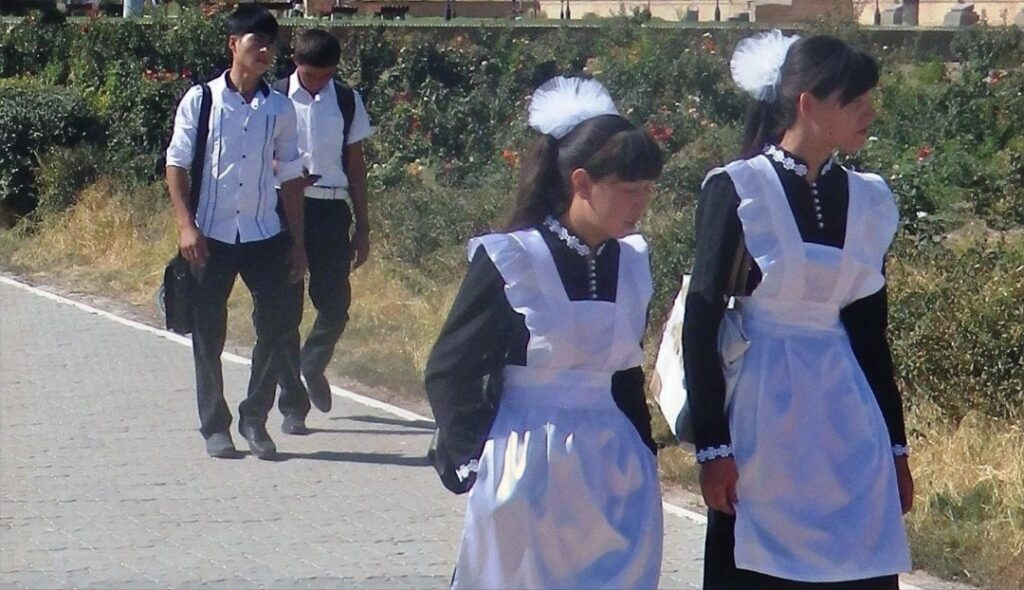
Secondary schools across Central Asia are embracing modern teaching methods and aiming to elevate the status of teachers, as the new academic year begins with a wave of reforms. Kazakhstan: AI in Classrooms and Teacher Protections In Kazakhstan, the academic year begins on September 2, as Constitution Day on the 1st is a national holiday. Over 370,000 first-graders are expected to enter school this year. As previously reported by The Times of Central Asia, significant reforms are underway in the country’s education system. Amendments to the Law “On the Status of Teachers” will shield educators from non-teaching duties and protect them from undue legal responsibility. President Kassym-Jomart Tokayev has emphasized that educators should not be held accountable for incidents involving children that occur outside school or due to parental negligence. New “personal safety” lessons will also be introduced across all educational levels, from kindergartens to colleges. These age-appropriate classes will cover topics ranging from water safety and interaction with strangers to cyberbullying, financial literacy, and legal awareness. Schools and colleges are also rolling out DosbolLIKE, an anti-bullying initiative piloted in 50 schools last year, designed to curb bullying in student communities. Artificial intelligence will be introduced into the curriculum via “Digital Literacy” and “Computer Science” classes. AI-focused online courses called Day of AI are now available for grades 1-11, with training programs also developed for teachers. Despite the construction of 1,200 new schools accommodating over a million students in recent years, the high birth rate continues to strain infrastructure. In Almaty alone, the shortage exceeds 34,000 school places. Uzbekistan: Ivy League Aspirations and Civic Values In Uzbekistan, school also starts on September 2, a customary date. The first lesson will be conducted under the motto: “In the name of the Motherland, in the name of the nation, in the name of the people!” According to the Ministry of Preschool and School Education, 738,000 first-graders will receive gifts from President Shavkat Mirziyoyev. An international school is set to open this September, initially enrolling 60 top-performing graduates of the 8th grade. The curriculum will include leadership and social activism training, with a focus on preparing students for admission to Ivy League universities. A nationwide talent identification and development program is also in development. The weekly Kelazhak Soati (“Hour of the Future”) class will debut this year, aiming to strengthen students’ moral values and encourage reflection on their future roles in society. Kyrgyzstan: Transition to 12-Year Education This academic year marks Kyrgyzstan’s official transition to a 12-year education system. The reform affects lesson structures, curricula, and textbooks. The transition, to be completed by 2028, includes the redistribution of students across grade levels. For example, third graders born in 2015 will skip to fifth grade, and sixth graders born in 2012 will advance to eighth grade. Further shifts are scheduled for the next two academic years. While the extended education model is expected to allow deeper learning and skills development, the transition period may cause confusion among students, parents, and educators. Adapting to new...

U.S. State Department: No Improvement in Turkmenistan’s Human Rights Record

The U.S. State Department’s annual report on Turkmenistan for 2024 concludes that “no significant changes in the human rights situation in the country have been observed.”  Death in Custody and Pressure on Journalists The report cites the death of Allamurat Khudayramov, from Mary region, who reportedly died from torture while in custody. Journalists also remain under pressure. On August 13, former Radio Azatlyk correspondent Khudayberdi Allashov died in Koneurgench. Independent journalist Soltan Achilova reported harassment by authorities in video messages on July 11 and December 10. In November, she was barred from traveling to Geneva for the second time to receive an international award for her human rights work. The government continues to enforce strict media censorship and control of the internet, blocking websites, social media platforms, and VPN services. Security services reportedly summoned citizens who used VPNs for questioning, though more people are finding ways to bypass restrictions. Labor Rights Violations The report details widespread abuses in the workplace. Employers, including state agencies, compelled employees to work 10-hour days or six-day weeks without overtime pay. Many civil servants were required to work Saturdays. Penalties for labor law violations remain light compared with other crimes, and enforcement mechanisms are weak. Only 327 labor inspectors were responsible for monitoring compliance nationwide. The Ministry of Labor reported 2,269 violations as of September 1, 2024. Workers in the cotton industry faced health risks from chemical exposure but could not refuse unsafe tasks without risking dismissal. The report also documents the use of child labor, with children from low-income families engaged in heavy work in markets and agriculture. Restrictions on Freedom and Repression Abroad The organization Show Them Alive! recorded 162 cases of prisoner disappearances. While no new cases were identified in 2024, existing cases remain unresolved. Courts reportedly prevent detainees from challenging their arrest, and families are often unaware of prisoners’ whereabouts. Torture continues to be reported. The State Department also notes Turkmenistan’s involvement in transnational repression. On November 11, Human Rights Watch warned that Turkmen citizens critical of the government face arrest and torture if they return from abroad. Exit bans remain in force: some citizens are prevented from leaving the country even after renewing passports. In August, Turkmen News editor Ruslan Myatiev was denied entry to Turkey, where he was labeled a “threat to national security.” Turkmen activists abroad have also faced detention. Several opposition figures were arrested in Turkey at Ashgabat’s request, with some deported, including Merdan Mukhamedov, who now faces up to 25 years in prison.

In Turkmenistan, Non-Turkmen Public Servants Pressured to “Turkmenize” Their Names

In the city of Turkmenabad, mounting evidence points to growing pressure on government employees from ethnic minority backgrounds to alter their names to Turkmen equivalents. According to reports by turkmen.news, ethnic Uzbek names such as Sardon and Shukhrat are being replaced with Turkmenized versions like Serdar and Shokhrat. Forced “Turkmenization” Sources indicate that while this practice previously applied primarily to candidates for high-ranking government positions, it is now being extended to mid-level officials and rank-and-file employees. The pressure appears to be particularly intense within the Ministry of Internal Affairs. In recent years, individuals of non-Turkmen origin have reportedly been systematically excluded from employment in the ministry. While personal connections or influence once allowed some exceptions, ethnic Uzbek and Tajik applicants are now being rejected outright, despite ongoing staffing shortages and high attrition rates. Several sources allege that these practices are being directed from the central government in Ashgabat. The same coercive approach is reportedly applied to secondary school graduates in the Lebap region, where students are encouraged or pressured to conceal their ethnic identities or change their names to Turkmen variants. There are also claims that many Uzbeks previously registered themselves as Turkmen in older-style passports to avoid potential discrimination. Ethnic Composition and Language Rights Official data ranks the Lebap velayat as Turkmenistan’s second most ethnically diverse region, with a significant Uzbek population. In districts such as Farab and Dyaneva, Uzbeks comprise one-third or more of the population. In neighboring Dashoguz region, Uzbeks officially represent nearly one-third of the population. However, similar to the Baluchi community in Mary province, they are denied the right to study their native language in schools, even as an elective subject. Unspoken Employment Discrimination Employment opportunities for non-Turkmens are most restricted in the Lebap and Dashoguz regions. New economic projects and job-creating initiatives are typically implemented last in these areas. An unspoken rule reportedly prioritizes ethnic Turkmens for state employment. The Ministry of National Security screens applicants’ backgrounds across three generations, a practice known as uch arka maglumat. Although Turkmenistan’s laws do not officially require candidates to be ethnically Turkmen and there are ethnic minorities in some senior posts, career advancement is significantly hindered for non-Turkmens. Sources stress that ethnic discrimination in Turkmenistan is closely linked to the broader issue of systemic corruption. Government appointments and promotions are often determined not by merit, but by personal connections, bribery, or family lineage. As a result, officials frequently serve the interests of a narrow in-group rather than the public.

China-Central Asia Trade Nearly Triples Since 2020

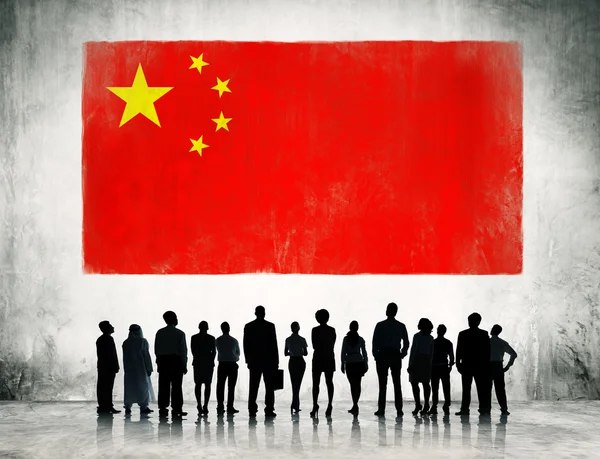
Trade between China and the countries of Central Asia reached $66.2 billion in 2024, nearly triple the 2020 level, according to the Eurasian Development Bank (EDB). Imports from China accounted for about 60% of total trade turnover. China’s largest trading partner in the region is Kazakhstan, with bilateral trade valued at $30.1 billion (46% of total China-Central Asia trade), followed by Uzbekistan at $18 billion (27%) and Turkmenistan at $10.6 billion (16%). China’s share in Central Asia’s overall trade turnover has risen sharply, from 17.7% in 2020 to 24.1% in 2024. However, the level of dependence on Chinese trade varies by country: Turkmenistan - 55% of its total trade is with China. Kyrgyzstan - around 35%. Kazakhstan, Uzbekistan, and Tajikistan - between 20-22%. The EDB estimates significant untapped trade potential of $39.3 billion, about 60% of the current turnover. This includes $32 billion in potential Chinese exports to Central Asia (such as automobiles, electronics, and consumer goods) and $7.3 billion in potential Central Asian exports to China (including copper products, gold, and uranium). With deepening economic ties and major infrastructure links through the Belt and Road Initiative, analysts expect China-Central Asia trade to continue expanding in the coming years.