• KGS/USD = 0.01144 0%
  • KZT/USD = 0.00194 -0%
  • TJS/USD = 0.10822 -0.18%
  • UZS/USD = 0.00008 0%
  • TMT/USD = 0.28571 0%
  • KGS/USD = 0.01144 0%
  • KZT/USD = 0.00194 -0%
  • TJS/USD = 0.10822 -0.18%
  • UZS/USD = 0.00008 0%
  • TMT/USD = 0.28571 0%
  • KGS/USD = 0.01144 0%
  • KZT/USD = 0.00194 -0%
  • TJS/USD = 0.10822 -0.18%
  • UZS/USD = 0.00008 0%
  • TMT/USD = 0.28571 0%
  • KGS/USD = 0.01144 0%
  • KZT/USD = 0.00194 -0%
  • TJS/USD = 0.10822 -0.18%
  • UZS/USD = 0.00008 0%
  • TMT/USD = 0.28571 0%
  • KGS/USD = 0.01144 0%
  • KZT/USD = 0.00194 -0%
  • TJS/USD = 0.10822 -0.18%
  • UZS/USD = 0.00008 0%
  • TMT/USD = 0.28571 0%
  • KGS/USD = 0.01144 0%
  • KZT/USD = 0.00194 -0%
  • TJS/USD = 0.10822 -0.18%
  • UZS/USD = 0.00008 0%
  • TMT/USD = 0.28571 0%
  • KGS/USD = 0.01144 0%
  • KZT/USD = 0.00194 -0%
  • TJS/USD = 0.10822 -0.18%
  • UZS/USD = 0.00008 0%
  • TMT/USD = 0.28571 0%
  • KGS/USD = 0.01144 0%
  • KZT/USD = 0.00194 -0%
  • TJS/USD = 0.10822 -0.18%
  • UZS/USD = 0.00008 0%
  • TMT/USD = 0.28571 0%
18 December 2025

Viewing results 169 - 174 of 399

Turkmen Business Prepares for WTO Integration

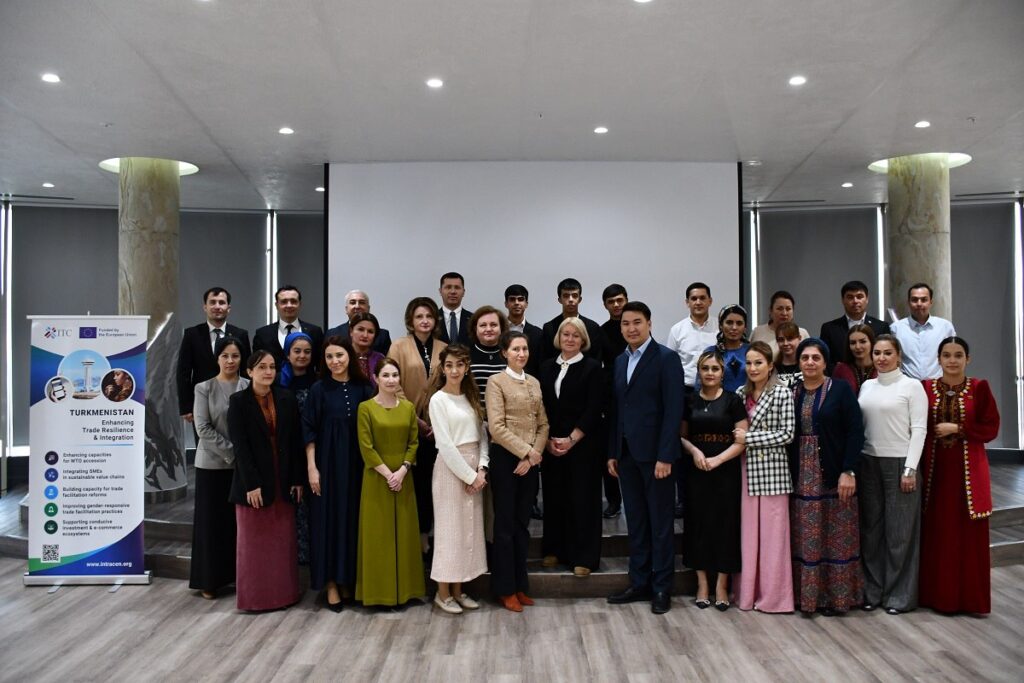
Ashgabat recently hosted a two-day seminar on Turkmenistan's prospects for joining the World Trade Organization. The event, organized by the Ministry of Finance and Economy and the International Trade Center (ITC), brought together representatives of the country's private sector and government agencies. ITC international experts Daria Karman, Alyson Hook, and Nurlan Kulbatyrov shared practical integration experience into the global trading system with the participants. Special attention was paid to Kazakhstan, whose path to the WTO can serve as an illustrative example for Turkmenistan. Among the key topics of discussion were the need to adapt legislation to international standards, reform trade policy, and modernize mechanisms for regulating foreign economic activity. For Turkmen entrepreneurs, accession to the WTO opens access to world markets and creates favorable conditions for increasing exports. However, this will require a significant increase in local enterprises' competitiveness and the introduction of modern production technologies. According to the event organizers, the active discussion of integration processes testifies to Turkmen business's serious attitude toward international cooperation. Such seminars are part of Turkmenistan's comprehensive preparation for accession to the WTO. In the future, this should create additional incentives for entrepreneurship and increase the country's export potential. Representatives of government agencies and the business community actively participated in the seminar, which confirmed Turkmenistan's interest in deepening integration processes and expanding international trade cooperation.
IDB to Fund $156.3 Million for Cancer Hospitals in Turkmenistan

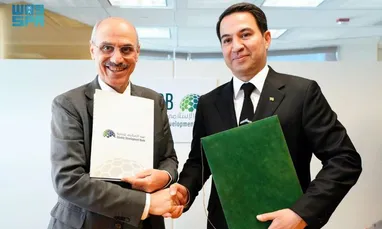
Turkmenportal reported that a Turkmenistan delegation visited Washington DC from October 22 to 26 to participate in the annual meetings of the International Monetary Fund (IMF) and the World Bank, along with related events. During the visit, representatives of Turkmenistan's financial and banking sector engaged in bilateral discussions with foreign partners. According to the Saudi Press Agency, the Islamic Development Bank (IDB) has approved $156.3 million in funding to build three specialized cancer treatment hospitals in Turkmenistan. These modern facilities will be located in Balkanabad, Turkmenabad, and Mari, with a combined capacity to serve over 11,750 patients. The agreement was signed in a meeting between IDB President Muhammad Al Jasser and Rahimberdi Jepbarov, Chairman of the State Bank for Foreign Economic Affairs of Turkmenistan. Meanwhile, on October 24, Swiss pharmaceutical company Roche, in partnership with Nobel Almaty Pharmaceutical Factory, launched the production of innovative drugs in Almaty, Kazakhstan. This initiative is part of an agreement between Roche, Kazakhstan’s SK-Pharmacy, Nobel, and the Kazakh Research Institute of Oncology and Radiology, supported by Kazakh Invest. Under this collaboration, Roche will locally produce three biotechnological drugs to treat HER2-positive breast cancer, a highly aggressive form affecting up to 20% of breast cancer patients in Kazakhstan.

Turkmengaz Ends Gas Supply Contract with Gazprom Over Pricing Dispute

Turkmenistan's national gas company, Turkmengaz, has not extended its gas supply contract with Gazprom because the parties could not agree on a new fuel price. Turkmengaz Chairman Maksat Babayev explained: "On June 30, as outlined in the contract, we were set to review prices. If both sides agreed on the price, we could extend the contract. However, after negotiations, we couldn’t agree on the commercial terms. So, as per the contract, without an agreement, the contract was to end on June 30, which is what we proceeded with.” He shared this at a press conference following the “Oil and Gas of Turkmenistan – 2024” (OGT 2024) event. Babayev added that for Turkmengaz, the critical factor in starting, resuming, or ending supplies is the commercial aspect. “Contracts for purchase and sale are considered based on mutual benefit,” he explained. “Currently, demand from the north, west, and east is growing, and we are constantly in talks with various buyers and countries, so resuming supplies to Russia is certainly possible.” In 2019, Gazprom signed a five-year contract with Turkmengaz to buy natural gas through June 30, 2024. The agreement covers an annual supply volume of 5.5 billion cubic meters. Previously, Gazprom's head, Alexey Miller, announced that the company doubled the volume of gas supplies to Central Asia from January to August 2024. According to Miller, the republics' rapid economic and social development has opened meaningful new opportunities for Gazprom, which is currently at the highest possible level of gas supply to Uzbekistan.

Uzbekistan Leads in Central Asia’s Military Strength Rankings

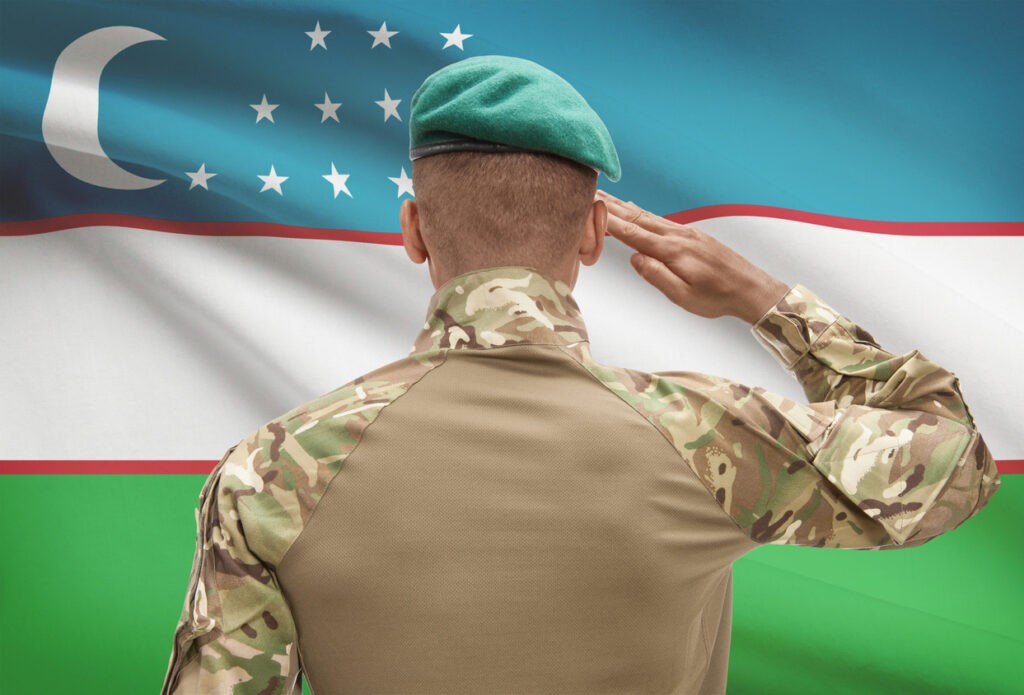
U.S. News recently published its list of the world’s strongest militaries, with Russia, the U.S., and Israel in the top three. The Times of Central Asia reviewed this rating in the Central Asian countries section. Uzbekistan ranks 19th globally in military strength, the highest in the region. However, U.S. News ranks the country 74th out of 78 in its “Best Countries” category, citing an economy still largely driven by cotton. Uzbekistan remains a major global player in cotton, as the fifth-largest exporter and seventh-largest producer worldwide. Kazakhstan, Central Asia’s largest economy, ranks 22nd for military strength and is noted for its vast reserves of fossil fuels, uranium, and other minerals. Much of Kazakhstan’s economic growth has been oil-driven, and the country ranks 83rd on the “Best Countries” list. U.S. News ranked countries based on cultural influence, entrepreneurship, heritage, openness to business, quality of life, and social purpose. In a separate ranking, the Global Firepower Military Index for 2024 lists Kazakhstan as Central Asia’s top military power, placing it at 58th worldwide. Uzbekistan has fallen by three places since last year’s rankings — the only country in the region not to show an improvement — and is now in the 65th position. In the bottom half of the table, Turkmenistan lies in 83rd place, while Kyrgyzstan is 100th. Global Firepower puts Tajikistan in 107th place, making it the region’s weakest army.

How Central Asia Is Shifting From Russia Towards Turkey

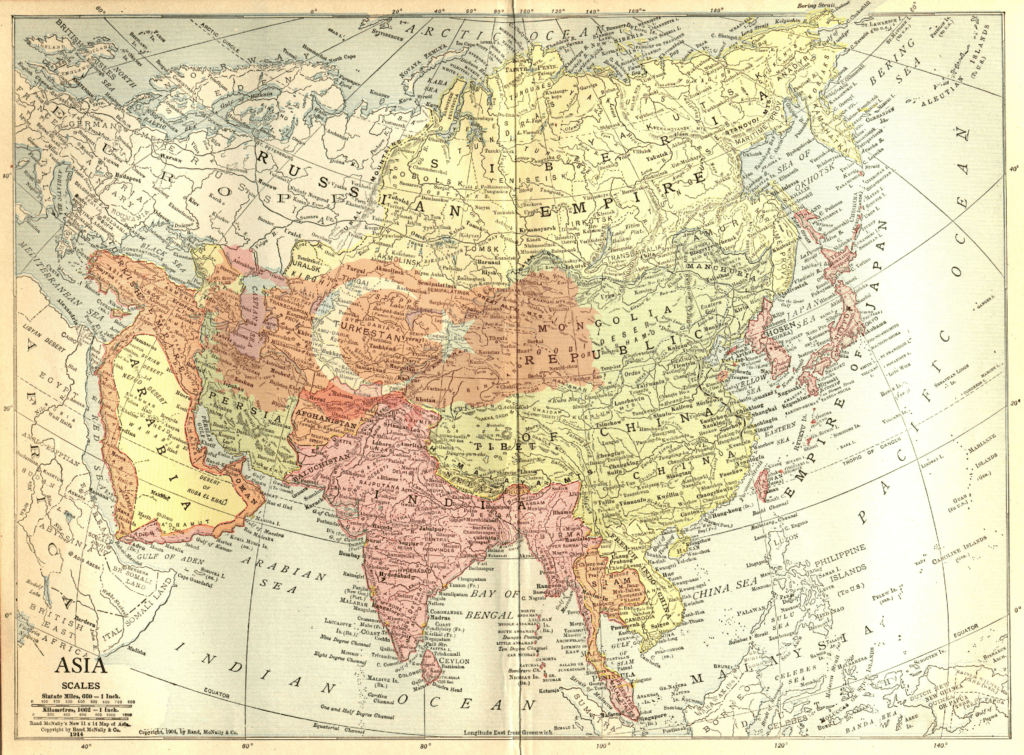
For Turkey, a NATO member and EU hopeful, the Organization of Turkic States (OTS) is an instrument that helps Ankara increase its presence in the strategically important region of Central Asia. For Kazakhstan, Kyrgyzstan, Uzbekistan, and Turkmenistan, the Turkish-dominated group seems to be a tool that allows them to achieve their economic goals, while also continuing to distance themselves from Russia. Although Moscow still has a relatively strong foothold in Central Asia, it does not seem able to prevent the growing role of the Organization of Turkic States in the post-Soviet space. This entity – whose members are Azerbaijan, Kazakhstan, Kyrgyzstan, Turkey, and Uzbekistan, while Turkmenistan, Hungary, and the self-proclaimed Turkish Republic of Northern Cyprus hold observer status – has the potential to eventually serve as a counterbalance not only to Russian, but also Chinese influence in the region. Since its foundation in 2009, the OTS has held ten summits of its leaders. Over this period, the intergovernmental organization’s working bodies have also convened dozens of times. On November 5-6 in the Kyrgyz capital Bishkek, the OTS heads of states will meet for the eleventh time to discuss the future of the Turkic world. Although the agenda has yet to be announced, it is believed that the OTS leaders will seek to strengthen economic cooperation between its members. Currently, their major trade partners are nations outside the bloc. For instance, Turkey’s largest trading partner is Germany, Azerbaijan’s is Italy, while China has recently become Kazakhstan’s biggest trade partner with bilateral trade hitting $31.5 billion. For neighboring Kyrgyzstan and Uzbekistan, China and Russia remain the most important economic partners. One of the group’s major problems is the fact that its members, excluding Turkey, are landlocked countries heavily-dependent on Russia and China geographically. Turkmenistan and Kazakhstan, as major energy exporters, rely on oil and gas pipelines traversing Russian territory to reach their customers in Europe. It is, therefore, no surprise that the Organization of Turkic States governments’ agreed in September to create a simplified customs corridor, aiming at reducing the number of documents required for customs operations and customs procedures between OTS member states. In other words, they plan to increase trade among themselves. According to Omer Kocaman, OTS Deputy Secretary-General, the Turkic nations are also looking to “continue cooperation to stimulate positive changes in their financial systems.” That is why the organization has recently launched the Turkic Investment Fund – the first joint financial institution for economic integration of the Turkic countries, with an initial capital of $500 million. Kyrgyzstan’s Chamber of Commerce and Industry announced on October 17 that, starting in January 2025, the Turkic Investment Fund will begin financing major joint projects in OTS nations. However, in July, Azerbaijani President Ilham Aliyev said that the current structure of the Organization of Turkic States does not meet its established goals, and that its budget is insufficient for their implementation. In order to change that, on October 19, ministers of economy and trade of the OTS nations met in Bishkek to...

Turkmen-Iranian Tourism Festival Held in Ashgabat

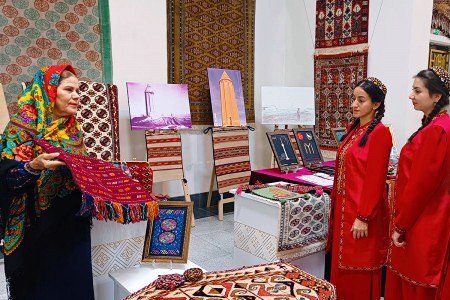
The Second Turkmen-Iranian Tourism Festival united representatives from the two states' tourism industry, cultural figures, and craftsmen. The opening ceremony was held in the Exhibition Hall of the Academy of Arts of Turkmenistan in Ashgabat. During the ceremony, visitors familiarized themselves with Iran's rich tourism potential, saw the works of Iranian craftsmen, and evaluated the proposals of Turkmen tourist companies. The festival's business program included a professional conference. Experts discussed the prospects of bilateral cooperation and new opportunities for increasing tourist flow between the countries. The organizers paid special attention to the cultural component of the event. The festival is designed to strengthen cultural ties between Turkmenistan and Iran and create a platform for the development of joint tourism projects. Earlier, the Academy of Arts of Turkmenistan exhibition hall hosted the opening of the Turkmen-Iranian Specialized Exhibition of Fashion and Clothing. The visitors could experience the latest achievements in Turkmenistan and Iran's fashion and textile industries. The first Turkmen-Iranian Tourism Festival was held in October last year. Visitors familiarized themselves with unique items of traditional folk crafts, handmade art products, national heritage, and modern trends of Turkmen and Iranian art masters.