• KZT/USD = 0.00219
  • TJS/USD = 0.10820
  • UZS/USD = 0.00009
  • TMT/USD = 0.29760
  • KZT/USD = 0.00219
  • TJS/USD = 0.10820
  • UZS/USD = 0.00009
  • TMT/USD = 0.29760
  • KZT/USD = 0.00219
  • TJS/USD = 0.10820
  • UZS/USD = 0.00009
  • TMT/USD = 0.29760
  • KZT/USD = 0.00219
  • TJS/USD = 0.10820
  • UZS/USD = 0.00009
  • TMT/USD = 0.29760
  • KZT/USD = 0.00219
  • TJS/USD = 0.10820
  • UZS/USD = 0.00009
  • TMT/USD = 0.29760
  • KZT/USD = 0.00219
  • TJS/USD = 0.10820
  • UZS/USD = 0.00009
  • TMT/USD = 0.29760
  • KZT/USD = 0.00219
  • TJS/USD = 0.10820
  • UZS/USD = 0.00009
  • TMT/USD = 0.29760
  • KZT/USD = 0.00219
  • TJS/USD = 0.10820
  • UZS/USD = 0.00009
  • TMT/USD = 0.29760
24 August 2026

Viewing results 25 - 30 of 65

Travel Ban Overturned: Turkmen Woman and Her Daughter Rejoin Family in Turkey

After nearly a year of separation, Zulfiya Kazhir and her six-year-old daughter Sena have finally been allowed to leave Turkmenistan and reunite with their family in Turkey. The case drew widespread public attention after the pair, Zulfiya, a Turkmen citizen, and Sena, a Turkish citizen, were detained while attempting to leave the country in September 2024. The long-awaited reunion took place on July 15, and a video capturing the emotional moment was shared on TikTok by Zulfiya’s husband, Turkish national Ahmed Sefa Kacir.   A Sudden Separation In the summer of 2024, Zulfiya traveled to Turkmenistan with Sena to renew her documents. However, their scheduled return flight on September 18 was abruptly halted when Zulfiya was denied boarding at Ashgabat airport. Authorities cited her temporary placement on a no-fly list, though no further explanation was provided at the time. Only later did Turkmenistan’s migration service inform her that she was subject to a travel ban. Despite numerous appeals to both Turkmen and Turkish authorities, the family’s efforts to lift the restriction proved unsuccessful for many months. The situation was especially dire due to Sena’s medical and developmental needs. Diagnosed with gluten intolerance and autism spectrum disorder, she requires a specific diet, regular hygiene protocols, and access to developmental therapy, services largely unavailable in Turkmenistan. Collective Punishment After nearly ten months of legal and diplomatic stalemate, Zulfiya learned that the travel ban was linked to her brother’s alleged involvement in armed conflicts in Syria. Although he had not lived in Turkmenistan for over 20 years and Zulfiya had no contact with him, her name was included on a restricted travel list alongside other relatives, a practice critics describe as a form of collective punishment. A Direct Plea to the President As previously reported by The Times of Central Asia, frustrated by the lack of progress, Zulfiya recorded a video appeal to President Serdar Berdimuhamedov, calling for an end to the restriction on her freedom of movement. In the message, she identified her family as ethnic Tatars and explained that her mother and sister also hoped to leave for Tatarstan, their ancestral homeland. “Let me and my daughter return home,” she pleaded in the video, which was widely circulated online. Shortly afterward, the travel ban was lifted. On July 15, her husband posted a video from the airport showing the family’s emotional reunion, filled with hugs, tears, and relief, marking the conclusion of their nearly year-long ordeal.

International Human Rights Defenders Demand Release of Turkmen Activist

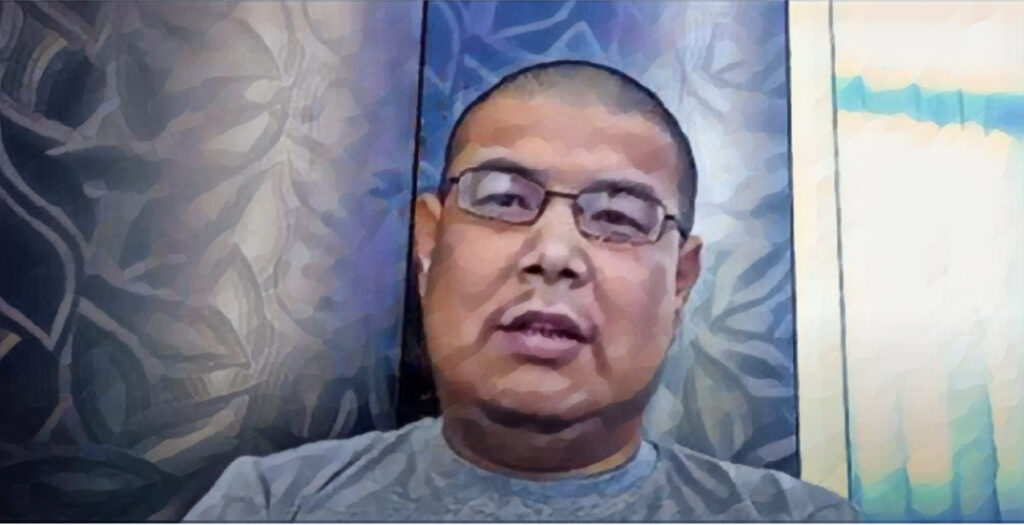
Turkmen civil activist Murat Dushemov, who has completed a four-year prison sentence, was not released on June 14 as expected. Instead, he was transferred to a pre-trial detention facility in Turkmenabat just days before his anticipated release. Sentence Served, Yet No Freedom According to Turkmen.News, new criminal charges were filed against Dushemov following an alleged altercation with another inmate, an incident human rights defenders claim was fabricated. Dushemov asserts he was framed in a deliberate provocation: "The person who filed the complaint started hitting the wall, injuring himself, and smearing the wall with blood. They want to slander me again to prolong my stay here," he said. Human rights advocates argue the authorities are using these new accusations as a tactic to extend Dushemov's imprisonment. Retaliation for Criticism Dushemov was arrested in 2021 and sentenced to four years on charges of extortion and bodily harm. International watchdogs have consistently stated that the charges were politically motivated. Prior to his arrest, Dushemov had openly criticized the Turkmen government's COVID-19 policies, questioning the legal basis for mask mandates and mandatory vaccination, which he refused to comply with. One allegation involved the chief doctor of a medical facility, whom Dushemov allegedly blackmailed by threatening to release a compromising video. Another accusation stemmed from a supposed provocation in prison, where two inmates, allegedly encouraged by authorities, fought each other and later claimed Dushemov had assaulted them. Global Advocacy Five human rights groups, including the Norwegian Helsinki Committee, Turkmen.News, the Turkmen Human Rights Initiative, the International Partnership for Human Rights, and the Association for Human Rights in Central Asia, have issued a joint statement calling for Dushemov’s immediate release. They condemned the new charges as retaliation for his civic activism: “The authorities must drop the new criminal charges brought against civil society activist Murat Dushemov as clear retaliation for his activities and release him immediately,” they stated. The groups also urged Turkmenistan’s international partners to exert diplomatic pressure on Ashgabat to halt its persecution of activists and journalists. Human Rights Watch echoed this call, stating on June 25 that the Turkmen authorities must “immediately and unconditionally release activist Murat Dushemov and end all abuses aimed at prolonging his detention.” The case of Murat Dushemov illustrates the ongoing suppression of dissent in Turkmenistan. Despite growing international criticism, the government continues to use the criminal justice system as a tool to silence civil society.

Bans and Beliefs: Understanding Central Asia’s Most Controversial Restrictions

A recent controversy involving the Spiritual Administration of Muslims of Kazakhstan (SAMK) has reignited public debate over seemingly bizarre bans in Central Asia. SAMK was asked to comment on whether popular video games such as Counter-Strike 2, Dota 2, GTA, League of Legends, Minecraft, and Genshin Impact are permissible under Islamic law. SAMK responded that, from a Sharia perspective, all of these games are prohibited. The public interpreted this as an official ban, possibly even a fatwa, sparking a media uproar. But the reaction wasn’t unfounded: Central Asian republics often make headlines with prohibitions that, from the outside, can appear surreal. Yet, context often provides a more nuanced explanation. Turkmenistan: The Regional Champion of Bans Turkmenistan remains unmatched in its record of curious restrictions. Under its first president, Saparmurat Niyazov, the state banned smoking in cars, mobile phones, radios, stereo systems, clowns, and lip-syncing. Public smoking was also prohibited, and officials were barred from having gold teeth. Other bans targeted personal appearance. Men were forbidden from wearing long hair, beards, or mustaches, while makeup was banned for television presenters. Niyazov justified the latter by claiming it was difficult to distinguish men from women on screen and that Turkmen women’s natural “wheat-colored” complexion should be visible. Cultural life was similarly curtailed. Niyazov abolished ballet, opera, the circus, and even the national folk dance ensemble. “I don’t understand ballet. Why do I need it?” he said. “You can’t instill a love for ballet in Turkmen people if it’s not in their blood”. His successor, Gurbanguly Berdimuhamedov, retained many of these restrictions, particularly the sweeping limitations on internet access. According to Turkmen.news, as of 2023, approximately 75% of global IP addresses were blocked in Turkmenistan. The list of banned platforms includes Facebook, Instagram, TikTok, Telegram, YouTube, WhatsApp, and X (formerly Twitter). Cloud services such as Google Cloud, Microsoft Azure, and Dropbox are also blocked, along with most public DNS servers and online games such as Minecraft, Dota 2, and League of Legends. Dushanbe Follows Suit Kazakhstan and Turkmenistan are not alone in targeting video games. In 2024, the Interior Ministry in Tajikistan’s capital, Dushanbe, banned the distribution of games and video clips deemed violent or immoral. Authorities argued that such content negatively influenced youth behavior and contributed to crime. Games like Counter-Strike and GTA were explicitly named. Tajikistan has also imposed a range of non-digital bans. In 2018, the Committee for Architecture and Construction ordered that rooftops follow a citywide color scheme: green on one side of the river, burgundy on the other. The directive was short-lived. That same year, the mayor banned wearing house clothes, galoshes, and slippers in public, citing the need to uphold the capital’s dignity. The city also outlawed drying laundry on balconies to preserve the urban aesthetic. While these rules may seem odd, they reflect the ongoing transformation of societies that, until recently, were largely agrarian. Urbanization has brought with it an effort to instill new norms and behaviors. Sorcery, Beards, and Dress Codes This same logic applies...

Central Asian Migrants Coerced Into Russia’s War in Ukraine

Citizens of Central Asian countries, including Uzbekistan and Tajikistan, are increasingly being coerced into joining Russia’s war effort in Ukraine, according to a recent statement from Ukraine’s military intelligence agency. Many of those affected are labor migrants who originally traveled to Russia for work but were later pressured or misled into signing military contracts. Reports suggest that Russian army representatives have been enticing migrants with promises of fast money through short-term enlistment. In practice, however, many of these so-called “volunteers” are deployed to the most dangerous front-line positions. Ukraine’s Defense Intelligence claims most do not survive. Among the recently reported casualties were nationals from Uzbekistan and Tajikistan who had enlisted earlier this year. Ukraine's warning also highlights the legal risks facing survivors. Returning home after fighting in a foreign conflict can expose them to criminal charges and potentially long prison sentences under national laws that prohibit participation in overseas military operations. Russian officials have also acknowledged the recruitment of migrants. Alexander Bastrykin, head of Russia’s Investigative Committee, stated during a legal forum in St. Petersburg that his office had identified around 80,000 individuals who received Russian citizenship but then attempted to evade military service. Of those, approximately 20,000 are currently serving on the front lines in Ukraine, according to Bastrykin. As of September 2024, Russia hosted nearly four million citizens from Central Asia. Uzbekistan accounted for the largest share with an estimated 1.79 million migrants, followed by Tajikistan and Kazakhstan. While some migrants sign military contracts out of economic desperation, others reportedly face coercion, threatened with the loss of citizenship or imprisonment for avoiding conscription. The practice of deploying foreign labor migrants to the battlefield has caused mounting concern across Central Asia. Families fear for the fate of relatives drawn into a distant and escalating conflict, often without clear legal protection or state support.

Turkish Authorities Move to Deport Turkmen Dissident Umida Bekchanova

On May 30, Turkmen citizen and outspoken critic of the Ashgabat regime, Umida Bekchanova was detained in Istanbul and now faces deportation to Turkmenistan. Detained Without Warning According to Turkmen.news, Bekchanova was seized by unidentified individuals in plain clothes and transferred to a deportation center in Turkey. The incident was later reported by opposition blogger Kalmurad Soyunov, who lives in Sweden, via his YouTube channel. Citing Bekchanova’s legal team, Soyunov claimed that the arrest was conducted with the involvement of Turkmen special services in cooperation with local Turkish authorities. Bekchanova resides in Turkey legally and has long been a vocal opponent of the Turkmen government. Her activism has led to reprisals against her family in Turkmenistan, including a criminal case against her younger son, whom she alleges was tortured with electric shocks during interrogation. He remains in custody. The activist has also received threats and significantly curtailed her public activity following the forced return of fellow dissidents Farhad Meymankuliev and Merdan Mukhamedov, as well as the detention of Alisher Sakhattov and Abdulla Orusov. Allegations of Entrapment Soyunov claims the operation to detain Bekchanova was premeditated and involved strategic deception. After Turkmen intelligence failed to locate her for months in Istanbul, a city of over 15 million people, they allegedly turned to subterfuge. In January, Bekchanova was informed by her bank that her card had been deactivated due to an expired visa, despite her visa being valid. Her sister-in-law, who had recently arrived in Turkey for work, was unknowingly used to reveal Bekchanova’s location. According to the report, men posing as police officers approached the residence and lured Bekchanova out. She was then detained, transported in a minibus, and held for four hours before being taken to a deportation facility. Attempted Emergency Deportation The timing of her detention on a Thursday was reportedly deliberate. “The calculation was that on Friday, lawyers and government offices would be closed, and with the weekend ahead, it would be the ideal moment to deport Umida before any intervention could occur,” Soyunov said. Similar tactics have been used in past deportations of Turkmen dissidents. By June 1, Bekchanova had reportedly been taken to the airport for extradition, without her identification documents. Her legal team is actively working to halt the deportation. Voice of Dissent Bekchanova began publicly criticizing the Turkmen authorities in 2020. Her activism was galvanized by a series of national crises, including the deaths of dozens of Turkmen migrants in Turkey purportedly from alcohol poisoning, the government’s concealment of the COVID-19 outbreak, and a devastating hurricane that went unreported in state media. Her current legal status and future in Turkey remain uncertain. Should the deportation proceed, Bekchanova may face severe risks in Turkmenistan, where her family has already suffered intimidation and abuse.

Forced Labor Rampant in Turkmenistan’s 2024 Cotton Harvest, Say Rights Groups

Despite public pledges of reform and cooperation with the International Labor Organization (ILO), Turkmenistan's government continues to enforce widespread forced labor during its annual cotton harvest. This is the core finding of a report released on May 19 by Turkmen.news, the Turkmen Initiative for Human Rights (TIHR), the Progres Foundation, and the Cotton Campaign coalition. Systemic Abuse: The Role of the State The report, titled “State-imposed Forced Labor in the 2024 Harvest and Links to Global Supply Chains,” identifies the Turkmen state as the primary orchestrator of forced labor practices. Observers documented conditions in the country’s key cotton-producing regions, Balkan, Dashoguz, Lebap, and Mary, while withholding personal identifiers to protect sources. Public sector workers, particularly junior staff from schools, healthcare facilities, and utilities, were either compelled to harvest cotton or to finance hired laborers from their own wages. Private entrepreneurs also faced coercive financial pressure. Although child labor remains officially banned, instances were reported, often incentivized by promises of payment. Reforms on Paper, Resistance in Practice While Ashgabat adopted a roadmap in 2024 for eradicating forced labor in coordination with the ILO, human rights defenders report negligible progress. Central to the issue is the state’s monopolistic control over every stage of the cotton supply chain, land allocation, seed distribution, pricing, and collection, enabling local officials to enforce arbitrary quotas and extort farmers. “Boosting productivity or upgrading equipment is futile unless workers are shielded from coercion and can organize to defend their rights,” the report concludes. Women disproportionately bear the burden, as they make up the majority of social sector employees and often lack the financial means to avoid fieldwork by hiring substitutes. Supervised Compliance and Global Implications The report also describes how Turkmen officials obstructed genuine engagement with the ILO. In Mary region, state workers were coached on how to respond to ILO queries, while others were excluded from meetings entirely. International supply chains are not immune. As one of the world’s top 15 cotton producers, Turkmenistan exports textiles primarily to Turkey, Italy, and Pakistan. Turkish-made goods incorporating Turkmen cotton are subsequently sold in the EU, while firms from Germany and Italy supply industrial machinery to Turkmen producers. Recommendations and Global Accountability The report urges the Turkmen government to hold corrupt officials accountable, uphold labor laws, and guarantee fundamental freedoms, including the right to form independent trade unions. International actors are advised to enhance import scrutiny and exclude goods linked to forced labor from supply chains. Foreign diplomats are encouraged to raise the issue during negotiations with Ashgabat and in investment discussions. The ILO, Turkmenistan’s Ombudsman, and international brands are called upon to maintain rigorous oversight and actively prevent labor violations. In a rare move, ILO experts were permitted to monitor the 2024 cotton harvest. Despite limited access, they published critical findings on wage inadequacies, child labor persistence, and repercussions for public employees who resisted field assignments.