• KZT/USD = 0.00219
  • TJS/USD = 0.10820
  • UZS/USD = 0.00009
  • TMT/USD = 0.29760
  • KZT/USD = 0.00219
  • TJS/USD = 0.10820
  • UZS/USD = 0.00009
  • TMT/USD = 0.29760
  • KZT/USD = 0.00219
  • TJS/USD = 0.10820
  • UZS/USD = 0.00009
  • TMT/USD = 0.29760
  • KZT/USD = 0.00219
  • TJS/USD = 0.10820
  • UZS/USD = 0.00009
  • TMT/USD = 0.29760
  • KZT/USD = 0.00219
  • TJS/USD = 0.10820
  • UZS/USD = 0.00009
  • TMT/USD = 0.29760
  • KZT/USD = 0.00219
  • TJS/USD = 0.10820
  • UZS/USD = 0.00009
  • TMT/USD = 0.29760
  • KZT/USD = 0.00219
  • TJS/USD = 0.10820
  • UZS/USD = 0.00009
  • TMT/USD = 0.29760
  • KZT/USD = 0.00219
  • TJS/USD = 0.10820
  • UZS/USD = 0.00009
  • TMT/USD = 0.29760
24 August 2026

Viewing results 31 - 36 of 65

Turkmenistan Denies Torture Allegations in Case of Activist Mansur Mingelov

At the 82nd session of the UN Committee Against Torture, held on April 23-24 in Geneva, Turkmenistan’s Permanent Representative to the UN, Vepa Hajiyev, rejected allegations that human rights activist Mansur Mingelov was tortured while in detention. Speaking in Geneva, Hajiyev stated that a domestic investigation found “no facts confirming such violations during criminal proceedings and during Mansur Mingelov's stay in places of detention.” He also provided an official medical diagnosis for Mingelov, tuberculous arthritis in both knees, and denied claims that Mingelov was not informed of his medical status. Background: Arrest and Allegations of Abuse Mansur Mingelov, a member of the Baluchi minority, was first detained in June 2012 by officers of the now-defunct Turkmenistan Drug Control Service. According to human rights groups, he was beaten and sustained a broken leg during his arrest. Although initially released without charge, Mingelov later submitted formal complaints to the Prosecutor General’s Office and the Presidential Administration, alleging torture against himself and other Baluchi community members. He compiled testimonies from at least 11 individuals who described being subjected to electric shocks, beatings with plastic bottles and chairs, and having bones broken with chisels. After attempting to deliver this evidence, including video and audio recordings, to the U.S. Embassy in Ashgabat, Mingelov was rearrested. Authorities subsequently charged him with drug smuggling, distribution of pornography, and involving minors in anti-social activities. He was sentenced to 22 years in prison. Health Condition and Calls for Release In 2018, Mingelov was diagnosed with tuberculosis, later complicated by osteomyelitis. Prison doctors recommended amputation of his leg, which he refused. In 2024, a commission led by Interior Ministry-affiliated physician Professor Elena Geldieva concluded that amputation was unnecessary and that his condition could be treated abroad. A 2017 presidential decree in Turkmenistan permits the release of seriously ill prisoners. Despite Mingelov’s confirmed diagnosis, he has not received the requisite documentation for release, nor has any court ruled in favor of it. The UN Human Rights Committee, several international organizations, and U.S. senators have all urged Turkmenistan to release Mingelov. However, activists claim the matter is stalled at the Ministry of National Security. At the Geneva meeting, Hajiyev asserted that a release requires a court decision based on a multi-agency commission’s findings, but did not clarify whether Mingelov's illness qualifies under the existing criteria. Mansur Mingelov remains incarcerated, as international watchdogs once again spotlight Turkmenistan’s human rights record.
U.S. Commission Again Cites Turkmenistan for Religious Freedom Violations

The U.S. Commission on International Religious Freedom (USCIRF) has once again designated Turkmenistan as a “Country of Particular Concern” (CPC), citing ongoing and systematic violations of religious freedom in its 2024 annual report. Persistent State Control and Persecution The USCIRF report emphasizes that religious freedoms in Turkmenistan remain severely restricted, with the state maintaining tight control over religious life and prosecuting individuals whose beliefs deviate from officially sanctioned interpretations. Notably, the commission highlighted the imprisonment of ten Muslims for participating in peaceful religious activities, a case that underscores the regime's repressive stance toward nonconforming Islamic practices. Turkmenistan’s legal framework continues to draw criticism. The 2016 Religion Law prohibits unregistered religious groups and heavily restricts the distribution of religious literature, instruction, and rituals. The 2015 Law on Combating Extremism also remains a concern, as its vague provisions allow for the prosecution of peaceful religious activity. Harassment of Religious Minorities The report also documents the continued harassment of Protestant Christians and Jehovah’s Witnesses. In one case, a mosque official in Lebap province reportedly threatened to "shut down" a pastor of an unregistered Protestant church, prompting a visit from the Ministry of National Security. The pastor’s relatives later received anonymous threats. In January, law enforcement officers raided a Jehovah’s Witnesses' home in the village of Sakara, detaining five individuals who were subjected to eight hours of interrogation. Restrictions on Religious Travel The Turkmen authorities also restrict international travel on religious grounds. In January 2024, Pygamberdy Allaberdyev, a lawyer and activist from Balkanabat, was barred from traveling to Iran to attend a relative’s funeral. According to USCIRF, he was informed by Department of Homeland Security officials that he was under surveillance and would be prohibited from leaving the country for five years. Religion and the Cult of Personality The commission's report also criticizes the use of religion to reinforce the cult of personality surrounding former president Gurbanguly Berdimuhamedov. Although he currently serves as chairman of the Khalk Maslahaty, his influence remains widespread. Officials in Balkanabat and Turkmenbashi reportedly interfered with wedding ceremonies, mandating the exclusive use of Turkmen music, including songs from the former president’s personal repertoire. Authorities have also targeted religious expression among civil servants. Men have been forced to shave their beards, and women have been ordered to remove their hijabs. Ahead of the Berdimuhamedov family’s vacation in Avaza, police carried out raids targeting religious symbols. In October, women in Ashgabat wearing hijabs were reportedly detained, had their belongings confiscated, and were banned from traveling abroad. They were also lectured about the secular nature of the state. Policy Recommendations In its conclusions, USCIRF recommends targeted sanctions against officials and agencies responsible for egregious violations of religious freedom, including asset freezes and visa bans. The commission also urged the U.S. Congress to take a more active role in addressing these issues through hearings and delegations to the region. Turkmenistan has consistently appeared on USCIRF’s CPC list since 2000, reflecting its entrenched policies of religious control, suppression of non-state-approved faiths, and ongoing violations against...

Turkmen Nationals in Belarus Investigated Over Alleged Migration Scheme

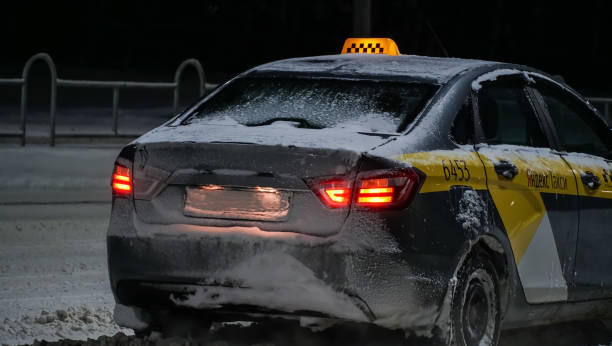
Belarusian authorities have launched a criminal investigation into an alleged illegal migration network that reportedly involved hundreds of Turkmen citizens residing in the country, according to a report by state news agency BELTA. The investigation centers on a scheme allegedly orchestrated by three taxi company owners in Minsk. Since 2022, four companies officially registered as taxi service providers were involved in operations that enabled foreign nationals, primarily from Turkmenistan, to obtain temporary residence permits using falsified documents. The business owners, aged between 30 and 38, are accused of hiring foreign nationals on paper to facilitate their acquisition of legal status. Investigators say the suspects collaborated with three intermediaries, themselves undocumented migrants, who advertised the scheme in online chat groups. These groups promised an easy path to legal residency, bypassing official procedures and bureaucracy. According to law enforcement, the operation offered two main methods for obtaining documents. The first involved issuing fake job invitations that prospective migrants could use at Belarusian embassies in Turkmenistan when applying for a visa. The second relied on falsified employment contracts, which migrants then submitted to local migration offices to obtain legal residence. The scheme came to light following coordinated searches at the suspects’ homes and company offices. Authorities seized computers, documents, and other evidence now under review. The suspects, who have been taken into custody, are cooperating with investigators and have reportedly admitted to charging $150 per visa, along with monthly payments from clients seeking to remain in Belarus. The investigation remains ongoing. Belarusian authorities are currently verifying the legal status of all foreign nationals who utilized the services of the implicated companies.

UN Calls on Turkmenistan to Probe Suspected Poisoning of Journalist Soltan Achilova

The UN Special Rapporteur on the situation of human rights defenders, Mary Lawlor, has called on Turkmenistan to launch an independent investigation into alleged attempts to poison 75-year-old journalist and human rights activist Soltan Achilova and her family members. The appeal was published on the website of the Office of the UN High Commissioner for Human Rights. “These are extremely serious allegations which, if confirmed, would constitute a violation of Achilova's right to life,” Lawlor stated. “Authorities have an obligation to conduct a thorough investigation and bring the perpetrators to justice.” The alleged poisoning incident occurred in November 2024 when Achilova and her daughter were forcibly hospitalized in an infectious disease clinic on the day they were scheduled to leave the country. Phones were disconnected, and security personnel were reportedly present at the hospital, leading Lawlor to suspect a deliberate attempt to block their departure. “The forced hospitalization of Achilova and her daughter on the day of their departure suggests an attempt to prevent them from traveling,” she said. Lawlor also cited disturbing conditions during their detention. For the first three days, they were not given food, water, or hygiene products. “Such treatment seems to be aimed at further humiliating and intimidating them,” she added. Long-Term Harassment and Intimidation Achilova has endured years of state pressure, including surveillance, travel bans, and property damage. Her phone and online activities are reportedly monitored, and she has not received alternative housing or compensation since her home was demolished in 2006. In both 2017 and 2024, unknown individuals vandalized her family’s property, breaking the windows of her son’s car, but the authorities did not investigate. “Gurbansoltan Achilova has faced years of harassment and intimidation, including previous travel restrictions, concerns that we have already raised with the government on June 19, 2020, and January 11, 2024,” Lawlor said. “Given our repeated appeals, I expect more than another letter refuting the allegations. The authorities must immediately stop all harassment and guarantee Achilova's safety and her ability to work and travel freely.” A Voice for Independent Journalism Soltan Achilova is one of Turkmenistan’s last independent female journalists publishing under her real name. Since 2006, she has been subjected to repeated threats, surveillance, and attacks. In 2023, her passport was deliberately damaged before she could travel to Geneva. In another incident in November 2024, as she prepared for an international trip, unidentified men in white coats broke into her home. One reportedly seized her keys and told her, “Why do you need a key in the other world?” before forcibly taking her to a medical facility. Repression Amid Global Scrutiny Turkmenistan ranks among the worst countries for press freedom, placing 175th out of 180 in the 2024 World Press Freedom Index published by Reporters Without Borders. The report highlights the systematic persecution of the nation’s remaining independent journalists. The UN continues to monitor Achilova’s case and has urged the Turkmen government to take meaningful steps to end harassment and ensure her safety. The international community is watching closely...

Turkmenistan Government Monitoring Former Law Enforcers and Imposing Travel Restrictions

Turkmenistan’s Ministry of Justice has launched an initiative to collect data on former Interior Ministry officials to track those who have left the country. This move is the latest in a series of efforts by the government to monitor and restrict its citizens’ ability to travel abroad. Tracking Former Law Enforcement Officers Since February 2025, the Ministry of Justice has been compiling information on former law enforcement officers who held ranks of major or higher and served between 1991 and 2024. The Ministry of Internal Affairs, the Ministry of National Security (MNS), the Migration Service, and the Prosecutor’s Office have been instructed to assist in the campaign, which is expected to conclude by the end of April. The main objective is to identify retired officers who have relocated abroad. Several theories have emerged regarding the authorities' motives. One explanation is that routine inspections revealed cases of former officers settling in other countries after retirement. Another theory links the initiative to the recent controversy surrounding Rustam Inoyatov, the former head of Uzbekistan’s National Security Service, who, along with his family, acquired Vanuatu citizenship through a “golden passport” program. Turkmen security services suspect that similar schemes may have been used by their own former colleagues. Particular scrutiny is being placed on those who had professional ties with Inoyatov during his tenure. Law enforcement veterans are now required to submit reports detailing their current residence and occupation. In cases where an ex-officer has passed away, their relatives must provide official documentation, including death certificates and burial site information. New Restrictions on Travel Abroad Retired law enforcement officers have been informed that they may only leave the country for medical reasons and must obtain official authorization from the Ministry of Health. This is not the first instance of the government tightening travel restrictions. In September 2024, reports surfaced that public sector employees were being compelled to surrender their biometric passports or provide proof that they did not possess one.  While officials have not commented on these measures, observers believe they are linked to the increasing number of citizens emigrating in search of work or permanent residency. Additionally, recent reports indicate that some Turkmen nationals have participated in Russia’s war against Ukraine, with some receiving Russian citizenship in return for their military service. Confiscation of Student Passports Travel restrictions have also been extended to students. In the fall of 2024, media reports revealed that students enrolling in Turkmen universities were required to surrender their passports to prevent them from traveling abroad.  Students who refuse to comply and sign a receipt acknowledging the surrender of their passports face the risk of being denied admission. According to sources, this policy has been in place for two years, with passports held by faculty deans for the duration of students’ studies. Although officials have not provided explanations for these measures, university professors suggest that they aim to curb mass youth migration. Previously, students were only required to sign receipts, but authorities have now escalated their efforts by confiscating passports...

Turkmenistan’s Security Services Interrogate Citizens Deported from the U.S.

Citizens deported from the United States arrived in Turkmenistan in the first half of February. They were transported on a flight alongside migrants from Uzbekistan and Tajikistan. After landing in Ashgabat, where 40 Turkmen citizens disembarked, the plane continued on to Tashkent.  Upon arrival, all deportees were sent to their places of permanent residence, where they were interrogated by officers from the Ministry of National Security (MNS). Among the group were 13 individuals who had previously applied for asylum in the U.S. Intelligence officers are reportedly scrutinizing these individuals to determine whether they made negative statements about Turkmenistan while seeking refugee status. As a result, they are being summoned for questioning more frequently than those who were in the U.S. illegally. Also among the deportees were children of high-ranking officials at both regional and state levels. Many had previously studied at Ukrainian universities before obtaining U.S. visas and traveling abroad. According to journalists from Chronicles of Turkmenistan, a married couple was also among those deported. While no arrests have been reported, all returnees continue to be regularly summoned for questioning.