• KZT/USD = 0.00218
  • TJS/USD = 0.10820
  • UZS/USD = 0.00008
  • TMT/USD = 0.29850
  • KZT/USD = 0.00218
  • TJS/USD = 0.10820
  • UZS/USD = 0.00008
  • TMT/USD = 0.29850
  • KZT/USD = 0.00218
  • TJS/USD = 0.10820
  • UZS/USD = 0.00008
  • TMT/USD = 0.29850
  • KZT/USD = 0.00218
  • TJS/USD = 0.10820
  • UZS/USD = 0.00008
  • TMT/USD = 0.29850
  • KZT/USD = 0.00218
  • TJS/USD = 0.10820
  • UZS/USD = 0.00008
  • TMT/USD = 0.29850
  • KZT/USD = 0.00218
  • TJS/USD = 0.10820
  • UZS/USD = 0.00008
  • TMT/USD = 0.29850
  • KZT/USD = 0.00218
  • TJS/USD = 0.10820
  • UZS/USD = 0.00008
  • TMT/USD = 0.29850
  • KZT/USD = 0.00218
  • TJS/USD = 0.10820
  • UZS/USD = 0.00008
  • TMT/USD = 0.29850
25 November 2026

Viewing results 49 - 54 of 68

Turkmenistan Requests Deportation of Fifty Activists and Journalists

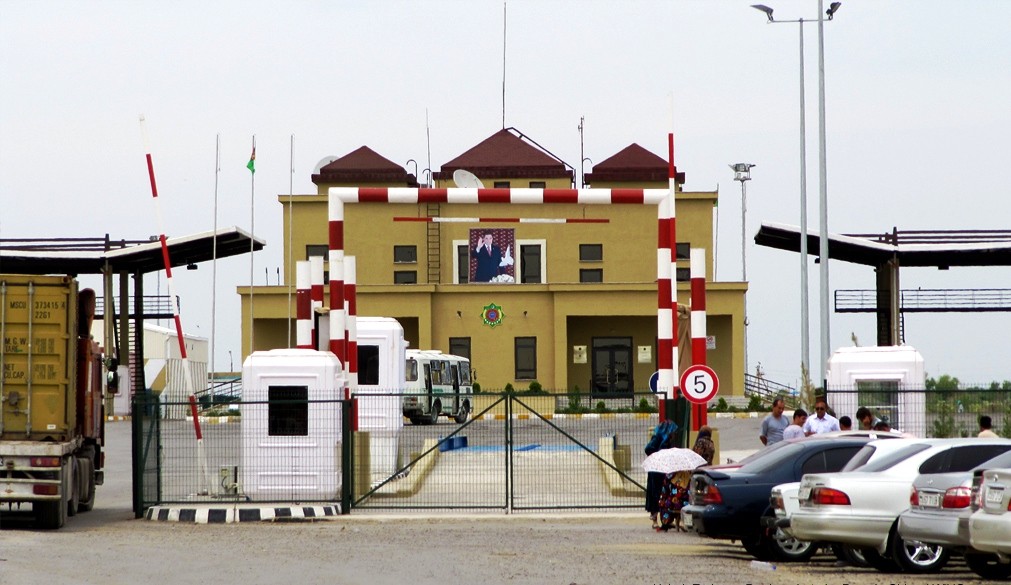
The Chronicles of Turkmenistan reports that Turkmenistan has sent a list to several countries comprising 50 people, asking that they not be permitted to enter their territory, or to have them deported to Turkmenistan. The appeal was sent to Belarus, Russia, Azerbaijan, Kazakhstan, Uzbekistan, Tajikistan, Kyrgyzstan, Turkey, Iran, Moldova, Georgia, and Armenia. According to the authorities, the index lists civil activists, journalists, independent media, and opposition representatives as threatening state security. Turkmenistan has prioritized the return of nine people from this list. It remains to be seen whether the aforementioned foreign countries will execute the Turkmen authorities wishes. However, Turkmen.news journalist Ruslan Myatiev, who went to Turkey on summer vacation with his family on July 25, was not allowed to enter the country. After several hours of interrogation by the Turkish National Security Service, Myatiyev was deported to Turkmenistan. The Times of Central Asia previously reported that the daughter of a Turkmen activist was not allowed to fly to Turkey. This follows on from an increasing number of cases where Turkmen citizens have been removed from flights abroad without explanation; the same thing is reportedly happening when attempting to cross the border by land.

Daughter of Civil Activist in Turkmenistan Not Allowed to Leave Country

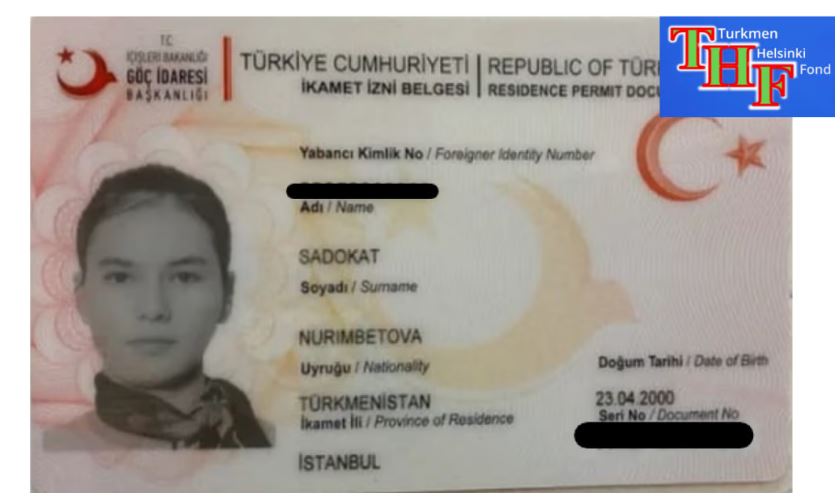
Sadokat Nurimbetova, the daughter of prominent civil activist Hamida Babajanova, was removed from a Turkmenistan Airlines flight to Istanbul at Ashgabat International Airport, it has been reported. Nurimbetova, an ethnic Uzbek, is a second-year student at Istanbul Medical University, and accordingly she has a valid Turkish residence permit, a “kimlik.” On June 5, Nurimbetova went to her home country to apply for a new passport, which she duly received on July 10, and bought a plane ticket to Istanbul. At passport control, two immigration officials intercepted Nurimbetova and took her to a separate room. There, she was fingerprinted and interrogated, after which the Migration Service officers told the student that she was banned from leaving Turkmenistan.  “This is a directive from above," Nurimbetova was told, and was advised not to go anywhere and not to complain to anyone. It was also emphasized to her that her mother should not entertain thoughts of going anywhere. Nurimbetova is the daughter of well-known Turkmen civil activist Hamida Babajanova, who last year defended the right of her elderly mother, Yakujan, to make a pilgrimage to Mecca. Recently, cases of Turkmen citizens being removed from flights abroad without explanation have become more frequent. The same thing is happening when attempting to cross the border by land.

A Eurasian Perspective on the Historic Conviction of U.S. Senator Bob Menendez

On July 16, a federal court in New York found United States Senator Robert "Bob" Menendez (D) guilty on 16 counts in a corruption trial, including charges of accepting bribes to benefit the governments of Egypt and Qatar, obstruction of justice and extortion. He is the first U.S. senator to be convicted as a foreign agent and the charges collectively carry a potential sentence of 222 years in prison. Bribery charges involved receiving gold bars worth over $100,000 and more than $480,000 in cash as well as a Mercedes-Benz for his wife. “This wasn't politics as usual. This was politics for profit,” summarized Damian Williams, an attorney for the Southern District of New York. According to federal prosecutors, among other things, Menendez helped secure millions of dollars of U.S. aid for Egypt and used his office to assist a multi-million-dollar deal with a Qatari fund. Egypt’s intelligence and military officials are said to have bribed him and his wife at a time when U.S. military aid to the country would have paused due to human rights concerns. Menendez also used his official position “to protect and enrich” individuals in exchange for payments, including helping a New Jersey businessman secure a halal certification monopoly with regards to U.S. meat exports to Egypt. Striking similarities to another recent “influence-for-sale” scandal For many Europeans, this U.S. case resembles the European Union’s own Qatargate scandal, which broke out in 2022 and unveiled how foreign governments (Qatar, Morocco and Mauritania) have been channeling hundreds of thousands of euros to a ring of elected European Parliament officials who, in turn, were leveraging their authority to benefit these clients. The services included “attempts to manipulate the Parliament” and “scheming to kill off six parliamentary resolutions condemning Qatar’s human rights record” as Politico reports. In his plea deal, Antonio Panzeri, the chief of the European Parliament's Subcommittee on Human Rights (DROI), admitted to receiving bribes as well as to leading and participating in a criminal organization. This criminal organization reportedly doled out bribes to EU officials through two NGOs named Fight Impunity and No Peace Without Justice, which were allegedly set up to launder money and help fund the scheme. In Menendez’s case, the money ran through his wife’s consultancy. Qatargate allegations extended beyond the Middle East and North Africa. For instance, Atlantico.fr reported that Panzeri and his associates may have been corrupted by at least two Kazakh criminal figures. Europeans appeared lenient on corruption as Panzeri only received a five-year prison sentence, of which four would be suspended and the one year he’d serve would be under house arrest with an electronic bracelet. Momentum behind investigations of key suspects has since waned, leading the EU Observer to call Qatargate “a missed opportunity to bring Europe to justice”. Foreign policy priorities pushed by Senator Menendez need to be re-examined When public officials are found to have used their office to promote external interests, their past policy activities should be closely examined. Bob Menendez has been a member of...

Turkmenistan Province Bans Child Labor in Cotton Harvesting

The Chronicle of Turkmenistan reported that on 3 June, the governor of Lebap Province called a meeting with heads of agricultural associations of etraps - administrative-territorial units - to discuss issues regarding the production of cotton and in particular, the growing employment of children in harvesting. In order to halt this worrying trend, he warned, "If children are seen in the fields, the heads of the agricultural associations will be held responsible and as such, should advise parents of the inadmissibility of child labor." He also recommended that families of tenants on neighboring plots form brigades and cooperate in agro-technical activities on each other's plots. In addition, heads of the associations were promised that if their tenants bought fertilizers at their own expense and provided receipts, the agricultural enterprise would provide compensation when paying for the harvest.

Women and Girls in Central Asia in Need of Protection from Violence

 Central Asian Countries are seeing a new wave of violence against women and girls, and the fight against their long-standing powerlessness is just beginning. In 2023, the Women, Peace and Security Index (WPS Index), published by the Georgetown Institute for Women, Peace and Security and the PRIO Centre on Gender, Peace and Security, found Kyrgyzstan and Uzbekistan the most dangerous countries in Central Asia for women. Things were deemed slightly better in Kazakhstan, Tajikistan, and Turkmenistan. The challenges faced by women in the region result from a combination of factors: the low number of women in government and law enforcement, women’s lack of financial independence, especially in rural areas, a distorted understanding of traditions across populations, and a mentality in society that often denies or covers up flagrant cases of injustice.   The law is written in blood: the case of Kazakhstan According to WPS experts, Kazakhstan has progressed further than its neighbors toward equality. Still, according to Kazakhstan’s Ministry of Internal Affairs, 69 women and seven children died in 2023 in domestic conflicts alone. It is believed that, on average, at least 80 women die every year at the hands of those they live with; every day, the police receive hundreds of calls, while thousands of women need the help of specialized protection and support centers. According to the Prosecutor General, last year 150 women sustained severe injuries and 200 moderate injuries in marital conflicts, with another 4,000 suffering minor bruises. This year, however, marked a turning point for Kazakhstani society – more and more women are recording videos with marks from beatings, posting the videos on social media, and calling on the police to punish their abusers. Even high-profile domestic abusers can now be exposed. The trigger for these changes was the trial of former Nazarbayev-era Minister of the National Economy, Kuandyk Bishimbayev, who beat his wife, Saltanat Nukenova, to death last November. Following a live-streamed trial, this May, Bishimbayev was sentenced to 24 years in prison for her murder. Even during the Bishimbayev trial, Karina Mamash, the wife of a Kazakh diplomat in the UAE, went public with allegations about systematic abuse, calling on the state to help. The Ministry of Foreign Affairs urgently recalled her husband, Embassy Counselor Saken Mamash, who may be fired. Karina is now at home with her children while a criminal case has been opened against her husband. She has since reported threats from her husband's relatives. Also in May, Akmaral Umbetkalieva, a resident of Atyrau, alleged that her ex-husband, Rinat Ibragimov – the akim (mayor) of Makat District in Atyrau Region – had beaten her for eleven years and taken away their children. Ibragimov called the allegations slander. The month before, former Taldykorgan police chief, Marat Kushtybaev was sentenced to eleven years for raping a girl in his office in November 2023. Another headline from April was that a security guard at an Almaty bar who had been convicted of raping a girl at knifepoint would serve eight years in prison. The...

Reporter in Turkmenistan Freed After Four Years in Jail

Authorities in Turkmenistan have released a freelance reporter who was jailed for several years on a fraud conviction that media groups alleged was retaliation for his journalism. Nurgeldi Halykov, who has worked for the Turkmen.news website, was arrested in Ashgabat on July 13, 2020 and freed on Saturday, the Committee to Protect Journalists said on Monday. Halykov was detained the day after the Netherlands-based website published a photo that it received from him in which a World Health Organization delegation is seen at a local hotel during the COVID-19 pandemic, according to the committee. Turkmenistan strictly controls the media, making it hard to get information about what is going on in the Central Asian country. The government there did not report a single case of COVID-19, though there are widespread doubts about the government’s transparency regarding the impact of a virus that has killed millions of people worldwide. The photo of the WHO representatives was taken by an Ashgabat resident who saw them sitting by the pool of the Ashgabat Yildiz Hotel, Turkmen.news said. The resident posted the photo on Instagram and Halykov, “who had previously studied with this girl in the same school, saw it. He thought it necessary to send the photo to the editorial office of Turkmen.news,” the website reported. “The girl was identified from CCTV cameras. She and six of her friends, relaxing by the hotel pool, were called to the police. The police looked through all her photographs, including personal ones, restored previously deleted photographs, and reread all her correspondence with other people. Then they began to study contacts in the address book and her friends on Instagram,” the news outlet said. Halykov was detained and sentenced in September 2020 after being convicted of failing to repay a loan, according to Turkmen.news. It said a former close friend made the complaint about a $5,000 debt that Halykov allegedly owed. The Committee to Protect Journalists said it was glad that Halykov had been released and it urged the Turkmen authorities “to improve the country’s international reputation by liberalizing the media environment so that independent reporters do not have to work clandestinely or under fear of arrest.” Turkmenistan’s state news agency did not mention Halykov’s release in its report on Monday. The main news was the visit to Ashgabat of South Korean President, Yun Suk Yeol, and his talks on trade and other issues with Turkmen President Serdar Berdimuhamedov. Other prominent articles talked about the start of the grain harvest and the Turkmen president’s recent participation in a mass bicycle excursion in Ashgabat.